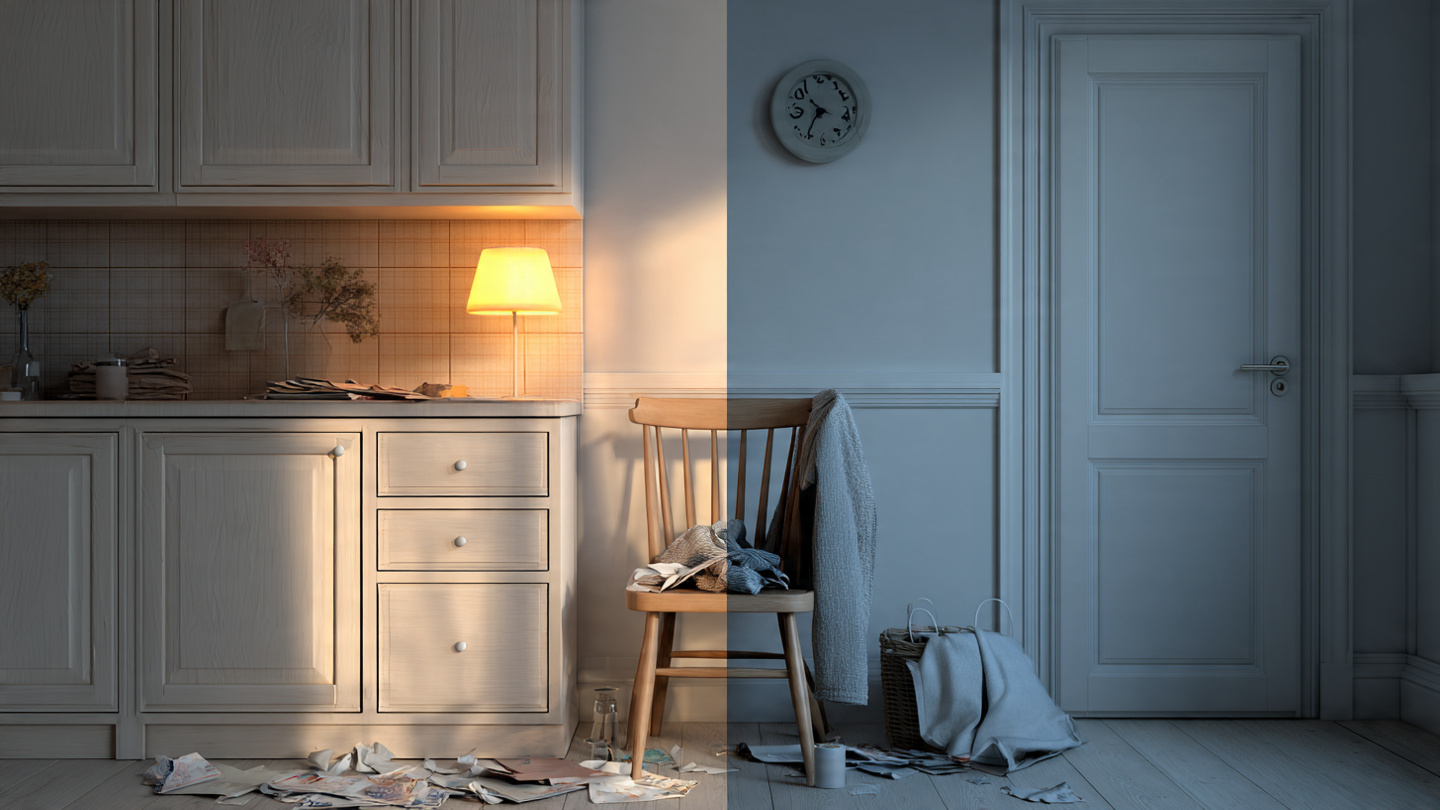
25 Declutter Home Ideas That Will Transform Your Space and Help You Finally Get Organized

You walk into your home after a long day and instead of feeling relief, you feel a low hum of stress. The counter has things on it that shouldn’t be there. The drawer won’t close properly. There’s a pile somewhere, there’s always a pile that you’ve been mentally stepping around for weeks.
You don’t want more stuff. You want less. You want to walk through your door and breathe.
That feeling you’re chasing, the calm, clear, spacious feeling of a home that feels genuinely under control, is absolutely achievable. Research consistently shows that cluttered environments raise cortisol levels, reduce focus, and make it harder to relax even when you’re technically at rest. The good news is that the solution doesn’t require a complete renovation, a large budget, or an entire lost weekend. It requires a starting point and a plan, and this guide gives you both.
These 25 declutter home ideas are practical, real, and emotionally honest about what it actually takes to clear a space and keep it that way. Whether you live in a small flat in the UK, a suburban home in Canada, an apartment in Sydney, or a house in the American Midwest, these ideas work. Let’s begin.
Why Decluttering Is One of the Most Powerful Things You Can Do for Yourself
The Real Cost of Clutter
Clutter isn’t just a visual problem. It’s a mental one. Every object in your home that’s out of place, unnecessary, or undecided represents an unfinished thought, a small, ongoing demand on your attention. Multiply that by a hundred objects and your brain is quietly working overtime just navigating your own living space.
When you declutter, you’re not just clearing surfaces. You’re clearing mental bandwidth. People who live in decluttered, organized homes consistently report feeling calmer, sleeping better, and feeling more in control of their daily lives. The space you live in shapes how you think and feel far more deeply than most people realize.
Why This Feels Hard (And Why That’s Okay)
Decluttering feels overwhelming because most people try to do it all at once and exhaust themselves before they’ve made visible progress. Or they don’t have a system, so stuff just migrates from one pile to another. Or they’re emotionally attached to objects in ways they haven’t fully examined.
All of that is normal. And all of it is workable. The ideas ahead address each of these challenges directly and give you a path that’s manageable, satisfying, and genuinely sustainable.
Start Here: The Mindset and Method Ideas
Before you move a single object, these foundational ideas set you up for real, lasting success.
1. Declutter in Small Time Blocks, Not Marathon Sessions
Why It Works
The all-day decluttering session sounds productive in theory. In practice, it leads to burnout, decision fatigue, and a house that looks worse in the middle than it did at the start, which often results in giving up entirely. Small, focused time blocks work dramatically better.
How to Do It
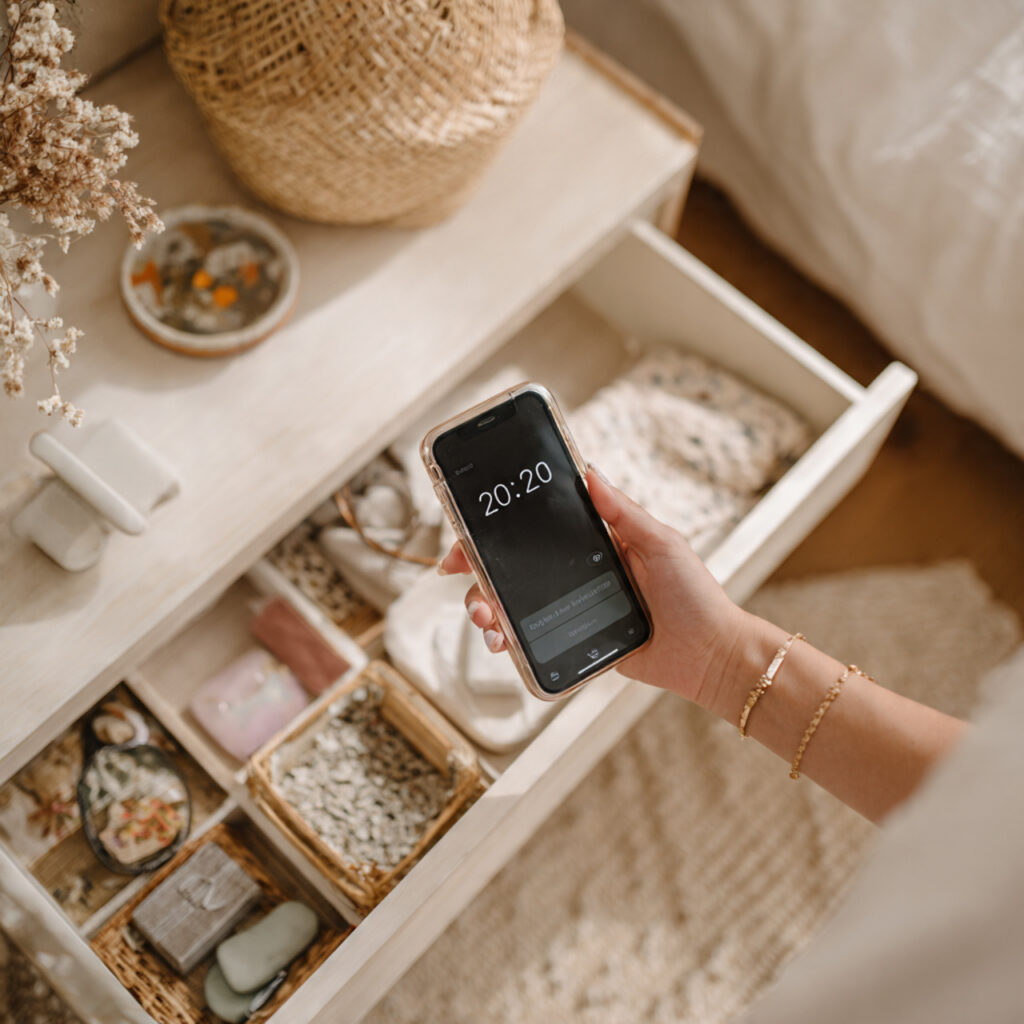
Set a timer for twenty to thirty minutes. Choose one specific area, not “the kitchen,” but “the junk drawer” or “the top shelf of the pantry.” Work only in that area for the duration of the timer. Stop when it goes off, even if you’re mid-task. The containment is the point. Small wins build momentum in a way that exhausted, all-day sessions never do.
Insider Tip
Do one twenty-minute declutter session three times a week rather than one massive session monthly. The cumulative effect is far greater, the effort feels far smaller, and the results become genuinely visible within two weeks.
Also Read: 27 Simple Spring Cleaning Aesthetic Ideas That Make Your Home Feel Calm, Fresh and Beautiful Fast
2. Use the Three-Box Method Every Time
Why It Works
The most common decluttering mistake is making decisions about objects in place — picking something up, wondering about it, and putting it back exactly where it was. The three-box method forces a decision by creating physical destinations that make the choice feel final and real.
How to Do It
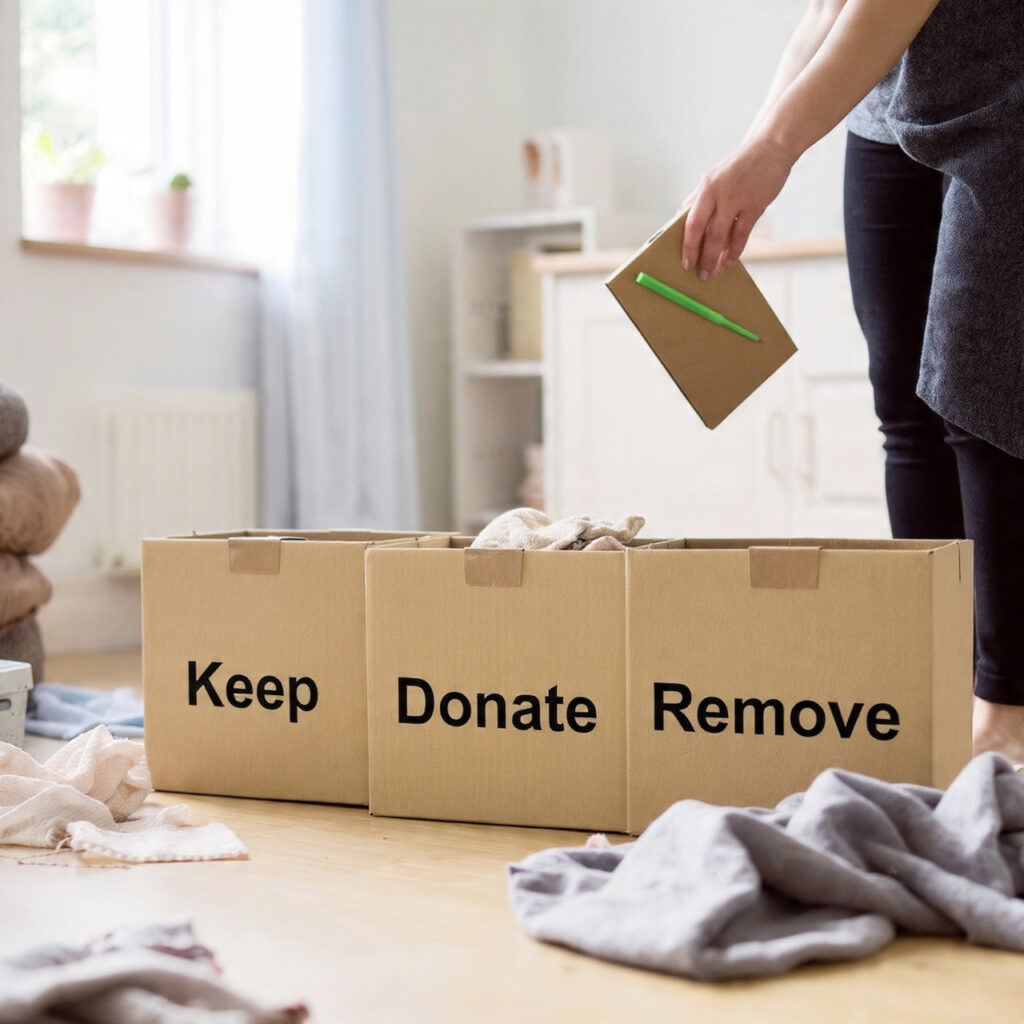
Before every decluttering session, set out three boxes or bags clearly labeled: Keep, Donate, and Remove. Every object you pick up must go into one of the three. Nothing goes back where it was unless it’s going into Keep. The Donate box goes to a charity or donation point within 48 hours. The Remove box goes in the bin or recycling immediately.
Common Mistake
Creating a fourth “maybe” box. The maybe box becomes a storage unit for everything you can’t decide about, and it defeats the purpose entirely. If you genuinely can’t decide, set a time limit: put it in a sealed box with today’s date on it. If you haven’t needed or thought about anything in it within three months, donate the whole box unopened.
Read More: 23 Spring Home Reset Ideas That Will Instantly Refresh Your Space and Boost Your Mood This Season
3. Start With the Easiest Area First
Why It Works
Motivation follows action, not the other way around. Starting with the most challenging area, the garage, the basement, the spare room that’s become a storage overflow, is the fastest route to giving up. Starting with something easy creates a completed win that makes the harder areas feel possible.
How to Do It
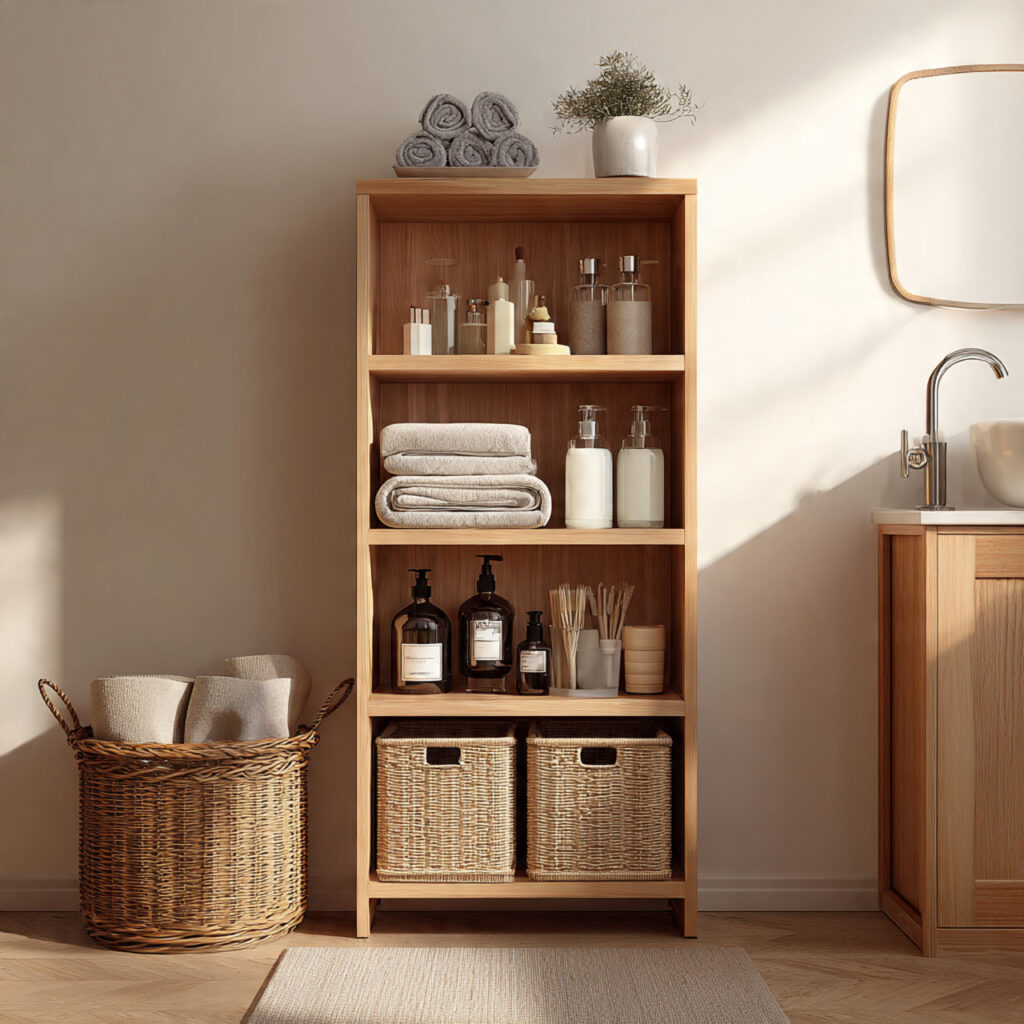
Choose the single easiest area in your home to declutter. A bathroom cabinet. One shelf. The top of the bedroom dresser. Spend twenty minutes clearing it, organizing what remains, and making it look genuinely good. Then stop. Come back tomorrow or in a few days. The satisfaction of that one finished area is fuel for everything else.
4. Photograph Before and After Every Area
Why It Works
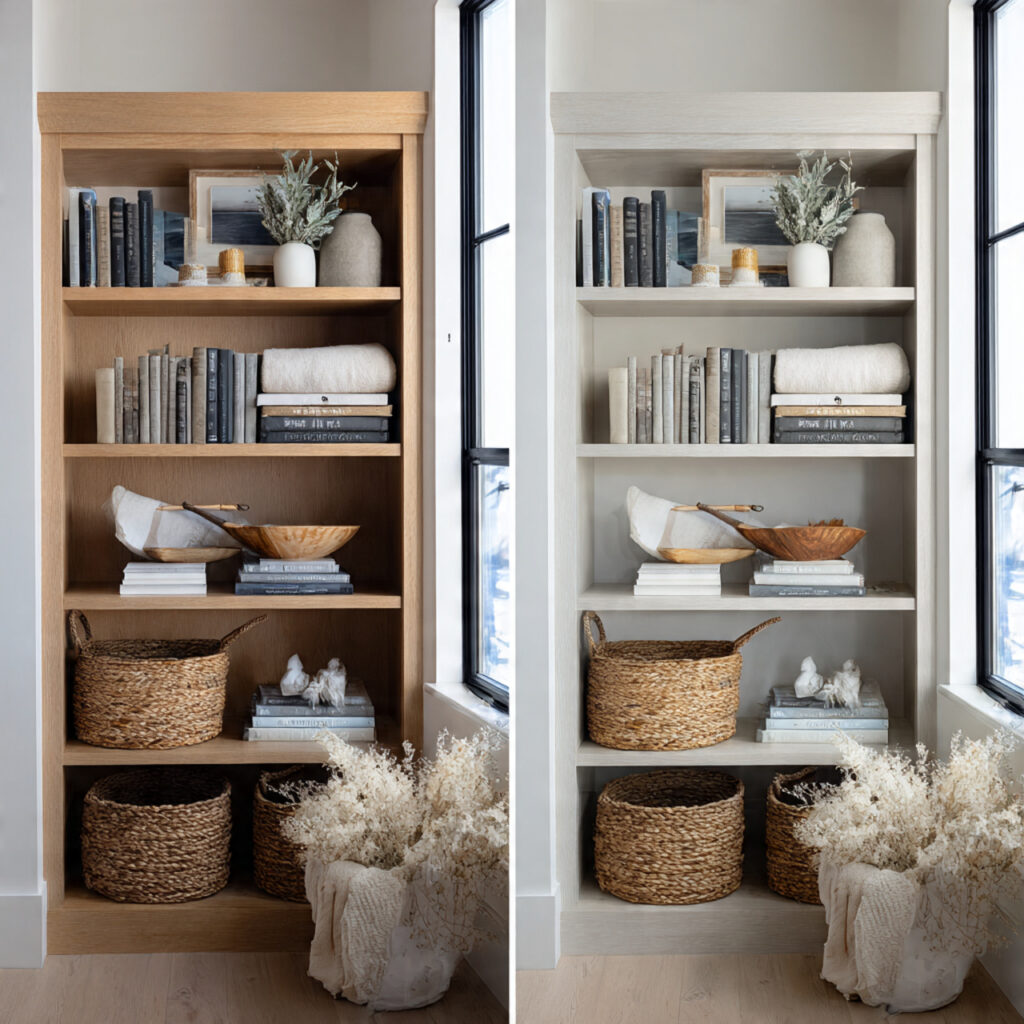
Progress is motivating, but it’s easy to forget where you started. Photographing each area before and after you declutter it creates a visible record of your progress that you can look back at when motivation dips, and it always does at some point.
How to Do It
Before touching anything, take a photo of the area on your phone. After completing the declutter, take another. Put them side by side. The contrast is almost always more dramatic than it felt from inside the process, and seeing it clearly is genuinely energizing for what comes next.
5. Decide Where Everything Lives Before You Organize
Why It Works
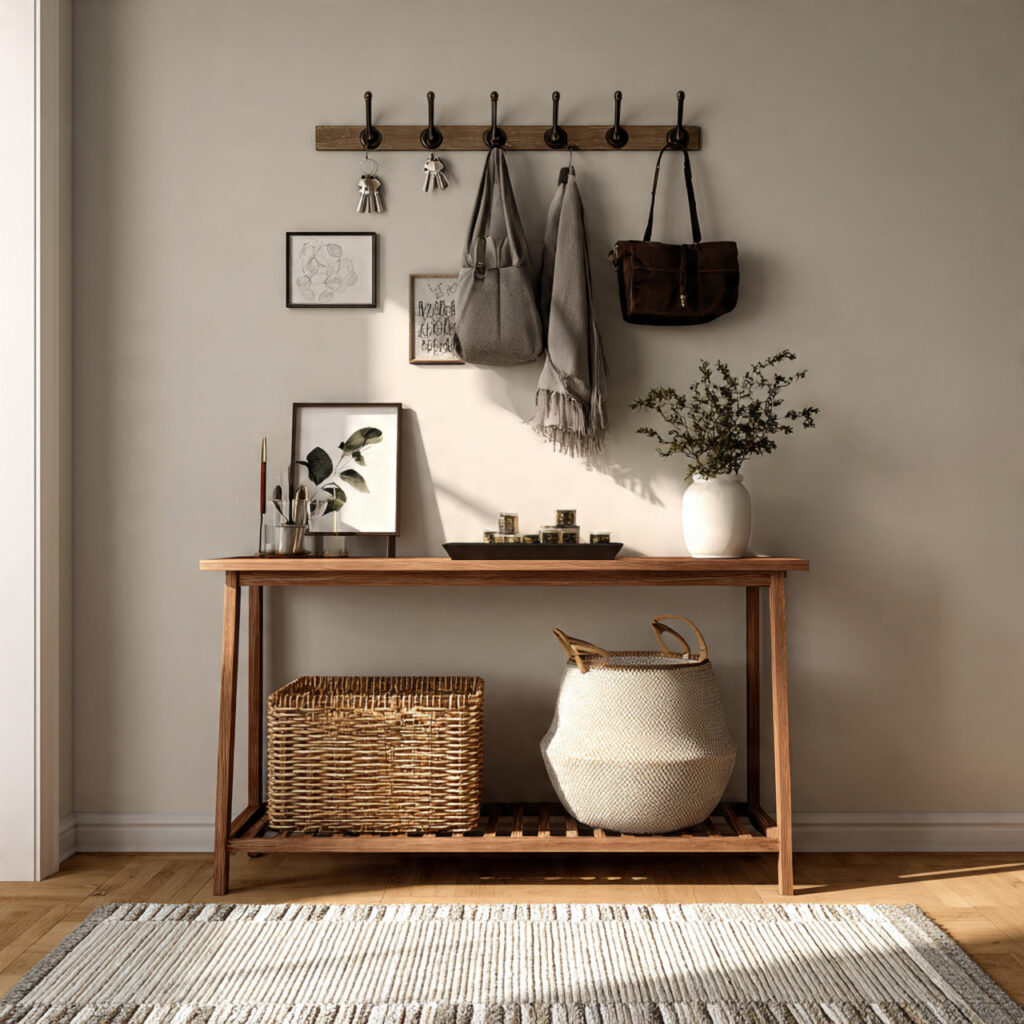
Organization without designated homes for objects just creates prettier clutter. If a category of item doesn’t have a single, consistent, logical place to live, it will always be somewhere random, on counters, in wrong drawers, creating visual noise. Deciding first where things belong makes every other organizing step work.
How to Do It
For each category of objects in your home, mail, keys, charging cables, cleaning supplies, medications, spare batteries, designate one specific location where that category always lives. Write it down if needed. Then enforce that location consistently. When everything has a home, putting things away takes seconds rather than decisions.
These five ideas form the foundation of everything else. The room-specific ideas ahead build directly on them, and this is where the real transformation becomes visible.
Room-by-Room Declutter Ideas That Actually Work
6. The Kitchen: Clear Counters as a Non-Negotiable Rule
Why It Works
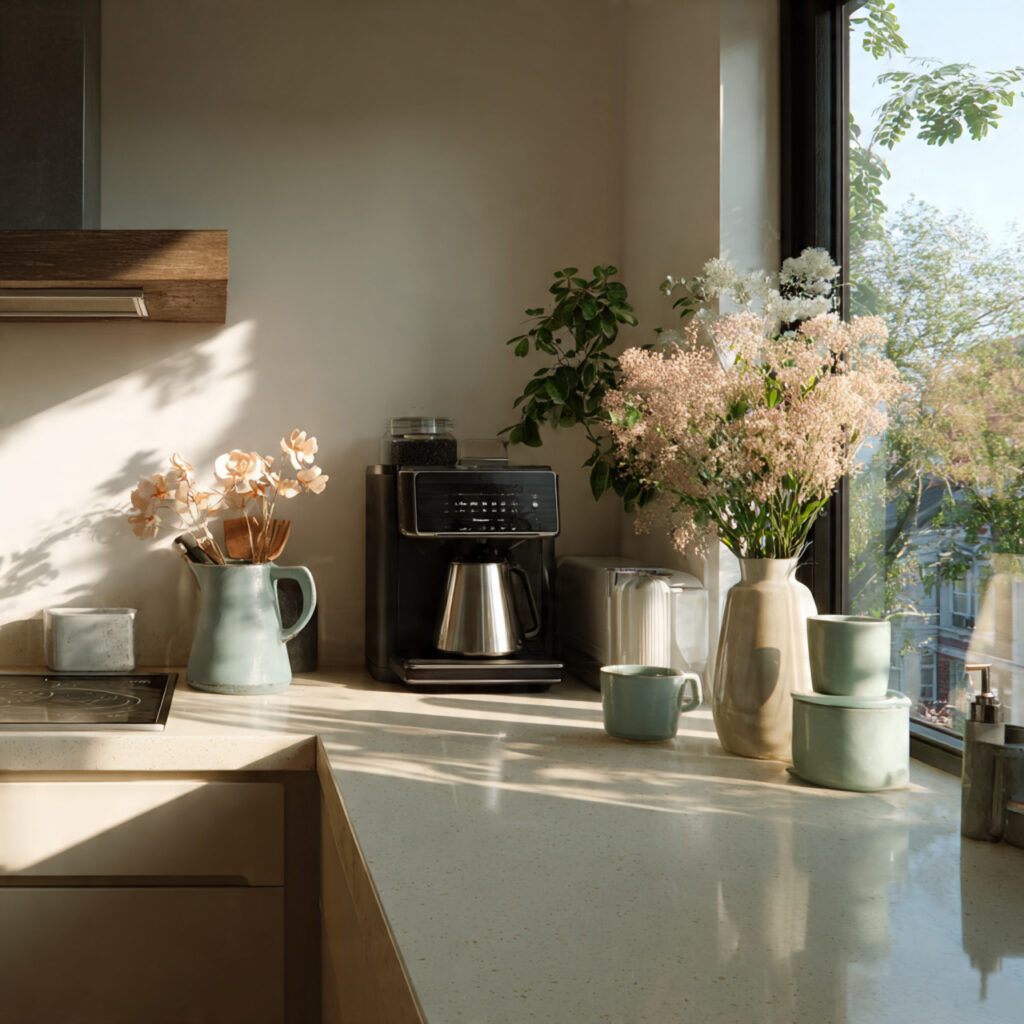
Kitchen counters are the most clutter-prone surfaces in most homes, and they affect daily life more than any other surface because you interact with them multiple times a day. A cluttered counter makes cooking feel harder, cleaning feels endless, and the whole kitchen feels smaller and more stressful.
How to Do It
Remove everything from your counters completely. Then apply a strict rule: only items used every single day earn counter space. For most kitchens, that means the kettle or coffee maker, and almost nothing else. Everything else lives in a cabinet. The expanse of clear counter space that results feels like gaining a room.
Common Mistake
Keeping appliances on the counter “for convenience” when they’re used once a week or less. A bread maker, a smoothie blender, an air fryer used on weekends — these all belong in a cabinet. The convenience of having them visible is vastly outweighed by the visual clarity of a clear counter.
7. Declutter the Pantry Using the Expiry Date Rule

Why It Works
Pantries accumulate expired products, duplicate items, and things purchased for one recipe and never used again. These items take up space that makes the pantry feel packed and hard to navigate, and they make cooking feel harder than it needs to be.
How to Do It
Remove everything from the pantry. Check every item for an expiry date and discard anything expired. For duplicate items, consolidate where possible. For single-use recipe items you’re unlikely to use again, donate or discard. Organize what remains by category — grains, cans, baking supplies, snacks, and return them in logical groupings with the oldest items at the front.
Insider Tip
Decanting dry goods, pasta, rice, oats, flour, sugar, into matching airtight containers after a pantry declutter transforms the visual experience completely. The uniformity of containers makes even a modestly stocked pantry look organized and intentional.
8. The Wardrobe: The “Worn in 12 Months” Rule
Why It Works
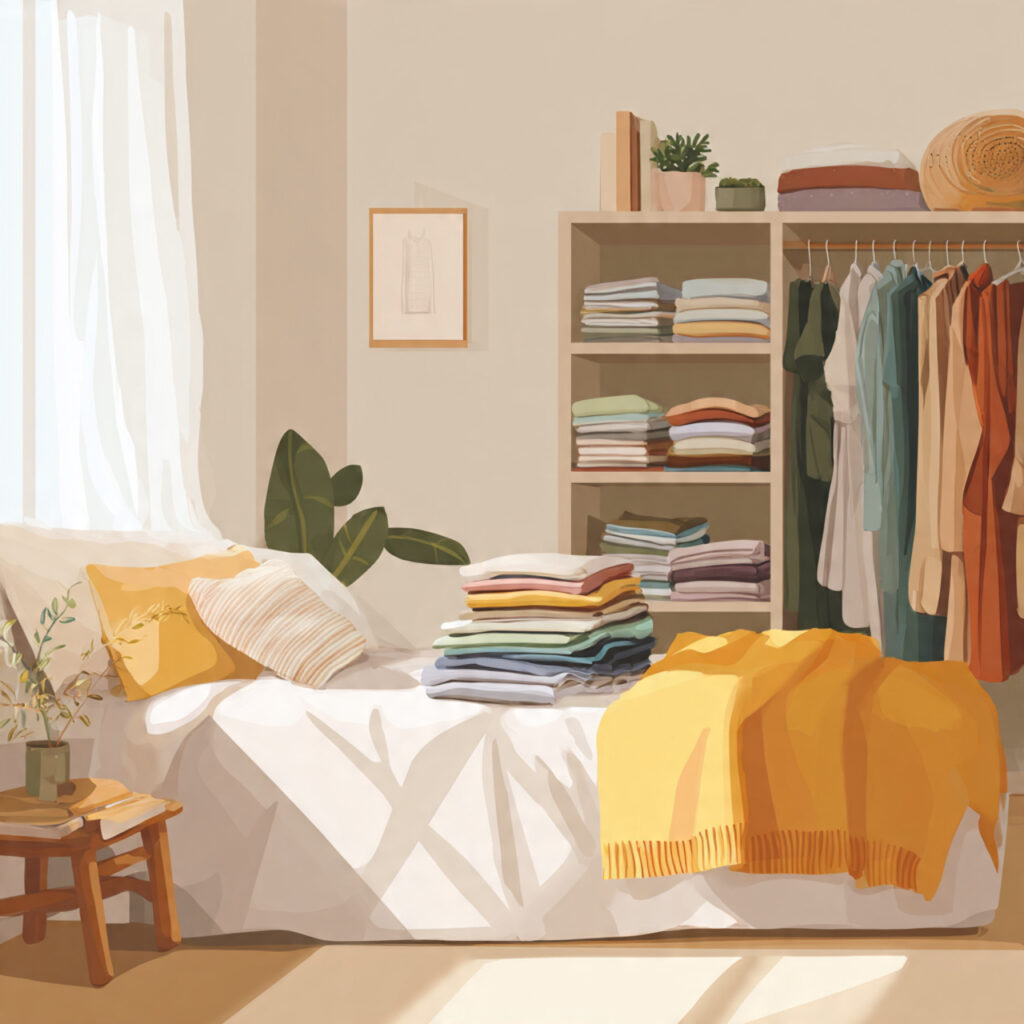
Most people wear about 20% of their clothing 80% of the time. The other 80% takes up space, makes getting dressed feel more complicated, and creates a wardrobe that’s both overfull and somehow always lacking what you actually want to wear. The 12-month rule cuts through sentiment and justification with a single clear question.
How to Do It
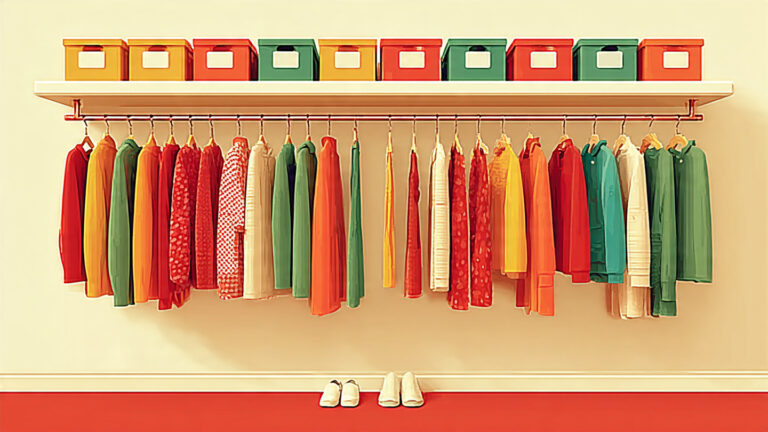
Go through every item in your wardrobe and ask one question: have I worn this in the past 12 months? If no, and there’s no compelling specific upcoming reason to wear it, it leaves. Donate clothes in good condition. Discard ones that are worn out. What remains is a wardrobe full of things you actually wear, which makes getting dressed faster and more enjoyable.
Common Mistake
Keeping things “just in case” or “when I lose weight” or “it was expensive.” These justifications are the most common way wardrobes refill with unworn items after a clear-out. The money spent on something is gone whether it stays in your wardrobe or goes to someone who will actually wear it. Let it go.
9. Clear Under the Bed Completely
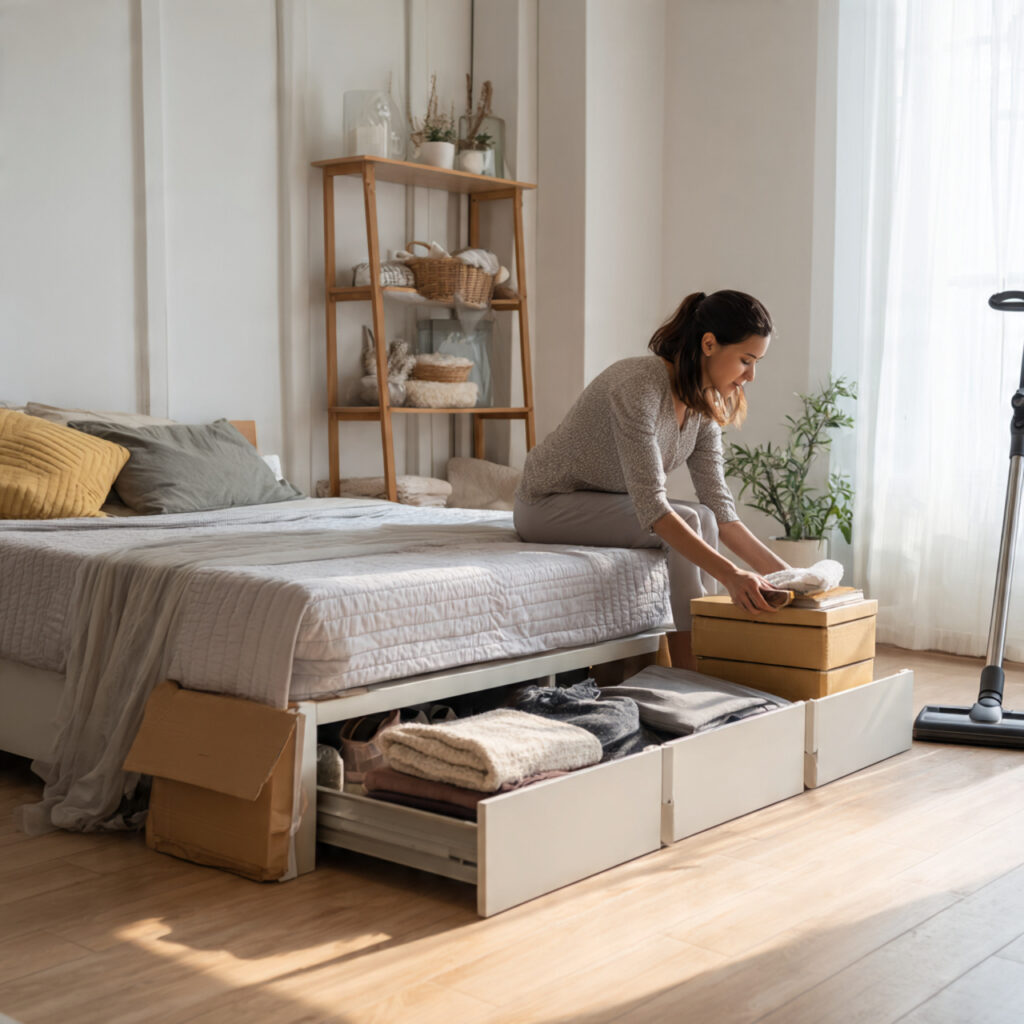
Why It Works
Under-bed storage feels invisible, but it contributes to the overall clutter load of a room more than people realize. A bedroom with a clear, clean space under the bed feels lighter and more restful than one where under-bed storage is crammed full, even if you never consciously look at it.
How to Do It
Pull everything out from under the bed. Sort using the three-box method. If you need to use the under-bed space for storage, use closed containers, flat storage boxes with lids, so dust doesn’t accumulate on stored items and the space stays visually clean. Label each box so you can find things without unpacking everything.
10. The Bathroom Cabinet Purge
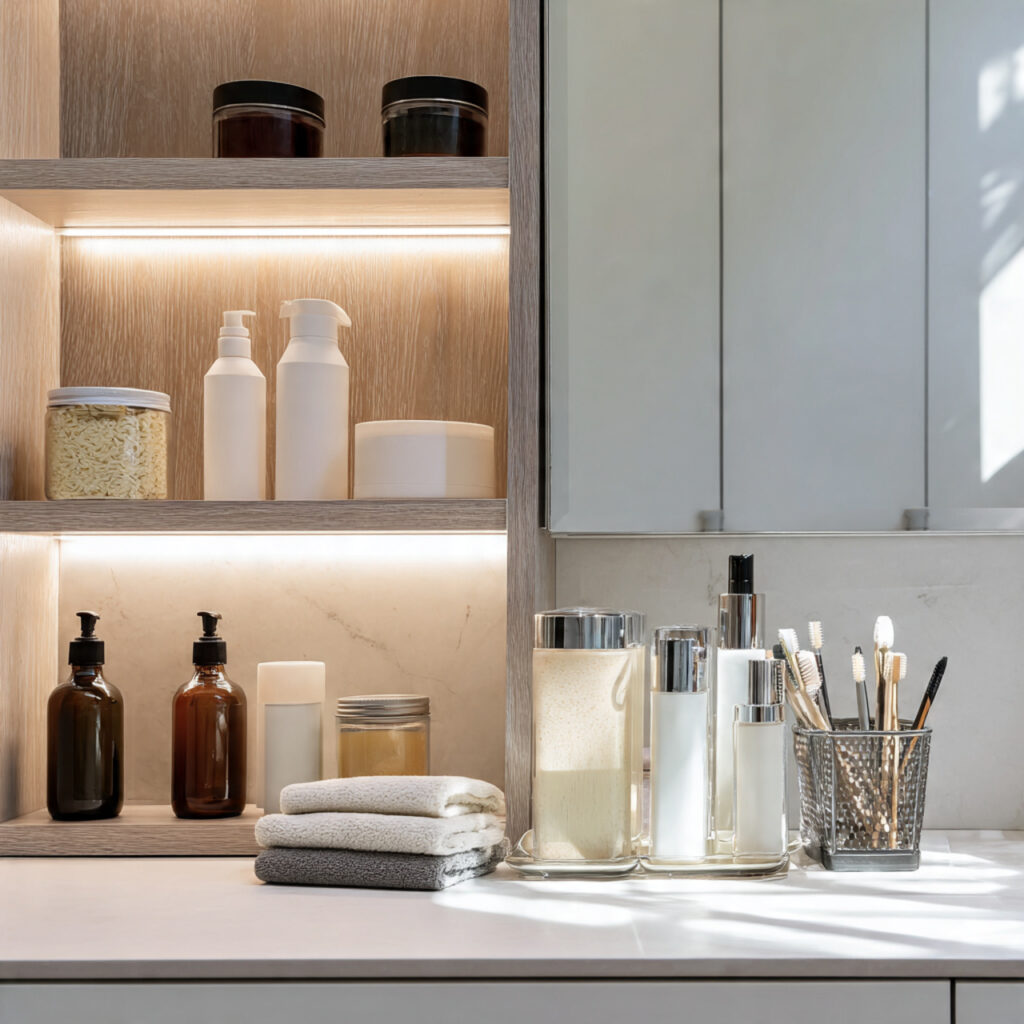
Why It Works
Bathroom cabinets and vanity spaces accumulate products at an extraordinary rate, expired medications, half-used skincare that didn’t work, hotel shampoo bottles, duplicates bought because the original was somewhere in the cabinet and you couldn’t find it. A thorough purge transforms not just the cabinet but the daily experience of your morning routine.
How to Do It
Remove everything. Check expiry dates on medications and skincare, both expire and using expired products is at best ineffective and at worst harmful. Discard empties, samples you’ll never use, and products you genuinely don’t like or use. Organize what remains by category in simple bins or baskets. The result is a cabinet where you can find what you need in seconds.
The room-specific ideas are building a complete picture of transformation, and the organizational ideas ahead are where everything finally locks into place.
Organizing After Decluttering: Ideas That Make It Stick
11. The “One In, One Out” Rule Going Forward
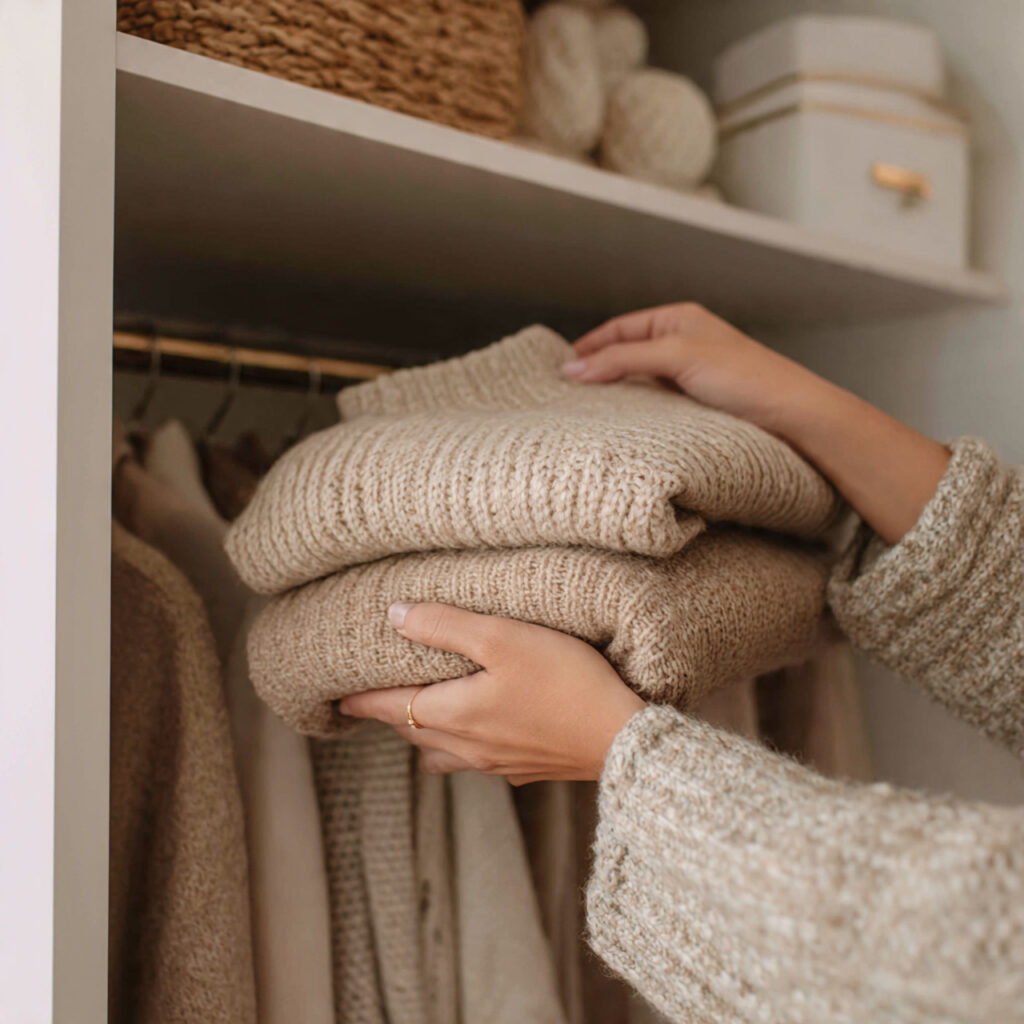
Why It Works
Decluttering solves the current problem. The one-in-one-out rule prevents the same problem from rebuilding over time. It’s the simplest maintenance rule in home organization and one of the most effective.
How to Do It
For every new item that comes into your home, a new book, a new kitchen gadget, a new piece of clothing, one existing item of the same category leaves. Buy a new sweater, donate an old one. Get a new kitchen tool, remove one you use less. The total volume of belongings stays stable rather than steadily accumulating.
Insider Tip
Apply this rule especially strictly to categories that have a tendency to multiply: books, shoes, kitchen gadgets, craft supplies, and children’s toys. These categories tend to grow invisibly until they’re suddenly overwhelming.
12. Designate a “Landing Zone” for Daily Items
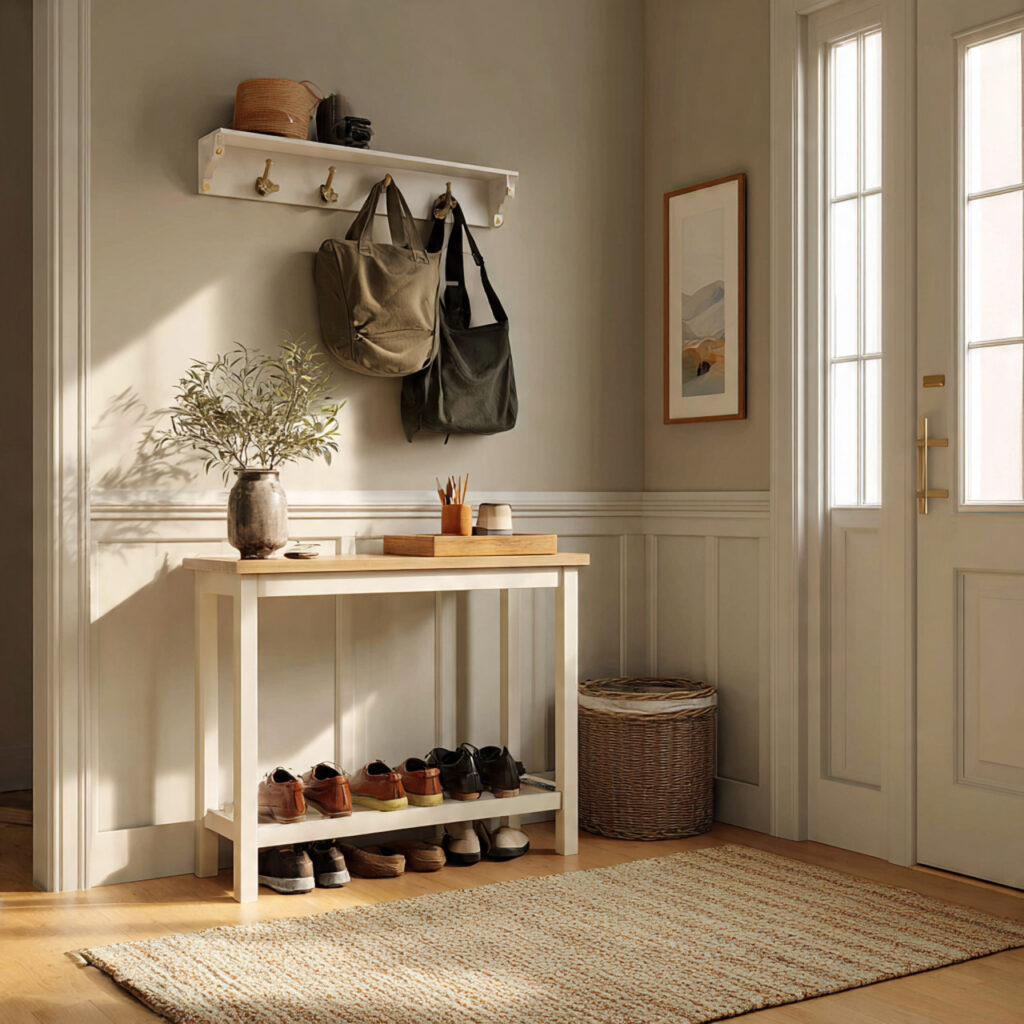
Why It Works
Keys, bags, mail, sunglasses, wallets, these items cause daily low-level stress when they don’t have a consistent home. A dedicated landing zone near your entrance solves this completely.
How to Do It
Choose a console table, a wall-mounted shelf, or even a small tray near your front door. This becomes the non-negotiable home for everything that arrives and leaves daily. A hook for bags, a small tray for keys and wallet, a slot or basket for mail. When this system exists, you stop leaving daily items on random surfaces throughout your home.
13. Tackle Junk Drawers With a Category System
Why It Works
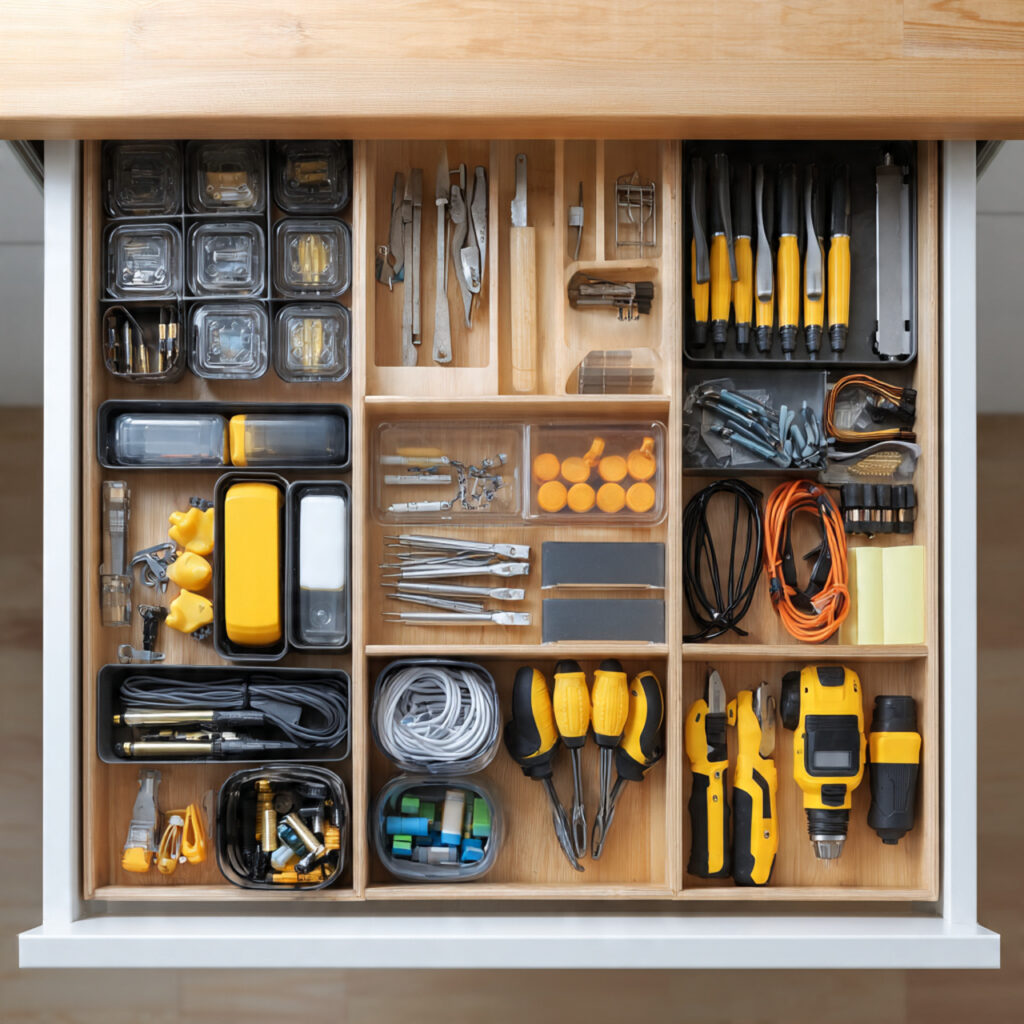
Every home has a junk drawer, or several, and most of them are a source of quiet ongoing frustration. The solution isn’t eliminating the junk drawer entirely (some miscellaneous storage is genuinely needed) but converting it from a dumping ground into a categorized, navigable space.
How to Do It
Empty the drawer completely. Sort the contents into categories: tools, batteries, stationery, takeaway menus, cables. Discard anything broken, expired, or genuinely purposeless. Use small dividers or separate small containers within the drawer to give each category its own zone. The drawer goes from something you dread opening to something you can actually find things in.
Common Mistake
Trying to eliminate the miscellaneous drawer entirely. Forcing everything into a perfectly categorized home creates a system too rigid to maintain. One well-organized miscellaneous drawer is a functional reality. Five junk drawers are a problem.
14. Use Vertical Space in Closets and Cabinets
Why It Works
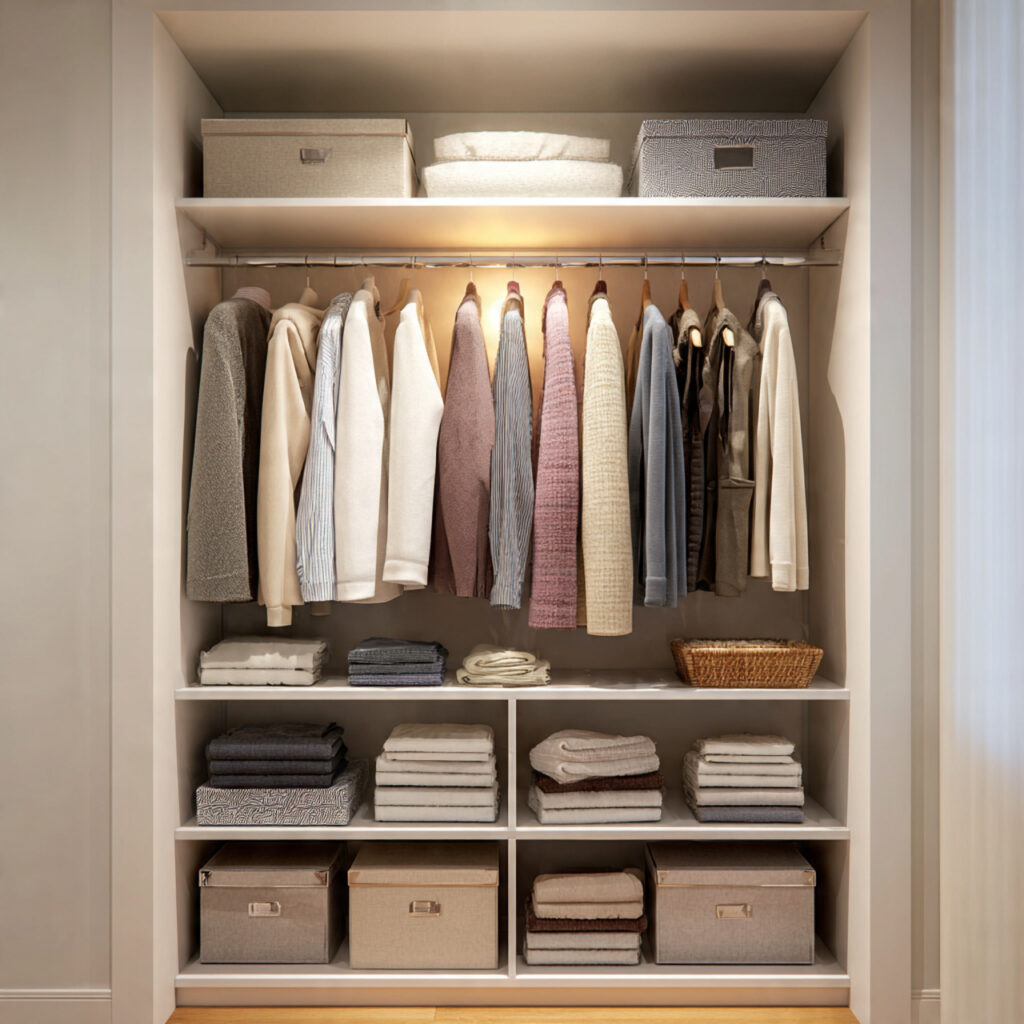
Most storage spaces are used horizontally rather than vertically, items stacked in low piles on single shelves with empty air above them. Using vertical space properly can effectively double the storage capacity of most closets and cabinets without adding any physical space.
How to Do It
Add a second hanging rod in wardrobes where you hang short items, jackets, shirts, folded trousers, and use the space below for a shoe rack or storage boxes. Add shelf risers to kitchen cabinets to create two levels of storage where one existed. Use over-door organizers on pantry, bathroom, and bedroom doors. The height of your spaces is almost always underused.
15. Create a Paper Management System
Why It Works
Paper is one of the most persistent sources of household clutter. Mail, bills, school notes, receipts, instruction manuals, documents, paper accumulates faster than almost any other category and creates visual noise that’s disproportionate to its physical size.
How to Do It
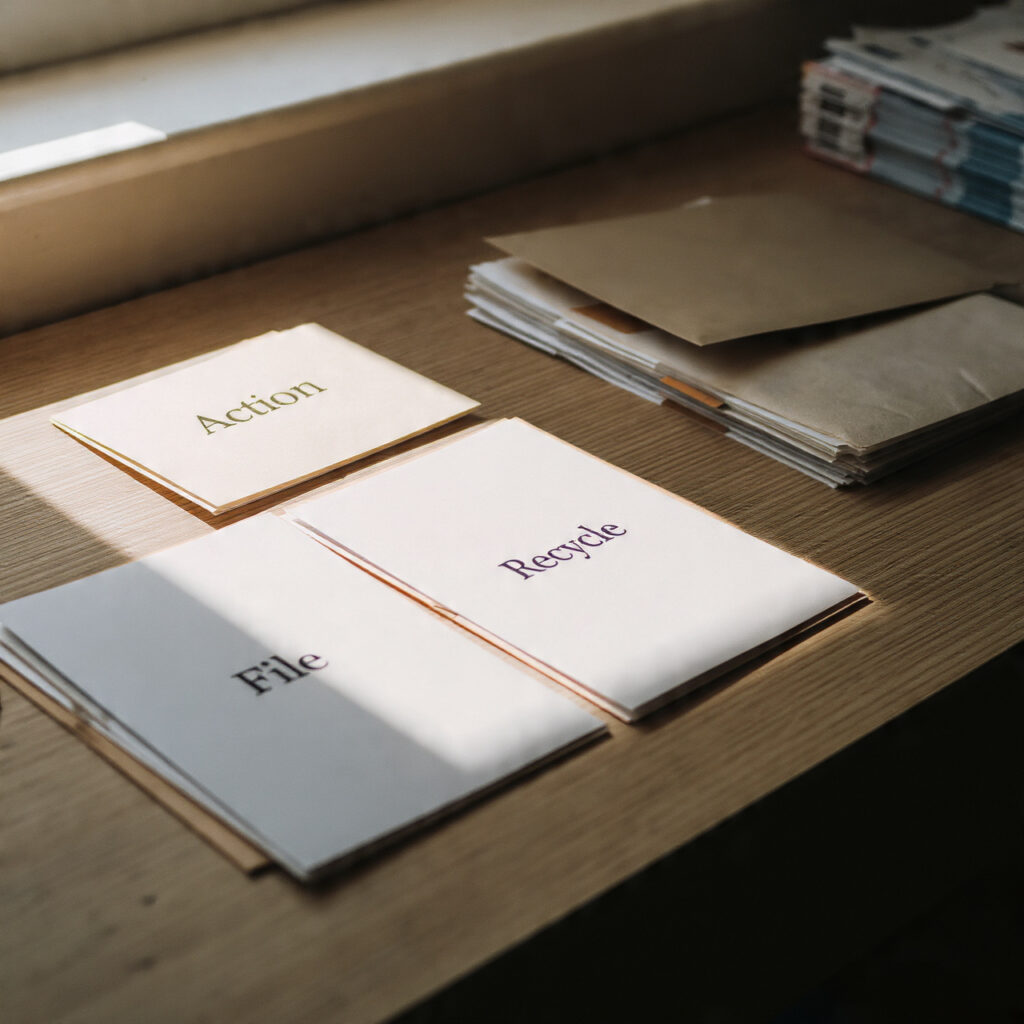
Create a simple three-folder system: Action (things needing a response or action), File (things needing to be kept), and Recycle (everything else). Deal with incoming paper the same day it arrives whenever possible. Go through the Action folder weekly. File whatever needs filing monthly. Recycle anything that doesn’t need to be kept immediately, most paper can be discarded or digitized.
Insider Tip
Most instruction manuals, receipts, and documents that people keep “just in case” can be found online if actually needed. Before filing a piece of paper, ask whether you could find this information online within two minutes if you needed it. If yes, it can go in the recycle folder rather than the file.
These organizational systems make the declutter permanent rather than cyclical, and the ideas ahead cover the spaces and scenarios most people find hardest to tackle.
The Harder Declutters: Ideas for Emotionally Charged Spaces
16. Decluttering Sentimental Items Without Guilt

Why It Works
Sentimental items are the hardest category to declutter because they feel like discarding the memory or the person the item is connected to. But keeping every sentimental item means eventually living in a museum rather than a home, and neither the objects nor the memories they represent are served well by that.
How to Do It
Choose the items that genuinely bring you joy or tell an important story when you look at them. Display or store those intentionally. For the rest, items kept out of obligation or vague guilt rather than genuine feeling, take a photograph before letting go. The photo preserves the memory without requiring the object. The memory lives in you, not in the object.
Insider Tip
Create a “memory box”, one single box per person in the household for irreplaceable sentimental items. When the box is full, nothing new goes in until something comes out. The constraint creates intentionality about what’s actually worth keeping.
17. The Children’s Toy Declutter

Why It Works
Children’s toys multiply at an extraordinary rate, through birthdays, holidays, impulse purchases, and the natural generosity of extended family. Beyond a certain volume, more toys don’t increase a child’s enjoyment, they decrease it, because the overwhelm makes it harder to engage deeply with any single thing.
How to Do It
Involve children in the process wherever age-appropriate. Explain that toys they’ve outgrown or no longer play with will go to other children who don’t have as many. Most children respond well to this framing. For very young children, rotate toys, pack half away and swap every few weeks. The “new” toys reappear with renewed interest.
18. Declutter Your Digital Space Too

Why It Works
Digital clutter, overflowing email inboxes, desktop screenshots, unused apps, photo libraries with thousands of duplicates, creates the same cognitive drain as physical clutter, just in a different context. A digital declutter feels as freeing as a physical one.
How to Do It
Unsubscribe from email lists that you delete without reading. Create a simple folder structure for important documents and file them there. Delete apps you haven’t opened in three months. Back up and organize your photo library. None of these tasks is glamorous, but each one removes a small source of daily low-level friction.
19. The Garage or Storage Area
Why It Works
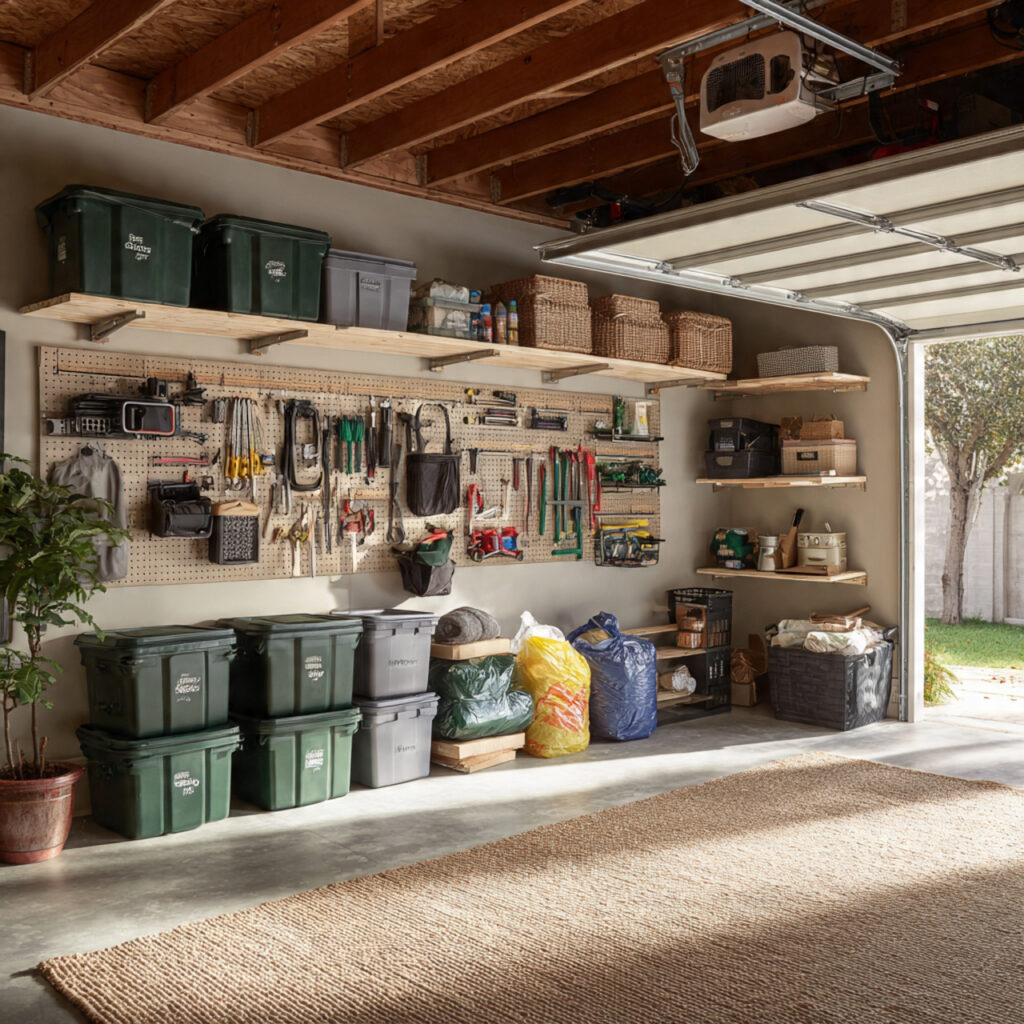
Garages and storage areas often become the final destination for everything that doesn’t fit anywhere else, which means they accumulate the items most likely to be genuinely useful and the items most likely to be completely useless, in roughly equal proportion.
How to Do It
Categorize everything in the garage by type: tools, sports equipment, garden supplies, seasonal items, car supplies. Discard anything broken or unusable. Donate anything in good condition that isn’t used. Store remaining items in clearly labeled bins arranged by category. The goal isn’t a showroom garage, it’s a garage where you can find what you need without excavating.
20. Declutter Your Entryway First for Daily Impact
Why It Works
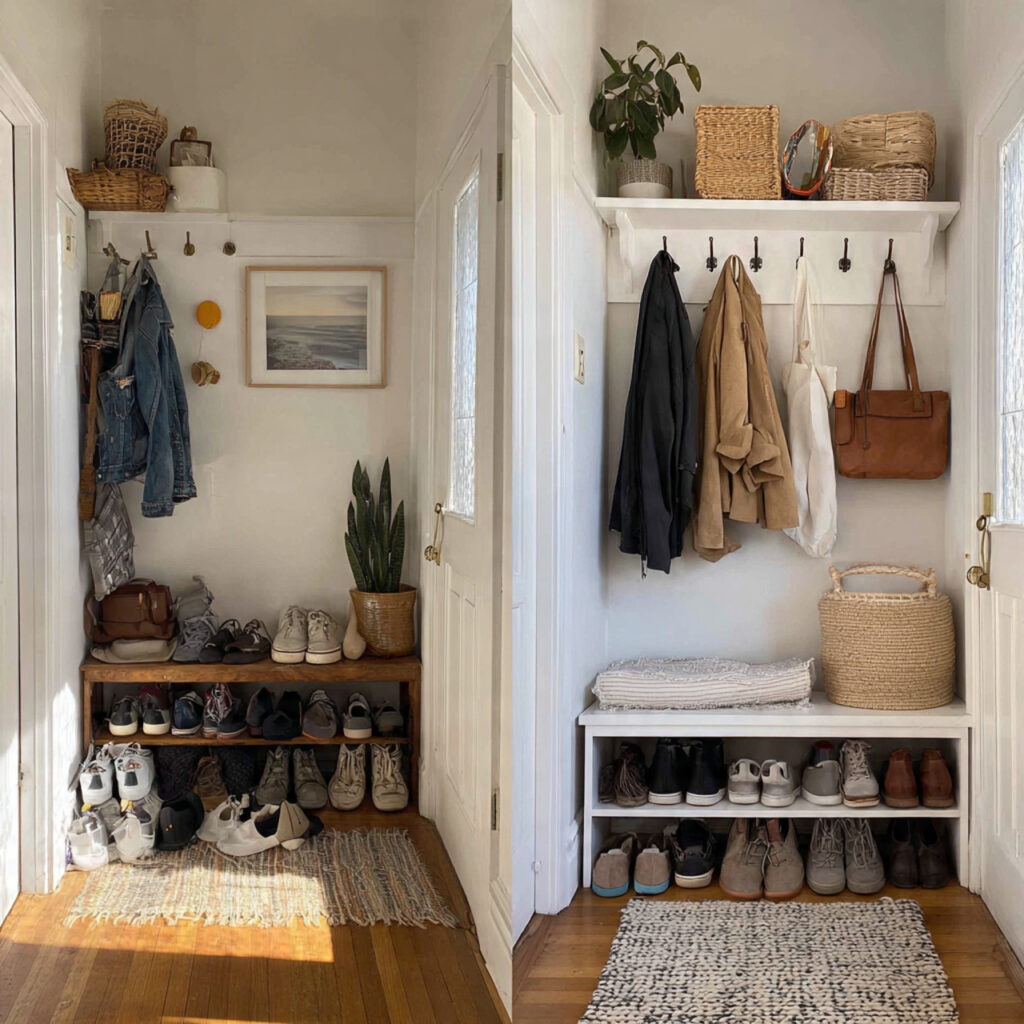
The entryway is the first thing you see when you come home and the last thing you see when you leave. Its energy sets the emotional tone for both of those daily experiences. A cluttered entryway creates low-level stress every single day. A clear, organized one does the opposite.
How to Do It
Remove every item that doesn’t serve a daily purpose. Keep one hook per household member for bags and coats. Add a single tray for keys and daily items. Remove shoes from the floor with a small rack or shoe cabinet that has a defined capacity. Clear the floor entirely. The result of twenty minutes in the entryway pays a daily emotional dividend that compounds over time.
Making It Last: Habits That Keep a Decluttered Home Clear
21. The Daily Five-Minute Reset
Why It Works
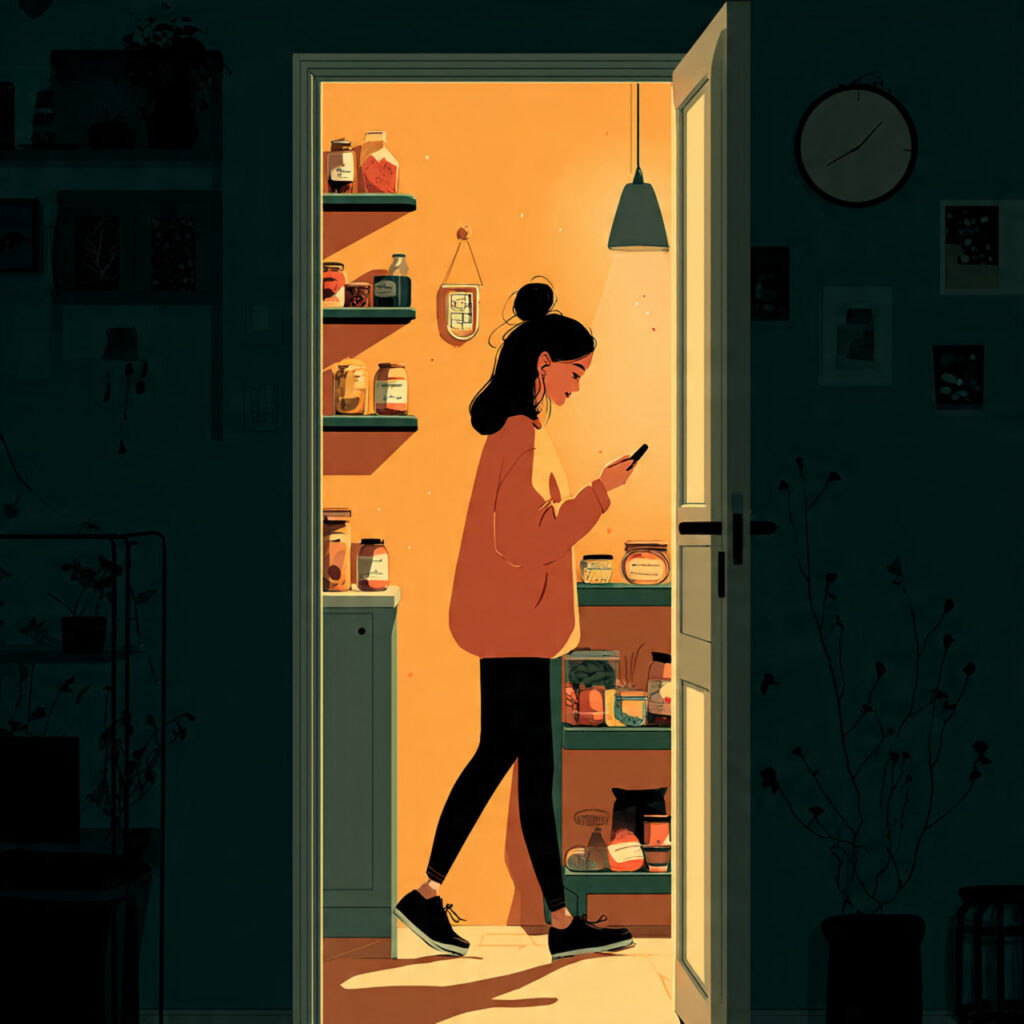
A decluttered home doesn’t stay decluttered without maintenance, but maintenance doesn’t have to be a major effort. Five minutes at the end of each day, returning things to their homes and clearing surfaces, prevents the accumulation that leads to overwhelming clutter.
How to Do It
Set a timer for five minutes each evening before bed. Walk through each room and return misplaced items to their homes. Clear any surfaces that have gathered items during the day. The timer prevents the reset from expanding into a cleaning session. Five minutes, every day, keeps the system intact indefinitely.
22. The Sunday Reset as a Weekly Ritual

Why It Works
A weekly reset, more thorough than the daily five minutes, handles anything that accumulated during the week and sets the home up for a fresh start to the new week. People who do this consistently report feeling more organized and less stressed on Monday mornings.
How to Do It
Set aside twenty to thirty minutes on Sunday, or whatever day marks the end of your week. Deal with paper that’s piled up. Return items to their homes throughout the house. Do a quick surface wipe in the kitchen and bathroom. Check the landing zone for things that need to be acted on. The consistency of a weekly rhythm is what makes it feel manageable rather than reactive.
23. Shop Intentionally to Prevent Re-Cluttering

Why It Works
The most effective long-term decluttering habit isn’t clearing things out, it’s being more intentional about what comes in. Most household clutter doesn’t arrive all at once in dramatic ways. It arrives in slow accumulation: impulse purchases, things bought “just in case,” duplicates, things that seemed useful in the store and never got used at home.
How to Do It
Before purchasing any non-essential item, apply a waiting period. For items under thirty dollars, wait 24 hours. For items over thirty dollars, wait a week. Most impulse purchase desires fade entirely within this window. What remains is genuine need, and genuine need is worth buying for. This single habit reduces incoming clutter dramatically over time.
24. Create a Donation Station

Why It Works
One of the reasons decluttered items end up back in the home is that there’s no clear, easy path out for them. A permanent donation station removes this friction point entirely.
How to Do It
Keep a bag or box in a consistent, accessible location, a cupboard near the front door, the boot of your car, a shelf in a spare room. Whenever you come across something you no longer need during normal daily life, a book you’ve finished and won’t reread, a kitchen item you replaced, a piece of clothing that doesn’t fit, it goes directly into the donation station. When the box or bag is full, it goes to the donation point. No delay, no second-guessing, no pile forming.
25. Celebrate Progress Instead of Chasing Perfection

Why It Works
The biggest reason people give up on decluttering is that they measure success against an imaginary perfect home rather than against where they started. A cleared junk drawer that’s now organized is a genuine win, even if the garage is still a work in progress. Celebrating actual progress maintains the motivation to continue.
How to Do It
Go back to those before-and-after photos. Look at them regularly. Acknowledge what you’ve accomplished, not just what remains. Tell someone about the progress you’ve made — the act of sharing it makes it feel more real and more worth protecting. And when clutter builds back up in an area you’ve already cleared, return to it without self-judgment. Decluttering isn’t a destination. It’s a practice.
Insider Tip
Track your donations as you go, not just what you cleared, but what you gave away. Knowing that 47 items went to people who actually need them transforms the process from loss into generosity. That reframe makes every future declutter easier.
The Home You Want Is Waiting Underneath the Clutter
Here’s what all of this comes down to: the calm, clear, spacious feeling you’re looking for in your home isn’t created by buying better things. It’s created by releasing what no longer belongs.
The things you’re holding onto out of guilt, habit, or “just in case” are not serving you. They’re taking up physical space, mental bandwidth, and the quiet daily energy you could be spending on anything else.
You don’t need a perfect home. You need a home that feels like yours, clear enough to breathe in, organized enough to function without friction, and beautiful enough to feel like a genuine place of rest.
That home is available to you. It’s under the pile on the counter and behind the overfull wardrobe door and inside the junk drawer that won’t quite close. It’s been there all along.
Start with one drawer, one shelf, one twenty-minute timer. The rest unfolds from there.
Because a decluttered home isn’t just a tidier space, it’s a quieter mind, and that’s worth every bag you let go of.