26 Summer Chalkboard Ideas That Add a Fun, Creative Touch to Your Home Try These Cute Designs Today

There’s something quietly magical about a chalkboard in a home. It sits there on the wall or propped on the counter, a small black rectangle of pure possibility, and then someone picks up a piece of chalk and suddenly the kitchen has a personality, the entryway has something to say, and the whole house feels a little more alive and a little more like the people who live in it.
Summer is the absolute best season for chalkboard art. The themes are irresistible, sunflowers and sunshine, beach quotes and lemonade, watermelons and ice cream cones and all the things that make warm days feel worth celebrating. And the best part? You don’t need to be an artist to create something beautiful.
Summer chalkboard ideas have become one of the most beloved home decor projects across the US, Canada, the UK, and Australia, because they’re seasonal, personal, affordable, and completely changeable. Interior stylists consistently note that chalkboards are among the most versatile and most customizable home decor elements available: one surface, infinite possibilities, and the freedom to start over any time inspiration strikes. Whether you have beautiful lettering skills or draw stick figures and call it character, there’s a summer chalkboard idea here that’s genuinely perfect for you.
Why Summer Chalkboard Art Is Worth Your Time
The Beauty of Impermanence
There’s a particular freedom in creating something you know you’ll eventually erase. Unlike wall art or framed prints, chalkboard designs aren’t permanent decisions, they’re seasonal expressions, changed with the weather, the mood, and the moment. Summer chalkboard art celebrates the abundance of the season while it’s here, and when September arrives, you simply wipe it clean and start something new.
This impermanence is what makes chalkboard art so approachable. Every design you create doesn’t need to be your best work, it just needs to be today’s work. And tomorrow you can try something different.
Also Read: https://myhavenvibes.com/mermaid-home-decor/
What You Actually Need
Before the ideas: a clean chalkboard (new boards benefit from being seasoned, rub chalk over the entire surface, then erase, before drawing on them for the first time), quality chalk or chalk markers in white and any summer colors, a small damp cloth for corrections and erasing, and a reference image if you’re working from one. That’s genuinely all. The rest is in the ideas ahead.
Summer Quote and Lettering Chalkboard Ideas
Words are the most powerful and most personal chalkboard content. These ideas use summer’s best phrases beautifully.
1. “Hello, Summer” Welcome Design
Why It Works
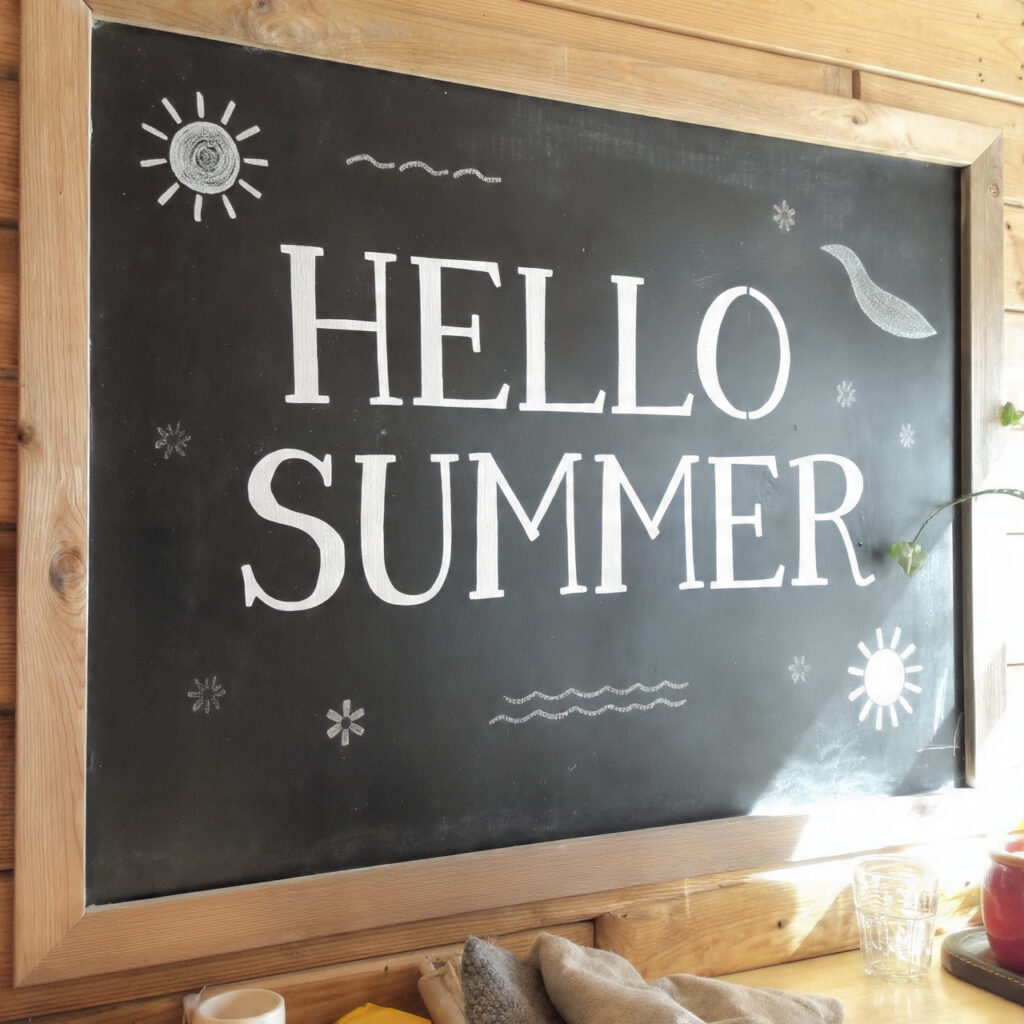
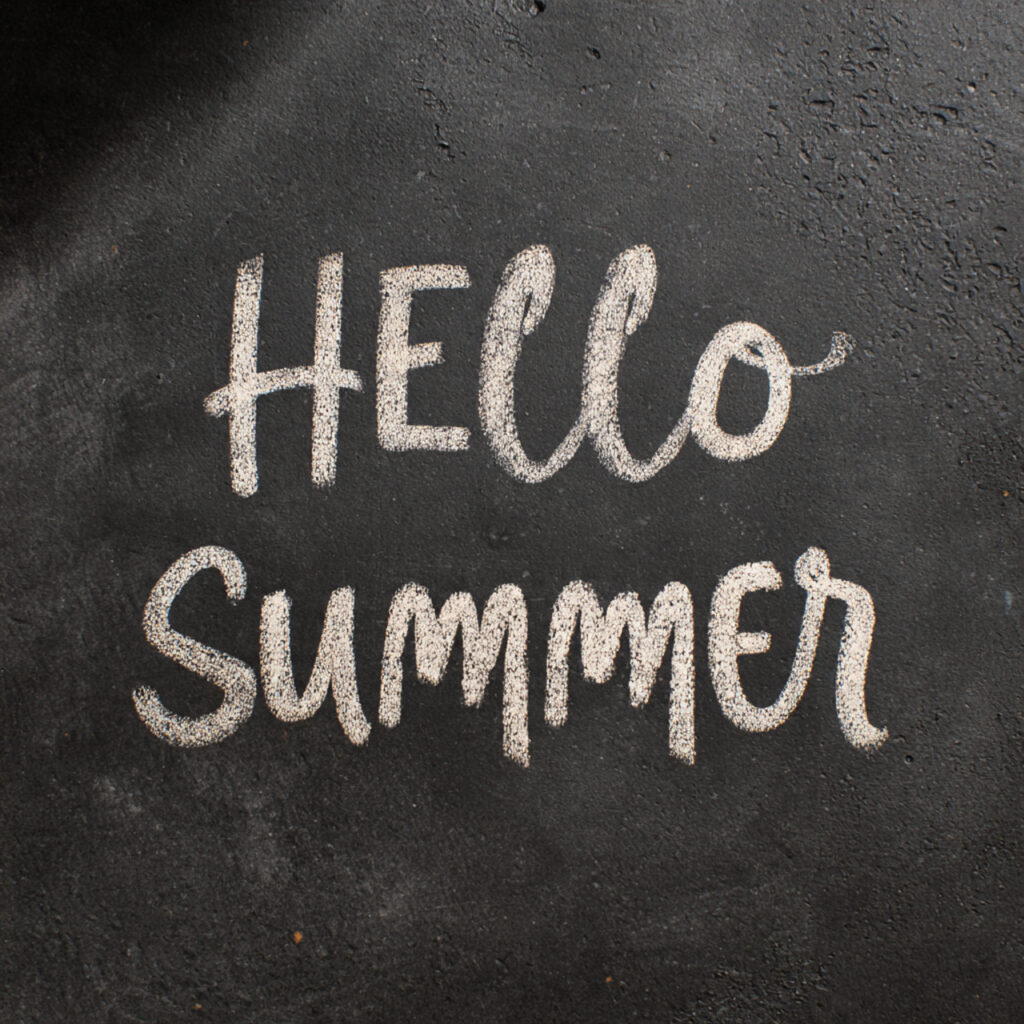
A simple “Hello, Summer” design, the word HELLO in large block letters on one line, SUMMER in larger, more decorative letters below, is the most universally loved seasonal chalkboard greeting. It communicates the season’s arrival with warmth and directness and works in any room from the kitchen to the entryway to a front porch.
How to Create It
Lightly sketch the letter placement with a soft chalk pencil first. Write HELLO in clean capital letters with consistent spacing. Write SUMMER below in larger letters, using a different style, if HELLO is printed, make SUMMER more flowing or italic. Add simple seasonal elements around the text: a small sun in one corner, a few daisies along the bottom, a simple wave line beneath SUMMER.
Common Mistake
Centering the text imprecisely and ending up with one word noticeably off-center. Fold a piece of paper to the board’s width, crease the center, and use that crease as a vertical guide before writing. This single step makes lettering look genuinely professional.
Read More: https://myhavenvibes.com/summer-mantel-decor/
2. A Summer Quote in Script Lettering
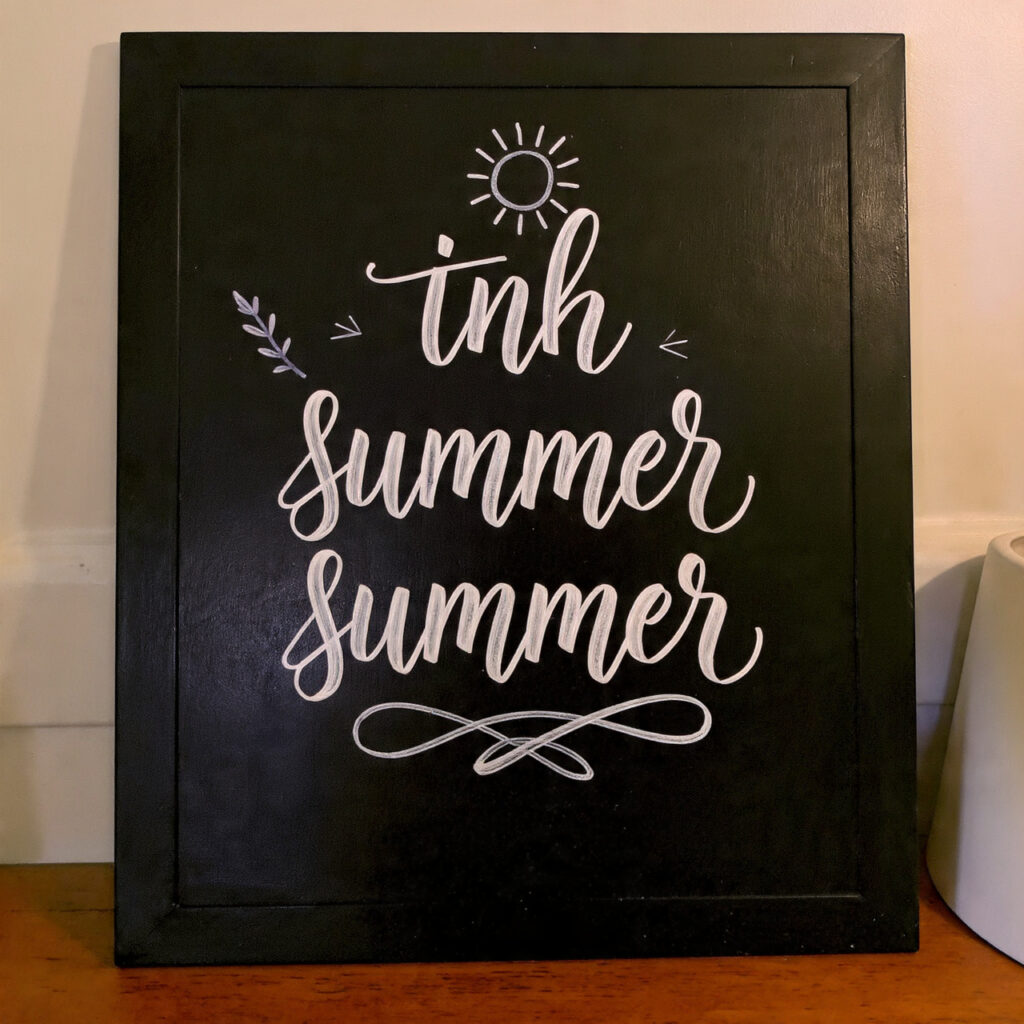
Why It Works
A meaningful summer quote written entirely in a flowing script across the chalkboard creates one of the most beautiful and most sharable chalkboard designs. The script letter style has a romantic, handwritten quality that photographs particularly well.
Summer Quote Options
“Life is better at the beach.” “Sunshine is the best medicine.” “Make today so beautiful it hurts to think about yesterday.” “Sandy toes, sunkissed nose.” “Every summer has its own story.” Choose a quote that feels genuinely meaningful rather than defaulting to the most common one.
How to Practice Script Lettering
If script lettering is new to you, practice on paper first with a chalk pencil, focusing on the consistent direction of your stroke and the rhythm of connecting letters. The connection between letters is the key quality that makes the script look intentional, each letter should flow into the next without lifting the chalk completely.
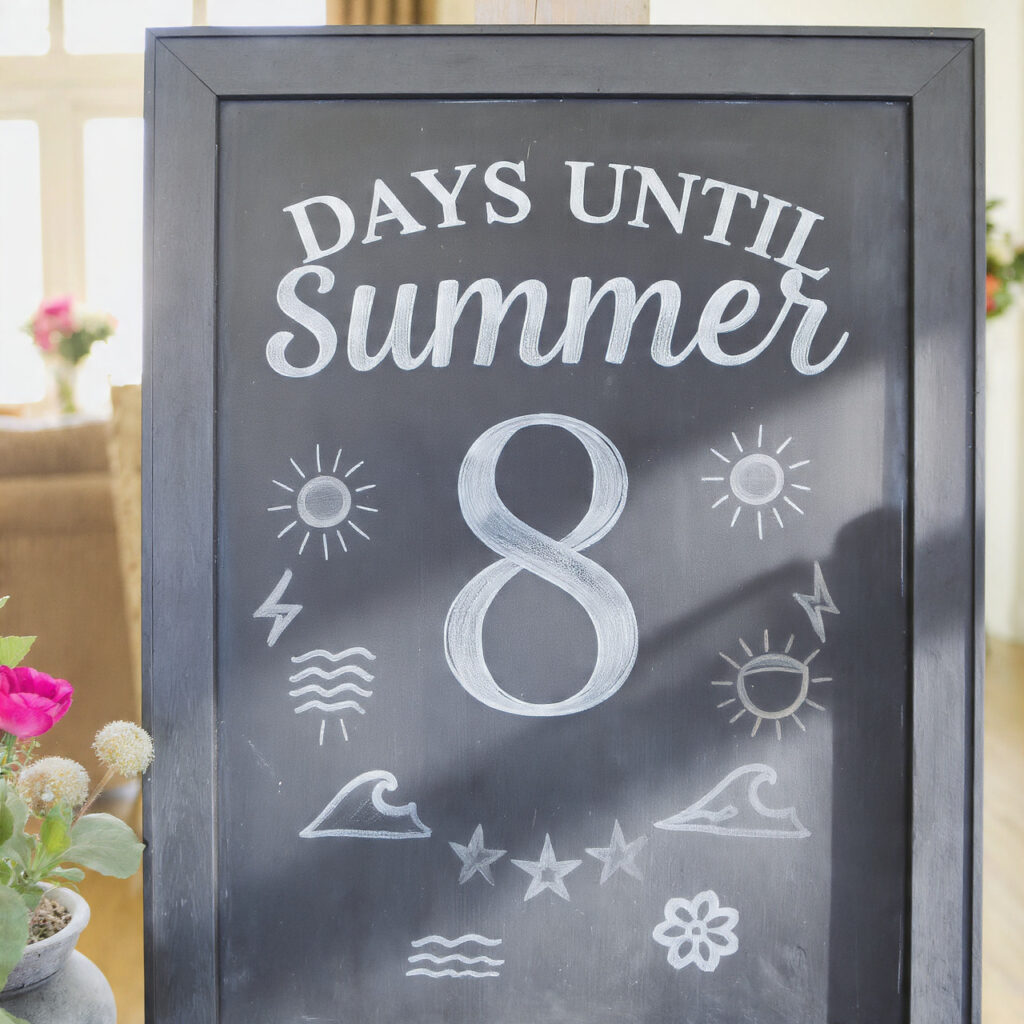
3. A Summer Countdown Board
Why It Works
A chalkboard countdown, “X days until summer!” or “X days until vacation!”, creates interactive, anticipatory energy in a family home that changes daily and gives children a tangible way to track the approach of something exciting.
How to Design It
Create a permanent frame and structure, a large number placeholder in the center, the surrounding text in consistent lettering, and decorative seasonal elements around the border that stays in place. Each morning, erase only the number and write the new countdown figure. The structure remains; only the number changes.
Insider Tip
Use a chalk marker (rather than standard chalk) for all the permanent structural elements and standard chalk for the changeable number. The chalk marker won’t smudge when the number area is erased, keeping the design looking clean and intentional throughout the countdown.
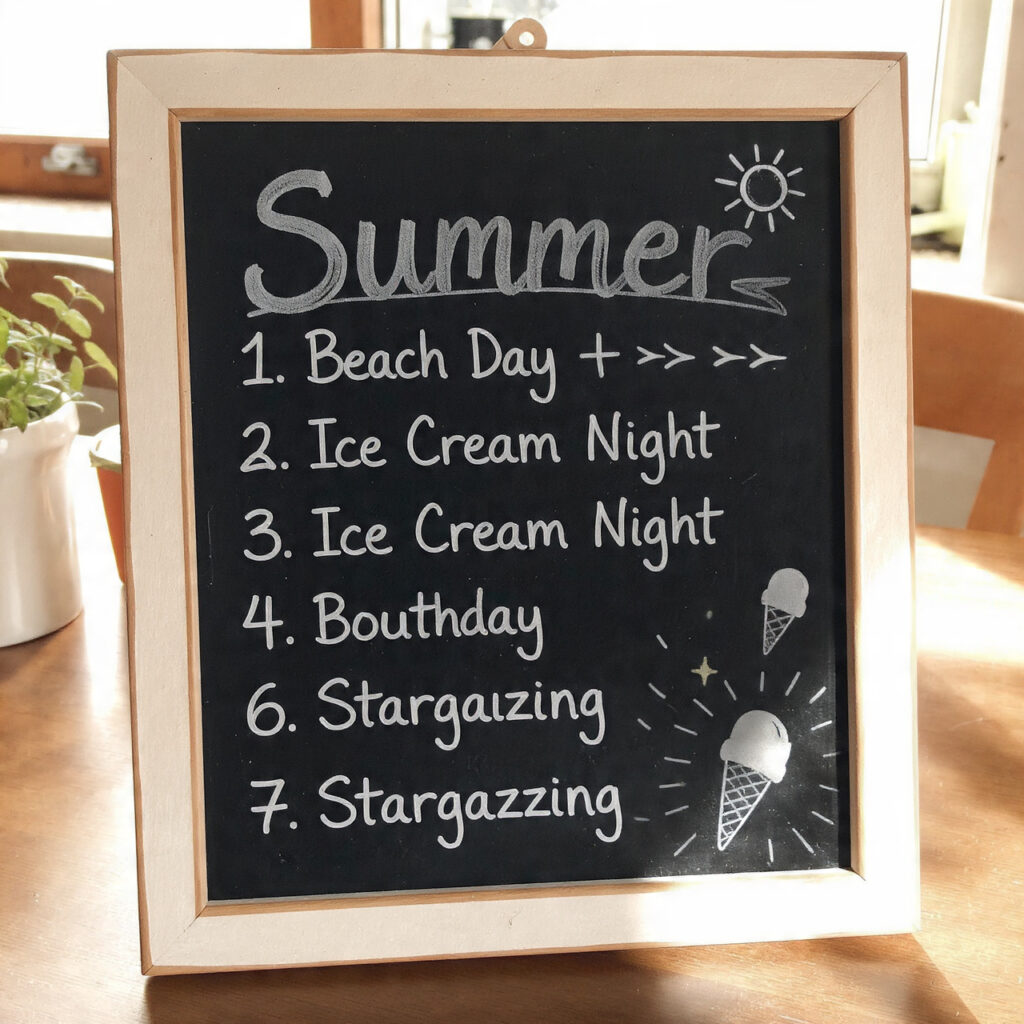
4. A Weekly Summer Activity Board
Why It Works
A chalkboard divided into sections, one per day of the week, with summer activities written in each (beach day, ice cream run, backyard movie night, farmers market morning) creates a family activity planner that’s also a beautiful seasonal decoration. It makes the summer feel curated and intentional rather than letting the weeks slip by unnoticed.
How to Design It
Rule light horizontal lines dividing the board into seven sections. Write the days of the week on the left side in a consistent small script. Use the remaining space for the activity. A simple decorative border, small suns, stars, or waves, around the edge frames the functional content beautifully.
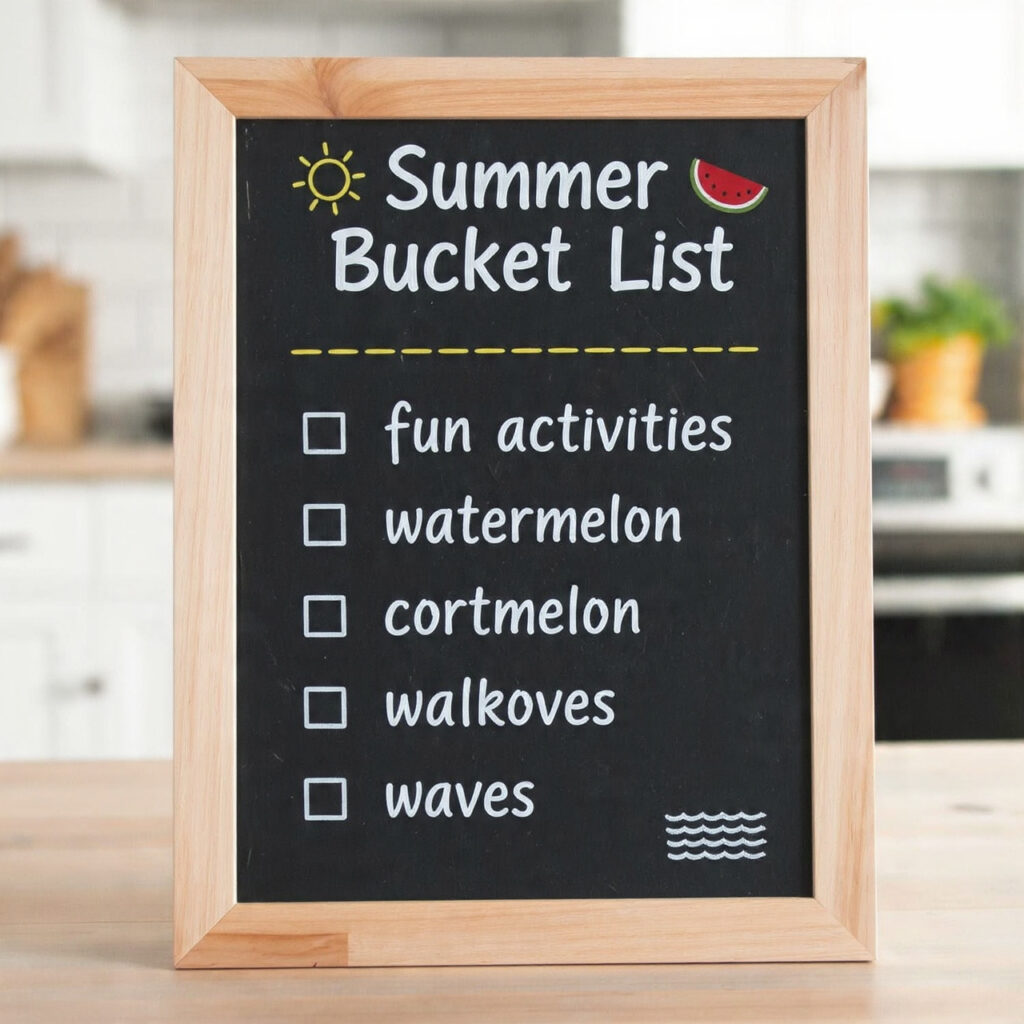
5. A Summer Bucket List Chalkboard
Why It Works
A “Summer Bucket List” chalkboard, with checkboxes beside each activity to tick off as the summer progresses, is one of the most emotionally satisfying seasonal chalkboard designs. It turns the season into an adventure and makes even ordinary summer activities feel deliberately chosen and worth celebrating.
How to Create It
Write “Summer Bucket List” in a combination of print and script at the top. Below, create a list of activities with small square or circle checkboxes to the left of each item. Activities can range from ambitious (road trip to the coast) to wonderfully simple (eat ice cream before noon, watch a thunderstorm from the porch). As each is completed, check it off with chalk, the gradual filling of checkboxes is its own kind of satisfaction.
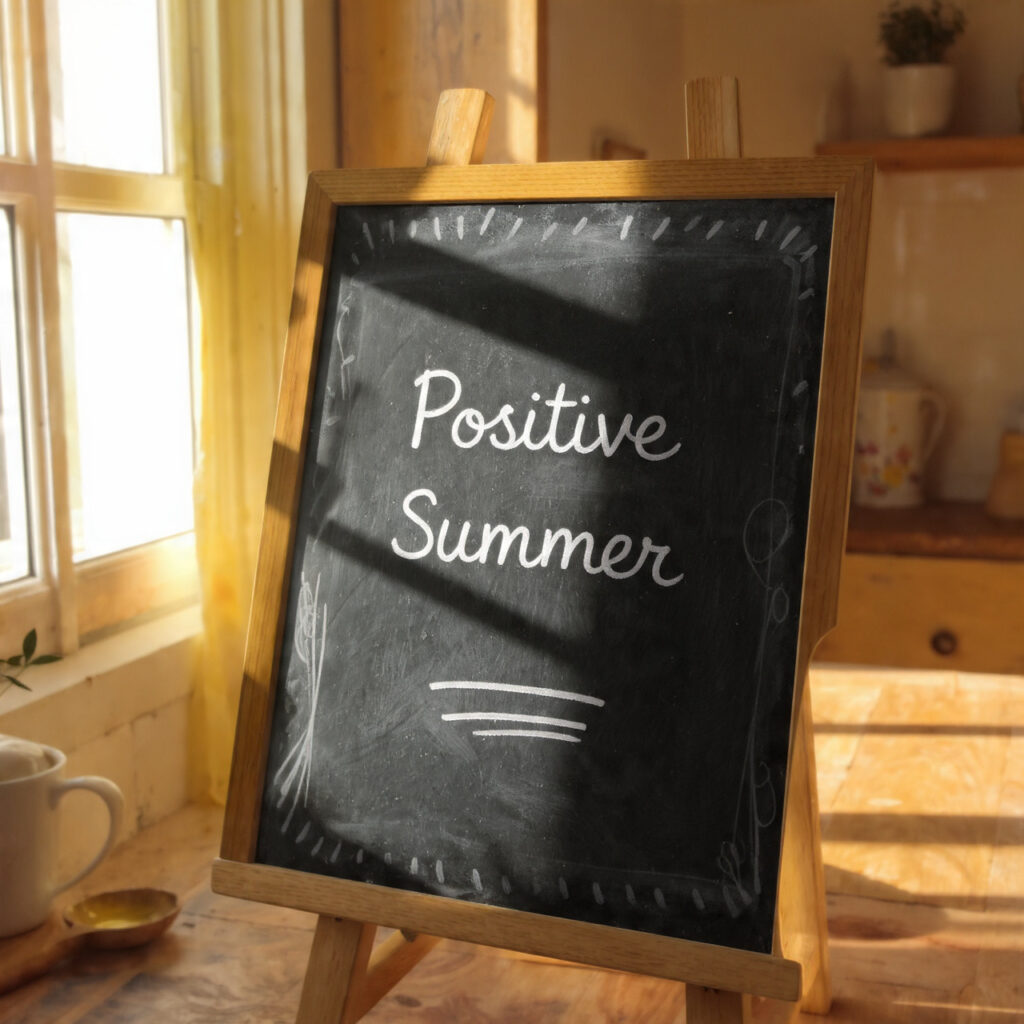
6. A Morning Affirmation or Daily Quote Board
Why It Works
A chalkboard in the kitchen or entryway with a new summer affirmation or seasonal quote written each morning creates a small but genuine daily ritual that sets a positive tone. “Today is going to be a beautiful day.” “The sun is shining. So are you.” Simple, warm, intentional.
How to Do It
Keep a list of your favorite summer affirmations and quotes in a notebook or phone. Each morning, wipe the previous day’s message and write a new one in two minutes flat. The daily change keeps the chalkboard feeling alive and prevents it from becoming invisible through familiarity.
This is a perfect moment to save your favorite ideas from this section, the illustrated and decorative designs ahead are where the chalkboard becomes genuinely visual and full of summer character.
Illustrated Summer Chalkboard Ideas
You don’t need to be an artist for these, just willing to try.
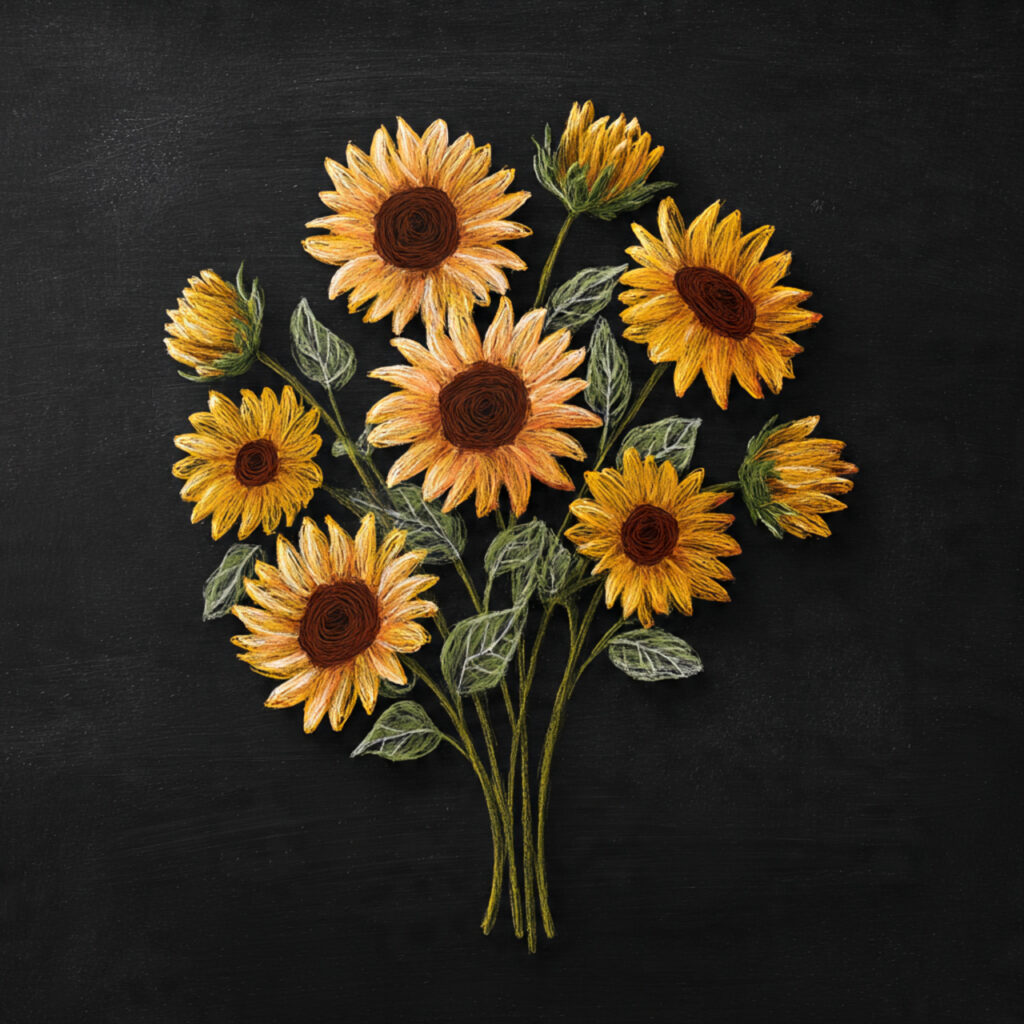
7. A Sunflower Bouquet Design
Why It Works
Sunflowers are one of the most recognizable and most joyful summer flowers, and they translate beautifully to chalkboard art, the bold, circular flower heads and strong stems are achievable even for those who don’t consider themselves artists.
How to Draw It
Start with a circular center, just a rough oval works. Draw petals around the center in a simple elongated leaf shape, all pointing outward. Draw the stem, two roughly parallel lines, and a few simple leaves. Multiple sunflowers of different heights create a bouquet rather than a single flower. Shade the center with crosshatching. Add “Summer” or a quote above or below the bouquet.
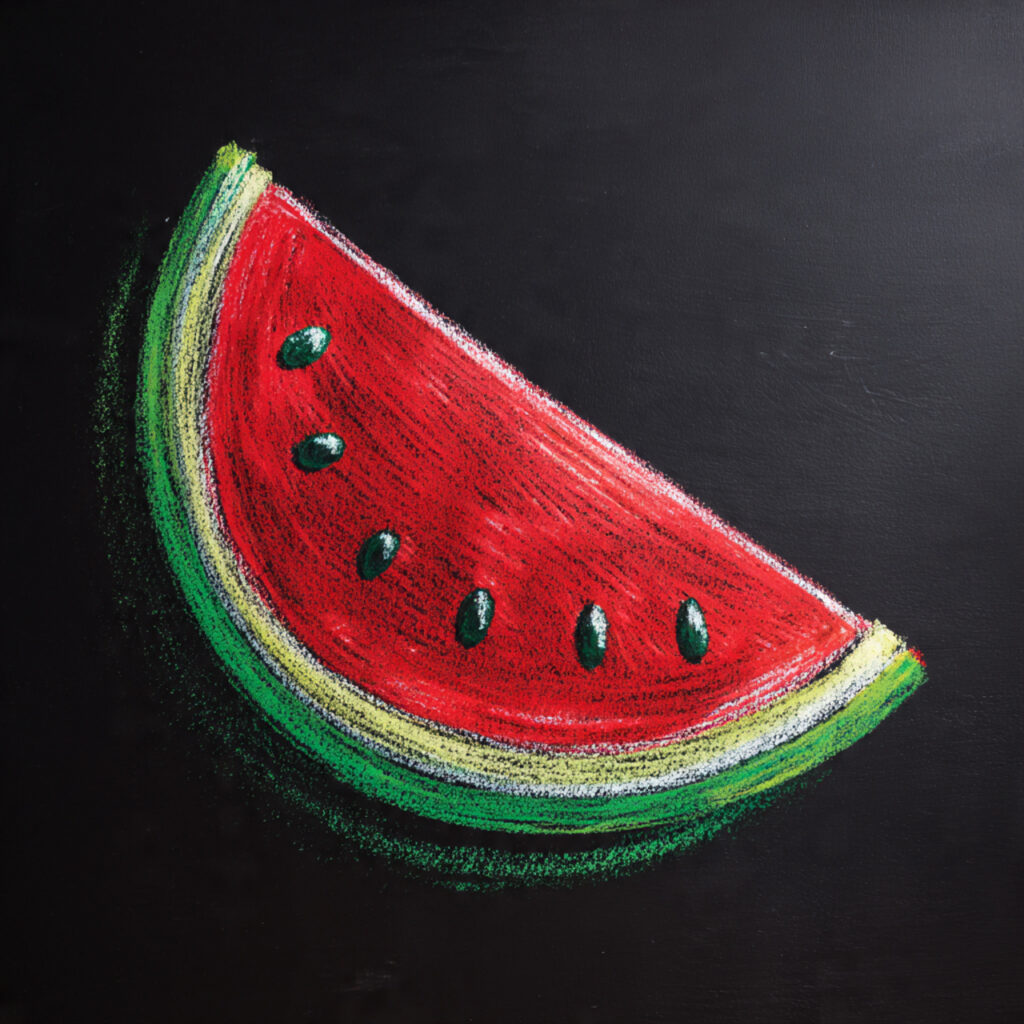
8. Watermelon Slice Art
Why It Works
A large watermelon slice, bold, graphic, immediately recognizable, is one of the most popular and most loved summer chalkboard motifs. Its simple shape, bright color potential with colored chalk markers, and unmistakable summer quality make it a perfect centerpiece design.
How to Create It
Draw a large semicircle for the watermelon slice outline. Add a slightly smaller inner semicircle approximately one inch inside the first to create the rind. Fill the outer ring with a lighter tone (the white/green rind) and the inner area with red or pink chalk marker. Add small oval seeds scattered through the inner area. The design is bold, cheerful, and genuinely easy.
Common Mistake
Making the watermelon slice too small relative to the board. Watermelon art works best as a large, bold, confident design, a tiny watermelon slice on a large board looks lost and uncertain. Let the design fill at least two-thirds of the board surface.
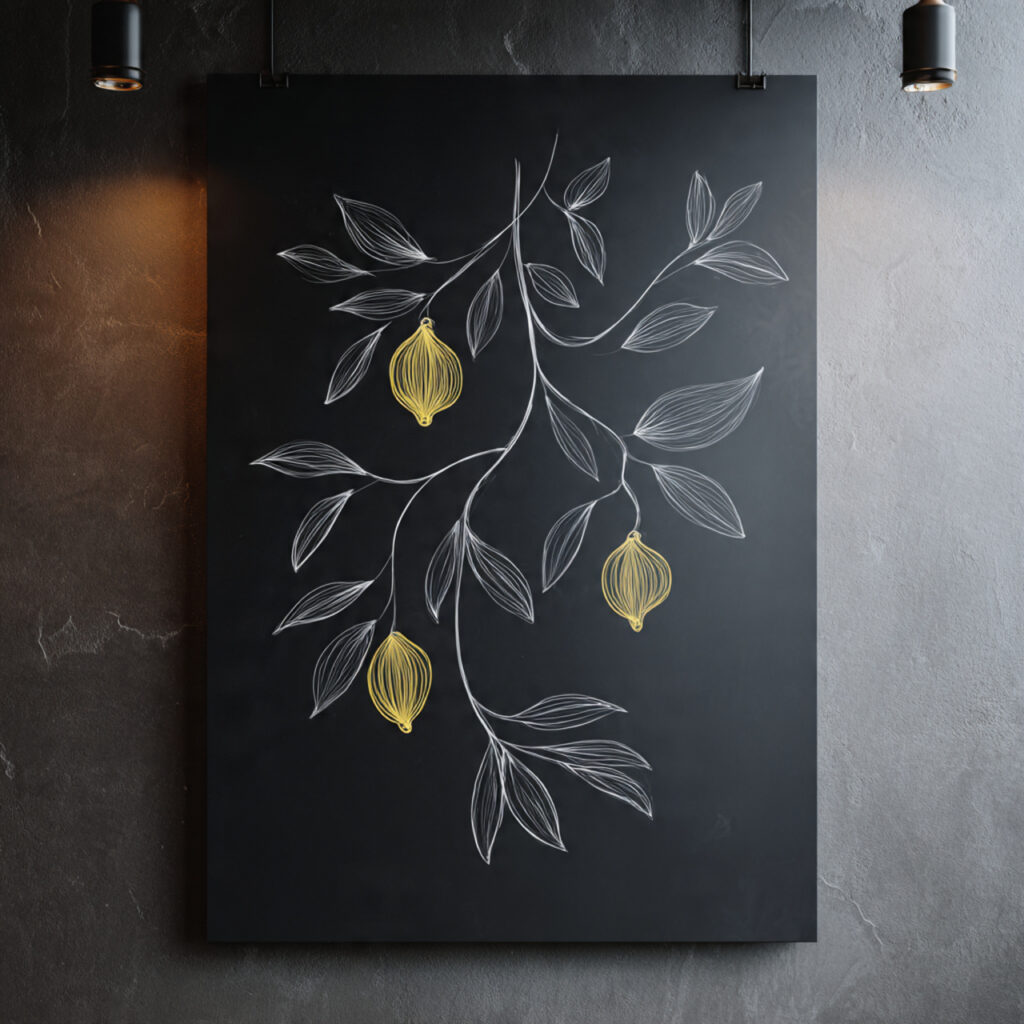
9. A Lemon Branch or Citrus Design
Why It Works
A lemon or citrus branch, clean, botanical, graphic, is one of the most elegant summer chalkboard designs available. Unlike the more casual watermelon or ice cream designs, a well-executed citrus branch has a quality that looks genuinely artistic.
How to Draw It
Draw a branching stem, irregular, naturally curved, with smaller branches extending from the main one. At the end of each branch, draw a simple leaf (elongated oval with a central vein line) and a lemon or lime (oval shape, slightly pointed at one end). The botanical arrangement should feel organic rather than perfectly symmetrical.
10. An Ice Cream Design

Why It Works
Ice cream art, a cone with two or three stacked scoops, each in a different implied color (if using only white chalk, texture each scoop differently for differentiation), is joyful, recognizable, and completely irresistible. It’s also one of the most beginner-friendly chalkboard illustrations.
How to Create It
Draw the cone first: two lines meeting at a point at the bottom, with a curved top edge. Add crosshatch lines across the cone for the waffle texture. Draw the first scoop as a rough circle sitting in the cone opening. Stack two increasingly smaller rough circles above the first. Add simple decorative touches, a cherry on top, drips running down the cone, sprinkles scattered around the design.
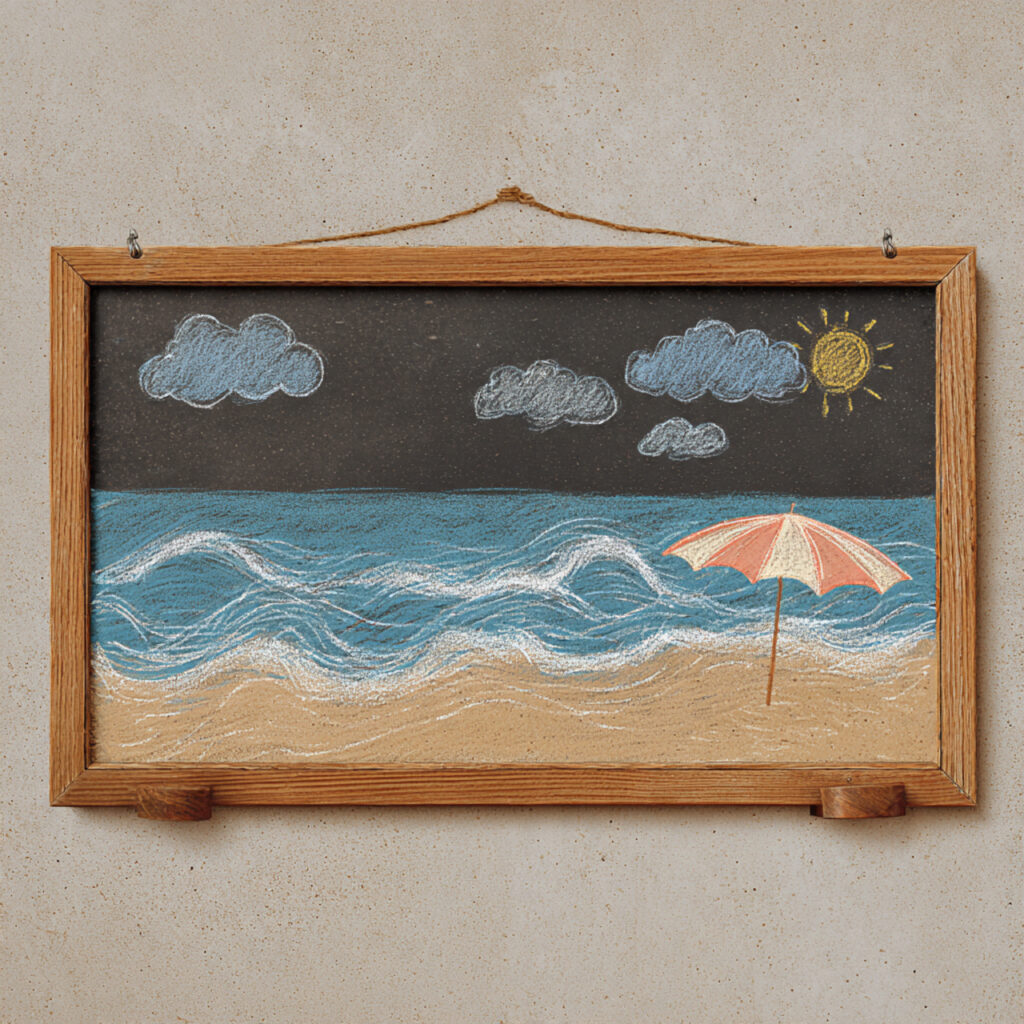
11. A Beach Scene Panorama
Why It Works
A simple beach scene, sun and clouds in the upper section, ocean waves in the middle, beach with shells and an umbrella below, creates a full chalkboard illustration that turns the board into a summer landscape. It requires more time than the simple motif designs but produces one of the most impressive results.
How to Build It
Work in horizontal zones. Upper zone: a simple sun (circle with radiating lines) in one corner, a few simple cloud shapes. Middle zone: a wavy horizontal line for the ocean surface, with simple wave lines below. Lower zone: a flat horizon line for the beach, a simple beach umbrella (stick with a half-circle top), and scattered shell shapes. The layered approach makes the composition feel complete.
12. A Sunflower Wreath Frame

Why It Works
A wreath of flowers and botanicals drawn around the border of the chalkboard, framing whatever text or design sits in the center, creates one of the most universally beautiful and most versatile chalkboard compositions. The wreath frame is a visual system that works with almost any central content.
How to Draw It
Work around the perimeter of the board, alternating simple flowers (five petals, round center), leaf sprigs (a stem with small oval leaves), and simple daisy shapes. Don’t worry about perfect symmetry, natural-looking wreaths have some variation. Connect the elements with small curling vines or simple dot accents. The frame creates the composition; the center is then free for any text or motif.
13. A Flamingo Design

Why It Works
A flamingo, the quintessential summer tropical motif, is a striking and elegant chalkboard subject. One large flamingo or a pair of flamingos creates an immediately seasonal, playful statement.
How to Draw One
Draw the neck first, a long, curved S-shape that ends in the head (a small oval with a slightly bent beak). Draw the body below the neck, a large oval or rounded triangle. Add one long leg extending from the body with a bent knee joint and simple foot. Add the wing detail, a curved line along the body edge. The flamingo’s distinctive posture (one leg tucked, long curving neck) is what makes it immediately recognizable, so focus on getting the silhouette right rather than the fine details.
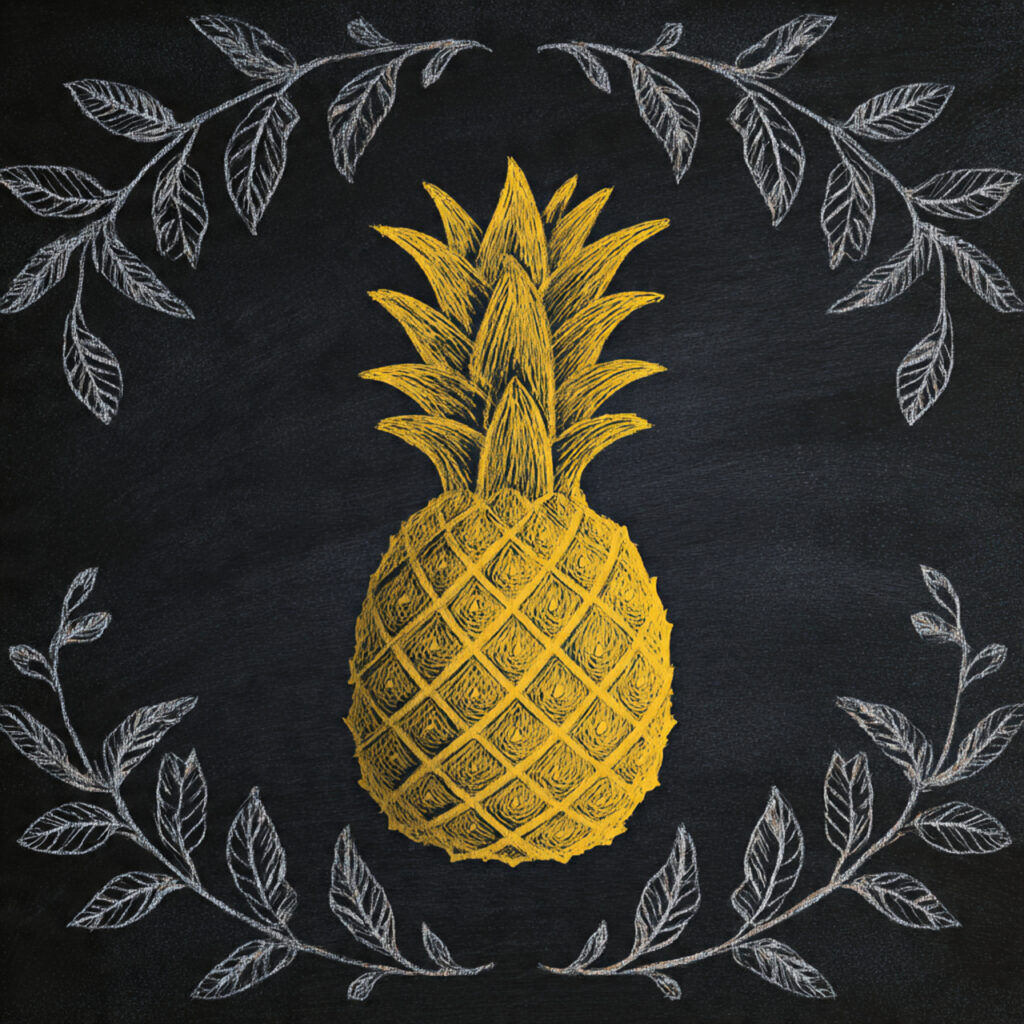
14. A Pineapple Illustration
Why It Works
A pineapple, tall, architectural, immediately tropical, is one of the most graphically interesting summer chalkboard subjects. Its distinctive texture and crown of spiky leaves create a naturally decorative illustration.
How to Create It
Draw the body first, a tall oval or teardrop shape. Add the crosshatch pattern across the body surface, lines going diagonally in two directions create the diamond pattern of pineapple skin. Draw the crown above, irregular, spiky leaf shapes of different heights shooting upward from the top of the body. The pineapple works beautifully as a standalone large illustration or repeated as a pattern across a smaller board.
These illustrated ideas create genuinely beautiful visual chalkboard moments. The practical and functional chalkboard ideas ahead are just as beautiful, and serve the everyday life of a home simultaneously.
Functional Summer Chalkboard Ideas
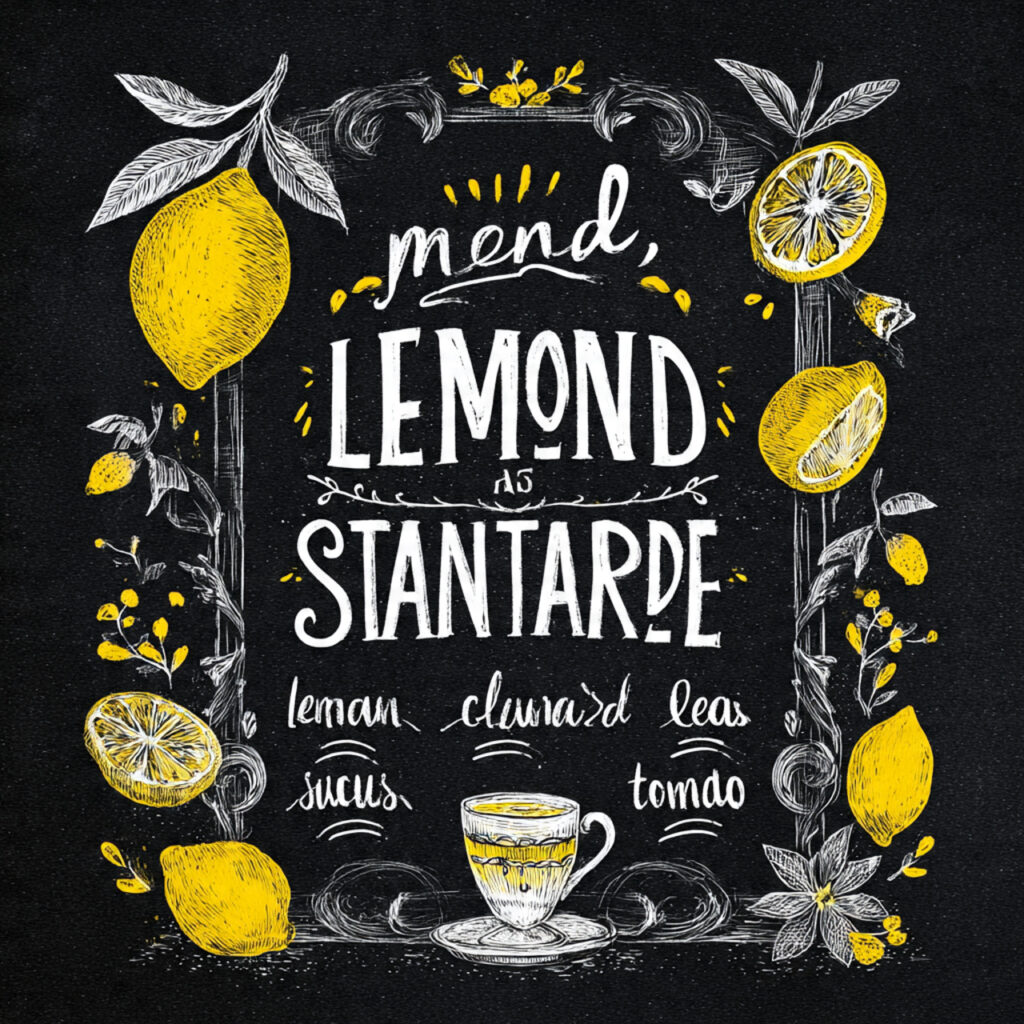
15. A Lemonade Stand Menu Board
Why It Works
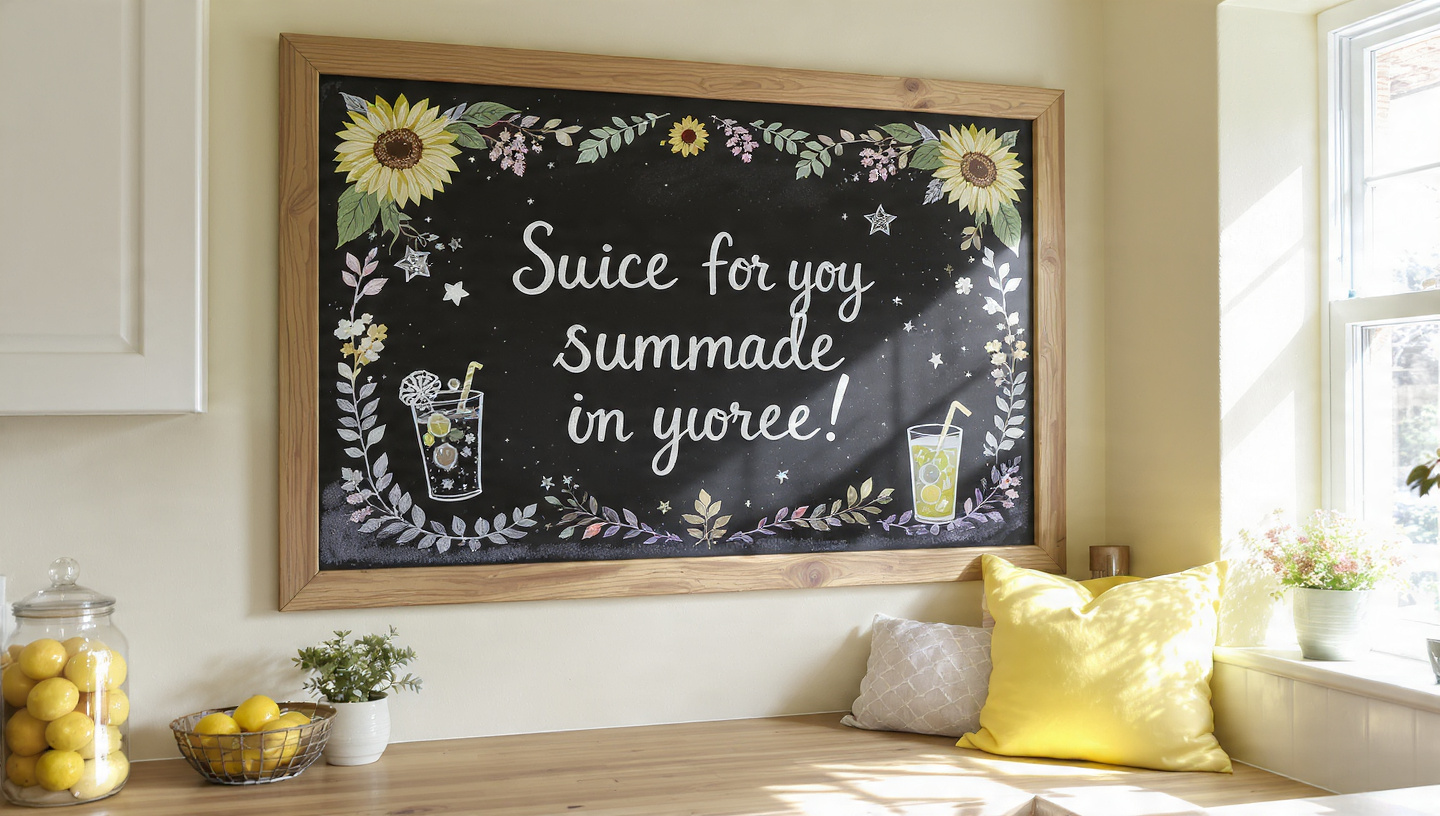
A chalkboard formatted as a lemonade stand menu, with hand-lettered beverage names, simple illustrations, and prices, creates one of the most charming summer home details for families with children. Whether the lemonade stand is real or simply a kitchen decoration, the menu board is completely delightful.
How to Design It
Create a simple heading in large letters: “LEMONADE STAND” or “SUMMER DRINKS.” Below, list offerings: Classic Lemonade, Strawberry Lemonade, Mint Lemonade, Sweet Iced Tea. Add simple lemon slices or glass illustrations beside each item. Include a tagline at the bottom, “Open All Summer” or “Because Summer.”
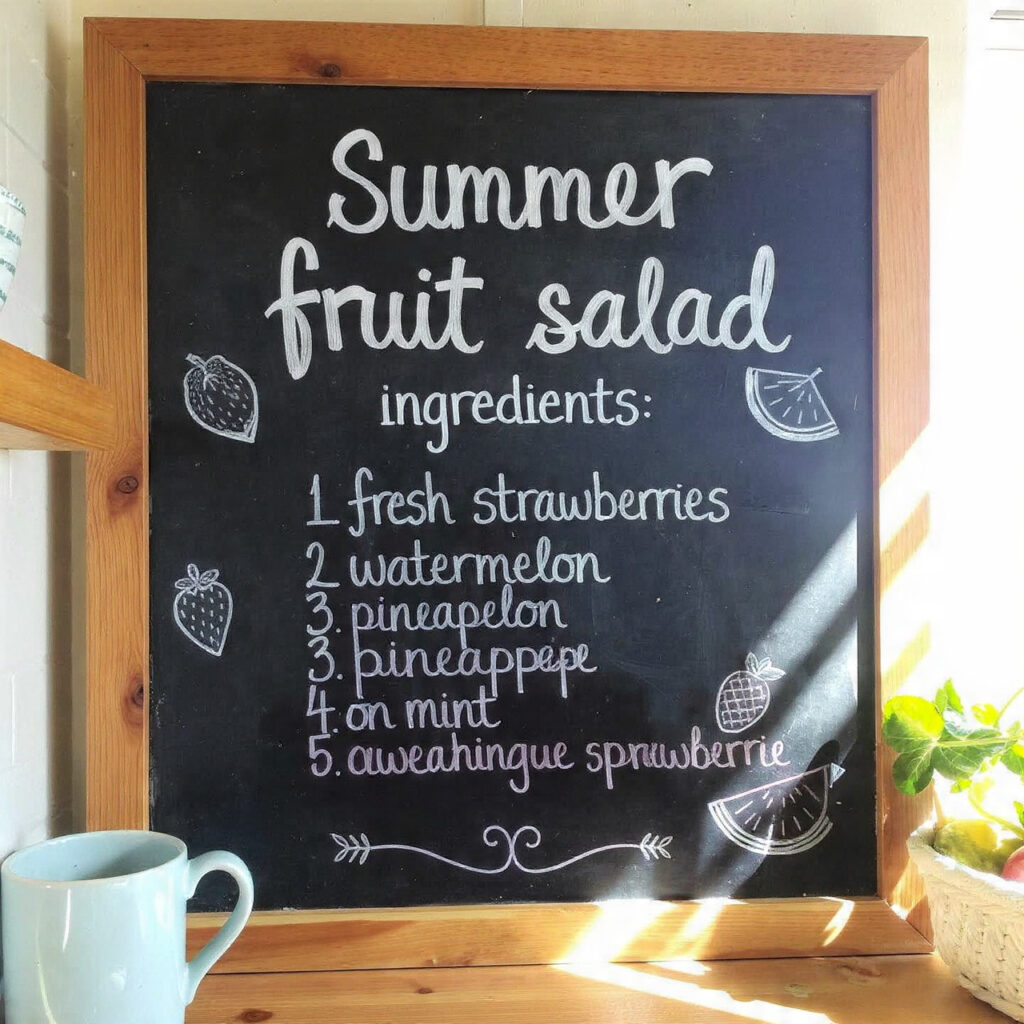
16. A Summer Recipe Board
Why It Works
A seasonal recipe written on the kitchen chalkboard, a simple summer cocktail, a lemonade recipe, a seasonal salad, makes the kitchen feel like a cooking show set and creates a genuinely useful and beautiful display simultaneously.
How to Format It
Title the recipe at the top in large lettering. List ingredients below with a simple bullet or dash format. Add “Method” as a subheading with brief steps. Decorate with a small illustration of the key ingredient, a lemon, a berry, a herb sprig. A simple border finishes the composition. Change the recipe weekly or monthly for a fresh kitchen display that’s actually usable.
17. A Daily Coffee or Drink Order Board
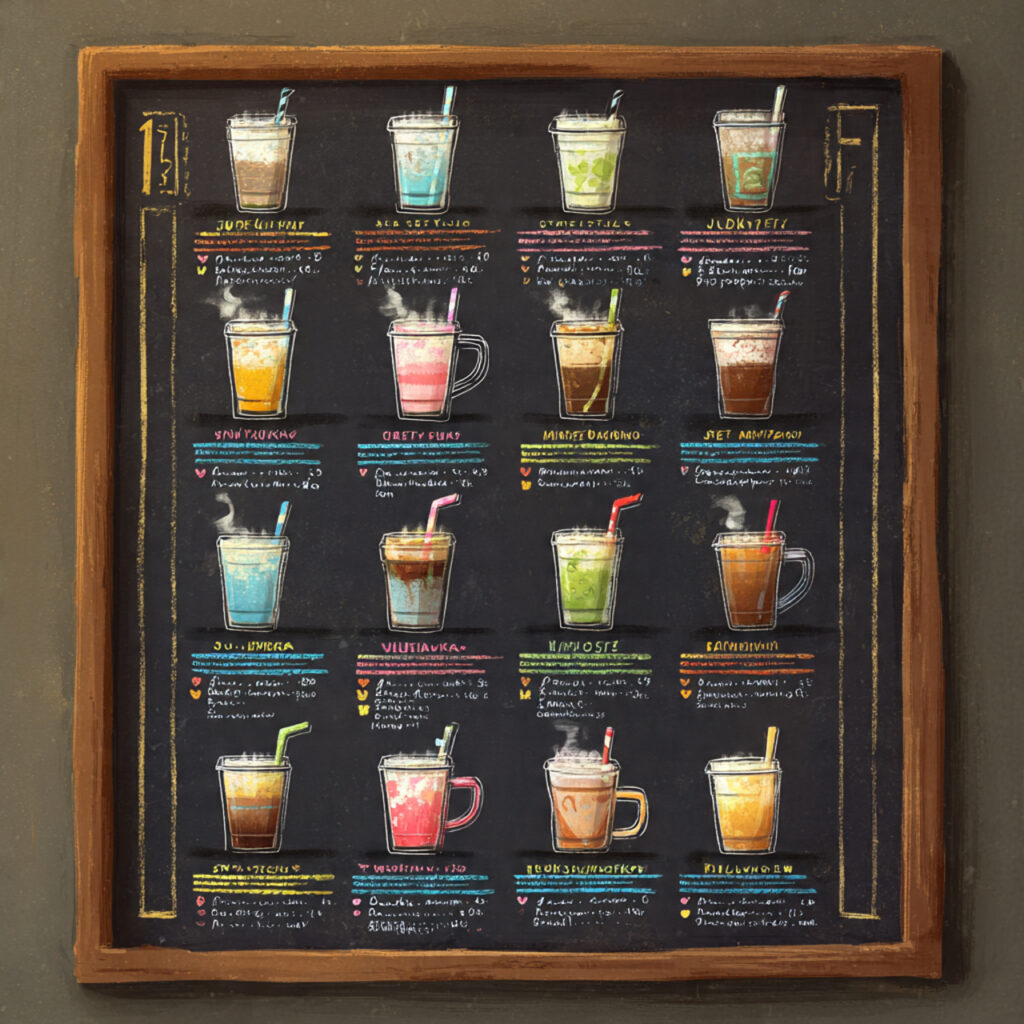
Why It Works
A chalkboard in the kitchen with the family’s daily coffee or iced drink orders, “Iced Latte,” “Cold Brew,” “Green Tea”, creates a playful café-at-home vibe that’s particularly charming in a household with multiple different morning drink preferences.
How to Style It
Format as a simple café menu or order sheet. Include each household member’s name with their preferred summer drink beside it. Decorate with coffee cup silhouettes, ice cube drawings, or simple straw illustrations. Update as preferences change through the summer.
18. A BBQ or Outdoor Entertaining Menu
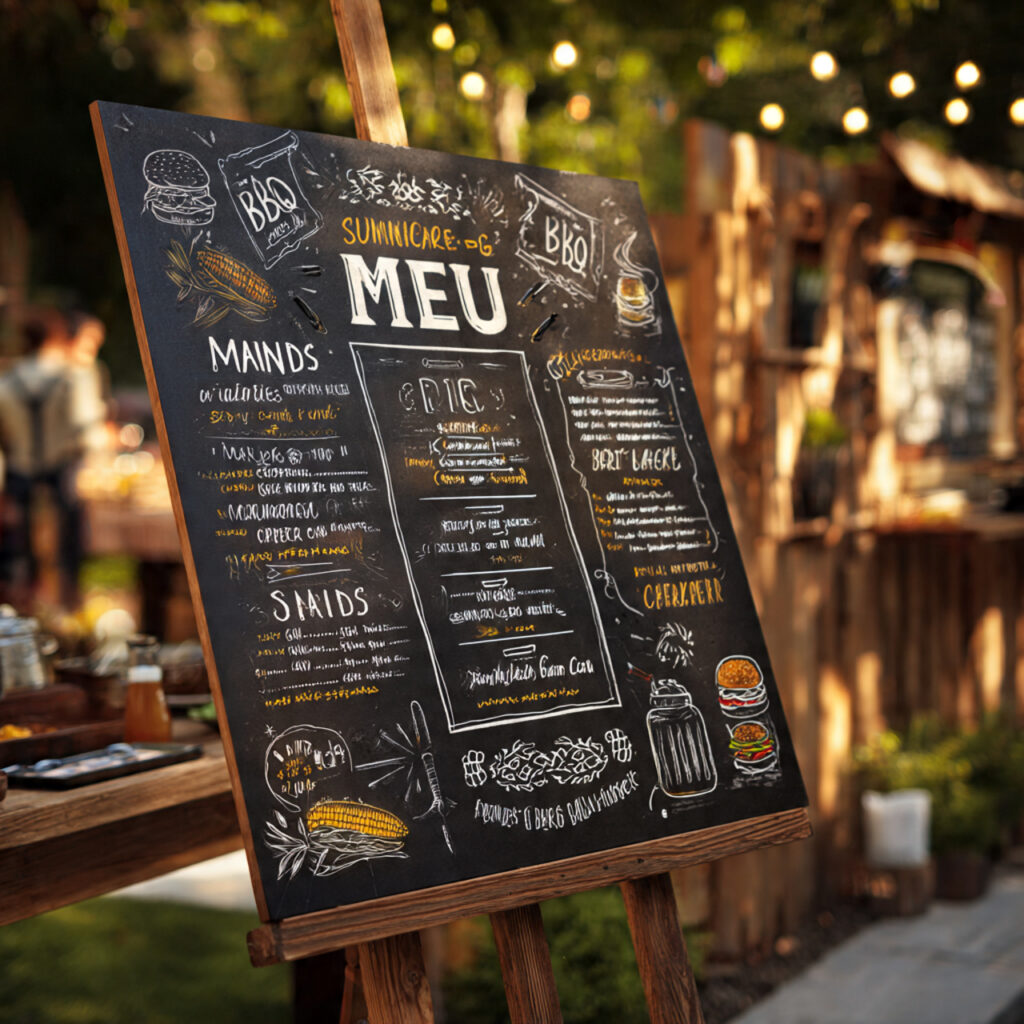
Why It Works
A chalkboard menu for a summer barbecue or outdoor gathering, listing what’s being served, when it’s ready, and any special details, turns a casual cookout into an occasion and gives guests a genuinely charming reference point.
How to Create It
Format with the event date or “Today’s Menu” at the top. List foods in categories, Mains, Sides, Drinks, Desserts, with a dividing line between each. Add simple food illustrations, a burger, a corn cob, a watermelon slice, beside relevant items. The menu board can be created in advance and displayed as a conversation piece before the food is even ready.
19. A Summer Chore Chart for Children
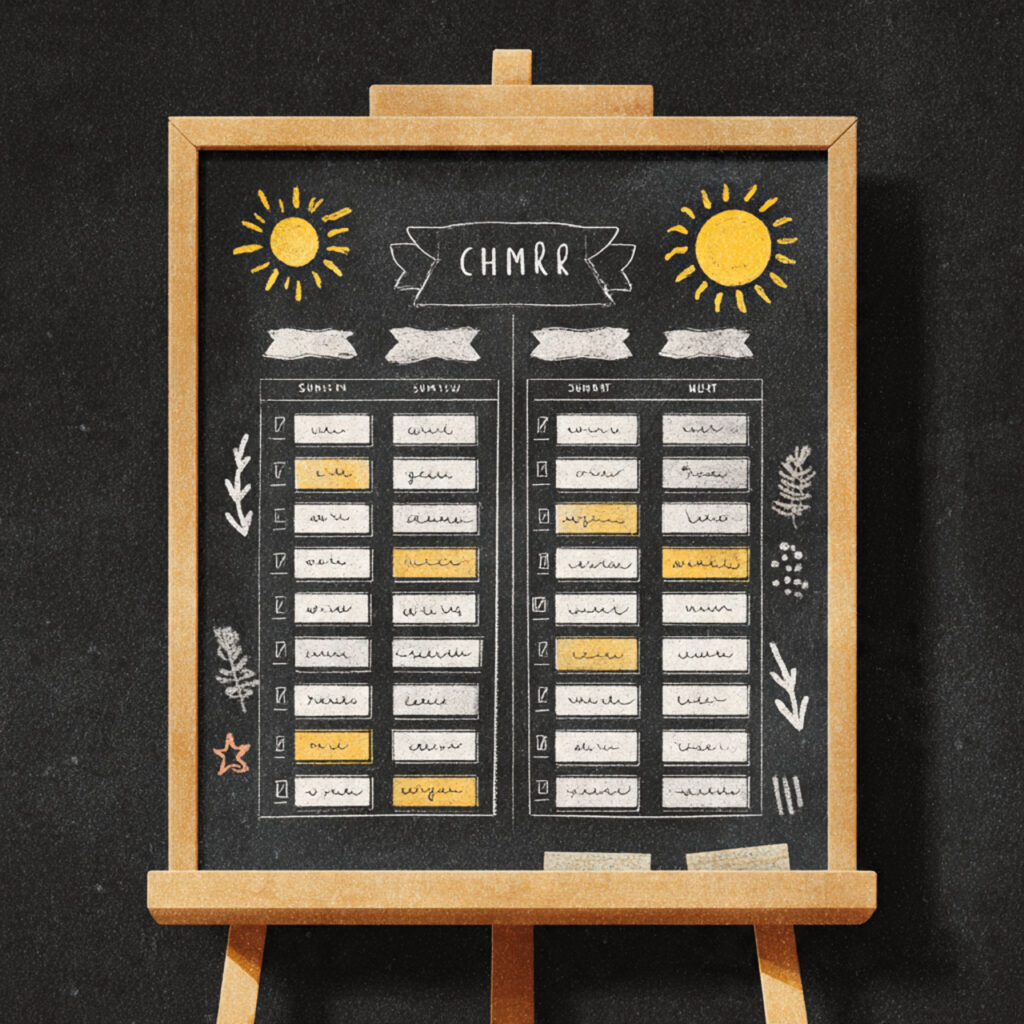
Why It Works
A summer chore or activity chart, with children’s names, assigned tasks or activities, and checkboxes, serves a practical family management function while being visually charming when well designed on a chalkboard.
How to Design It
Create columns for each child’s name and rows for different tasks or activities. Use small checkbox squares that can be checked off with chalk. Decorate with summer motifs in the border. Use chalk markers for the structural grid and standard chalk for the daily content that needs regular updating.
20. A Summer Savings Goal Tracker
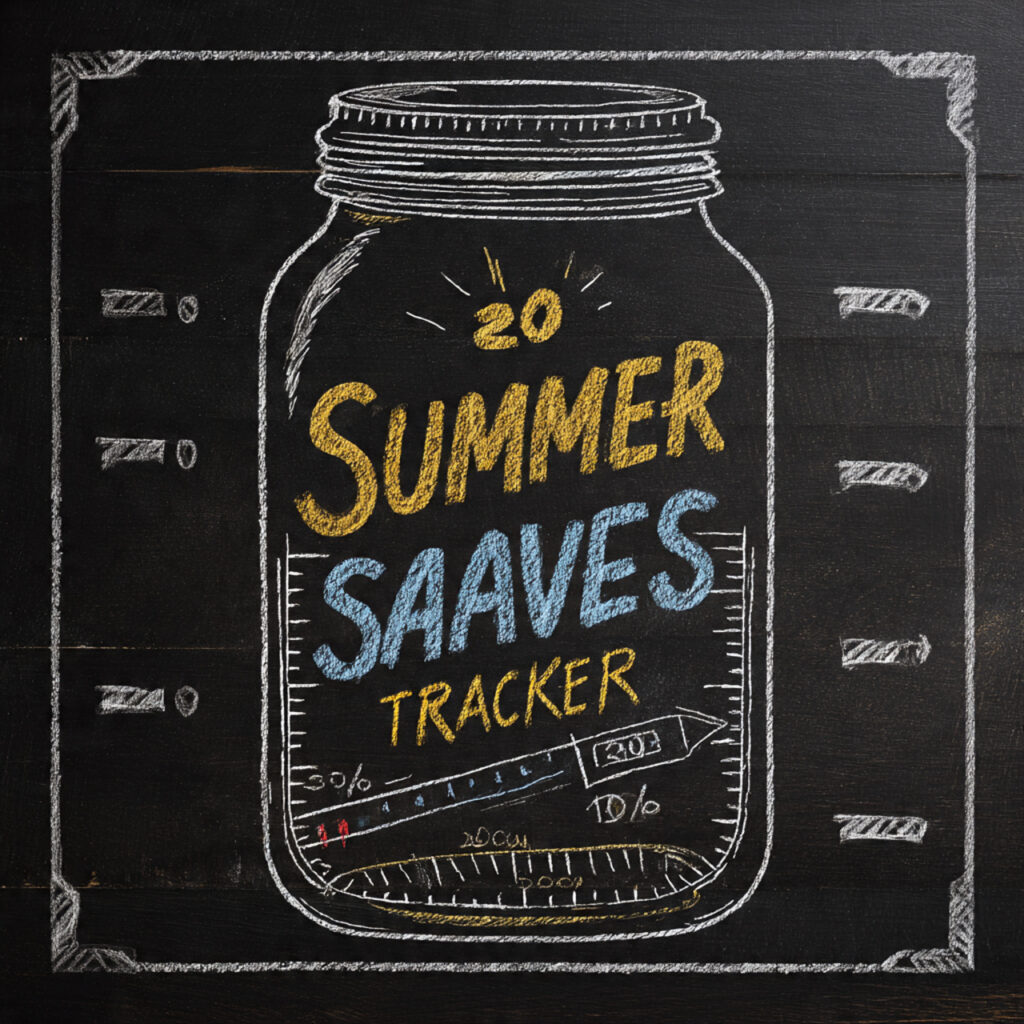
Why It Works
A savings tracker, a visual representation of progress toward a summer savings goal (family vacation, activity fund, back-to-school budget), turns a financial objective into a visual journey that motivates the whole household.
How to Create It
Draw a large thermometer, jar, or beach bucket outline. Mark levels at intervals from empty to full. As savings grow, shade in the appropriate level with chalk. Label the goal amount at the top and celebrate milestone levels with simple stars or checkmarks. The visual progress is genuinely motivating.
Tips for Creating Beautiful Chalkboard Art
21. Use a Chalk Pen for Crisp Details

Why It Works
Chalk markers (chalk pens) produce cleaner, crisper lines than standard chalk, ideal for lettering, outlines, and any element where precision matters. Standard chalk works beautifully for shading, blending, and backgrounds. Using both in the same design gives the best of both tools.
How to Use Them Together
Create the main outlines and lettering with chalk markers for clean, defined edges. Use standard white or colored chalk for shading, background elements, and soft texture effects. The combination creates a professional quality that either tool alone can’t achieve.
22. Trace Designs From a Projector or Lightbox
Why It Works
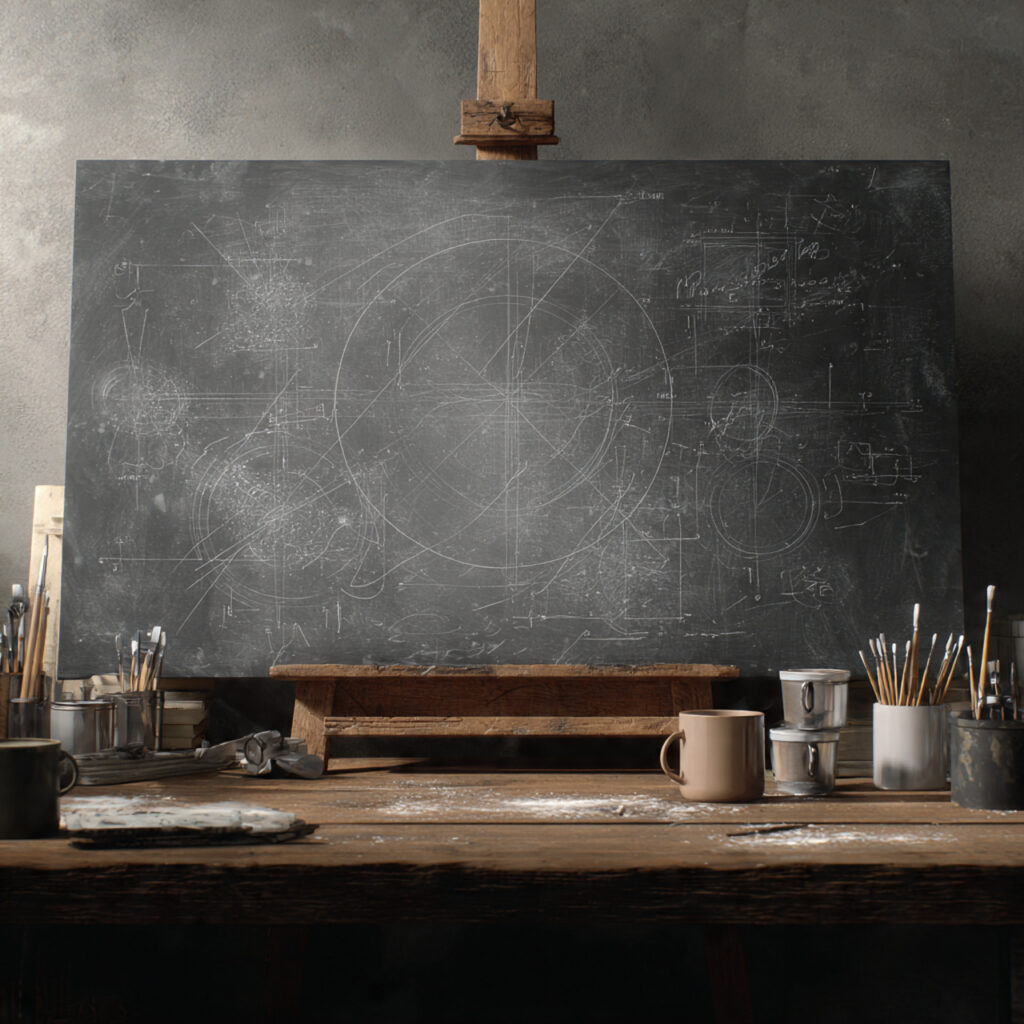
Projecting a reference image onto the chalkboard and tracing the outlines creates an accurate base for any design, removing the most common obstacle to chalkboard art (the initial drawing) and allowing even those with minimal drawing skills to create beautiful, well-proportioned illustrations.
How to Do It
Find or create the reference image on a phone or tablet. Dim the room and hold the device at a distance that projects the image at the desired size onto the board. Lightly trace the key outlines with chalk. Turn off the projection and refine the drawing. This technique is used by professional chalk artists worldwide, there’s no shame in a good shortcut.
23. Use Templates and Stencils for Lettering
Why It Works
Letter stencils, available at craft stores or printable online, guide perfect lettering spacing and proportion for those whose freehand printing is inconsistent. The stencil traces the letter shape; the chalk fills it. The result looks precise and professional.
How to Use Them
Position the stencil on the board and hold or tape in place. Apply chalk through the stencil openings with the tip of a chalk marker or a cotton swab. Lift carefully. The stencilled letter provides the structure; hand-drawn decorative elements around it add the personal character.
24. Season the Board Before Drawing
Why It Works
A new chalkboard that hasn’t been seasoned (the entire surface rubbed with chalk and then erased) tends to ghost, leaving visible traces of the first design even after erasing. Seasoning prevents this and creates a better surface for future artwork.
How to Season It
Rub regular white chalk over the entire surface of a new board, covering every area. Erase completely with a dry cloth or eraser. The board is now seasoned and ready for detailed artwork. This takes two minutes and prevents weeks of ghosting frustration.
25. Photograph Every Design Before Erasing
Why It Works
Summer chalkboard designs represent real creative effort, and erasing them permanently without a record is one of the most common and most regretted chalkboard habits. A simple photograph before erasing creates a visual library of your designs that you can return to next summer, share, or simply enjoy as a record of the creative season.
How to Photograph Them Well
Photographed in natural daylight without flash, the chalk surface reflects artificial light and can wash out or create glare in photos. Position the camera directly in front of the board (not at an angle) for the most accurate image. Adjust the brightness slightly in the photo editor if the chalk appears too bright or too dim.
26. Create a Signature Border Style
Why It Works
Developing one beautiful border style, a simple wreath motif, a wave line, a dotted border with simple star accents, that you use consistently creates a visual signature across all your summer chalkboard designs. The consistency makes each new design look like part of a cohesive collection rather than a standalone experiment.
How to Develop It
Try three or four simple border approaches and identify the one that feels most natural and looks most beautiful in your handwriting style. Practice it on paper until it’s completely fluent. Then apply it to every chalkboard design as the consistent frame. The border becomes your creative trademark, immediately recognizable as yours.
Insider Tip
Save a photo of your signature border when it’s at its best, drawn on a practice piece of paper, and keep it visible while creating new designs. Having the reference eliminates the inconsistency that comes from drawing the border from memory rather than from a consistent model.
The Chalkboard Is Waiting for Summer
Here’s what every idea in this guide comes down to: the chalkboard in your home is a canvas for the season, a small, beautiful, completely personal expression of what summer means to you and the people you share your home with.
It doesn’t need to be perfect. It doesn’t need to look like the examples you’ve saved on your phone. It needs to be yours, chosen with intention, created with joy, displayed with the particular satisfaction of having made something that wasn’t there before.
The season is here. The board is waiting. The chalk is in your hand.
Pick an idea that makes you smile and start. Erase it when you’re ready for something new. Try again. Try differently. Let the summer surface be as changeable and as alive as the season itself.
Because a home that creates things, even small chalk things on a black board, is a home that’s fully, joyfully, beautifully alive.