16 Japandi Bathroom Ideas That Blend Minimalist Calm and Natural Beauty Try This Look

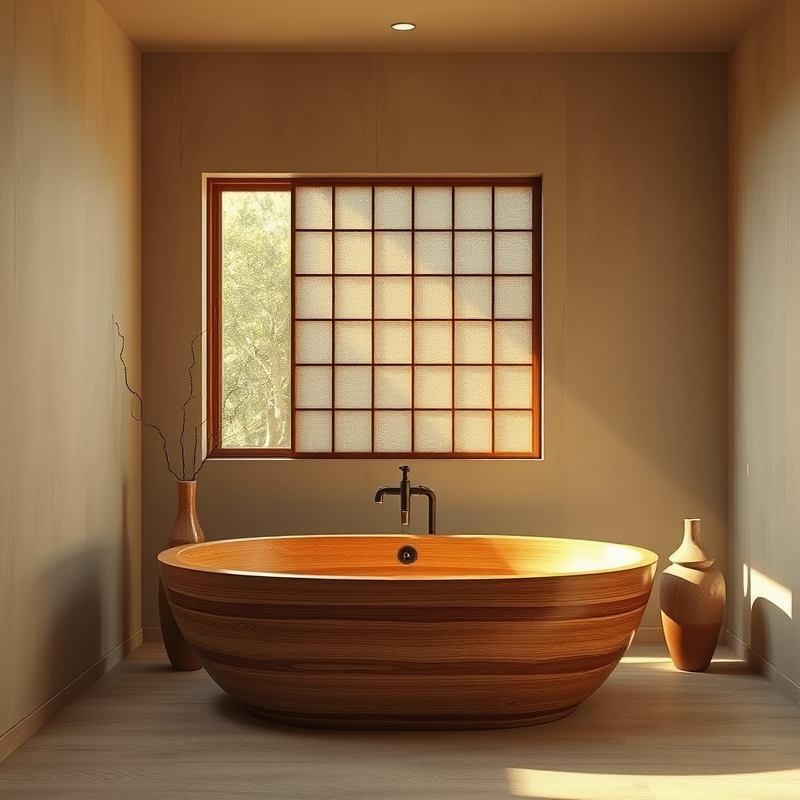
Imagine stepping into a space so quiet and grounded, it feels like exhaling after a long day. The air carries the faint scent of cypress wood, and soft light filters through a rice paper screen, washing the room in a gentle, golden glow. A freestanding wooden tub sits at the center of it all, sculptural and still.
This is the soul of a Japandi bathroom, where Japanese wabi-sabi philosophy meets Scandinavian hygge to create a deeply restorative, grounded aesthetic. More than just a design trend, Japandi has become a lasting shift in how we think about wellness at home, stripping away the noise to reveal simple, lasting beauty. Try this look and transform your space into a serene sanctuary.
1: Soak in a Freestanding Wooden Tub
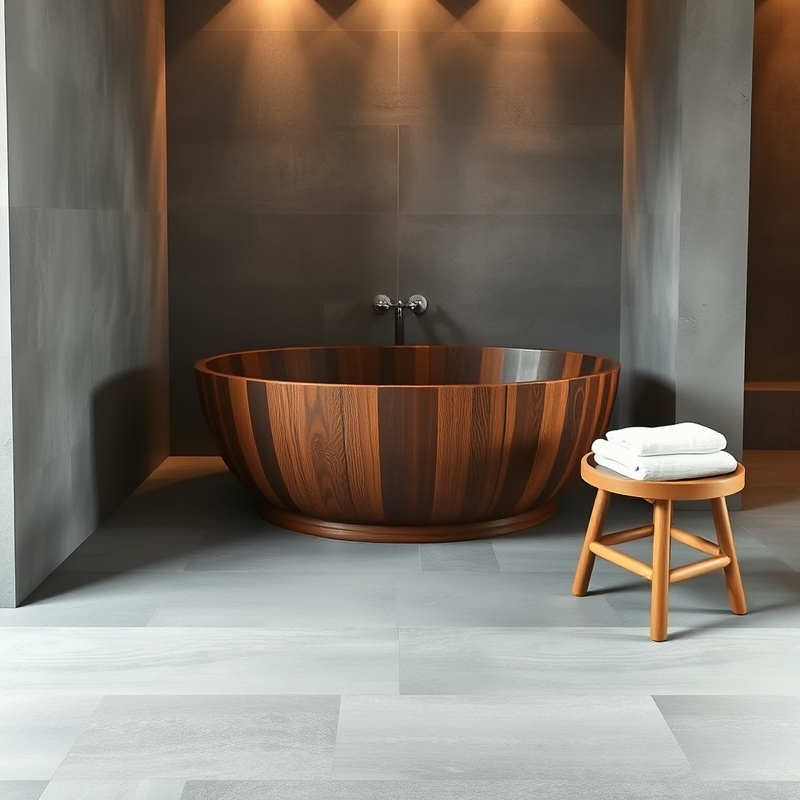
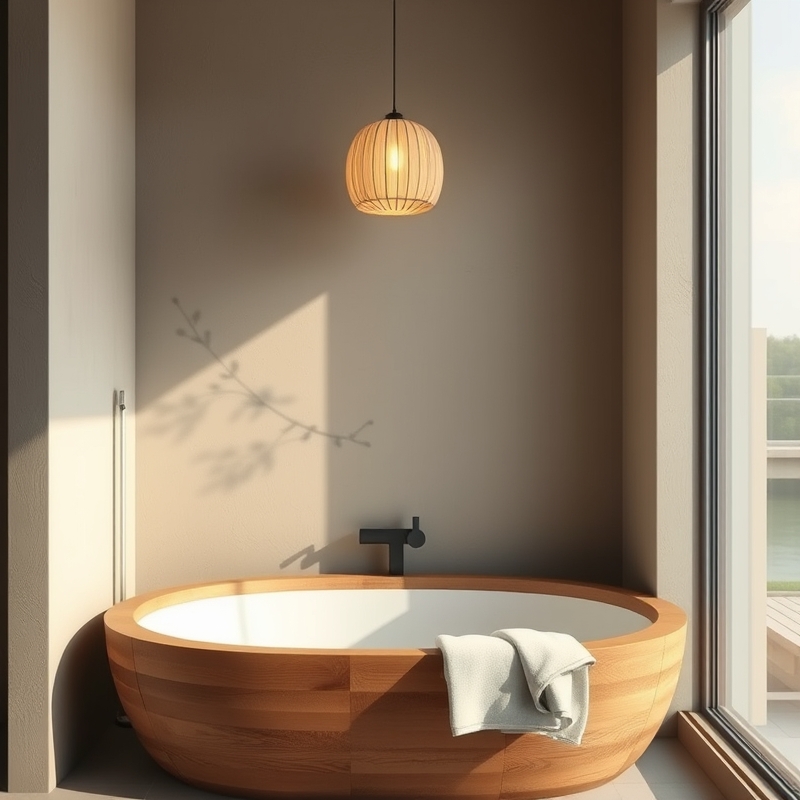
A freestanding wooden tub, particularly the deep Japanese ofuro style, anchors a Japandi bathroom with its raw, organic presence and sculptural weight. Unlike a standard white porcelain tub, wood introduces warmth and a sense of history, inviting you to sink into the water rather than just take a quick shower. The visual heft of the tub is balanced by maintaining an otherwise open floor plan around it, allowing the form to breathe.
Pair it with a minimal floor-mounted tub filler in matte black or brushed brass, and keep the immediate area free of clutter. A single smooth river stone or a small wooden side table holding a neatly folded towel is all the styling this setup needs to feel both luxurious and profoundly simple.
Also read: https://myhavenvibes.com/moody-bathroom-ideas/
2: Add Shoji Screen Privacy Panels
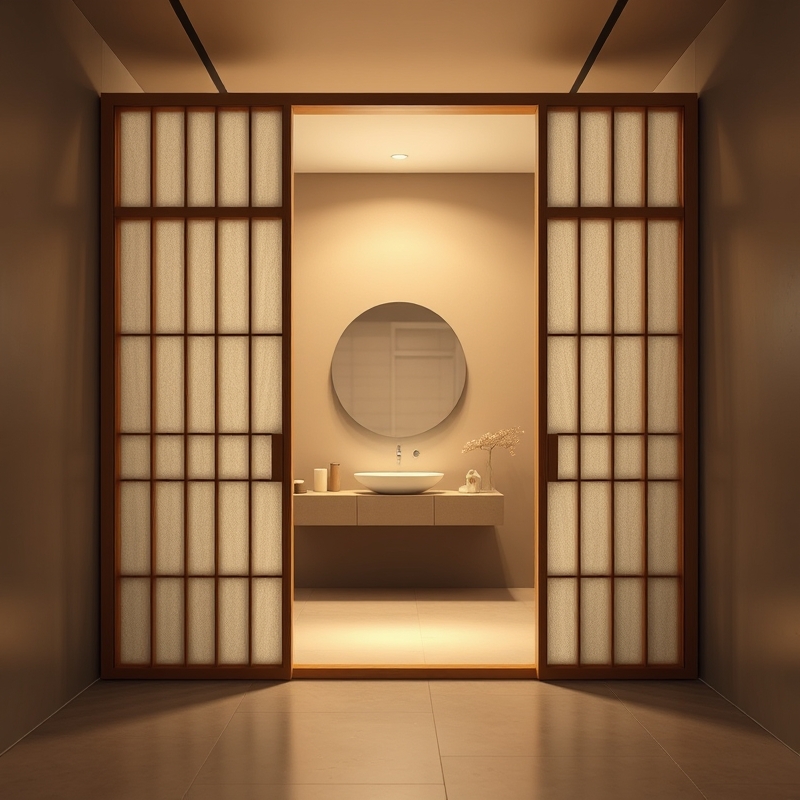
Introduce a shoji screen as a smart and beautiful way to divide the space or conceal a private area such as the toilet nook. The magic of this element lies in its translucency; it filters light softly rather than blocking it completely, preventing any corner of the room from feeling dark or harshly segmented. A wooden lattice frame with synthetic fiber panels works best in high-moisture environments to avoid warping while maintaining the authentic look.
This solution adds immediate architectural texture and plants a distinct Japanese root into the Scandinavian love for airy, light-filled rooms. The soft grid pattern draws the eye across the room, making a small bathroom feel intentionally layered rather than cramped.
Read more ideas here.
3: Use Washed Oak Vanities With Stone Countertops
Swap out high-gloss cabinetry for a vanity crafted from light, washed oak to bring that essential Scandinavian warmth into the framework of Japanese precision. The subtle grain of the wood brings life to a room that can often feel cold due to tile and stone. Pairing this with a honed limestone or soapstone countertop creates a quiet interplay of textures that feels both durable and gentle underhand.
Opt for clean, handleless push-to-open doors to maintain an undisturbed silhouette on the front of the vanity. This pairing feels earthy and understated, a perfect blend of hygge comfort and wabi-sabi imperfection that makes brushing your teeth feel like a intentional ritual.
4: Install a Rain Shower With a Bamboo Stool
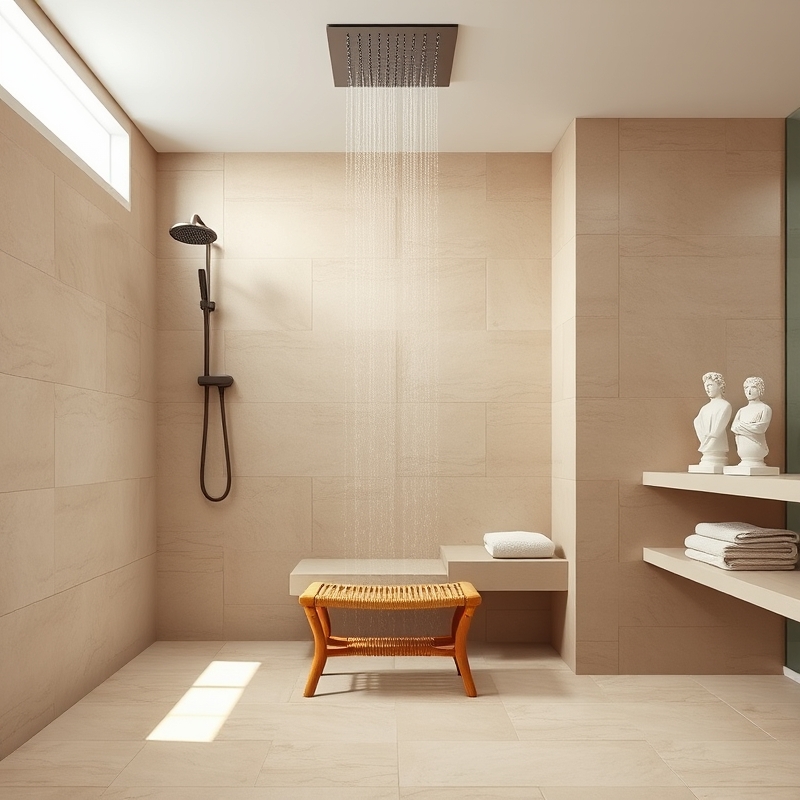
Create a bathing ritual by pairing an overhead rain shower with a simple bamboo stool, a nod to the Japanese custom of seated washing before soaking. The waterfall-like spray from the ceiling-mounted fixture turns a simple rinse into a meditative experience. Placing a wide, stable bamboo stool inside the wet zone instantly changes the pace of the morning, encouraging you to slow down.
Ensure the shower area is open or enclosed with a single clear glass panel to avoid breaking the visual flow, and use uniform large-format beige or gray tiles on the floor and walls. The combination of the vertical water drop and the horizontal wooden seat creates a beautifully balanced composition rooted in mindfulness.
5: Layer Neutral Linen and Cotton Textiles
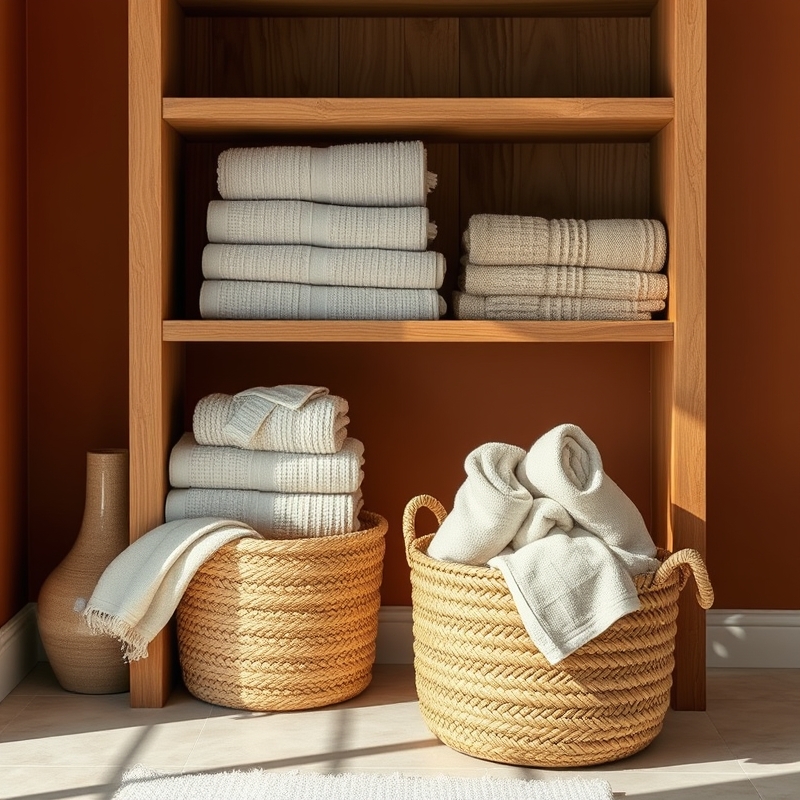
Softness is critical in a style that relies heavily on hard surfaces like stone and wood, making textiles the unsung hero of a Japandi bathroom. Ditch plush microfiber for breathable, dry-textured fabrics like washed linen and organic cotton waffle weaves.
Choose a strict palette of oatmeal, flax, warm sand, and dusty taupe, then stack them openly on a reclaimed wood shelf or in a woven seagrass basket. The key is that the towels should look slightly rumpled and inviting, not sterile and stiff. This simple layer of tactile comfort contrasts with sleek fixtures and emits an effortless, un-done elegance that defines the aesthetic.
Which of these Japandi bathroom ideas resonates most with your vision of a calming retreat?
6: Incorporate a Tatami Mat-Accented Floor Area
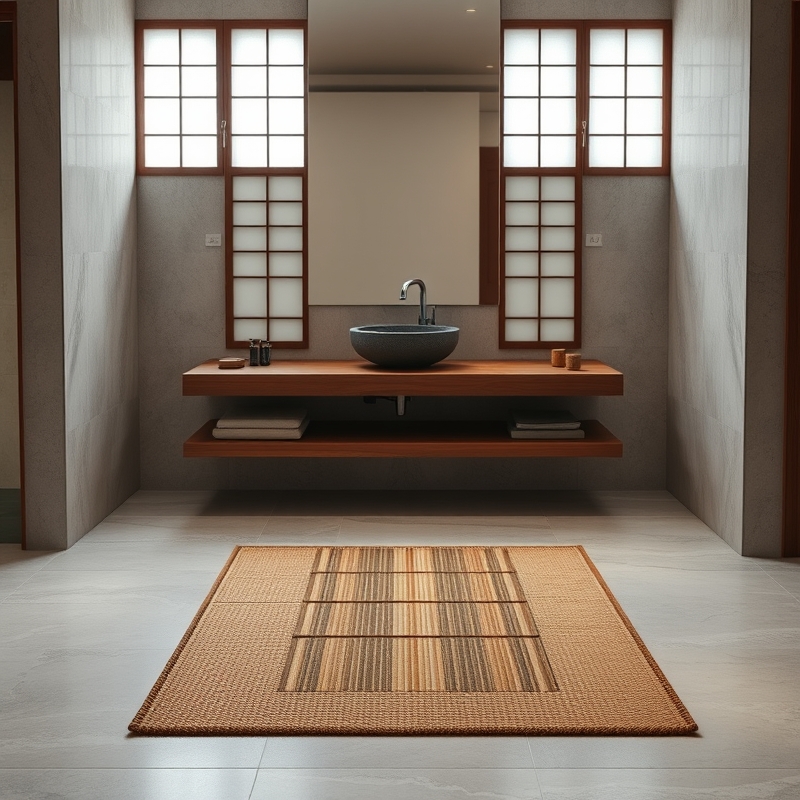
Dedicate a dry zone of your bathroom to the unique texture of a woven tatami mat to instantly ground the energy of the room. This works exceptionally well if you have a dedicated vanity or dressing nook connected to the bathroom where you can swap cold tile for a soft, fragrant reed covering.
A flush-mounted inset on the floor keeps the transition seamless, preventing tripping hazards while framing the specific area with dark wood borders. The subtle grassy scent and the cushioned feel underfoot bring a sensory experience that stark tile cannot replicate, fusing the Japanese floor-culture with the Scandinavian emphasis on organic comfort.
7: Choose Matte Black Fixtures Over Brushed Nickel
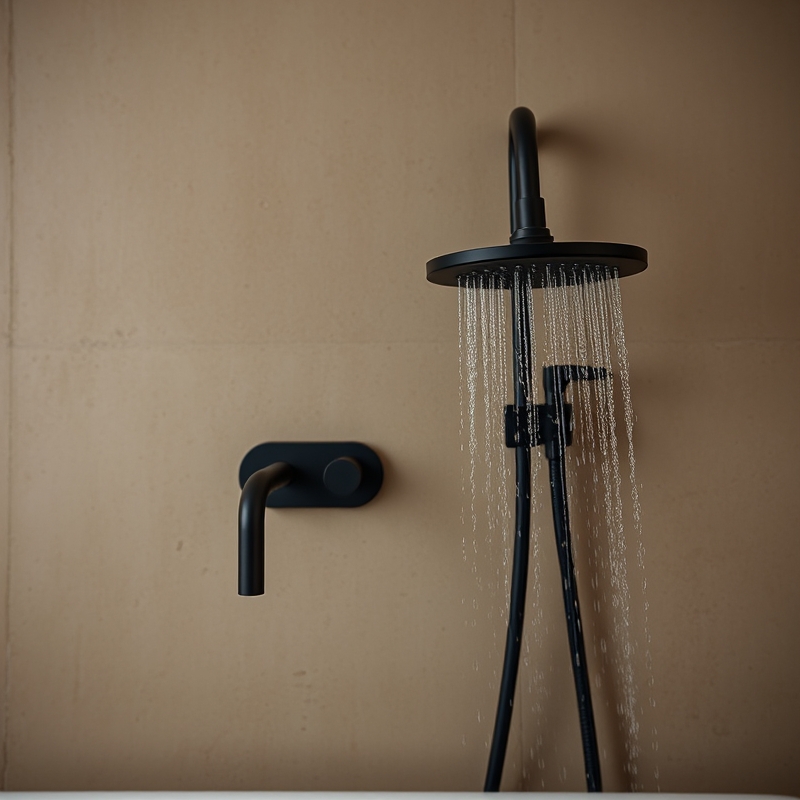
Matte black hardware acts as the quiet, defining outline in the soft palette of a Japandi bathroom, offering definition without the sterile glare of chrome or brushed nickel. The dark, powdery finish anchors the light wood vanities and cream-colored walls, drawing a clean, modern line that echoes the ink-brush strokes in Japanese art.
Select streamlined, low-profile spouts and simple cross or lever handles without ornate detailing. When combined with warm gray tiles or a travertine backsplash, black fixtures provide just the right amount of visual weight to ground the airy room, ensuring the space feels curated and intentional rather than washed out.
8: Add a Live Edge Wood Shelf for Greenery
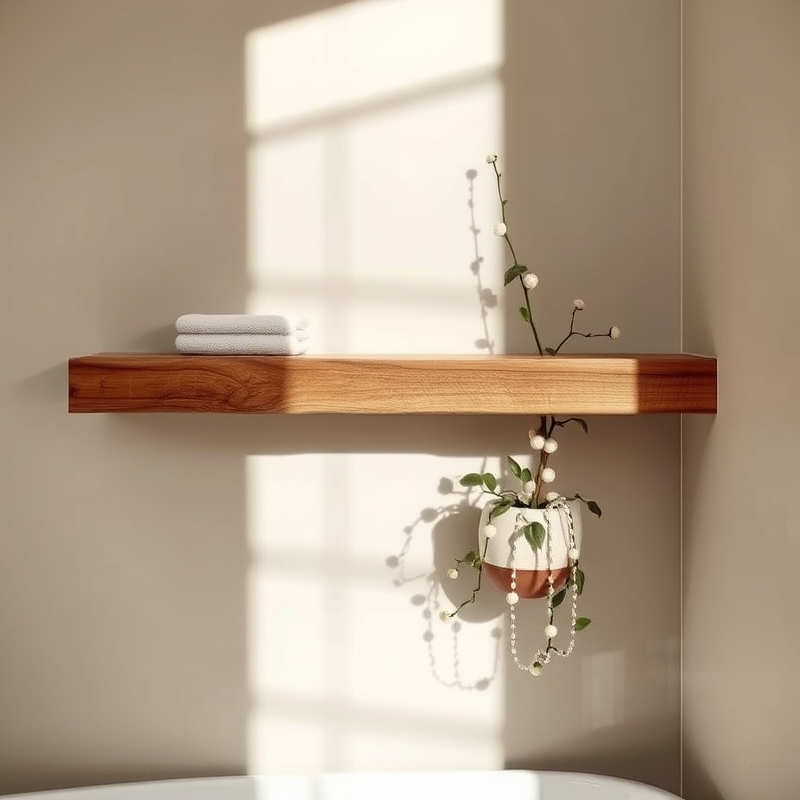
Move beyond the standard floating box shelf and introduce a single, thick live edge slab of wood to display a carefully chosen houseplant. The organic, irregular edge of the shelf brings a profound expression of wabi-sabi, celebrating the natural imperfect shape of the tree it came from.
Place it on a textured greige wall and style it with just one or two objects, such as a trailing plant like a rhipsalis cascading down over the edge. This vertical accent adds life and a pop of subdued green without disrupting the neutral palette. The result is a living, breathing artwork that softens the hard lines of the room and visually ties the window light to the interior.
9: Frame the Window With Shoji-Inspired Sliding Doors
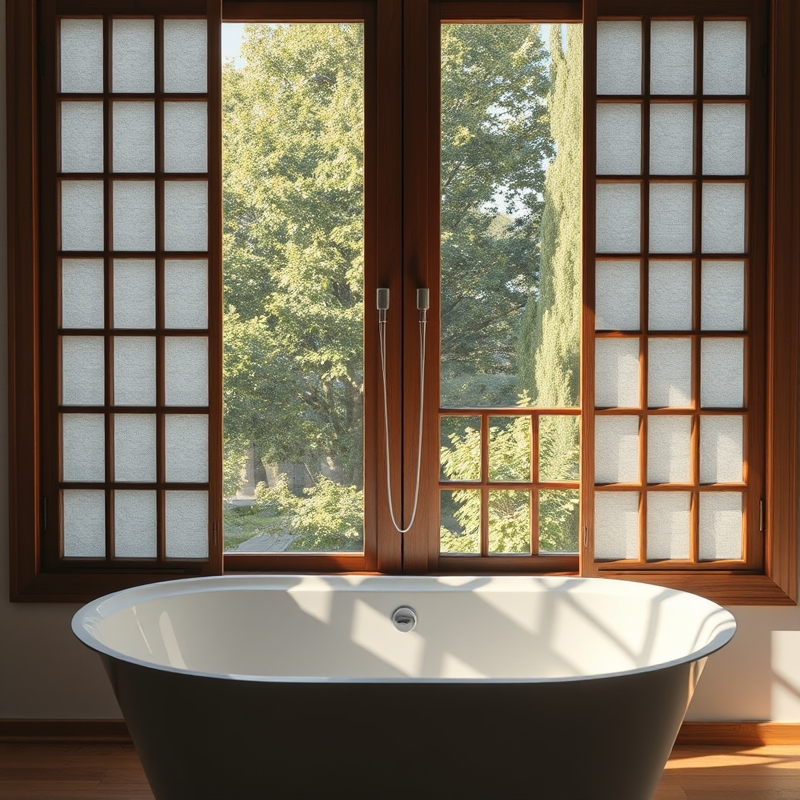
Instead of standard blinds or curtains that draw attention to the window as a hole in the wall, frame the entire window wall with sliding shoji-inspired doors. This architectural approach turns light control into an elegant feature, allowing you to slide the panels to obscure a less-than-perfect view while still bathing the room in a diffused, ethereal glow.
The grid pattern creates a beautiful, ever-shifting shadow play on the floor and the bathtub as the sun moves. When left partially open, the doors create a frame within a frame, focusing the eye on a specific piece of sky or a bamboo plant outside, thereby harmonizing the connection between your sanctuary and the natural world.
10: Use a Single Large Japanese Lantern as a Light Fixture
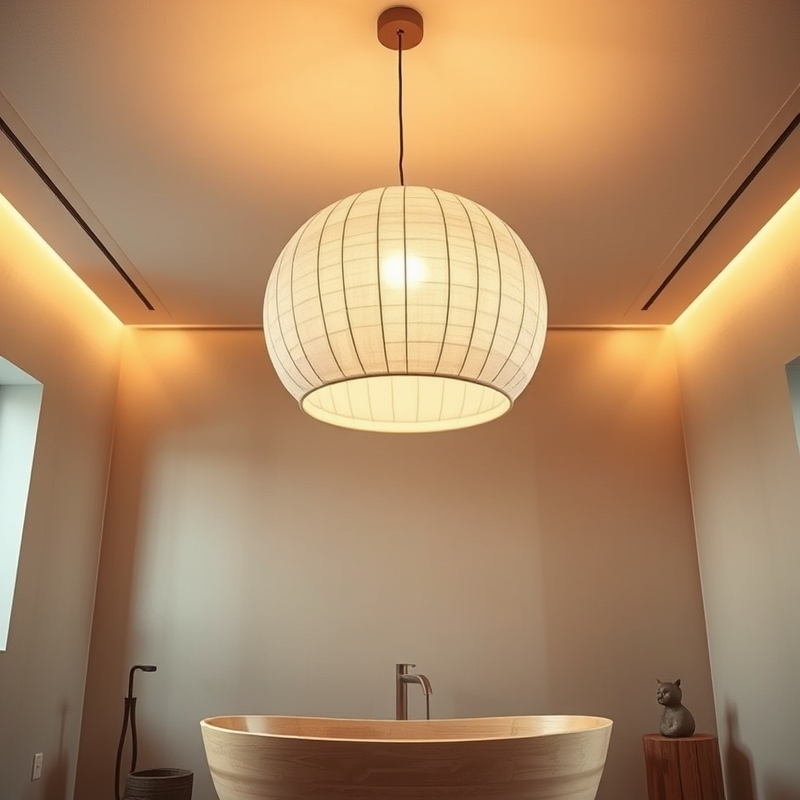
For a jaw-dropping yet utterly serene focal point, suspend a single oversized Japanese paper lantern, known as an Akari, from the ceiling over the bathtub or in the center of the room. The sculptural globe of the lantern emits a soft, ambient, 360-degree light that completely eradicates harsh shadows and creates the feeling of floating in a cloud.
This simple move acts as the soul of the Japandi bathroom, fusing the Japanese mastery of paper and light with the Scandinavian need for a cozy, central luminous core. Regardless of the size of the room, this single fixture immediately communicates peace and international design pedigree without saying a word.
11: Create a Pebble Tray Foot-Rinse Station
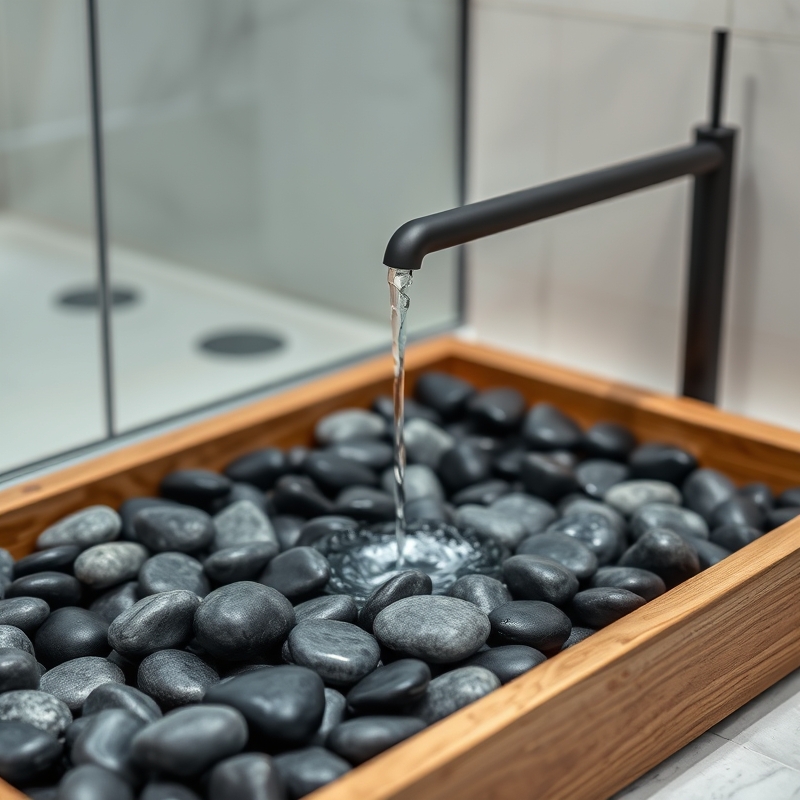
Introduce a spa-like antechamber in your shower zone by building a shallow, waterproof tray filled with smooth, dark river pebbles just outside the shower door or inside the curbless entry. Designed for a quick cooling rinse of the feet, the pebbles provide a grounding reflexology massage while keeping the area visually connected to a dry garden.
Use a dedicated cool-water wall spout coated in matte black above the tray to define the moment. The combination of running water and smooth stone creates a soundscape of a trickling stream, turning the act of cleaning your feet into an immersive sensory ritual that bridges the gap between wet and dry zones.
Starting small can make a big impact, so feel free to test one or two of these ideas first.
12: Paint Walls in a Warm Greige or Muted Clay Tone
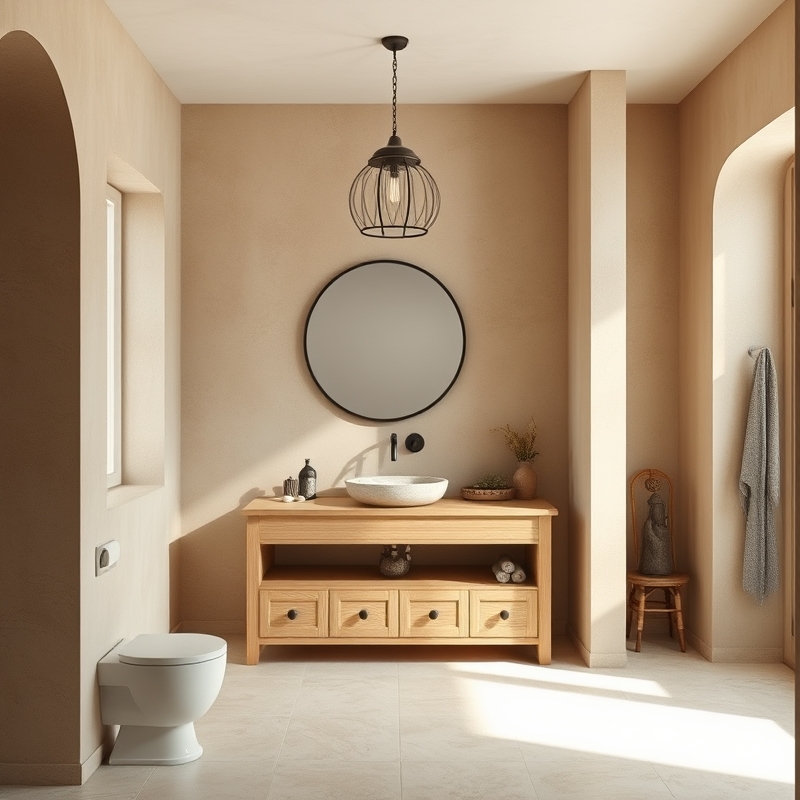
Step away from clinical pure white and bathe your walls in a complex neutral such as warm greige with green undertones or a dusty, muted terracotta clay. These colors shift beautifully in candlelight and natural light, enveloping the body in a distinct sense of warmth that stark white can never provide.
Use a flat or limewash finish to add a subtle, chalky texture that absorbs light rather than bouncing it back at you, crucial for maintaining visual silence. This backdrop acts as a unifying canvas, allowing the wooden elements to stand out poignantly. It’s the most cost-effective way to instantly alter the thermal feel of the room from cold and sterile to earthy and safe.
13: Display a Single Branch in a Ceramic Vase
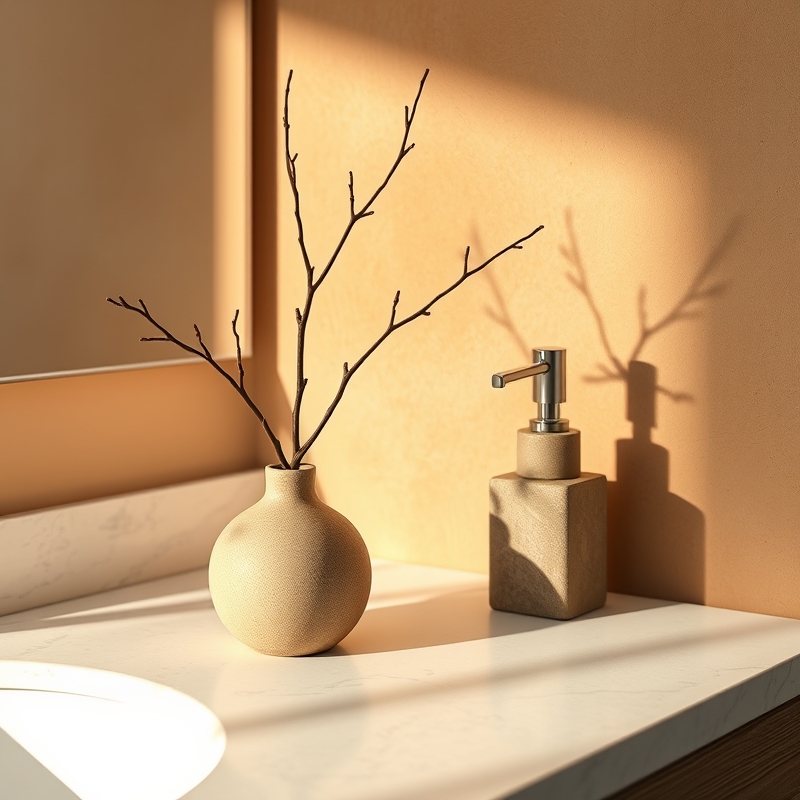
Japandi styling thrives on negative space, making a single, dramatic foraged branch far more powerful than a full bouquet. Find a curved line-drawing of a branch, perhaps cherry blossoms in spring or a dried twisting vine, and place it in a chunky, rough-hewn ceramic vase with a matte finish.
Place this arrangement on the far corner of the vanity or the floor, ensuring the wall behind it remains completely empty to act as a gallery background for the shadow it casts. This practice of ikebana-influenced decoration invites the outside in with restraint, adding sculptural height and organic movement without cluttering the countertops or introducing overly vibrant distractions that would disrupt the room’s quiet peace.
14: Install a Low, Floating Vanity for a Clean Look
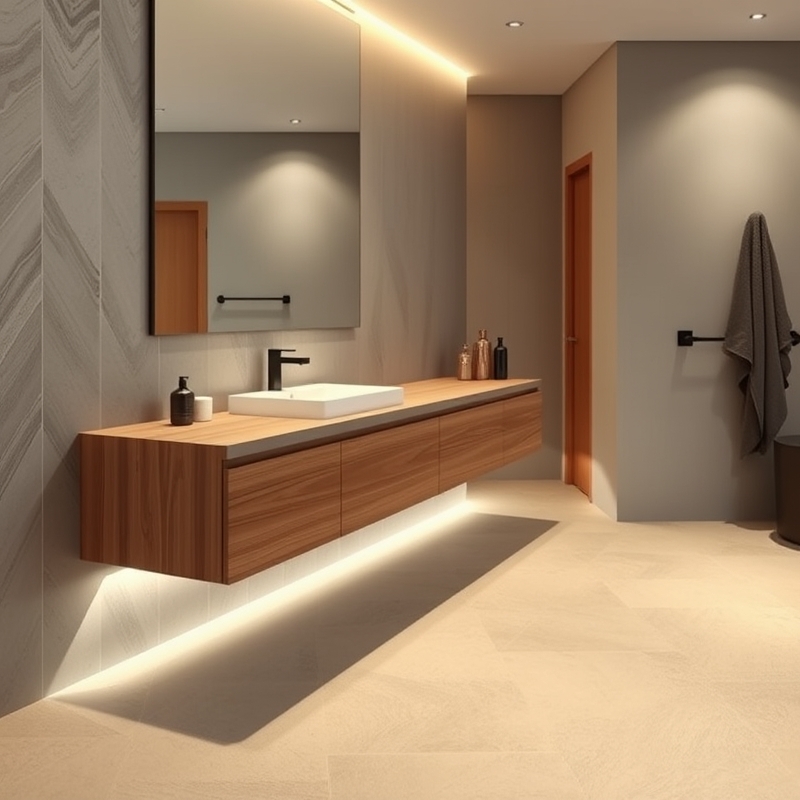
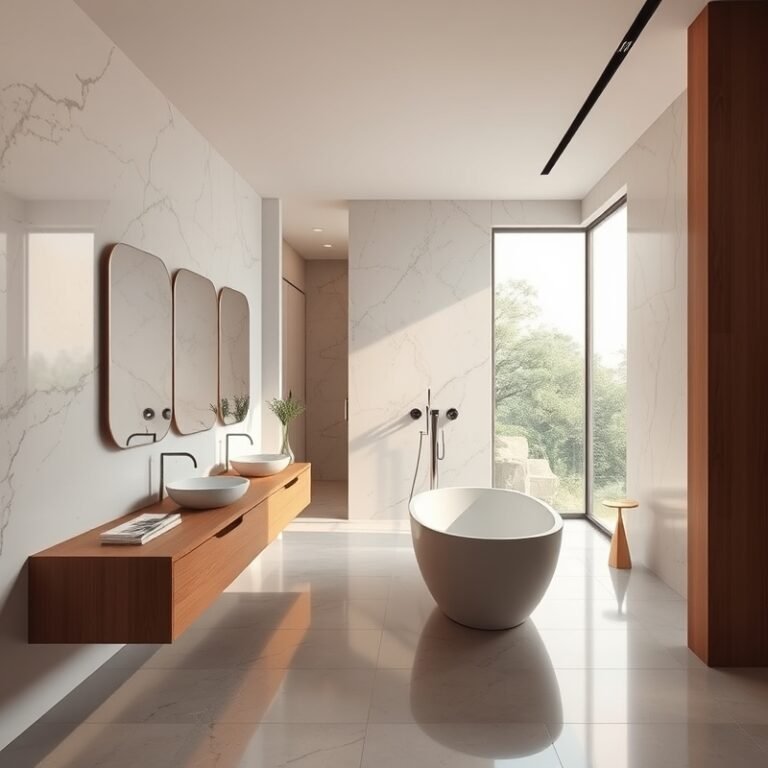
To nail the grounding proportions essential to Japanese interior design, drop the height of your vanity lower than a typical Western installation. A low, floating unit keeps the center of gravity down, which makes the ceiling feel higher and the room more expansive while maintaining intimate proportions.
The gap beneath the vanity isn’t just aesthetic; it makes sweeping the floor effortless and can house a soft hidden LED strip that creates a floating, lantern-like glow at night. Clad the front in rift-cut oak panels that run horizontally to stretch the visual length of the space, and keep the entire sink deck almost entirely bare, storing daily items out of sight in soft-close drawers.
15: Opt for Handmade Ceramic Soap Dispensers and Dishes
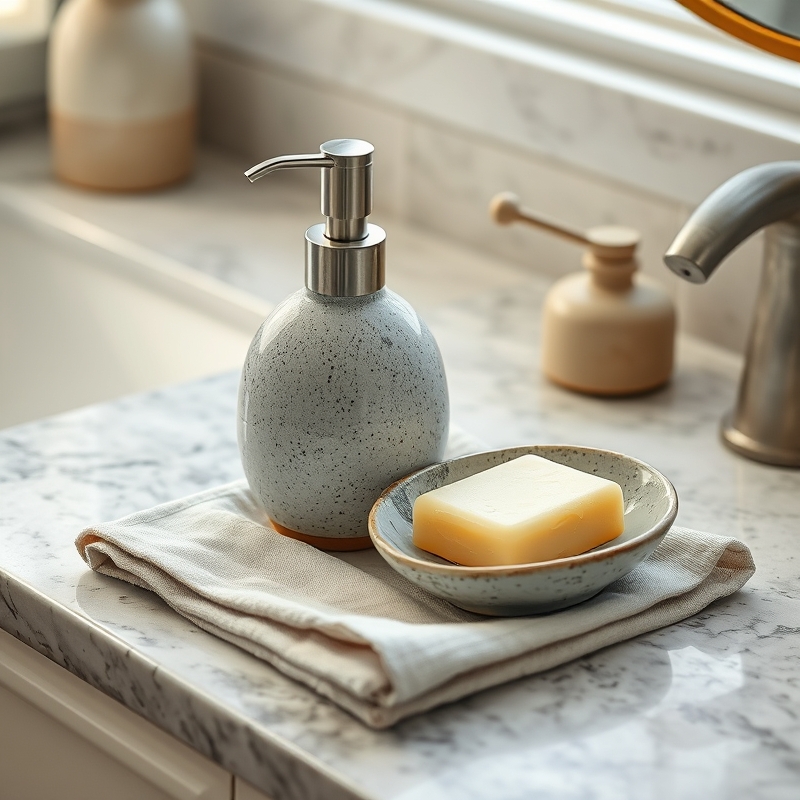
Banish the branded plastic bottles that scream visual noise and disrupt the natural flow. Decant your soaps and lotions into handmade ceramic dispensers with speckled glazes and intentional, irregular shapes that celebrate the hand of the maker. Look for colors derived from the earth, like buff, bisque, celadon, or deep charcoal, and pair them with a matching unglazed dish for solid soap.
The transformation is profound; suddenly, a necessary daily item becomes a piece of functional pottery that contributes to the decor. This small swap injects immediate wabi-sabi charm onto your countertop and signals to the mind that this is a space for sensory richness, not plastic mass production.
16: Add a Japanese Cypress Hinoki Bath Stool
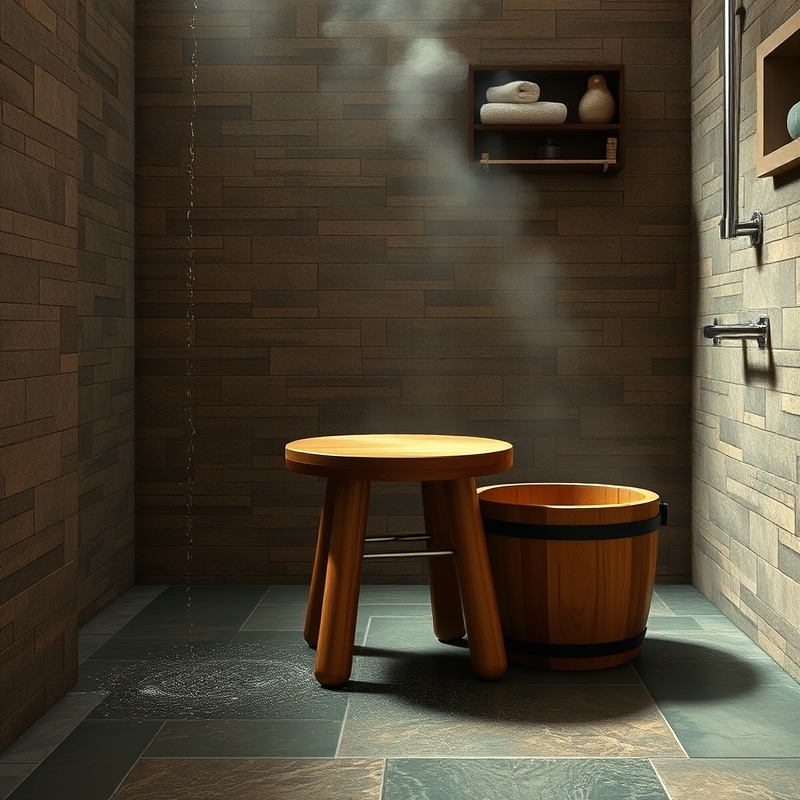
Introduce the iconic Japanese hinoki cypress stool and matching bucket set to fully commit to the ritual of purification. Even if you don’t use a bucket for washing, the stool itself serves as a beautiful perch for a folded towel or a safe seat for shaving legs. When wet, the hinoki wood releases an incredible, therapeutic scent of pine and lemon that immediately triggers a relaxation response.
The pale, almost white wood darkens beautifully over time with water, aging gracefully in line with wabi-sabi principles. Place these wood pieces directly on the shower tiles to break up the expanse of stone, connecting your bathing practice to the forest saunas of rural Japan and creating a truly authentic Japandi bathing haven.
Your calming Japandi bathroom can start with just one small shift toward natural beauty and quiet intention.
CONCLUSION
A Japandi bathroom isn’t just about aesthetics, it’s about creating a daily ritual of calm. By blending minimalist lines with natural materials, you can transform even a small washroom into a peaceful retreat. Start with one or two of these ideas and watch your space become a true haven of natural beauty. Slow down, strip back, and let the earthy textures remind you that every moment of rest is precious.
FAQ
What is the difference between Japandi bathroom and minimalism?
Japandi combines minimalism with warmth, it uses natural textures like wood and stone, plus soft lighting, to avoid the cold feel of strict minimalism.
Can I create a Japandi bathroom on a small budget?
Yes. Focus on small changes: swap bright accessories for neutral linens, add a wooden stool, and use a single vase with a branch, small touches make a big impact.
What colors work best in a Japandi bathroom?
Think muted earth tones, warm beige, soft gray-green, clay, and off-white. Avoid stark white; opt for a creamy or greige base to keep it cozy.
Do I need a lot of natural light for this style?
Not necessarily. Use shoji-style screens or rice paper lanterns to diffuse light and create a soft, airy feel even in windowless bathrooms.
Is it hard to maintain a Japandi bathroom with natural materials?
Simple upkeep, seal porous stone and wood, and choose matte surfaces that hide water spots. Regular dusting and a squeegee after showers keep it fresh.