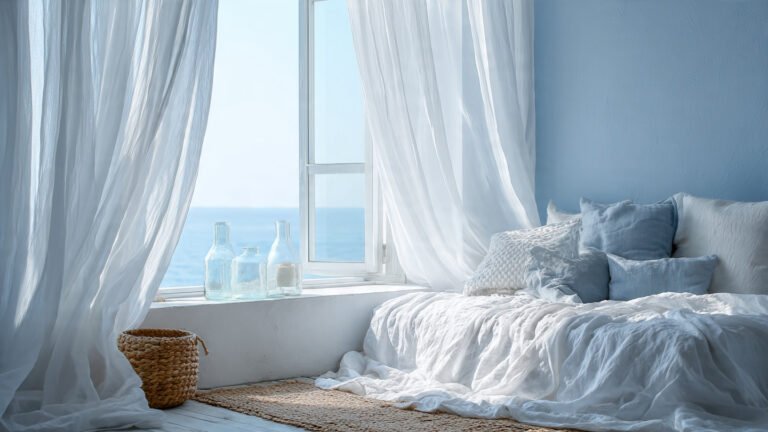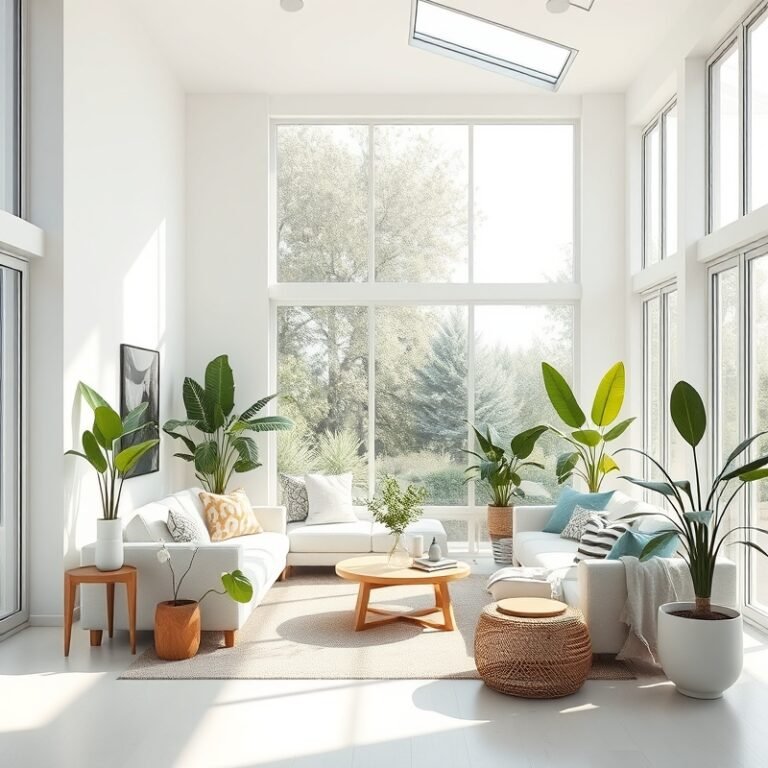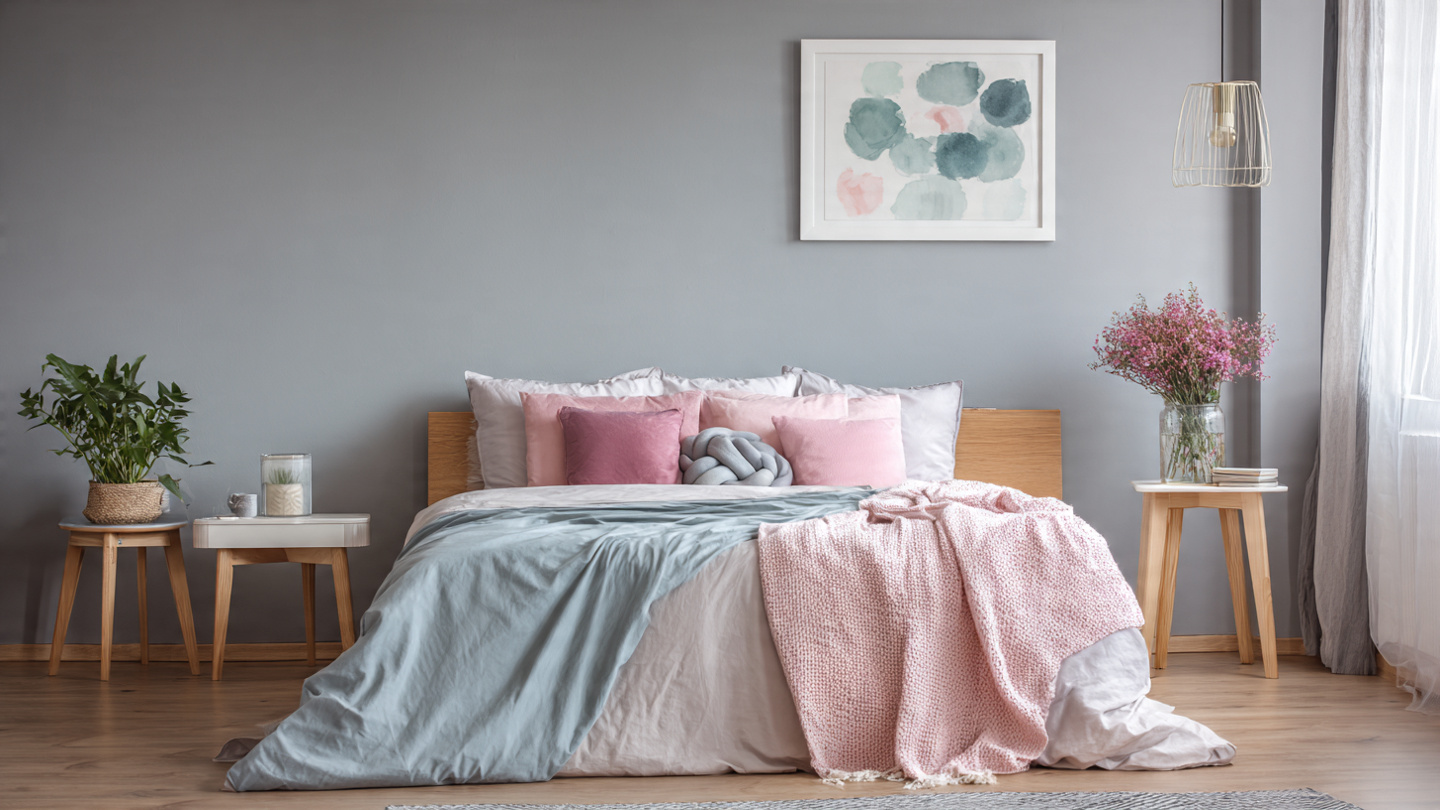
27 Colorful Minimalist Bedroom Ideas That Look Fresh and Calm

A bedroom that feels dull or chaotic can affect your rest and mood. This guide will help you design a colorful minimalist bedroom that feels calm, fresh, and balanced. You will learn how to use color without creating visual noise.
In this article, you will discover practical ideas that combine simplicity with personality. Each idea focuses on clean design, smart color use, and everyday comfort. These ideas work for small rooms and large bedrooms alike.
A colorful minimalist bedroom blends soft colors with simple layouts. It avoids clutter while still feeling warm and expressive. With the right approach, color can feel calming instead of overwhelming.
27 Core Colorful Minimalist Bedroom Styles
1. Soft Pastel Walls With Clean Furniture
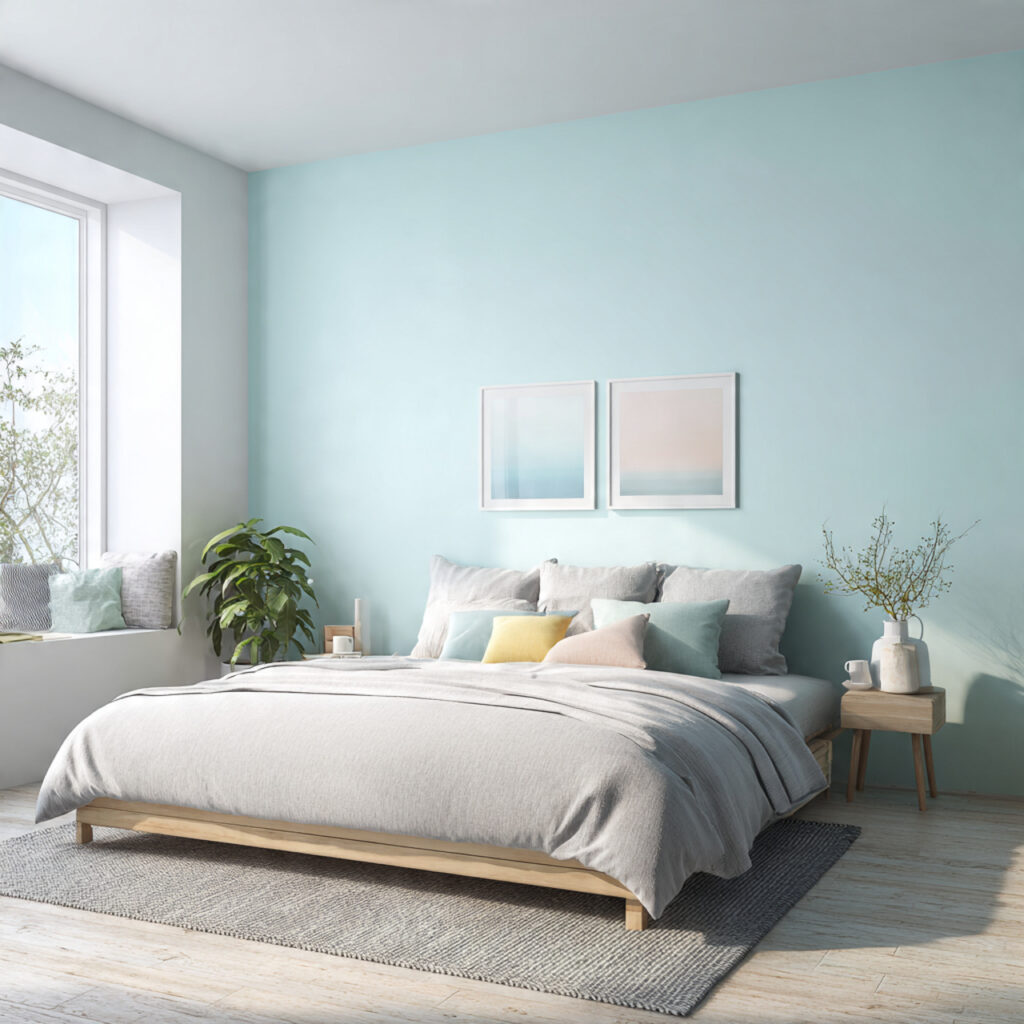
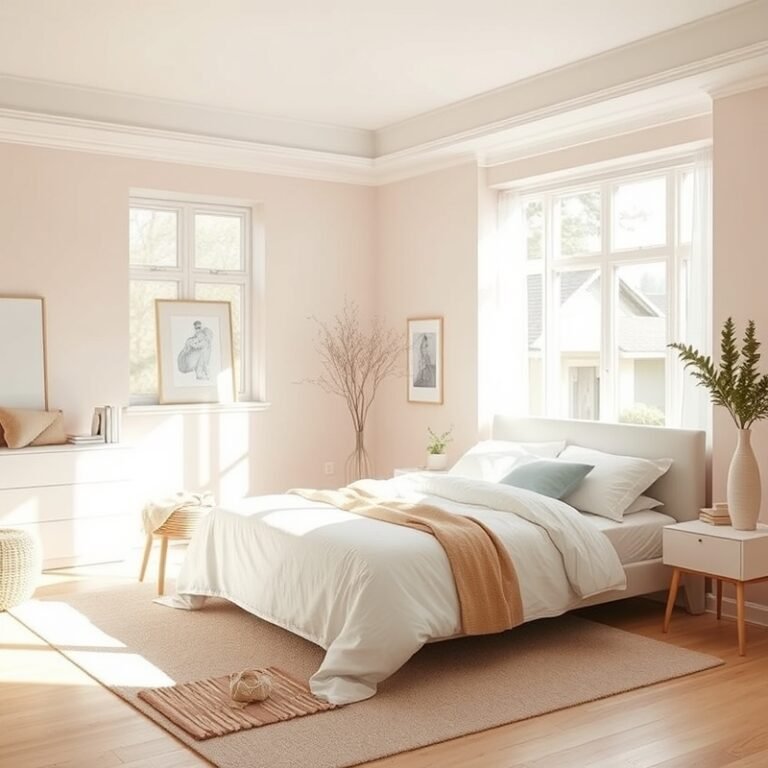
Soft pastel walls create a calm foundation for a colorful minimalist bedroom. Shades like blush, mint, and pale blue feel light and refreshing. These colors add personality without overwhelming the space. They also help the room feel relaxed and balanced.
Clean furniture supports the minimalist look effectively. Beds and nightstands with simple lines reduce visual noise. This allows the wall color to stand out naturally. The room feels organized and easy to enjoy.
Keeping decor minimal strengthens the calm effect. Use only a few matching accents. This avoids clutter and distraction. The bedroom remains peaceful and fresh.
Also Read: 25 Modern Rustic Living Room Ideas That Feel Warm and Stylish
2. White Base With One Strong Accent Color
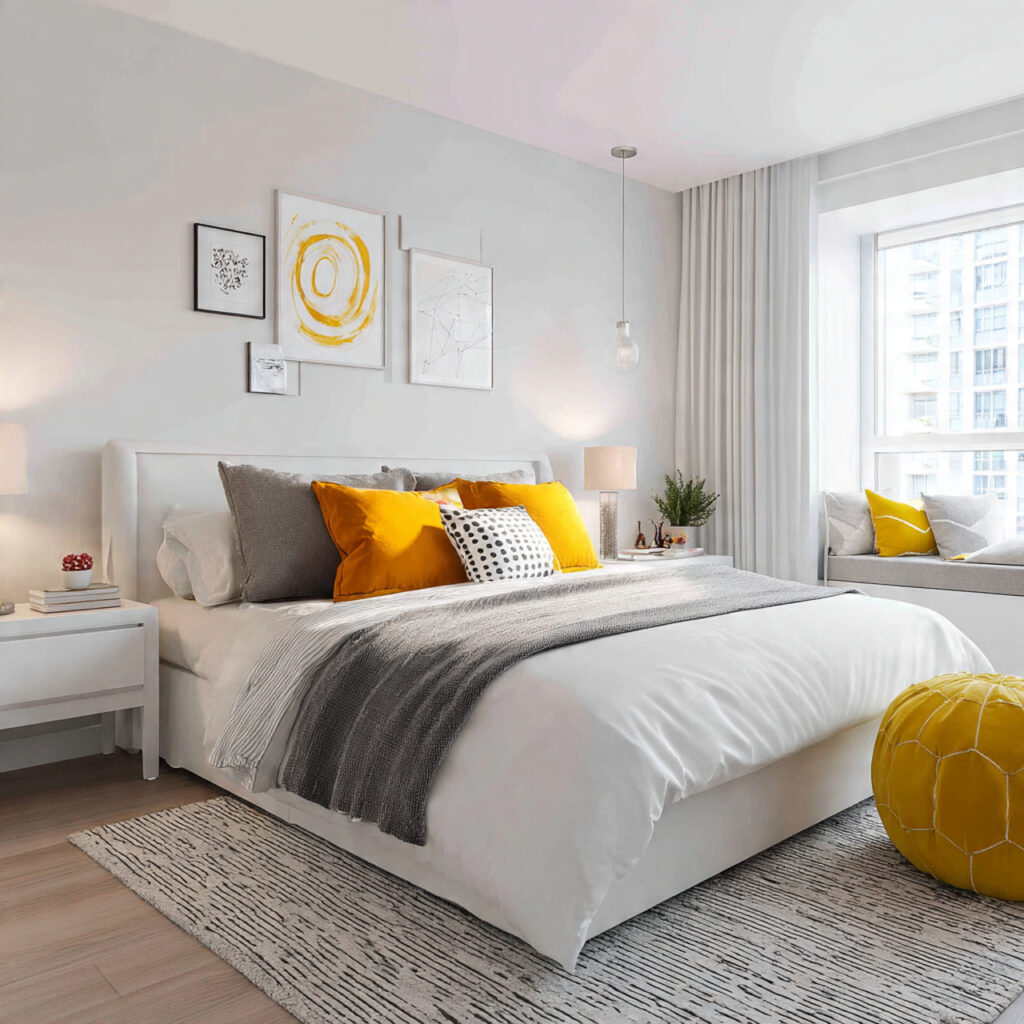
A white base makes the bedroom feel open and bright. It reflects light and enhances simplicity. This approach works well for modern and small bedrooms. It also creates a clean visual flow.
Adding one strong accent color introduces personality. This color can appear in bedding, cushions, or wall decor. Limiting color to one shade keeps the design controlled. The space feels lively but calm.
Consistency is important with accent colors. Repeat the same shade in a few places. Avoid mixing multiple bold tones. This keeps the bedroom minimalist and soothing.
Read More: 24 Valentine Mantle Decor Ideas That Look Elegant
3. Minimal Furniture With Color Focused Bedding

Minimal furniture reduces visual stress in the bedroom. Fewer pieces create more breathing room. This improves comfort and movement. The space feels uncluttered and calm.
Color focused bedding becomes the main design element. Soft colors like teal, mustard, or lavender work well. These tones add warmth without chaos. The bed becomes a gentle focal point.
Simple bedding designs support relaxation. Avoid heavy patterns or busy prints. Solid colors or light textures work best. The bedroom feels modern and restful.
4. Neutral Walls With Colorful Art Pieces
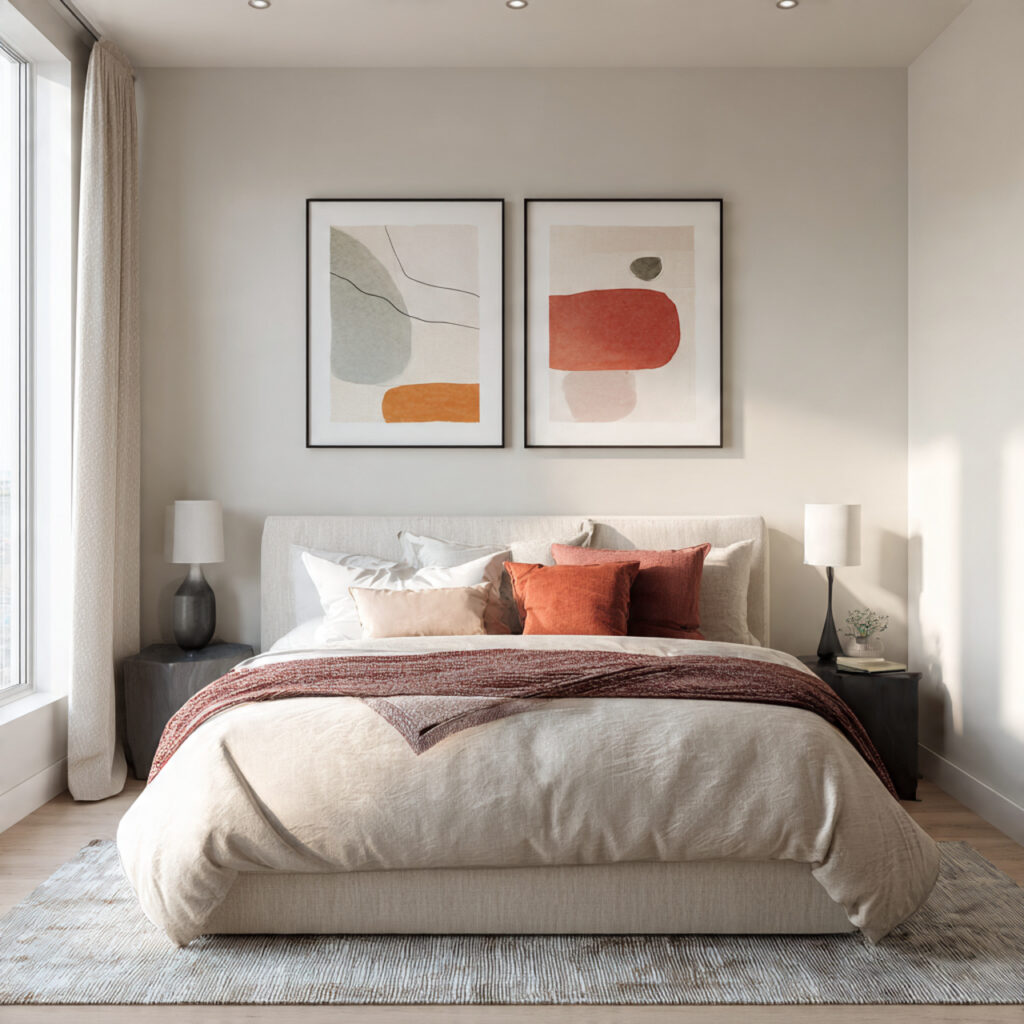
Neutral walls provide a peaceful backdrop for minimalist bedrooms. Tones like beige, off white, or light gray feel soft and stable. These shades reduce visual tension. They also allow color accents to stand out clearly.
Colorful art adds expression without clutter. Simple abstract prints or soft illustrations work well. They introduce color while keeping the space clean. Art becomes a controlled design feature.
Limiting artwork maintains balance. One or two pieces are enough. Too many visuals disturb calm. The bedroom stays fresh and composed.
5. Natural Light Enhanced With Soft Color Accents

Natural light plays a key role in minimalist bedrooms. It makes the room feel open and breathable. Light also softens colors naturally. This improves overall comfort.
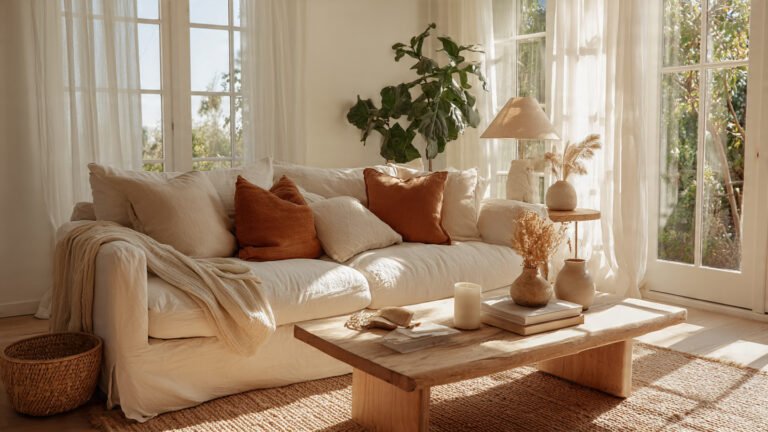
Soft color accents look better in natural light. Curtains, cushions, or rugs work well for this purpose. Light spreads color evenly across the room. The space feels gentle and balanced.
Avoid dark or heavy shades near windows. Light colors maintain freshness. They keep the room airy and calm. The bedroom feels peaceful throughout the day.
6. Low Profile Bed With Warm Color Layers
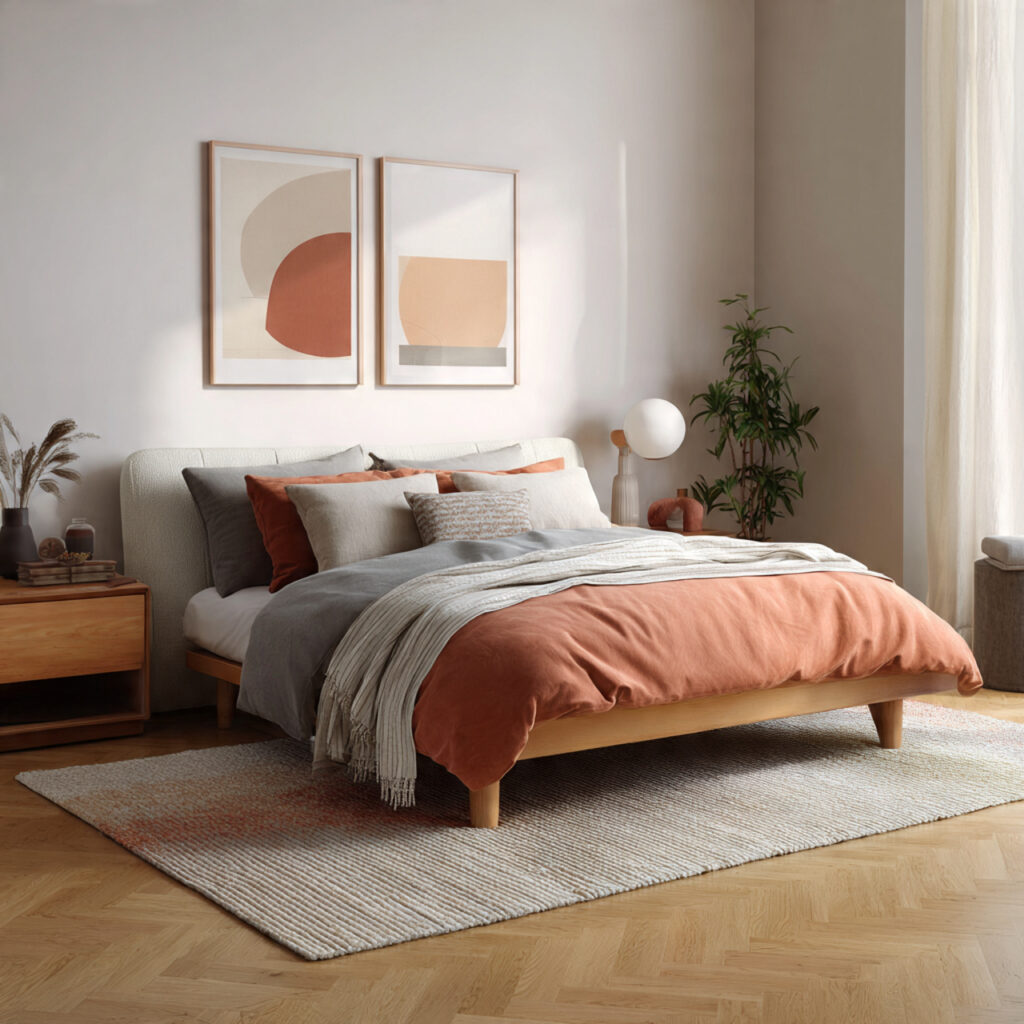
A low profile bed supports a clean and minimalist layout. It keeps visual weight low. This makes the bedroom feel more spacious. The design feels modern and relaxed.
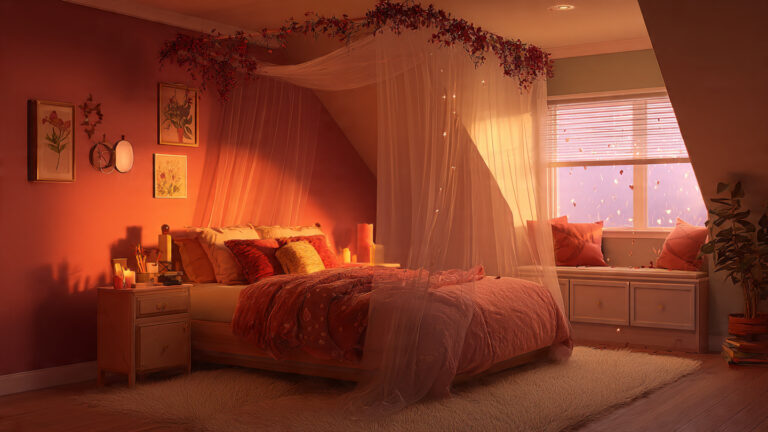
Warm colors like terracotta, peach, or soft rust add comfort. These tones feel inviting without being loud. They help create emotional warmth. The room feels cozy and calm.
Layer warm colors carefully to avoid excess. Combine them with neutral walls and furniture. This maintains balance and simplicity. The bedroom feels grounded and restful.
7. Soft Two Color Palette for Calm Contrast

Using two soft colors creates gentle contrast in a minimalist bedroom. This approach adds interest without visual noise. It helps the room feel layered yet calm. Balance is the key here.
Choose colors that sit close on the color wheel. Soft blue with gray or beige with sage work well. These combinations feel natural and soothing. They also support restful sleep.
Keep furniture and decor simple. Let the colors do the work. Avoid adding extra shades. This maintains clarity and harmony.
8. Muted Color Accents With Neutral Foundations
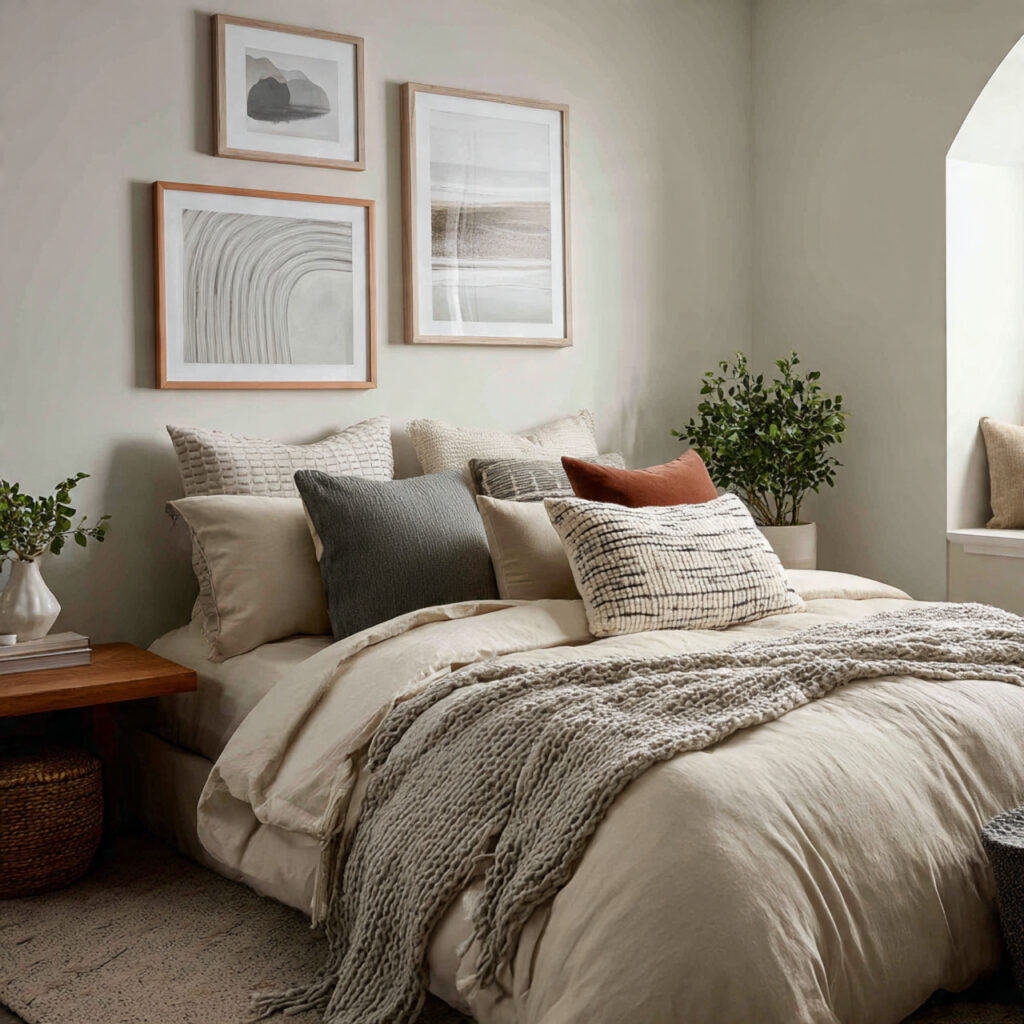
Muted colors bring depth without overpowering the room. Shades like dusty rose, soft olive, or muted mustard feel relaxed. They add warmth while staying subtle. This supports minimalist style.
Neutral foundations help control the visual flow. White or light beige walls work best. They allow muted accents to stand out gently. The room feels balanced and fresh.
Use muted accents in small areas. Cushions, throws, or art work well. Avoid large blocks of color. This keeps the space calm.
9. Color Blocking With Simple Geometry
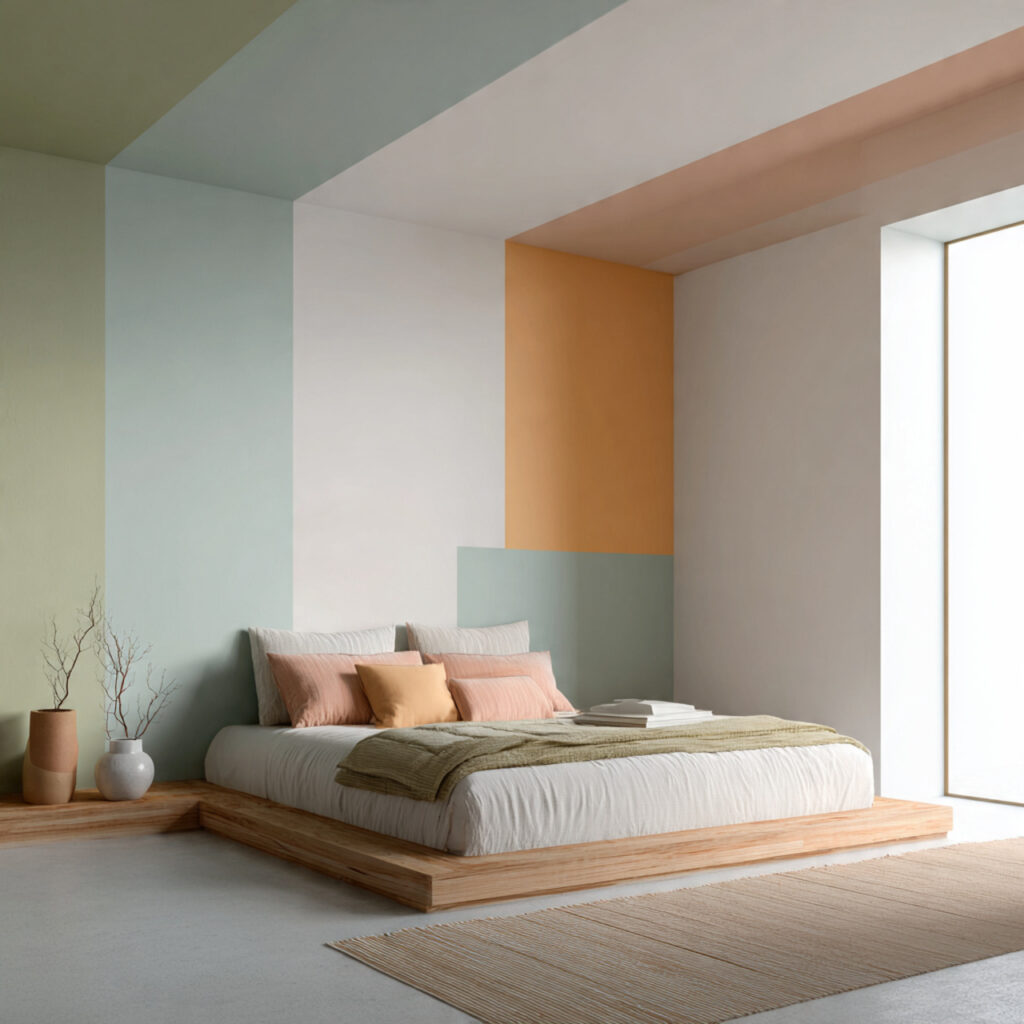
Color blocking adds modern character to a minimalist bedroom. Simple geometric shapes keep the look controlled. This adds interest without clutter. The style feels fresh and creative.
Use soft colors for blocking. Pastels and light earth tones work best. Avoid harsh contrasts or sharp edges. This maintains calmness.
Limit color blocks to one wall or area. Too much breaks minimalism. The room remains visually organized.
10. Tonal Color Layers for Subtle Depth
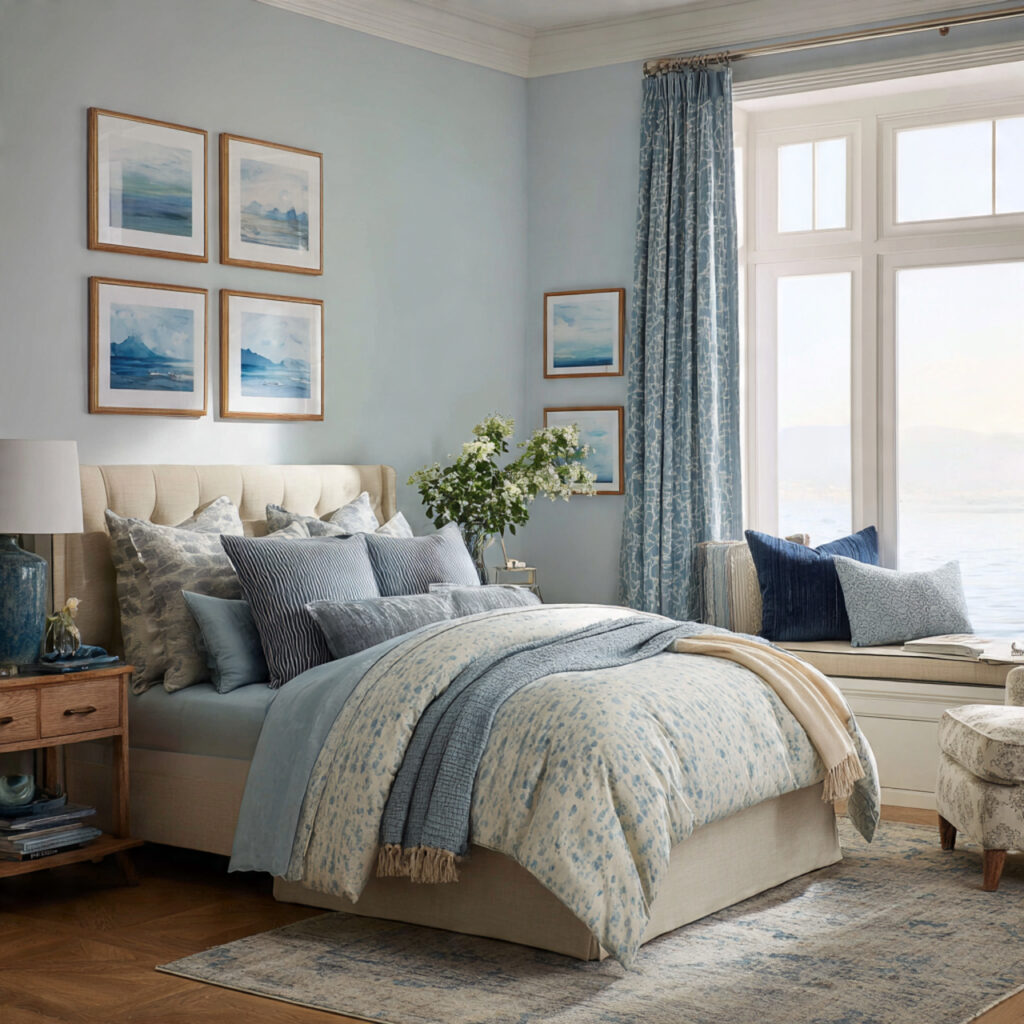
Tonal layering uses different shades of one color. This adds depth while keeping the space simple. It feels smooth and cohesive. The bedroom remains calm.
Use light to medium tones together. For example, soft blue with deeper blue accents. This creates variation without chaos. The look feels refined.
Keep patterns minimal when using tonal layers. Solid fabrics work best. This avoids visual overload. The room feels restful.
11. Balanced Use of Warm and Cool Colors
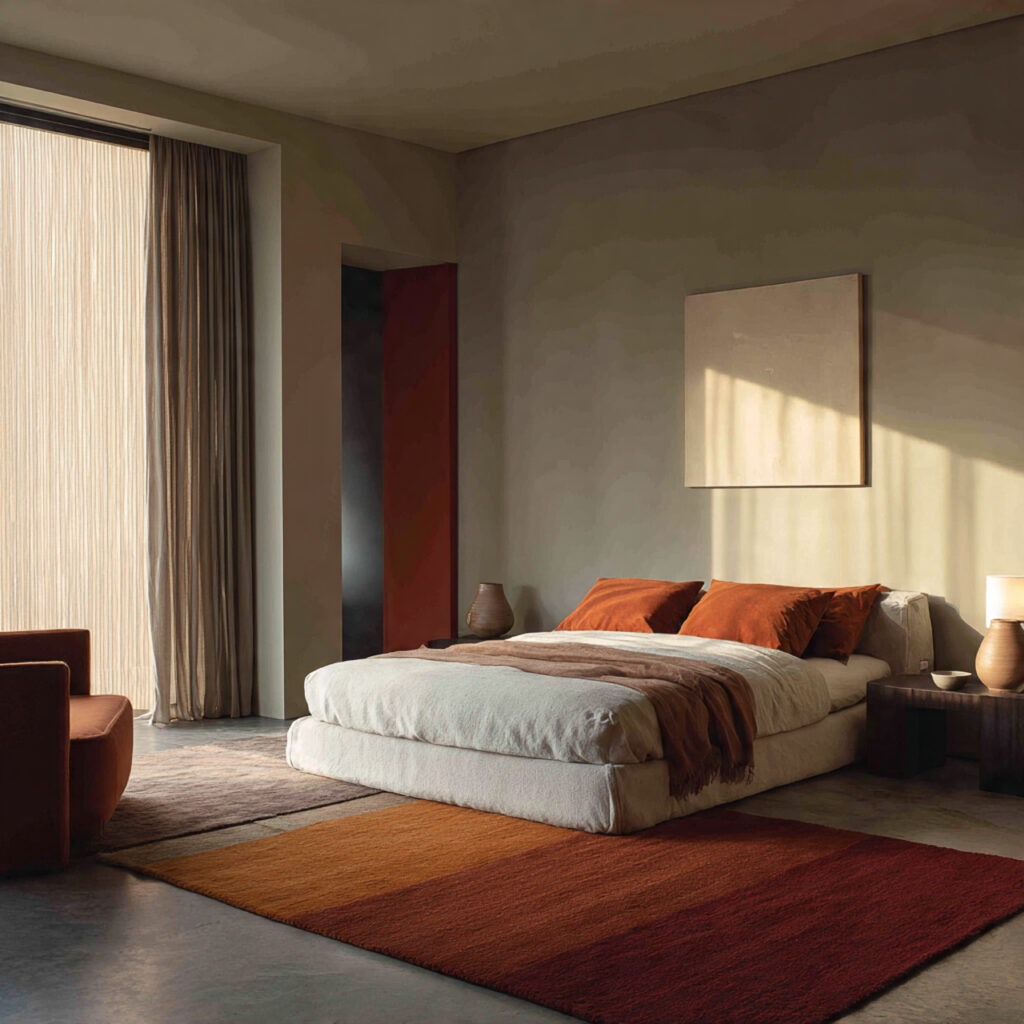
Warm and cool colors can coexist peacefully. Balance helps avoid visual tension. This combination adds richness to minimalist bedrooms. The space feels thoughtful.
Use one temperature as the base. Add the other in small accents. This keeps control and harmony. The room feels stable.
Avoid equal intensity of both tones. One should stay softer. This keeps the design calm. Balance remains intact.
12. Simple Color Repetition for Visual Flow

Repeating color creates flow across the room. It helps the eye move smoothly. This improves visual comfort. The bedroom feels connected.
Repeat the same color in different elements. Bedding, art, and decor work well. Keep the repetition subtle. The effect feels natural.
Avoid repeating too many colors. Stick to one or two shades. This supports minimalism. The room stays fresh and calm.
13. Minimal Bed Frame With a Color Accent Wall
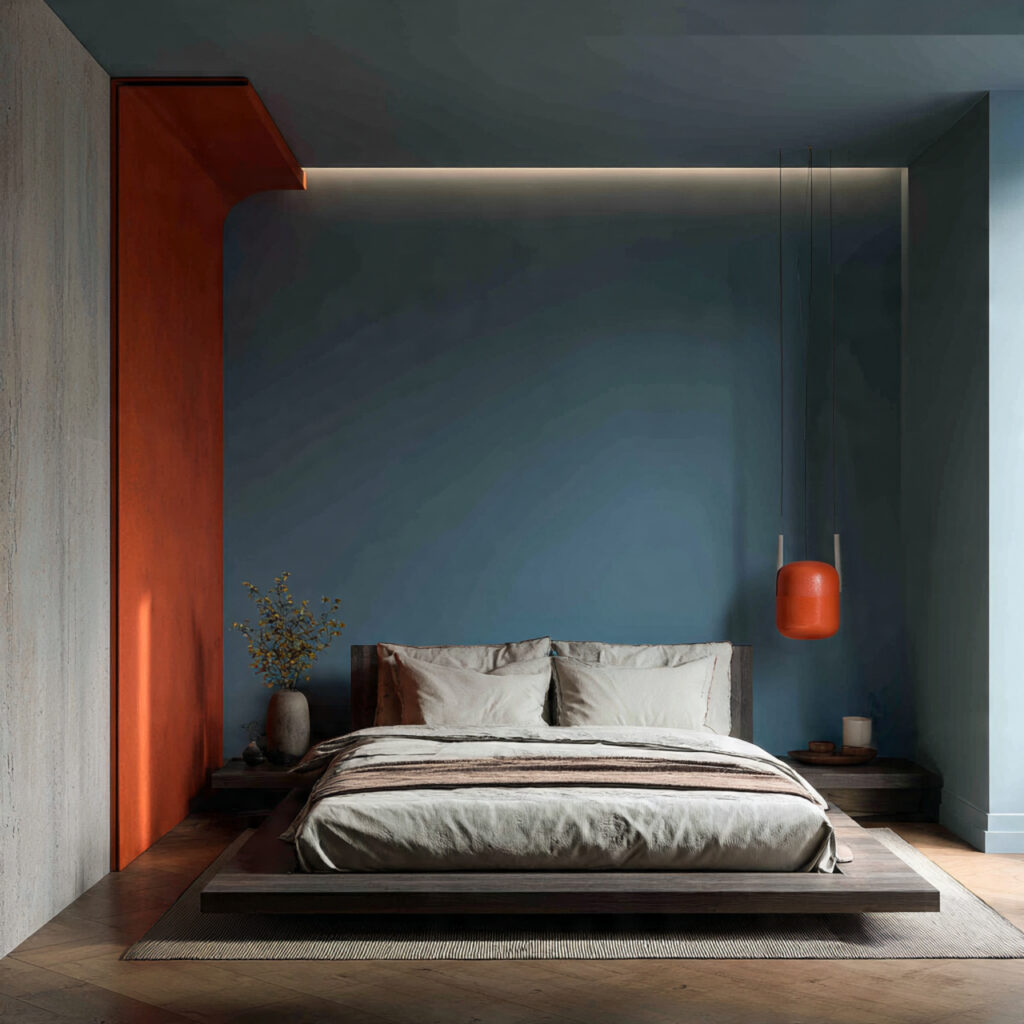
A minimal bed frame keeps the bedroom visually light and uncluttered. Simple shapes reduce distraction and improve calmness. This allows other elements to stand out naturally. The room feels balanced and open.
A color accent wall adds personality without overwhelming the space. Soft shades like sage, muted blue, or warm peach work well. These colors create focus behind the bed. They also add depth gently.
Keep the rest of the walls neutral to maintain balance. This prevents color overload in the room. The accent wall remains the main feature. The bedroom stays calm and modern.
14. Floating Nightstands With Subtle Color Touches
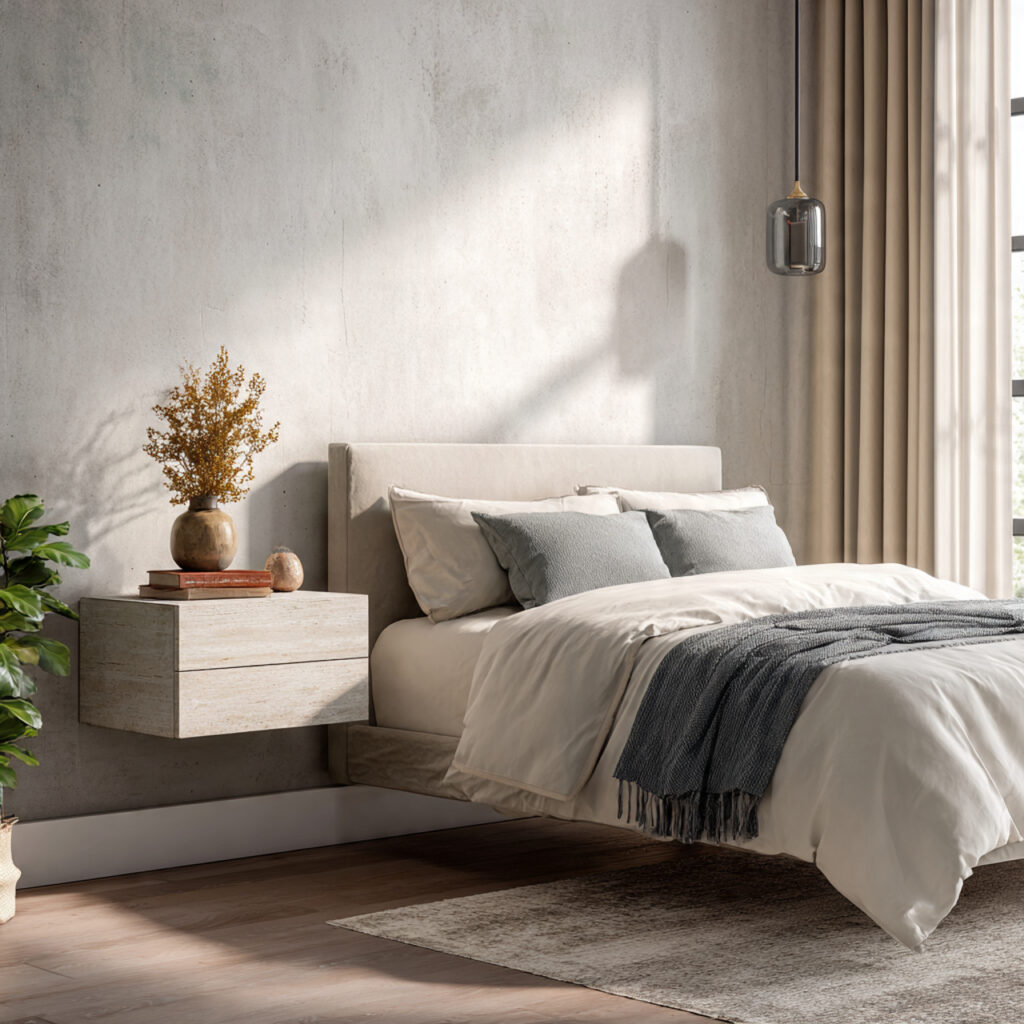
Floating nightstands support a clean and minimalist layout. They free up floor space and improve visual flow. This makes the bedroom feel larger. The design stays light and modern.
Adding subtle color to nightstands brings gentle interest. Soft finishes or small decor pieces work well. These touches add warmth without clutter. The look stays controlled.
Limit items placed on the nightstands. Keep only essentials like a lamp or book. This supports calm and function. The space feels tidy and relaxed.
15. Symmetrical Layout With Color Balance

Symmetry creates a sense of order and calm. Matching furniture on both sides of the bed improves balance. This layout feels stable and restful. It works well in minimalist bedrooms.
Color balance enhances the symmetrical layout. Use the same color tones on both sides. This could include cushions, lamps, or wall art. The room feels visually even.
Avoid adding extra elements that break symmetry. Too many variations disrupt calm. Keep the layout intentional. The bedroom feels peaceful and composed.
16. Simple Storage With Soft Color Finishes

Simple storage keeps the bedroom organized and calm. Clean lines help avoid visual clutter. This improves daily comfort and function. The space feels easy to manage.
Soft color finishes make storage feel less heavy. Light wood tones or pastel finishes work well. These colors blend naturally into the room. Storage becomes part of the design.
Avoid bulky or dark storage units. They add visual weight. Choose compact and light options. The bedroom stays fresh and open.
17. Open Floor Space With Minimal Color Details
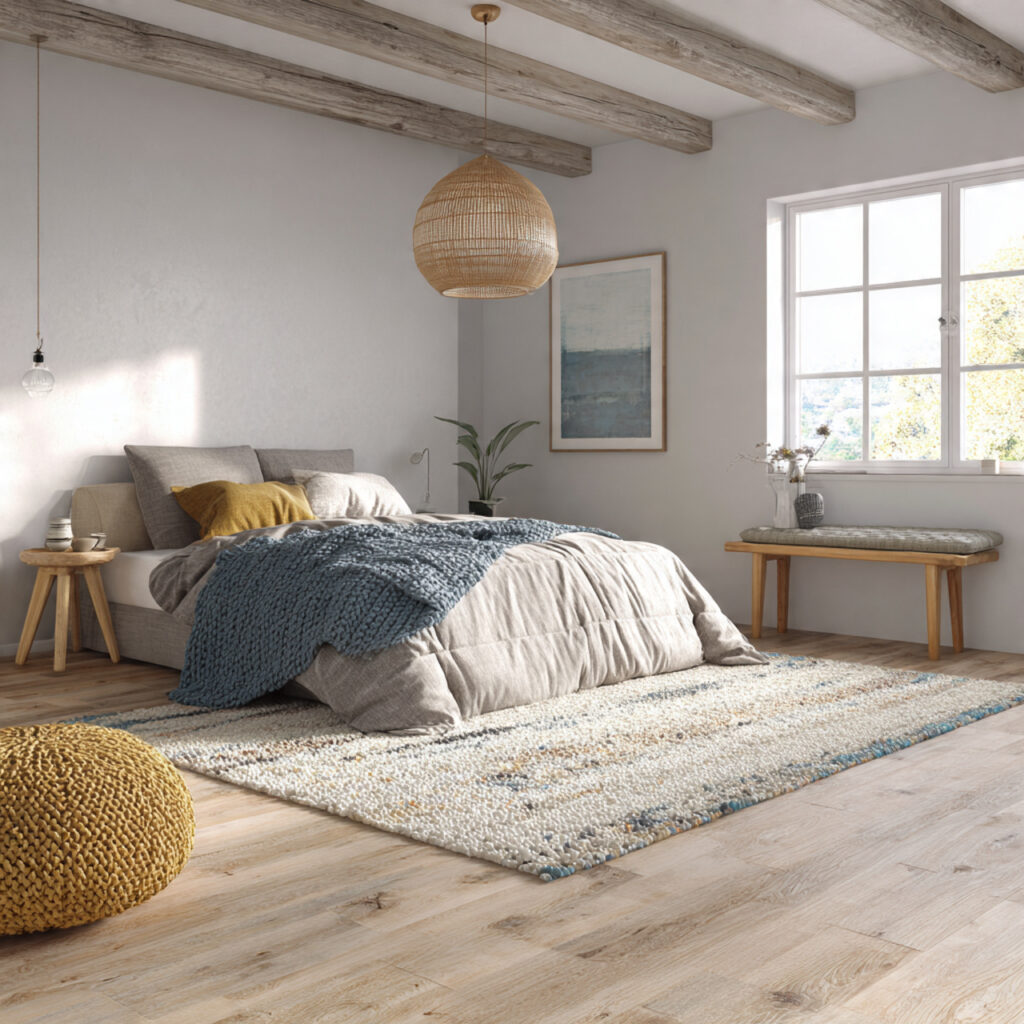
Open floor space improves movement and comfort. It helps the bedroom feel airy and relaxed. This is important for minimalist design. The room feels calm and breathable.
Minimal color details add interest without clutter. Rugs, cushions, or throws work well. These elements bring softness and warmth. Color remains controlled.
Keep the floor mostly clear of furniture. This improves visual flow. The space feels simple and peaceful. Comfort increases naturally.
18. Seating Corner With Soft Color Accents
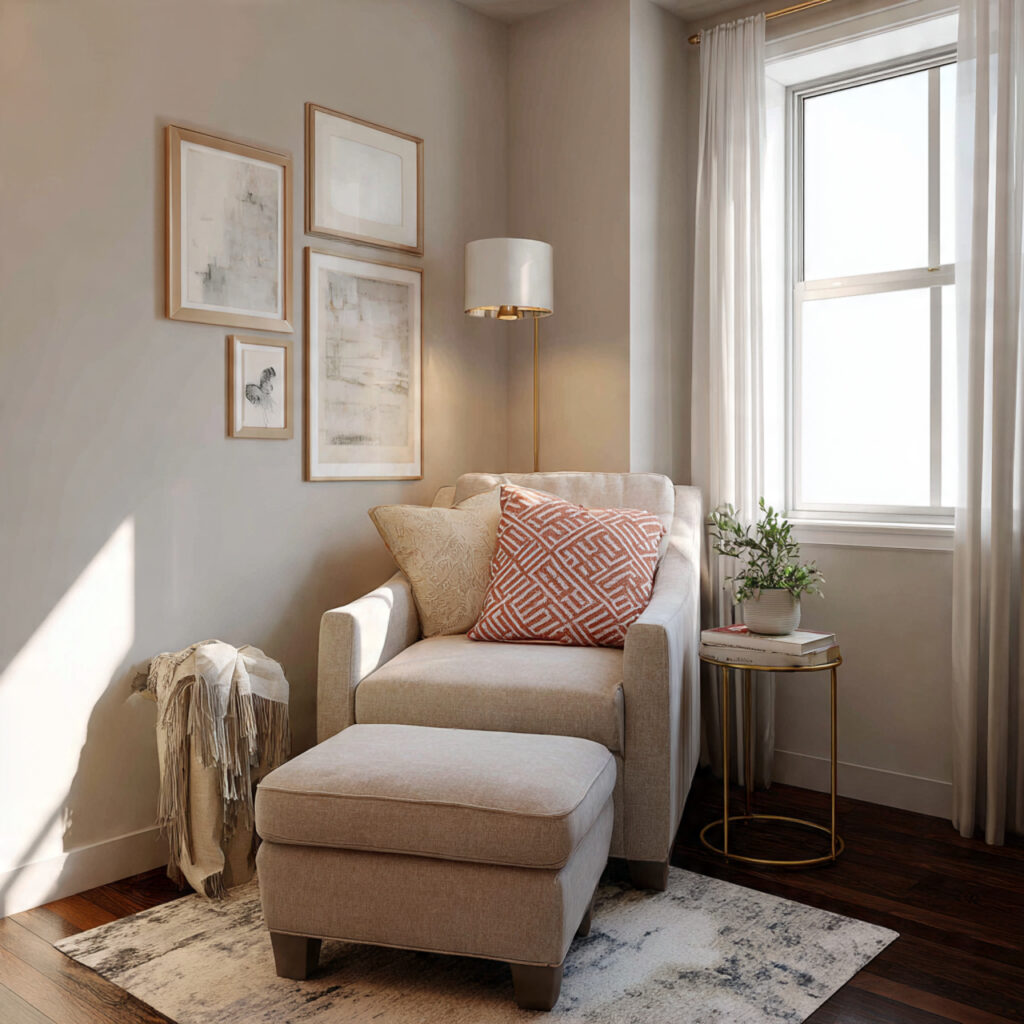
A small seating corner adds function to the bedroom. It creates a place to relax or read. This improves daily usability. The bedroom feels more complete.
Use soft colors for the seating area. Muted tones keep the corner calm. They blend well with the overall design. The space feels inviting.
Keep the seating design simple and light. Avoid heavy chairs or bold patterns. This maintains minimalism. The bedroom stays fresh and calm.
19. Soft Ambient Lighting With Color Harmony
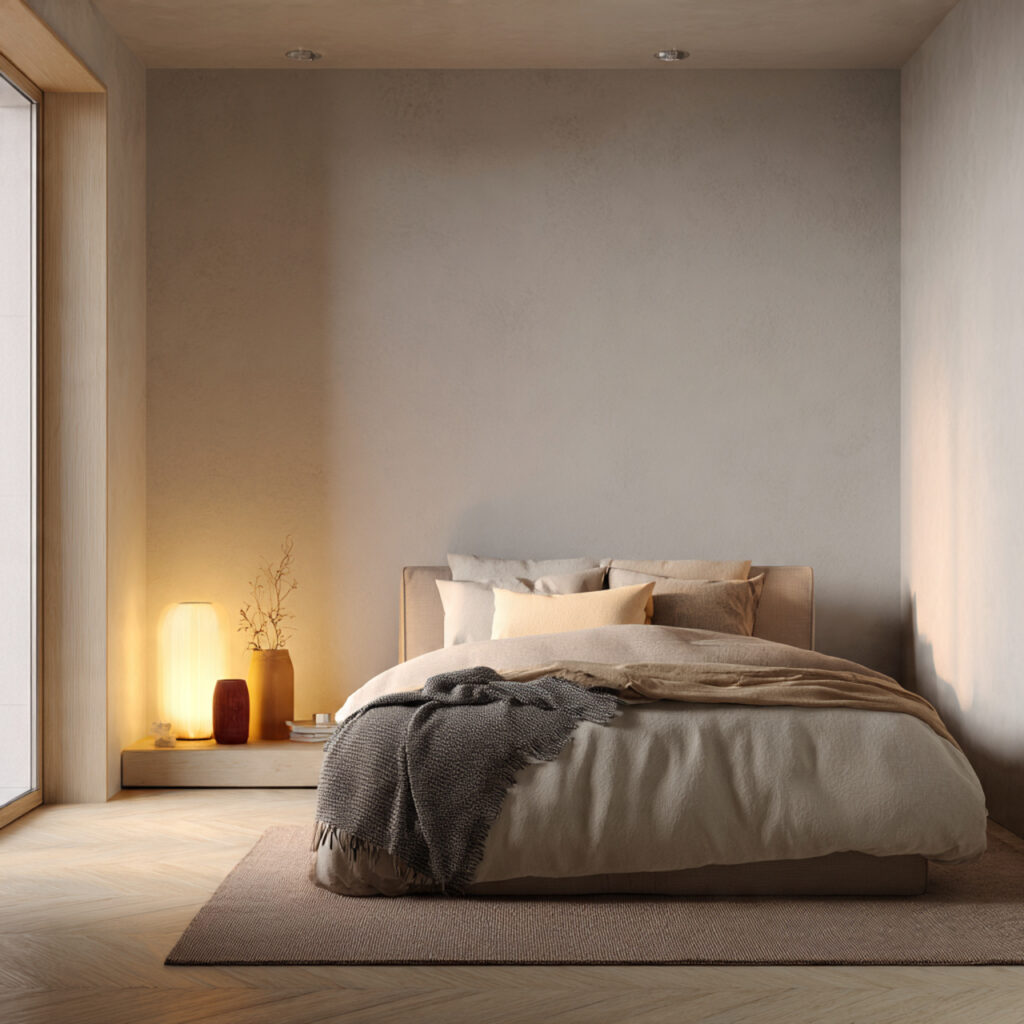
Soft ambient lighting helps a minimalist bedroom feel calm and restful. Warm light reduces harsh shadows and visual stress. It supports relaxation and better sleep. Lighting should feel gentle and even.
Color harmony improves the effect of ambient lighting. Soft colored lampshades or warm bulbs work best. These elements blend naturally with the room palette. The space feels balanced and soothing.
Avoid bright or cool lighting tones. They can disturb the calm atmosphere. Keep lighting consistent throughout the room. This creates a peaceful environment.
20. Layered Bedding With Controlled Color Use
Layered bedding adds comfort without clutter. Sheets, duvets, and light throws improve visual softness. This makes the bed feel inviting and relaxed. Layering also adds subtle depth.
Use controlled color choices for bedding layers. Stick to two or three related shades. This keeps the look clean and organized. The bed remains a calm focal point.
Avoid heavy patterns or strong contrasts. Simple textures work better. This supports minimalist design. The bedroom feels calm and fresh.
21. Curtains That Soften Light and Color

Curtains play an important role in visual calm. They filter natural light gently. This helps control brightness and mood. The room feels softer and more private.
Choose curtains in soft or neutral colors. Light tones support minimalism and calmness. They also blend easily with wall colors. The space feels harmonious.
Avoid thick or dark curtain fabrics. These can feel heavy and overwhelming. Lightweight materials work best. The bedroom stays airy and relaxed.
22. Rugs That Add Color Without Clutter
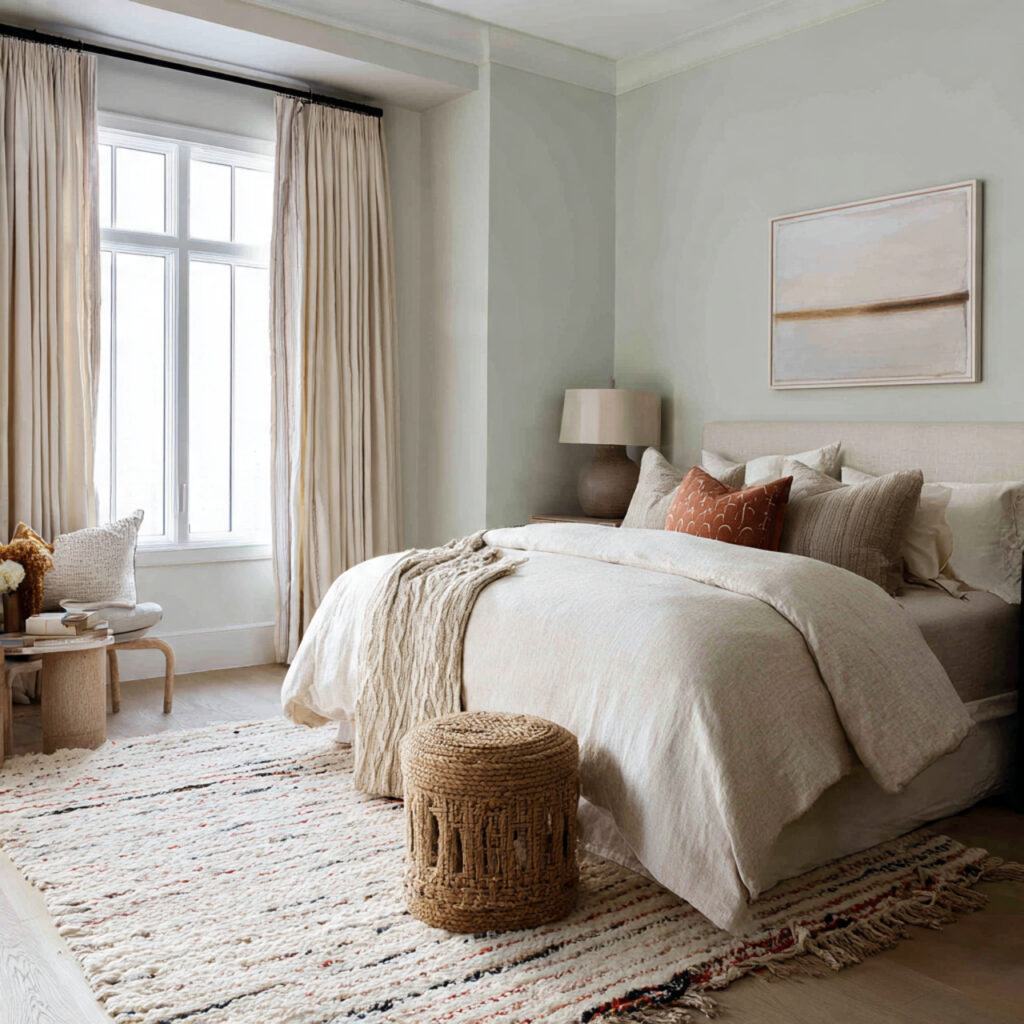
Rugs add warmth and comfort to the bedroom. They soften hard flooring and reduce noise. This improves overall comfort. Rugs also help define the space.
Choose rugs with soft colors and simple patterns. Muted tones work best for minimalism. They add interest without distraction. The room feels grounded.
Keep rug size appropriate to the room. Oversized or too small rugs break balance. Proper sizing supports harmony. The bedroom stays visually calm.
23. Textured Throws With Gentle Color Layers
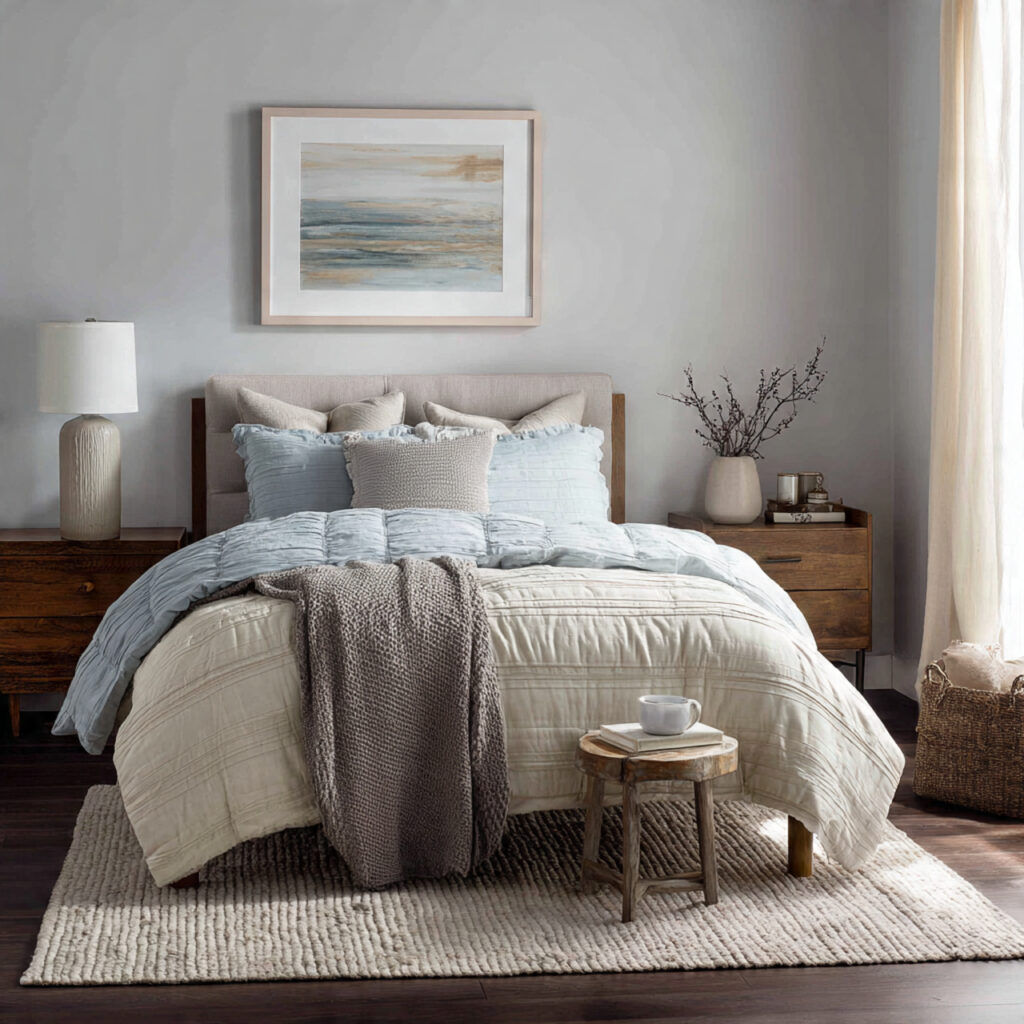
Textured throws bring softness to minimalist bedrooms. They add warmth without adding bulk. Texture improves visual interest subtly. The space feels more inviting.
Choose throws in gentle color tones. Soft blues, creams, or warm neutrals work well. These colors blend naturally with bedding. The look stays calm.
Limit throws to one or two pieces. Too many layers create clutter. Keep placement intentional. The bedroom feels clean and balanced.
24. Simple Decor That Supports Restful Energy

Simple decor supports relaxation and calm. Fewer items reduce visual stress. This helps maintain a peaceful bedroom environment. The space feels easier to enjoy.
Choose decor with soft shapes and colors. Natural materials work especially well. These elements add warmth without noise. The room feels grounded.
Avoid decor with bold colors or sharp edges. These disrupt calmness. Keep items minimal and meaningful. The bedroom stays fresh and restful.
25. Color Coordinated Accessories for Visual Calm

Color coordinated accessories help maintain a clean and balanced look. Using the same color family across small items creates unity. This prevents the bedroom from feeling scattered or busy. The space feels visually calm.
Accessories like cushions, lamps, or small decor pieces work best. Keep colors soft and consistent. This adds personality without disrupting minimalism. The bedroom stays fresh and composed.
Avoid mixing too many accessory colors. Stick to one or two tones only. This keeps visual flow smooth. The room feels controlled and relaxing.
26. Wall Space Left Open for Mental Clarity
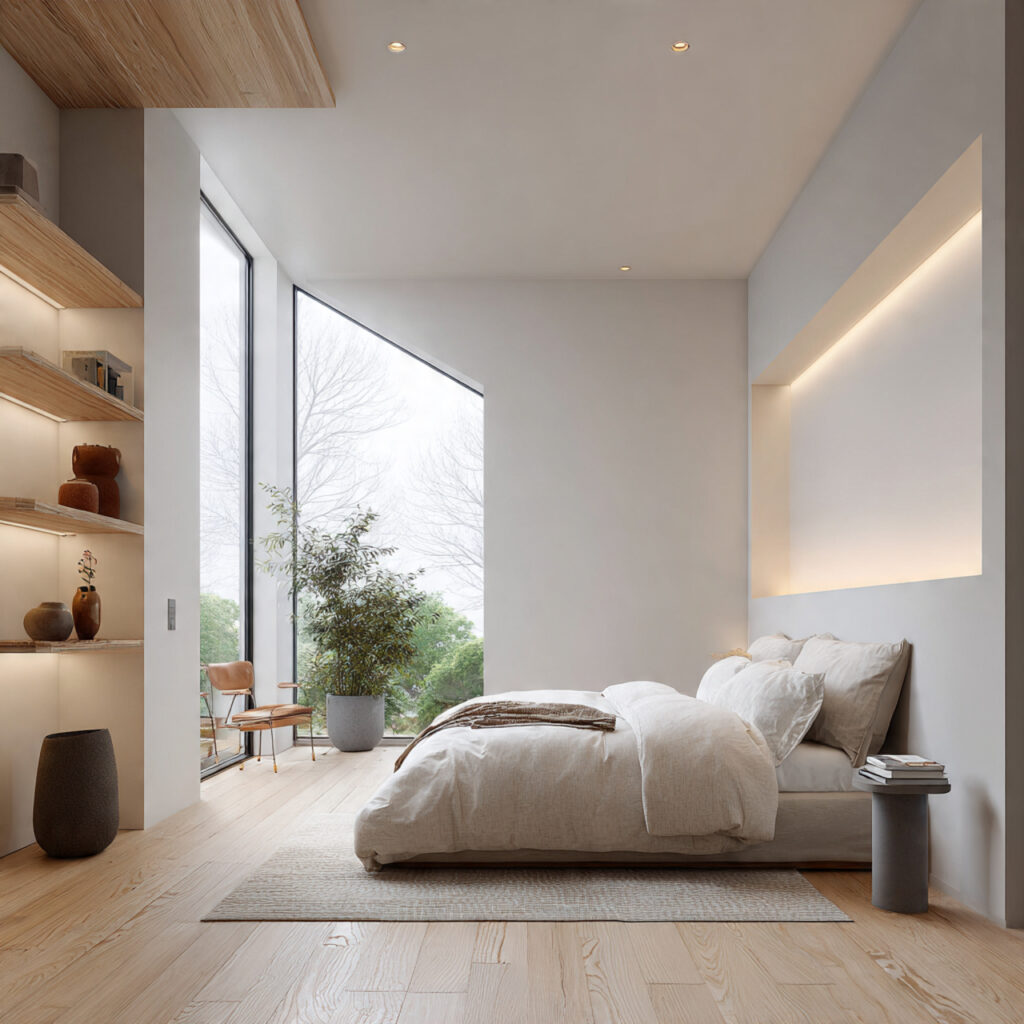
Open wall space supports a calm and minimalist environment. It gives the eyes a place to rest. This reduces visual pressure and mental clutter. The bedroom feels lighter and more peaceful.
Leaving walls open also improves balance. It allows furniture and color accents to stand out naturally. This keeps the room from feeling crowded. The design feels intentional and breathable.
Use wall decor sparingly if needed. One simple piece is enough. Avoid filling every wall. The bedroom remains calm and fresh.
27. Consistent Color Theme Throughout the Bedroom
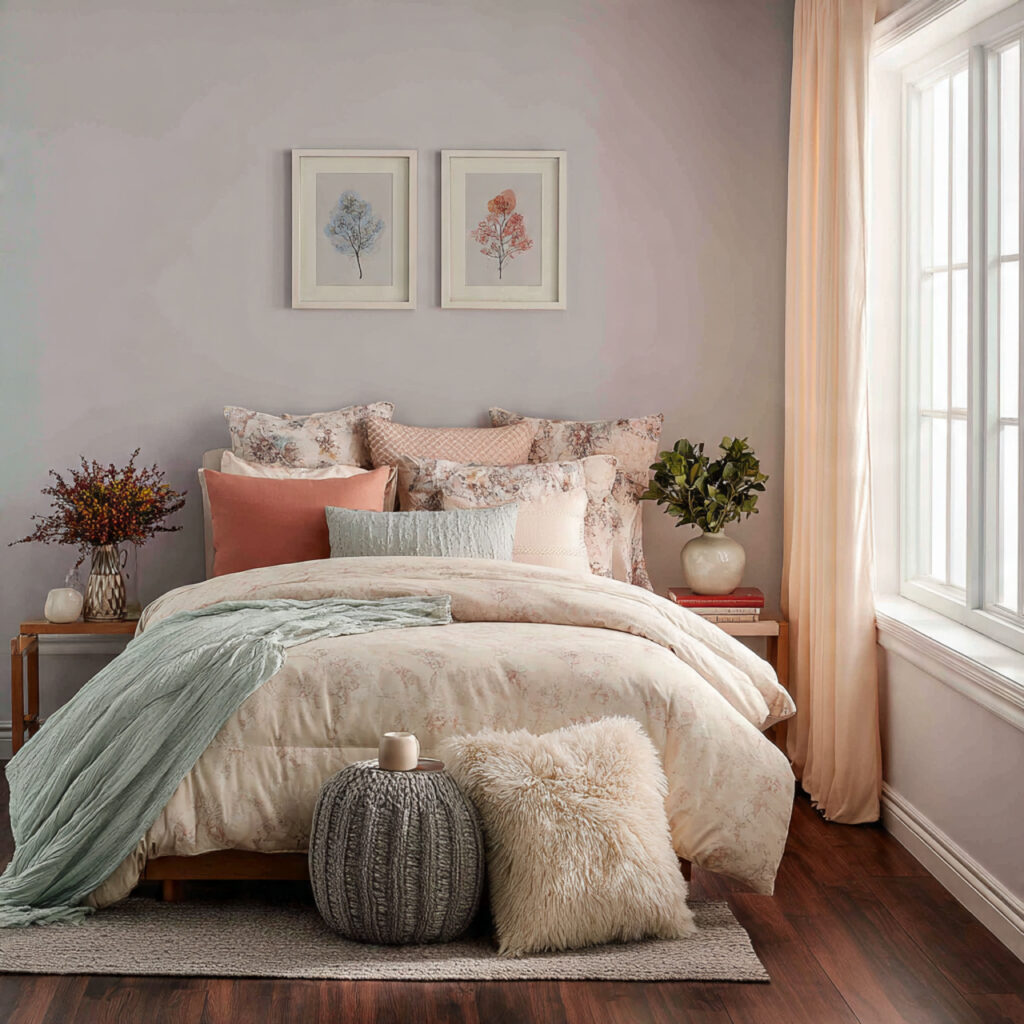
A consistent color theme ties the entire bedroom together. Repeating the same tones creates harmony. This helps the space feel organized and calm. The design feels effortless.
Use color consistently across bedding, decor, and textiles. This does not mean everything matches exactly. Soft variations keep the look interesting. The room feels balanced and natural.
Avoid introducing new colors at the final stage. This can break visual calm. Stick to your chosen palette. The bedroom feels complete and restful.
Conclusion
A colorful minimalist bedroom blends simplicity with gentle expression. By using controlled color and clean layouts, the space feels calm and refreshing. This approach supports better rest and daily comfort. The bedroom becomes a peaceful retreat.
Each idea in this guide focuses on balance and intention. Color is used thoughtfully, not excessively. Minimal furniture and soft textures support relaxation. The room feels fresh without feeling empty.
A colorful minimalist bedroom does not rely on trends. It values clarity, comfort, and harmony. With careful choices, the design stays timeless. Your bedroom remains calm and inviting every day.