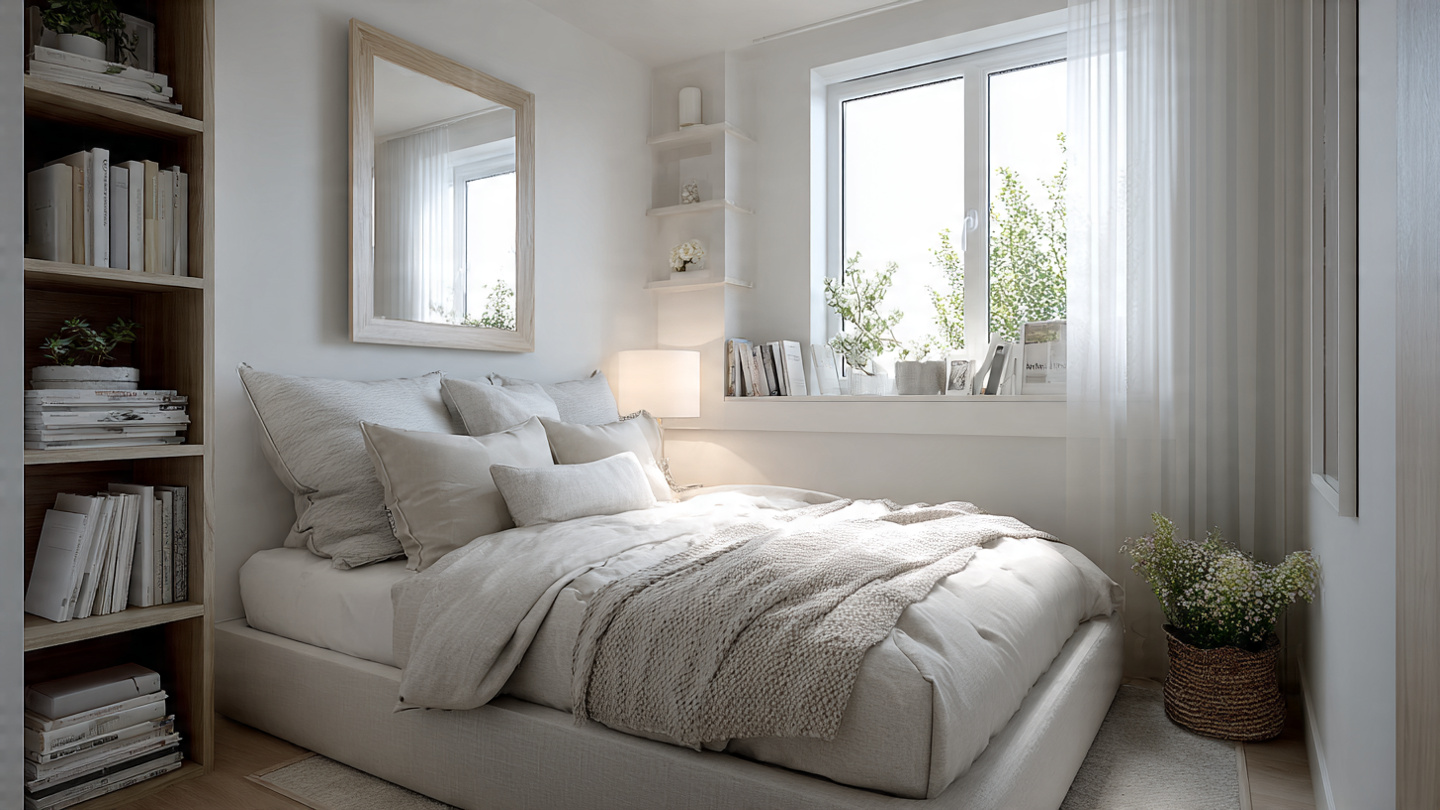
24 Bedroom Ideas for Small Rooms That Maximize Space and Make Your Room Look Bigger Try These Today

You know the feeling. You walk into your bedroom and immediately feel the walls closing in a little not dramatically, not dramatically at all, but just enough. Just enough that you can’t quite relax the way you want to. The room works. The bed fits. The dresser is there. But the space feels tight in a way that follows you even after you leave it.
Here’s the thing most people don’t realize: small bedrooms are not a design problem. They’re a design opportunity and the most beautiful, most thoughtfully styled small rooms often feel more intentional and more personal than rooms with twice the square footage.
Bedroom ideas for small rooms have become one of the most consistently searched home design categories across the US, Canada, the UK, and Australia and for genuinely good reason. Apartment living, smaller homes, converted spaces, shared houses the reality is that most bedrooms aren’t large, and most people need practical, beautiful solutions rather than aspirational advice designed for rooms they don’t have. Interior designers who specialize in small spaces consistently confirm that the principles that make small bedrooms work are not about illusion or compromise; they’re about intelligent design that makes every square foot serve its purpose beautifully.
These 24 ideas address every dimension of the small bedroom: furniture choices, color strategy, storage solutions, lighting, and the specific styling details that make a room feel either cramped or calm. Start with the ideas that address your biggest frustrations first.
Why Small Bedrooms Can Feel Bigger Than They Are
The Perception Principle
Room size is partly physical and partly psychological. The actual square footage of a bedroom is fixed but how large it feels is influenced significantly by color, light, furniture proportion, visual clutter, and the specific design choices that either draw the eye in or push it outward. A small bedroom designed with these principles feels generous; the same bedroom without them feels small regardless of what you do.
The goal isn’t to trick the eye, it’s to use design principles that genuinely create spaciousness rather than the visual noise that makes rooms feel crowded and contained.
Also Read: https://myhavenvibes.com/st-patricks-day-decorations/
The Small Bedroom Design Rules That Always Work
Three principles underpin every successful small bedroom transformation. First, consistent colors and materials across floors, walls, and furniture reduce the number of visual interruptions the eye encounters, making the space feel more expansive. Second, vertical emphasis using the full height of the room draws attention upward and creates perceived spaciousness above the furniture line. Third, strategic editing of fewer, better-chosen pieces always creates more room than more pieces, however small each individual item might be.
Color and Light Ideas That Open a Small Bedroom
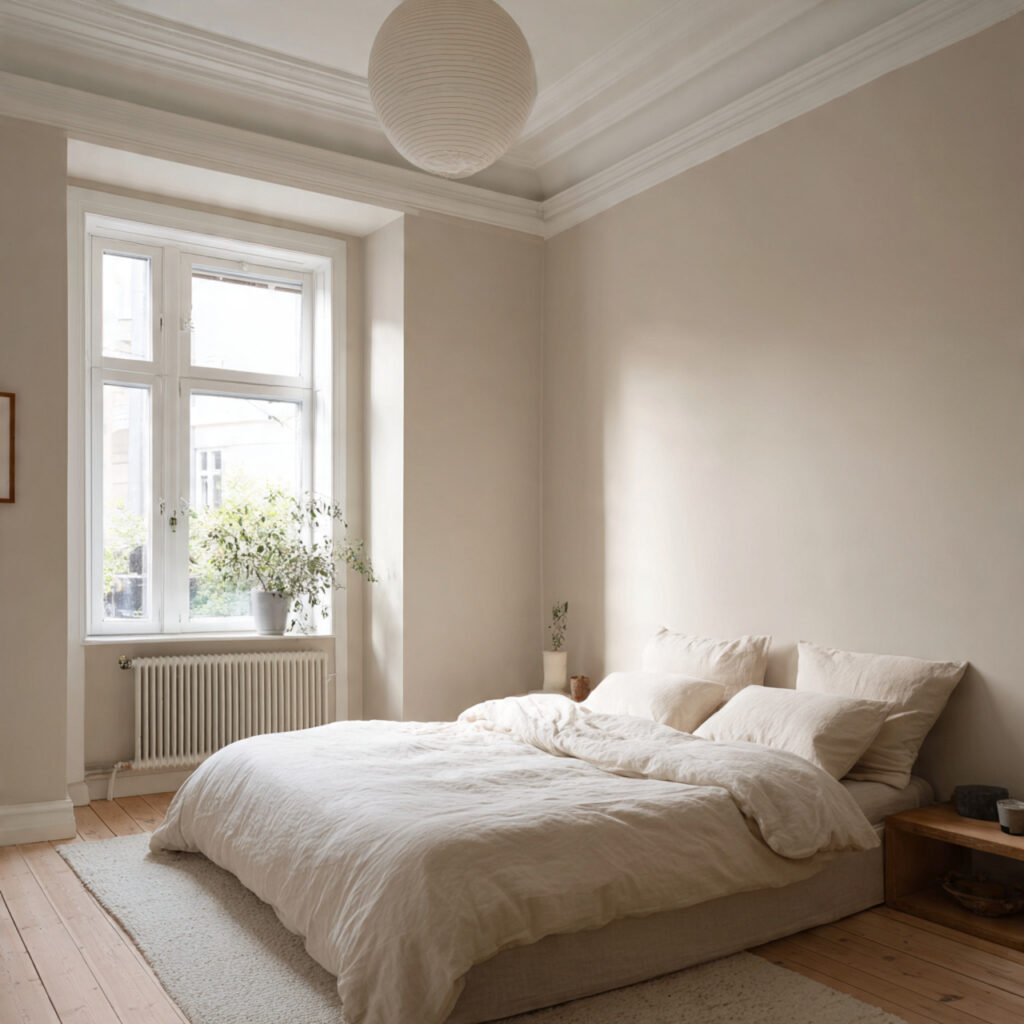
1. A Pale, Warm Neutral on All Four Walls and the Ceiling
Why It Works
Painting all four walls and the ceiling in the same pale, warm neutral cream, warm white, the softest greige eliminates every visual interruption that color contrast between surfaces creates. The eye moves continuously around the room without stopping at a contrasting ceiling or a different wall color, and the room reads as a single generous envelope of space rather than four contained walls.
How to Choose the Tone
Choose a warm rather than cool neutral. Cool whites and greys can feel clinical and slightly contracting in small rooms; warm creams and greiges feel expansive and enveloping. Test a large swatch at least A4 size on the actual wall in the room’s specific light before committing.
Common Mistake
Painting the ceiling a different color from the walls with the intention of adding interest. In a small room, ceiling contrast draws attention to the room’s edges and emphasizes its boundaries. Continuity between walls and ceiling removes those boundaries visually and the room feels immediately taller and more open.
Read More: https://myhavenvibes.com/purple-gray-bedroom/
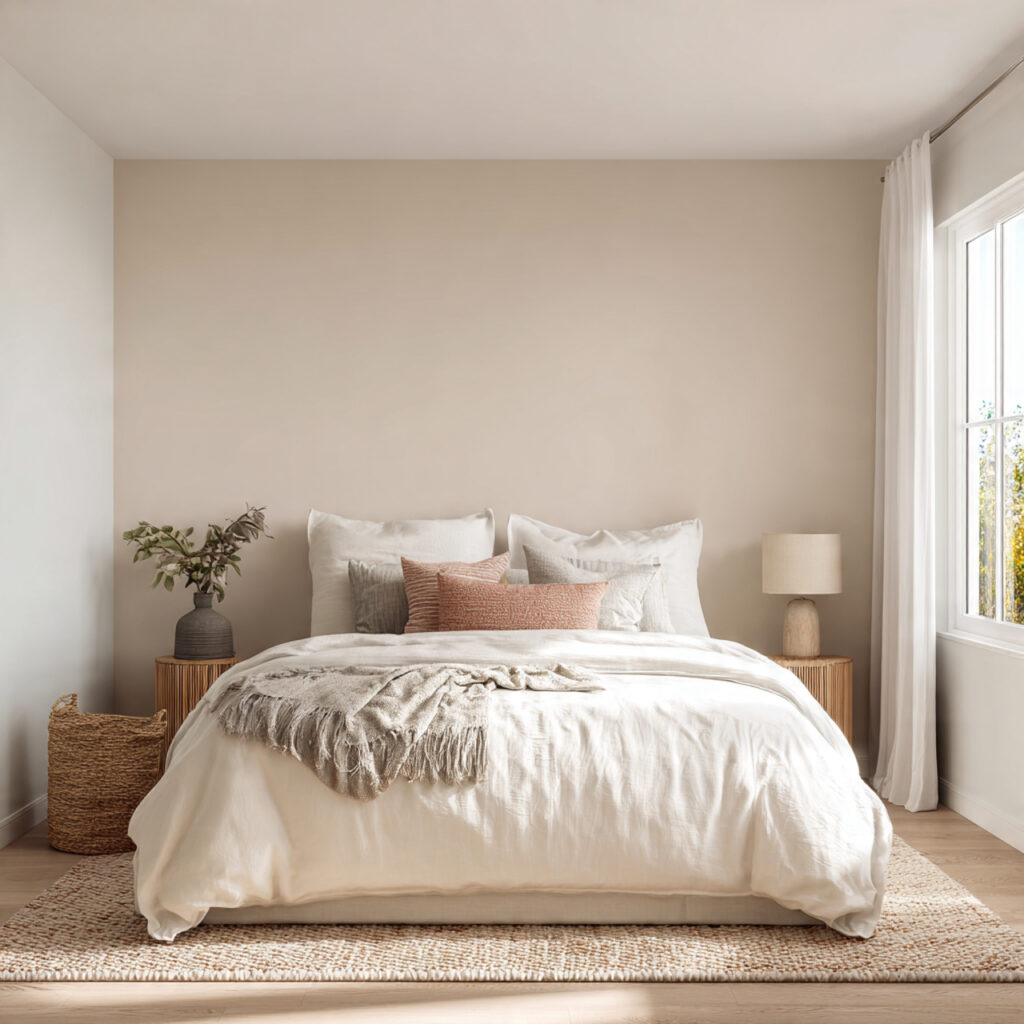
2. A Single Accent Wall in a Complementary Tone
Why It Works
When a completely neutral room feels too bland, a single accent wall in a tone that’s deeper or richer than the other three but still within the same palette adds depth and visual interest without the chopping effect of strong contrast.
How to Choose It
The accent wall should sit behind the bed the headboard wall where it creates a visual backdrop for the room’s focal point without advancing toward the viewer. A deeper tone on this wall actually creates a sense of recession; the wall appears to be further away than it is, increasing the room’s perceived depth.
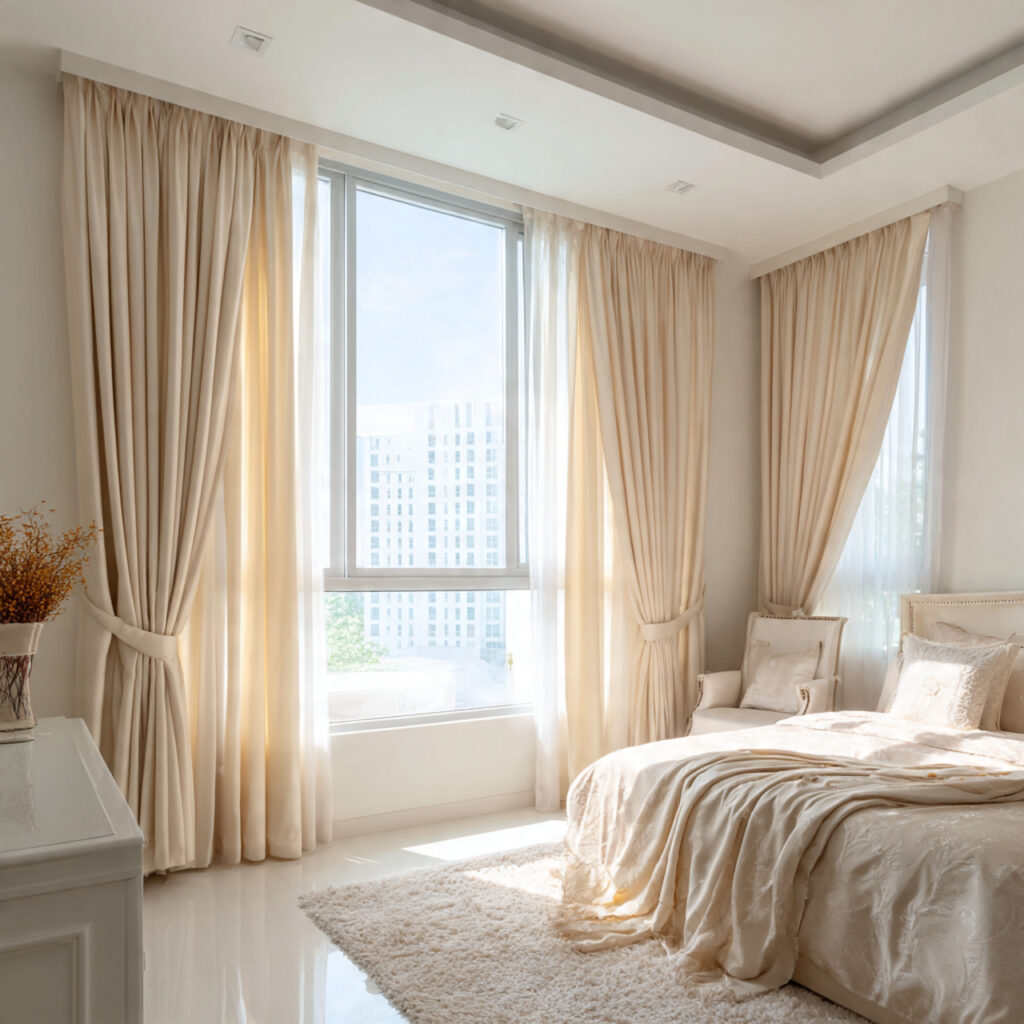
3. Ceiling-Height Curtains in the Wall Color
Why It Works
Curtains that match the wall color and hang from ceiling height to the floor create a wall of continuous color that makes windows look dramatically larger, ceilings feel dramatically higher, and the room feel significantly more expansive all through the strategic use of fabric and height.
How to Implement It
Mount curtain rods or tracks as close to the ceiling as possible, regardless of where the actual window sits. Choose curtains in a tone very close to the wall color not an exact match, but within the same tonal family. When the curtains blend with the walls, the entire perimeter of the room reads as one unbroken surface, which is enormously expansive visually.
Insider Tip
Choose curtains that extend 6-12 inches wider than the window frame on each side, so when open they clear the glass completely. The uncovered window maximizes natural light which is the most powerful room-expanding tool available.
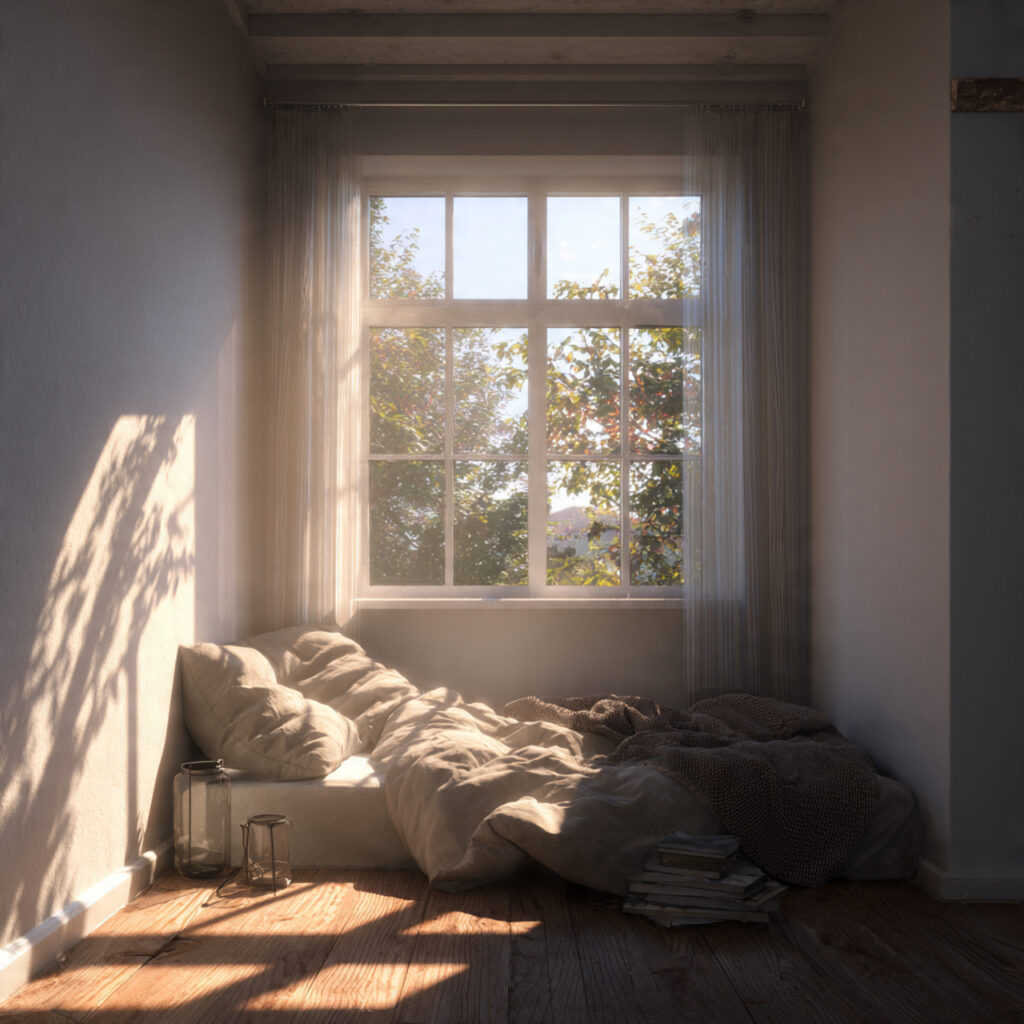
4. Maximize Natural Light at Every Opportunity
Why It Works
Natural light is the single most effective room-expanding element in any interior. A small bedroom flooded with light feels generous and airy; the same room in dim light feels tight and enclosed regardless of what other design choices are made.
How to Maximize It
Keep windowsills clear of objects that block incoming light. Choose window treatments that pull completely clear of the glass when open. Position a mirror to reflect incoming daylight back into the room. Clean the windows inside and out the difference between dirty and clean windows in terms of light quality is significant and immediate.
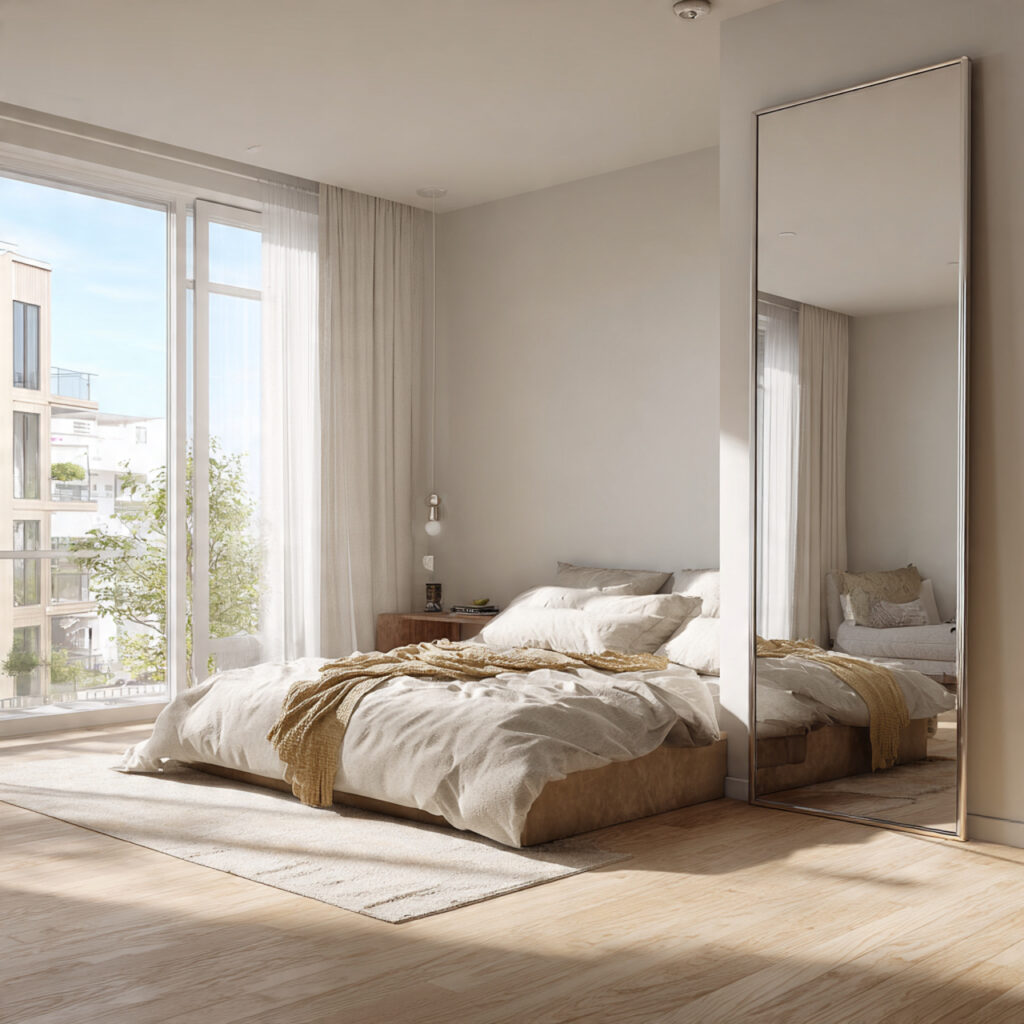
5. A Mirror Opposite or Adjacent to the Window
Why It Works
A large mirror placed opposite or adjacent to the main window reflects natural light back into the room effectively creating a second light source and doubles the perceived visual depth of the room by reflecting the space behind the viewer. Both effects are immediately and significantly room-expanding.
How to Position It
A full-length mirror leaned against the wall opposite the window creates the most light reflection. A large framed mirror hung at eye height beside or opposite the window achieves the same quality in a fixed position. The mirror should be large enough to capture a meaningful proportion of the reflected light. Small mirrors reflect small amounts.
These light and color ideas create the visual foundation that makes everything else work. The furniture and spatial ideas ahead tackle the most common practical challenges in small bedrooms.
Furniture Ideas That Work in Small Bedrooms
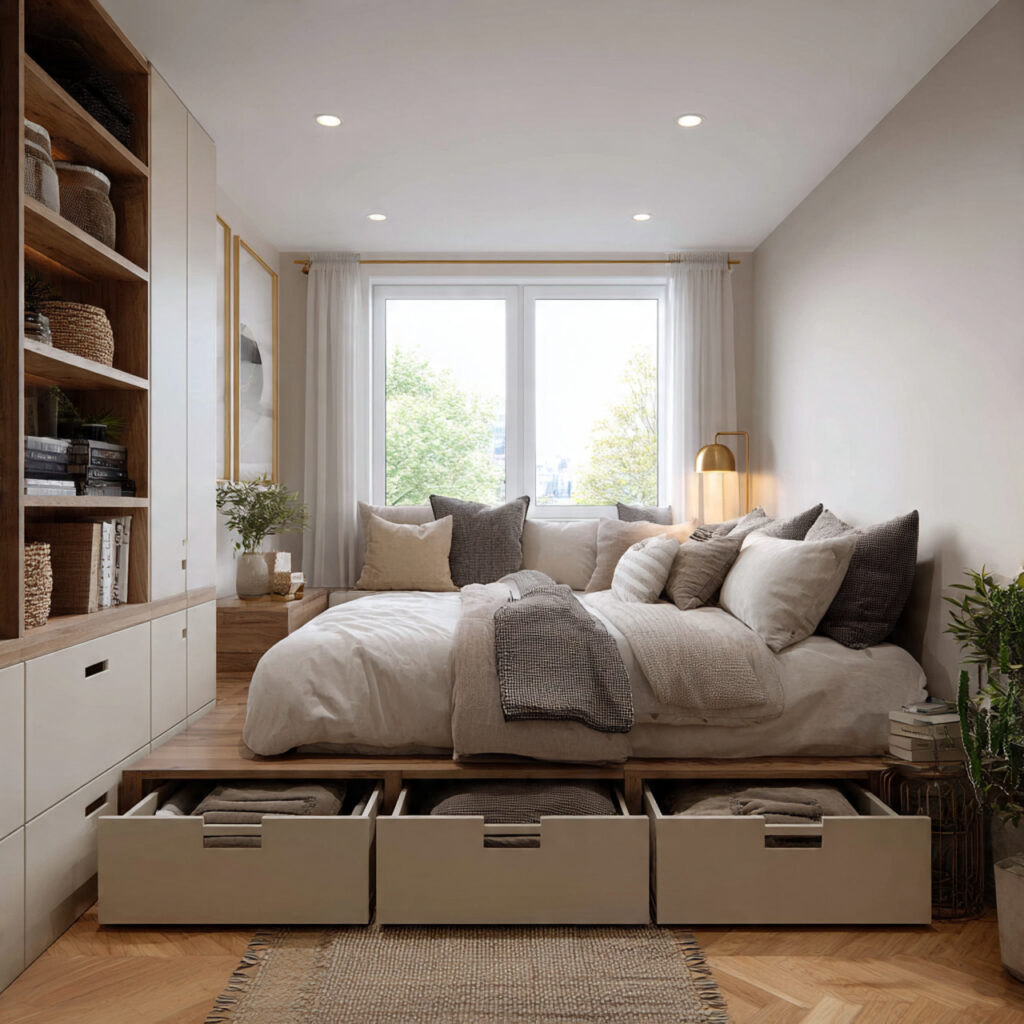
6. A Bed With Storage Underneath
Why It Works
In a small bedroom, the space beneath the bed is one of the largest and most consistently wasted storage zones in the room. A bed frame with built-in drawers, or a standard frame with sufficient clearance for rolling storage, turns the dead zone under the mattress into organized, hidden storage that reduces the need for additional furniture elsewhere.
How to Choose One
Platform beds with built-in drawers on one or both sides of the frame provide the most integrated under-bed storage. Ottoman beds with a lift-top mattress platform provide the maximum storage in a single contained unit. For existing frames, under-bed rolling drawers or flat storage containers on casters create the same benefit without replacing the bed.
Common Mistake
Buying a bed frame with excellent storage but no headboard, resulting in a room that lacks the visual anchor a headboard provides. The headboard is as important as the storage look for frames that provide both.
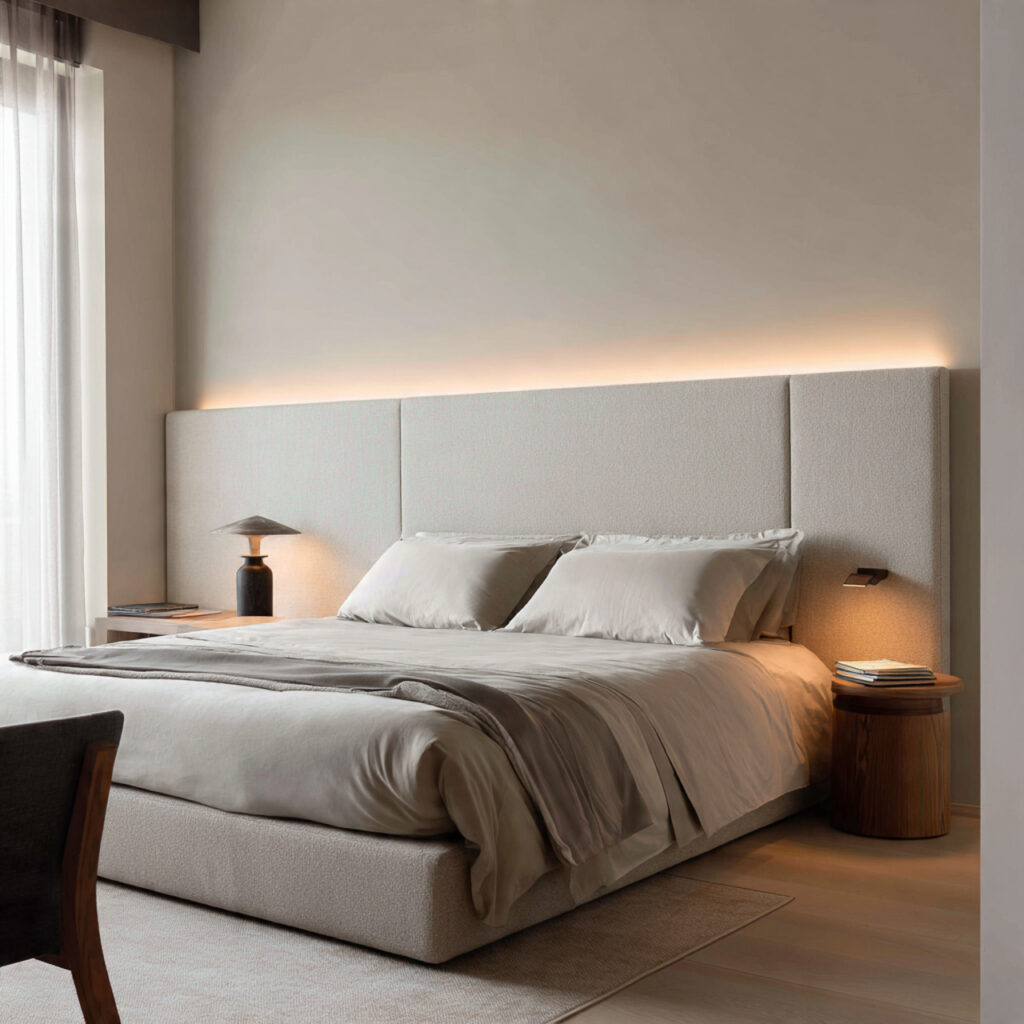
7. A Wall-Mounted or Floating Headboard
Why It Works
A wall-mounted or floating headboard attached to the wall rather than to the bed frame creates the bed’s visual anchor without the floor footprint that a standard headboard requires. It also allows the floor to be visible beneath the head of the bed, which increases the room’s perceived spaciousness at floor level.
How to Create It
A simple rectangular panel of upholstered foam, plywood covered in fabric, or a section of reclaimed wood mounted directly to the wall behind the bed creates a floating headboard effect. Wall-mounted shelving units above each side of the bed serve the dual purpose of headboard alternative and bedside storage.
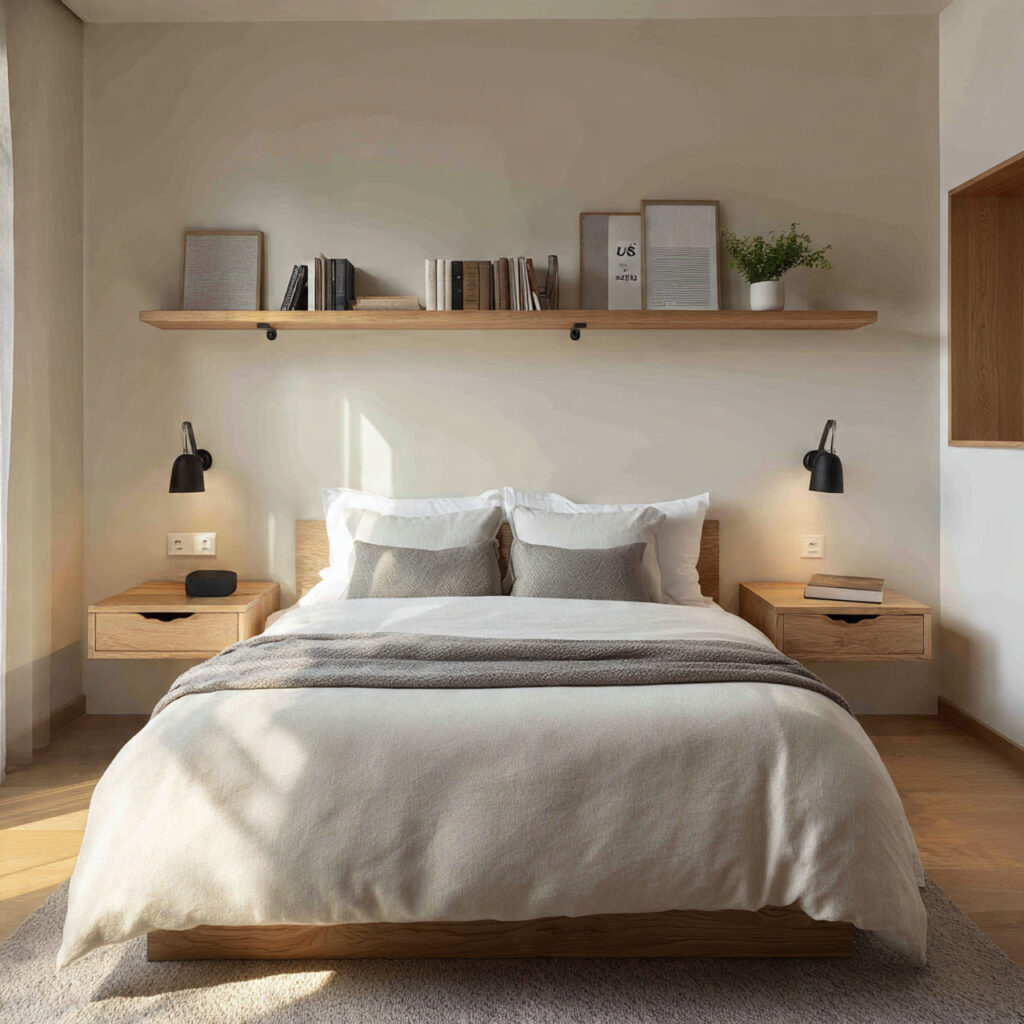
8. Nightstands That Mount to the Wall
Why It Works
Wall-mounted nightstands, simple shelves or small brackets attached to the wall on each side of the bed provide the functional bedside surface without the floor footprint of standard nightstand furniture. The visible floor beneath wall-mounted nightstands makes the room feel more open than conventional floor-standing ones.
How to Choose Them
A simple floating shelf 8-10 inches deep in a natural wood or painted finish, mounted at mattress height on each side of the bed, provides all the function of a nightstand lamp, book, and glass of water without any floor space. The simplicity of the shelf also reduces visual clutter compared to larger, more elaborate nightstand furniture.
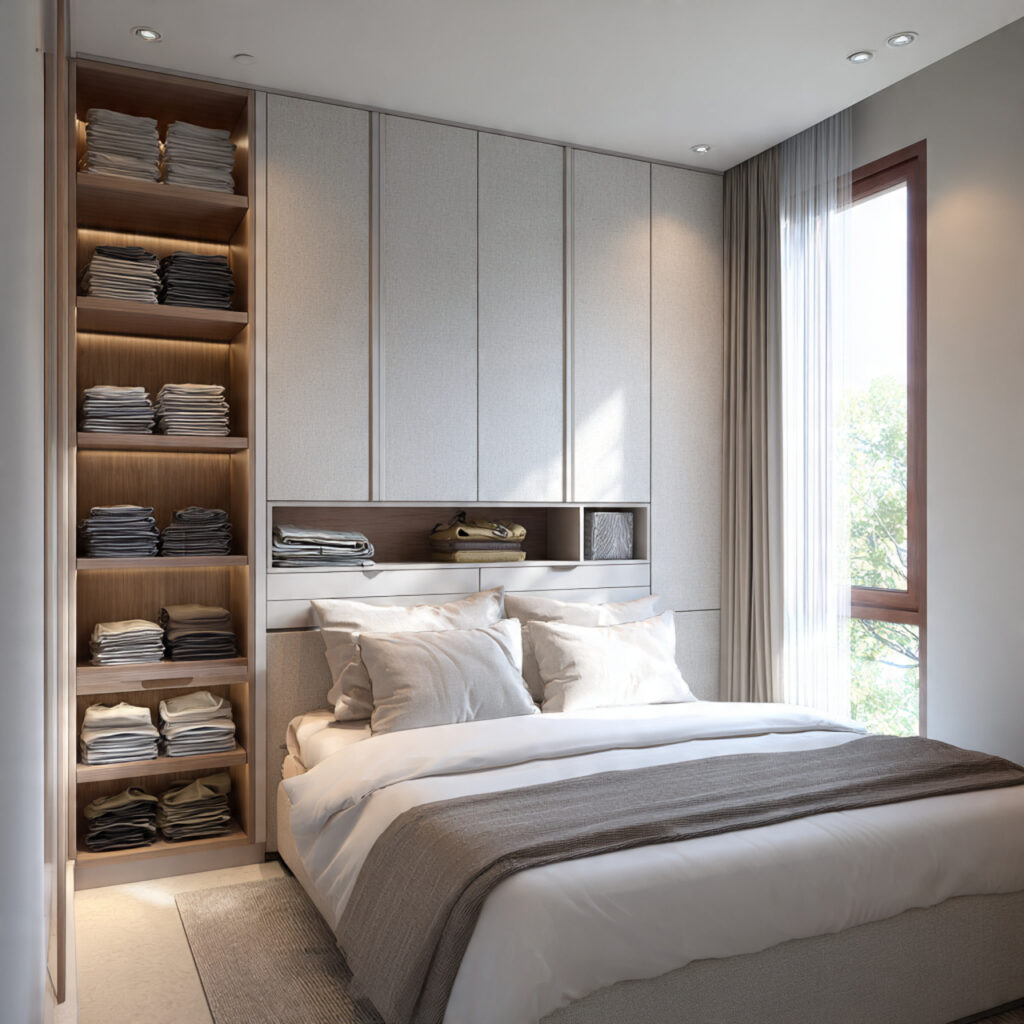
9. A Tall, Slim Wardrobe That Reaches the Ceiling
Why It Works
A wardrobe that extends to full ceiling height uses every inch of vertical space available both for functional storage and for visual effect. Tall, ceiling-height storage draws the eye upward and emphasizes the room’s full height, making the ceiling feel higher and the room feel more generous.
How to Source It
Built-in wardrobe systems with ceiling-height panels can be installed by carpenters or through flat-pack systems designed for floor-to-ceiling installation. IKEA’s PAX system, for example, accommodates ceiling-height extensions that transform the visual quality of the wardrobe wall dramatically.
Common Mistake
Leaving a visible gap between the wardrobe and the ceiling. The gap whether 12 inches or 4 inches creates a visual break that interrupts the vertical line and makes the ceiling feel lower rather than higher. Fill the gap with additional storage panels, cabinet-making above the wardrobe, or crown molding that visually bridges the gap.
10. A Loft Bed or Bunk Bed for the Right Situation
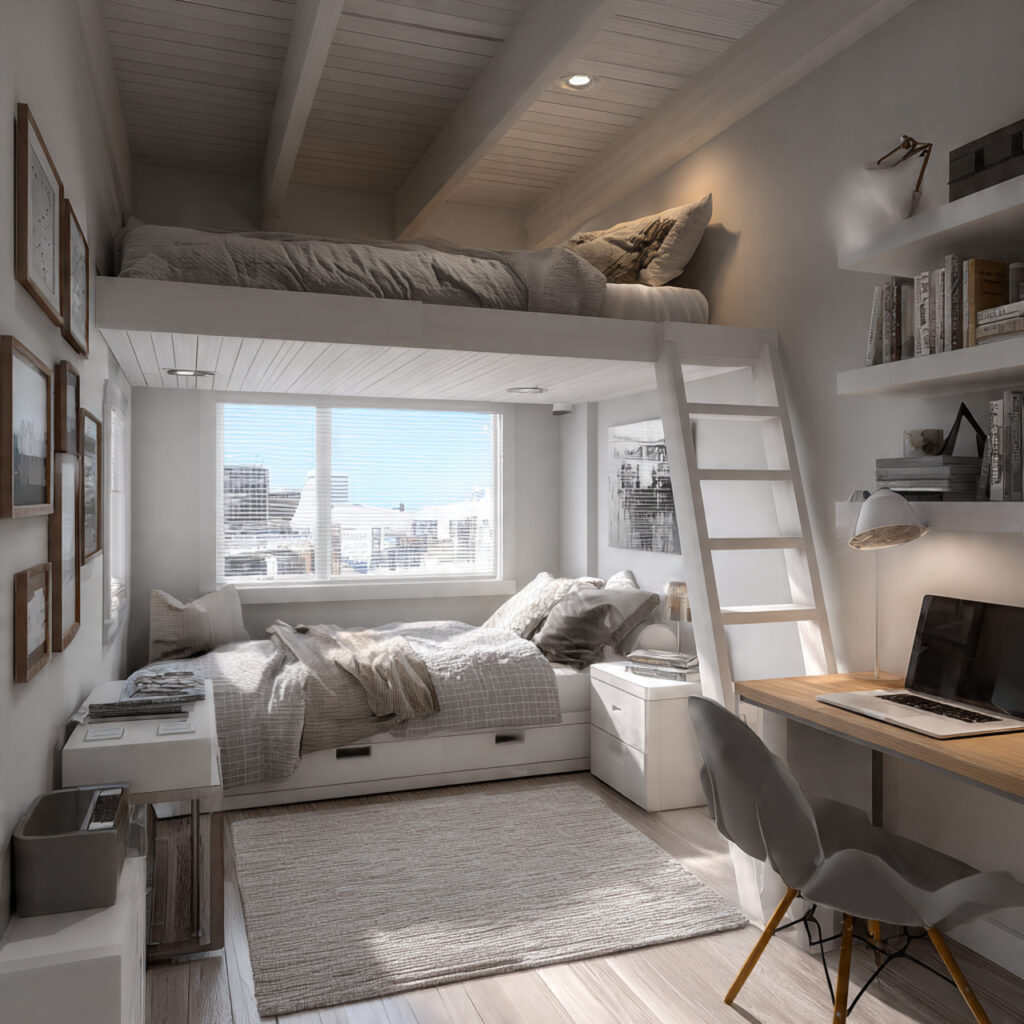
Why It Works
In a room where ceiling height permits typically 8 feet or more a loft bed lifts the sleeping area above floor level, freeing the space beneath for a desk, a reading area, storage, or a small sitting zone. The vertical use of space transforms a small bedroom’s entire functional capacity.
Who It Suits
Loft beds are most practical for single occupants without mobility concerns primarily children, teenagers, and young adults. For adults, the practicality of the daily climb and the aesthetics of the loft design need to be honestly assessed before committing.
This is a perfect moment to save the ideas that feel most relevant to your specific room; the storage, decor, and styling ideas ahead complete the full small bedroom picture.
Storage Ideas That Keep Small Bedrooms Organized
11. Floor-to-Ceiling Shelving on One Full Wall
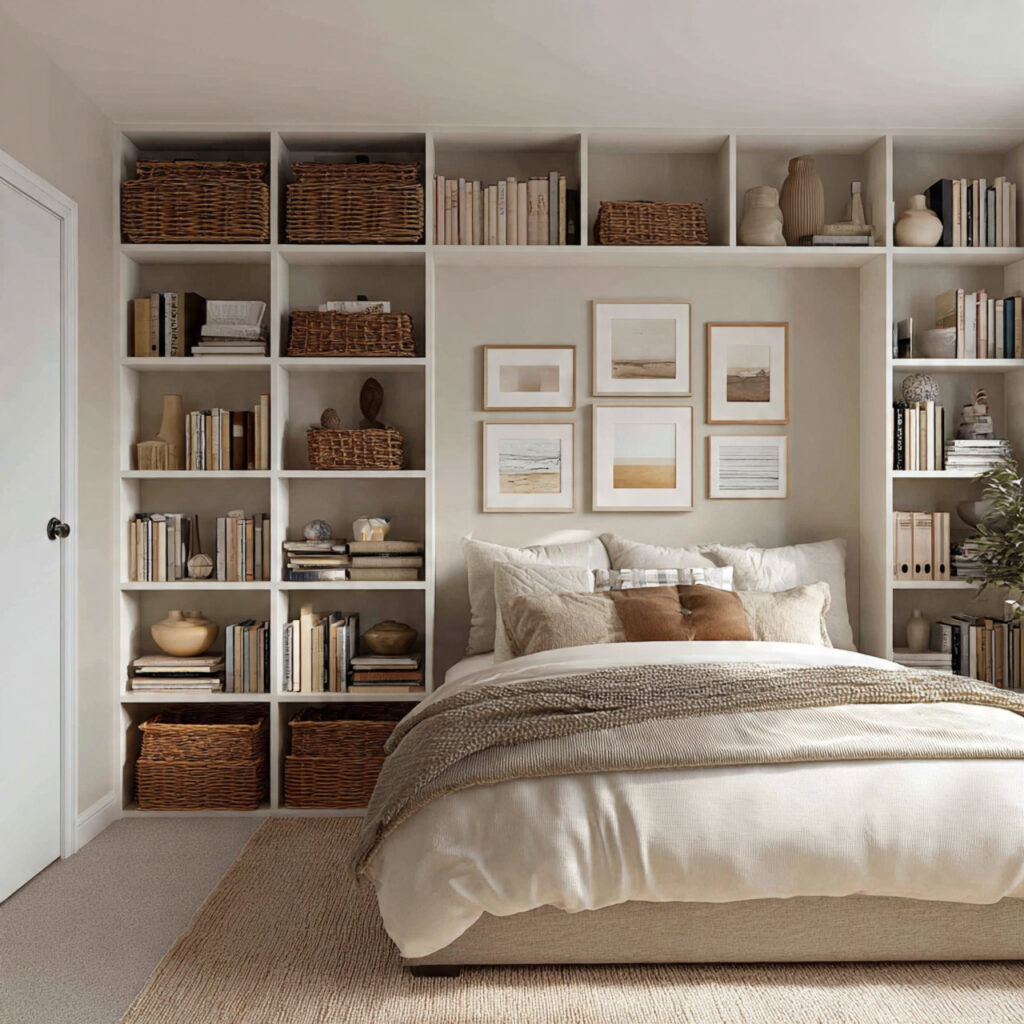
Why It Works
A full wall of shelving floor to ceiling, one wall only provides extraordinary storage capacity while creating one of the most visually striking small bedroom features possible. The wall of shelving becomes the room’s defining architectural element rather than a furniture afterthought.
How to Style It
Alternate books with small decorative objects to prevent the shelving from looking like a library or an office. Leaving some sections partially empty breathing room on shelves is visually important in a small room where every surface is visible. Use consistent baskets or boxes on lower shelves for concealed storage.
12. Over-Door Storage on Every Door
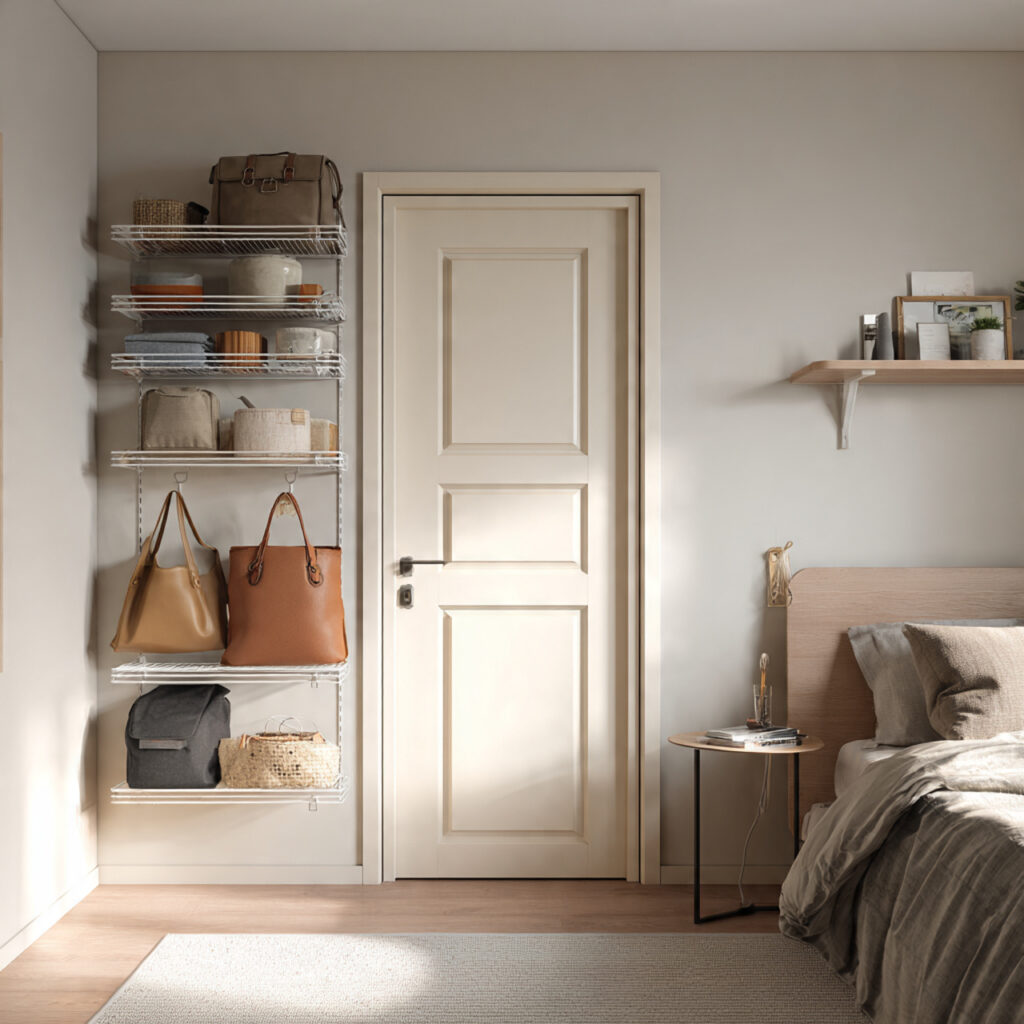
Why It Works
The backs of doors are consistently overlooked storage opportunities in small bedrooms. An over-door rack, hook system, or organizer on the wardrobe door, the bedroom door, or any accessible door surface adds meaningful storage in a location that uses no floor or wall space.
What to Store There
On the wardrobe door interior: shoes, accessories, scarves, or a full-length mirror. On the bedroom door back: hooks for tomorrow’s outfit, a bag organizer, a small over-door shelf for books or accessories. The storage is hidden when doors are open, completely invisible from the room’s primary perspective.
13. A Storage Ottoman or Bench at the Foot of the Bed
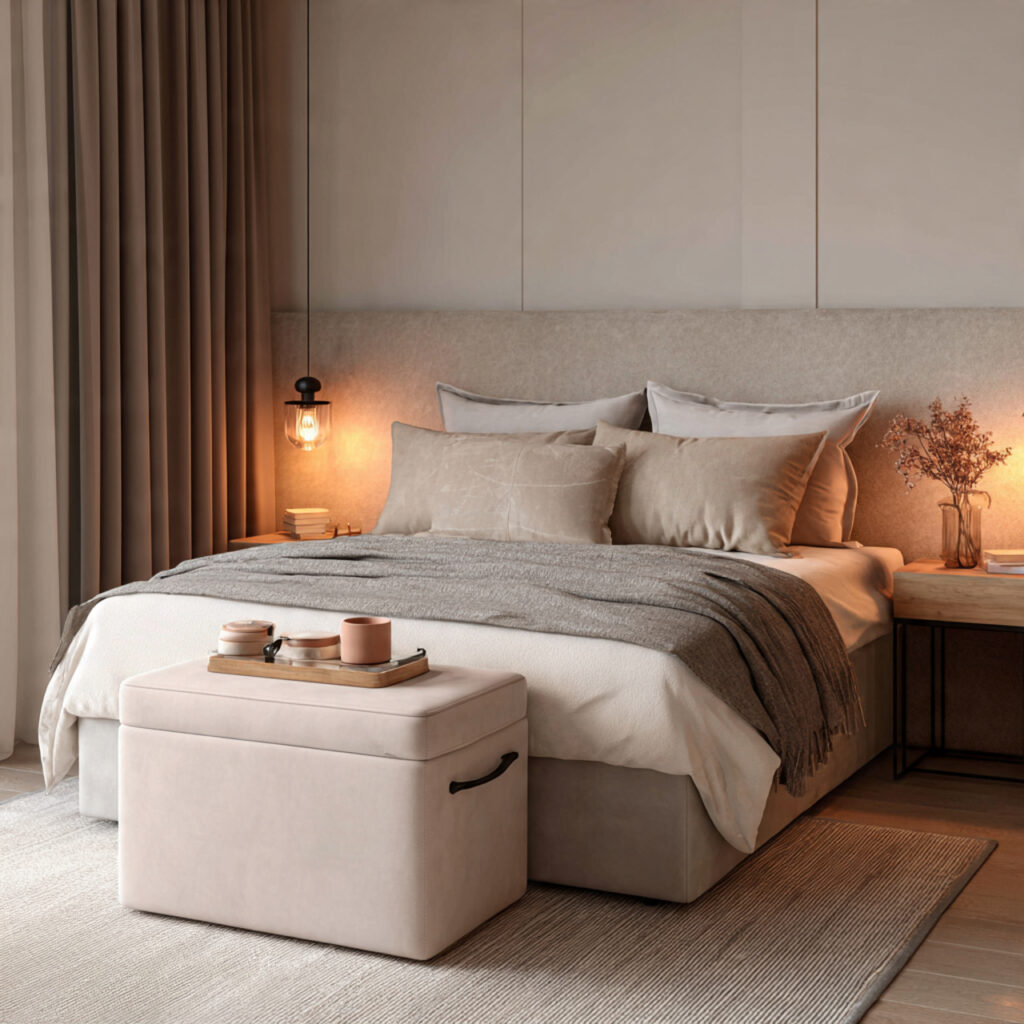
Why It Works
A storage ottoman or bench at the foot of the bed provides hidden storage for extra bedding, seasonal clothing, or bulky items while functioning visually as an elegant piece of bedroom furniture that completes the bed’s visual composition.
How to Choose One
A lift-top storage ottoman provides the most capacity. Choose a size that’s proportional to the bed approximately the same width as the foot of the mattress and 18-24 inches deep. Upholstered in a fabric that suits the room’s palette, it becomes a beautiful furniture piece that happens to hold a surprising amount of storage.
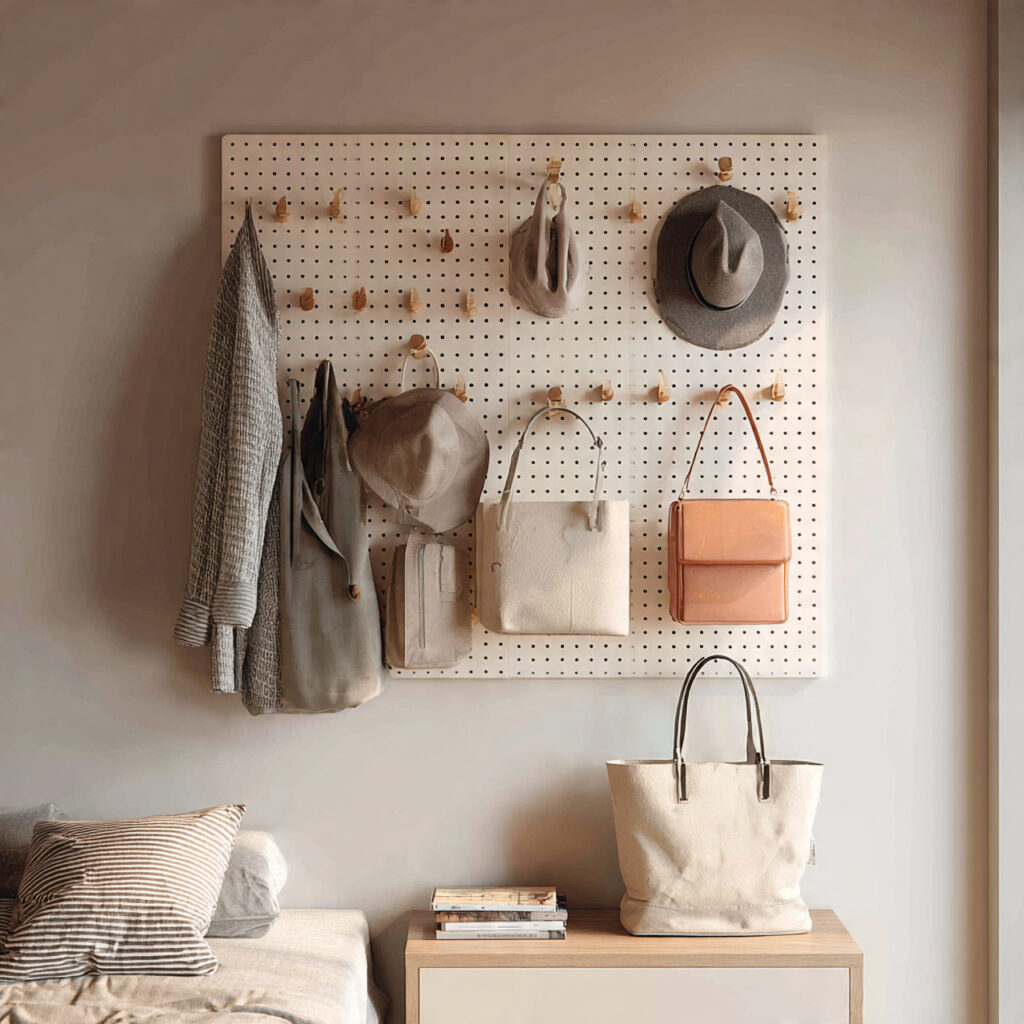
14. Pegboard or Hook Wall for Daily Items
Why It Works
A section of pegboard or a row of hooks on the bedroom wall for bags, hats, jewelry, scarves, and daily-use items keeps frequently accessed items visible and accessible without requiring a dedicated piece of furniture to hold them.
How to Style It
Paint the pegboard in the wall color for the most seamless visual effect; the hooks and accessories become the feature rather than the board itself. Limit what’s displayed to items you genuinely use daily the pegboard is a curated display of your active wardrobe, not a catch-all for everything without another home.
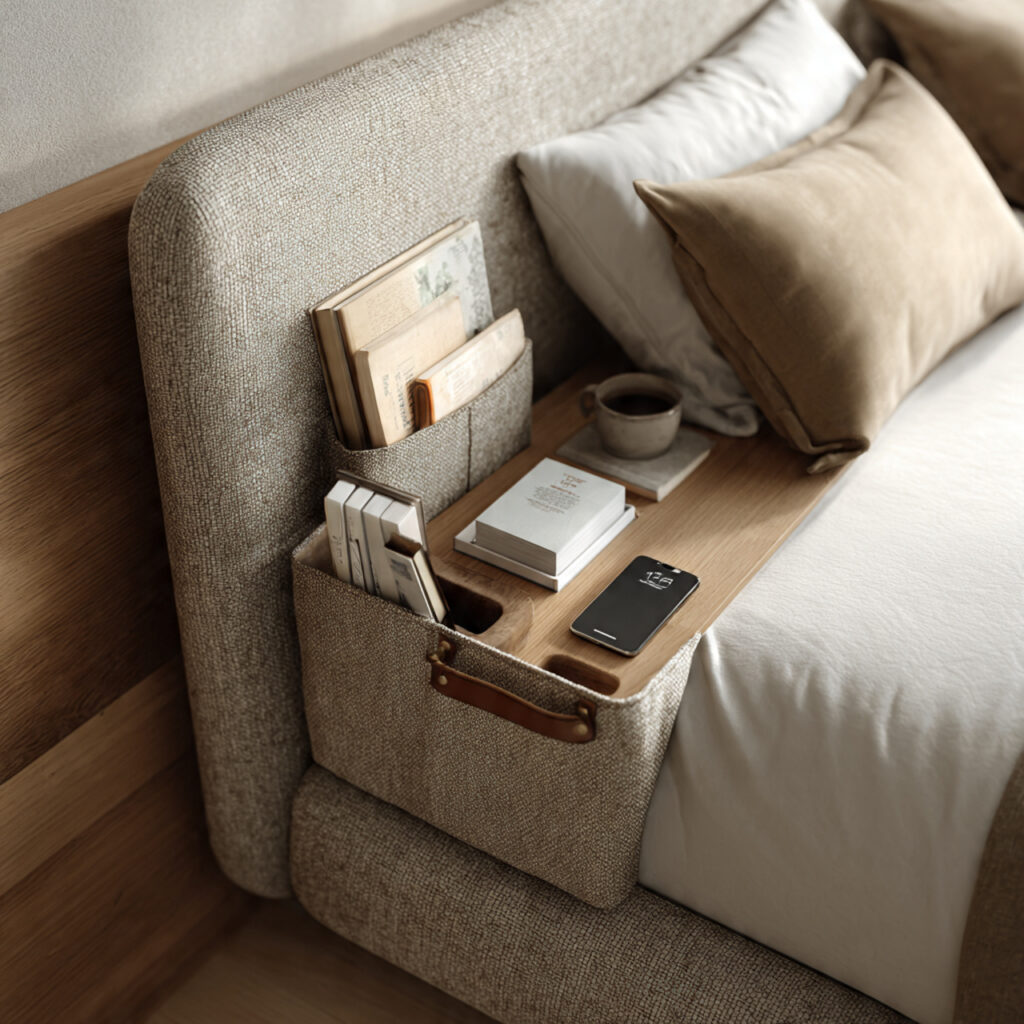
15. Bedside Pockets or Small Shelf Attached to the Bed Frame
Why It Works
A fabric bedside pocket attached to the bed frame or mattress or a small shelf clipped to the headboard provides a bedside storage solution that requires no floor or wall space at all. Books, phones, glasses, and nighttime essentials have a contained, accessible home without any additional furniture.
Styling and Decor Ideas for Small Bedrooms
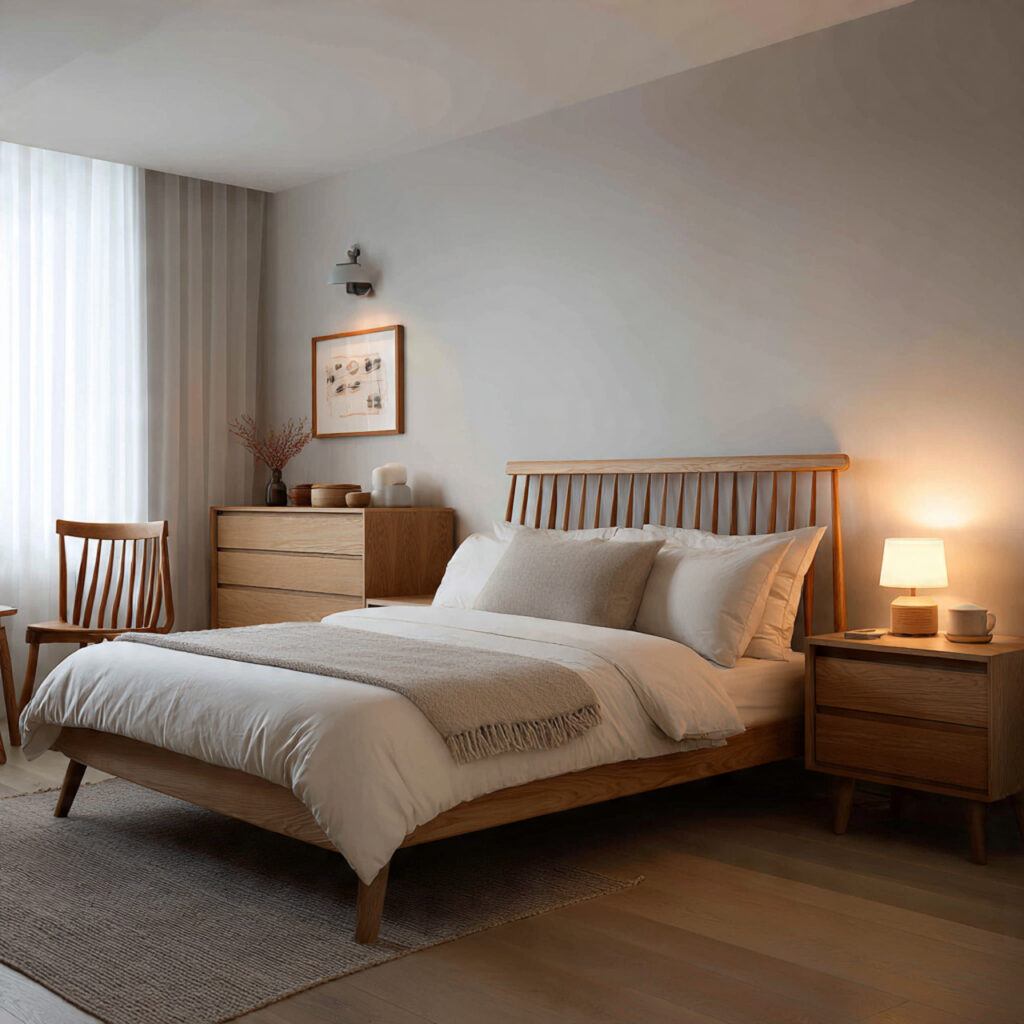
16. Consistent Materials and Finishes Throughout
Why It Works
A small bedroom where every piece of furniture is in a consistent finish all natural wood, all white painted, all the same warm grey reads as a unified whole rather than a collection of individual pieces. The visual unity reduces the interruptions the eye encounters and makes the room feel more spacious.
How to Achieve It
If you can’t replace existing furniture, paint mismatched pieces in the same color for instant cohesion. Chalk paint in warm white or soft cream unifies furniture of different styles and origins in a single afternoon and creates a cohesive look that makes the room feel deliberately designed.
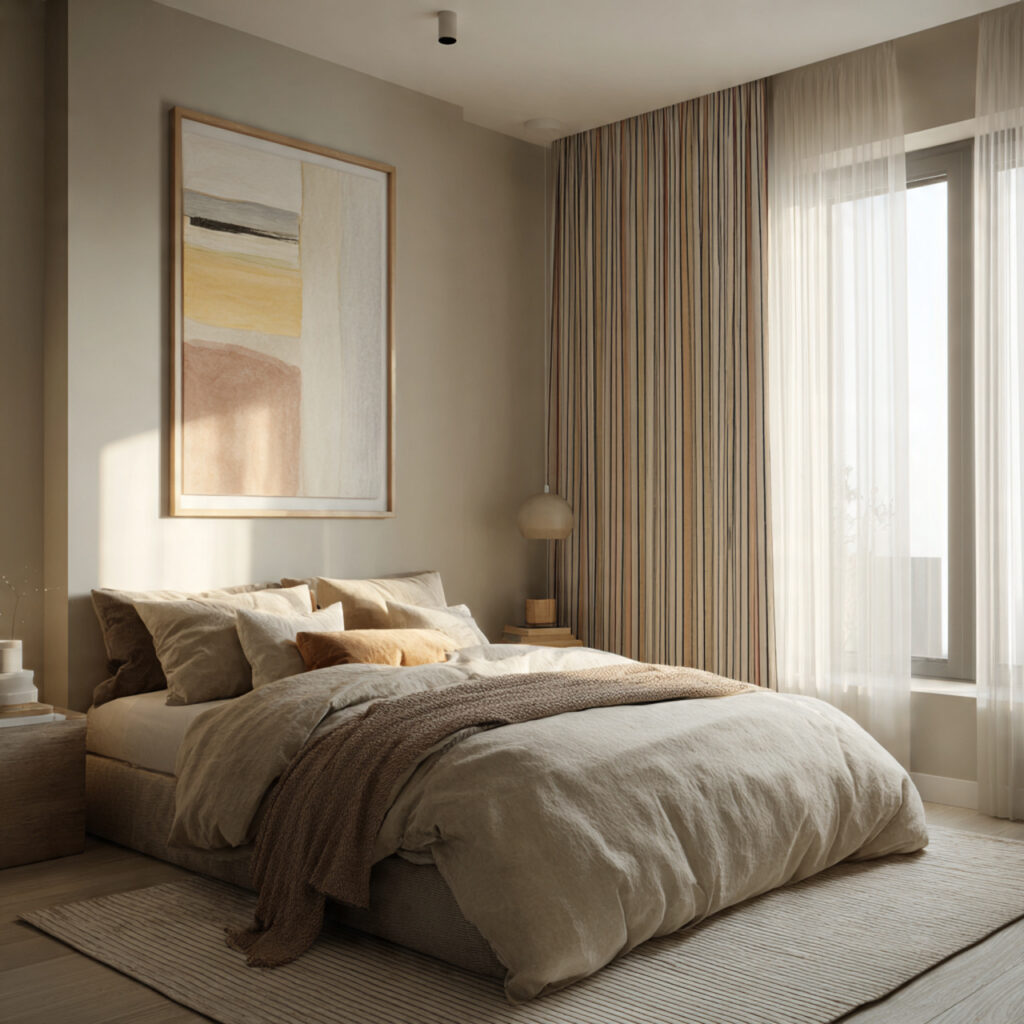
17. Vertical Stripes or Vertical Artwork
Why It Works
Vertical lines whether in a wallpaper pattern, a curtain fabric, or artwork positioned vertically draw the eye upward and create the impression of height. In a small bedroom where ceiling height is the primary limiting factor, vertical emphasis is one of the most effective visual tools available.
How to Apply It
A tall, slim mirror. A vertically oriented artwork piece or gallery wall arranged more tall than wide. A wallpaper with a subtle vertical pattern. Curtains that hang from ceiling to floor are the longest vertical line possible in most rooms. Any combination of these creates an upward visual pull that increases perceived ceiling height measurably.
18. A Platform Bed That Sits Low
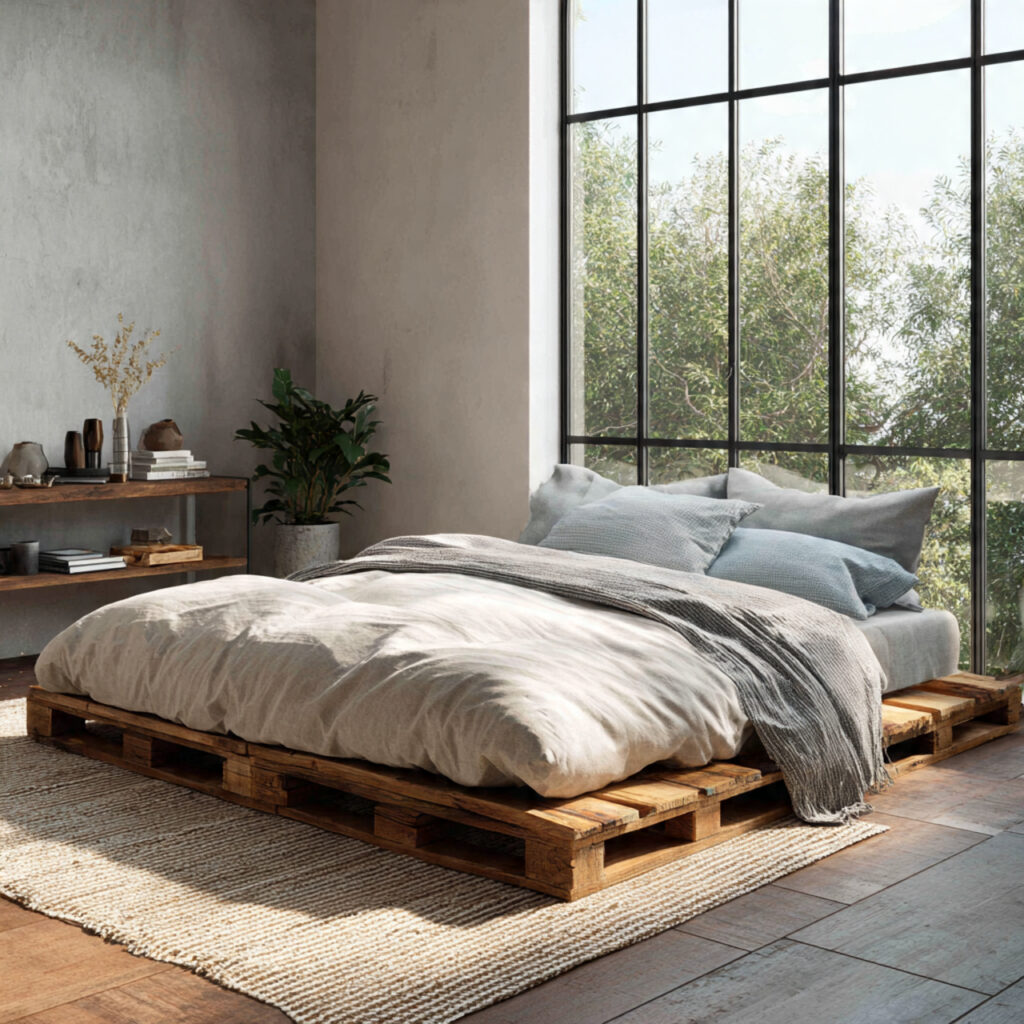
Why It Works
A low-profile platform bed that sits close to the floor rather than elevated on a high frame changes the visual proportion of the room by keeping the largest piece of furniture low, which emphasizes the vertical space above it. The more visual space above the bed, the taller the room appears.
How to Style It
A platform bed in a small room is most effective with wall-mounted nightstands (which maintain the low profile) and ceiling-height curtains (which emphasize the vertical space the bed has opened up). Bedding that doesn’t overhang to the floor pulled taut to the mattress edge keeps the low-profile aesthetic clean.
19. Clear or Glass Furniture Elements
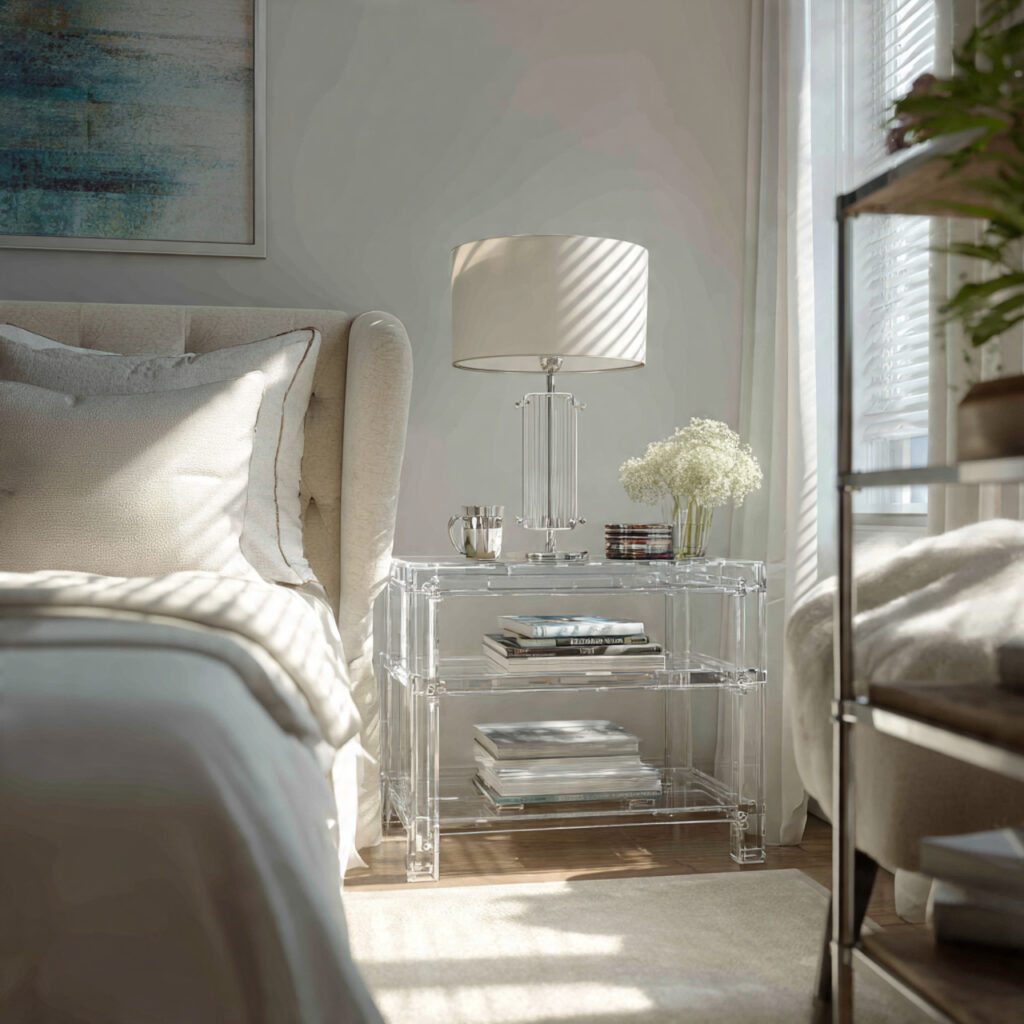
Why It Works
Glass, acrylic, and clear furniture: a glass-topped nightstand, a lucite desk, a glass door wardrobe take up physical space without occupying visual space. Light passes through them; the eye reads them as near-transparent; the room feels more open because the floor and walls are visible through and around the furniture.
How to Use Them
One or two clear elements in a small bedroom: a glass-topped desk, a lucite chair, glass nightstand surfaces create the space-opening effect without making the entire room feel cold or clinical. Pair clear elements with warm wood and soft textiles for balance.
20. Keep the Floor Visible
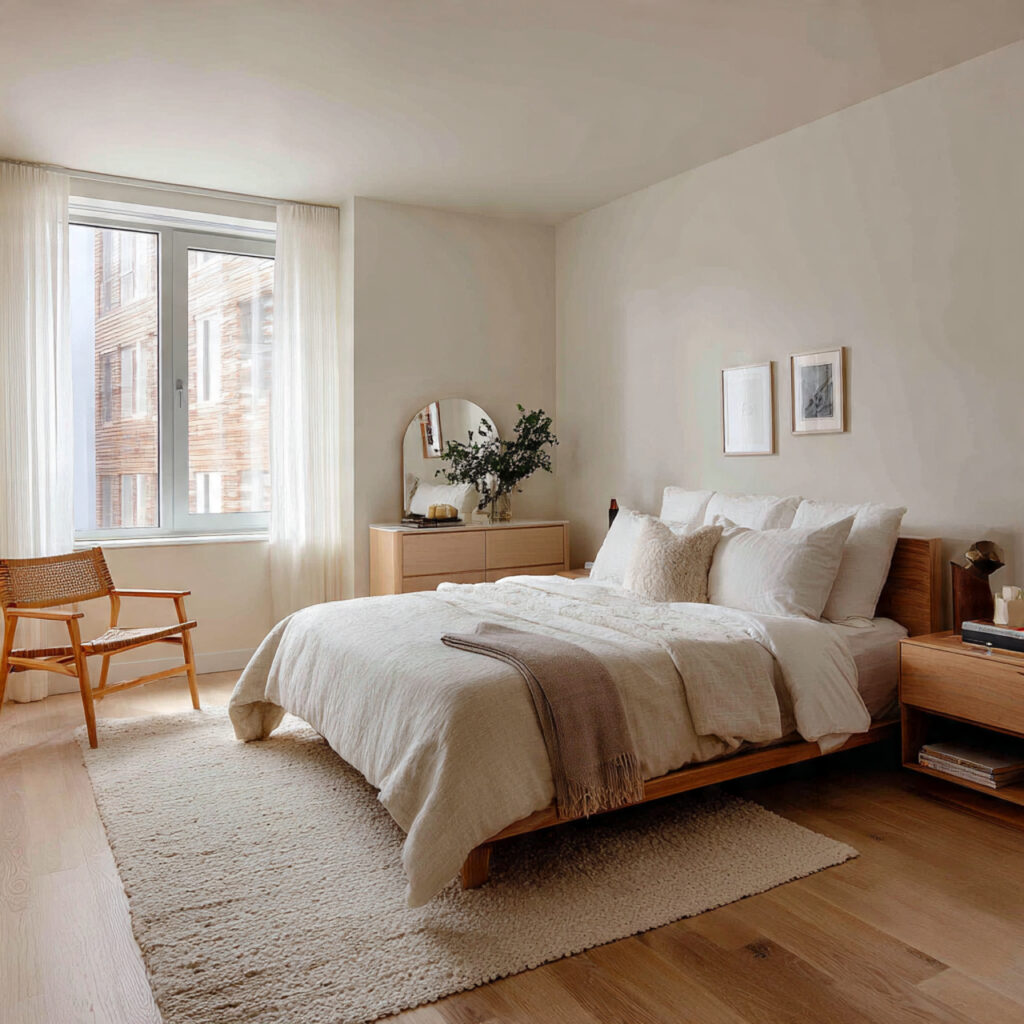
Why It Works
Nothing makes a small bedroom feel smaller than a floor that’s completely invisible beneath rugs, furniture, and accumulated objects. The visible floor and the expanse of actual flooring between pieces of furniture creates visual breathing room that perceived spaciousness depends on.
How to Apply It
Choose a rug sized to define the sleeping area without covering the entire floor. Keep the floor surrounding the rug completely clear, no items stored on the floor, no shoes scattered, no bags deposited and left. A rug that covers approximately 60-70% of the floor with the remaining floor clearly visible creates the ideal proportion.
21. A Single Piece of Meaningful Artwork
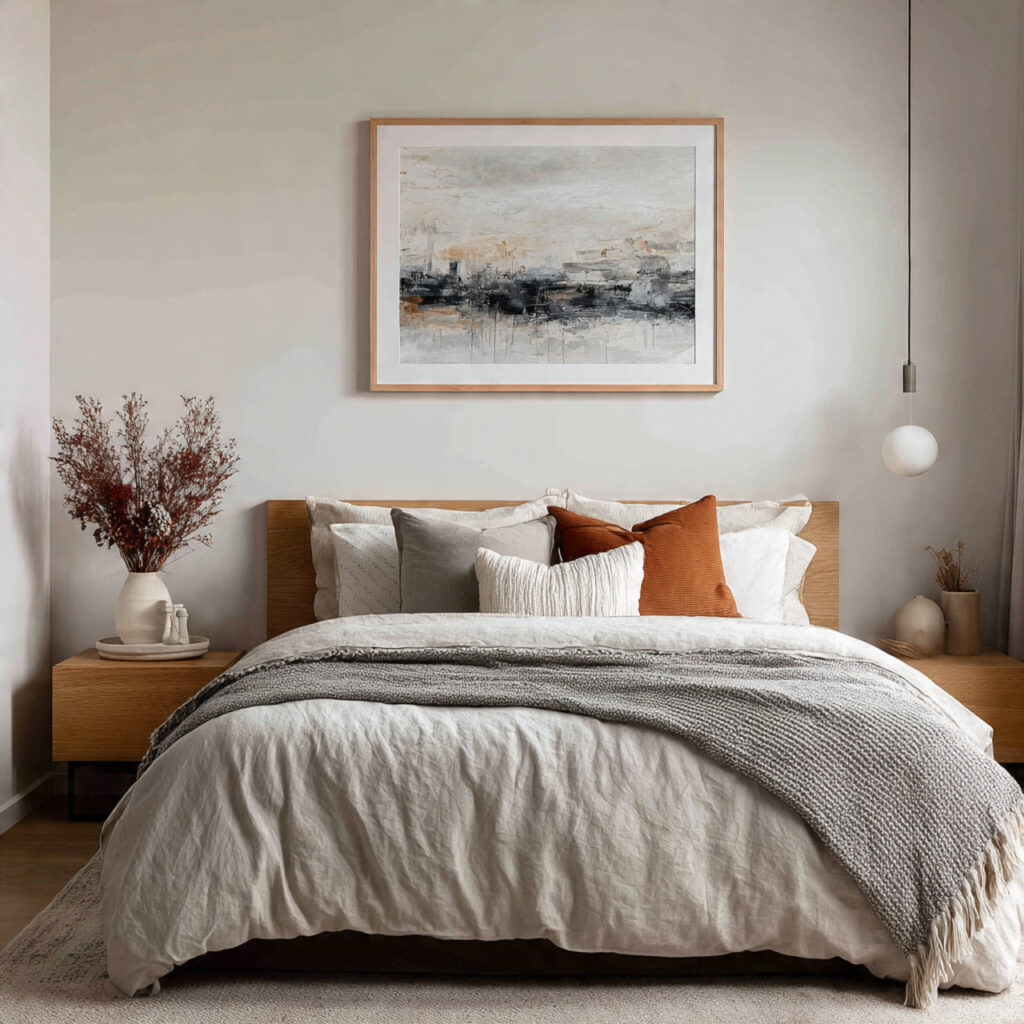
Why It Works
In a small bedroom, one large piece of artwork well-chosen, well-positioned, given space to breathe creates more visual impact and more perceived space than multiple smaller pieces competing for the same wall. A large artwork that suits the room’s palette and style makes the wall feel intentional.
How to Choose It
Size the artwork to fill approximately 60-75% of the wall space above the headboard, or the equivalent on another wall. Leave at least 6-8 inches of clear wall on each side. The breathing room around the artwork is as important as the artwork itself.
22. Lighting From Multiple Sources at Varied Heights
Why It Works
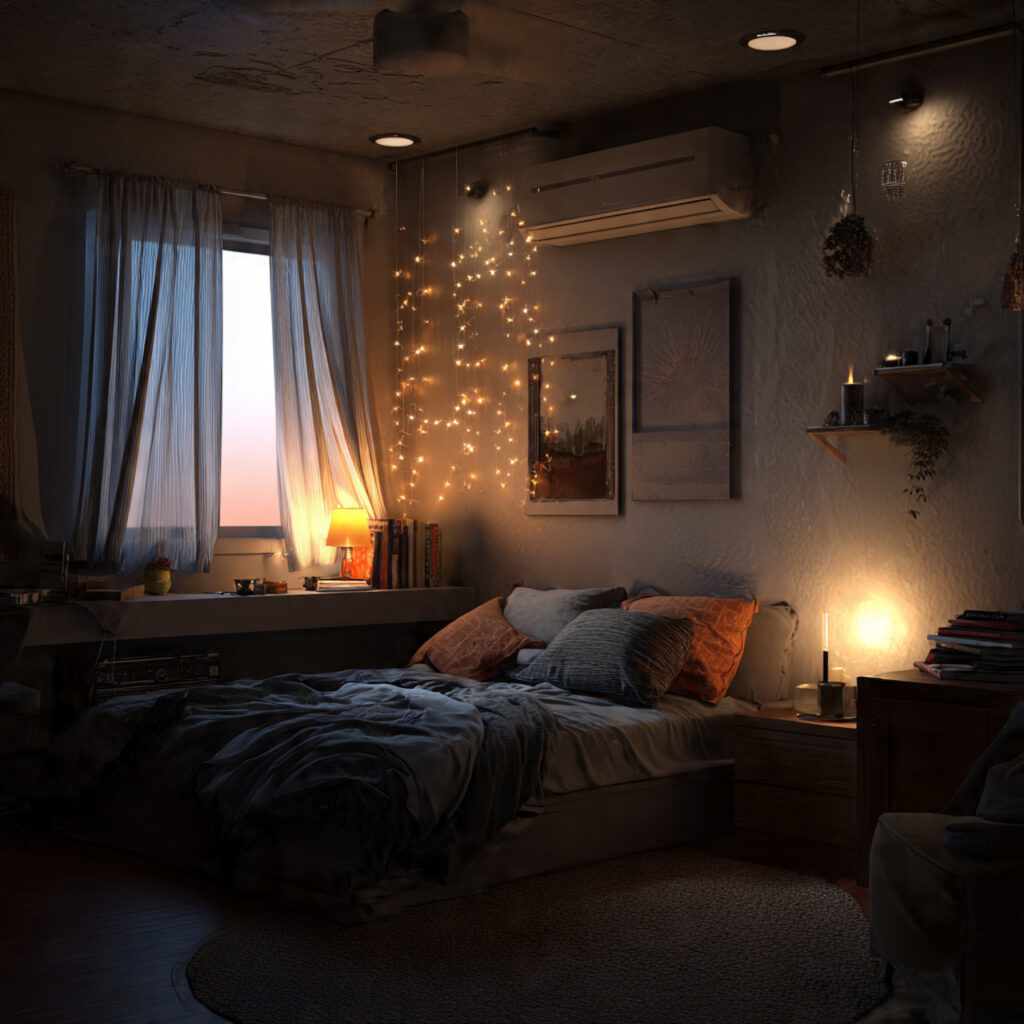
A small bedroom lit only from a central ceiling fixture looks flat and uniform all shadows fall in the same direction, all surfaces read equally, and the room lacks the dimensional quality that creates perceived depth. Multiple light sources at different heights create shadow, dimension, and the quality that makes any room feel larger and more interesting.
How to Layer It
A warm central ceiling light as the primary source. Wall-mounted sconces beside the bed for targeted reading light and wall emphasis. A small lamp or fairy lights at a low level for warm ambient glow. The combination of high, mid, and low light sources creates a room that feels deliberately designed and significantly more spacious than uniform overhead-only lighting achieves.
23. A Small Bedroom Color-Matched Rug
Why It Works
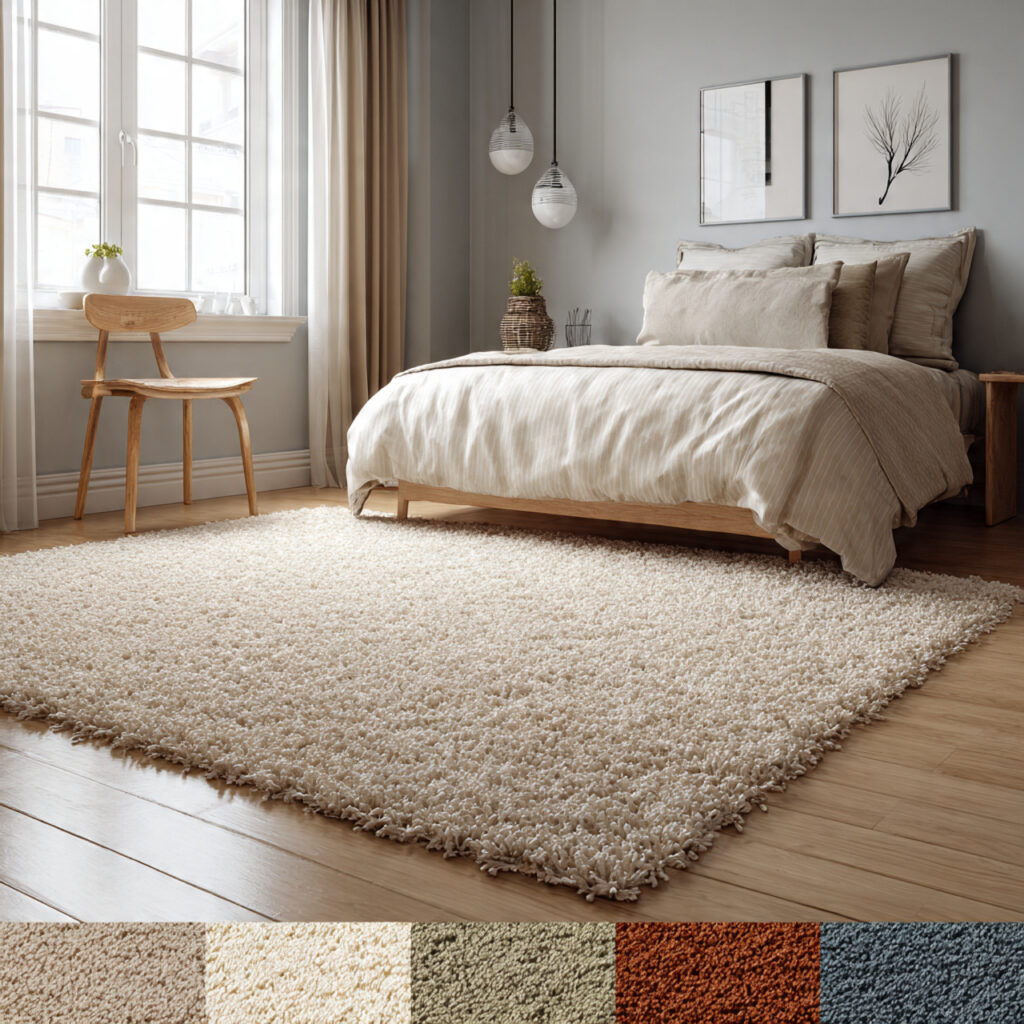
A rug in a color or tone very close to the floor color, a natural fiber rug on light wood flooring, a cream rug on a white-painted floor creates the most floor-expanding effect possible. The minimal contrast between rug and floor reduces the visual interruption of the rug’s boundary, and the floor reads as a larger, more continuous surface.
Common Mistake
Choosing a rug that strongly contrasts with the floor in a small room. A dark rug on light flooring creates a shape on the floor an outlined area that visually defines the room’s smallness by making the perimeter of the rug visible. Tonal coordination removes that definition and allows the floor to read as expansive.
24. Edit Relentlessly and Keep Editing
Why It Works
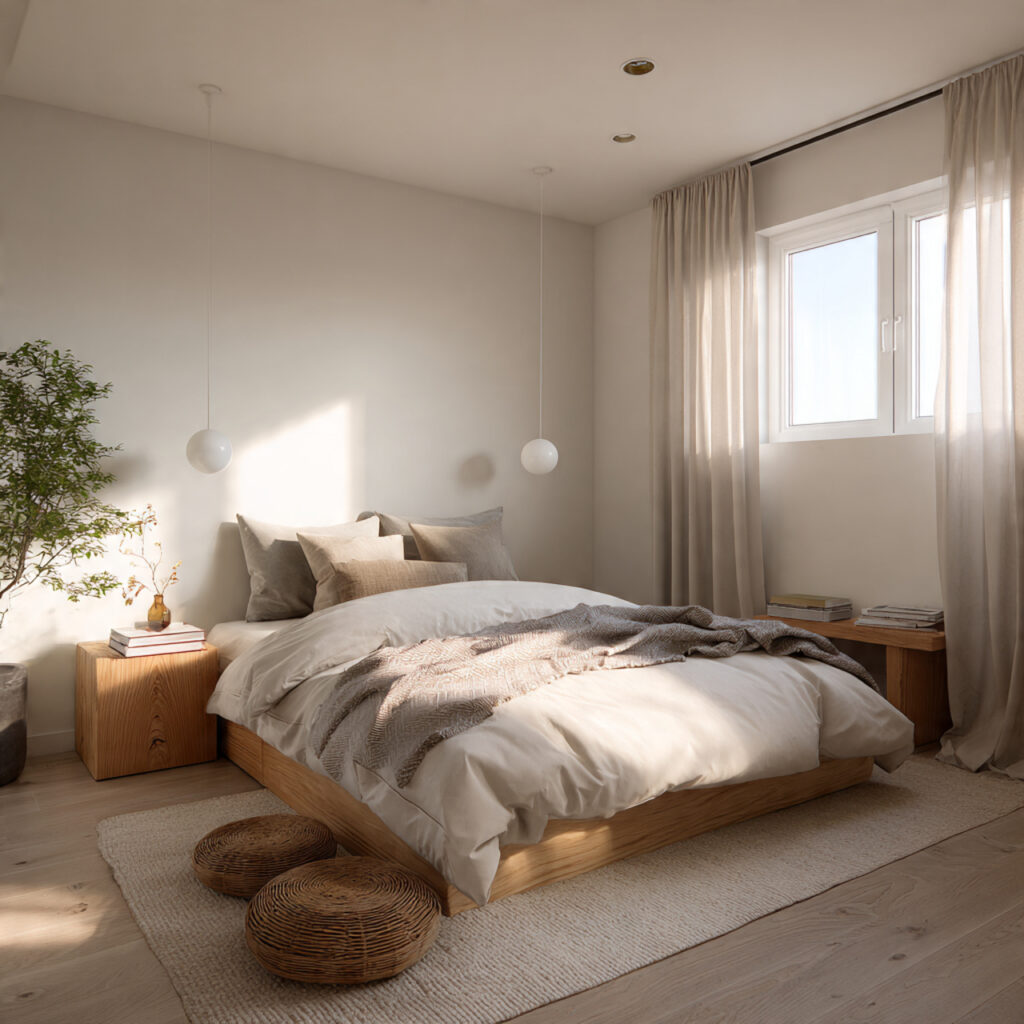
Every small bedroom tip, technique, and product in this guide becomes more effective in a room where the editing has been done. The best mirror, the most perfect curtains, the most beautiful floating nightstands none of them work as well against a backdrop of clutter, accumulated objects, and too many things competing for the same limited space.
How to Edit
Remove everything from the bedroom that isn’t genuinely necessary or genuinely meaningful. Store everything that doesn’t belong in the bedroom somewhere else. Return only what passes the test: used regularly, or loved enough to earn visible space. The room that remains after this edit, whatever size it is, will feel significantly more spacious, more calm, and more genuinely yours.
Insider Tip
After the initial edit, return to it monthly. Small bedrooms accumulate quickly, items drift in without intention, surfaces gather the overflow of daily life, and the edited calm of last month can disappear in a few weeks of ordinary living. A monthly fifteen-minute edit is easier, faster, and far more effective than waiting until the accumulation requires a major decluttering effort.
The Room You Have Is Already Enough
Here’s what designing a small bedroom ultimately teaches: the constraint is not the problem. The problem, and the solution, is always how you’re working with it.
A small bedroom designed with intention, edited with honesty, and styled with the specific principles that create visual spaciousness can feel like exactly the right size. Not a compromise. Not a limitation. A thoughtfully designed room that serves its purpose beautifully and feels like a genuine retreat every time you walk into it.
You don’t need more square footage to have a beautiful bedroom. You need better decisions in the square footage you have.
Start with one idea from this guide. The one that addresses your most persistent frustration. Then try another. Let each change tell you what the next one should be.
Because the most beautiful small bedrooms aren’t the ones that pretend to be larger than they are. They’re the ones that prove that size has almost nothing to do with how a room makes you feel.