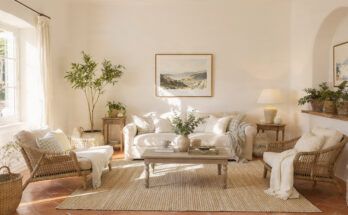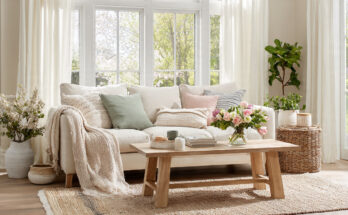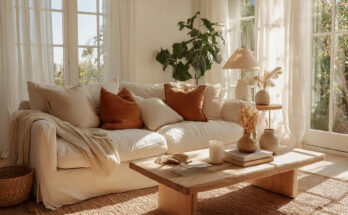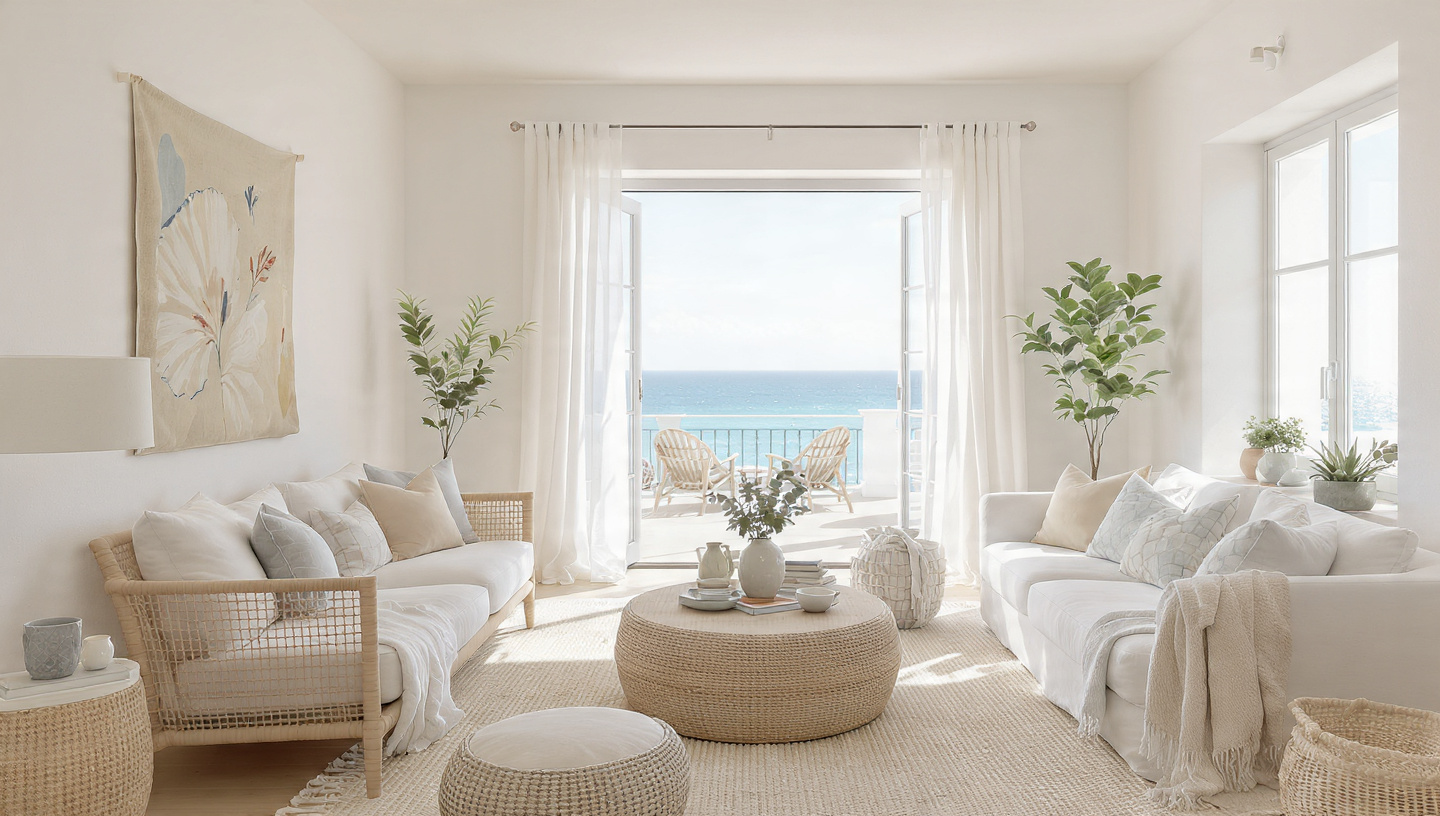
Think of a whitewashed villa on a Greek island. A French Riviera apartment with tall shuttered windows and the faint smell of salt air. A Scandinavian coastal cottage where pale wood and soft blues create something simple and quietly perfect. European summer living rooms draw from all of these traditions and the result is a design language that feels at once refined, relaxed, and deeply connected to the natural world.
This aesthetic is one of the most consistently searched interior styles for good reason. It combines elegance with ease, which is the hardest combination to achieve and the most rewarding to live with. Interior designers consistently point to European coastal interiors as the benchmark for rooms that feel genuinely sophisticated without trying too hard. The ideas below capture that quality across multiple European traditions, from Mediterranean warmth to Nordic restraint, giving you a full range of options regardless of your existing space or style.
Here are 18 complete design concepts to bring European summer coastal elegance directly into your living room.
1. Crisp White and Soft Blue Color Palette With Natural Texture Base
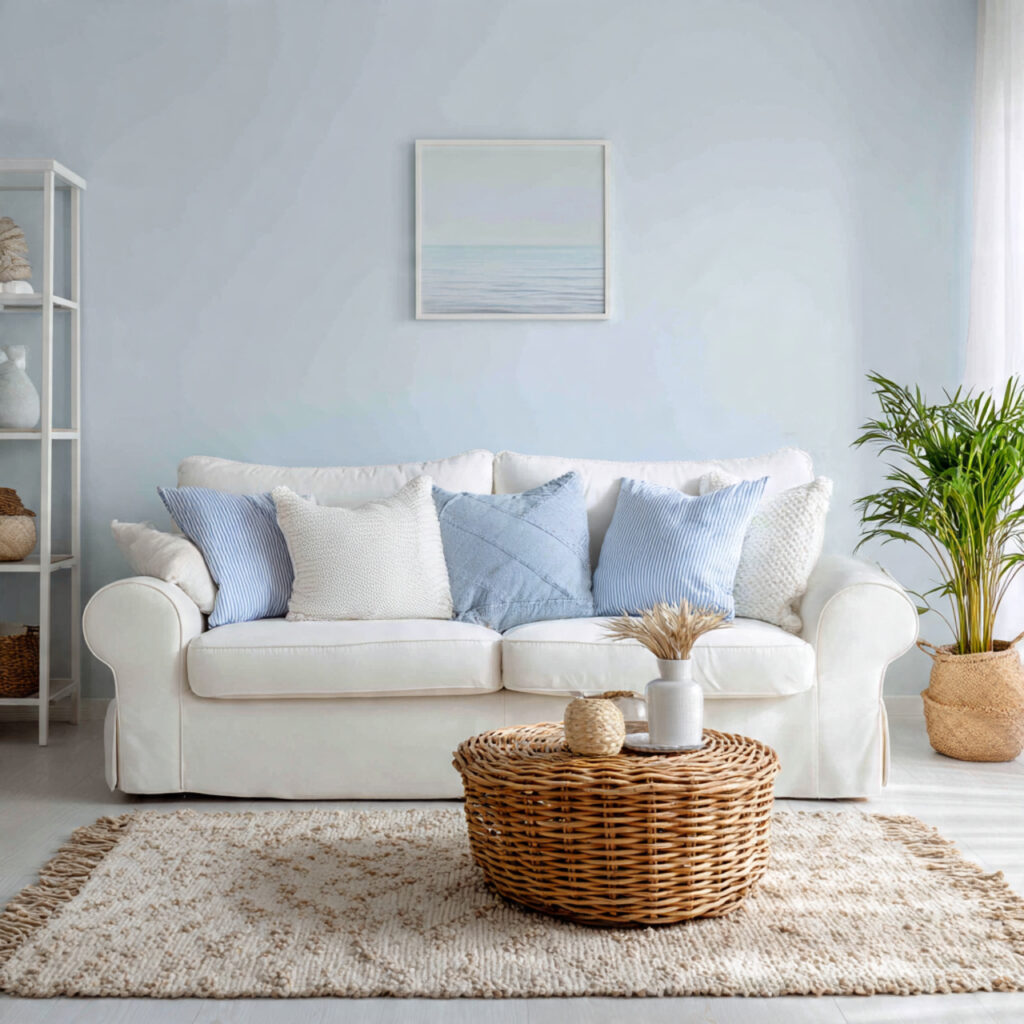
Build the entire room’s visual identity around a crisp white and soft blue palette layered over a base of natural textures. Use white on the walls and main upholstery, soft coastal blues in cushions, ceramics, and a possible painted element, and introduce natural textures through a jute rug, linen throws, and rattan or cane accessories.
This combination directly references the whitewashed walls and blue accents found across Greek, Spanish, and Southern French coastal architecture. The natural texture base keeps it from feeling cold or clinical and gives the whole palette an organic, lived-in quality.
You can read more ideas here.
2. Tall Shuttered Window Panels With Sheer Linen Overlay
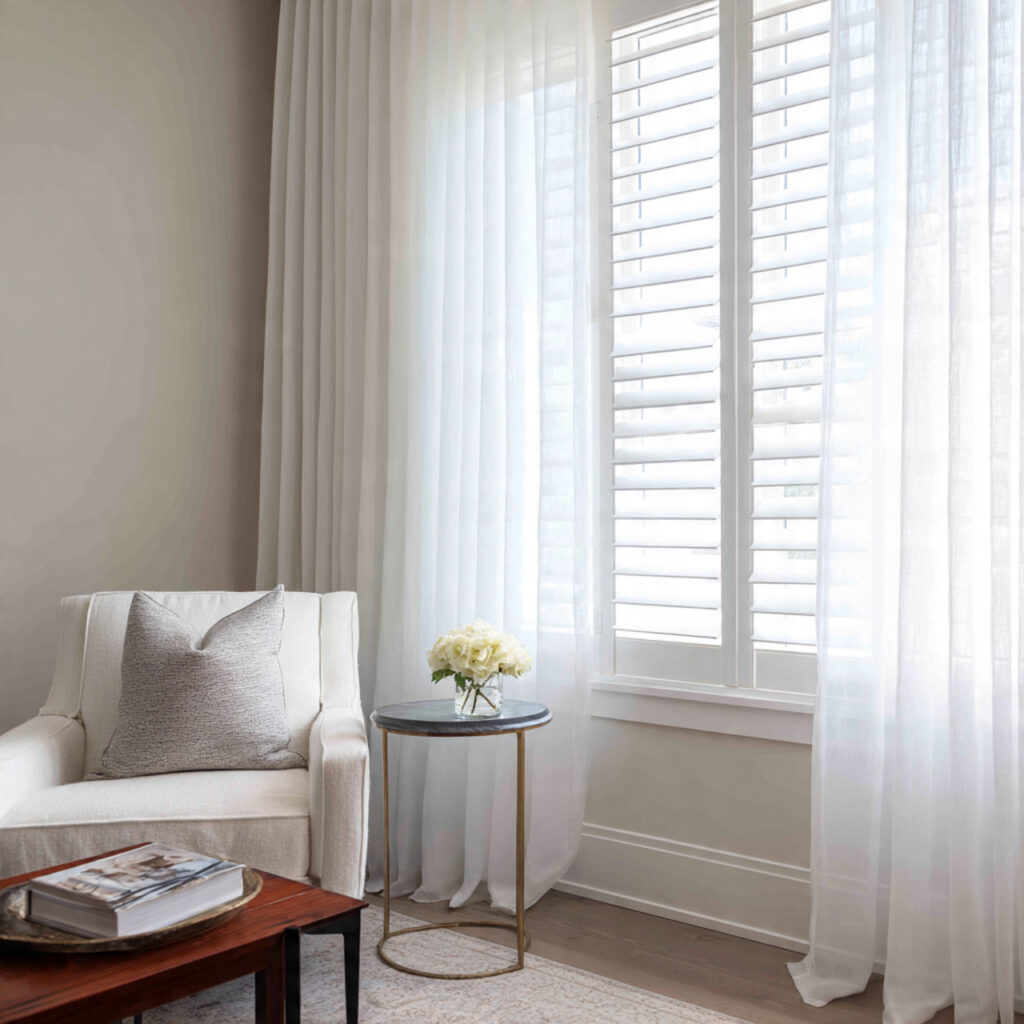
Install interior wooden shutter panels in a white, pale gray, or washed wood finish on your living room windows, and layer sheer linen curtains in front of them. This window treatment is one of the most recognizable signatures of European coastal interiors, appearing in French, Italian, Spanish, and Greek homes throughout the Mediterranean.
The shutters add architectural character and allow precise control over the quality of light entering the room, while the sheer linen overlay softens the whole window wall into a gentle, diffused glow. Together they create a window arrangement that is both functional and deeply beautiful.
Visit these new ideas here.
3. Whitewashed or Limewashed Stone Wall Texture Effect
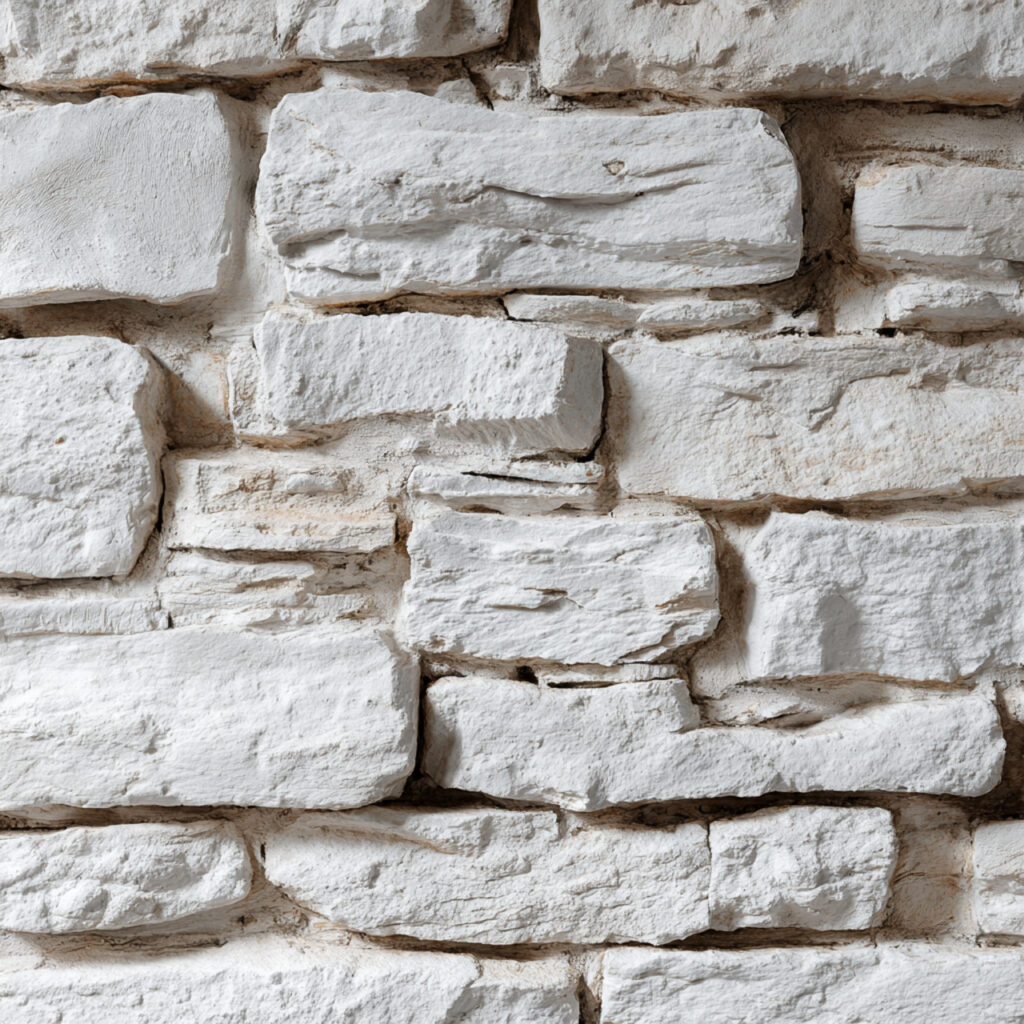
Apply a whitewash or limewash finish to one or more walls to create the effect of aged, sun-bleached stone typical of European coastal architecture. Use a warm white rather than a cool bright white, and allow some variation and imperfection in the application to achieve an organic, aged quality.
This wall finish is the single most effective way to bring a European coastal atmosphere into a modern interior because it references centuries of Mediterranean building tradition in a single surface treatment. Pair it with warm wood tones, natural fiber textiles, and simple iron or brass hardware for a fully cohesive result.
4. French-Style Carved Wood Sofa Frame With Linen Upholstery
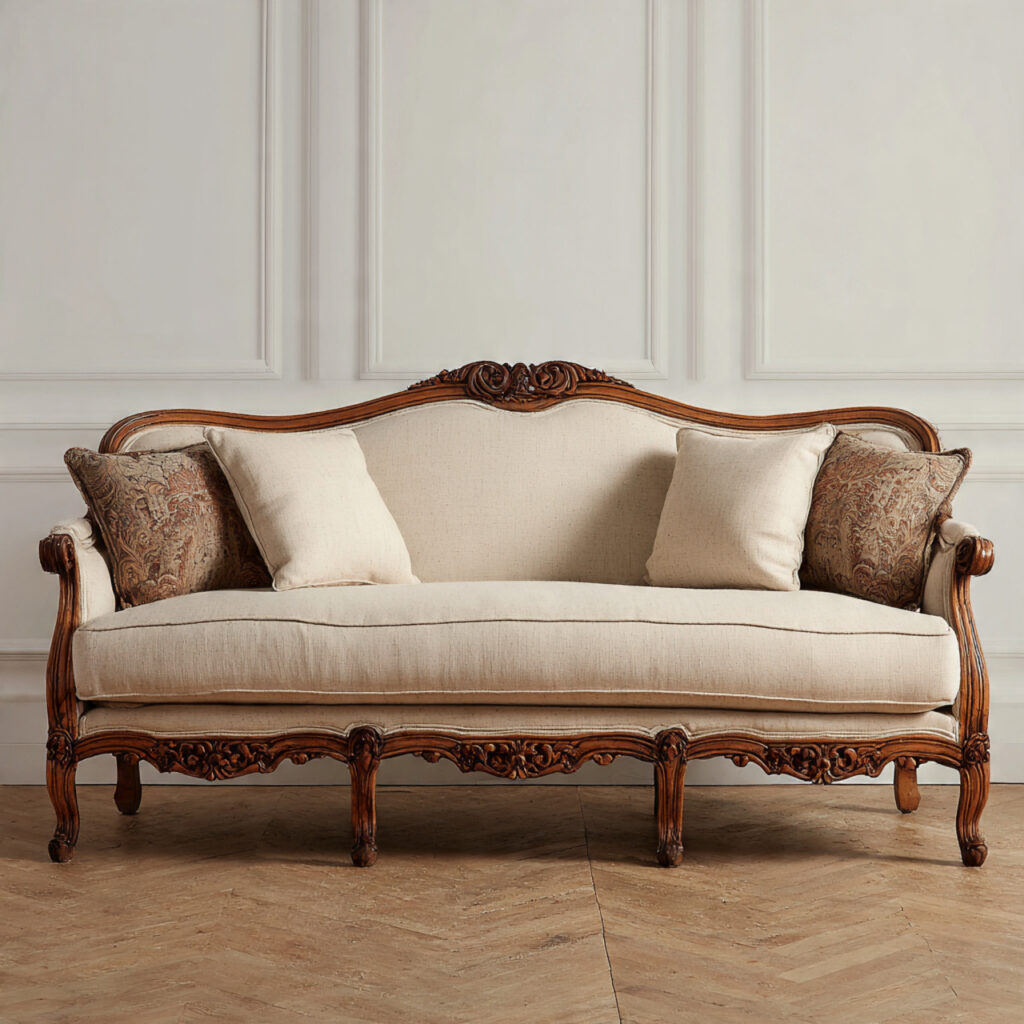
Choose a sofa with a carved or turned wooden frame in a white-painted, aged gray, or natural wood finish, referencing the classic French provincial furniture tradition. Upholster the seat and back in a plain linen or a fine stripe in warm white and soft blue or sand.
This style of sofa immediately introduces a sense of European elegance and history into a room while remaining completely practical and comfortable. Pair it with a simple cane or wicker side table, a soft area rug in a natural tone, and one or two cushions in a faded toile or botanical print for a complete French coastal look.
5. Coastal Blue Wainscoting or Dado Rail Wall Treatment
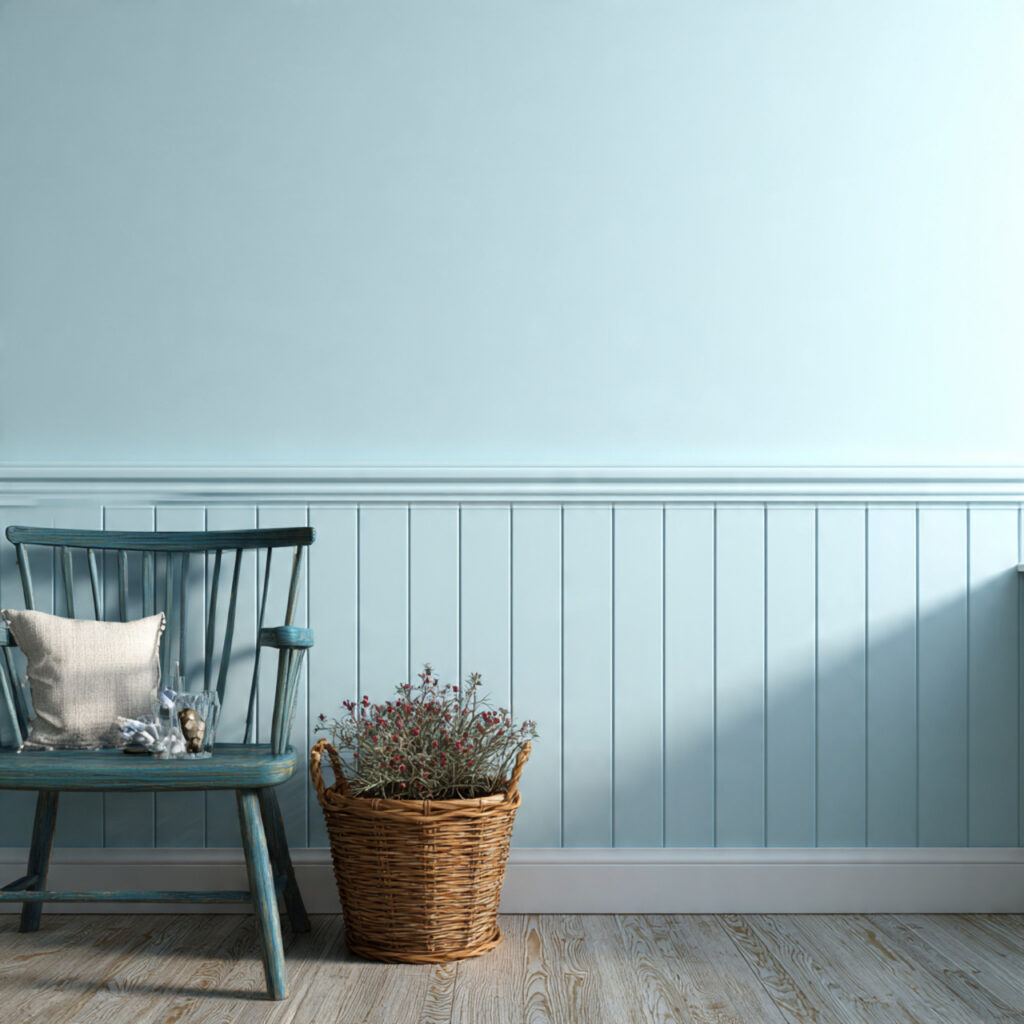
Install or paint a wainscoting or dado rail treatment on the lower section of your living room walls in a coastal blue tone, powder blue, faded navy, or soft teal, with warm white above. This wall treatment is widely used across European coastal interiors, particularly in Scandinavian, French, and British seaside homes, and it gives a room an immediate sense of architectural structure and regional character.
The color division creates visual interest on an otherwise plain wall and grounds the room’s palette in a very deliberate, designer way. Use a satin or eggshell finish on the lower panel for a subtle sheen that catches light cleanly.
Those first five ideas establish the essential European coastal framework. Keep reading because the next set brings in the regional details that make this aesthetic truly distinctive and layered.
6. Scandinavian-Inspired Pale Wood and White Furniture Arrangement
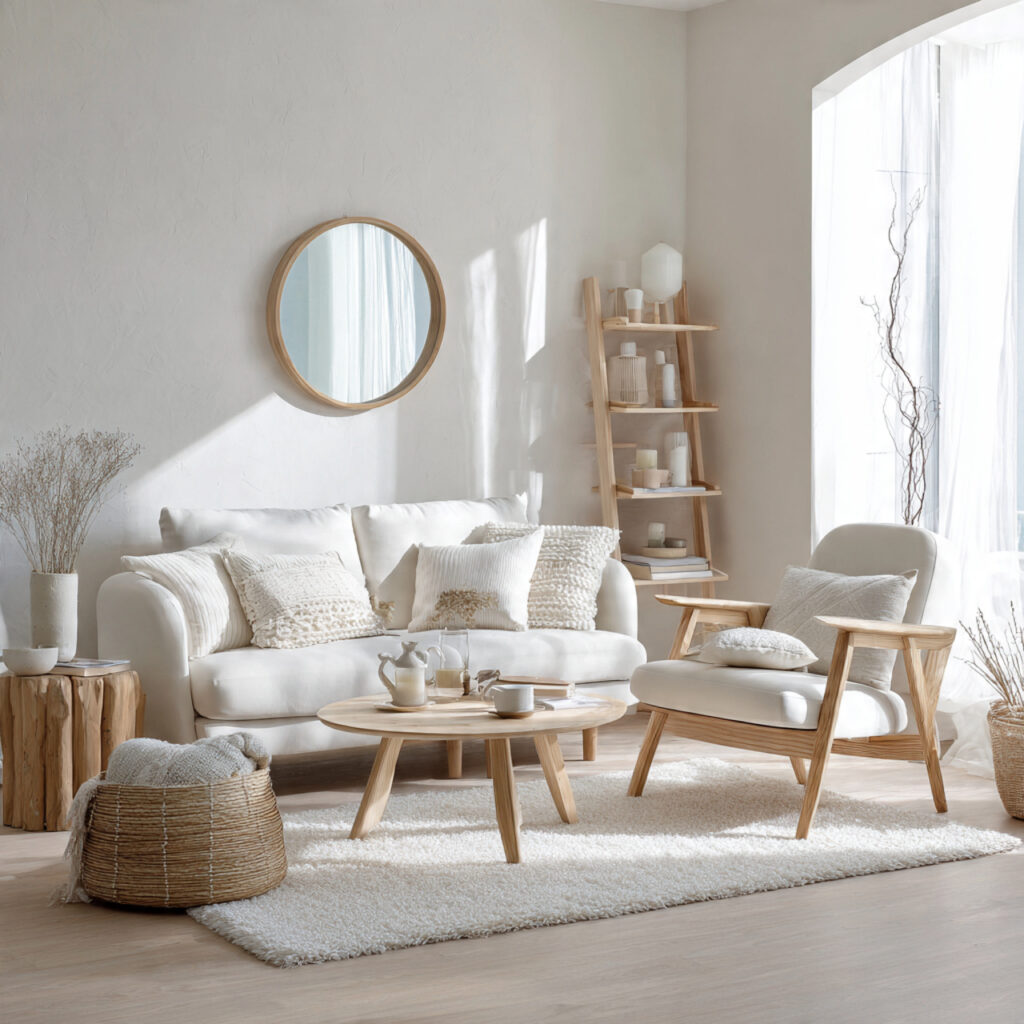
Create a light-filled, minimal seating arrangement using pale wood furniture, ash, birch, or light oak, combined with white or off-white upholstery and simple, clean-lined forms. Scandinavian coastal interiors are defined by their commitment to natural light, quality materials, and functional simplicity.
A pale wood coffee table, a white linen sofa with clean arms, and a simple open shelving unit in the same light wood tone create a room that feels airy, calm, and elegant without a single unnecessary element. Add a sheepskin throw over one chair and a small potted plant in a plain ceramic pot to complete the Nordic coastal look.
7. Greek Island-Inspired All-White Room With Blue Accent Pops
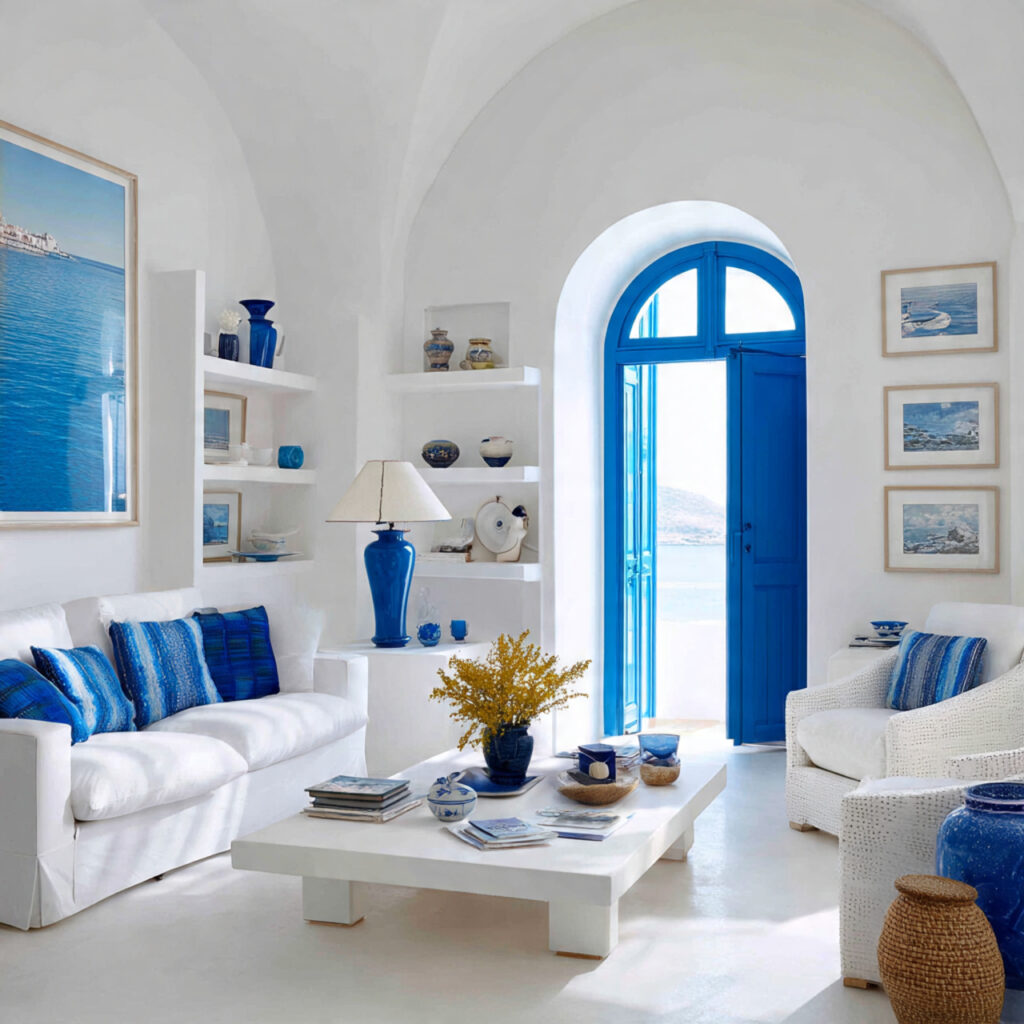
Design the room almost entirely in white, white walls, white sofa, white rug, white shelving, and introduce cobalt or Aegean blue as a sharp, deliberate accent in two or three specific places. Use it in a pair of ceramic vessels on the coffee table, a cushion cover, and one framed blue-toned artwork or print.
This is the Cycladic design principle at its purest: the contrast between stark white and deep blue, with very little in between. It creates a room of extraordinary visual clarity and coastal identity that requires very little furniture or decor to feel complete. The key is keeping the white very warm, not cool, and the blue very saturated and confident.
8. French Riviera-Inspired Striped Textile and Rattan Combination
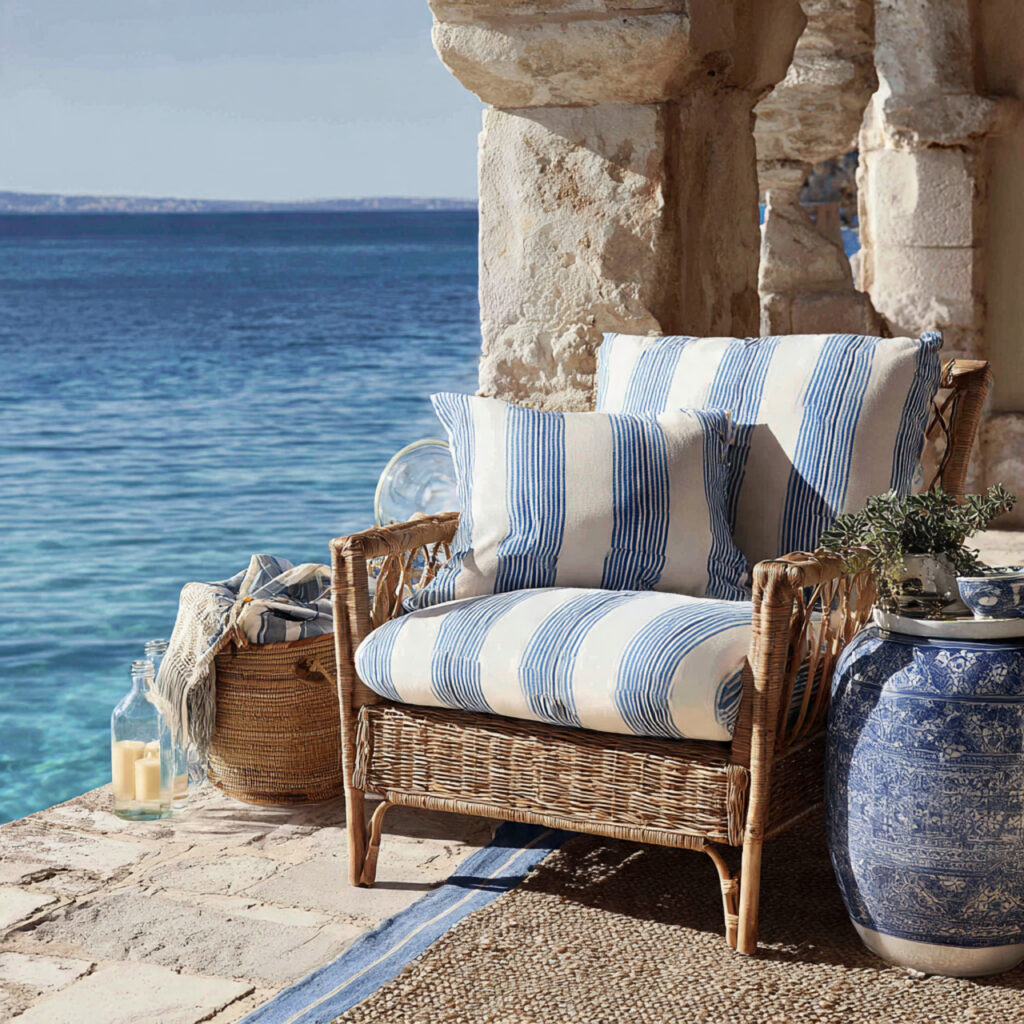
Introduce classic navy and white or blue and cream horizontal stripes through your key textiles, cushion covers, a throw, or a single upholstered piece, and pair them with rattan or cane furniture elements. The combination of Breton-style stripes and natural rattan is one of the most iconic visual codes of French Riviera and coastal French interior design.
A rattan armchair with a striped seat cushion, a striped throw on the sofa, and a rattan pendant light above create a complete French coastal moment that is stylish, practical, and immediately recognizable as European in character.
9. Driftwood and Bleached Wood Decorative Feature Wall
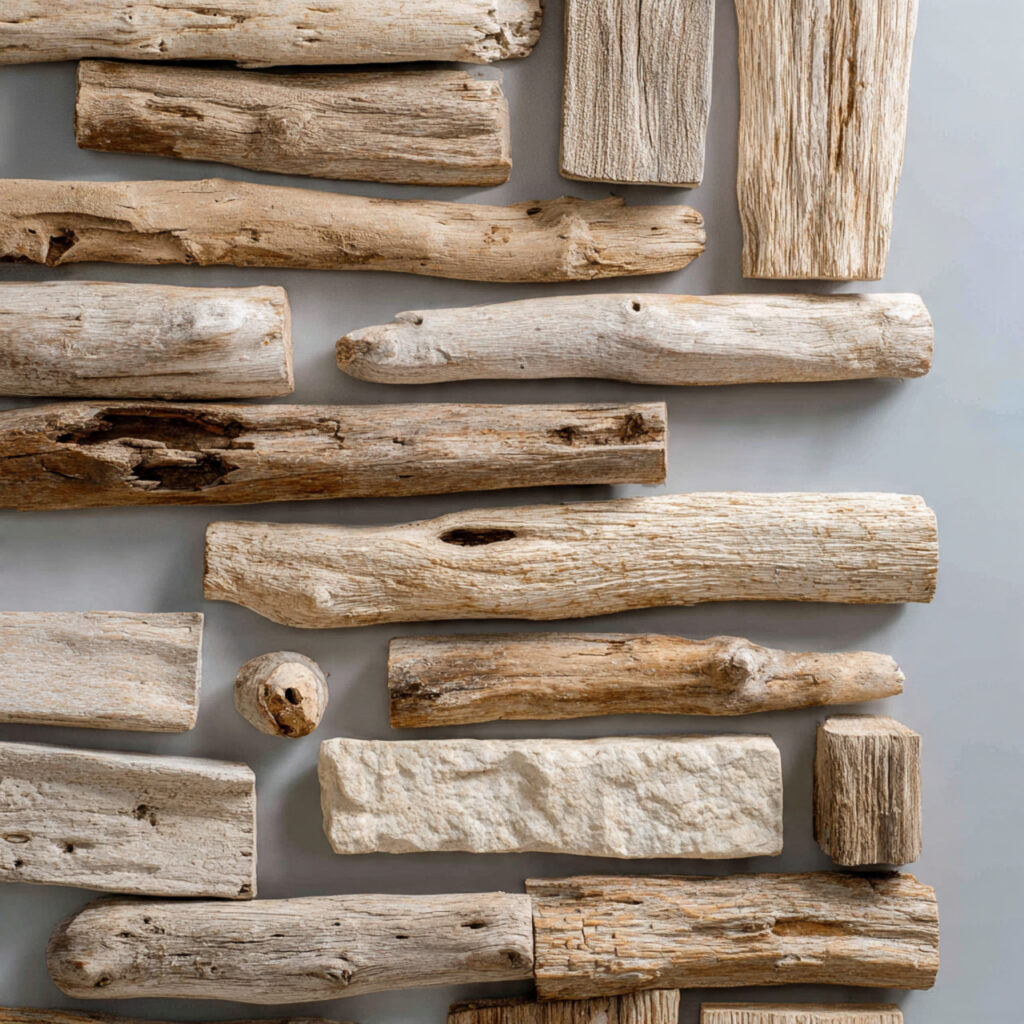
Create a feature wall using panels of bleached or whitewashed wood in a horizontal plank arrangement, or hang a large-scale driftwood installation as a wall art piece above the sofa or console. Bleached wood references the salt-worn, sun-bleached timber found in European coastal fishing villages and beach houses and it adds a strong natural texture to a room of predominantly soft and smooth surfaces.
The warm, pale tone of bleached wood sits beautifully against white or blue walls and pairs naturally with linen, jute, and ceramic accessories. A full wall of whitewashed horizontal planks is one of the most dramatic and effective coastal design transformations available.
10. Ceramic and Glazed Tile Accent in Coastal Blue and White
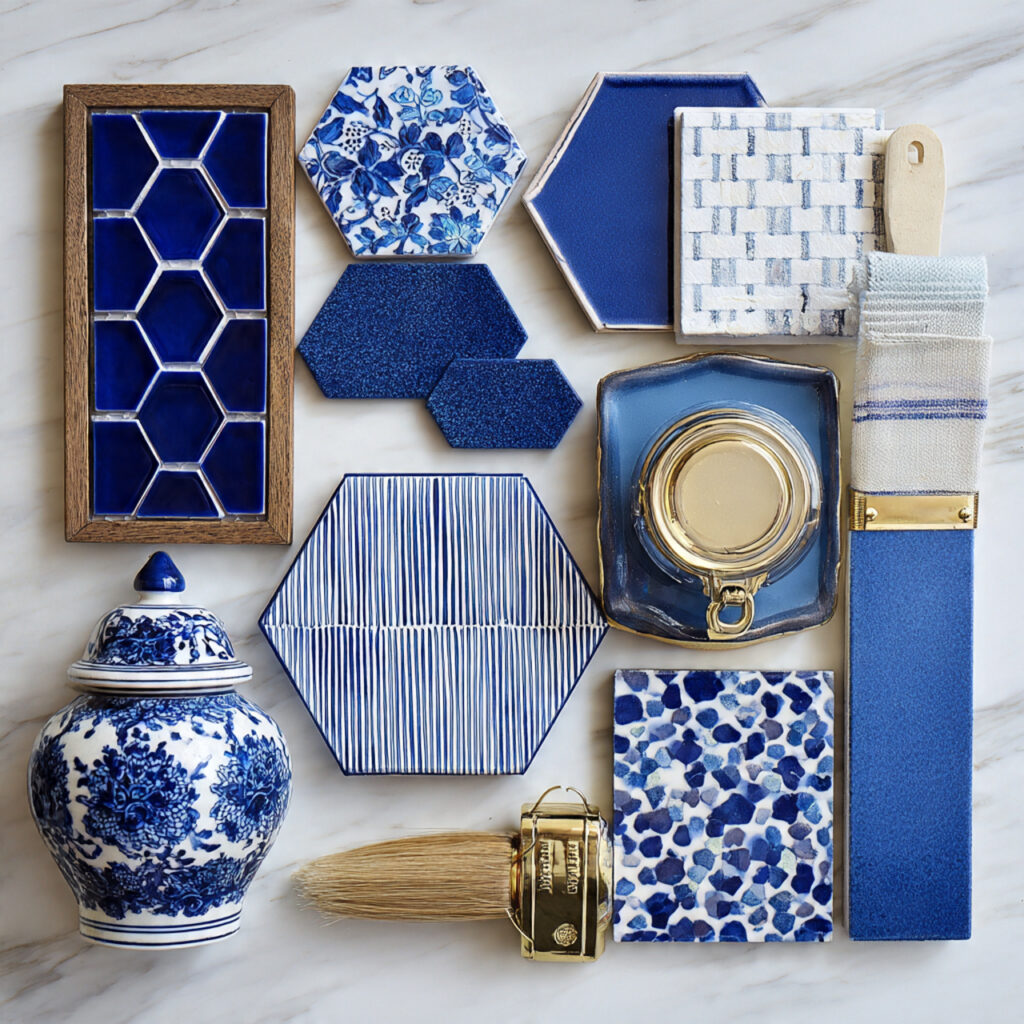
Introduce hand-painted or glazed ceramic tiles in a coastal blue and white pattern as an accent feature, around a fireplace surround, in a built-in niche, or as a panel behind a console or shelving unit. This detail references the tile traditions of Portugal, Spain, France, and Italy, all of which have deeply embedded ceramic cultures that show up in domestic interiors throughout the European coastal belt.
Even a small grouping of tiles framed as a panel or hung as individual art pieces creates a strong visual reference to this tradition. Choose patterns in cobalt, navy, or soft teal on a white ground for the most authentic result.
You are more than halfway through the list and the design picture should be coming together clearly. This next idea is one of the most complete and save-worthy concepts in the entire article.
11. Mediterranean Arch Window or Doorway Mirror Installation
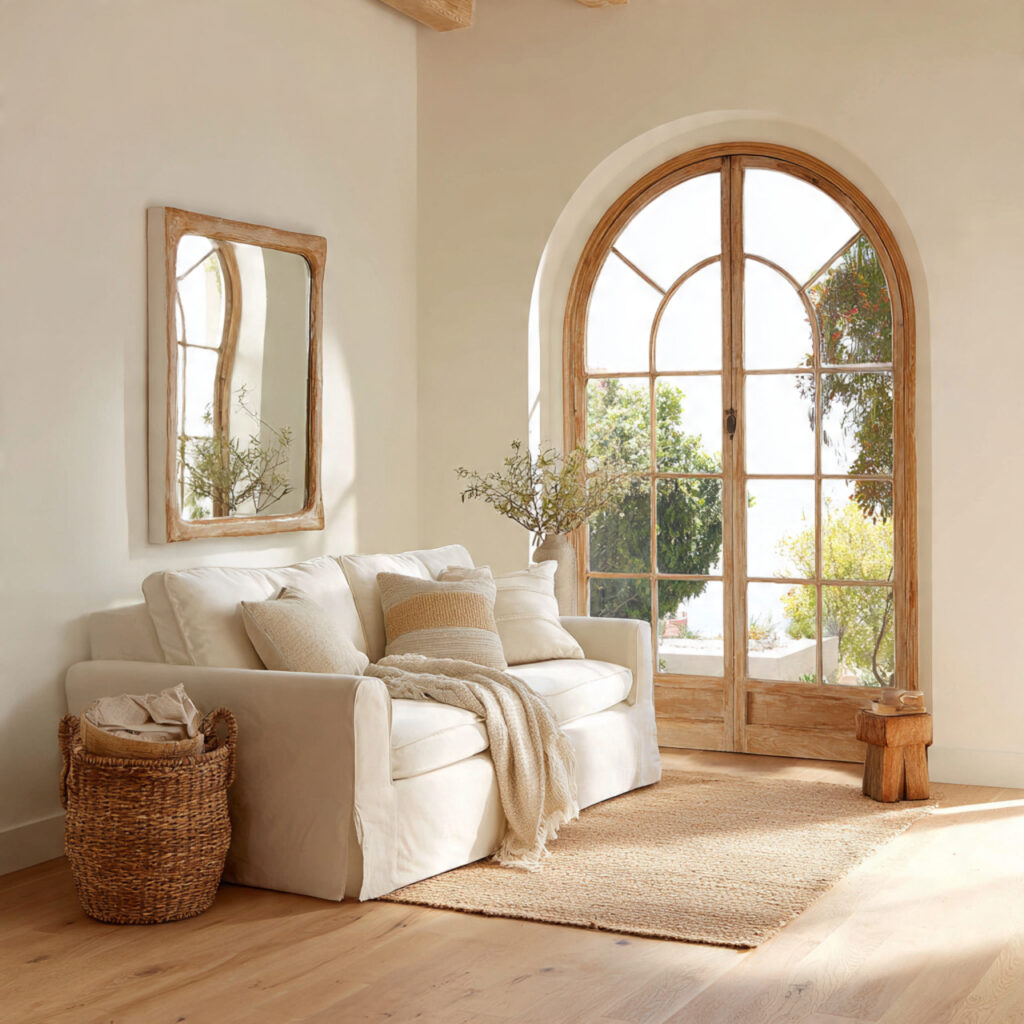
Hang one or two large arch-shaped mirrors on the main living room wall to reference the arched windows and doorways found throughout Mediterranean European architecture. Position them to reflect natural light from a window or the warm glow of a lamp, and choose frames in whitewashed wood, aged plaster, or pale natural stone finish.
Arch mirrors are one of the strongest single design elements for creating a European coastal atmosphere because the arch shape alone carries enormous architectural reference and the reflective surface amplifies light in a way that makes any room feel more open and sunlit. Size up as much as the wall allows for maximum impact.
12. Woven Rope and Natural Fiber Decor Layering Throughout
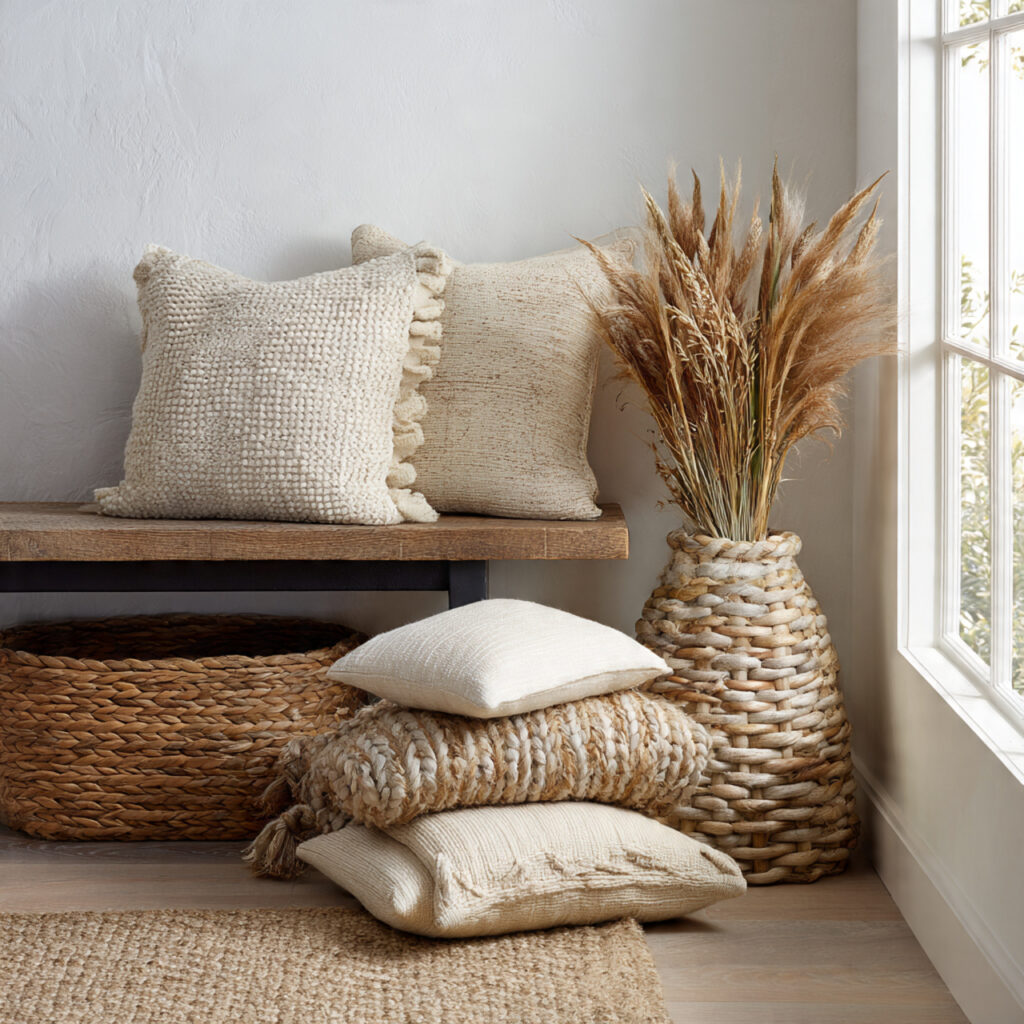
Layer woven rope, knotted cord, and natural fiber accessories throughout the room as a connecting texture. Use a rope-wrapped pendant light above the seating area, a knotted macrame wall hanging beside the sofa, a woven seagrass basket used as a side table, and natural fiber cushion covers in a loose weave.
These materials reference the maritime and craft traditions of European coastal communities and they bring a warmth and handmade quality to a room that mass-produced smooth-finish accessories cannot replicate. The key is keeping the tones consistent, cream, oat, sand, and warm white, so the varied textures feel cohesive rather than scattered.
13. Soft Sand and Warm Taupe Neutral Palette With Sea Glass Accents
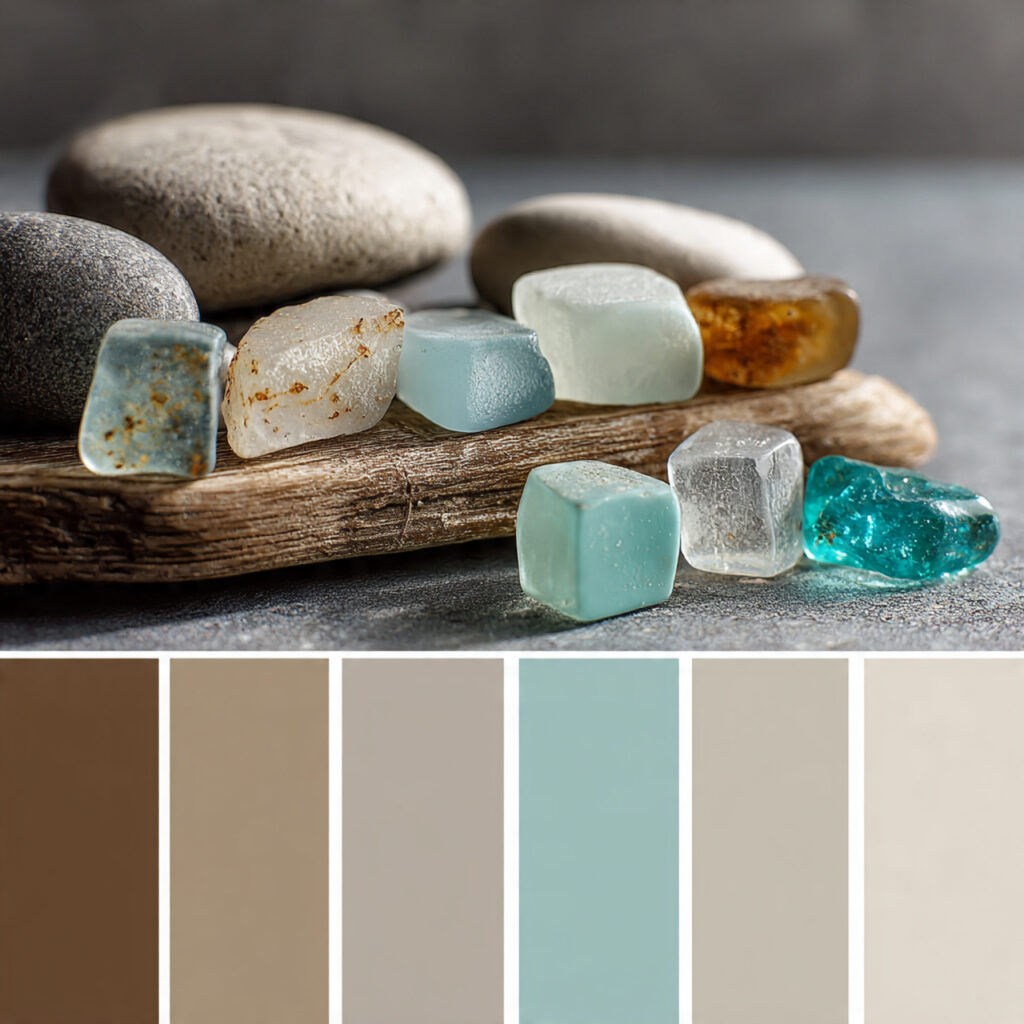
Build a restrained, sophisticated coastal palette around soft sand, warm taupe, and aged linen as your three neutrals, then introduce sea glass tones, pale aqua, dusty sage, and soft seafoam, as carefully placed accents.
Use the sea glass tones only in glass objects, a collection of colored glass bottles on a windowsill, a sea glass green ceramic vessel, or a single art print, to maintain the reference to coastal natural materials. This palette is more subtle than the classic blue and white approach and it creates a European coastal room that feels luxurious and refined rather than thematic or obvious.
14. Exposed Stone Fireplace With European Mantel Styling
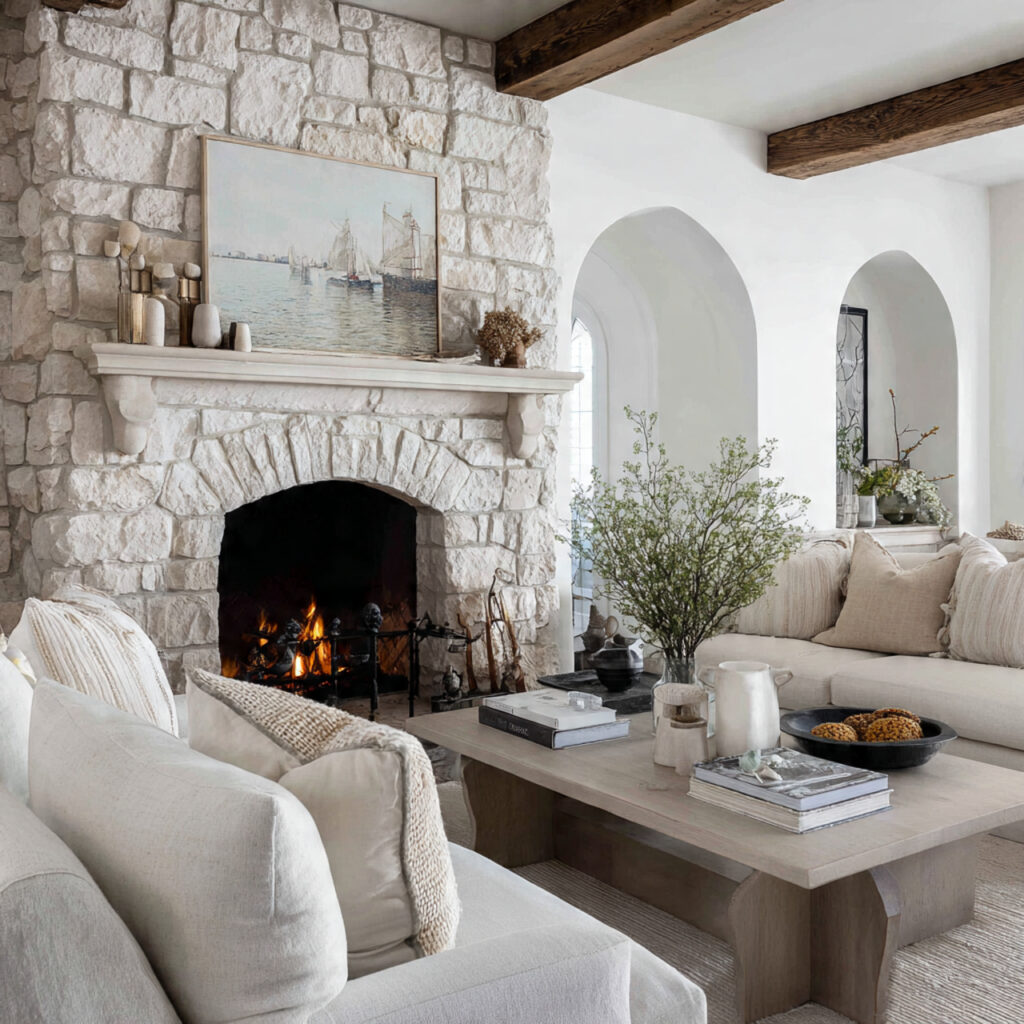
Style your fireplace as the room’s primary European coastal focal point by dressing the mantel with a large leaning mirror in a simple natural frame, a pair of white or stone-colored pillar candles in minimal holders, one ceramic vessel in a coastal tone, and a single architectural object such as a small stone sculpture or an aged urn.
If the fireplace surround is painted, consider applying a limewash or stone-effect finish to it to give it a more European character. European coastal homes consistently use the fireplace as the most formally styled element in the living room and the mantel as a surface for carefully considered, minimal display.
15. Blue and White Toile or Botanical Print Upholstered Chair
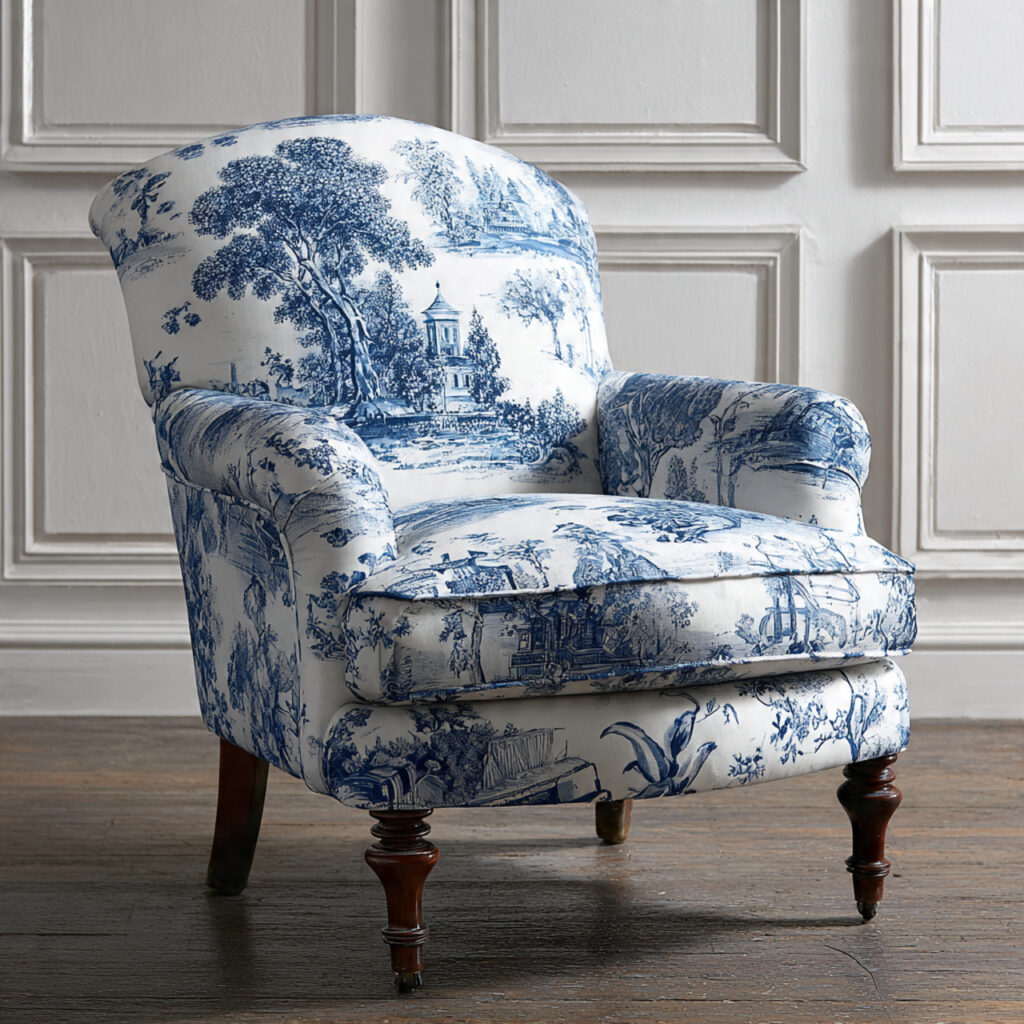
Place a single accent chair upholstered in a blue and white toile de Jouy or large-scale botanical print fabric within the main seating arrangement. Toile is deeply French in origin and botanical prints are consistent across British, Dutch, and Scandinavian interior traditions, making either choice an authentic reference to European design heritage.
Keep the chair frame simple in white or natural wood and allow the fabric to be the visual statement. Position it against a plain white or lightly textured wall so the pattern reads clearly. This single chair introduces enormous pattern and cultural specificity to a room of predominantly solid and neutral surfaces.
16. Soft Blue Painted Ceiling as an Architectural Color Feature
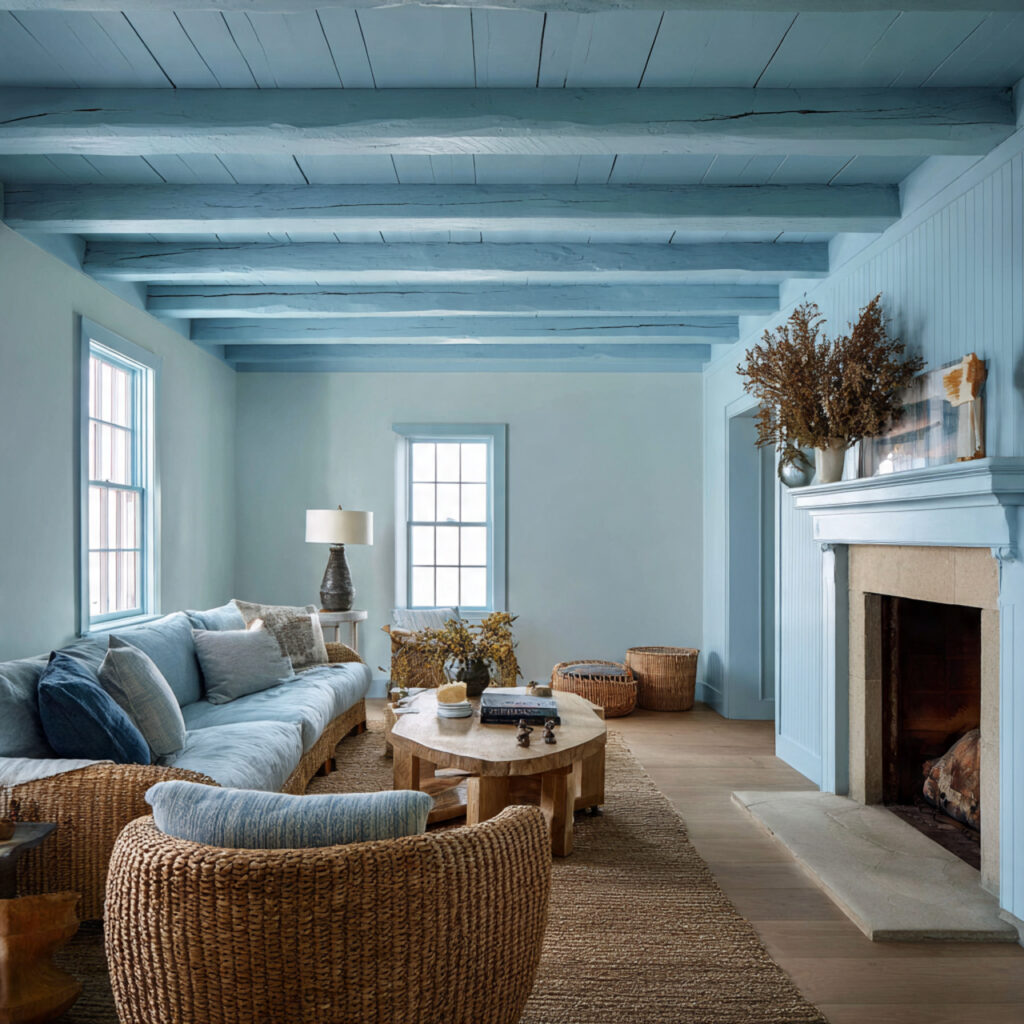
Paint the ceiling in a soft, muted blue, sky blue, pale powder, or washed periwinkle, while keeping the walls warm white. This treatment is used across European coastal interiors, particularly in Provencal farmhouses, Greek island homes, and coastal British cottages, where the painted ceiling references the sky and the sea overhead.
A blue ceiling makes a room feel taller, cooler, and more architectural without adding any furniture or decor, and it creates a color envelope that makes everything in the room below it look warmer and more luminous by contrast. Use a matte finish to keep it soft and sky-like rather than reflective.
17. Coastal Still Life Gallery Wall in Soft Tonal Frames
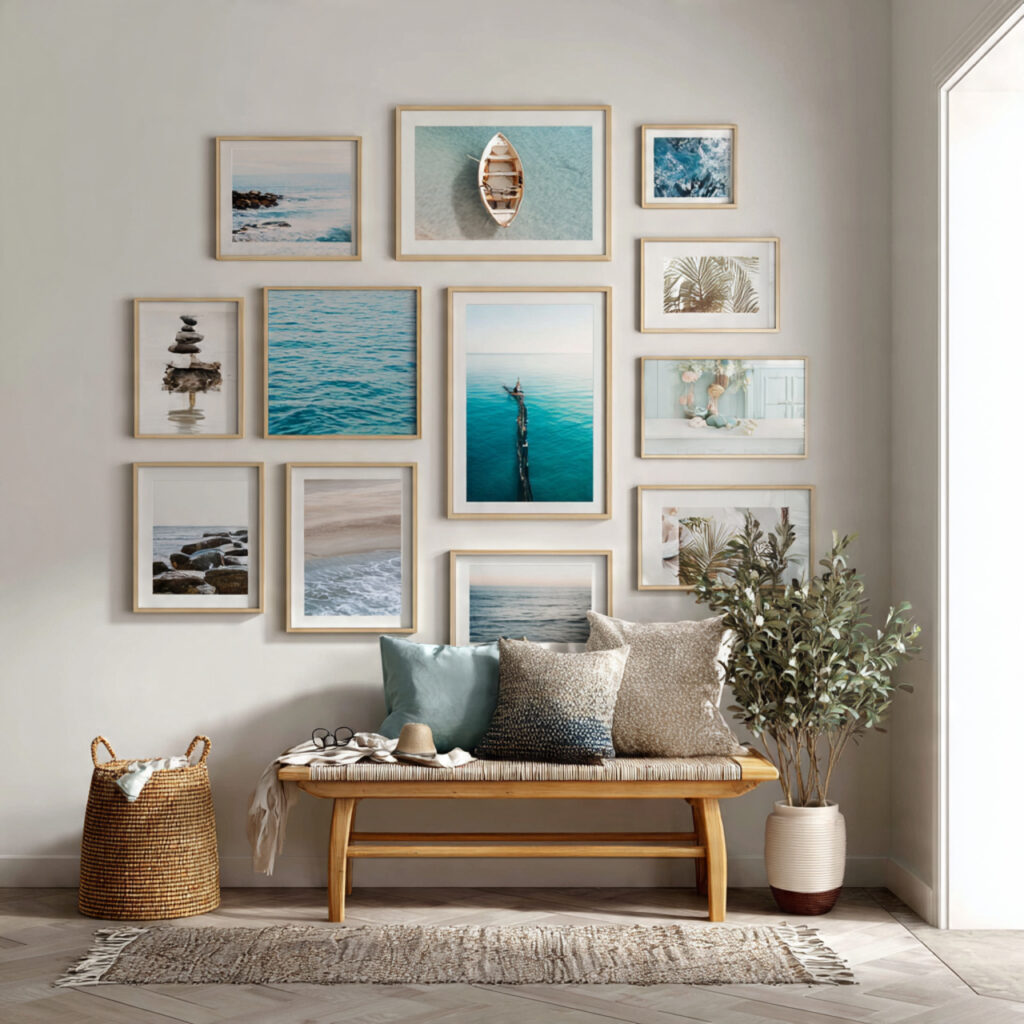
Build a gallery wall using a cohesive collection of coastal still life prints, seascape paintings, nautical charts, shell studies, or abstract ocean-toned works, all framed in pale natural wood, white, or soft gray frames. Arrange them in a balanced grid for a modern European look or a close-hung salon arrangement for something more traditional and layered.
The subject matter and the tonal palette of the frames together create a wall that reads immediately as coastal European without requiring any single dramatic piece. Choose art that uses the room’s existing palette, blues, whites, sand tones, and warm neutrals, to keep the gallery fully integrated with the rest of the design.
18. Open-Plan Layout With Furniture Arranged Around a Central Rug
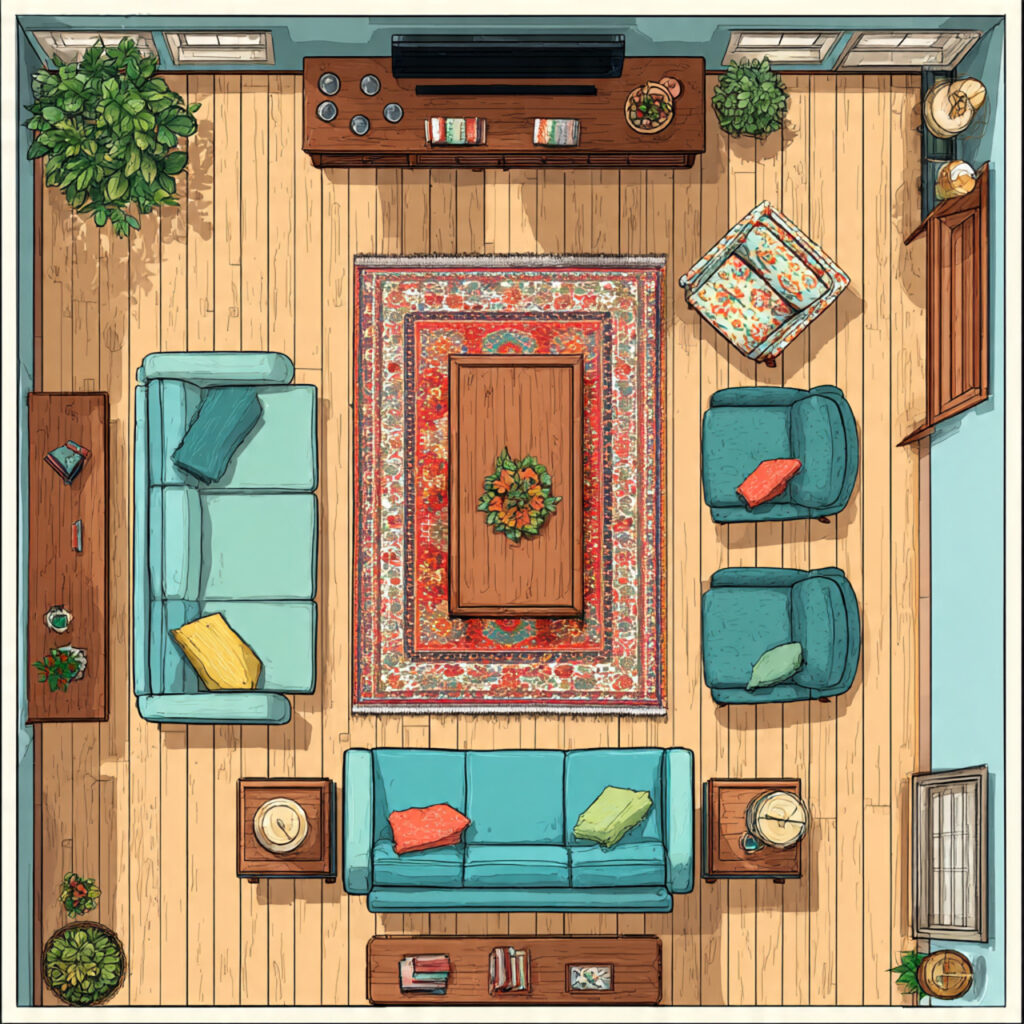
Reconfigure your living room layout to float all key furniture pieces on a large central rug, pulling the sofa and chairs away from the walls and creating a defined conversation zone in the center of the room. European coastal living rooms, particularly in French, Italian, and Greek contexts, favor open, sociable arrangements that feel welcoming and generous rather than furniture lined against walls.
A large natural fiber or flat-weave rug in warm white, sand, or pale blue defines the zone and ties the arrangement together. Position all pieces to face each other across the coffee table and leave clear paths around the outside of the rug for a layout that feels relaxed, intentional, and genuinely European in spirit.
A European summer living room is ultimately about a specific quality of life made visible through design. It is the belief that beautiful surroundings matter, that natural materials deserve to be seen, that light is the most important element in any room, and that elegance and comfort are never in conflict. The 18 ideas above draw from some of the richest interior traditions on the planet and every single one can be adapted to a real home in a real budget. Start with the palette, add the texture, find the light, and let the rest follow naturally. The room you have been picturing is entirely within reach.