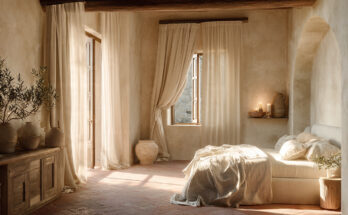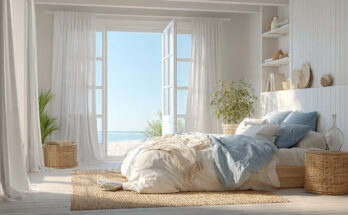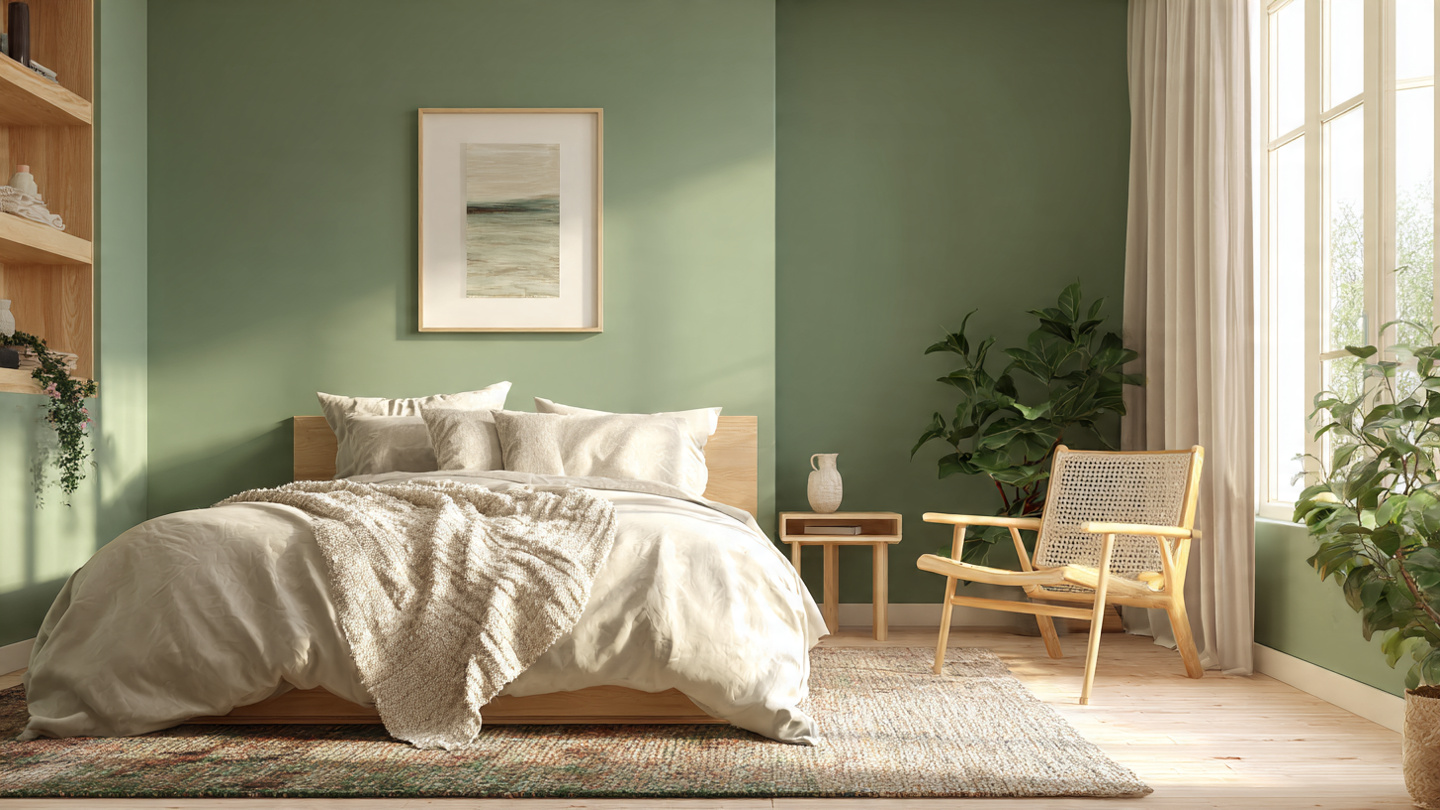
There is something about a green bedroom that feels instantly different from any other color. The moment you walk in, the room breathes. It feels grounded, peaceful, and alive in a way that white, grey, or beige rooms rarely achieve.
Green is having a significant moment in interior design right now, and for good reason. It is the color most closely associated with nature, and research consistently shows that nature-inspired environments reduce stress, lower heart rate, and improve the quality of sleep. A 2024 study published by the Environmental Design Research Association found that bedrooms featuring green tones and natural elements led to measurably better sleep outcomes and higher feelings of relaxation among participants.
From deep forest greens to soft sage, from botanical wallpaper to a single statement plant, there are more ways to bring green into a bedroom than most people realize. These 26 green bedroom ideas cover every style, every budget, and every shade of green, so you can find exactly the right look for your space.
26 Green Bedroom Ideas to Create a Calm, Fresh, and Beautiful Space
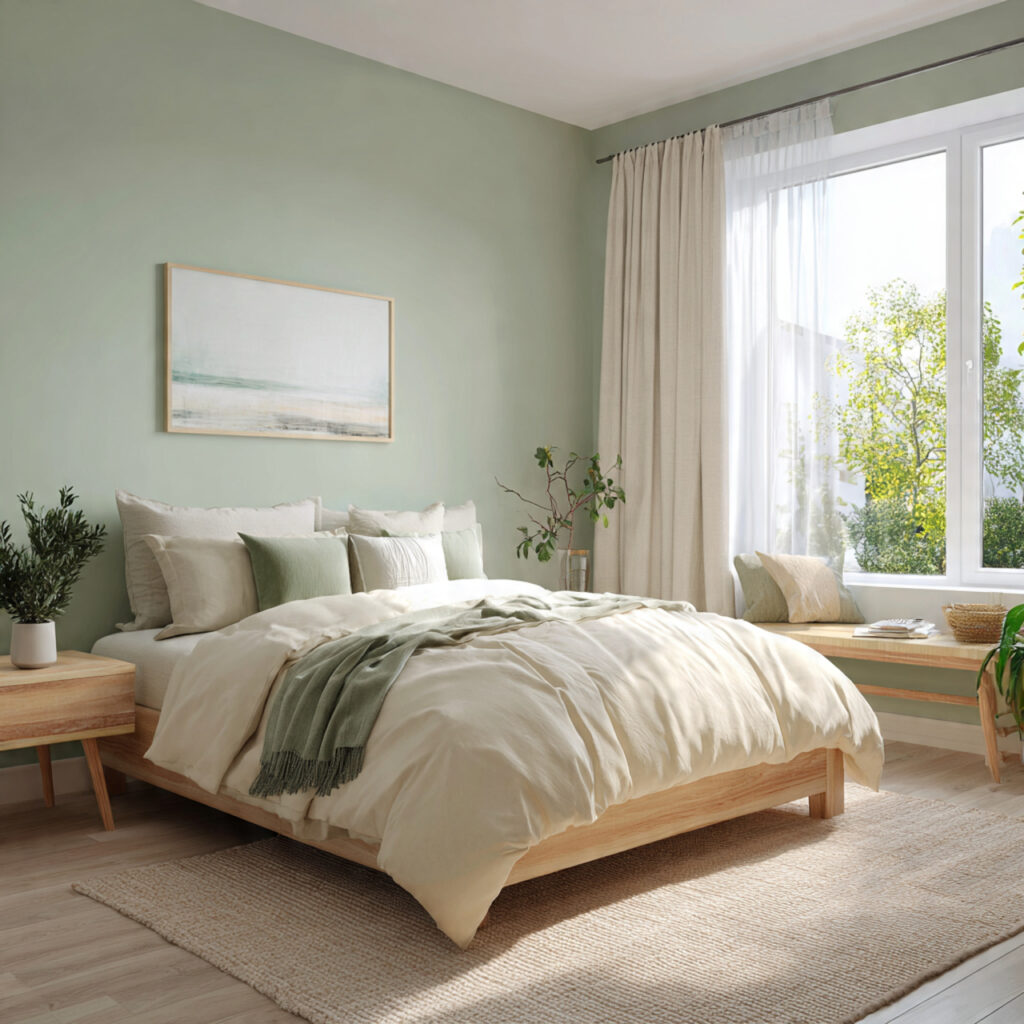
1. Paint the Walls in Soft Sage Green
Why This Works
Sage green is the most universally loved green for bedrooms because it sits in a perfect middle ground between warm and cool. It feels earthy without being heavy, and fresh without being harsh. Sage-painted walls instantly make a room feel calm, collected, and naturally beautiful.
How to Implement
Choose a matte or eggshell finish for the most sophisticated result. Popular sage green paint shades include Farrow and Ball’s Mizzle, Benjamin Moore’s Pale Eucalyptus, and Dulux’s Sage Advice. Apply to all four walls for full immersion, or use it on the headboard wall only as a feature. Pair with cream, warm white, and natural wood tones to keep the palette grounded.
Pro Tip
Paint the ceiling one shade lighter than the walls in the same green family. This creates a soft, enveloping effect that makes the room feel like a quiet garden hideaway.
Also Read: https://myhavenvibes.com/teenage-girl-bedroom-ideas/
2. Choose Deep Forest Green for a Bold Accent Wall
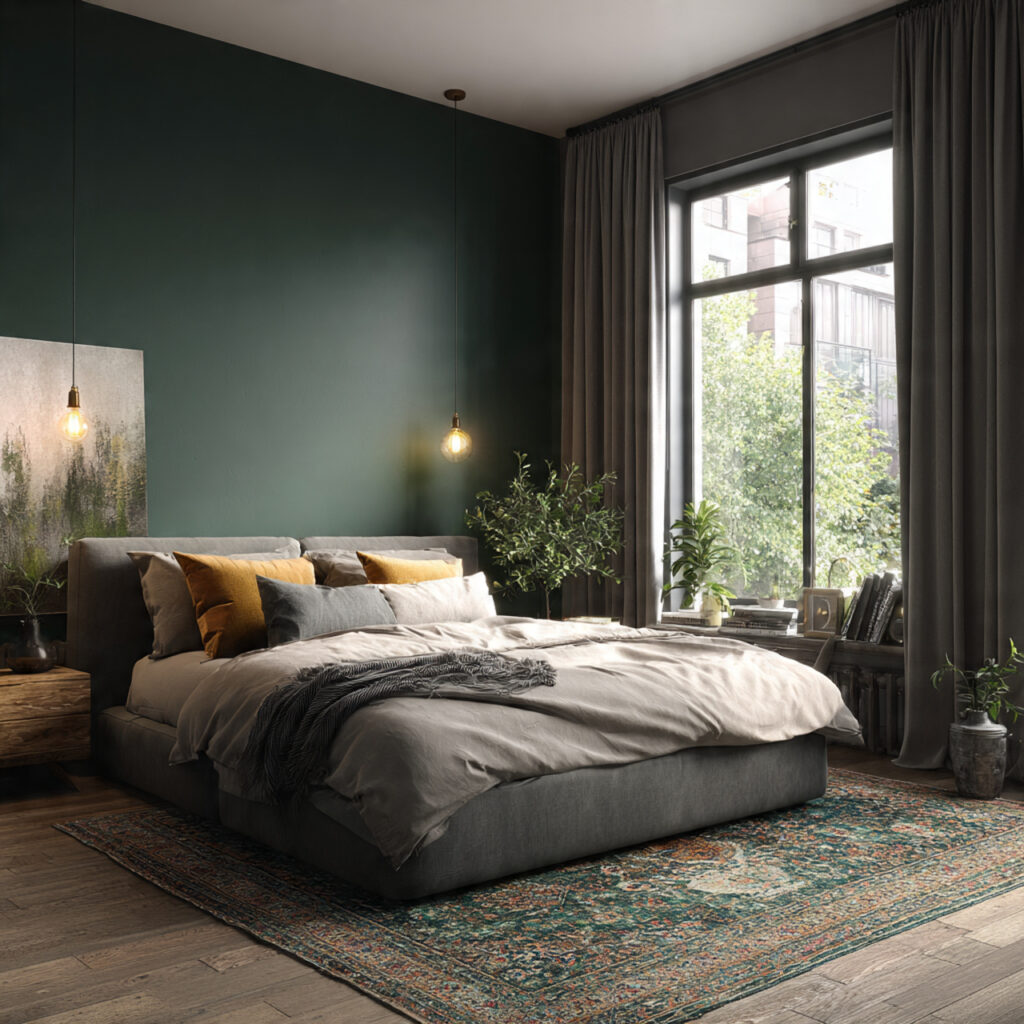
Why This Works
Deep forest green on the headboard wall creates a dramatic, rich focal point that anchors the bed and makes the entire room feel more intentional. It is confident, striking, and deeply atmospheric without needing any other major design changes.
How to Implement
Paint only the wall behind the headboard in a deep forest or hunter green. Look for shades like Farrow and Ball’s Studio Green, Sherwin-Williams’ Cascades, or Annie Sloan’s Amsterdam Green. Use a matte finish to absorb light and enhance the depth of the color. Keep the remaining walls in white or warm cream to let the feature wall take center stage.
Common Mistake
Pairing forest green with cool greys or stark white. This combination can feel cold and clinical. Opt for warm whites, brass accents, and natural wood instead to keep the palette lush and inviting.
Read More: https://myhavenvibes.com/bedroom-ideas-2026/
3. Use Botanical Wallpaper as a Statement Wall
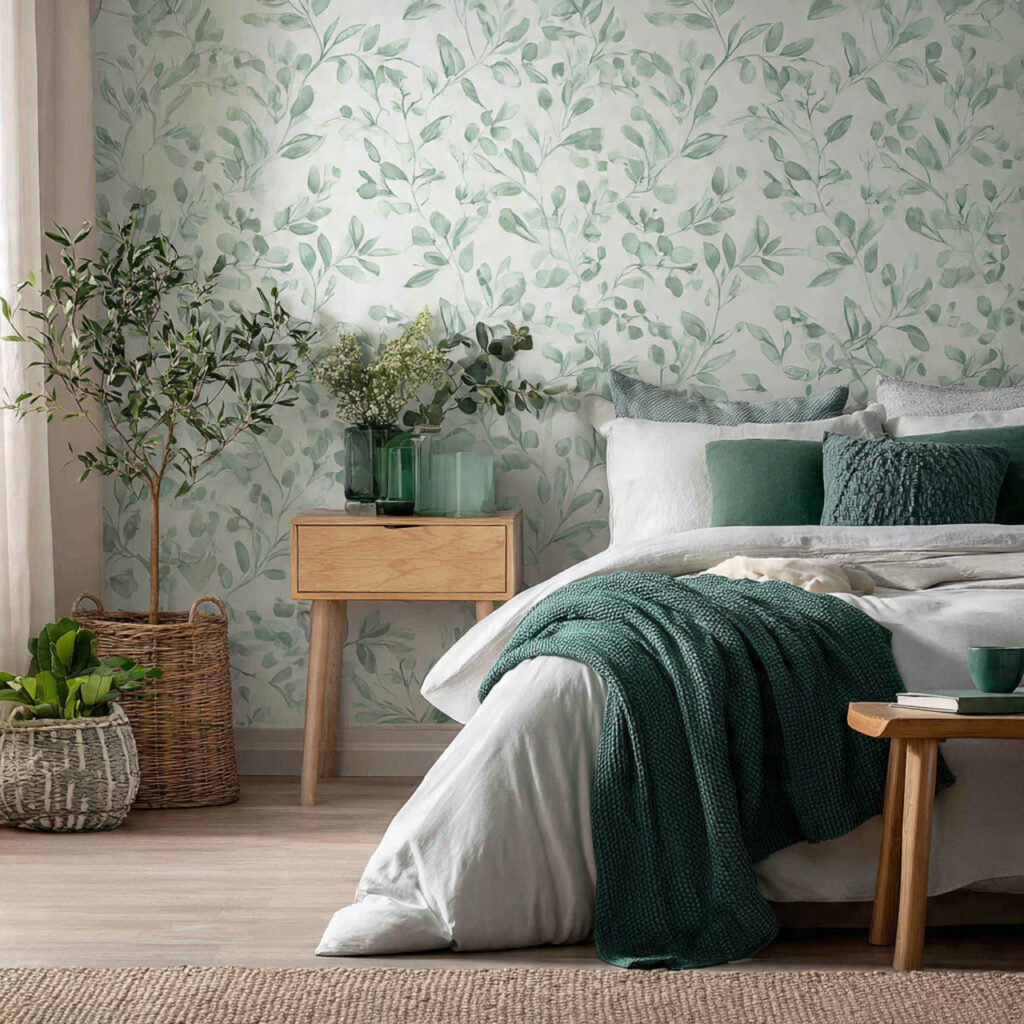
Why This Works
Botanical wallpaper brings an entire garden into the bedroom through pattern, color, and visual storytelling. A single wall covered in oversized leaves, tropical prints, or delicate botanical illustrations transforms a plain room into something that feels immersive and alive.
How to Implement
Apply botanical wallpaper to the headboard wall only for maximum impact without overwhelming the space. Choose prints with a mix of greens, from dark emerald to pale mint, for depth. Pair with solid-colored bedding in one of the greens from the wallpaper to create cohesion. For renters, peel-and-stick botanical wallpaper is widely available and looks just as impressive as traditional paste versions.
Pro Tip
Choose wallpaper with a cream or off-white background rather than stark white. The warmth in the background color makes the botanical print feel more organic and less graphic.
4. Add a Cluster of Indoor Plants in Varying Heights
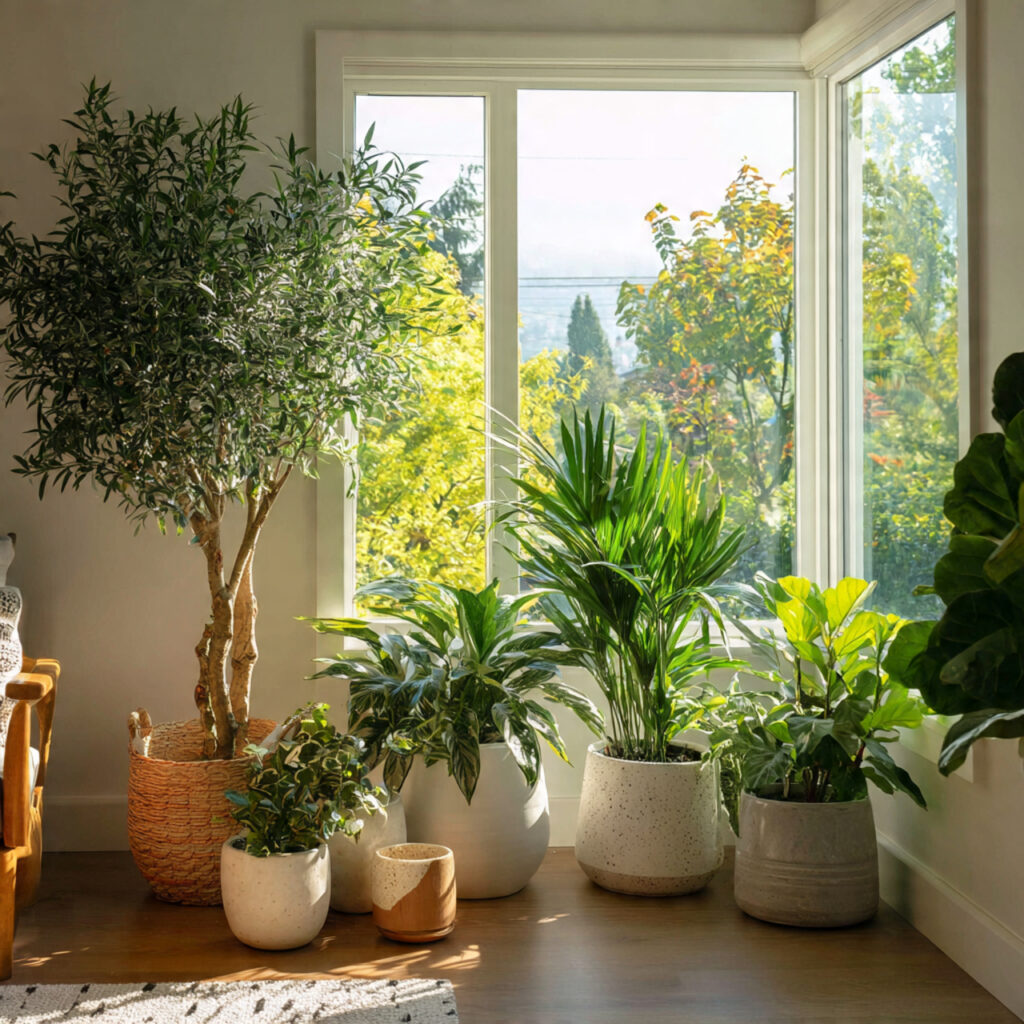
Why This Works
A grouping of live plants in one corner of the bedroom creates a lush, layered display that brings genuine life and fresh energy into the space. Plants absorb sound, improve air quality, and add a constantly changing organic element that no other decor item can replicate.
How to Implement
Group three to five plants of different heights in one corner, ideally near a window with natural light. Use a tall floor plant like a fiddle leaf fig or monstera as the anchor. Add medium-height plants like a snake plant or peace lily at eye level. Finish with small trailing plants on a low shelf or stool. Use pots in terracotta, matte white, or earthy tones for a cohesive look.
Common Mistake
Spreading plants randomly around the room. Grouping them together creates a much more dramatic and intentional display than isolated plants scattered in every corner.
5. Layer Green Bedding in Multiple Tones and Textures
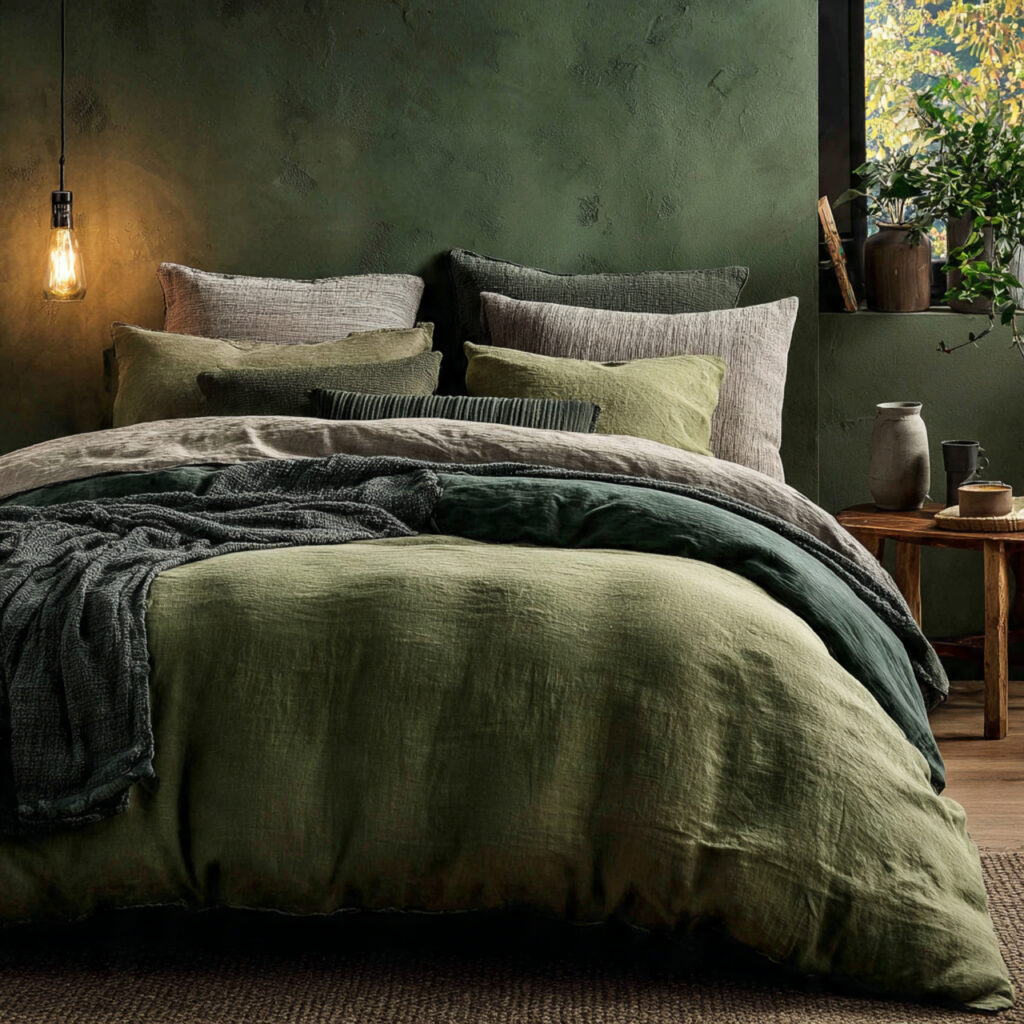
Why This Works
Green bedding in layered tones turns the bed into a lush, textured focal point. When you combine different shades and fabrics, the result is a bed that feels rich, welcoming, and deeply cozy, like sinking into a cool forest.
How to Implement
Start with a base duvet or comforter in sage or moss green. Layer a washed linen flat sheet in a lighter, complementary green tone. Add throw pillows in forest green velvet and pale sage linen for textural contrast. Finish with a chunky knit throw in olive or hunter green draped across the foot of the bed. Keep one neutral pillow in the mix to prevent the palette from feeling too heavy.
You are probably noticing how versatile green really is. It works at every intensity, from the palest whisper to the deepest forest tone. Keep reading because the ideas ahead explore even more creative ways to use this color.
6. Install Green Curtains From Ceiling to Floor
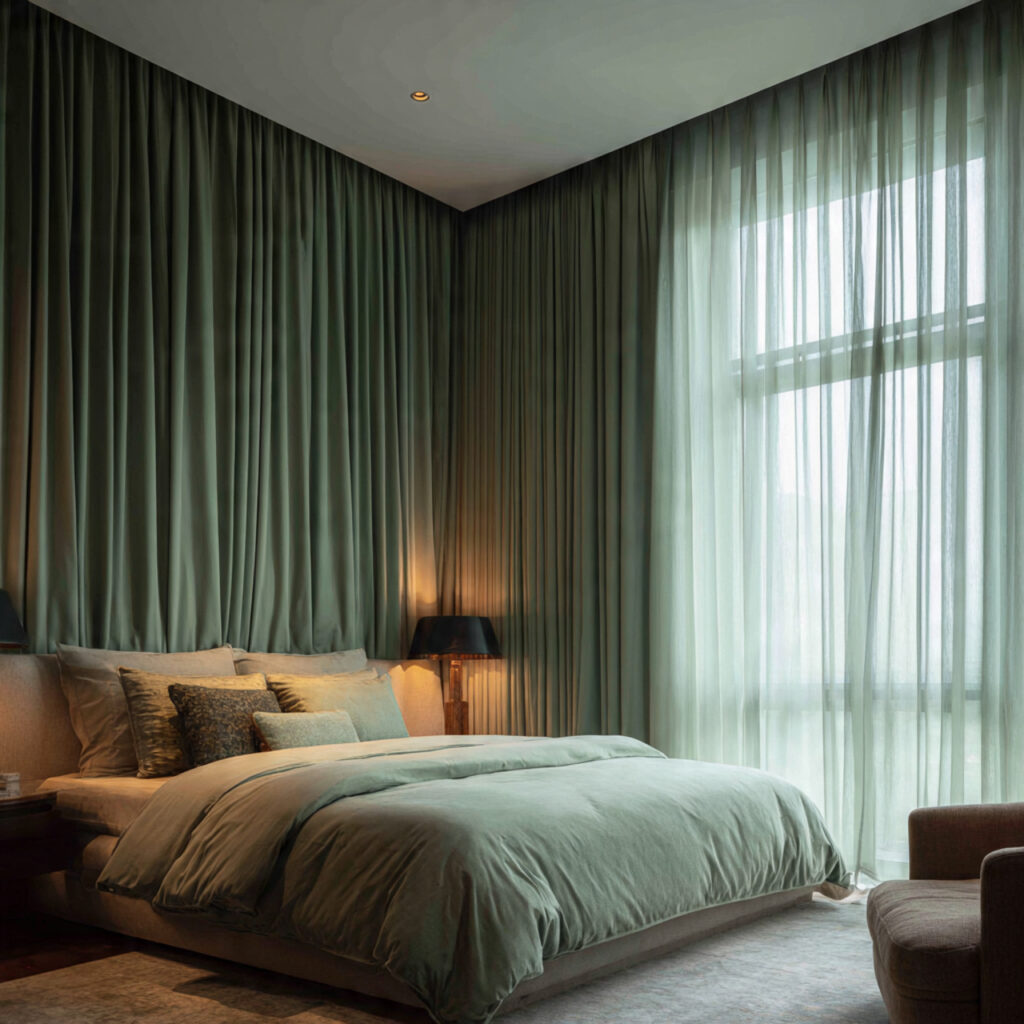
Why This Works
Floor-to-ceiling curtains in a rich green tone add color, texture, and grandeur to a bedroom in a way that furniture alone cannot achieve. They frame the window dramatically and make the entire room feel more curated and complete.
How to Implement
Mount the curtain rod 4 to 6 inches below the ceiling and extend it 8 to 12 inches past both sides of the window. Choose floor-length panels in forest green velvet for a luxurious look, or sage linen for something softer and more relaxed. Let the panels graze or puddle slightly on the floor for an effortlessly elegant finish. Pair with warm white walls to keep the room light and balanced.
Pro Tip
Use blackout lining in dark green curtains. It adds practical function, improves the drape of the fabric, and makes the curtains hang beautifully.
7. Choose a Green Upholstered Headboard
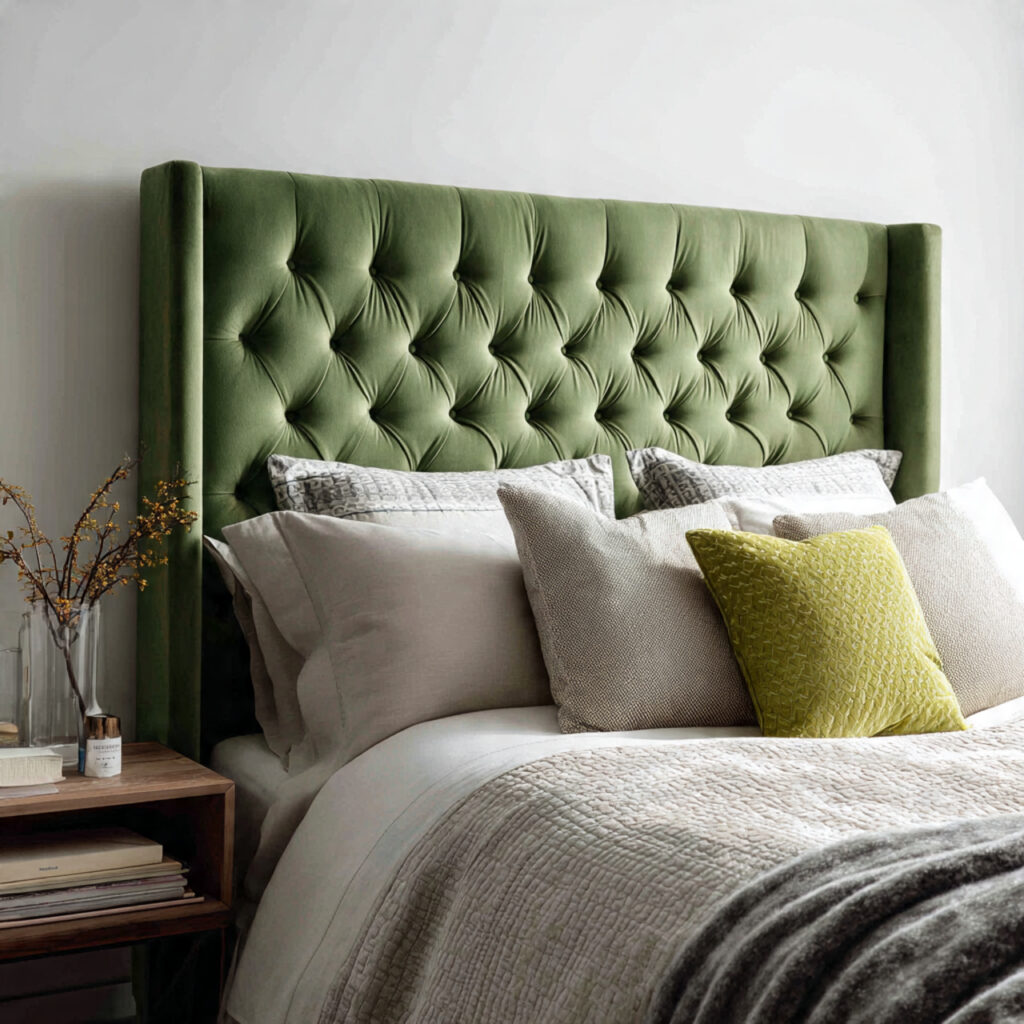
Why This Works
A green upholstered headboard is one of the most impactful single changes you can make to a bedroom. It combines color, texture, and furniture into one statement piece that ties the whole room together.
How to Implement
Choose an upholstered headboard in emerald green, sage, or dark teal velvet. A curved or arched shape adds a modern, luxurious quality. For a more relaxed look, choose a panel headboard in sage linen or olive boucle. Pair a jewel-tone green headboard with neutral bedding to let it stand out. Pair a softer sage headboard with layered earthy tones for a warmer, cozier result.
8. Use Green Painted Built-In Shelves or Cabinetry
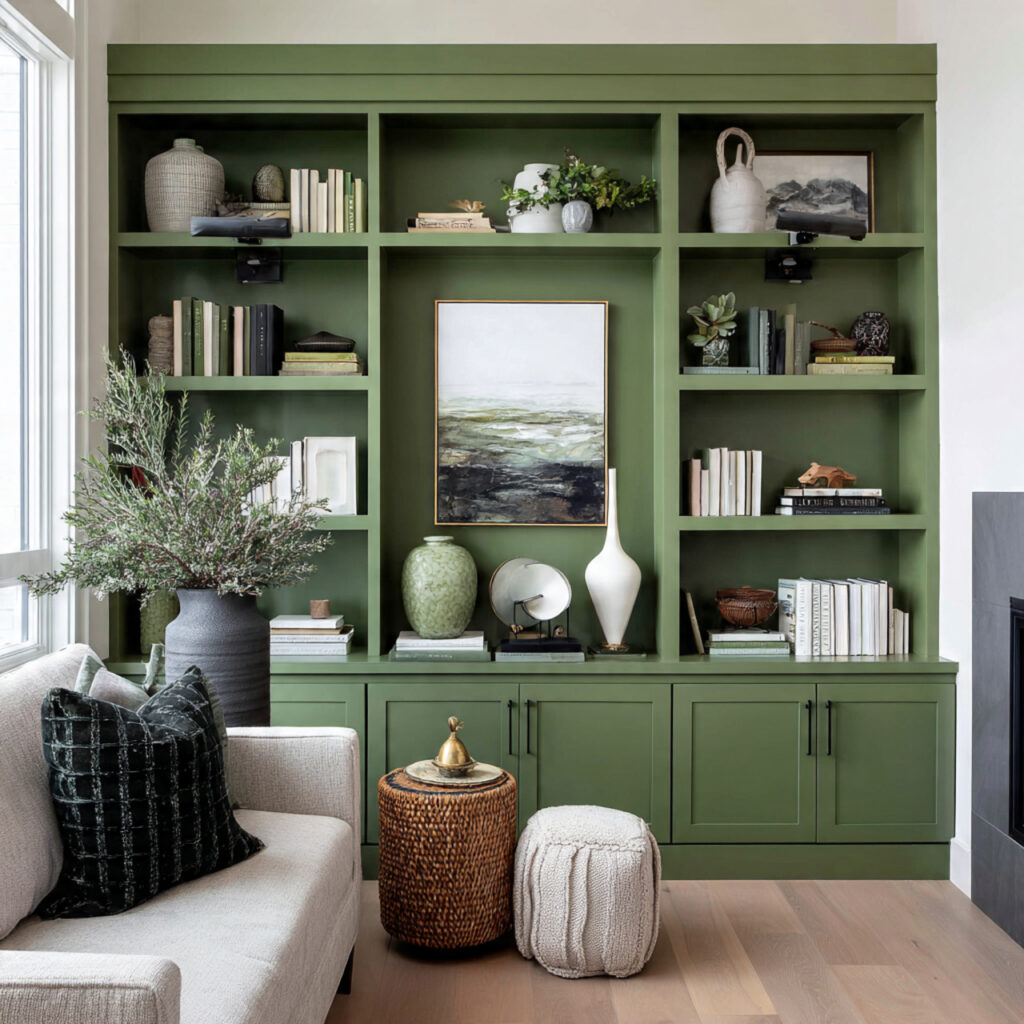
Why This Works
Painting built-in shelves or cabinetry in a deep or muted green creates a bold design statement that makes storage feel intentional and stylish. It adds color to the room without painting the walls and gives the furniture a custom, high-end appearance.
How to Implement
Choose a deep forest green, dark teal, or warm olive for built-in units. Paint the interior back of each shelf section in the same green or a slightly deeper tone for a layered effect. Style the shelves with books, ceramics, and plants in coordinating earthy tones. White or cream walls surrounding green cabinetry create a fresh, crisp contrast that looks striking and magazine-worthy.
9. Bring In an Olive Green Velvet Accent Chair
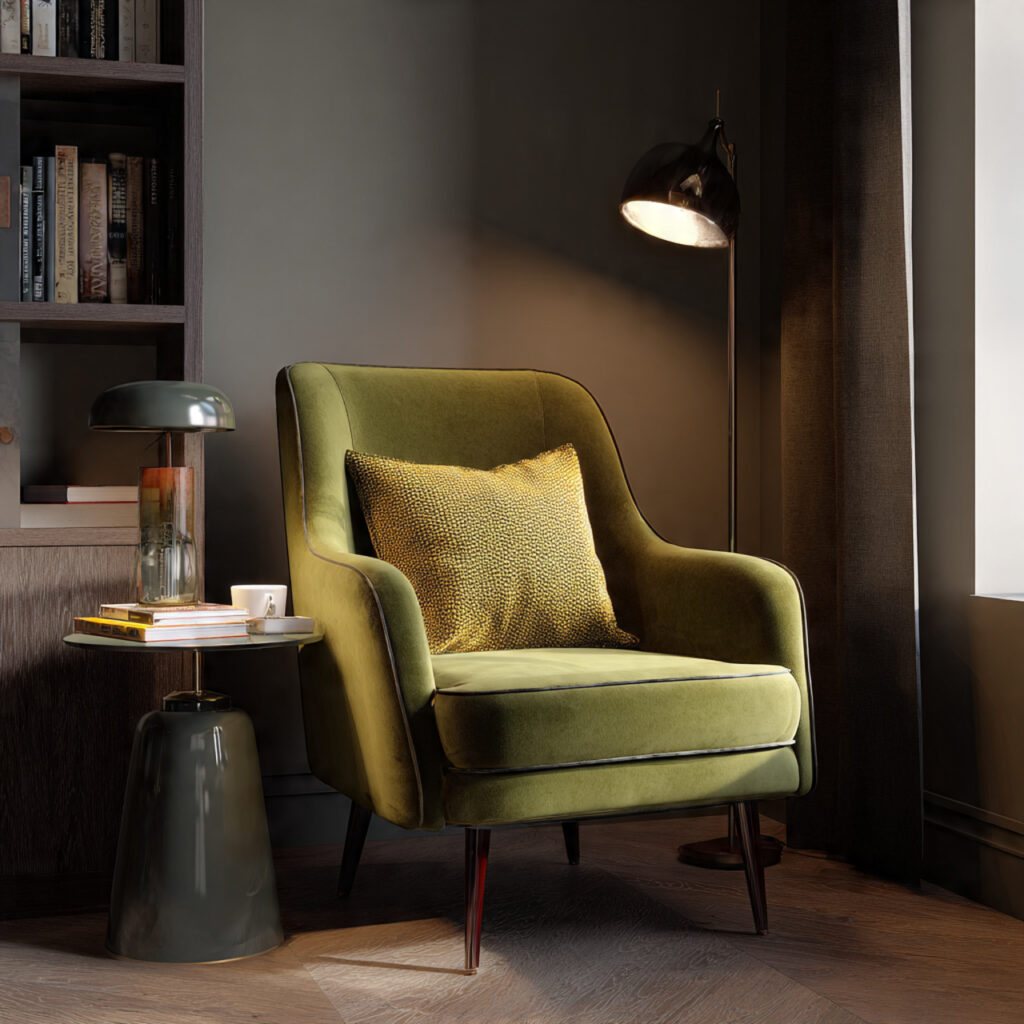
Why This Works
An olive green velvet accent chair adds a rich, luxurious touch to a bedroom corner. Olive green is one of the most sophisticated and versatile green tones, working equally well in modern, bohemian, and traditional spaces.
How to Implement
Place the chair in the corner beside the bed or near a window. Add a small side table or wooden stool beside it for a drink or a book. Drape a neutral throw blanket over the arm. A round velvet chair in olive green with tapered gold legs is one of the most beautiful and on-trend combinations available right now. Pair with a warm-toned floor lamp positioned behind the chair for a complete reading nook setup.
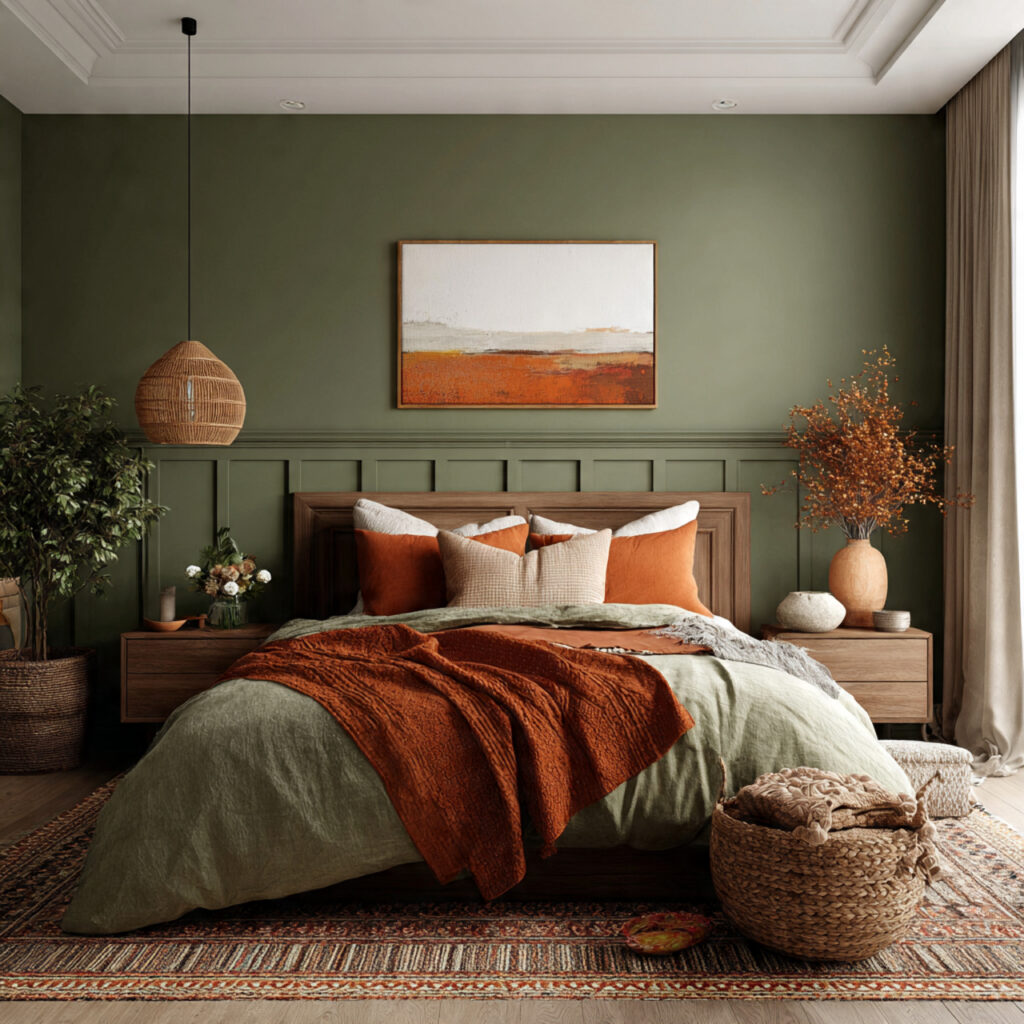
10. Add a Terracotta and Green Color Combination
Why This Works
Terracotta and green is one of the most naturally beautiful and harmonious color pairings in interior design. Both colors are found in nature, and together they create a warm, earthy palette that feels grounded, inviting, and visually interesting.
How to Implement
Use sage or moss green as the dominant color for walls or bedding. Introduce terracotta through ceramic pots, a terracotta-painted accent wall, throw pillows, or a woven blanket in rust tones. Add natural wood and cream to complete the palette. This combination works especially well in rooms with lots of natural light, where the warm terracotta and cool green create a beautiful visual balance.
If you have not already saved this article, now is the perfect time to do it. There are still 16 more green bedroom ideas below and you will want to come back to these.
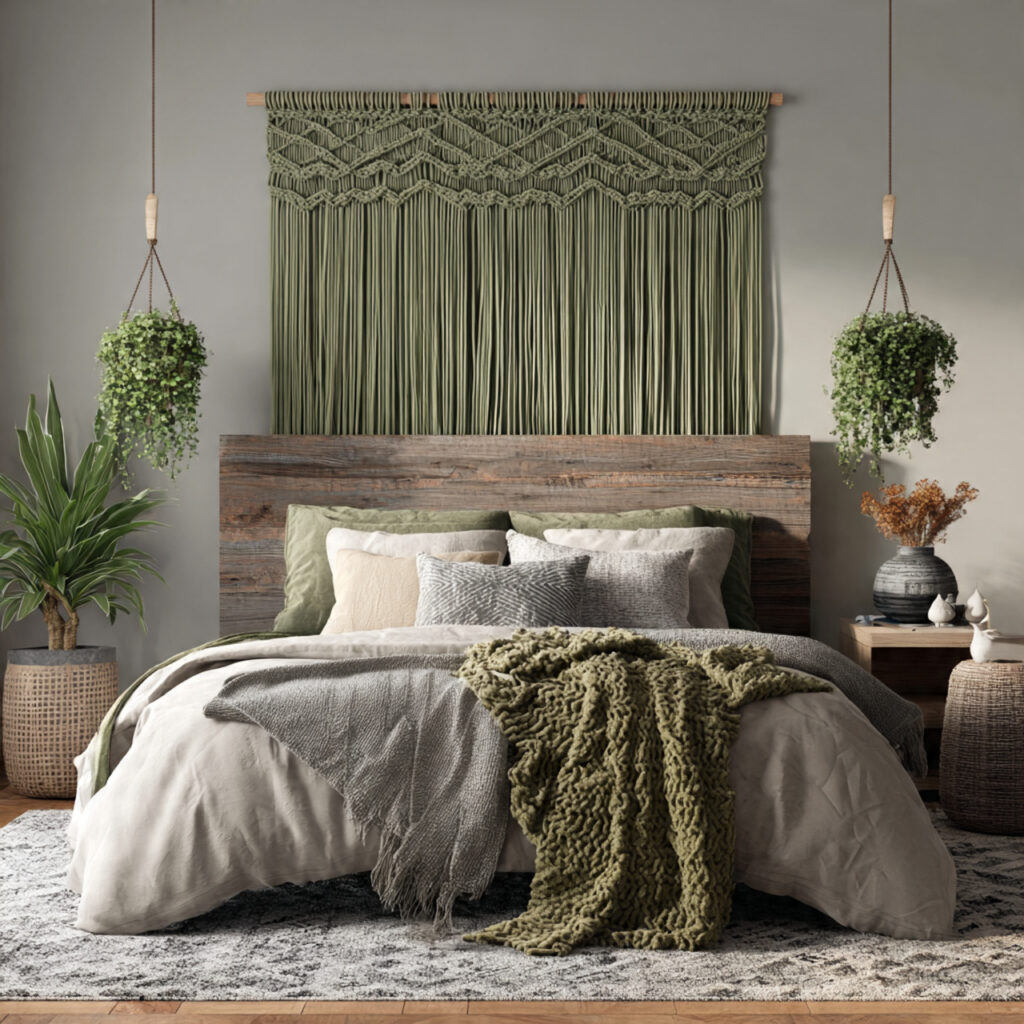
11. Hang a Green Macrame or Woven Wall Hanging
Why This Works
A green-tinted or naturally dyed macrame wall hanging adds texture, warmth, and a handcrafted quality to a green bedroom. It fills vertical wall space artistically and adds visual softness that paint and wallpaper alone cannot provide.
How to Implement
Choose a large macrame piece in natural cotton dyed in sage or forest green. Hang it above the headboard or on the wall beside the bed. Look for pieces with botanical motifs, leaf shapes, or flowing fringe for a nature-inspired result. Pair with wooden dowel mounting and natural jute accent pieces elsewhere in the room for a cohesive, earthy aesthetic.
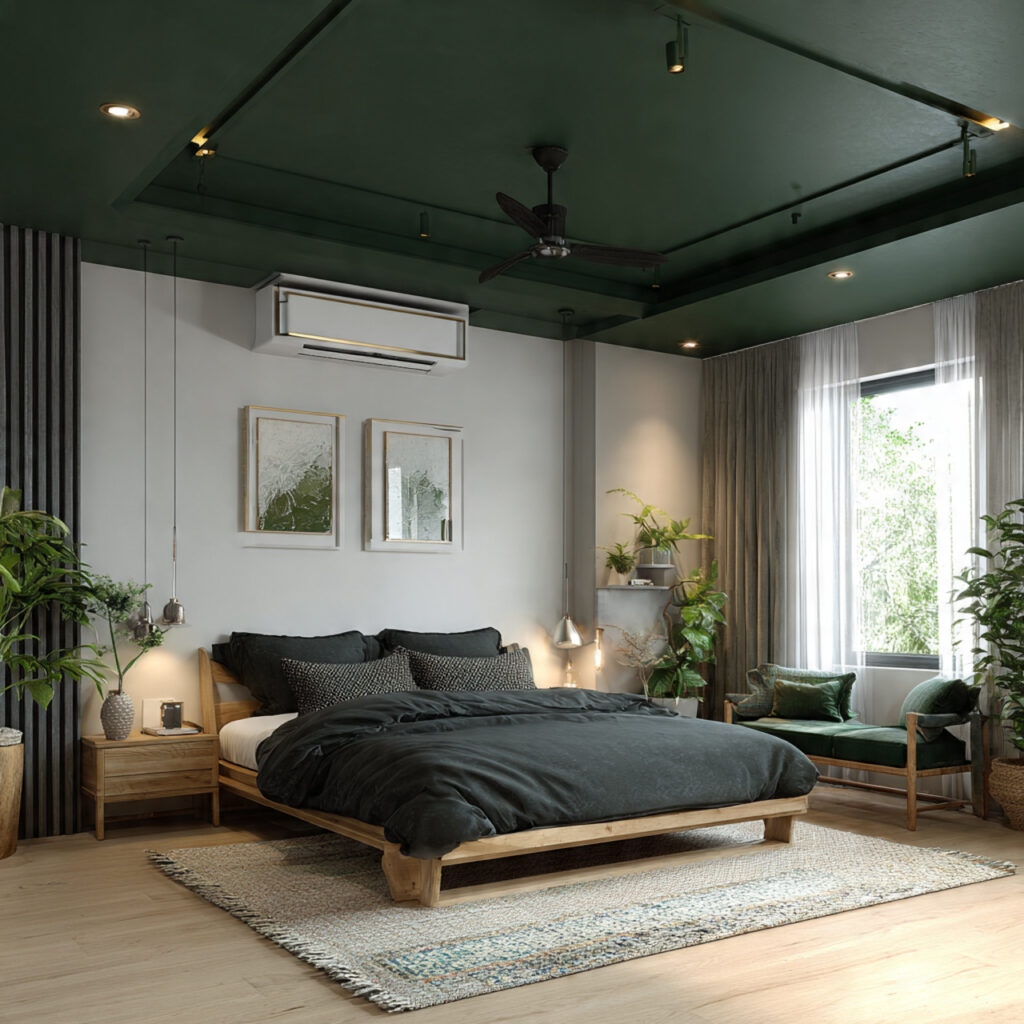
12. Use a Dark Green Painted Ceiling
Why This Works
A dark green ceiling creates an unexpected and dramatic effect that makes a bedroom feel intimate, cocooning, and incredibly special. It draws the eye upward and wraps the room in a sense of calm depth that is unlike anything a plain white ceiling can achieve.
How to Implement
Paint the ceiling in deep forest green, dark teal, or rich hunter green. Keep the walls in white or warm cream to maximize the contrast and prevent the room from feeling enclosed. The green ceiling works best in rooms with good natural light or strong artificial lighting. Add warm gold or brass light fixtures against the green ceiling for an exceptionally rich visual effect.
Common Mistake
Using a gloss or satin finish on a dark ceiling. Matte finish absorbs light beautifully and prevents the ceiling from looking heavy. Always go matte for dark ceilings.
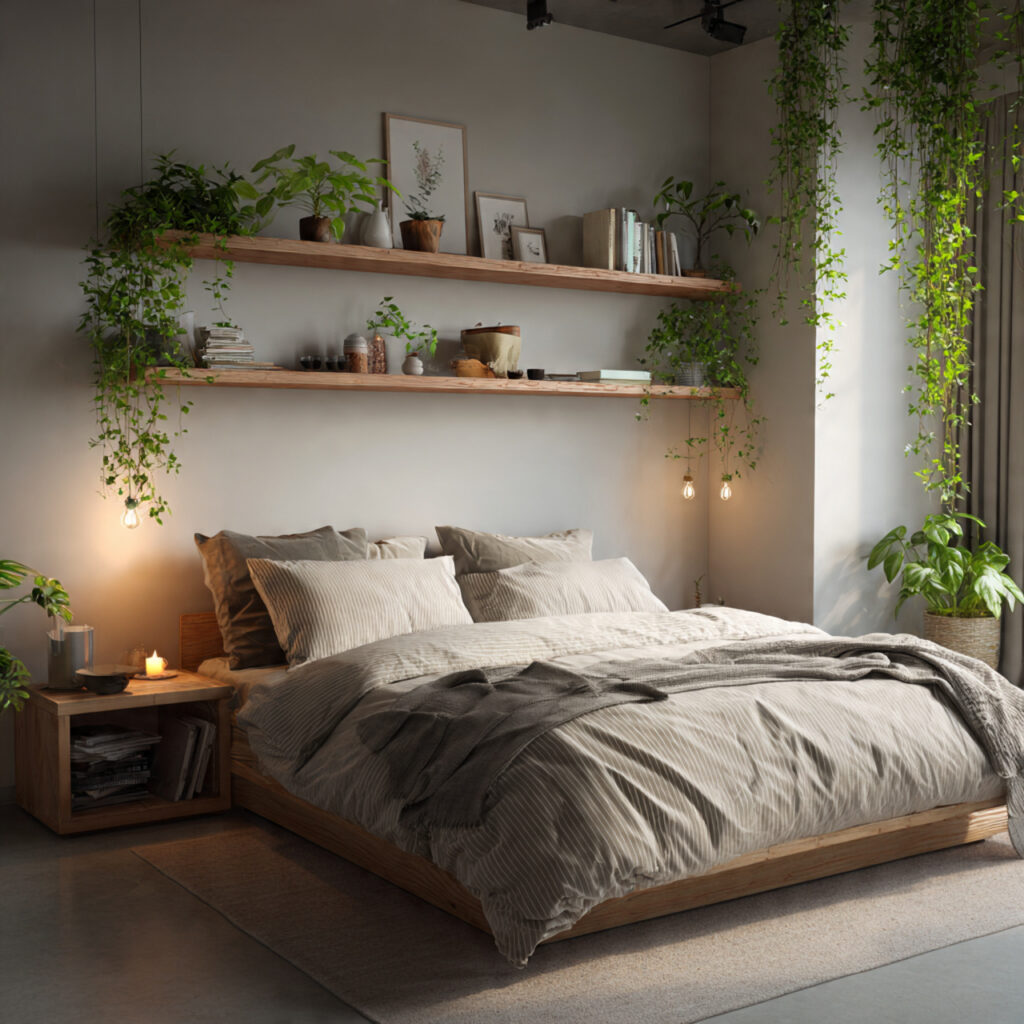
13. Style a Green Plant Shelf Above the Bed
Why This Works
A floating shelf mounted above the headboard and styled entirely with trailing plants creates a lush, organic canopy effect above the bed. It brings the feeling of sleeping under a leafy canopy indoors, which is both visually stunning and deeply calming.
How to Implement
Mount one or two floating shelves above the headboard at different heights. Fill them with trailing plants like pothos, string of hearts, or ivy. Allow the trailing stems to drape downward over the sides of the shelves. Mix in a small ceramic pot, a candle, and a simple decorative object to prevent it from looking purely utilitarian. Use warm accent lighting on the shelf to illuminate the plants from below at night.
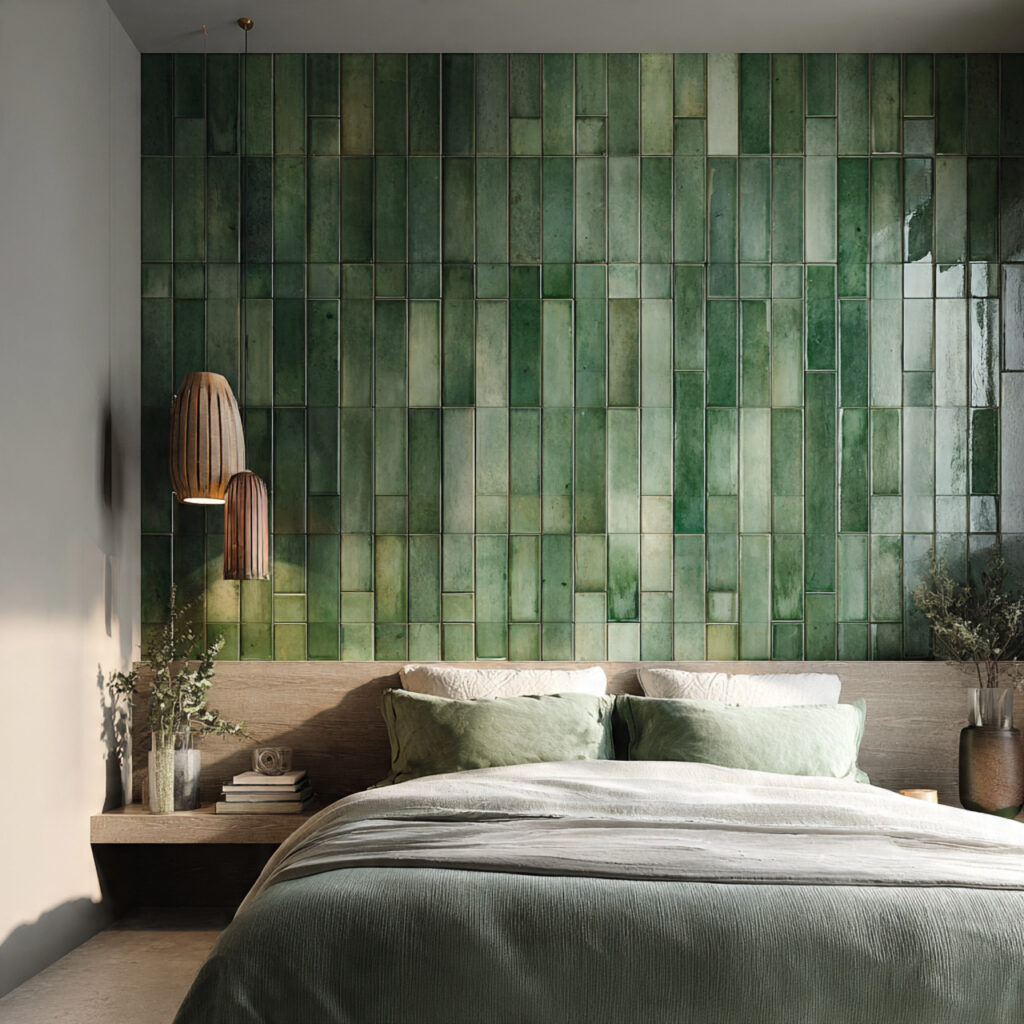
14. Choose Green Tiles or a Green Paneled Bedhead Wall
Why This Works
Zellige or handmade green tiles used on a small section of the headboard wall create a deeply textural and artisanal focal point that is impossible to replicate with paint. Each tile reflects light slightly differently, creating a shimmering, organic effect that is endlessly interesting.
How to Implement
Use green zellige tiles, ceramic subway tiles in sage, or handmade terracotta-style tiles in a moss green glaze on the section of wall directly behind the headboard. Frame the tiled section with a simple wooden or plaster border to define the zone. Pair with warm wood furniture and cream bedding so the tile remains the clear focal point.
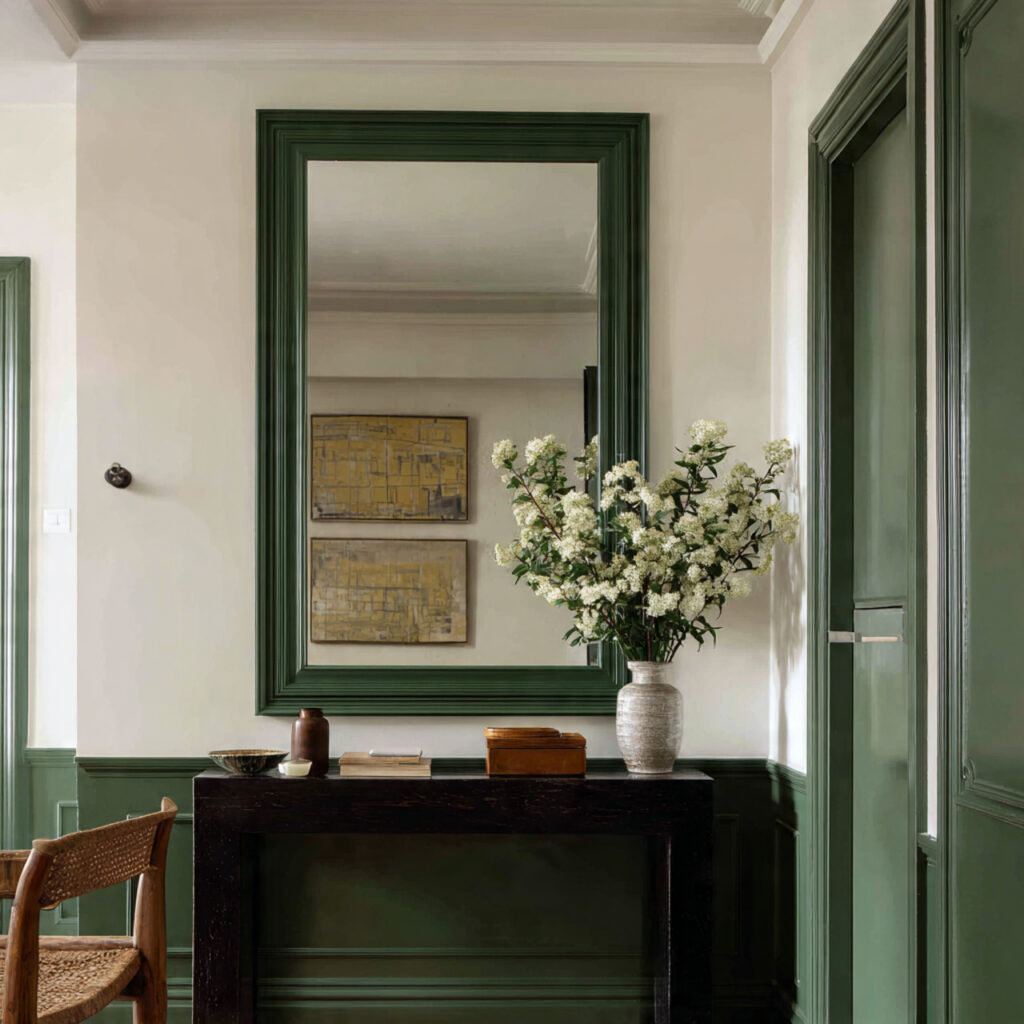
15. Add an Emerald Green Statement Mirror
Why This Works
A mirror with an emerald green frame is a striking decorative object that adds color, reflection, and visual interest simultaneously. It works as both a functional piece and a piece of statement art.
How to Implement
Choose a large round or arch-shaped mirror with a painted or lacquered emerald green frame. Hang it above the dresser or lean it against the wall beside the wardrobe. The deep green frame against a light wall creates a bold, beautiful contrast. For a more subtle version, choose a frame in matte sage or dusty green for a softer, more understated effect.
At this point, you are seeing exactly why green bedrooms feel so different from any other color scheme. Green has range, depth, and a natural harmony that most colors simply do not possess.
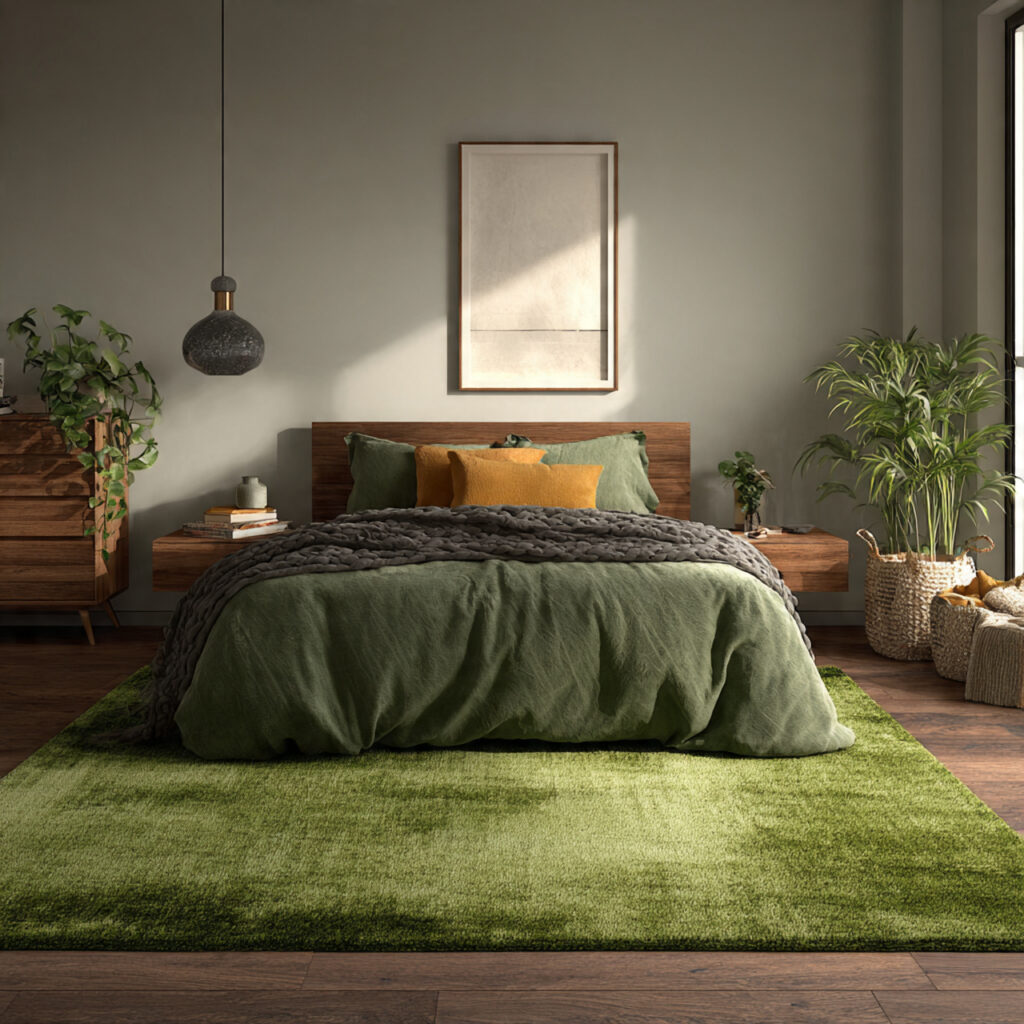
16. Layer a Green Area Rug Beneath the Bed
Why This Works
A green rug underfoot adds a grounding element of color to the floor plane and ties the room’s palette together in a way that immediately feels intentional. It is one of the most practical and affordable ways to bring green into a bedroom without making any permanent changes.
How to Implement
Choose a rug in sage, olive, or moss green that extends at least 18 to 24 inches beyond both sides of the bed. For a modern look, use a flat-weave or low-pile rug in a solid green tone. For a bohemian or eclectic feel, choose a vintage-style kilim or geometric pattern rug with green as the dominant color. Place a non-slip pad underneath to keep it in position.
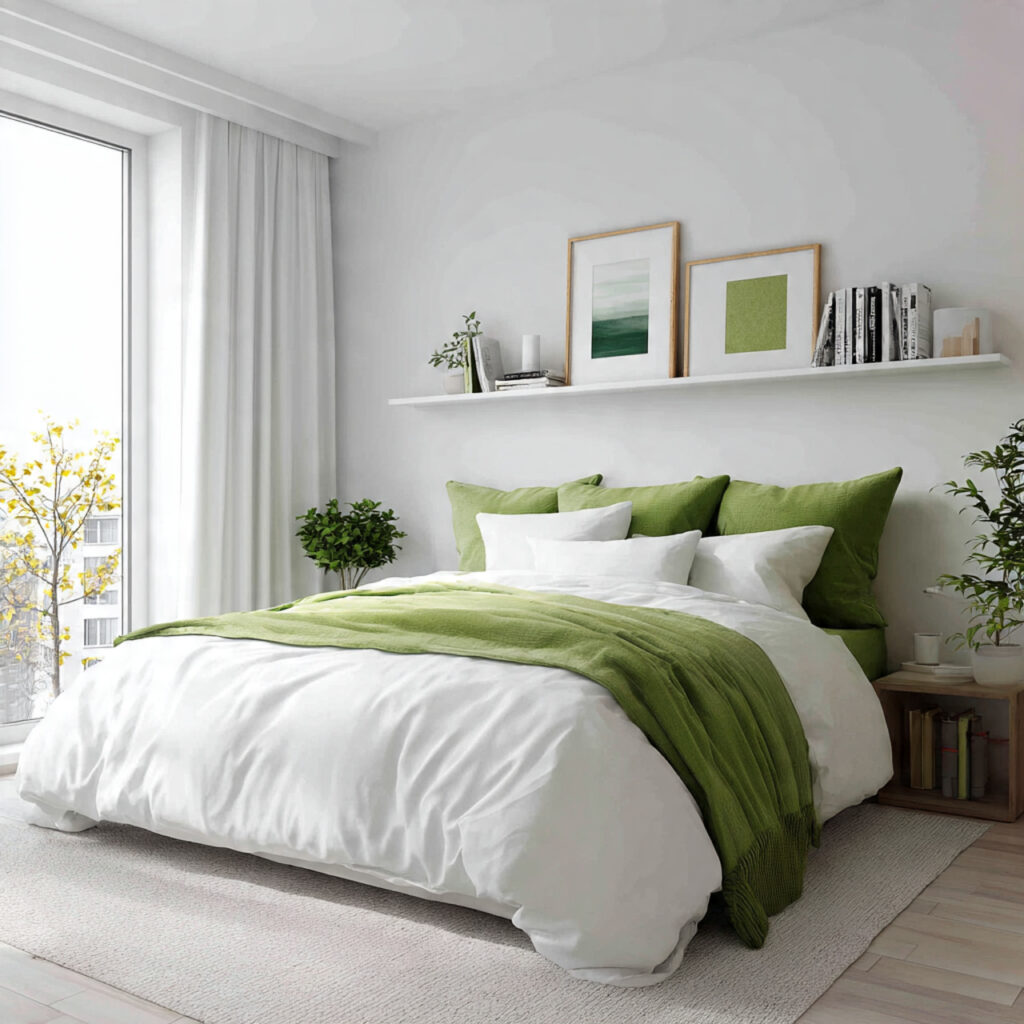
17. Create a Green and White Fresh Minimal Bedroom
Why This Works
The combination of crisp white and clean green is one of the freshest and most energizing bedroom palettes available. It feels airy, bright, and effortlessly modern without requiring any complex styling.
How to Implement
Use white as the dominant color for walls, bedding, and furniture. Introduce green through a single accent wall, a statement plant, green throw pillows, or a green velvet bench at the foot of the bed. Keep the room uncluttered and the surfaces intentional. This palette works especially well in smaller bedrooms where you want to maximize the feeling of light and space.
18. Use a Green and Natural Wood Japandi Palette
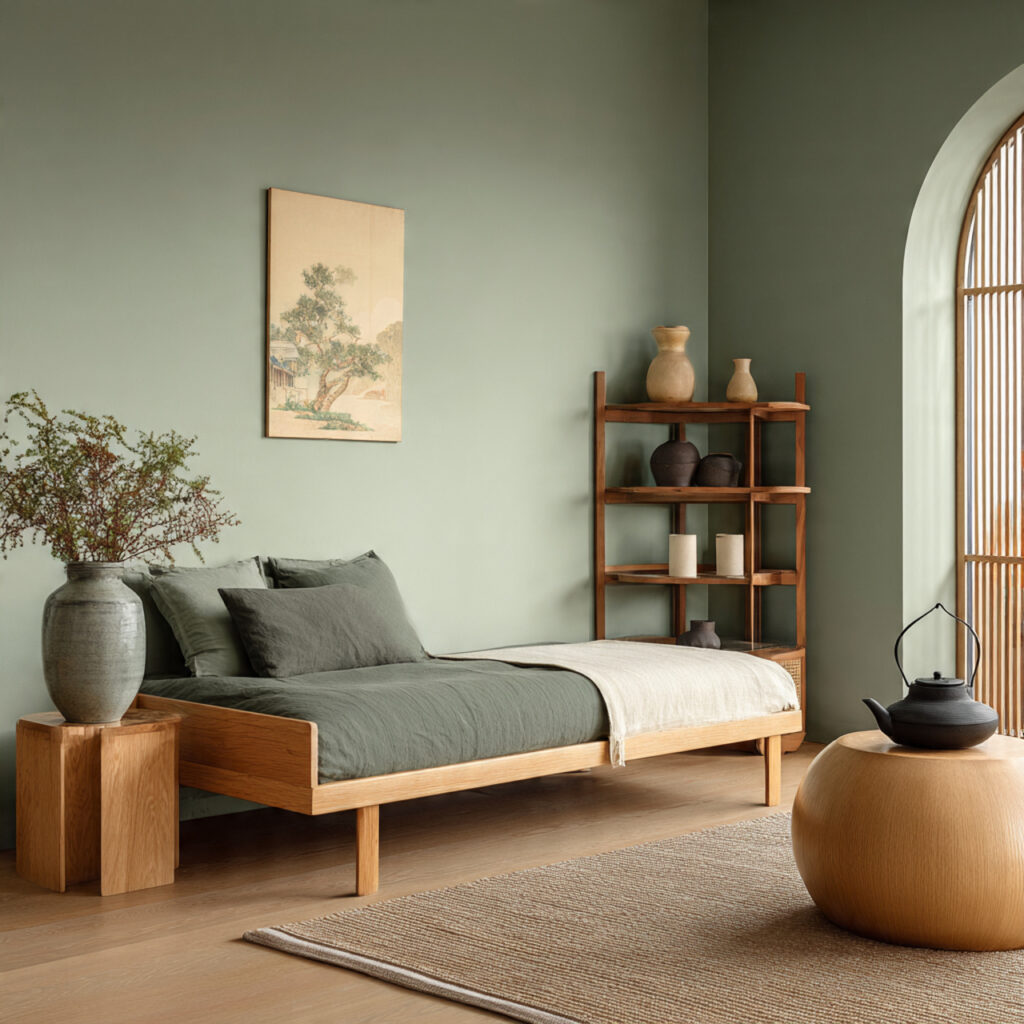
Why This Works
Sage green paired with warm natural wood tones is the perfect foundation for a Japandi-inspired bedroom. The combination is clean, warm, and deeply calming, with a natural harmony that feels both modern and timeless.
How to Implement
Choose sage or muted olive green for the walls. Use natural oak or walnut for the bed frame, nightstand, and floating shelves. Keep bedding in warm white or oat linen. Add minimal decorative objects: a smooth ceramic vase, a single plant, and a small wooden tray. Avoid patterns and excessive decoration. The beauty is in the simplicity and the quality of the materials.
19. Hang Dried Eucalyptus Bundles as Wall Decor
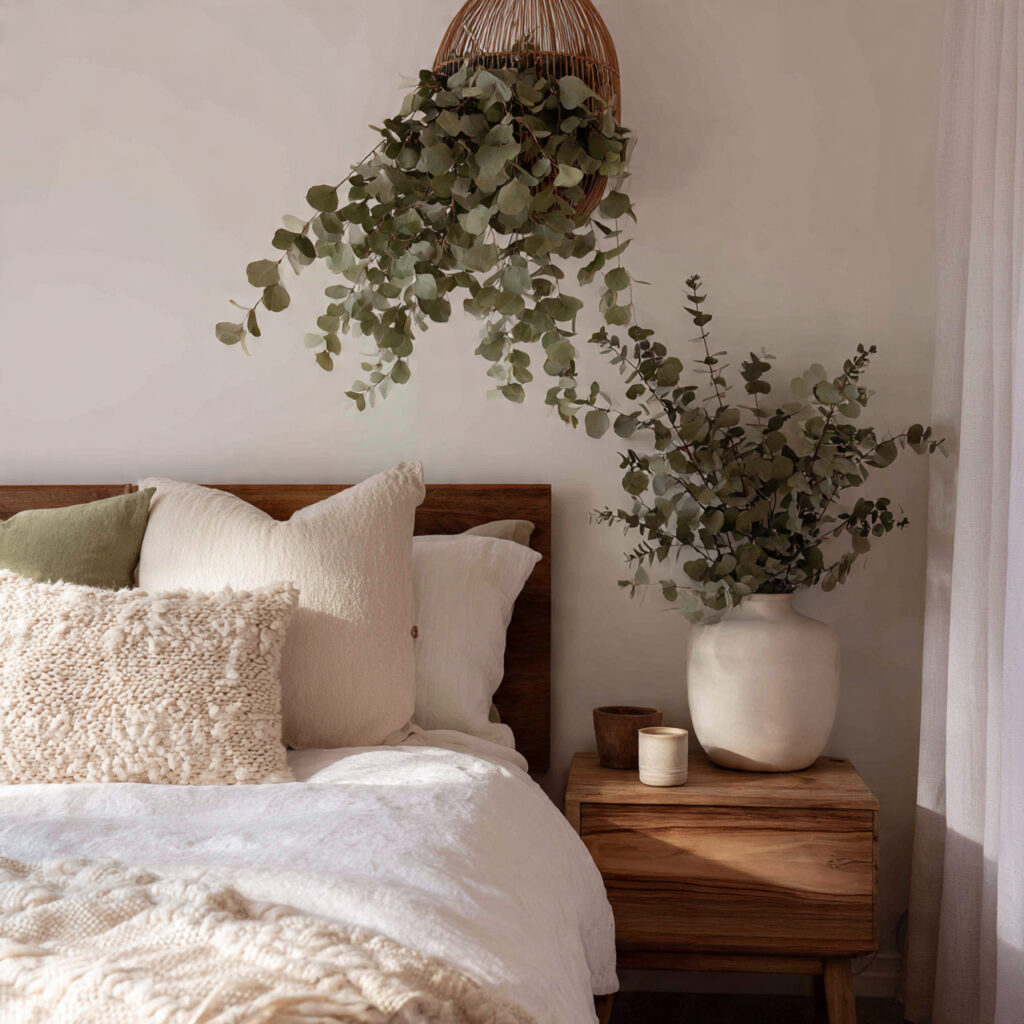
Why This Works
Dried eucalyptus bundles hung on walls or above a bed frame bring natural green color, beautiful texture, and a subtle fresh fragrance into the bedroom. They are one of the easiest and most affordable ways to add organic green detail to any space.
How to Implement
Tie a generous bundle of dried eucalyptus stems with a natural jute cord and hang it from a small hook above the headboard, on the back of a door, or from a curtain rod. Mix eucalyptus with dried pampas grass or dried lavender for a more layered botanical arrangement. Replace every few months as the color fades. Fresh eucalyptus can also be used in a vase on the nightstand for an even stronger fragrance and brighter green color.
20. Paint Furniture in a Muted Green Tone
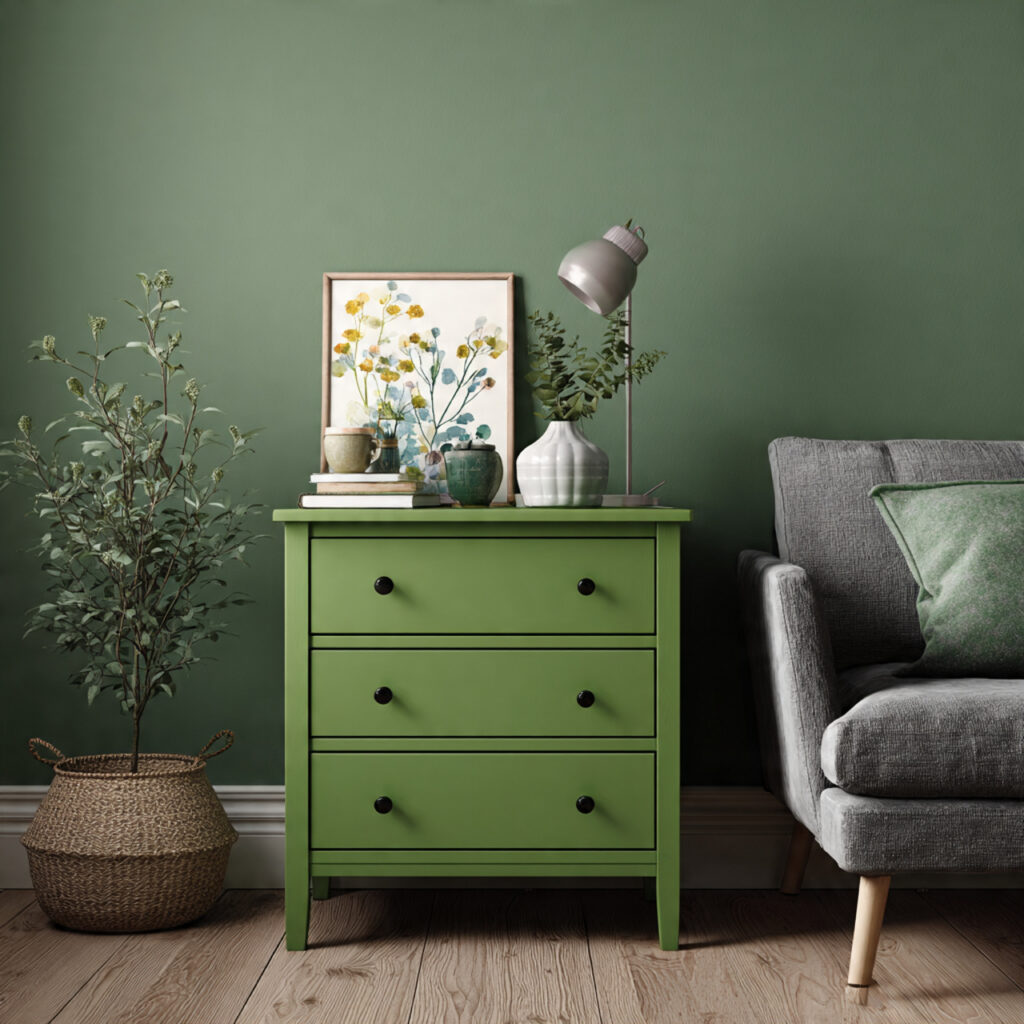
Why This Works
Painting existing furniture in a muted green is one of the most budget-friendly and transformative green bedroom ideas available. A sage or olive green dresser or nightstand becomes a design feature rather than just a storage piece.
How to Implement
Use chalk paint or furniture paint in sage, dusty sage, or muted olive green. Lightly sand the furniture surface first, apply two coats of paint, and finish with a clear matte wax or furniture topcoat for durability. Swap the existing drawer handles for brushed brass or matte black hardware to complete the transformation. This works beautifully on dressers, nightstands, wardrobes, and even picture frames.
21. Add a Green Canopy Over the Bed
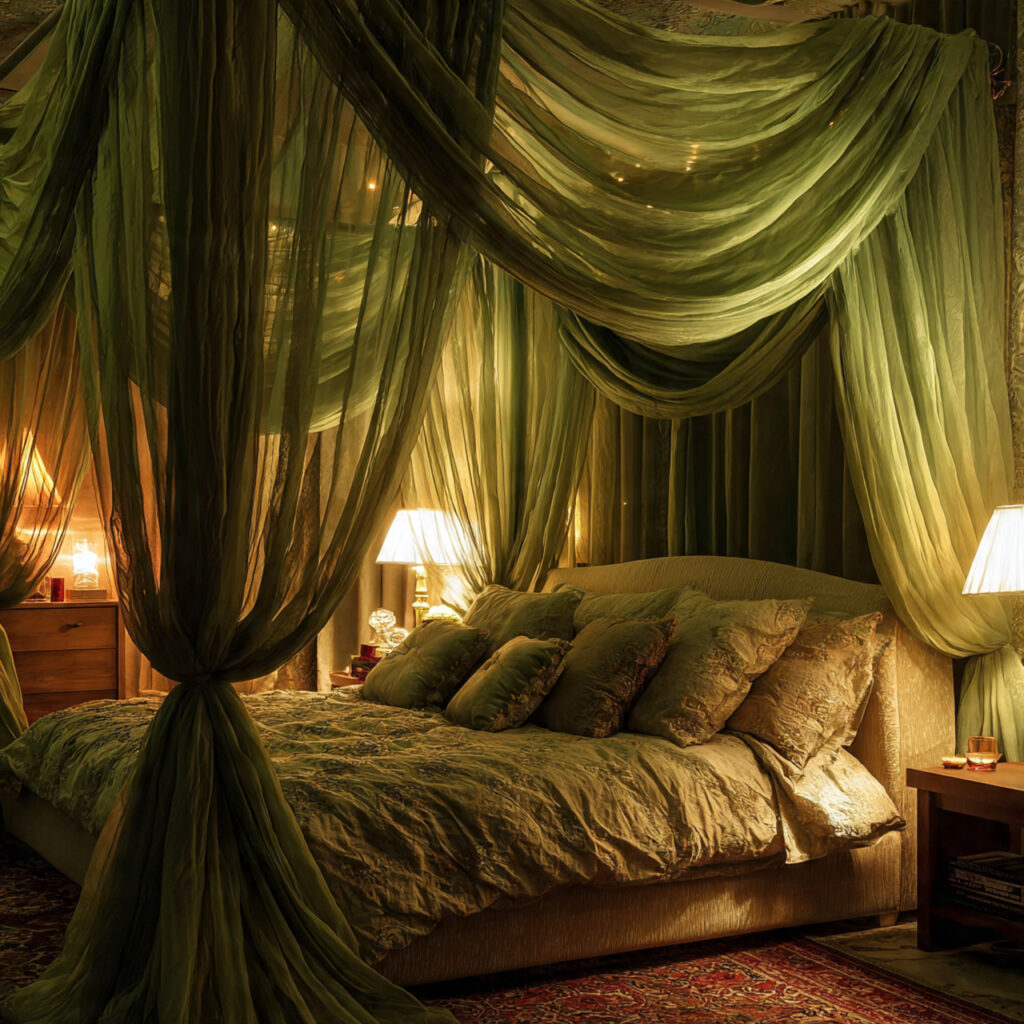
Why This Works
A canopy in soft green sheer fabric or botanical-print cotton creates a lush, garden-inspired enclosure around the bed. It adds intimacy, color overhead, and a deeply romantic atmosphere.
How to Implement
Install a ceiling hook above the center of the bed and hang a circular canopy ring. Drape panels of sheer sage or forest green fabric from the ring, letting them fall loosely on each side of the bed. For a more dramatic effect, use a deeper emerald green fabric with a slight sheen. Keep the rest of the room relatively neutral so the canopy becomes the clear focal point.
22. Use a Sage Green Limewash Paint Effect
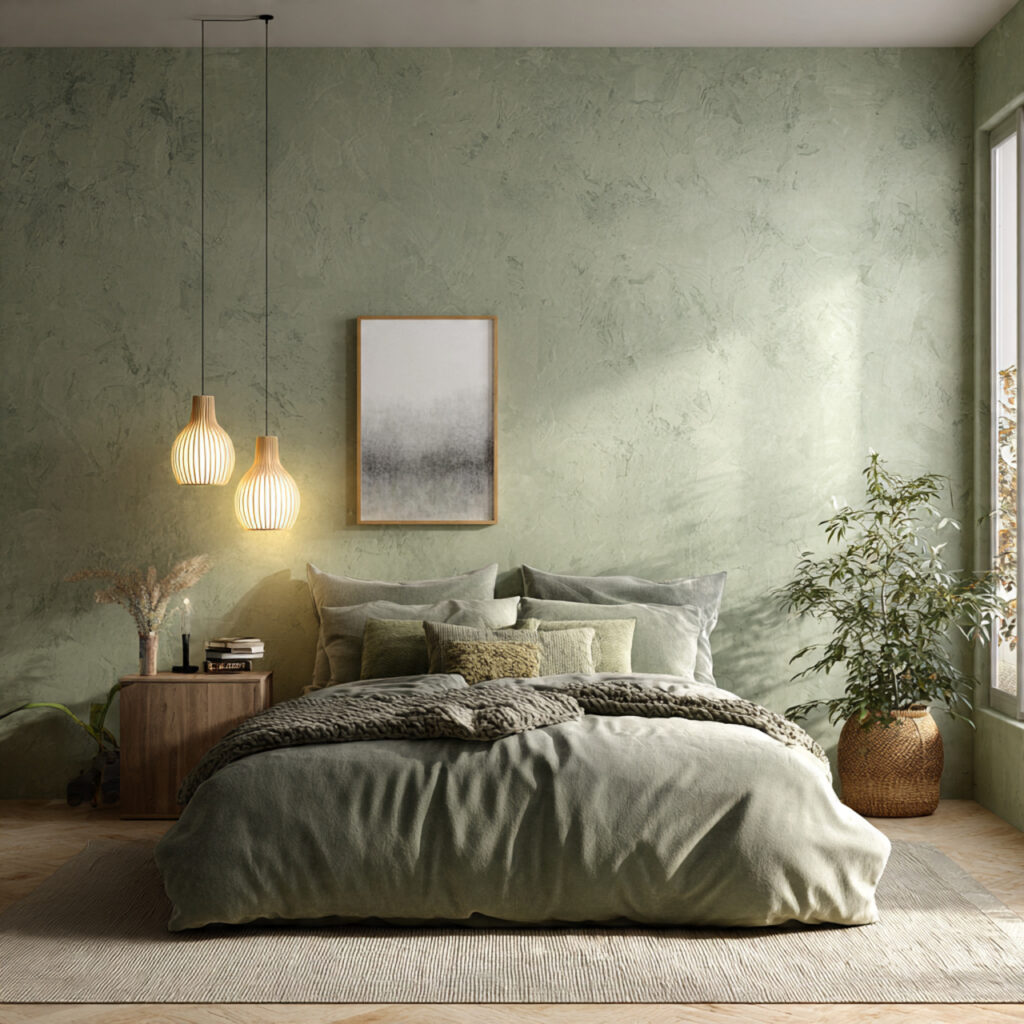
Why This Works
Sage green limewash paint creates a soft, aged, textural wall effect that is one of the most beautiful and sophisticated finishes in current bedroom design. The uneven, layered quality of limewash adds depth and warmth that flat paint simply cannot replicate.
How to Implement
Apply sage green limewash to the headboard wall or all four walls for full effect. Use a wide brush in overlapping, irregular strokes. Work in sections and vary the pressure to create natural variation in coverage. Look for sage limewash options from brands like Portola Paints, Roman Decorating Products, or the newer limewash-effect paints from major retailers that achieve a similar result without specialist application technique.
23. Mix Green With Blush Pink for a Soft, Romantic Look
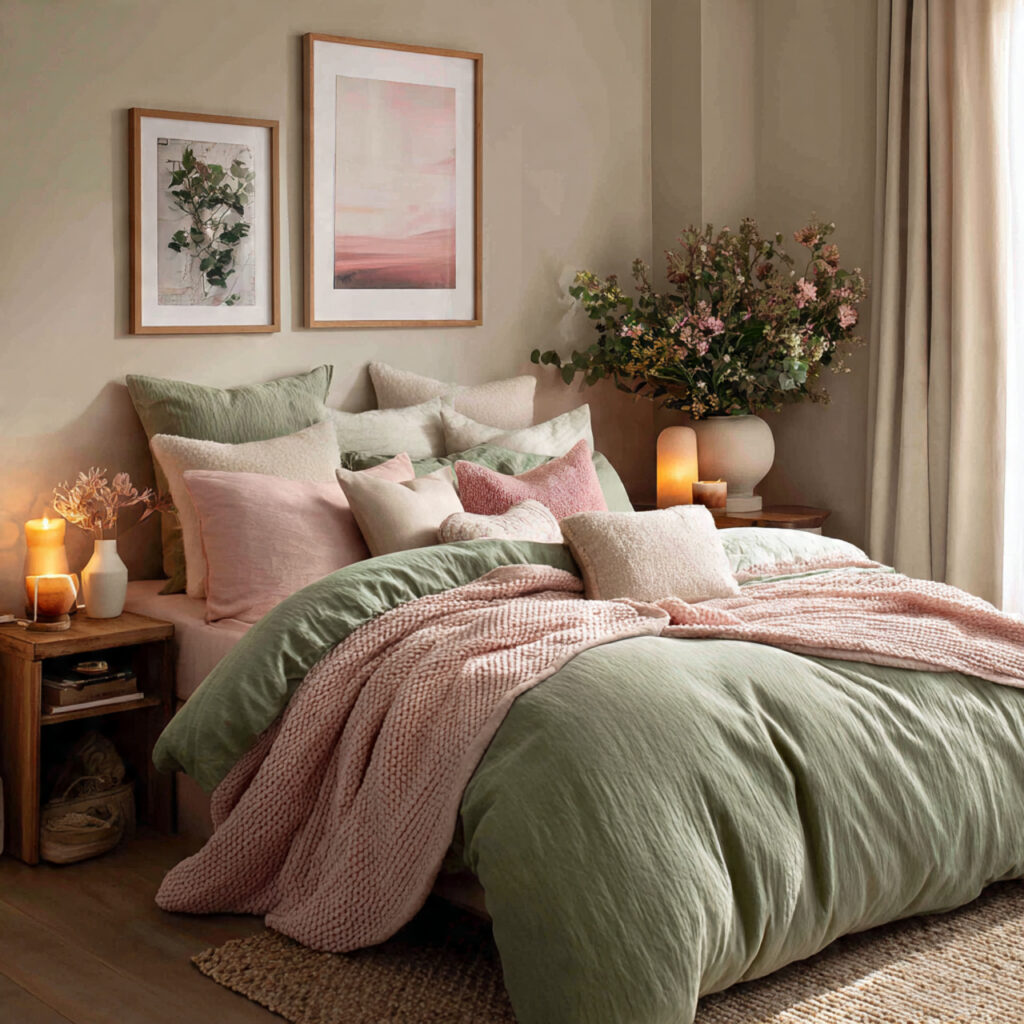
Why This Works
Sage green and dusty blush pink is one of the most naturally harmonious and romantically beautiful color combinations in bedroom design. Both colors are soft, muted, and organic, and they complement each other the way flowers and leaves do in nature.
How to Implement
Use sage green as the wall color or main bedding tone. Introduce blush pink through throw pillows, a velvet bench, curtain panels, or a blush pink upholstered headboard. Use cream and warm white as the connecting neutral. Add gold or brass metal accents to warm the palette further. Avoid using bright or saturated versions of either color. The muted, dusty tones are what make this combination feel elegant rather than sweet.
24. Add a Green Glass Vase Collection as a Shelf Display
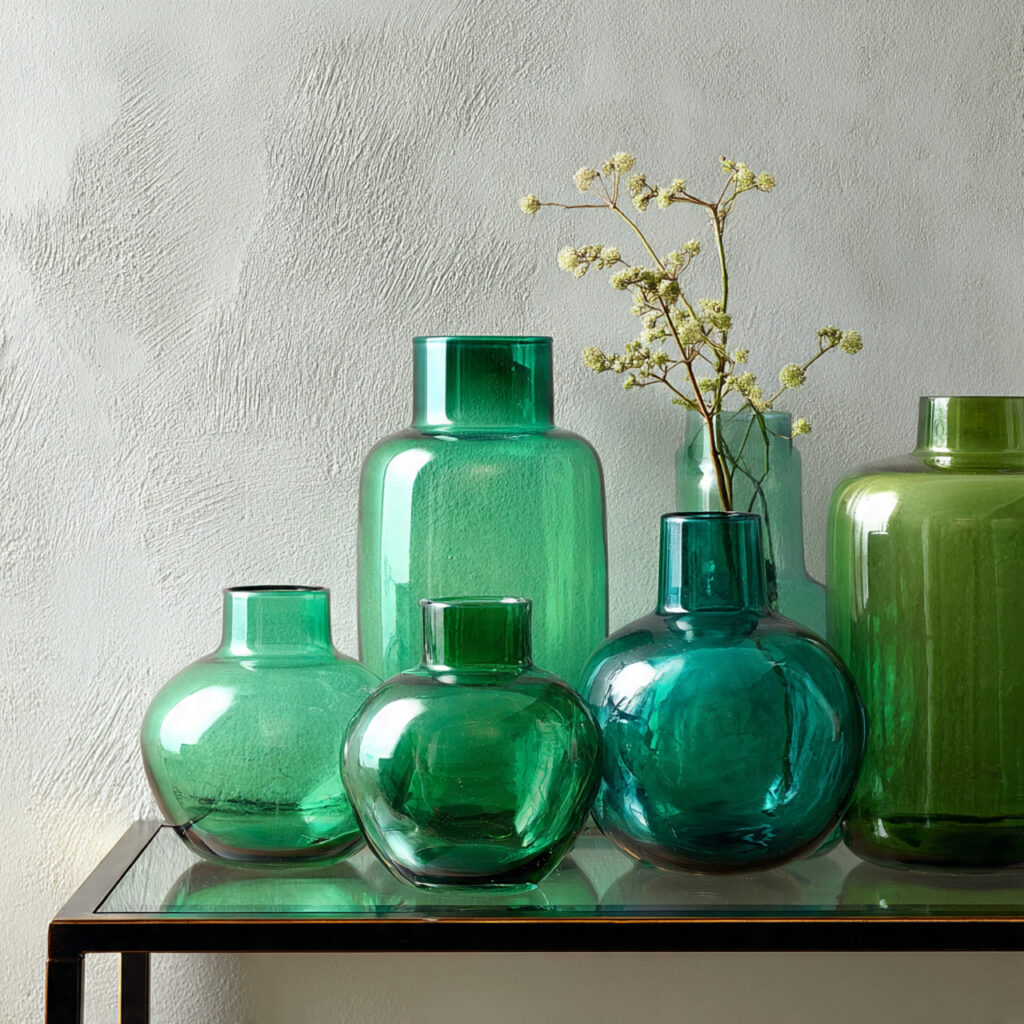
Why This Works
A curated collection of green glass vases grouped together on a shelf or dresser top creates a beautiful still-life display that adds color, light, and organic charm. When sunlight passes through colored glass, it casts gentle green reflections that bring the whole surface to life.
How to Implement
Collect three to five glass vases in varying heights and shapes, all in green tones ranging from pale mint to deep emerald. Group them together on a shelf, dresser, or windowsill. Fill some with dried botanicals, leave others empty, and add a fresh stem or two for seasonal variation. The collection reads as intentional and artful rather than random when grouped closely together.
25. Create a Tonal Green Monochrome Bedroom
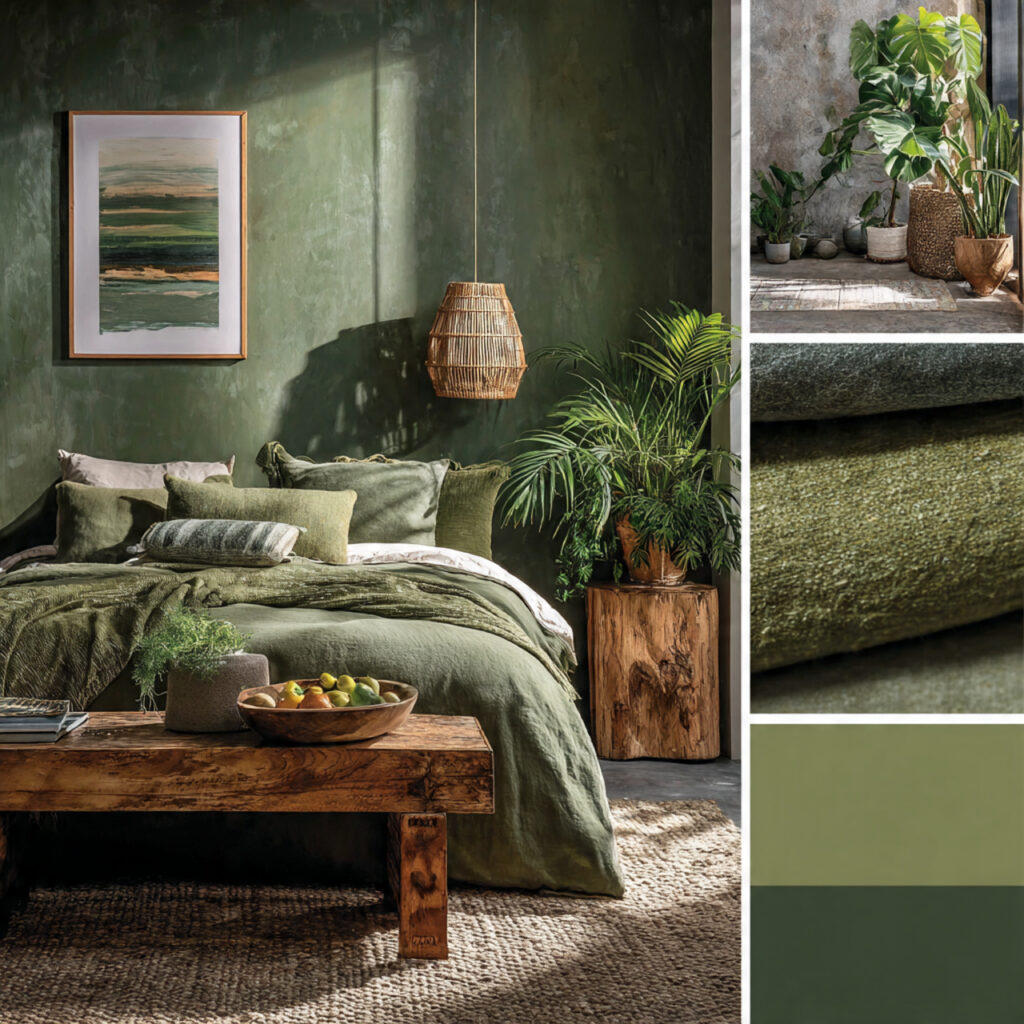
Why This Works
A fully tonal green bedroom, one where every element exists somewhere on the green spectrum, is one of the most visually cohesive and striking looks in modern interior design. Done well, it feels luxurious, immersive, and completely unique.
How to Implement
Use pale sage on the walls. Choose moss or medium green linen for the bedding. Add forest green velvet cushions and a deep olive throw. Select a headboard in sage boucle and curtains in a mid-tone fern green. Vary the textures heavily across every element to prevent the palette from looking flat. Keep all accessories in natural materials: wood, ceramic, and stone.
Pro Tip
Add one metallic accent in brushed gold or aged brass to break the tonal scheme just enough to prevent the room from feeling monotone. Even a single brass lamp is enough.
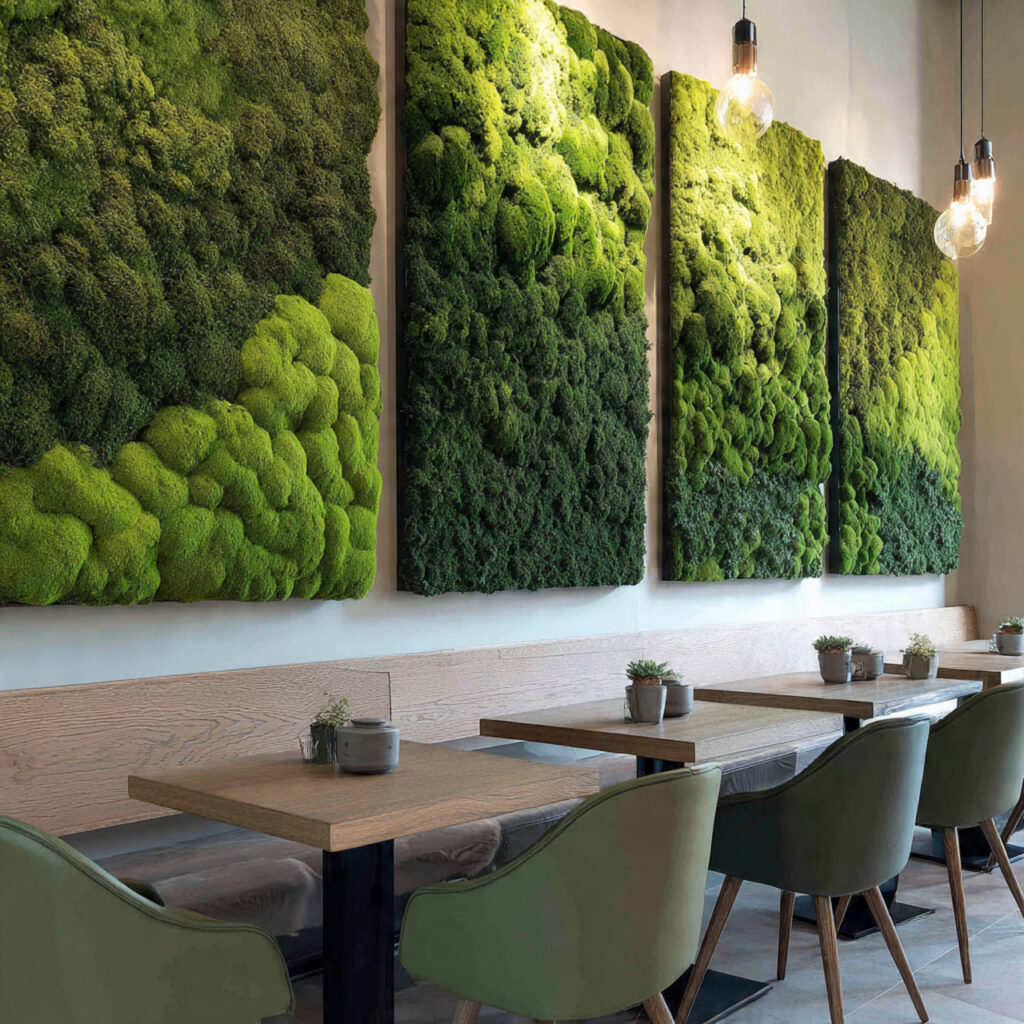
26. Install a Living Moss Wall Panel as a Feature
Why This Works
A preserved living moss wall panel is the ultimate expression of green bedroom design. It is a genuine piece of nature on the wall that requires no watering, no maintenance, and no natural light. It is striking, organic, and completely unlike any other wall treatment available.
How to Implement
Order a framed preserved moss panel in the size that suits your wall space. Panels come in flat sheet moss, reindeer moss, and mixed botanical varieties in various green tones. Mount it above the dresser, beside the bed, or as a full feature wall section. Pair with wooden frame elements and natural accessories to complete the botanical story of the room.
Final Thoughts
Green is not just a color choice for a bedroom. It is a decision to bring nature inside, to surround yourself with the tone that the natural world associates with growth, calm, and restoration.
Whether you go bold with an entire forest green room or start gently with a sage green accent wall and a handful of plants, every step toward green brings a quality of calm and freshness that very few other colors can offer.
Start wherever feels right. Pick the one idea from this list that made you stop and think, yes, that is exactly what I want, and begin there. Add more layers over time. Let the green grow.
A green bedroom does not just look beautiful. It makes you feel like you are exactly where you are supposed to be.