21 Japandi Bedroom Ideas That Blend Minimalist Calm With Warm Natural Beauty You Must Try

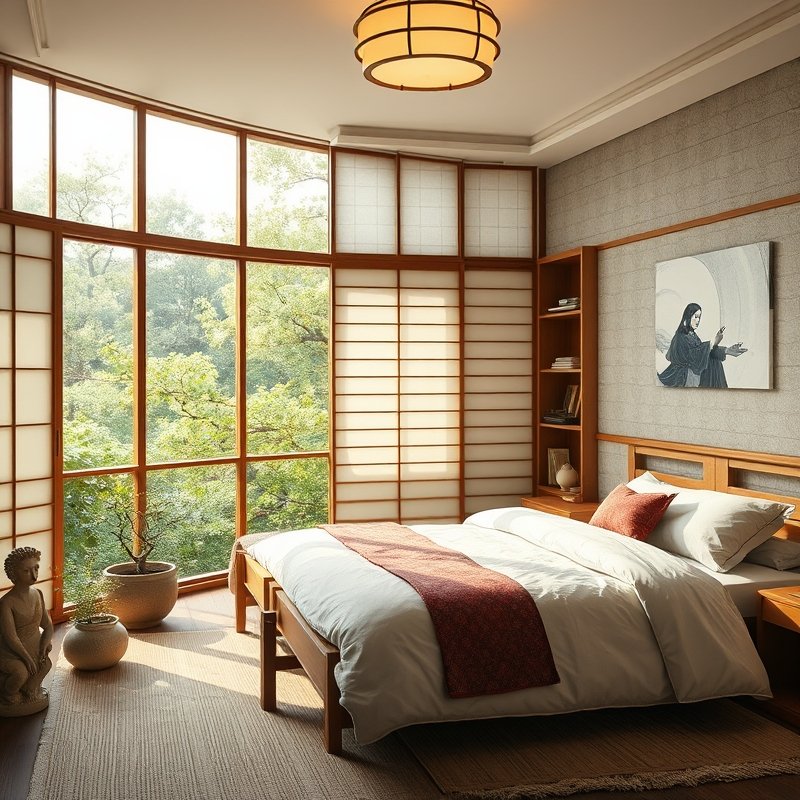
Imagine stepping into a bedroom where silence feels soft, and every surface asks you to exhale. Morning light slips through unbleached linen, brushing against a low wooden bed dressed in oyster and sand. There is no rush here, no noise, just quiet, intentional beauty. That is the soul of a Japandi bedroom.
Rooted in Japanese simplicity and Scandinavian warmth, this design style has become a global obsession because it turns a sleep space into a sanctuary. We crave calm now more than ever, and Japandi delivers it through natural textures, muted tones, and a gentle sense of order. These 21 japandi bedroom ideas show you how to craft that exact feeling, a room that holds you softly at the end of the day.
Japandi Bedroom Idea – Low Platform Bed with Tatami Mat
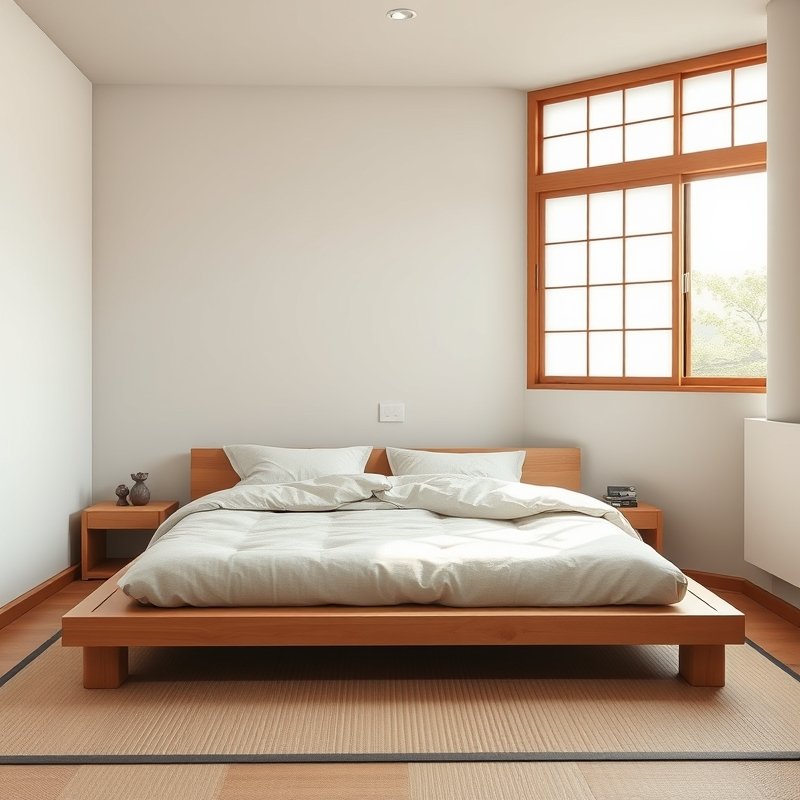
Ground your entire room with a low platform bed placed directly on woven tatami mats. This setup shortens the visual height and instantly invites a grounded, meditative feeling. Choose a simple oak or ash frame with clean lines, and let the warm straw scent of the tatami define the sensory backdrop. Pair it with a mattress that sits low, and add a folded mattress topper in raw cotton.
The result feels elemental — nothing competes for attention, yet the combination of wood, grass, and fiber fills the room with texture. In a small room, this also creates the illusion of more overhead space, making the ceiling feel airy. Keep the surrounding floor clear except for a petite ceramic planter, and you’ll have a restful, uncluttered haven.
Here you can explore boho bedroom ideas.
Japandi Bedroom Idea – Shoji Sliding Doors for Closet
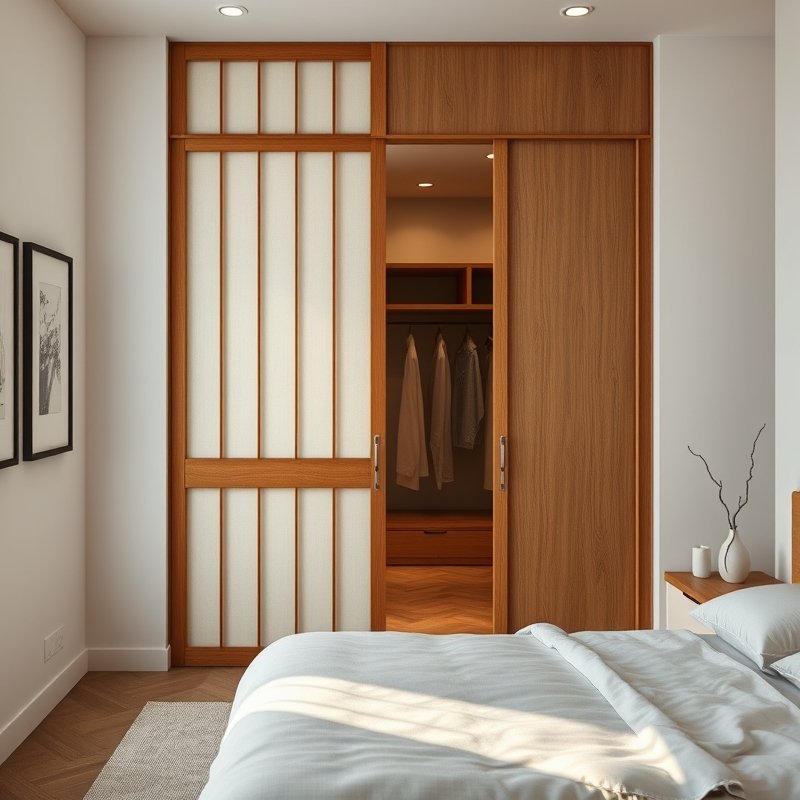
Ditch heavy wardrobe doors for lightweight shoji-inspired sliders. These panels, made of wooden lattice and translucent washi paper, hide clutter while letting gentle light filter through. The effect is like a glowing wall, transforming your storage into a piece of art. Install them on a simple track to conceal everyday items without adding visual weight. Inside, keep everything folded neatly using wooden shelves and canvas bins.
Outside, the room stays open and flowing. Even when closed, the doors contribute to the overall serenity rather than blocking it. For a modern twist, choose a dark-stained cedar frame paired with off-white paper to add subtle contrast. The soft glow in the evening turns the closet area into a peaceful lantern.
Also read: https://myhavenvibes.com/rustic-kitchen-ideas/
Japandi Bedroom Idea – Neutral Linen Bedding in Oyster and Sand
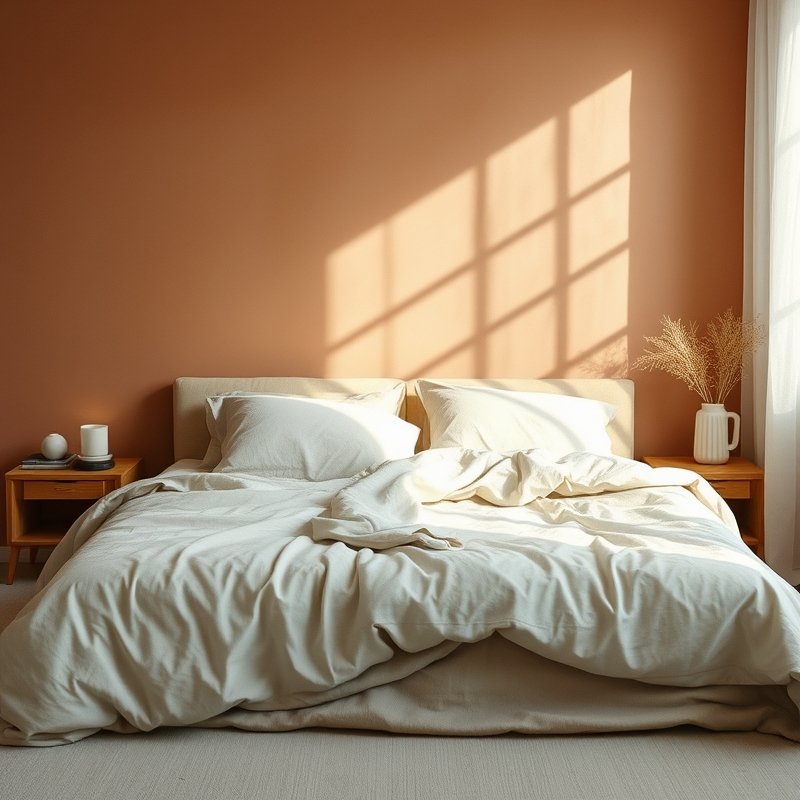
Bedding becomes the quiet hero when you strip back pattern and let natural fibers speak. Choose pre-washed linen in a blend of oyster, warm sand, and barely-there beige. The slight crinkle adds instant lived-in elegance, while the neutral palette mimics the calm of a windswept beach. Layer a fitted sheet, a top sheet, and a lightweight duvet — all slightly different tones so the eye moves gently across the bed.
A single lumbar pillow in raw cotton tucked against the headboard completes the look without fuss. This bedding combination works beautifully in any season: it feels cool in summer and keeps warmth in winter when you add a wool throw. The key is to avoid stark white and instead embrace hues that feel as if they’ve been washed by time. It’s minimalism that wraps you in comfort.
Hand-Thrown Ceramic Vase with Single Branch
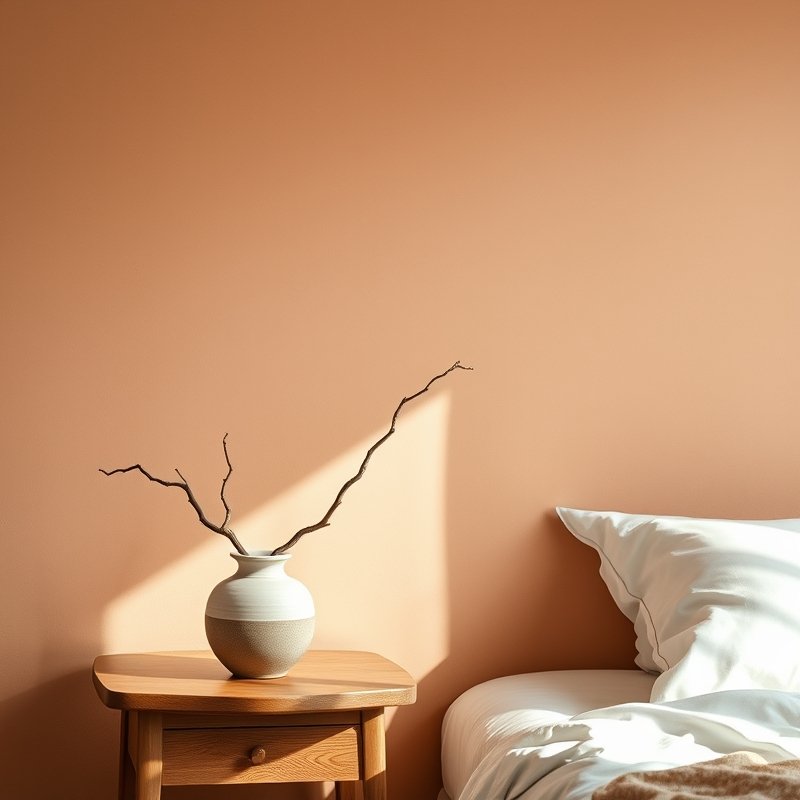
Obsess over one meaningful vessel. Set a hand-thrown ceramic vase — slightly asymmetrical, with a rough matte glaze in charcoal or warm earth — on your nightstand. Inside, place a single sculptural branch from a manzanita tree or a slender piece of dried blossom. This arrangement celebrates the wabi-sabi beauty of imperfection and transience. The vase itself feels like a found object, grounding the space with its weight and texture.
The solitary branch draws the eye upward and breaks the horizontality of the room. Against a muted clay wall, the silhouette is poetic and quiet. It’s a tiny gesture that steers the entire room toward mindfulness; you’ll notice it each time you reach for a book or turn off the lamp. Keep the surrounding surface empty to let this small scene breathe.
Washi Paper Pendant Light
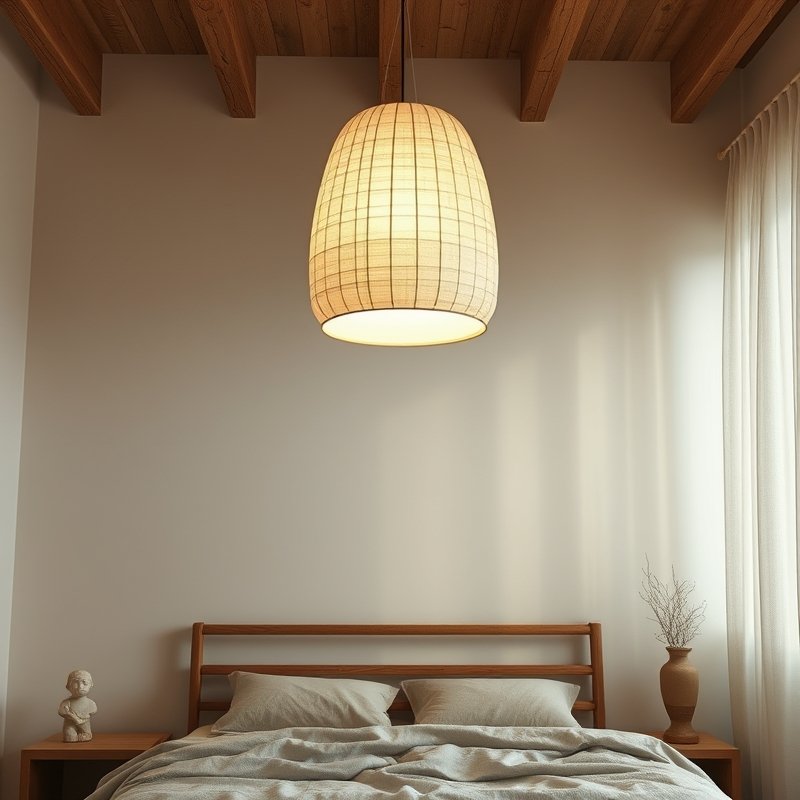
Suspended low over the bed or a corner reading chair, a washi paper pendant becomes the room’s glowing heart. The handmade paper diffuses light like a soft cloud, creating an atmosphere that no harsh ceiling fixture can replicate. Choose a round or organic pod shape with visible fiber lines. The gentle illumination highlights the wood grain of surrounding furniture and the texture of linen bedding.
In a Japandi bedroom, lighting should feel like a slow exhale — never blue or cold. Pair this pendant with a dimmer switch so you can shift from bright morning clarity to amber evening glow. If you rent and can’t hardwire, opt for a plug-in version hung from a simple hook on the ceiling, letting the cord drop gracefully in a clean line. The lamp itself becomes a sculptural object during the day, its pale skin a quiet counterpoint to darker wooden elements.
Organic Cotton Futon on a Wooden Slat Base
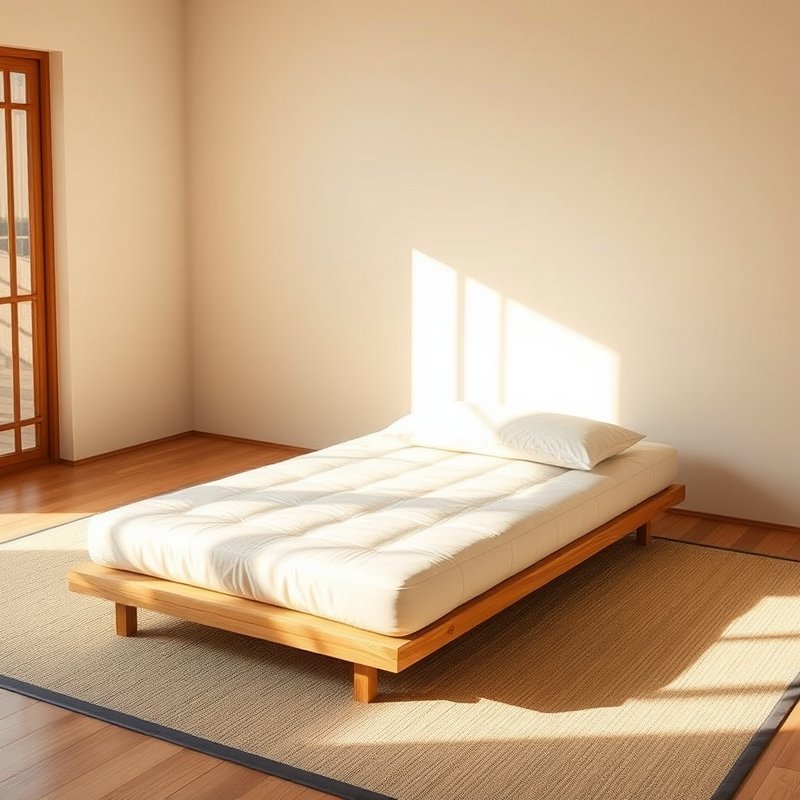
A traditional futon invites a deeper connection to the floor, turning sleep into a ritual. Place a thick organic cotton futon on a low, slightly elevated wooden slat base to allow airflow while keeping the silhouette slim. During the day, you can fold the futon and lean it against the wall, instantly opening up floor space for yoga or meditation.
The slatted base adds a subtle Scandinavian minimalism, its pale birch or ash echoing natural light. Dress the futon with a simple fitted cover in undyed cotton and a solitary flax cushion. This setup isn’t just about sleeping — it’s about honoring the room’s flexibility. The whole arrangement whispers breathability, seasonality, and a quiet kind of luxury that comes from living with less. Even in a small city apartment, this design brings a sense of Japanese ryokan calm.
Built-In Window Bench with Floor Cushions
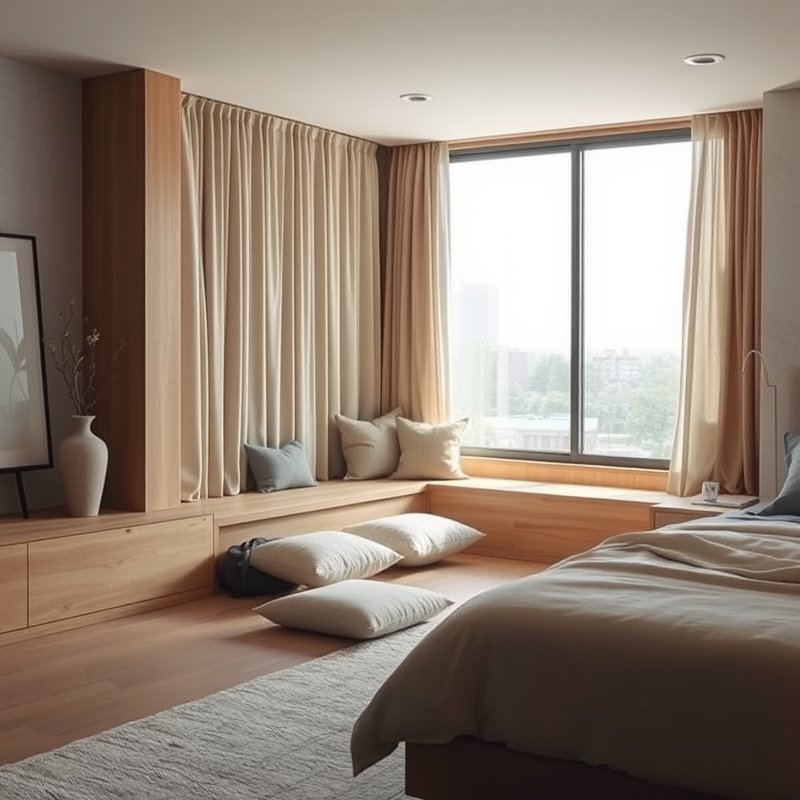
Carve out a quiet nook by turning a deep windowsill into a built-in bench. Cover it with a single slab of light wood and top it with a thin cotton mattress cut to size. Scatter two or three zaisu-style floor cushions in oatmeal and charcoal linen along the bench, inviting you to sit and watch the light change. Below, keep the space open or add a low wooden shelf for a few books and a candle.
This bench blurs the boundary between furniture and architecture, making the room feel more expansive. On sunny mornings, the wood warms under the light, and the whole corner becomes a meditation spot. In the evening, a small ceramic lantern placed on the sill adds a safe, intimate glow. It’s a simple structure that encourages slowness without adding visual clutter.
Each of these first seven ideas proves that Japandi calm comes from intentional restraint, not emptiness. Which texture speaks to you most — the crisp hand of washi paper or the grounded feel of a tatami mat?
Muted Clay Accent Wall
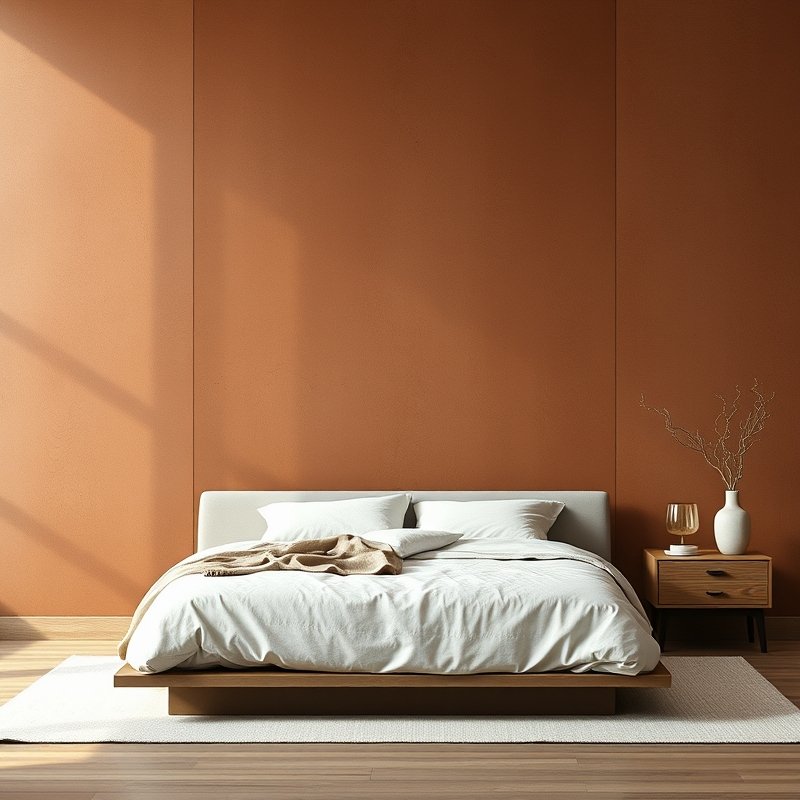
Wrap the wall behind your bed in a hand-troweled clay finish or limewash paint the color of ancient terracotta pots. The uneven pigment creates subtle shadows that shift throughout the day, giving the room an organic pulse. Choose a tone like dusty rose, warm adobe, or sun-baked earth — nothing too bright. This wall grounds the entire color story, absorbing light and reflecting it back softly.
The rest of the room stays neutral: pale wood, raw linen, a rice-paper pendant. A single art piece or a floating shelf might be the only other element on that wall. Because the finish feels tactile, you won’t need bold patterns or decorations. The wall itself becomes the artwork. To replicate this effect, you can apply a limewash yourself in one afternoon, using a large brush to create movement. It’s a weekend project that radically deepens your room’s sense of calm.
Minimalist Wooden Side Table with Curved Legs
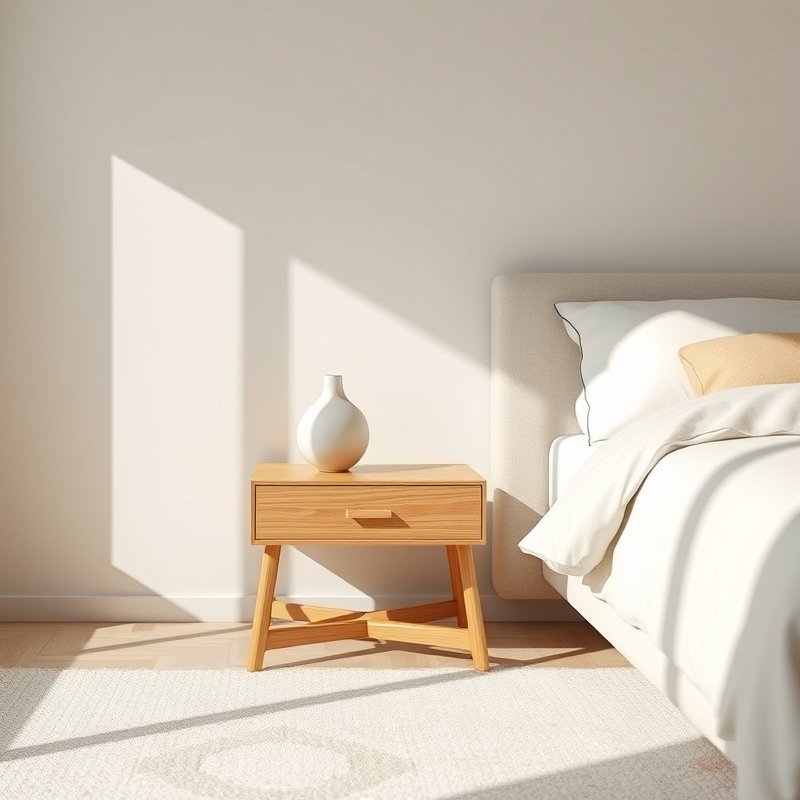
Swap boxy nightstands for a petite side table with softly curved legs — think 1970s Danish joinery meets Japanese restraint. The rounded silhouette softens the angular lines of the bed and walls. A warm walnut or light beech finish works beautifully, with visible grain that tells a story. On top, place only a small ceramic cup for a ring and a slim book. The slender legs keep the floor visible, making the room feel larger.
The curve itself echoes the organic shapes found in nature — no sharp corners to catch the eye or your shin. This small piece proves that even a single furniture choice can shift the entire mood of a room. If you love a vintage feel, search for a mid-century teak sewing table to repurpose; its low height and curved detail fit perfectly into the Japandi aesthetic. The result is a bedside moment that feels gentle and deeply intentional.
Shoji-Inspired Room Divider
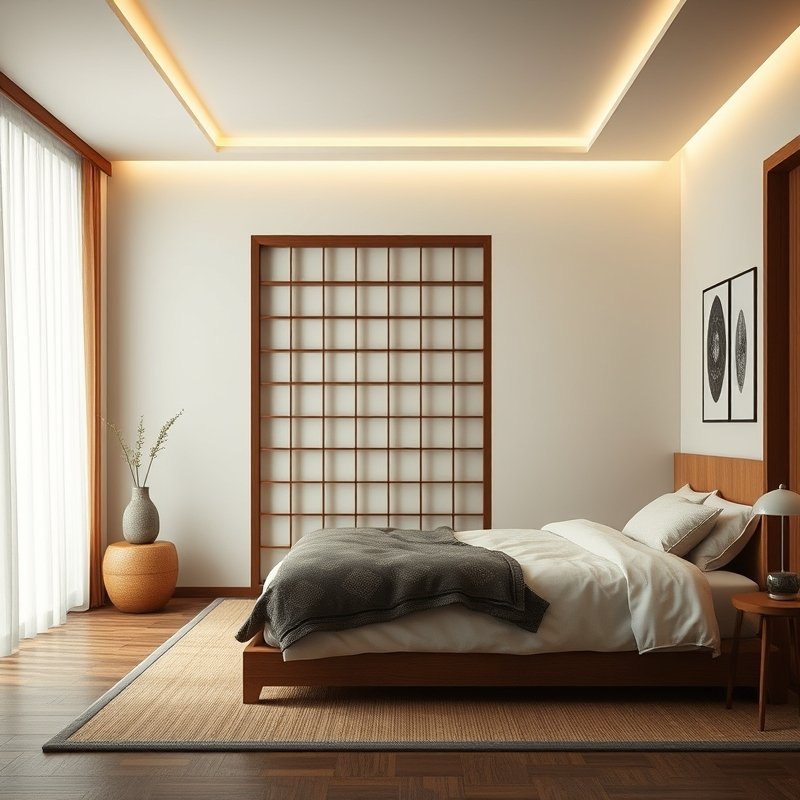
Use a freestanding shoji screen to carve out privacy without building walls. In a studio apartment or an open-plan bedroom, a hinged wooden frame with translucent panels softly separates sleep from work or dressing. The screen filters light beautifully, casting leaf-like shadows when the sun moves.
Choose a honey-toned hinoki cypress or a pale pine finish. Its portable nature means you can reconfigure the room anytime — fold it flat against a wall when you crave openness, or angle it to create a hidden dressing corner. The screen also acts as a backdrop for a low plant or a floor cushion vignette. Because the paper panels let light through, the room still feels connected and airy. This one element deftly solves layout challenges while staying true to Japandi’s love of light and simplicity. It’s architecture you can move with your hands.
Save this idea: The shoji-inspired screen isn’t just a divider — it’s a soft lantern for your whole room. When backlit by evening sun, the entire panel glows, instantly turning an ordinary corner into a sanctuary.
Stoneware Diffuser with Hinoki or Cedar Essential Oil

Scent is the invisible architecture of a Japandi bedroom. Choose a handcrafted stoneware diffuser — simple, unglazed, with a matte surface — and fill it with hinoki, cedar, or yuzu essential oil. Place it on a low windowsill or the floor near a vent so the aroma drifts through the room without overwhelming.
The earthy vessel feels like a piece of landscape; it blends into a neutral palette rather than announcing itself. A gentle forest scent lulls the mind toward rest, mimicking the air of a Japanese onsen or a Scandinavian sauna. Avoid sweet or floral blends; stick to green, woody notes that feel clean and grounding. For a no-mist option, use porous lava stones in a shallow ceramic dish with a few drops of oil. The scent lasts for hours and asks nothing of the eye. It’s a silent comfort that completes the room’s sensory circle.
Unbleached Linen Curtains That Touch the Floor
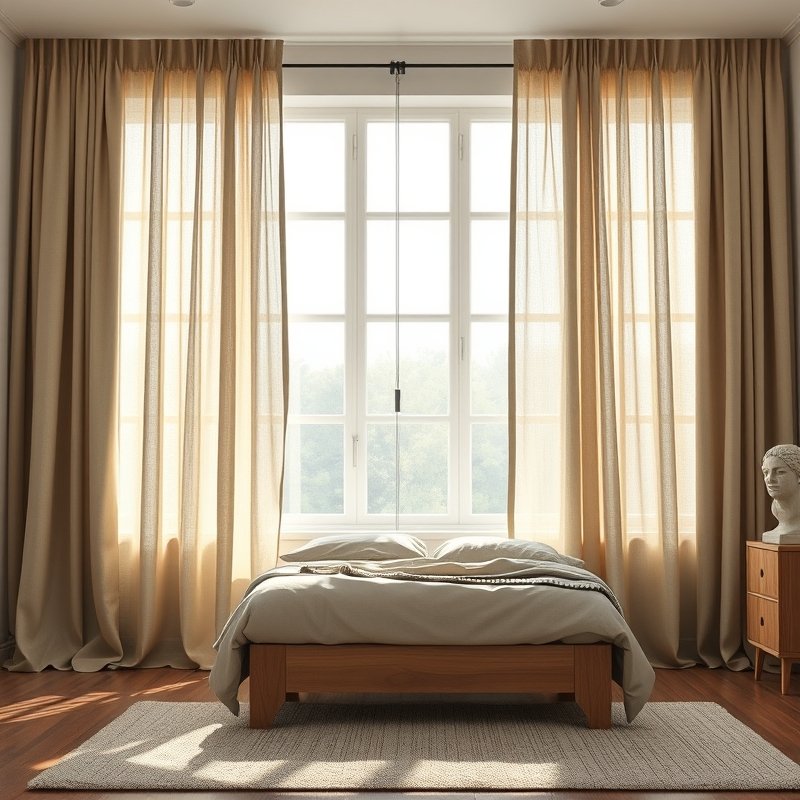
Frame every window with floor-to-ceiling unbleached linen panels that break ever so slightly on the floor. The fabric’s natural slub and creamy-beige tone warm the room instantly. Hang them on a slim black iron or wooden rod set close to the ceiling to exaggerate height. When drawn, the curtains drape with a reassuring weight, muffling sound and softening the room’s edges. During the day, push them aside to create plush, column-like folds that add vertical texture.
The raw, sun-faded look of unbleached linen connects directly to both Japanese philosophy of simplicity and Scandinavian love for honest materials. For extra depth, layer a sheer cotton voile behind — it diffuses harsh sunlight while the linen adds body. These curtains work with every wall color and every bed frame; they are the quiet backdrop that lets other touches shine. Nothing in the room will feel as effortlessly elegant as the way they pool on the wooden floor.
Hand-Painted Sliding Art Panel Behind Bed
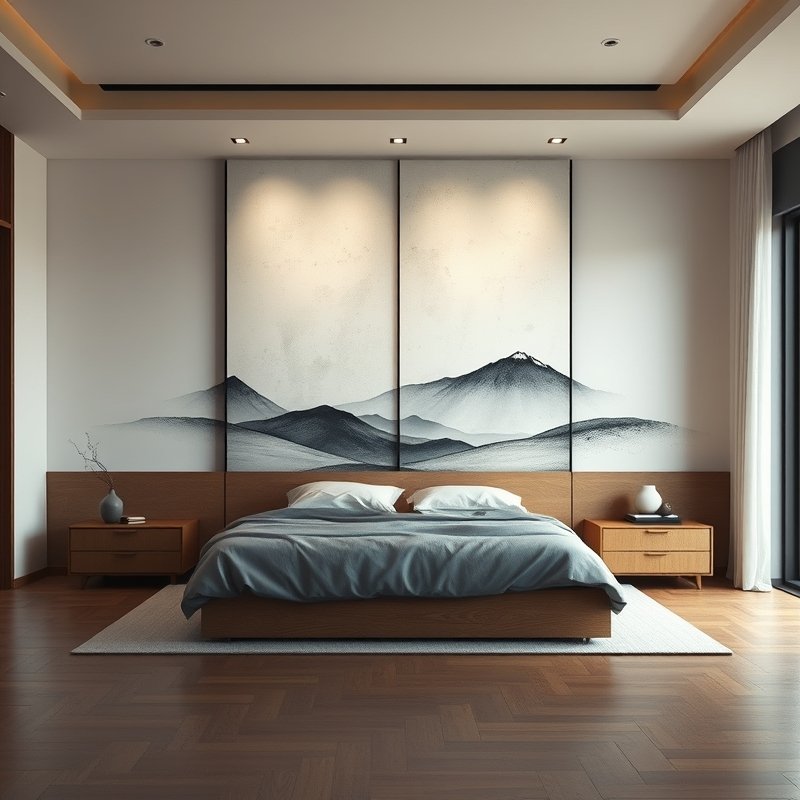
Replace a traditional headboard with a sliding art panel reminiscent of a Japanese fusuma screen. The panel glides along a subtle track, revealing or concealing a window, a storage nook, or simply a second painted composition. Commission a local artist to apply sumi-e brushstrokes or a soft abstract landscape in indigo and charcoal, or do it yourself with diluted acrylic and a steady hand. The art becomes part of the architecture, merging function with deep personal meaning.
When the panel is closed at night, it wraps the bed in imagery — perhaps a moonlit mountain or a single sweeping branch. Slide it open in the morning to let light flood the room. The visual surprise feels like a secret within a secret. This piece turns your bedroom into a gallery of one, where the art is never static. It’s a deeply satisfying way to bring handcraft into a minimal space.
Wabi-Sabi Ceramic Catch-All Tray

On a nightstand or dresser, place an irregular ceramic tray with uneven edges, crackled glaze, or finger-worn grooves. It holds your quiet rituals: a smooth stone, a wooden bead bracelet, a small vial of essential oil. The tray embraces imperfection, its asymmetry drawing gentle attention. Search for pieces made by potters who celebrate kintsugi-like repair or natural ash glazes.
This small object sets the tone for the entire room — it says that things don’t need to be perfect to be beautiful. In a world of mass-produced decor, this one-of-a-kind tray makes even the act of emptying your pockets a mindful practice. Let it sit on a bare wooden surface, no coaster underneath, so the ceramic meets wood directly. The tiny visual tension between slick glaze and rough timber is pure Japandi poetry.
You’re halfway through these warm, layered ideas. Notice how each small addition — a tray, a scent, a hanging panel — builds on the one before it, like brushstrokes on a canvas. Which detail would you try tomorrow?
Sparse Greenery – Bonsai or Potted Bamboo
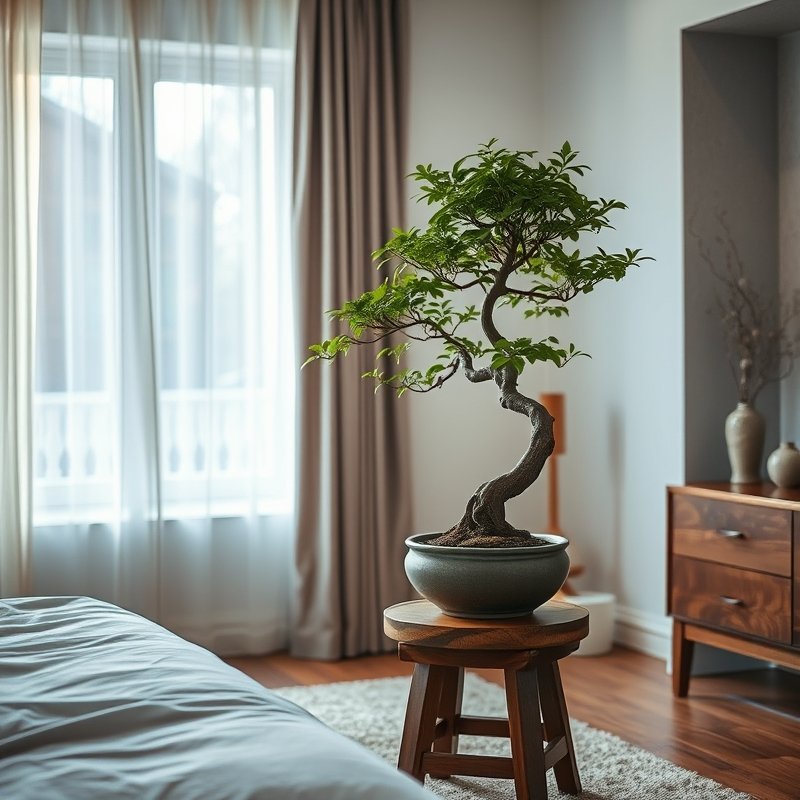
One well-chosen plant can breathe life into the entire room without creating jungle-like chaos. Set a sculptural bonsai — perhaps a juniper or a ficus — on a simple wooden stool by the window. Its twisted trunk and refined silhouette draw the eye while honoring discipline and patience. Alternatively, a single tall stalk of lucky bamboo in a slim stoneware vase sits elegantly in a corner, catching sidelight. The idea is sparse greenery, not a collection: the plant becomes a living sculpture.
Avoid blooms and large leafy potted plants that demand too much attention. Instead, choose something that looks good from every angle, with deliberate negative space around it. Morning sunlight tracing the shadow of tiny bonsai leaves on a pale wall can feel like a daily meditation. This touch reminds you that growth happens slowly and beautifully, just like the process of building a home.
Natural Wood Wall Sconce with Soft Glow
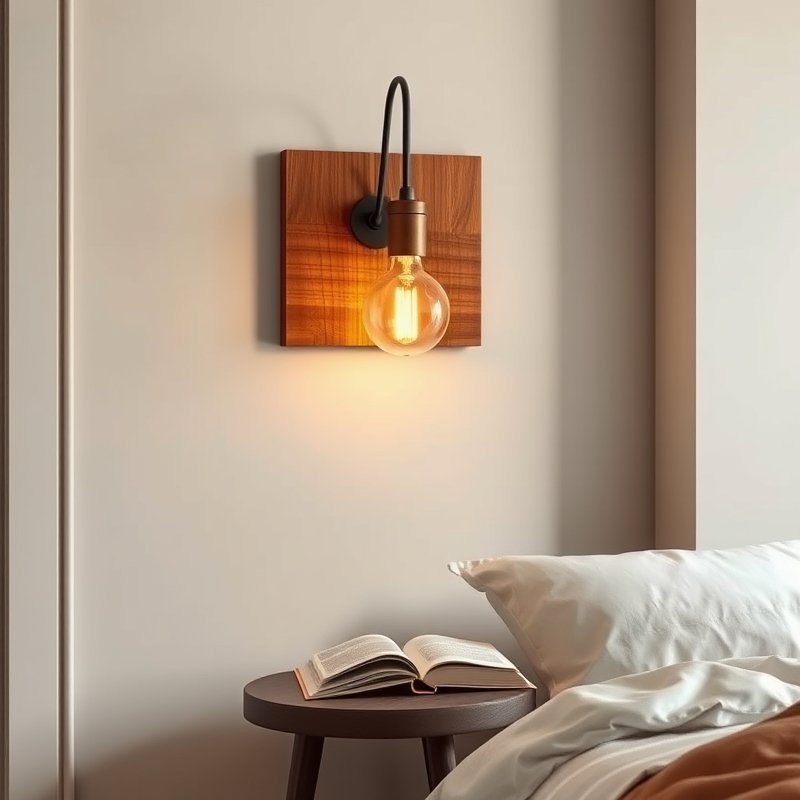
Free up your bedside table by installing a wooden wall sconce on each side of the bed. Choose a design with a slender oak or walnut arm and a simple cylindrical shade in frosted glass or raw brass. The light pools downward, creating a warm haven for late-night reading or quiet conversation. The sconce’s backplate can be circular and understated — nothing ornate. When the lights are off, the fixture itself feels like a subtle branch extending from the wall.
Position them low enough that you can reach the switch without sitting up fully. The soft amber glow highlights the wood grain of the headboard and the texture of your bedding. This detail eliminates visual noise from cords and lamps, letting your nightstand stay nearly bare. There’s a deep, old-world comfort in having light exactly where you need it, without a single lampshade to maneuver.
Earthy Throw Blanket in Charcoal or Indigo
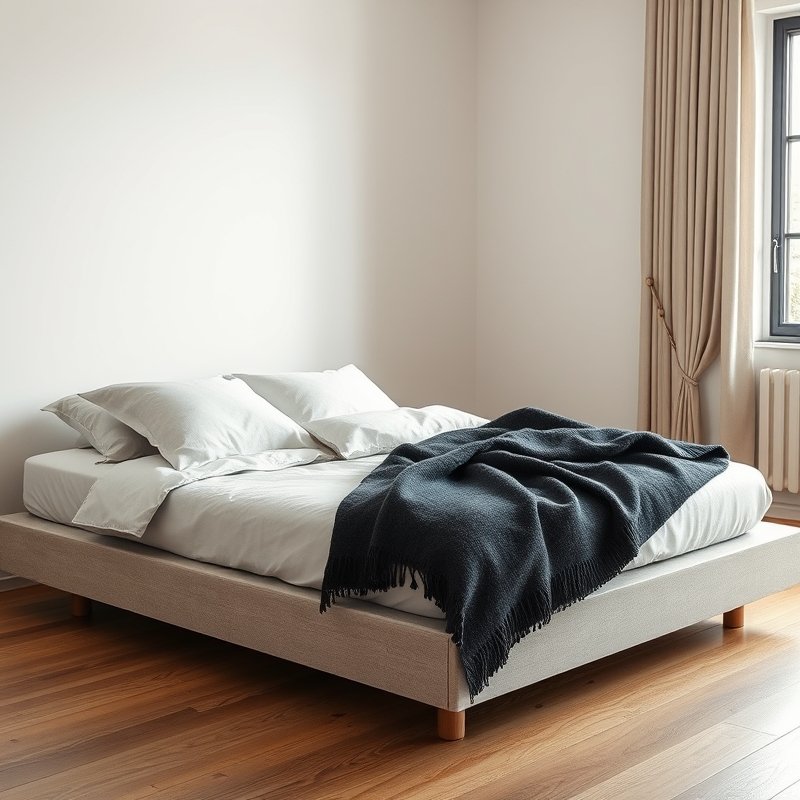
Fold a heavyweight wool or cotton-linen blend throw in deep charcoal, moody indigo, or smoky pine at the foot of the bed. The darker tone acts as an anchor in a room full of airy neutrals, drawing the eye to the bed’s endpoint and giving the space visual weight. Texturally, it should contrast with smooth sheets — think a nubby weave or a thick herringbone. This single piece invites touch and signals that the bed is a place for rest and physical comfort.
On colder nights, pull it over the duvet; during the day, leave it perfectly draped, its fringe just grazing the floor. The earthy shade echoes the soil and stone of the natural world, connecting your room to the outdoors. It’s a simple layering trick that adds instant depth and a whisper of hygge without breaking the clean Japandi calm.
Minimalist Clothing Rack (Wood + Brass)
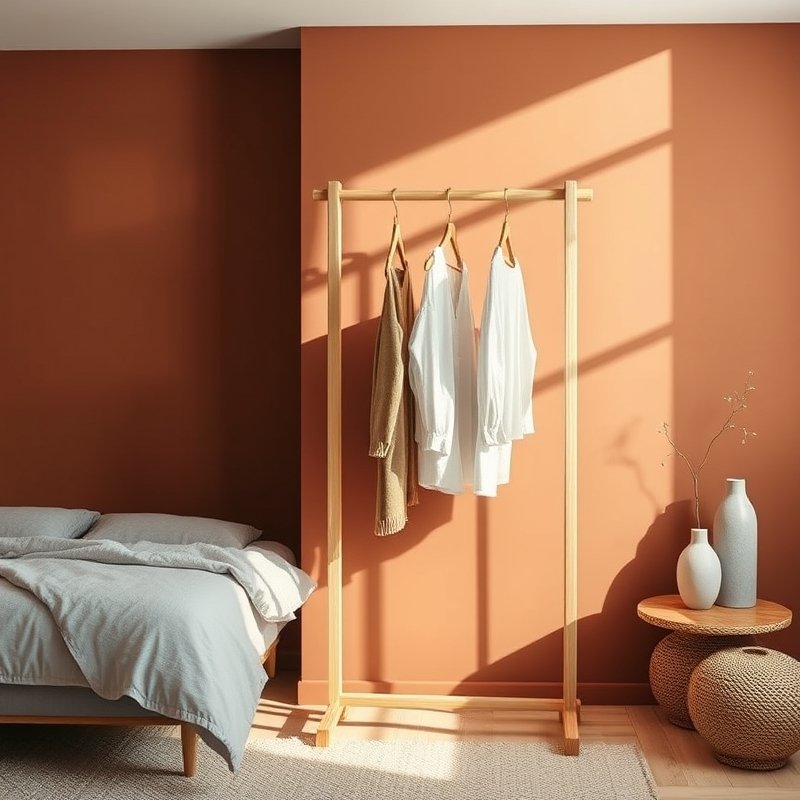
For a curated, open closet feel, add a free-standing clothing rack made of pale oak with slim brass hooks. Hang only a few beautiful pieces: a linen dress, a wool coat, a soft cardigan in oatmeal. The rack itself is a sculptural object, its clean lines adding architectural interest. Position it against a clay-accented wall or near a window so the fabrics catch light. A small woven basket beneath can hold slippers or a folded blanket.
This approach encourages a capsule wardrobe and transforms getting dressed into a quiet, aesthetically pleasing ritual. The combination of wood and warm metal feels both Japanese in its simplicity and Scandinavian in its craft. Because the rack is open, it also keeps the room feeling spacious, unlike a bulky armoire. Let it stand as evidence that in a Japandi bedroom, even storage deserves to be seen and celebrated.
Tatami-Inspired Rug Under the Bed
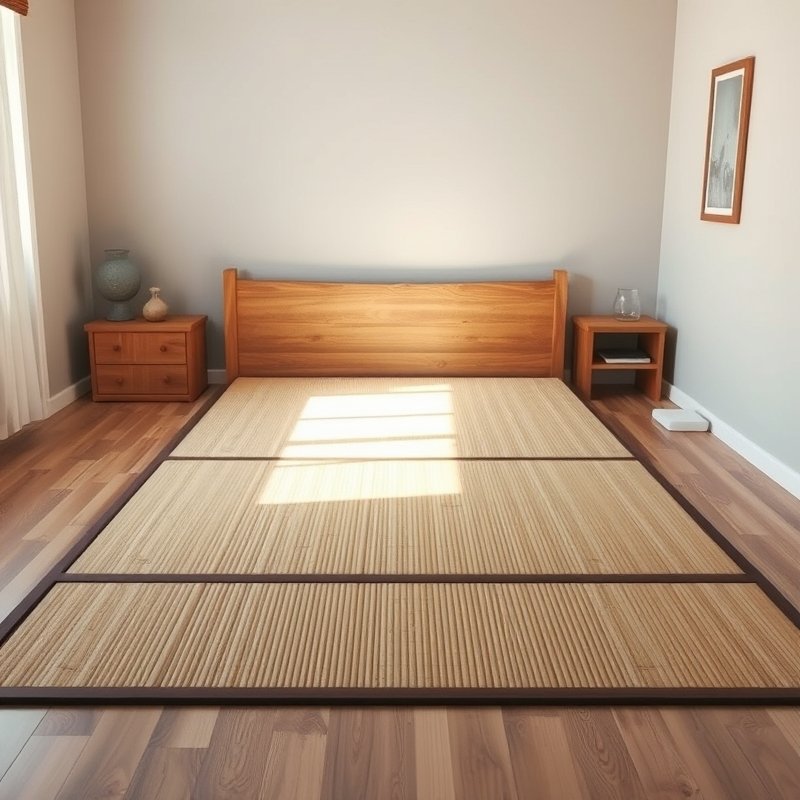
Anchor your sleep area with a large tatami-inspired rug made from woven sea grass, jute, or a blend of natural fibers. The rug should extend at least two feet beyond the bed on all sides, creating a defined zone that feels like a room within a room. Its subtle greenish-gold hue and delicate grid pattern mirror real tatami mats. Underfoot, the texture is slightly springy and crisp — perfect for barefoot mornings.
This piece adds warmth to wood or concrete floors without introducing artificial color. It also visually lowers the bed, reinforcing the low-slung, grounded aesthetic. To keep it fresh, air it outside seasonally and let it fade in the sun. The mat’s natural scent mingles with hinoki or cedar, turning your bedroom into a multi-sensory retreat. It’s the floor covering that does more than cover; it defines the entire mood.
Layered Texture – Wool Blanket Over Fitted Sheet

Forget heavy duvets for a moment and discover the beauty of a single wool blanket layered over a perfectly fitted sheet. Choose a blanket in undyed wool — creamy ecru or pale gray — with a raw, fringed edge. Its dense weave adds weight without trapping too much heat. The fitted sheet underneath stays crisp in washed cotton or linen, creating a sharp textural contrast. Fold the top edge down once to reveal the sheet’s smooth surface, and prop one pillow upright.
This simple bed-making style celebrates the materials themselves. It feels like a modern ryokan update: less fluff, more breathability. During the day, the bed looks neat and inviting, almost architectural. At night, the wool blanket wraps the body with gentle pressure, aiding deeper sleep. This layered approach also makes changing the look with seasons effortless, just swap the blanket for a lighter cotton throw in summer. It’s minimalism that truly serves comfort.
Single Art Piece – Sumi-e Brushstroke or Abstract Landscape
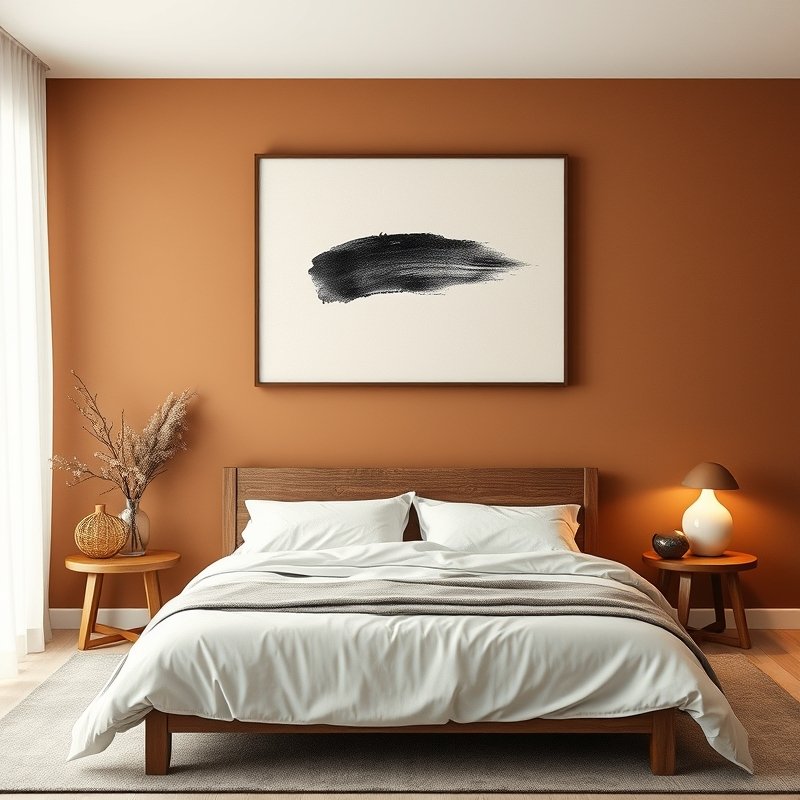
Hang one oversized piece of art, and nothing else, above the bed or on the main wall. The image should be restrained: a single sumi-e brushstroke sweeping across rice paper, a faint mountain range, or a large abstract landscape in muted indigo and charcoal. The composition harnesses the Japanese concept of ma, or negative space, where what’s missing holds as much power as what’s present. Frame it simply in pale wood, or mount it as a scroll with thin dowels top and bottom.
This singular focus creates a powerful, contemplative atmosphere. The eye has nowhere else to go, so it rests. In a room where everything else whispers, this artwork can speak, softly, poetically. It becomes the soul of the space, a visual anchor that draws you inward. Over time, you’ll notice new details in the strokes, much like watching clouds shift. That quiet rediscovery is exactly what a Japandi bedroom should offer.
These final five ideas bring the entire room together, from the floor under your feet to the art that fills the quiet. Each one is a gentle invitation to slow down and truly see your space.
Conclusion
These 21 japandi bedroom ideas prove that true calm comes from choosing less, but choosing better. A low platform bed, a paper lamp, the scent of hinoki, each decision adds a layer of warmth without noise. Start with one element that stirs something in you. Maybe it’s the shoji screen or a single bonsai by the window. Let that small change guide the rest, and soon your bedroom will feel like a deep, peaceful breath. Your sanctuary is waiting.