A living room that feels too loud or busy can affect daily comfort. This guide will help you design a sage green living room that feels calm, elegant, and balanced. You will learn how to use this soothing color without making the space feel dull.
In this article, you will discover practical ideas that blend modern style with natural softness. Each idea focuses on color balance, comfort, and timeless appeal. These ideas work well in both small and large living rooms.
A sage green living room creates a sense of peace and refinement. The color pairs beautifully with neutrals, wood, and soft textures. When styled thoughtfully, sage green feels fresh, elegant, and welcoming.
26 Core Sage Green Living Room Styles
1. Sage Green Walls With Neutral Furniture
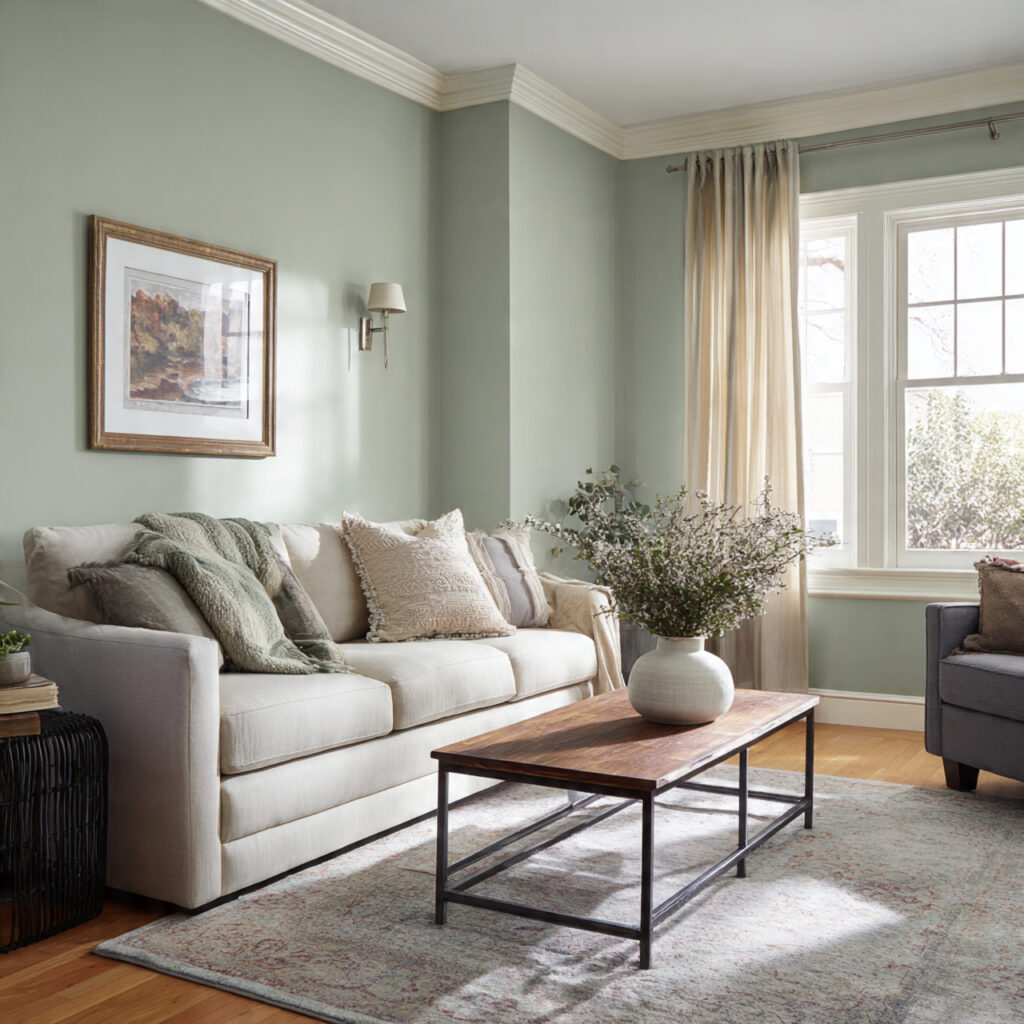
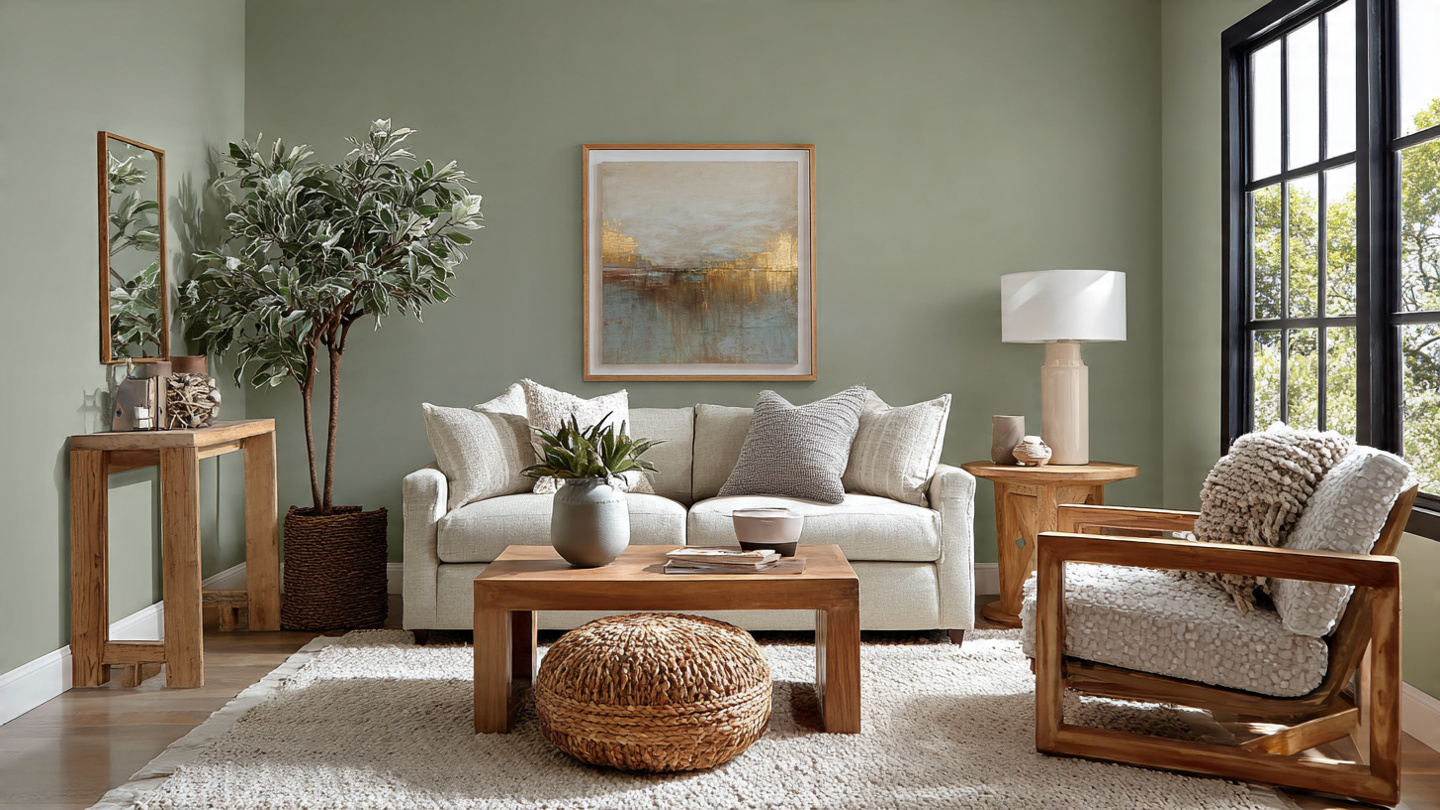
Sage green walls create a calm and grounded backdrop for the living room. The color feels soft and relaxing without being boring. It brings nature indoors and improves overall comfort. The space feels peaceful and refined.
Neutral furniture balances sage green beautifully. Sofas in beige, cream, or soft gray keep the room light. This combination prevents the color from feeling heavy. The design stays elegant and airy.
Keep decor simple to support the calm palette. Use minimal accents in wood or metal. This enhances sophistication. The living room feels timeless and serene.
Also Read: 29 Modern Colorful Living Room Ideas That Feel Bold and Trendy
2. Neutral Walls With Sage Green Accents
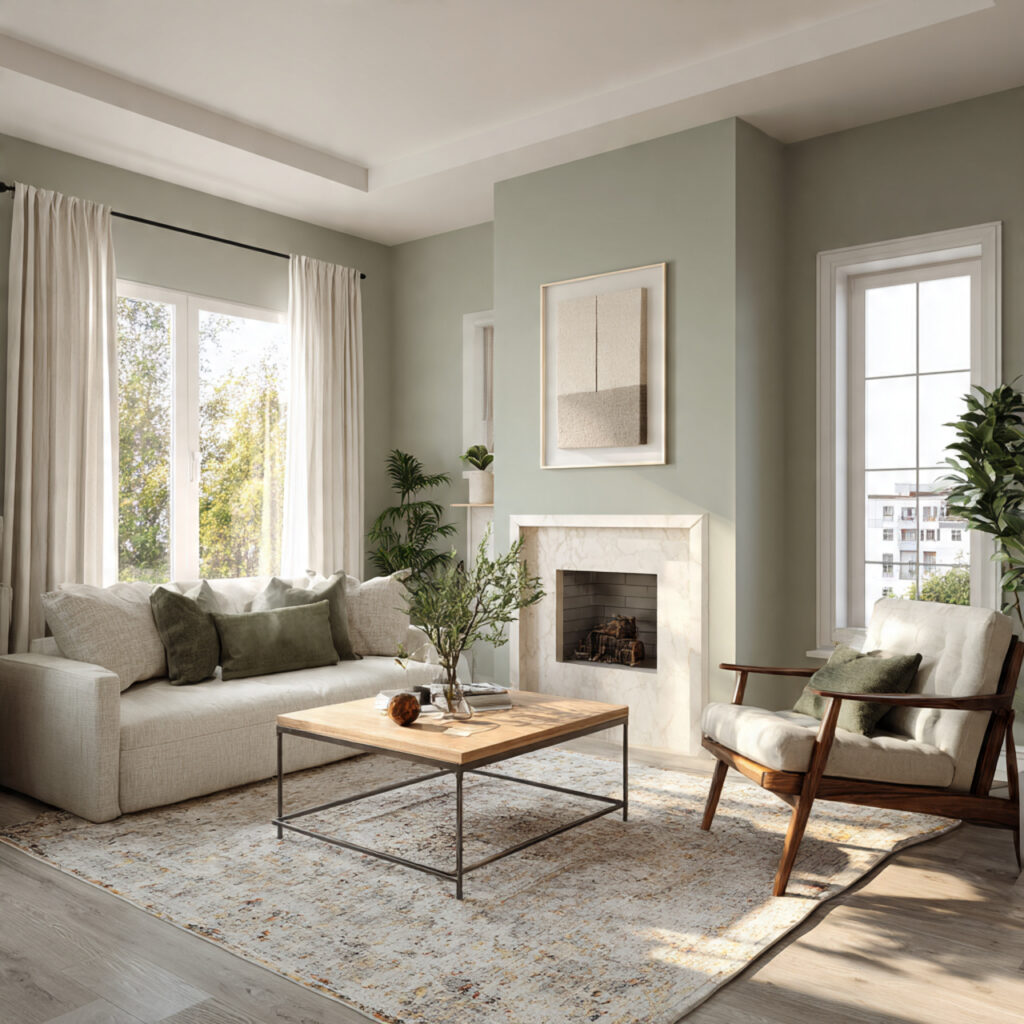
Neutral walls allow sage green accents to stand out gently. This approach works well for those who prefer subtle color. The room feels calm but not flat. Sage green adds freshness naturally.
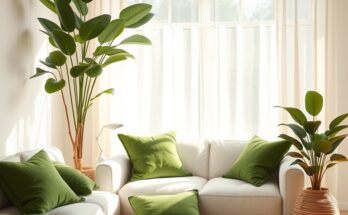
Use sage green through cushions, curtains, or rugs. These accents introduce color without commitment. They are easy to update over time. The design feels flexible and elegant.
Limit sage accents to a few areas only. Too much color can reduce calmness. Balance is key. The living room stays light and graceful.
Read More: 23 Boho Style Bathroom Ideas That Feel Relaxed and Aesthetic
3. Sage Green Sofa as a Statement Piece
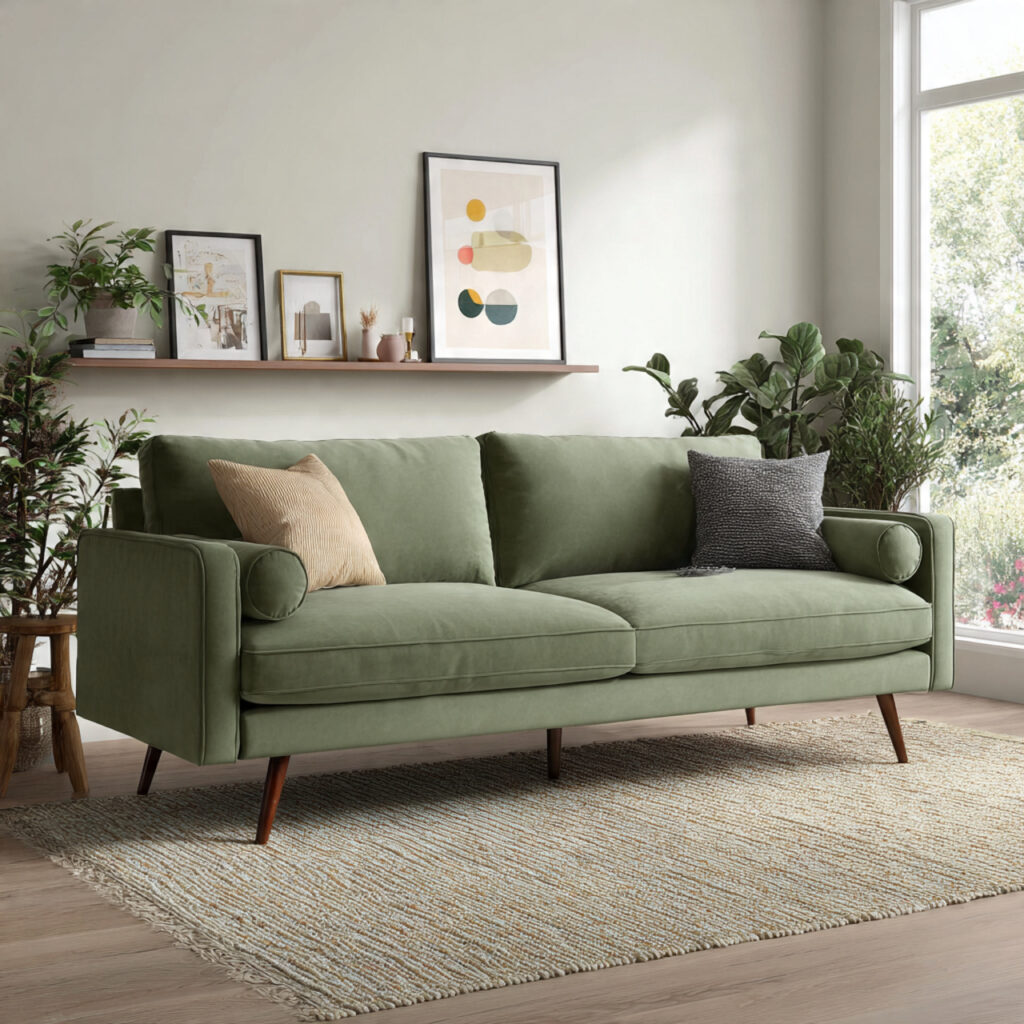
A sage green sofa creates a soft yet confident focal point. It adds color without overwhelming the room. This choice feels modern and elegant. The living room gains personality instantly.
Choose a sofa with clean lines and simple shape. This keeps the look modern and refined. Upholstery in sage green feels soothing and stylish. The design stays balanced.
Support the sofa with neutral walls and flooring. This allows the color to shine naturally. Avoid competing shades nearby. The room feels composed and calm.
4. Sage Green and White for a Fresh Look
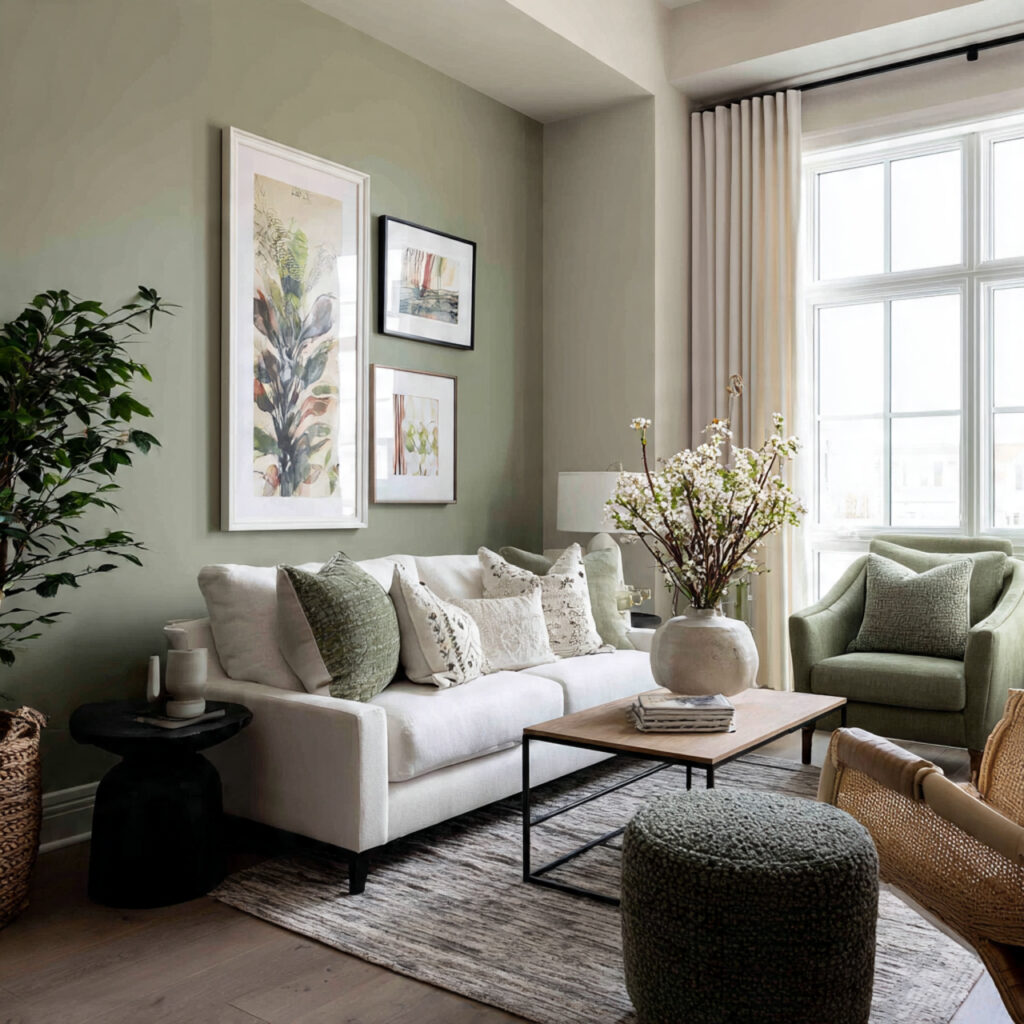
Sage green and white create a fresh and airy living room. White brightens the space and highlights the green tones. This pairing feels clean and elegant. The room looks open and inviting.
Use white on walls or larger furniture pieces. Sage green works well in accents or feature areas. This keeps balance and clarity. The color combination feels timeless.
Avoid sharp or bright whites if possible. Soft white tones work best. They maintain warmth and calm. The living room feels relaxed and polished.
5. Sage Green Paired With Natural Wood
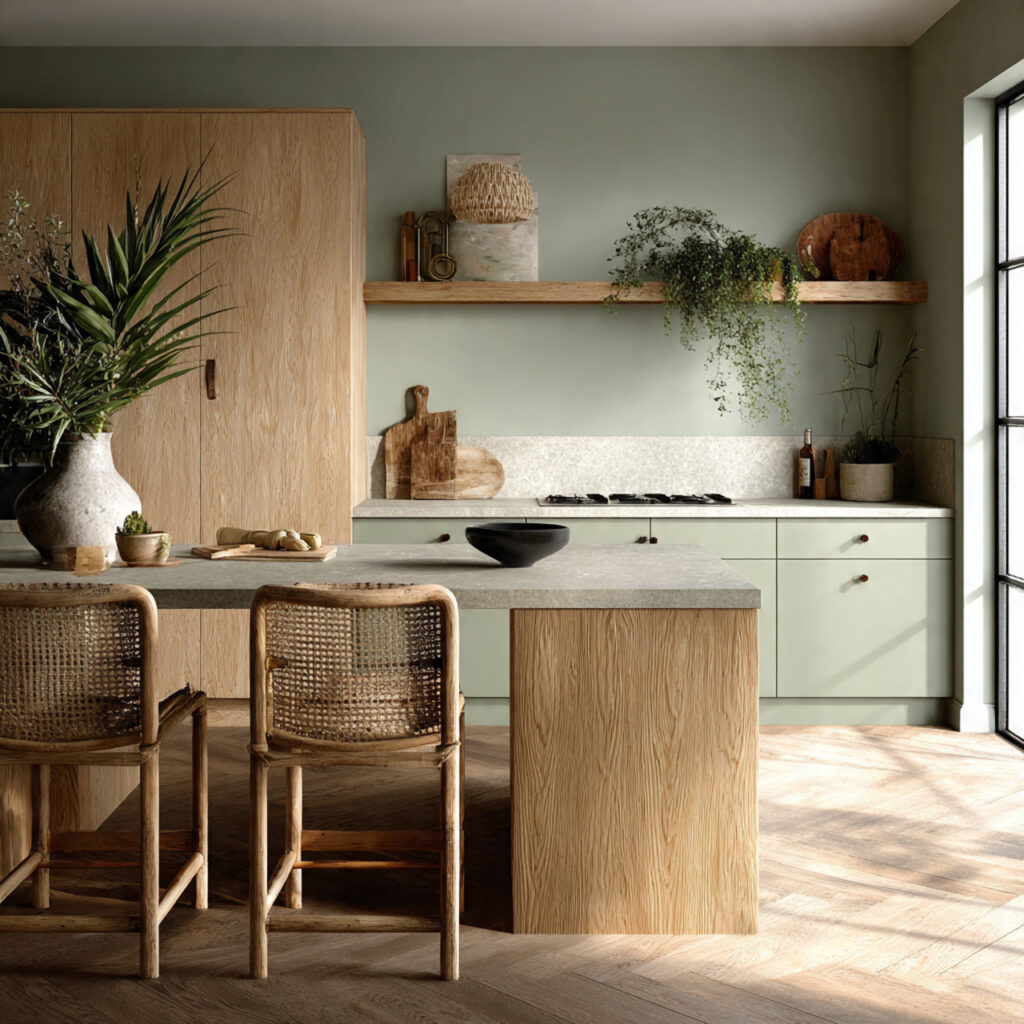
Natural wood enhances the beauty of sage green. Wood tones add warmth and texture to the space. This combination feels organic and comforting. The living room connects with nature.
Light to medium wood works especially well. Oak, ash, or walnut complement sage green nicely. These materials soften the overall look. The design feels welcoming.
Keep wood finishes natural and simple. Avoid high gloss surfaces. This maintains an elegant and calm style. The room feels balanced and authentic.
6. Minimalist Layout With Sage Green Focus
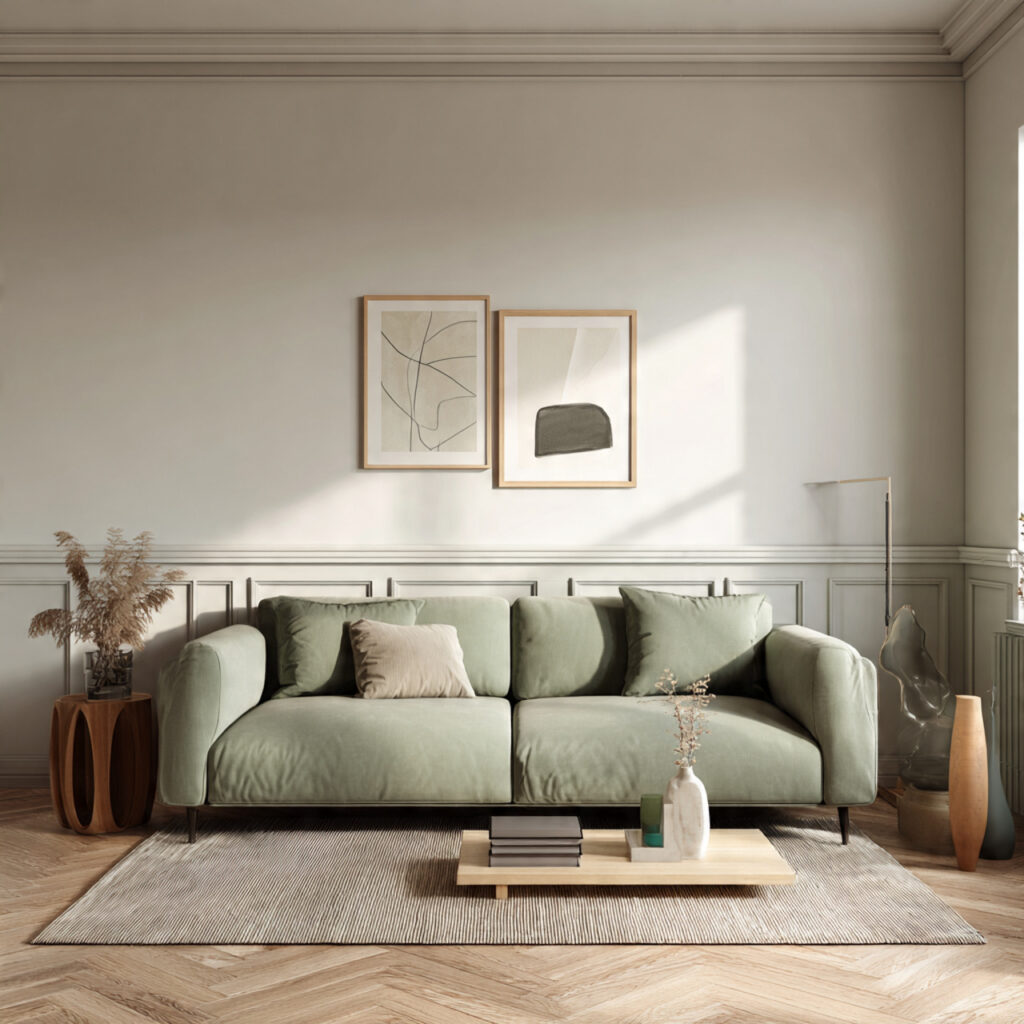
A minimalist layout allows sage green to shine. Fewer furniture pieces reduce visual noise. This supports a calm and elegant atmosphere. The room feels open and intentional.
Use sage green as the main color focus. Walls, seating, or large decor pieces work well. Keep other colors neutral. The design feels controlled and refined.
Avoid overcrowding the space with decor. Let color and texture lead the design. This improves visual comfort. The living room feels peaceful and stylish.
7. Sage Green With Soft Beige Tones
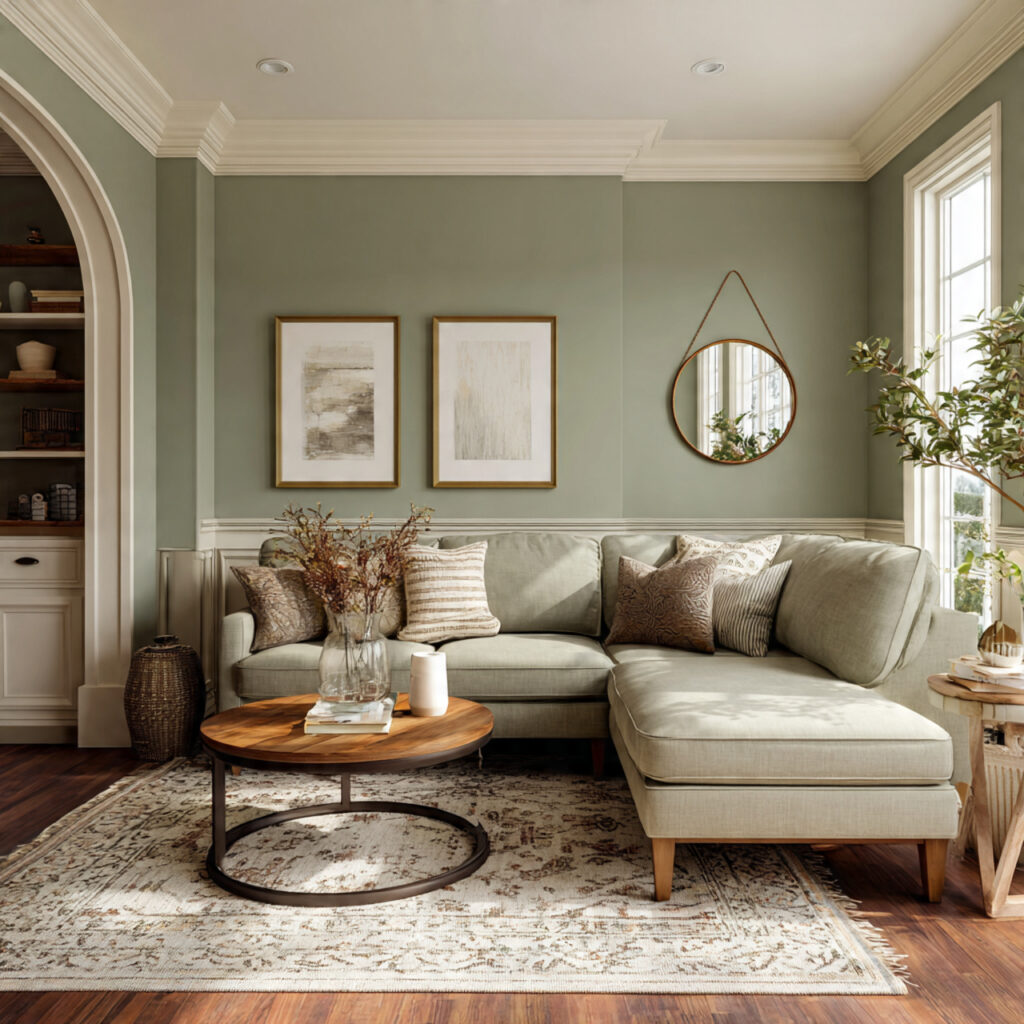
Sage green paired with soft beige creates a warm and elegant living room. Beige tones soften the green and add lightness. This combination feels calm and inviting. It works well for both modern and classic interiors.
Use beige on sofas, rugs, or curtains. Sage green can appear on walls or accent furniture. This balance prevents the space from feeling heavy. The room feels relaxed and refined.
Avoid using dark beige shades. Light and creamy tones work best. They maintain freshness and calm. The living room stays airy and graceful.
8. Sage Green and Gray for Modern Elegance
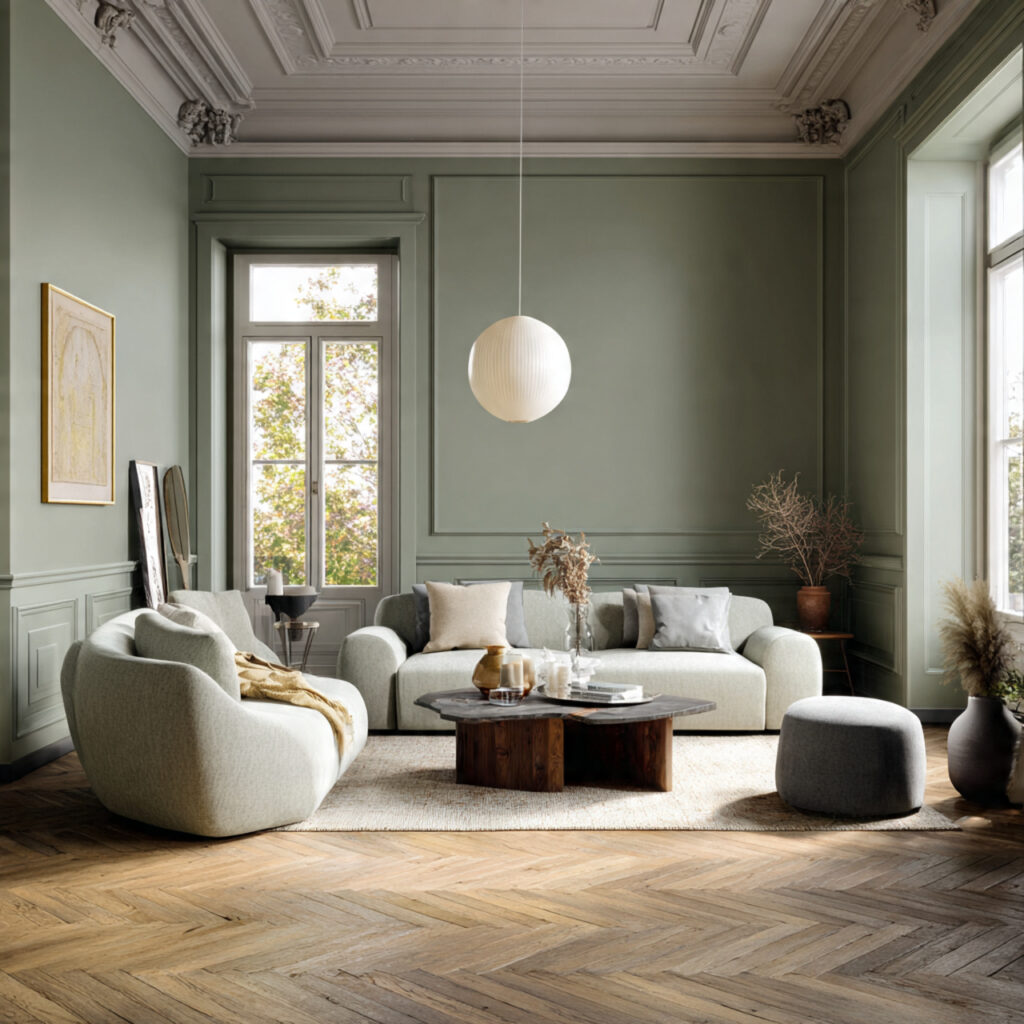
Gray adds a modern touch to a sage green living room. The cool tone balances the softness of green. This pairing feels clean and sophisticated. The space looks polished and calm.
Use light gray for furniture or flooring. Sage green works well on walls or accent pieces. This keeps the room visually balanced. The design feels modern yet welcoming.
Avoid dark gray shades that feel heavy. Soft gray tones are better. They support elegance and lightness. The living room feels composed and stylish.
9. Sage Green With Gold or Brass Accents
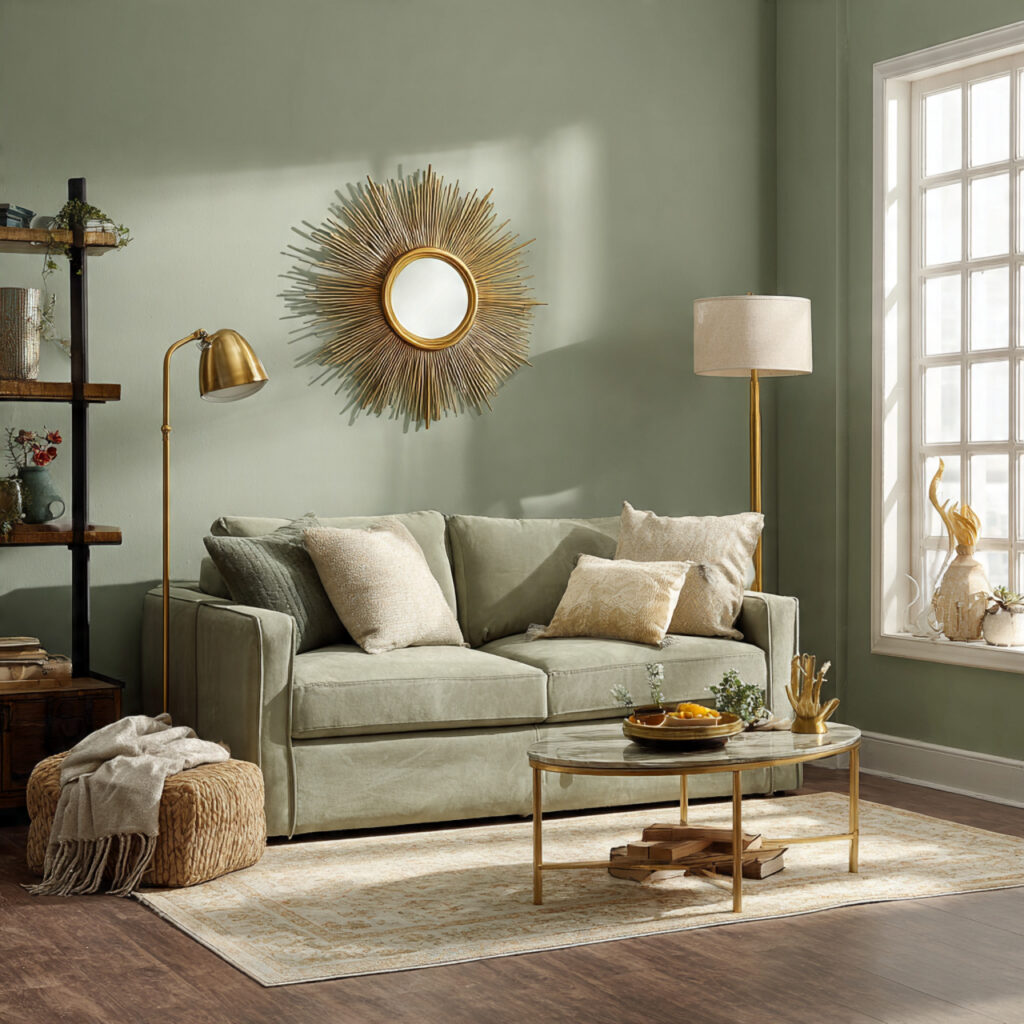
Gold or brass accents add subtle luxury to sage green interiors. These warm metals elevate the overall look. They bring elegance without excess shine. The room feels refined and calm.
Use metal accents in lamps, mirrors, or decor pieces. Keep finishes matte or brushed. This avoids harsh reflections. The space feels tasteful and balanced.
Limit metallic accents to a few areas. Too much can overpower the calm palette. Balance remains important. The living room stays elegant.
10. Sage Green With Cream Upholstery
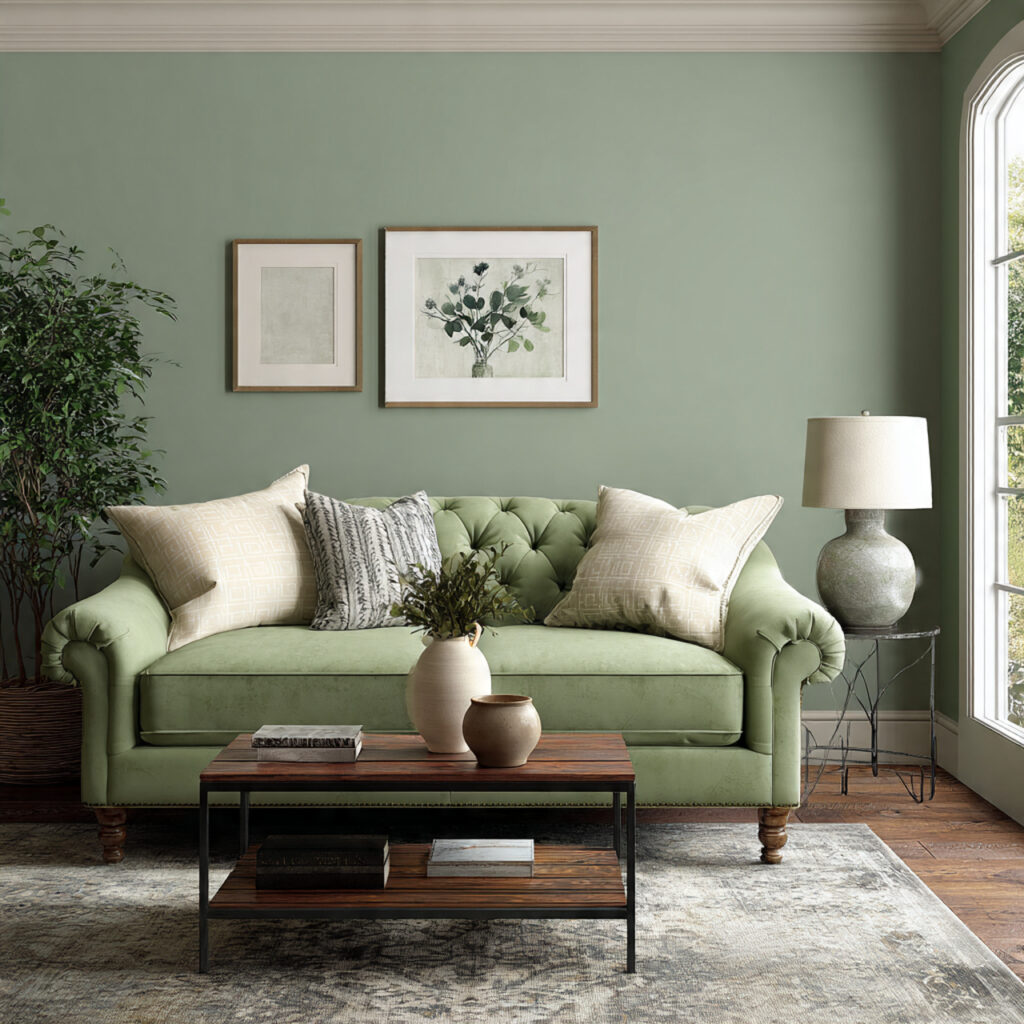
Cream upholstery softens the look of sage green. It adds warmth and comfort to the living room. This pairing feels gentle and timeless. The space becomes inviting and calm.
Use cream sofas or armchairs as main seating. Sage green walls or accents complement them well. This creates a soothing contrast. The room feels balanced.
Avoid bright white upholstery. Cream works better with sage green. It maintains warmth and softness. The living room feels elegant and cozy.
11. Sage Green With Black Accents for Contrast
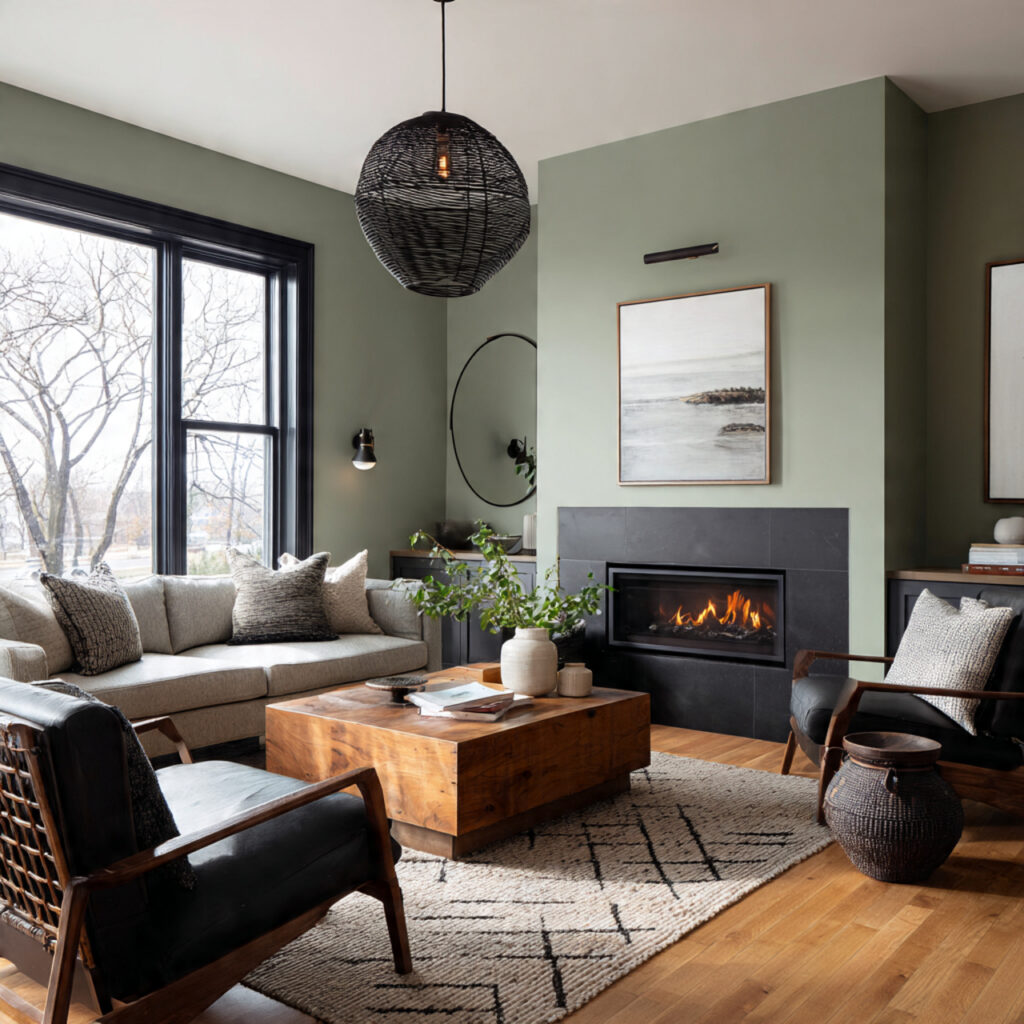
Black accents add definition to a sage green living room. They create contrast without overpowering the calm tone. This pairing feels modern and confident. The room gains structure.
Use black in small details like frames or tables. Keep lines clean and minimal. This avoids heaviness. The space feels sharp yet calm.
Avoid large black surfaces. Too much contrast can feel harsh. Keep accents subtle. The living room stays balanced and refined.
12. Layered Sage Green Shades for Depth
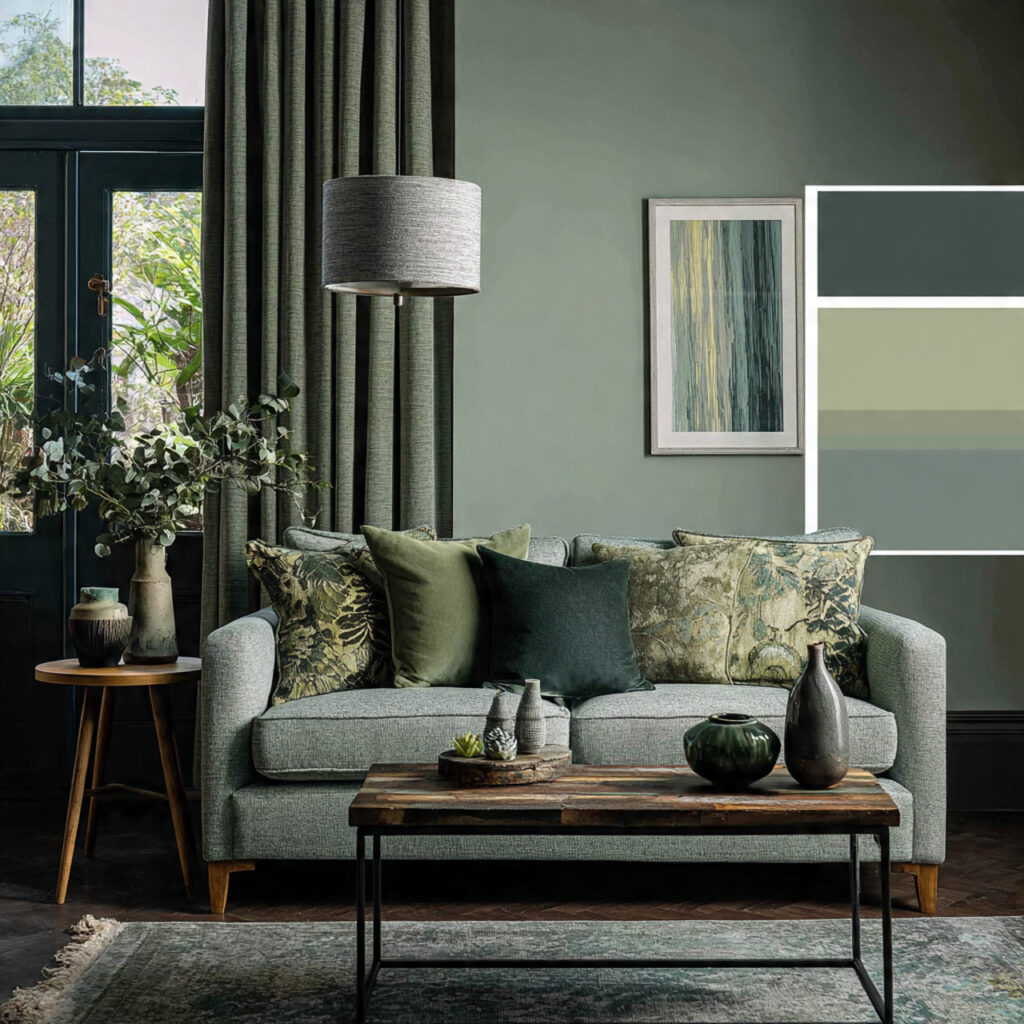
Layering different sage green shades adds depth. Light and dark tones create visual interest. This keeps the room from feeling flat. The design feels thoughtful and elegant.
Use darker sage in cushions or decor. Lighter sage works well on walls. This variation feels natural. The room stays calm.
Avoid mixing unrelated green tones. Stick to similar undertones. This keeps harmony intact. The living room feels cohesive and serene.
13. Sage Green Accent Chairs for Subtle Focus
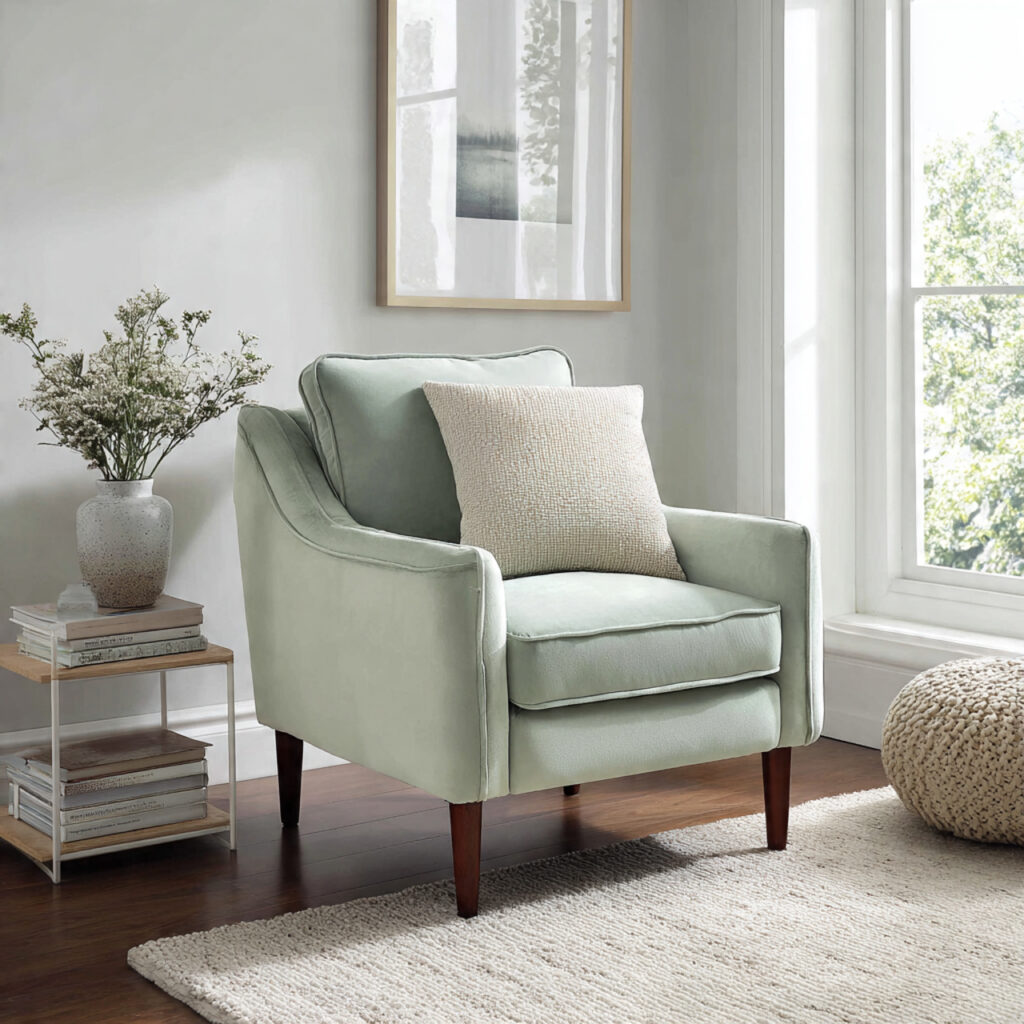
Sage green accent chairs add gentle color without dominating the room. They create a focal point while keeping the palette calm. This works well in both small and large living rooms. The space feels refined and welcoming.
Choose chairs with clean lines and soft upholstery. Simple silhouettes keep the look modern and elegant. Sage green feels soothing when paired with neutral surroundings. The balance remains effortless.
Place accent chairs near windows or seating areas. This helps integrate them naturally into the layout. Avoid overcrowding the space. The living room feels open and composed.
14. Minimal Sofa With Sage Green Cushions
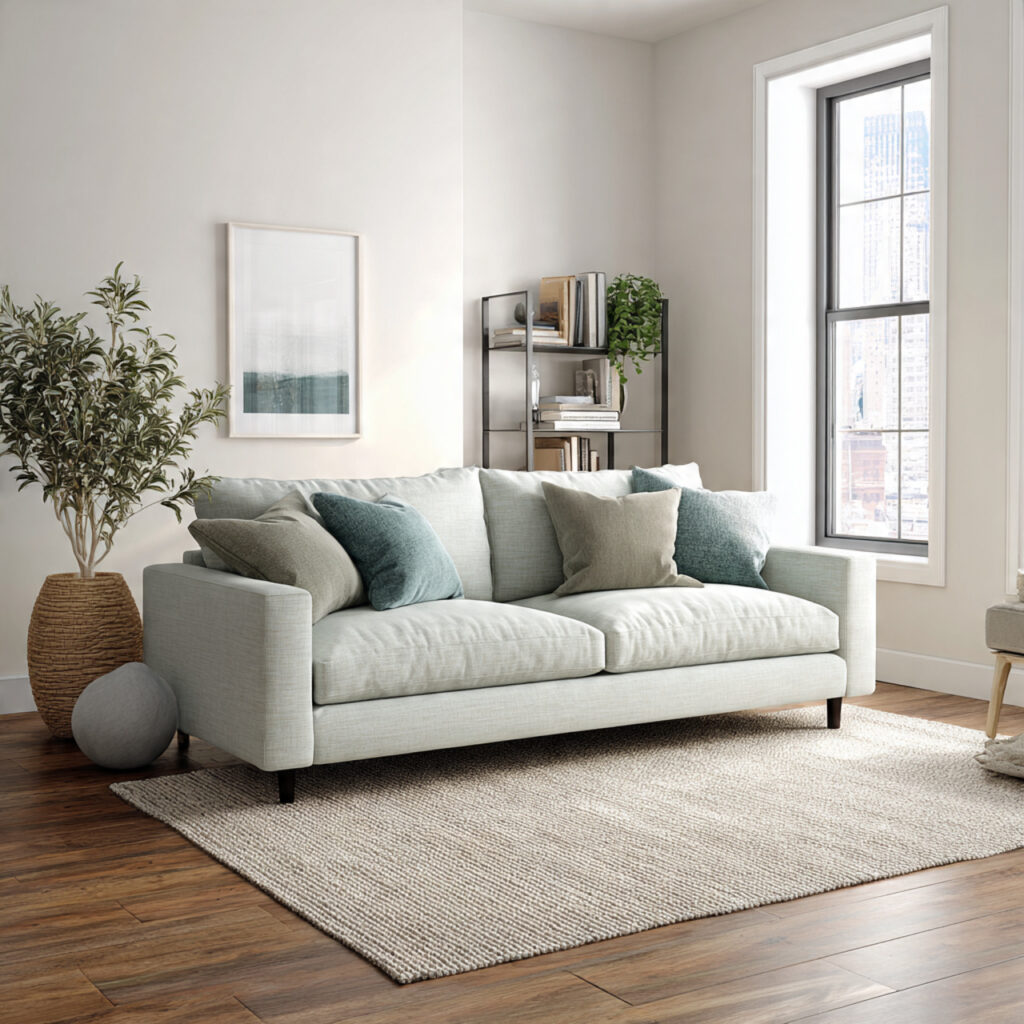
A minimal sofa provides a calm foundation for the living room. Clean lines reduce visual noise and support elegance. Neutral upholstery works best here. The room feels light and balanced.
Sage green cushions add color in a subtle way. They introduce freshness without overwhelming the space. This approach allows easy updates over time. The design feels flexible.
Limit cushions to a few well chosen pieces. Too many can disrupt calmness. Keep tones soft and coordinated. The living room stays serene and polished.
15. Open Layout With Sage Green Anchors
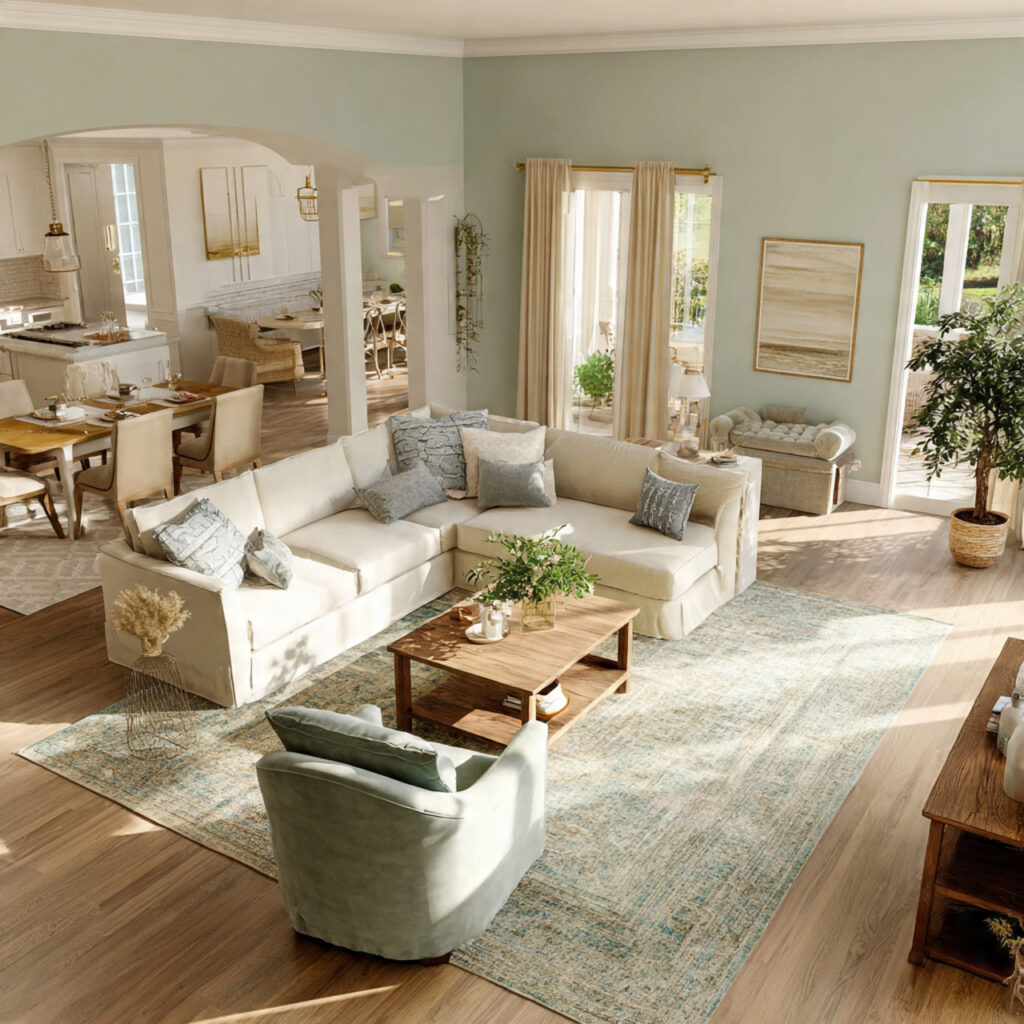
An open layout improves flow and comfort. It allows sage green elements to stand out naturally. This creates a relaxed and airy environment. The room feels spacious and calm.
Use sage green anchors like rugs or feature furniture. These pieces define the seating area clearly. Color feels grounded rather than scattered. The layout stays organized.
Avoid placing too many large pieces close together. Leave breathing room between furniture. This supports visual ease. The living room feels elegant and open.
16. Coffee Tables That Balance Color and Texture
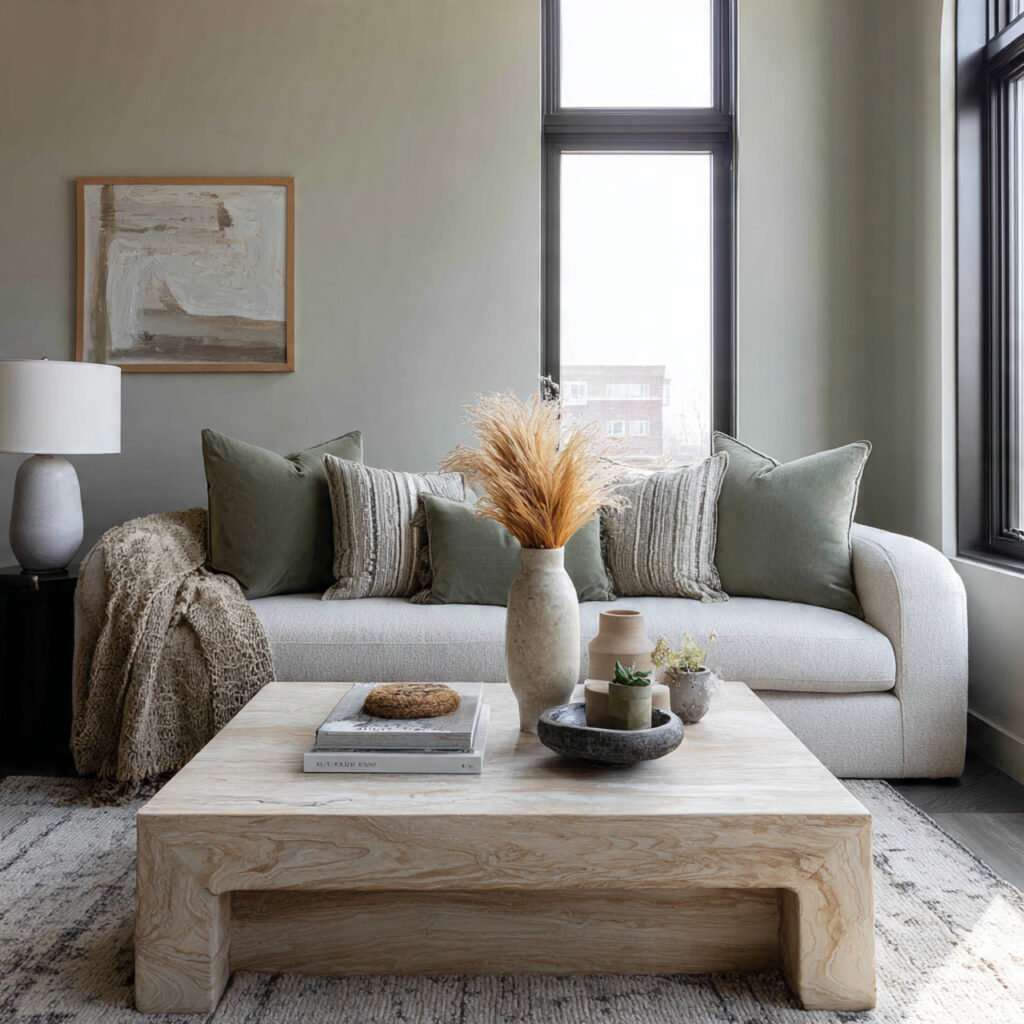
A simple coffee table keeps the center of the room clean. Wood or stone finishes pair well with sage green. These materials add texture without visual noise. The space feels grounded.
Sage green decor items work well on the table. Trays, books, or small plants add interest. Keep styling minimal and intentional. The look stays refined.
Avoid cluttering the table with many objects. Fewer items create calm. Balance is essential here. The living room feels thoughtful and elegant.
17. Floating Shelves With Sage Green Styling
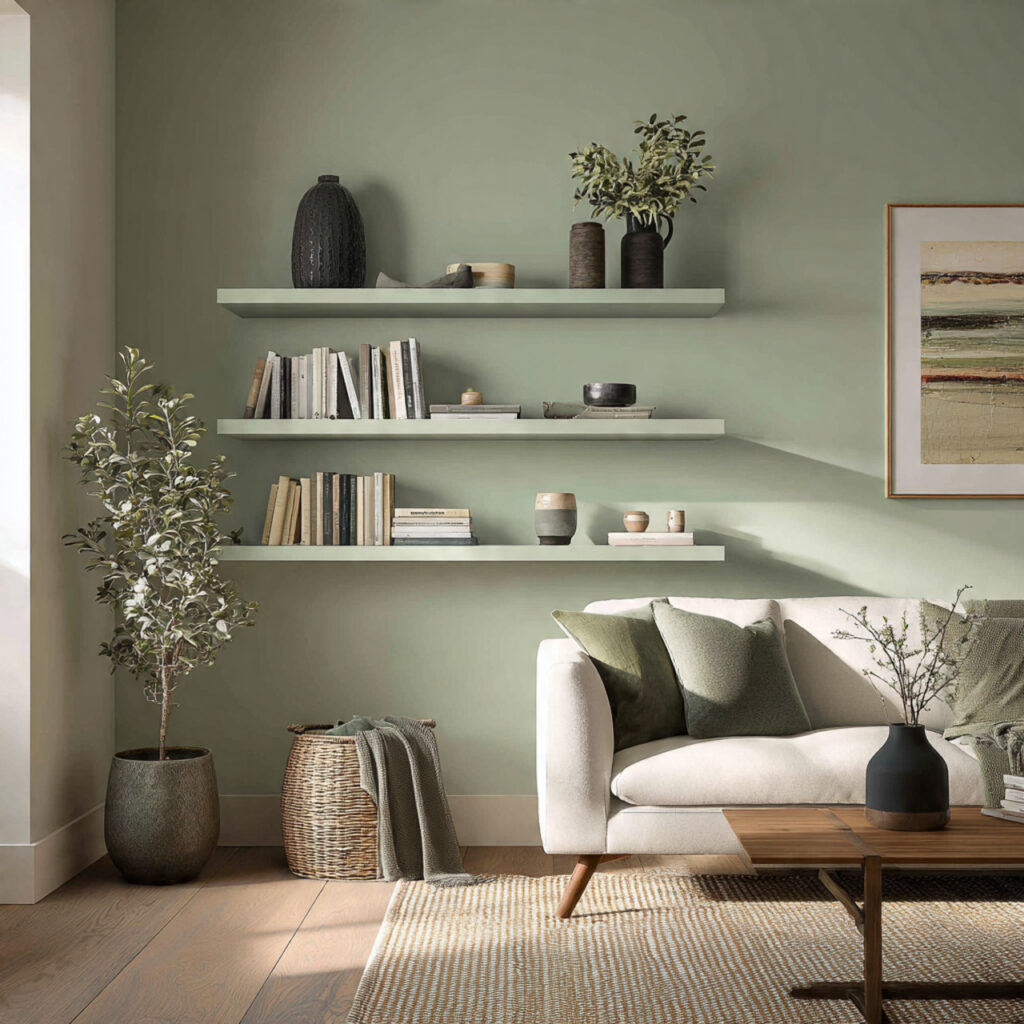
Floating shelves keep the room light and modern. They reduce floor clutter and improve flow. This supports a calm living room atmosphere. The design feels clean.
Style shelves with sage green accents and neutrals. Vases, books, or art work well. Keep spacing open between items. This prevents visual overload.
Avoid filling every shelf completely. Empty space improves balance. Let decor breathe. The living room feels composed and airy.
18. Layered Seating With Calm Color Harmony
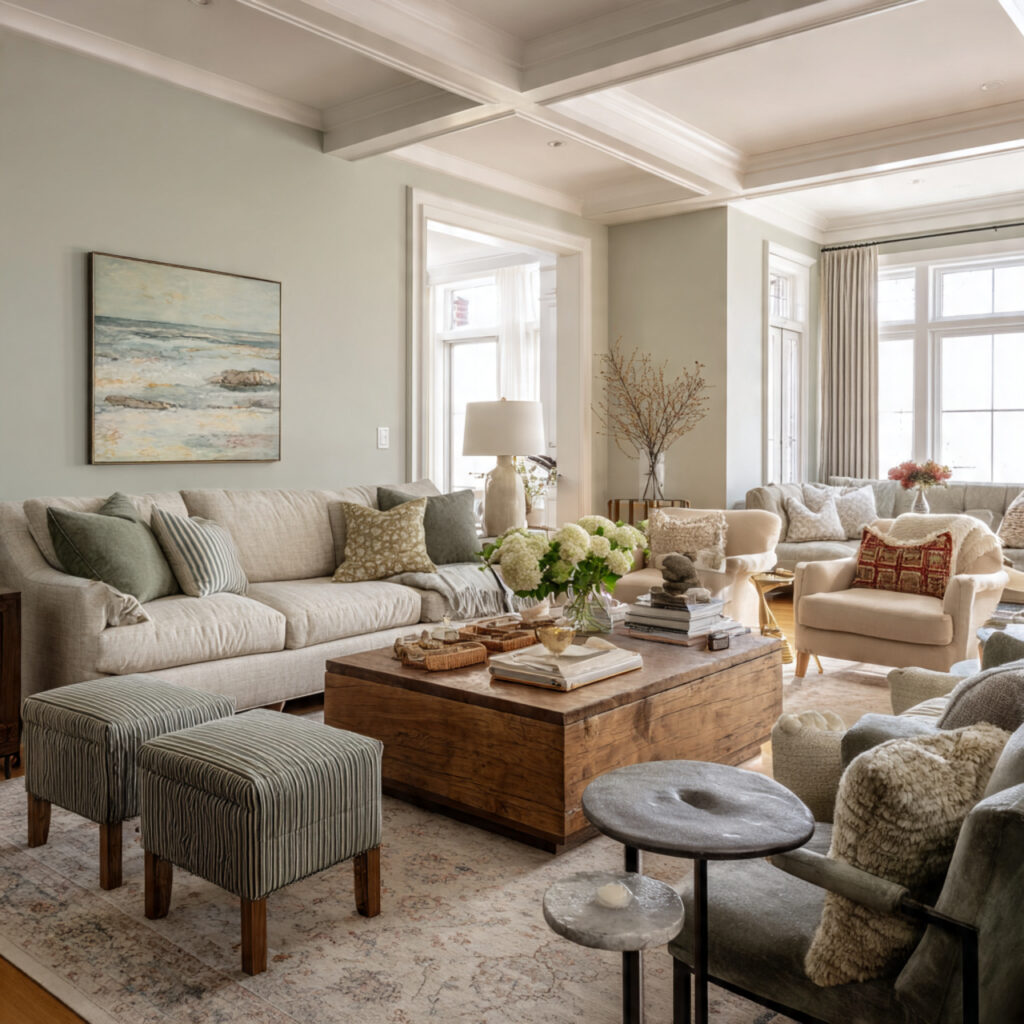
Layered seating improves comfort and usability. Combining sofas, chairs, and stools adds flexibility. This works well in family living rooms. The space feels welcoming.
Use sage green in one seating layer only. Keep other pieces neutral. This maintains harmony and calm. Color feels intentional.
Avoid mixing too many tones or patterns. Simplicity supports elegance. Keep shapes clean and balanced. The living room feels peaceful and refined.
19. Soft Lighting That Enhances Sage Green
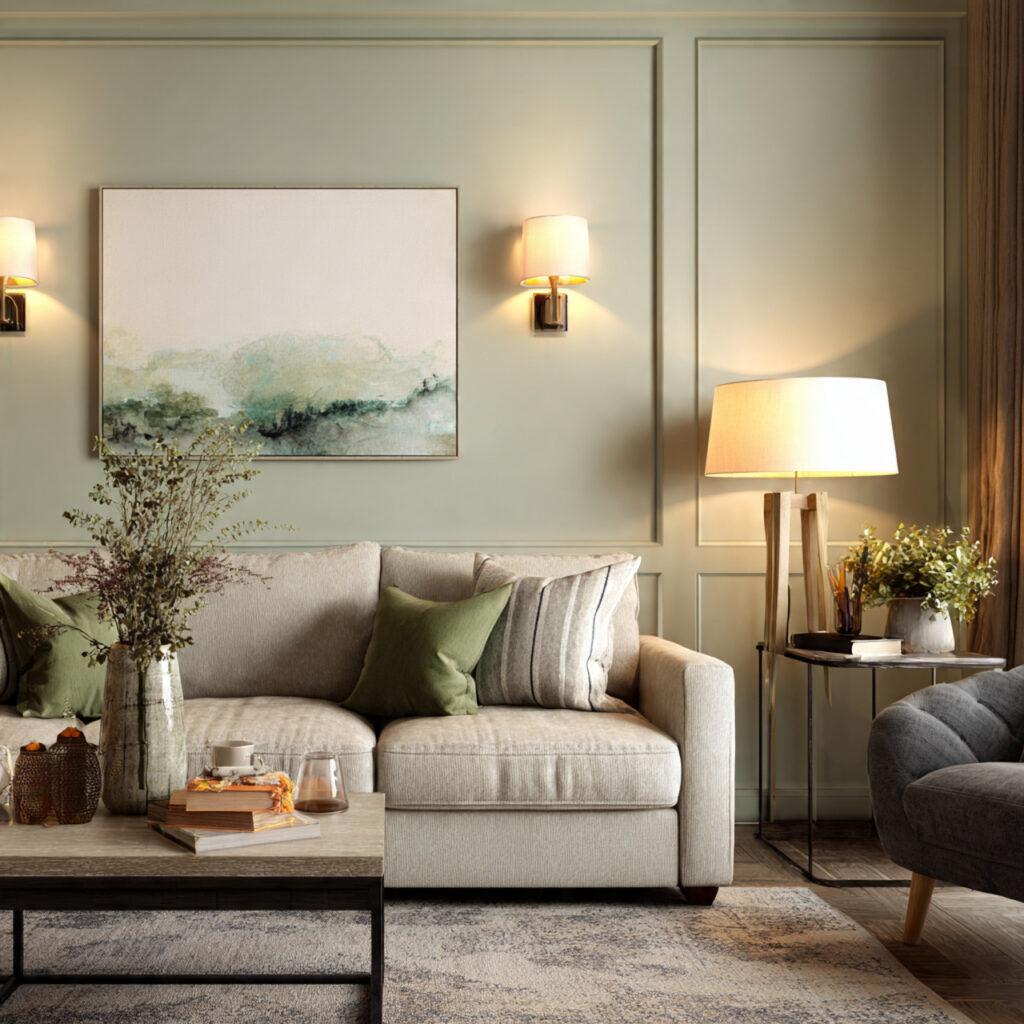
Soft lighting helps sage green look calm and elegant. Warm light reduces harsh contrasts and supports relaxation. It also highlights the natural softness of the color. The living room feels more inviting.
Table lamps and floor lamps work especially well. They create layered lighting instead of harsh brightness. This improves comfort during evenings. The space feels gentle and balanced.
Avoid cool or overly bright lighting. These tones can flatten sage green. Stick to warm bulbs only. The room stays soothing and refined.
20. Sage Green Curtains for a Polished Look
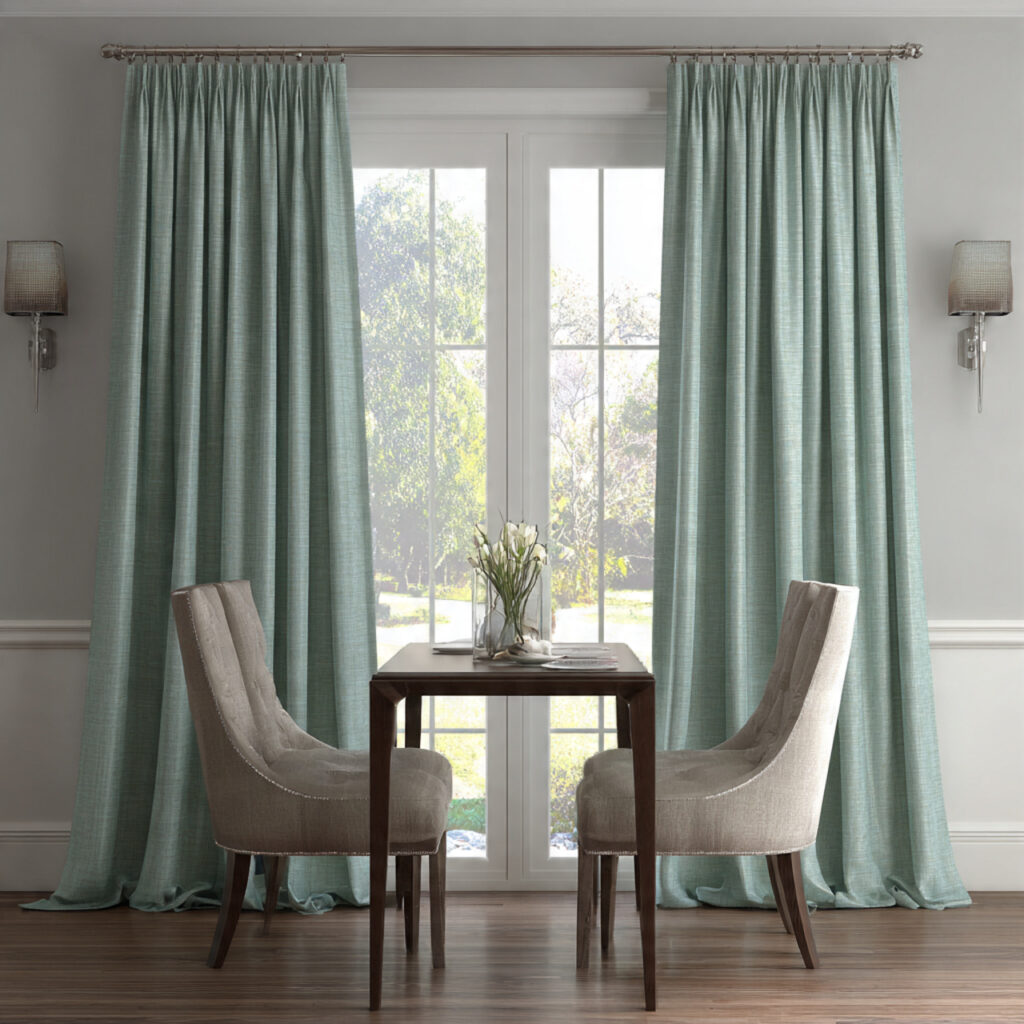
Sage green curtains add vertical softness to the living room. They frame windows in a calm and elegant way. This improves the overall flow of the space. The room feels more complete.
Choose lightweight fabrics for curtains. Linen or cotton works best with sage green. These materials keep the look relaxed. The space feels airy and fresh.
Avoid heavy or dark curtain fabrics. They can make the room feel closed. Soft textures maintain balance. The living room stays light and graceful.
21. Decorative Pillows With Subtle Sage Tones
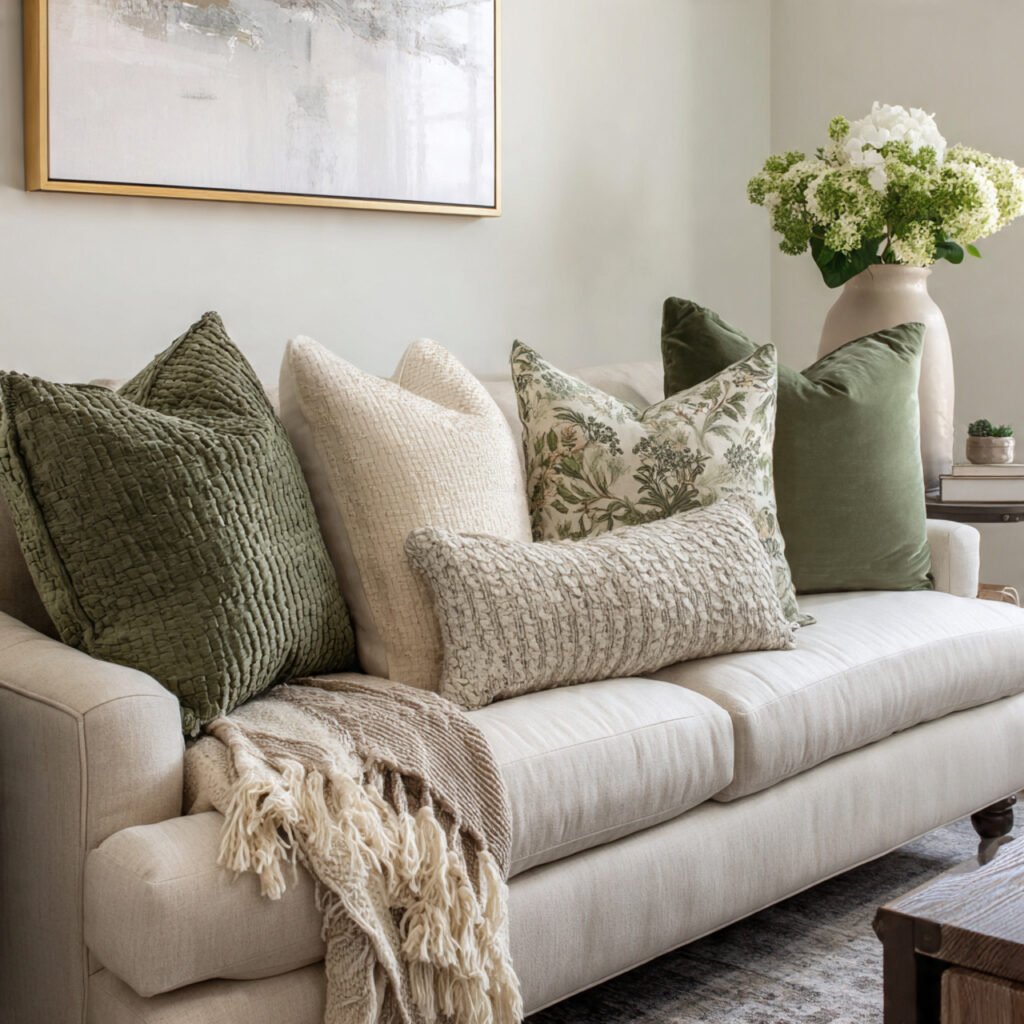
Decorative pillows are an easy way to add sage green. They introduce color without dominating the space. This works well for neutral sofas. The living room feels refreshed.
Mix sage green pillows with neutral tones. Cream or beige pairs beautifully. This keeps the look soft and elegant. Balance remains strong.
Avoid using too many pillows. Excess can disrupt calmness. Choose quality over quantity. The room feels composed and stylish.
22. Wall Art That Complements Sage Green
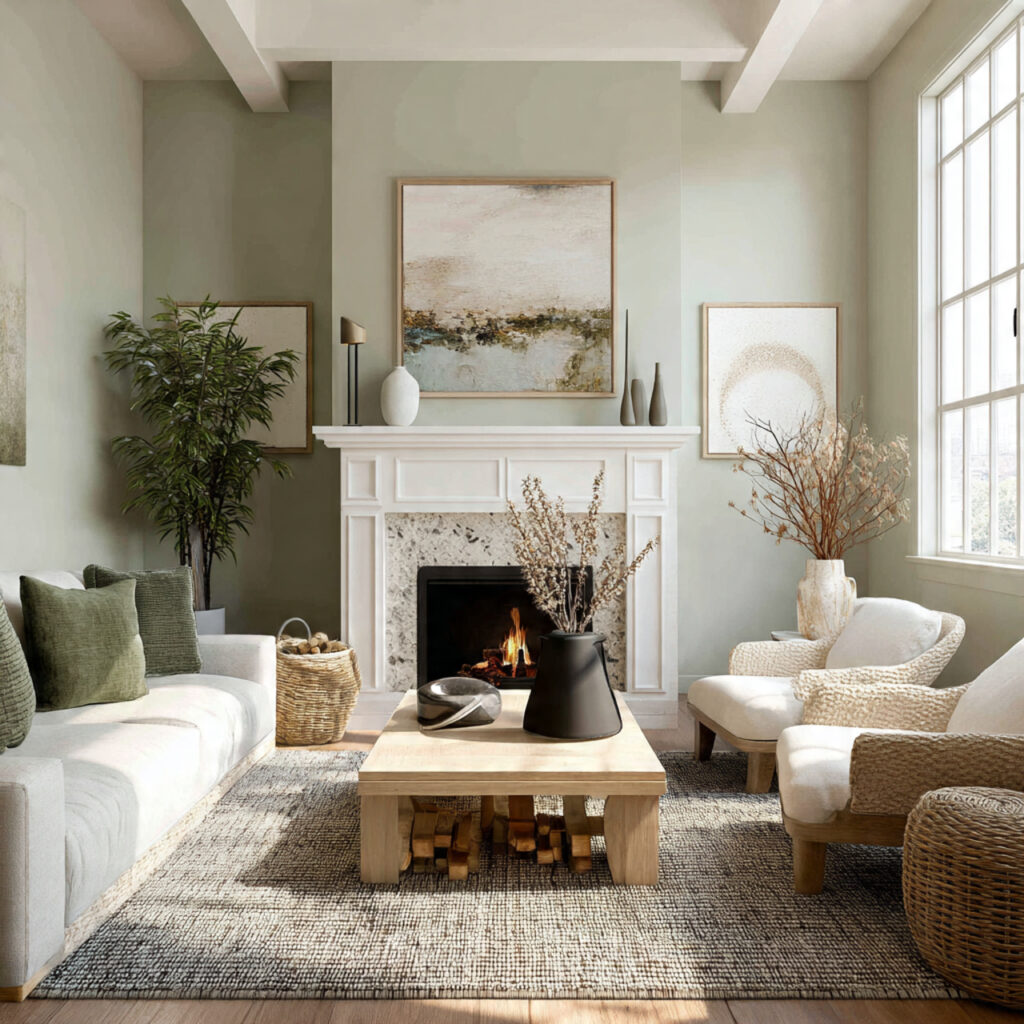
Wall art adds personality to a sage green living room. Nature inspired or abstract pieces work especially well. They support the calm theme naturally. The walls feel intentional.
Choose art with soft or earthy colors. Avoid loud or neon tones. This keeps the palette consistent. The room feels harmonious.
Limit wall art to one or two pieces. Too many visuals reduce calm. Give each piece space to breathe. The living room feels elegant and curated.
23. Natural Textures That Balance Color
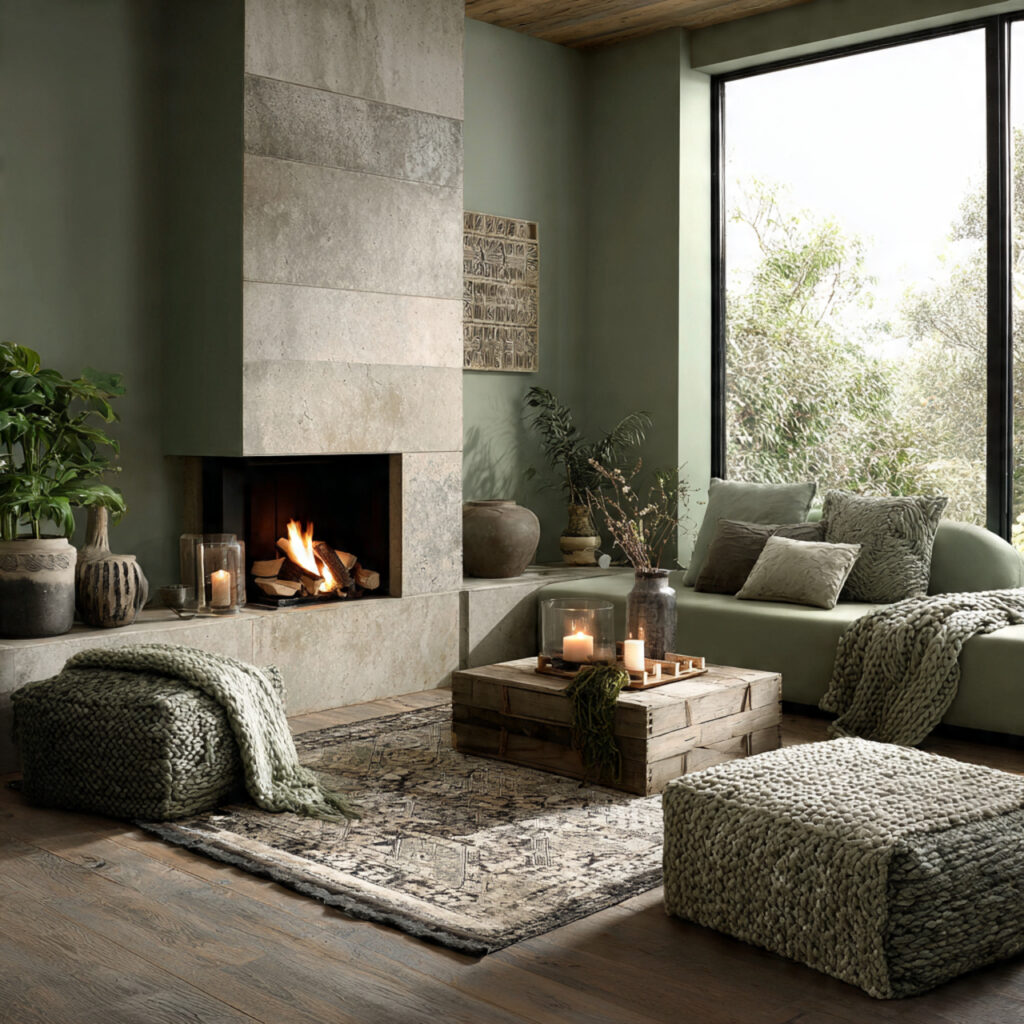
Natural textures improve warmth in a sage green living room. Materials like wool, cotton, or stone add depth. They soften smooth surfaces. The space feels more welcoming.
Use textured rugs, throws, or cushions. These elements enhance comfort visually and physically. They also balance the coolness of green. The room feels cozy.
Avoid synthetic or shiny textures. These break the natural flow. Stick to organic finishes. The living room stays calm and authentic.
24. Minimal Decor With Intentional Placement
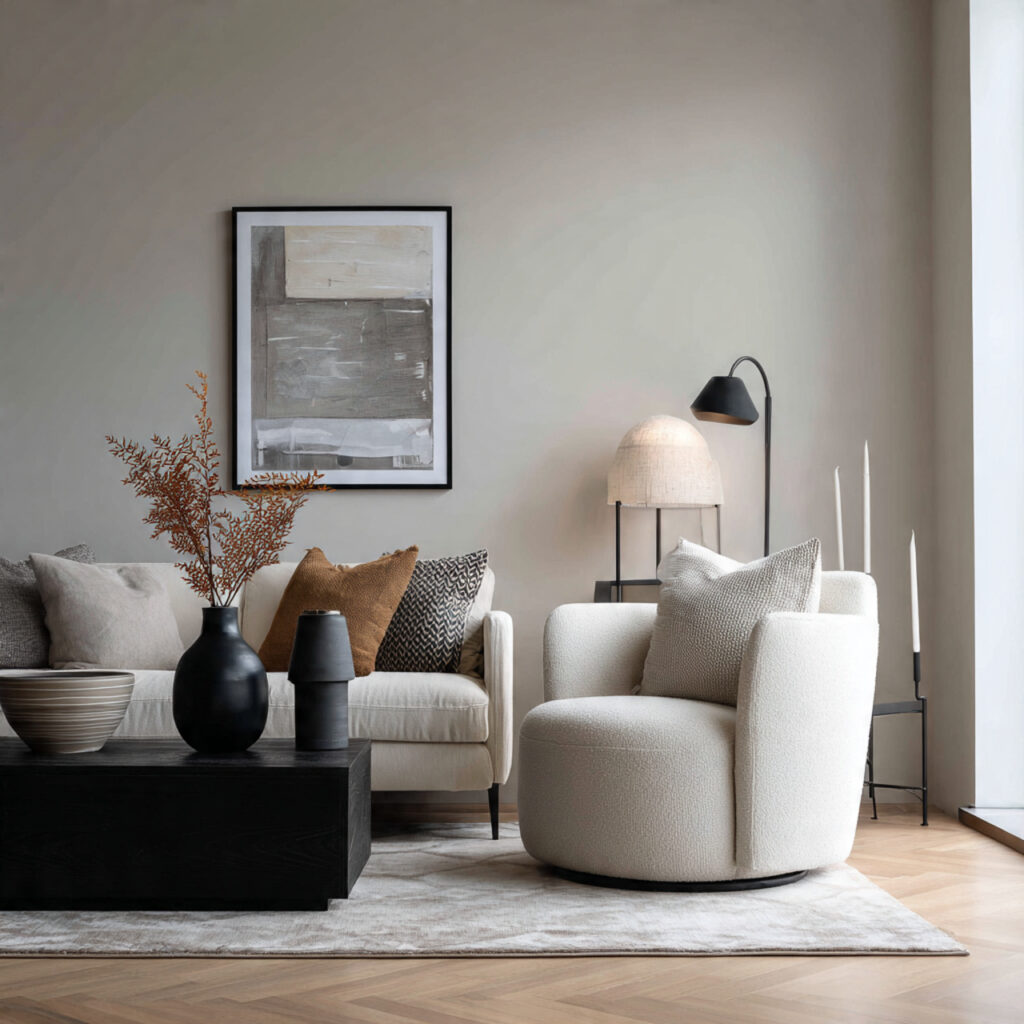
Minimal decor supports a calm and elegant atmosphere. Fewer objects reduce visual noise. This allows sage green to stand out gently. The room feels peaceful.
Place decor items with intention. Each piece should add value or meaning. This keeps the design thoughtful. The living room feels refined.
Avoid filling every surface with decor. Empty space improves balance. It gives the eyes rest. The space feels sophisticated and serene.
25. Sage Green Accessories for Subtle Coordination
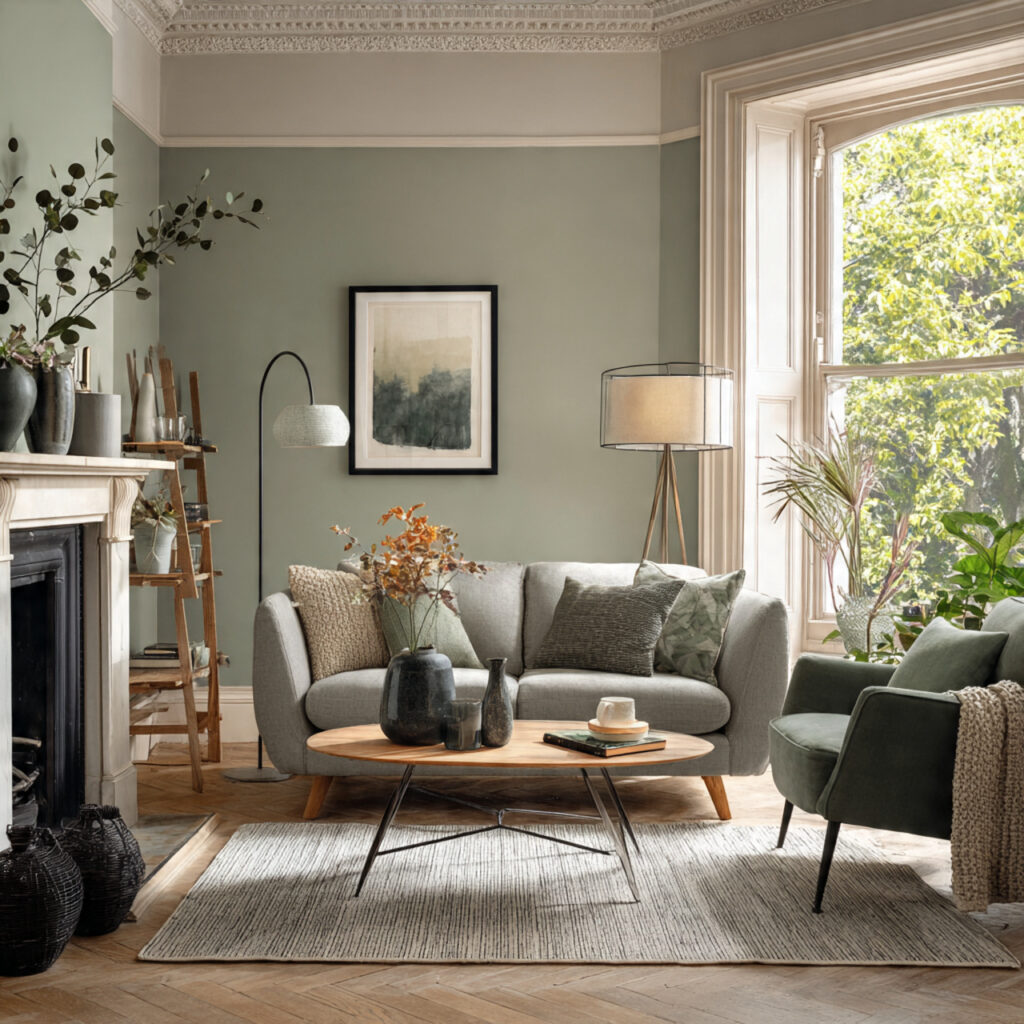
Sage green accessories help tie the living room together gently. Small items like vases, trays, or books add color without dominance. This creates a sense of unity across the space. The room feels thoughtfully styled.
Choose accessories in soft or muted sage tones. Avoid overly bright finishes or glossy textures. This keeps the look calm and refined. Color feels intentional rather than decorative.
Limit accessories to a few meaningful pieces. Too many items can create visual clutter. Simplicity strengthens elegance. The living room feels balanced and serene.
26. Open Space That Lets the Color Breathe
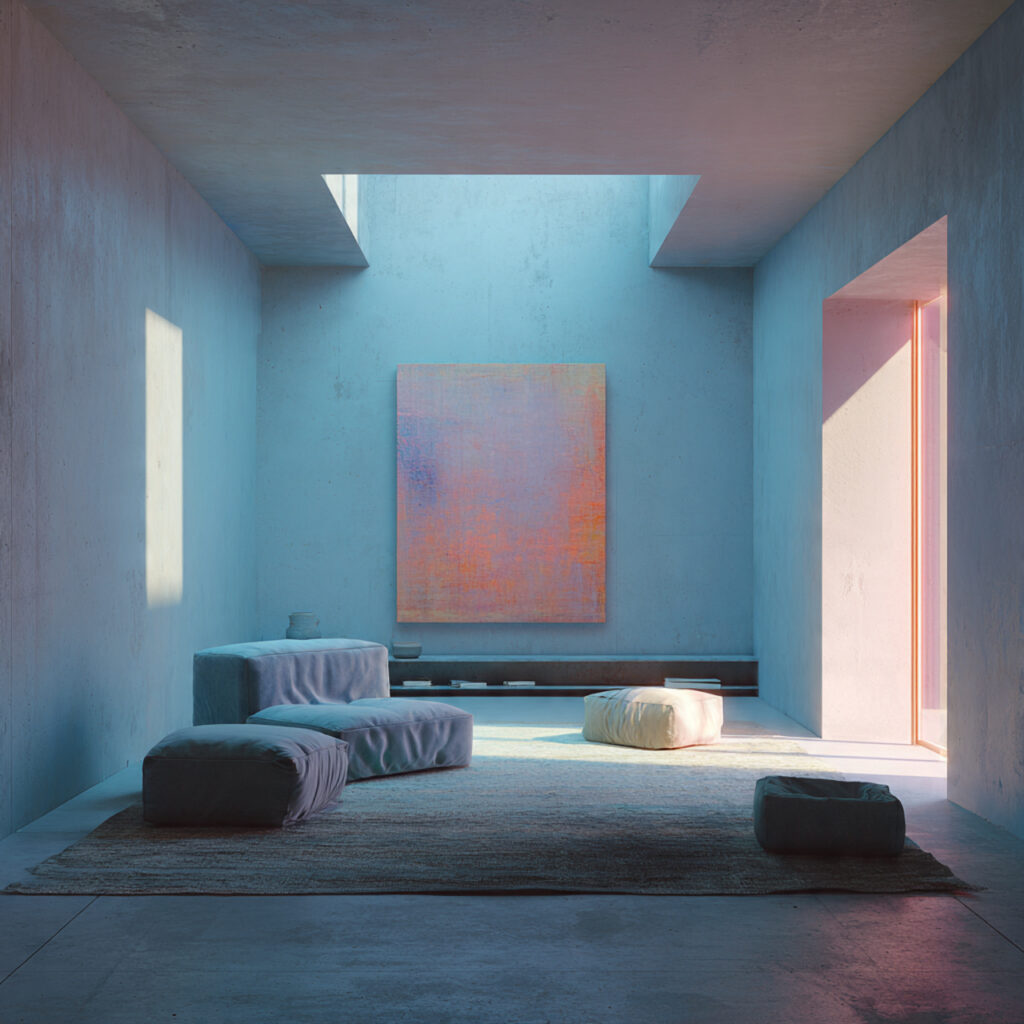
Open space plays an important role in elegant interiors. It allows sage green elements to stand out naturally. This improves visual comfort and flow. The room feels calm and spacious.
Avoid filling every corner with furniture or decor. Leave areas open to create balance. This makes the living room feel lighter. Color appears more sophisticated.
Open space also highlights textures and materials better. Wood, fabric, and greenery gain clarity. The design feels intentional. The room stays peaceful and elegant.
Conclusion
A sage green living room creates a sense of calm and timeless elegance. The color blends naturally with neutrals, wood, and soft textures. When used thoughtfully, it brings balance and comfort. The space feels welcoming and refined.
Each idea in this guide focuses on simplicity and intention. From furniture placement to lighting and accessories, every detail supports harmony. Sage green works best when paired with restraint. The living room remains visually soothing.
This style does not rely on trends or excess decor. It values softness, balance, and clarity. With careful choices, a sage green living room stays beautiful for years. Your space becomes calm, elegant, and enduring.