You don’t have a dedicated room for reading. You don’t have a bay window or a built-in alcove or a spare bedroom waiting to be transformed. What you have is a small apartment, a busy house, and a deep, persistent wish for one quiet corner that belongs entirely to you and your books.
Here’s the thing: that corner already exists in your home. You just haven’t claimed it yet.
A small reading corner doesn’t require square footage, it requires intention. The narrow gap beside the wardrobe, the unused bedroom corner, the small wall beside the window that currently holds nothing, these are all waiting to become the most loved spot in your home. Interior designers consistently confirm that the smallest, most purposefully designed spaces deliver the highest emotional return in any home. One thoughtfully created corner that feels genuinely yours can change the quality of your daily life in a way that a full room renovation sometimes can’t.
And the timing has never been better. Small-space reading corners have become one of the most loved and most adapted home ideas across apartments and smaller homes in the US, Canada, the UK, and Australia, proof that the desire for a personal reading escape is universal, and that space is rarely the real barrier.
These 21 ideas are built for genuinely small spaces. Not aspirationally small. Actually small. Let’s find your corner.
Why Small Reading Corners Work Better Than You’d Expect
The Psychology of Small, Defined Spaces
There’s a reason the smallest seats in coffee shops fill first. Humans are instinctively drawn to spaces with some sense of enclosure, a back wall, a low ceiling, the feeling of being slightly tucked away from the open room. Psychologists who study restorative environments call this “prospect and refuge”, we feel safest and most relaxed when we can see out while feeling sheltered.
A small reading corner works with this instinct perfectly. Its very smallness creates the enclosure that makes it feel like a retreat rather than just furniture in a room. The corner walls behind the chair, the lamp casting its circle of warmth, the books within reach, together they create a micro-environment that signals to the brain: this is where we rest and enjoy. The size is a feature, not a limitation.
Also Read: https://myhavenvibes.com/cozy-reading-nook-ideas/
The Four Non-Negotiables
Before any ideas, here are the four things every small reading corner absolutely needs to function beautifully: a seat that’s genuinely comfortable for reading (not just sitting), a light source positioned correctly for the eyes, books within arm’s reach, and enough physical warmth and softness to stay put for an hour. Small corners can deliver all four. The ideas ahead show exactly how.
Seating Ideas Scaled for Small Spaces
In a small reading corner, the seat sets everything. These ideas are proportioned to fit where larger furniture can’t.
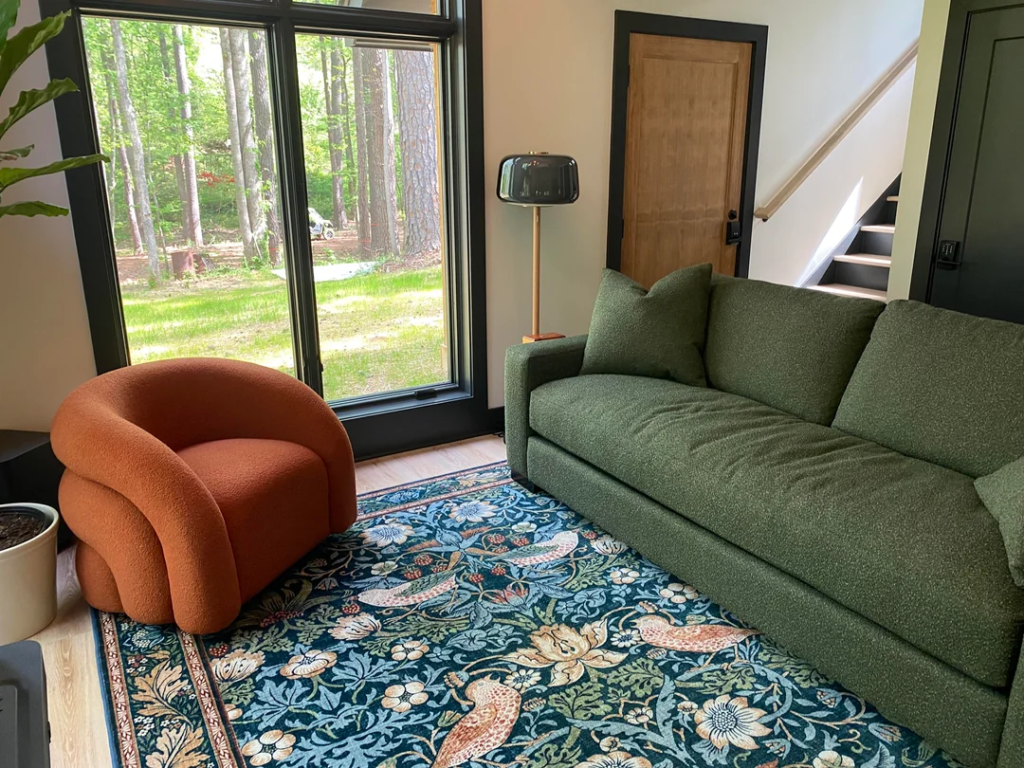
1. A Compact Armchair With a Small Footprint
Why It Works
A compact armchair, one specifically designed with a smaller footprint than a standard reading chair, delivers the full comfort and enclosure of a proper reading seat in a fraction of the floor space. Many people assume a reading chair needs to be large to be comfortable. The right compact chair, with proper depth and back support, reads every bit as well as its oversized equivalent.
How to Choose One
Look for armchairs with a seat width of 24-28 inches rather than the standard 32-36 inches, and a seat depth of at least 20 inches for comfortable leg support. A chair with a slightly angled back, not fully upright, supports the reclined-but-not-flat position that extended reading requires. Avoid armchairs with heavily padded, bulging arms that add width without adding comfort, slim arms keep the footprint tighter.
Common Mistake
Choosing a compact chair that’s too upright because it looks neater in a small space. A reading chair that sits you bolt upright will have you migrating to the sofa within thirty minutes. Comfort is the entire point, a slight backward angle in the backrest makes all the difference for extended reading sessions.
Read More: https://myhavenvibes.com/neutral-aesthetic-home-decor/
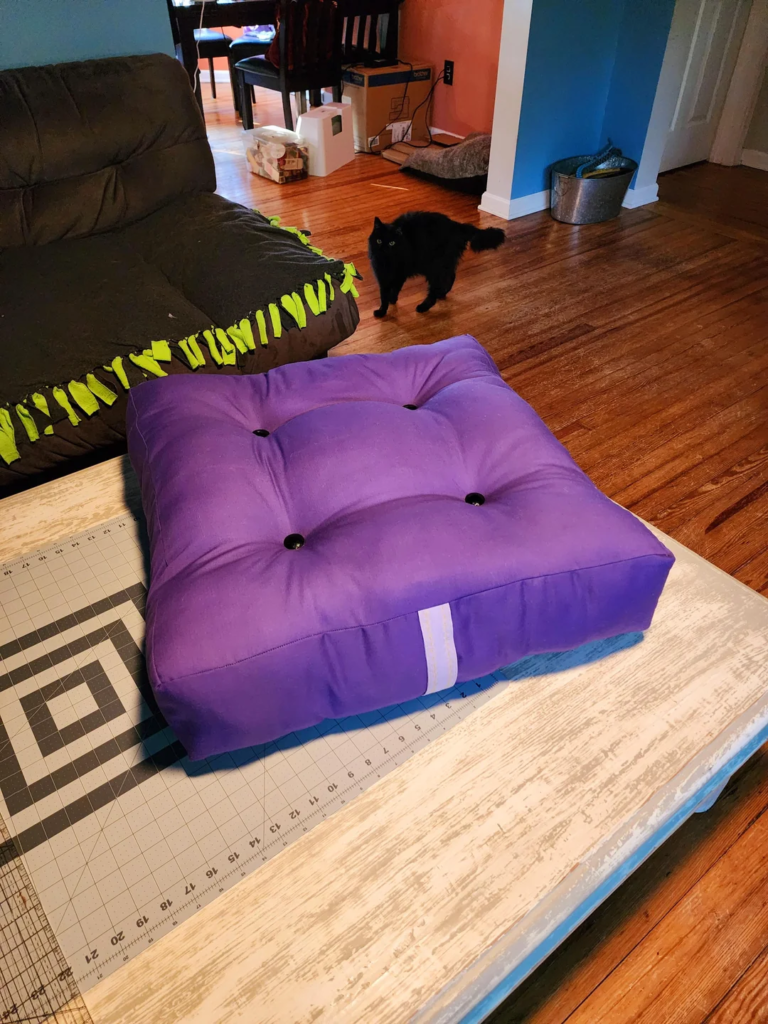
2. A Floor Cushion Setup in a Tight Corner
Why It Works
A floor cushion reading setup, one or two large floor cushions stacked against a corner wall, with a bolster for back support, takes up almost no floor space when not in use and creates a genuinely cozy reading spot when arranged. It’s the most space-efficient seating solution for a small reading corner and one of the most visually appealing in the right aesthetic context.
How to Create It
Two oversized floor cushions in a warm neutral fabric, stacked against the wall in the corner. A cylindrical bolster cushion for lumbar support. A small tray beside it at floor level for a mug and a lamp. A soft rug underneath to define the zone and add warmth. The whole arrangement can be tucked against the wall and largely forgotten when not in use, then pulled into position for reading in moments.
Insider Tip
Floor cushion setups work best with a wall lamp positioned at reading height rather than a floor lamp, which takes up too much space in a small floor-level corner. A wall-mounted swing-arm lamp at about shoulder-when-sitting height is the ideal light source for this configuration.
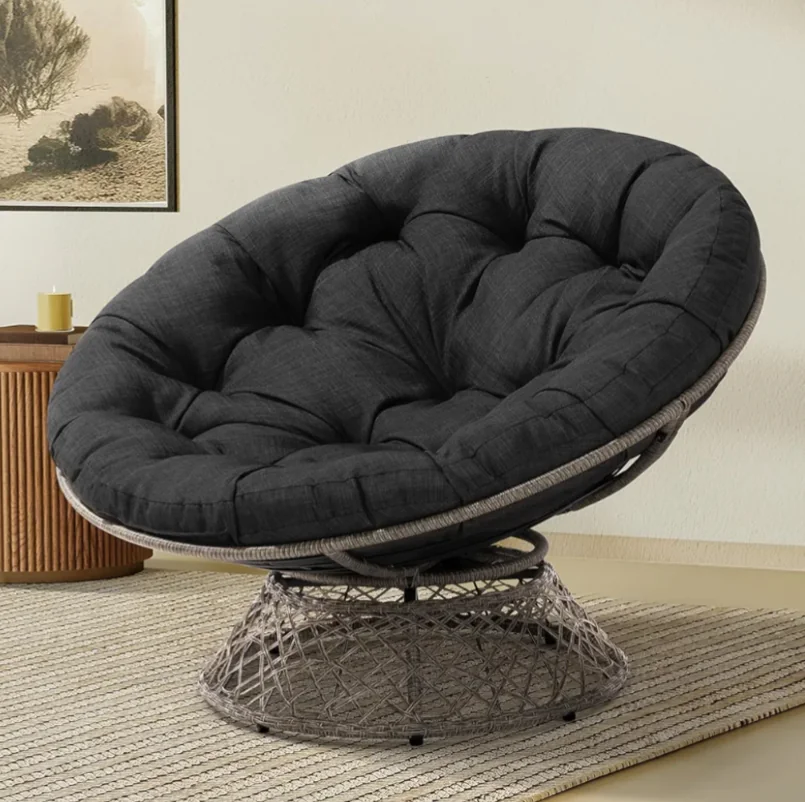
3. A Papasan or Egg Chair for Enclosed Comfort
Why It Works
A papasan or egg-shaped chair has a naturally enclosed, cocoon quality, the curved sides wrap around the reader, creating a sense of personal space within the larger room. Despite their visual presence, many papasan and egg chairs have a relatively modest floor footprint and provide a reading experience that feels uniquely separate from the rest of the home.
How to Position One
Position the papasan or egg chair facing away from the room’s main activity, toward a wall, a window, or a bookshelf rather than toward the television or the door. This orientation intensifies the separated, private quality of the reading experience within the chair and reduces the visual pull of other activities in the room.
Common Mistake
Choosing a papasan with a frame that’s too wide for the corner. Measure the available space carefully before purchasing, the outer diameter of the frame (not just the cushion) determines the footprint. Many models are available in both standard and smaller junior sizes.
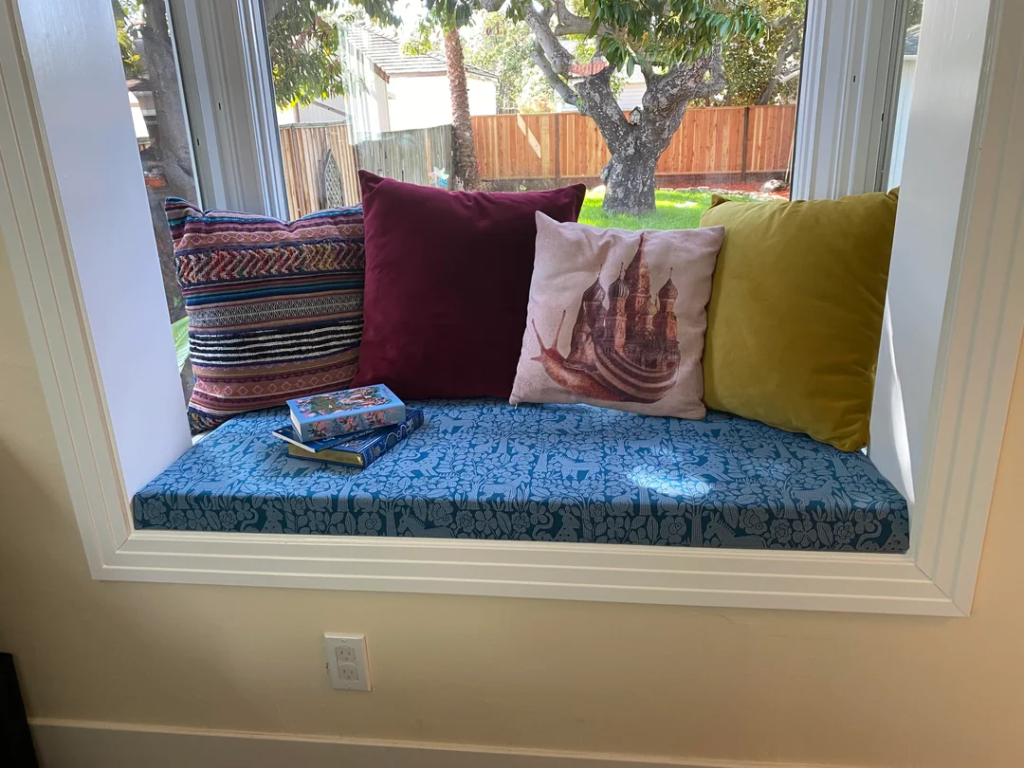
4. A Window Seat Cushion With No Frame Required
Why It Works
If your home has any window with a ledge or a deep sill, even one that currently holds plants or nothing at all, a thick cushion placed on that sill creates an instant window seat reading corner. No building, no installation, no cost beyond the cushion itself.
How to Do It
Measure the sill depth and width. Order or have made a foam cushion covered in durable fabric, at least 3 inches of foam thickness for comfortable sitting. Add two or three back cushions propped against the window frame. The result is a window seat reading corner that uses space that was previously purely decorative.
Insider Tip
A window sill reading spot is most comfortable with a small draught-excluding cushion along the bottom edge of the window, sill-level sitting can feel cold in winter when the window glass is closed. A thermal liner on the curtains also helps maintain warmth for year-round use.
5. A Folding Chair With a Good Cushion
Why It Works
For the smallest possible spaces, or for readers who want flexibility, a quality folding chair with a thick seat cushion can be set up for reading and folded away when the space is needed for something else. The best folding chairs in wooden or metal construction are genuinely beautiful objects that don’t look utilitarian even when open.
How to Choose One
Avoid the cheapest plastic folding chairs, they’re uncomfortable and aesthetically limiting. Look for wooden folding chairs in natural or painted finishes that take a proper cushion well. A cushion that ties onto the chair seat stays in place during reading without sliding. When folded, the chair leans flat against the wall in approximately 2 inches of depth, freeing the floor entirely.
The seating sets the stage. The small-space lighting and book storage ideas ahead are what transform a chair in a corner into a genuine reading escape, keep going.
Lighting Ideas That Work in Small Corners
Good light is non-negotiable for reading. These ideas deliver it without requiring space you don’t have.
6. A Wall-Mounted Swing-Arm Lamp
Why It Works
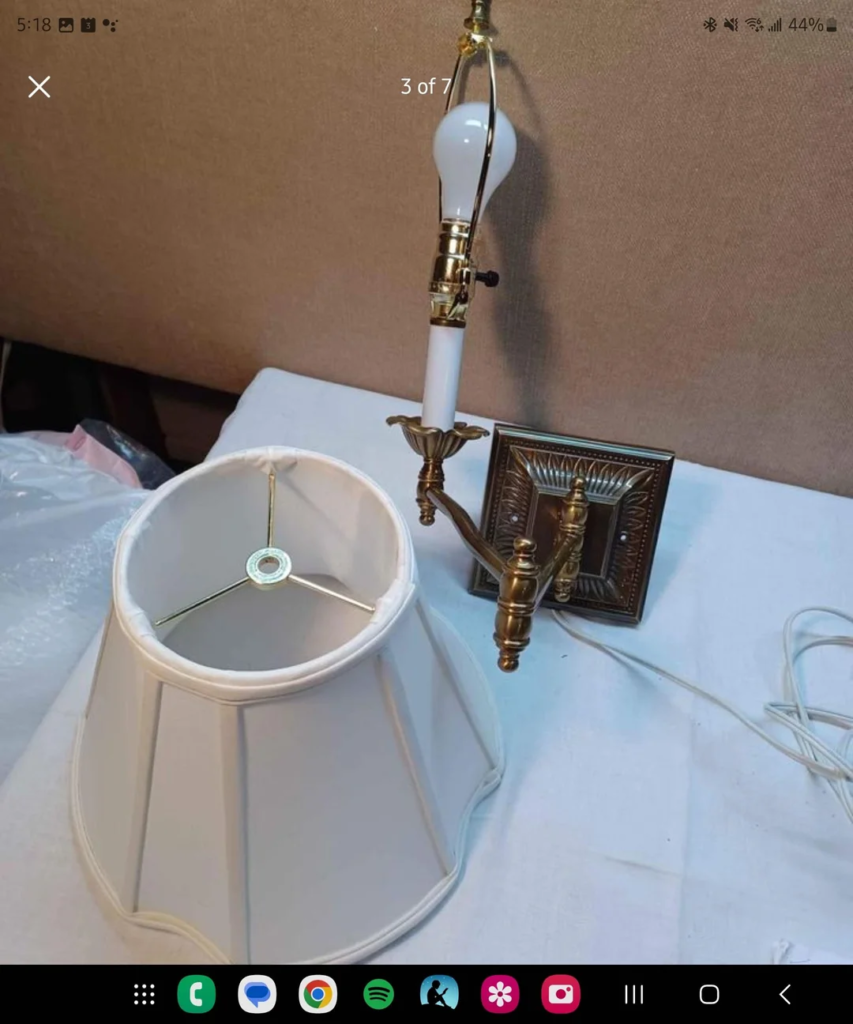
A wall-mounted swing-arm lamp is the single most space-efficient reading light available. It mounts directly to the wall, requires no floor space whatsoever, and its articulating arm allows precise positioning, forward, backward, up, down, to direct light exactly where it’s needed for the reader’s height and posture.
How to Install One
Most plug-in swing-arm lamps require only two screws and access to an outlet, the cord runs down the wall and can be concealed in a cable channel for a clean finish. Hardwired versions require an electrician but leave no visible cord. Mount the lamp on the wall directly beside or slightly behind the chair, at a height where the shade positions the light source above the reader’s eye level and directs light down onto the page.
7. A Slim Floor Lamp That Arcs Over the Chair
Why It Works
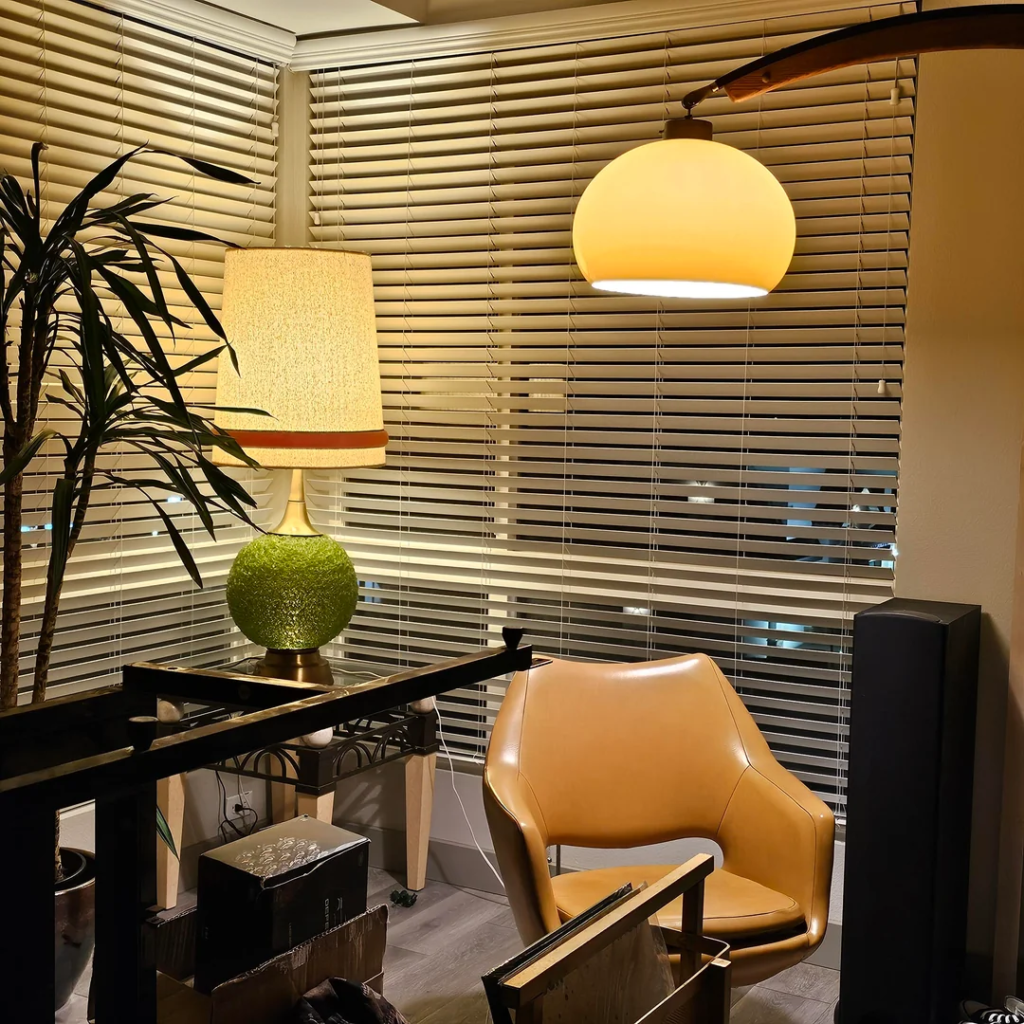
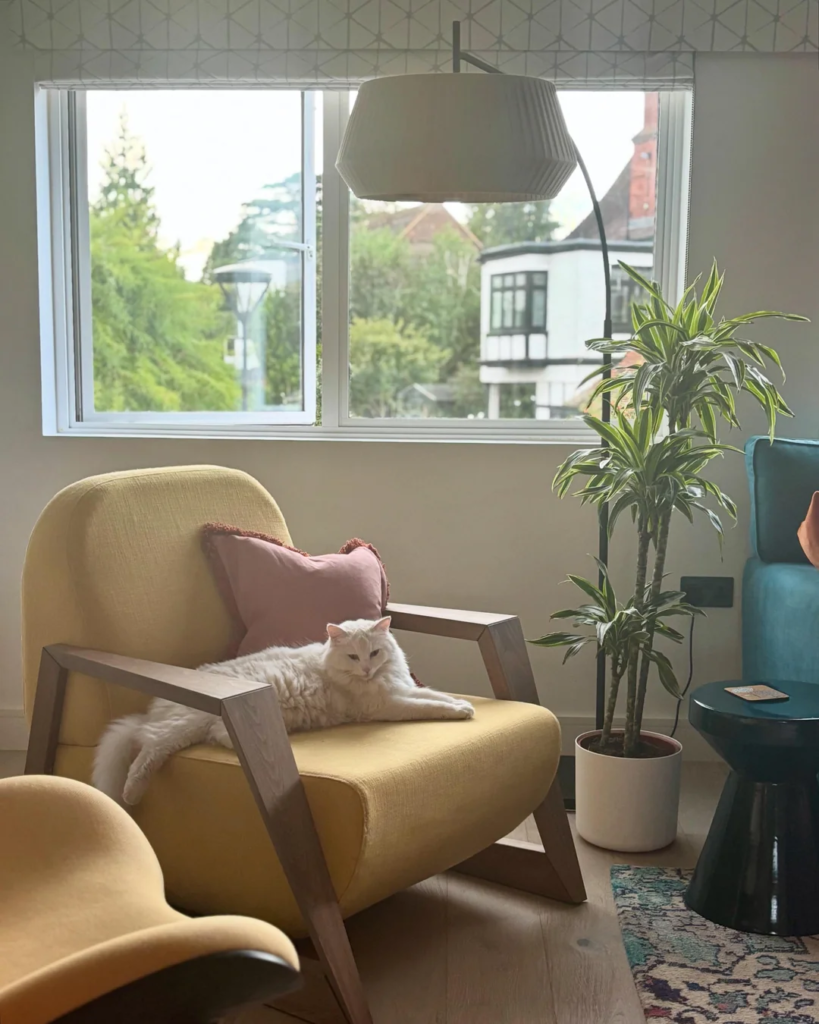
A slim arc floor lamp, one with a narrow base and a long, curved arm that positions the light directly above the reading chair, provides perfect overhead reading light without requiring the lamp base to be beside the chair. The base can sit behind or beside the chair with minimal floor impact.
How to Choose One
Look for arc lamps with a base footprint of 10 inches or less, these can tuck behind the chair or in the corner gap beside it. The arc should extend far enough to position the shade above and slightly in front of the reader’s head. A downward-facing shade concentrates light on the reading material rather than dispersing it around the room.
Common Mistake
Buying an arc lamp with a large, decorative base that takes up more floor space than the chair. In a small reading corner, the lamp base needs to disappear behind or beside the chair, not compete with it for floor space.
8. Clip-On or Clamp Reading Lights
Why It Works
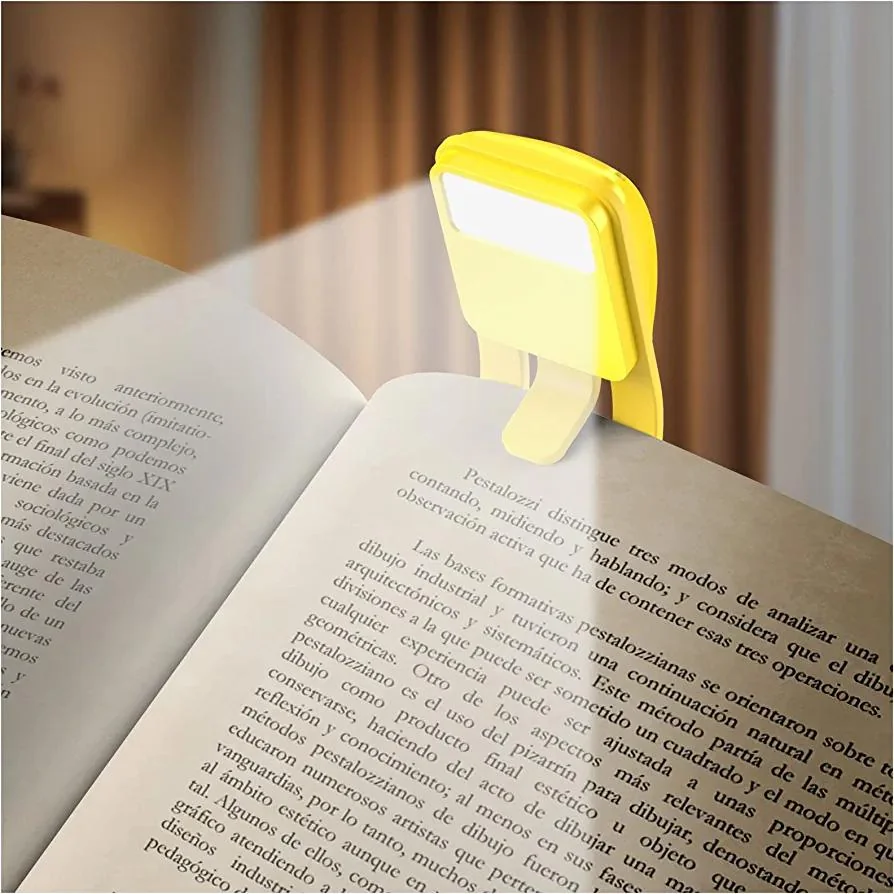
A clip-on reading light, one that attaches directly to the book, to a side table, or to a shelf above the chair, provides focused, personal reading light in the tightest possible spaces where no floor or wall lamp is practical. Modern LED clip lights are warm, adjustable, and genuinely adequate for extended reading.
How to Use Them
Clip-on book lights attach to the cover or pages of the book and travel wherever the book goes. Clamp lights that attach to shelves or table edges provide a fixed light source at the right angle without requiring any installation. In a floor cushion reading setup where wall and floor lamps are impractical, a good clip light is the most elegant solution.
9. String Lights for Atmosphere
Why It Works
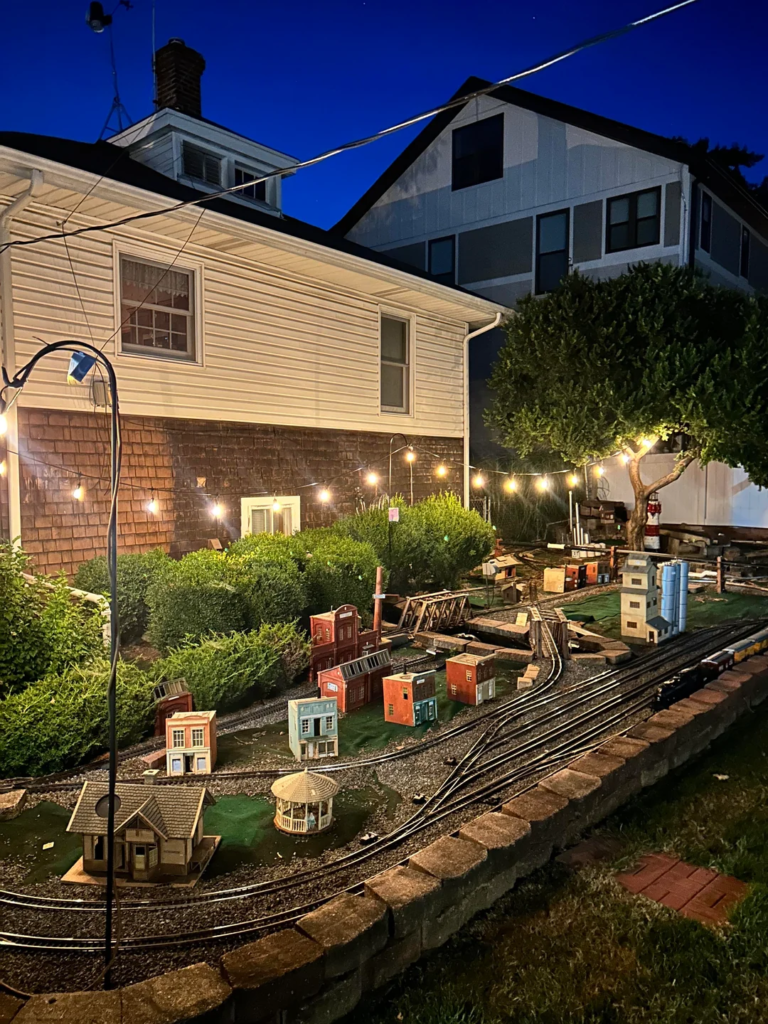
String lights in a reading corner don’t replace proper reading light, they supplement it with the warm, magical atmosphere that makes a small corner feel genuinely special rather than just functional. Draped along a wall, looped around a nearby shelf, or hung above the reading area, warm string lights transform the mood of the corner completely.
How to Use Them
Layer string lights with a proper reading light, the string lights create the atmosphere, the reading light provides the illumination. Battery-operated warm white string lights with Edison-style filament bulbs are the most beautiful and most versatile option for a small reading corner, requiring no outlet proximity and providing warm, amber light at a level perfect for ambient effect.
Book Storage Ideas for Tiny Corners
The books need to be closed. These ideas keep them there without using space you can’t spare.
10. Floating Shelves at Arm’s Reach
Why It Works
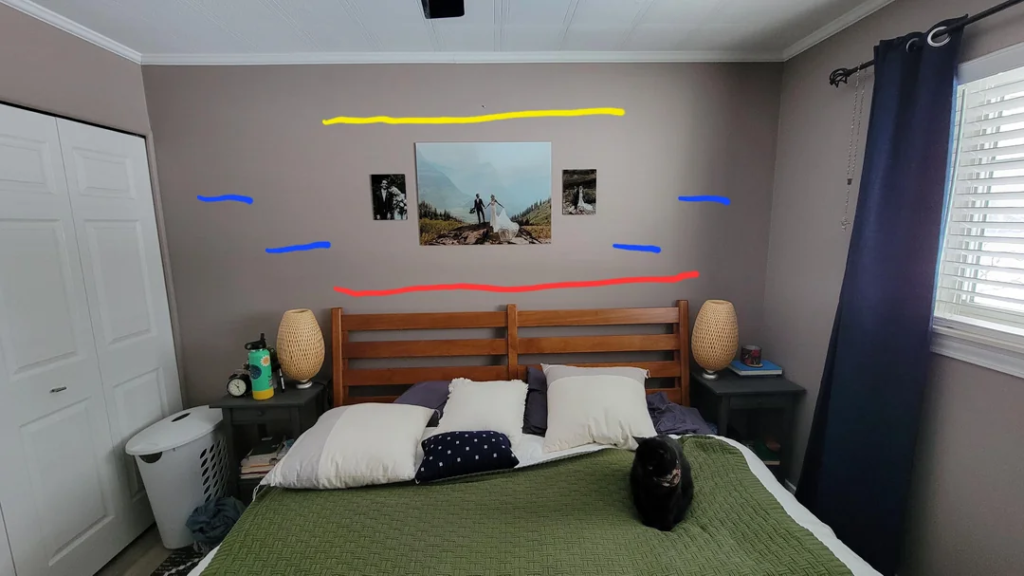
A cluster of two or three floating shelves on the wall beside or above the reading chair, positioned within natural arm’s reach from the seated position, keeps current reads accessible without requiring any floor furniture. The shelves store books, hold a small plant, display a candle, and contribute to the visual definition of the reading corner.
How to Position Them
Mount the lowest shelf at approximately the height of the seated reader’s shoulder, this is the reach-without-stretching zone. Add one or two shelves above at 10-12 inch intervals. Keep the shelves appropriately loaded, not crammed to capacity, with some breathing room between books and a few small decorative objects to break up the purely utilitarian feel.
Common Mistake
Mounting shelves too high above the chair to reach comfortably. Shelves that require standing to access aren’t genuinely part of the reading corner, they’re just wall storage near the chair. The whole appeal of having books near the reading chair is the ease of reaching a new book without leaving the seat.
This is a great moment to save your favorite ideas from this section, the comfort and personalization ideas ahead make the small reading corner feel completely and unmistakably yours.
11. A Wall-Mounted Book Ledge
Why It Works
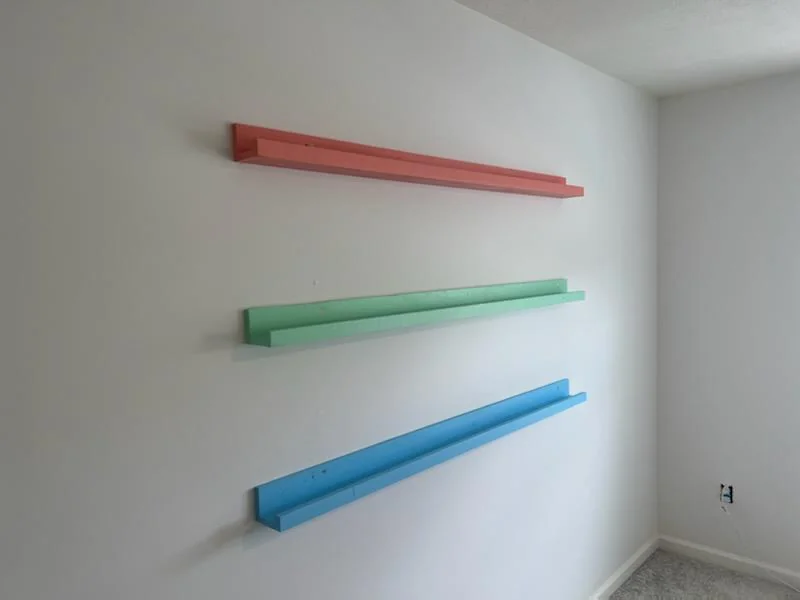
Book ledges, shallow wall-mounted ledges with a small lip that hold books face-out rather than spine-out, display books as art as well as storing them. In a reading corner, a wall-mounted book ledge keeps the current reading rotation visible and accessible in a footprint of approximately 3-4 inches of wall projection.
How to Style It
One book ledge holds 8-12 books displayed face-forward. Stack two ledges vertically for double the capacity in the same wall width. Mix books with small plants, candles, or personal objects for a displayed arrangement that feels curated rather than purely functional.
12. A Hanging Rope Shelf
Why It Works
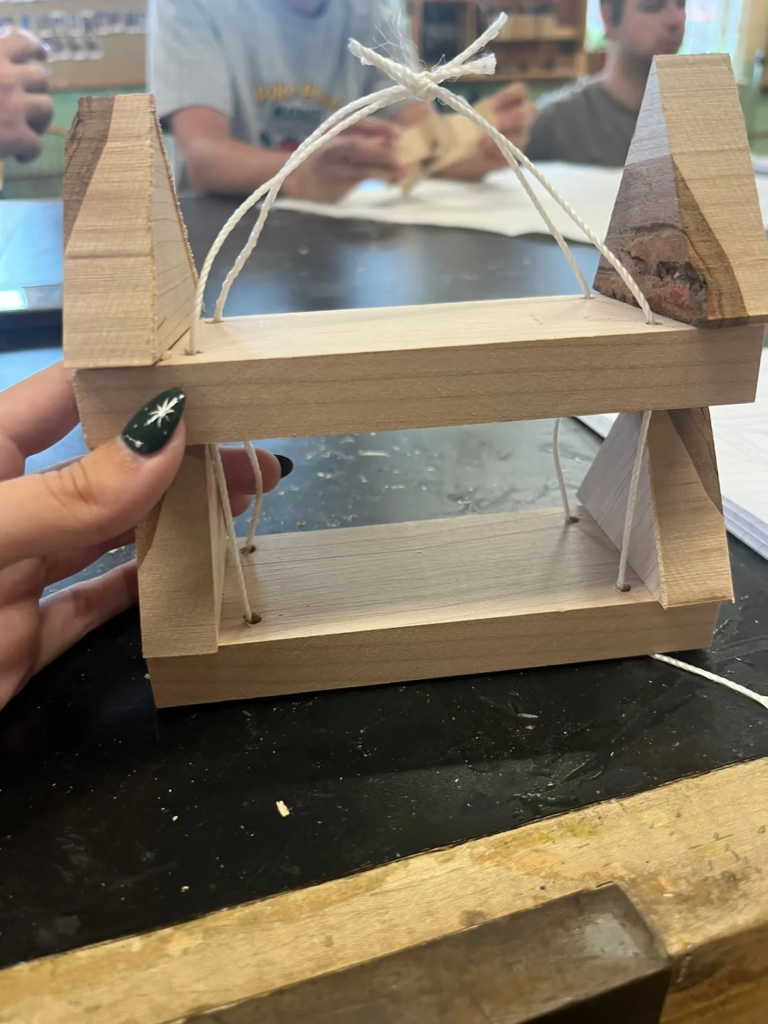
A hanging rope shelf, suspended from the ceiling or from a wall-mounted hook, holds books and small items in a slim, floating arrangement that uses vertical space without adding any floor footprint. The casual, artisan quality of rope shelving suits the cozy reading corner aesthetic particularly well.
How to Create One
Simple hanging rope shelves are available ready-made or can be made from a wooden plank and thick natural rope in an afternoon. Hang from a ceiling hook, positioned near or above the reading chair, at a height where the shelf surface is within comfortable reaching distance from the seated position. Two planks at different heights create a two-level storage arrangement.
13. A Slim Side Table With a Lower Shelf
Why It Works
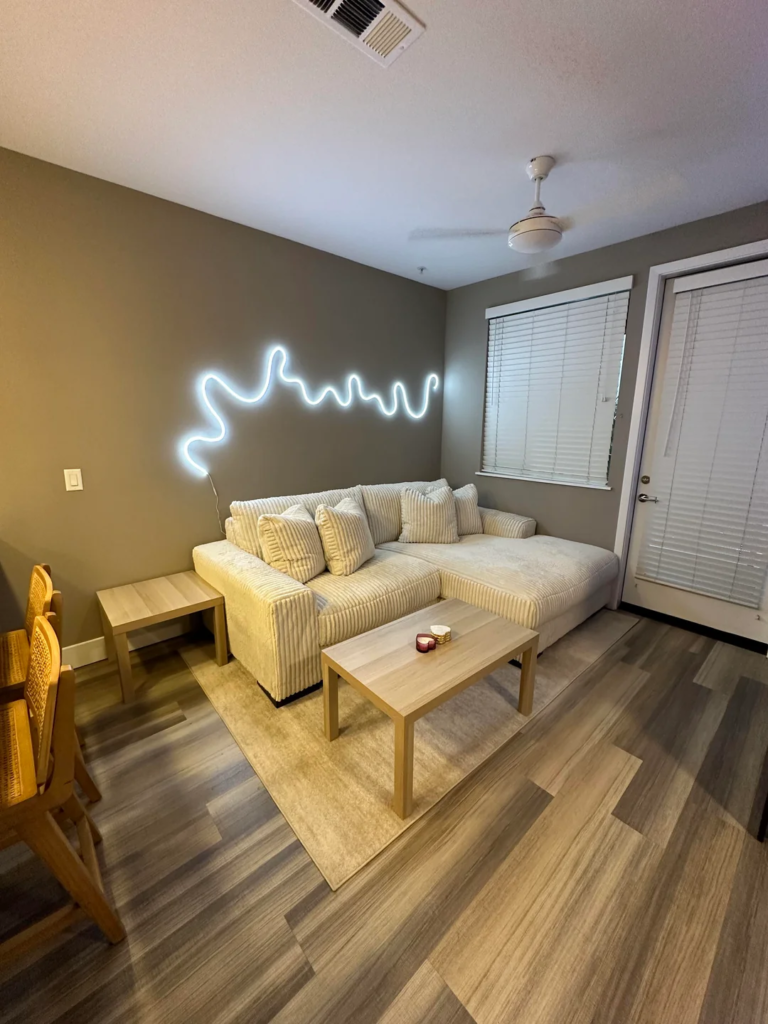
A slim side table at chair height, no wider than 12-14 inches, with a lower shelf below the surface stores current books on the shelf while providing a surface for the essentials above: a mug, a lamp, a coaster. The two-level function in one narrow footprint is the best possible use of the limited side table space in a small reading corner.
How to Choose One
Look for tables proportioned for small spaces, height between 22-26 inches to match the chair arm height, width and depth as small as 10-12 inches. Round or oval tops extend visual space better than square corners in tight spots. The lower shelf should be open rather than a drawer or cabinet for easiest book access.
14. A Single Bookcase as the Corner’s Back Wall
Why It Works
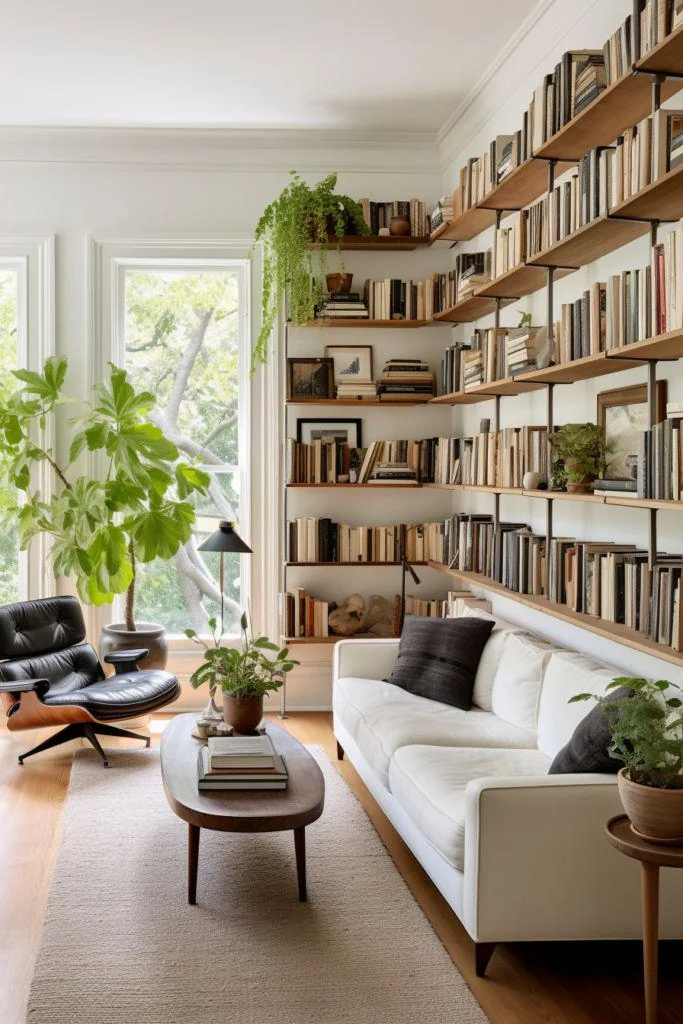
A slim, tall bookcase positioned as the back wall of the reading corner, with the chair positioned in front of it, creates the surrounded-by-books quality that makes a reading corner feel truly complete. The books behind the chair create a visual backdrop, a sense of enclosure, and a library atmosphere that defines the corner as belonging to reading.
How to Choose One
Slim bookcases, 10-12 inches deep, suit small corners far better than standard depth cases. A tall, narrow case (more height than width) maximizes storage in a minimal footprint and draws the eye upward, making the corner feel taller. In a natural wood finish or painted to match the wall, a slim bookcase behind the reading chair creates one of the most beautiful small reading corner configurations.
The Comfort and Personal Touch Ideas
15. A Soft Throw in the Chair Always
Why It Works
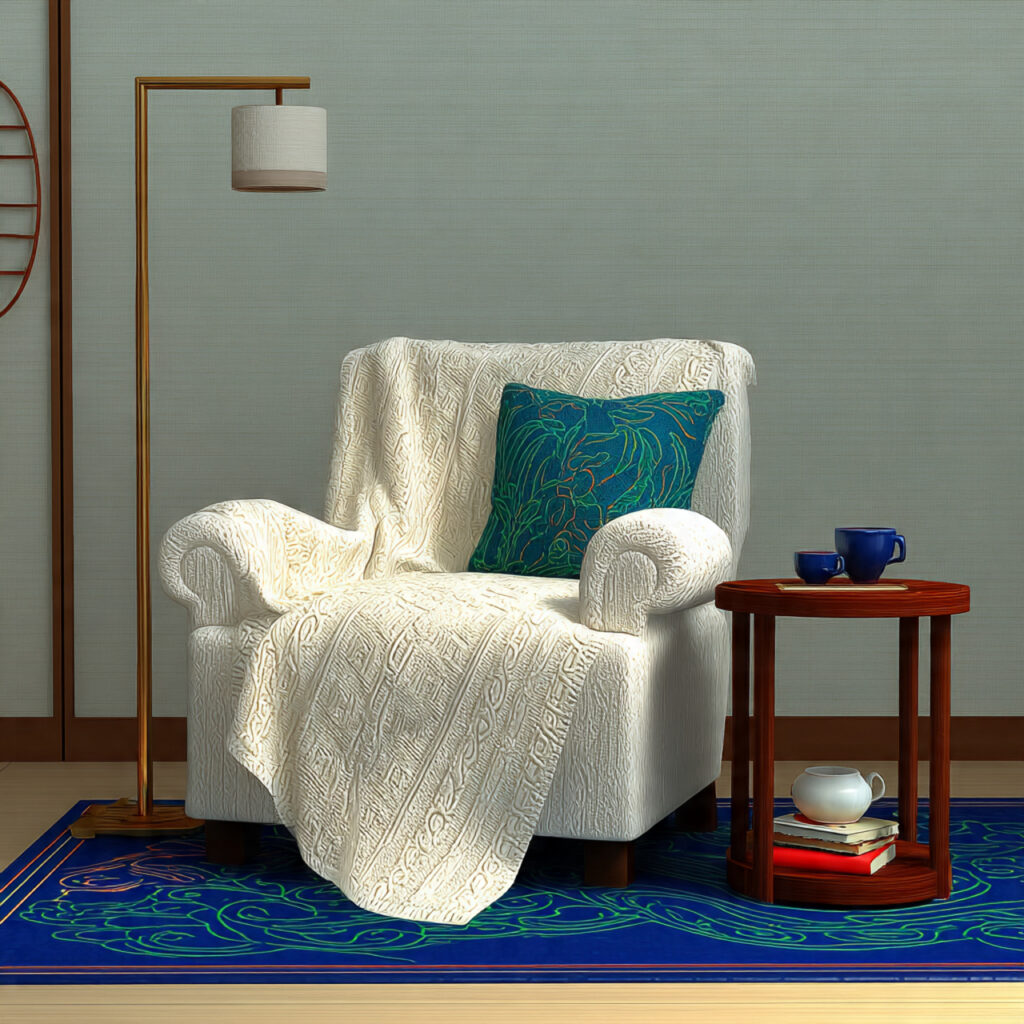
A throw blanket draped over the reading chair at all times serves two purposes: it’s visually warm and inviting (making the corner look like a place you want to be even when you’re not in it), and it’s immediately available for comfort the moment you sit down. The slight sensory pleasure of pulling a soft throw over your lap is part of the ritual that makes reading feel like genuine rest.
How to Choose One
Natural fiber throws, cotton, linen, or a wool blend, drape more beautifully than synthetic alternatives and feel more pleasant against bare skin. A chunky knit throw in a warm neutral tone photographs beautifully and suits most reading corner aesthetics. Choose one that’s large enough to cover from shoulders to feet, smaller throws are more decoration than comfort.
16. A Tiny Tray for Reading Essentials
Why It Works
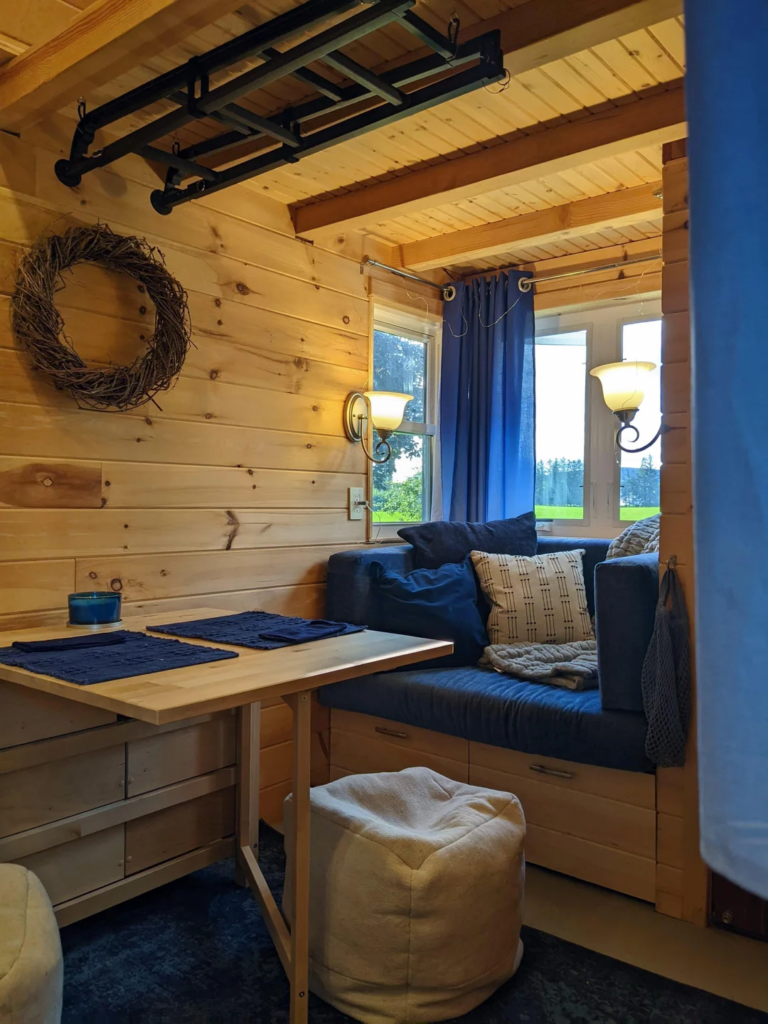
A small tray on the side table or floor beside the reading seat consolidates the small items that accumulate around a reading spot, a bookmark, a pencil for annotations, a lip balm, reading glasses, into one contained, tidy arrangement. The tray prevents the gradual scatter of small objects that makes a reading corner look less considered over time.
How to Style It
One small tray, beautifully chosen, ceramic, wood, or woven, holds: a coaster, a candle, and one or two small personal items. Nothing more. The tray is both functional and a styling element, contributing to the considered, intentional quality of the reading corner.
17. A Single Plant for Organic Life
Why It Works
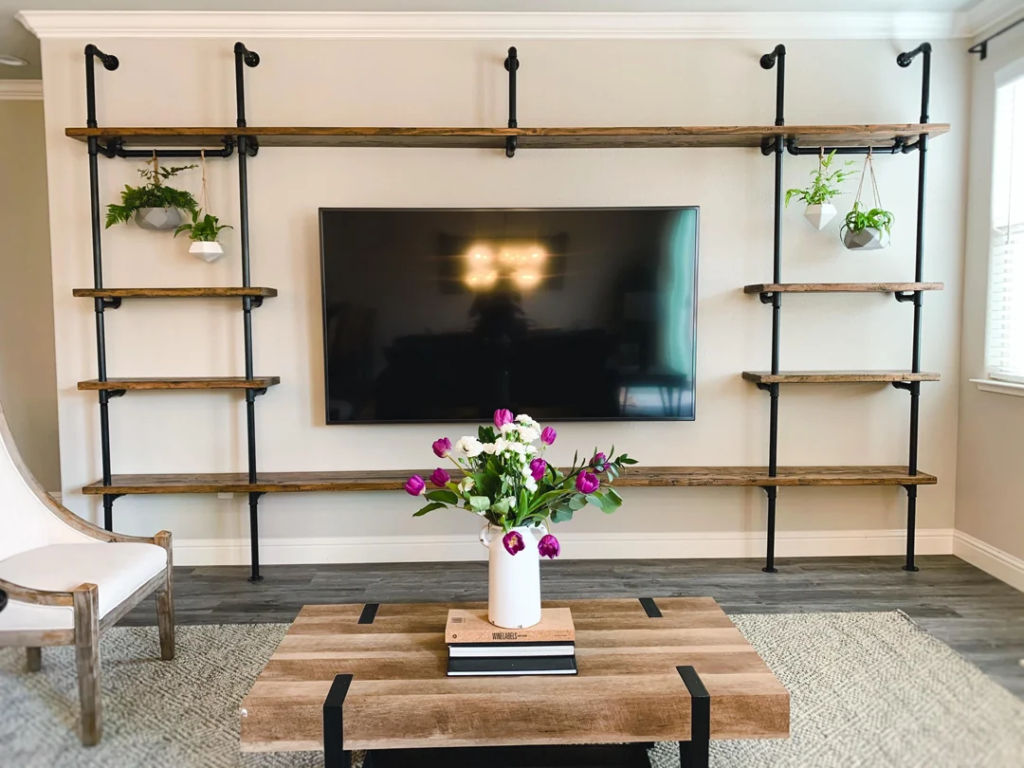
One plant in a beautiful pot beside or above the reading chair adds living warmth and organic presence that no inanimate object quite replicates. Plants have a calming, grounding effect on the spaces they inhabit, and in a small reading corner, even a single small plant contributes significantly to the atmosphere.
How to Choose One
For corners with natural light, near a window, a pothos, peace lily, or small monster thrive and look beautiful. For darker corners away from windows, a snake plant or ZZ plant handles low light well while still adding organic warmth. Place the plant where it won’t be knocked when entering or leaving the chair, on a shelf above, on the side table, or on a small stool beside the corner.
18. A Scent That Belongs to This Corner
Why It Works
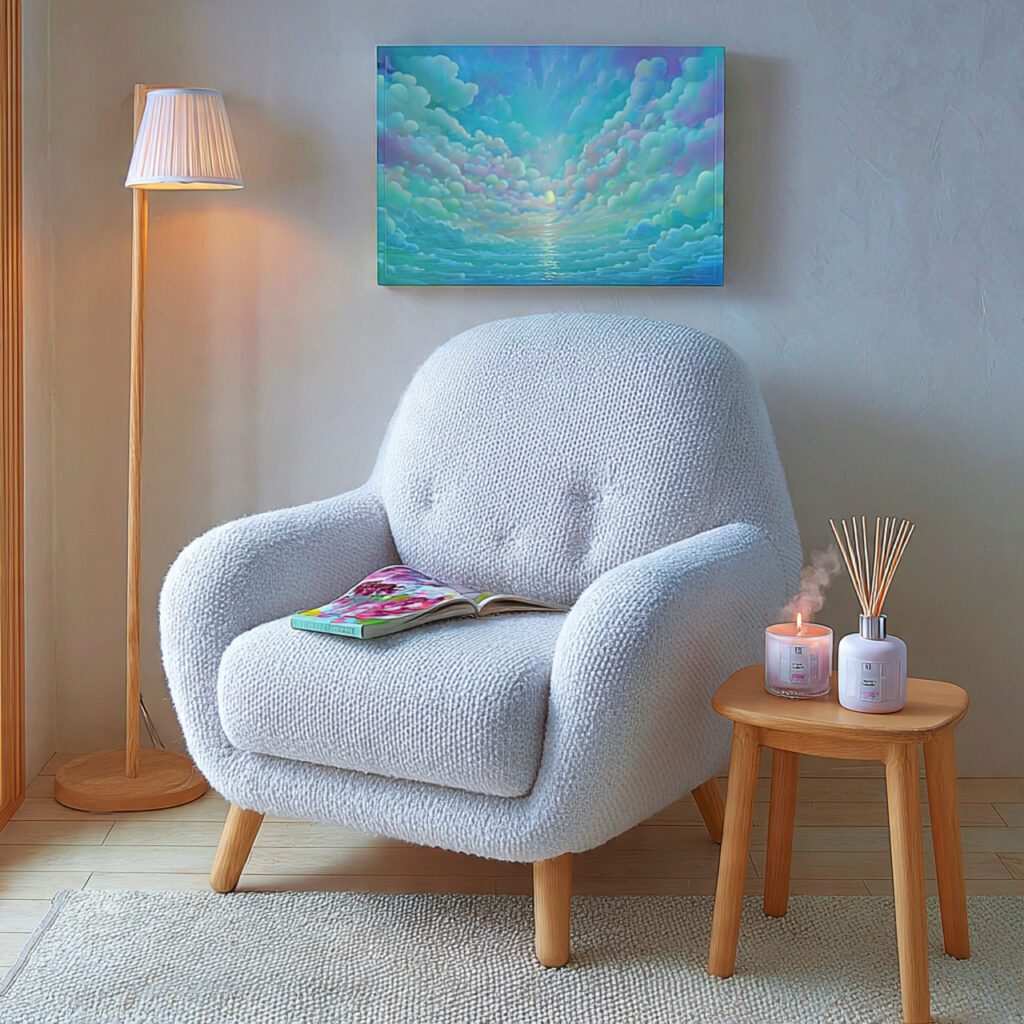
Scent creates the most powerful memory associations of any sense, which means a consistent scent in your reading corner becomes associated with reading, rest, and pleasure over time. The moment you smell it, your brain shifts into reading mode. It’s a small but genuine psychological tool for making the corner feel like a true retreat.
How to Use It
A small reed diffuser on the side table or shelf in a warm, literary scent, cedar, sandalwood, vanilla, soft linen, provides continuous ambient fragrance at a low, pleasant level. A candle for evenings adds the flickering warmth that makes the scent feel ceremonial. Choose one scent and keep it consistent, the association builds with repetition.
19. Curtains or Fabric to Create Enclosure
Why It Works
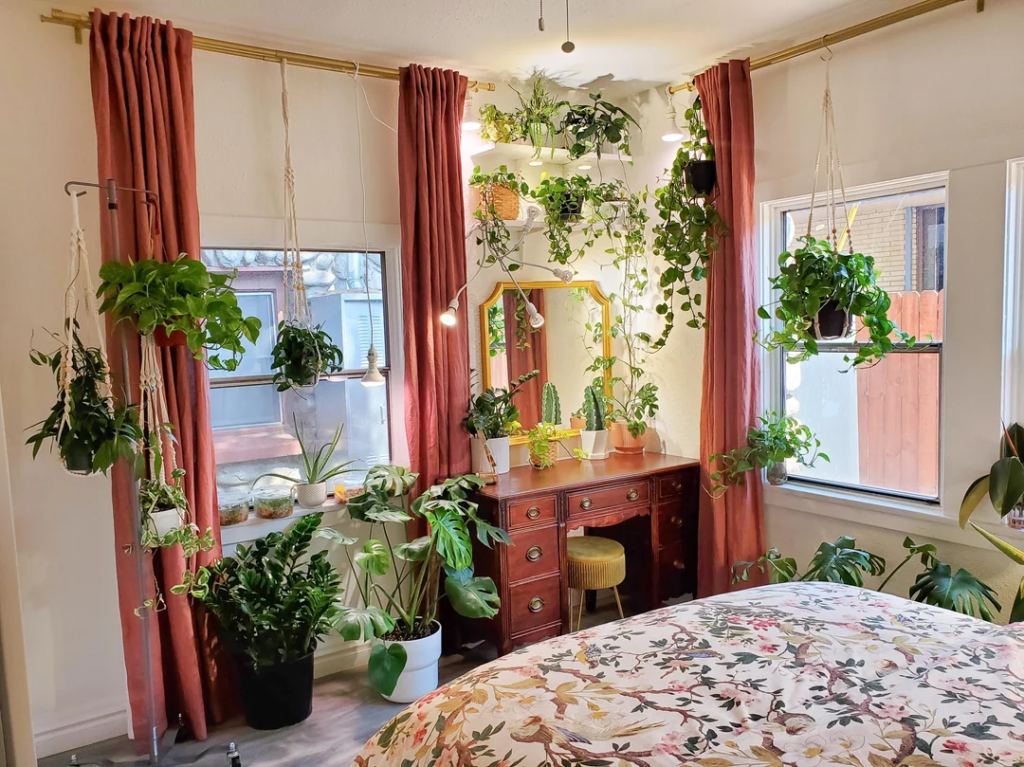
In an open-plan space or a room where the reading corner lacks natural walls on both sides, a simple curtain panel, hung from a ceiling-mounted rod or a tension rod, creates the enclosure that makes the corner feel genuinely separate from the rest of the room. It can be drawn when reading and pulled back when the space needs to feel open.
How to Create It
A single curtain panel hung from a ceiling rod beside the reading chair, not in front of it, but to its open side, is the simplest enclosure addition possible. Choose a fabric that suits the room’s aesthetic: sheer linen for a light, soft effect; a heavier linen or velvet for a more dramatic, cave-like quality. The curtain doesn’t need to reach the floor if the reading space is a chair rather than a floor cushion, waist to floor height creates sufficient enclosure.
20. A Small Rug That Defines the Zone
Why It Works
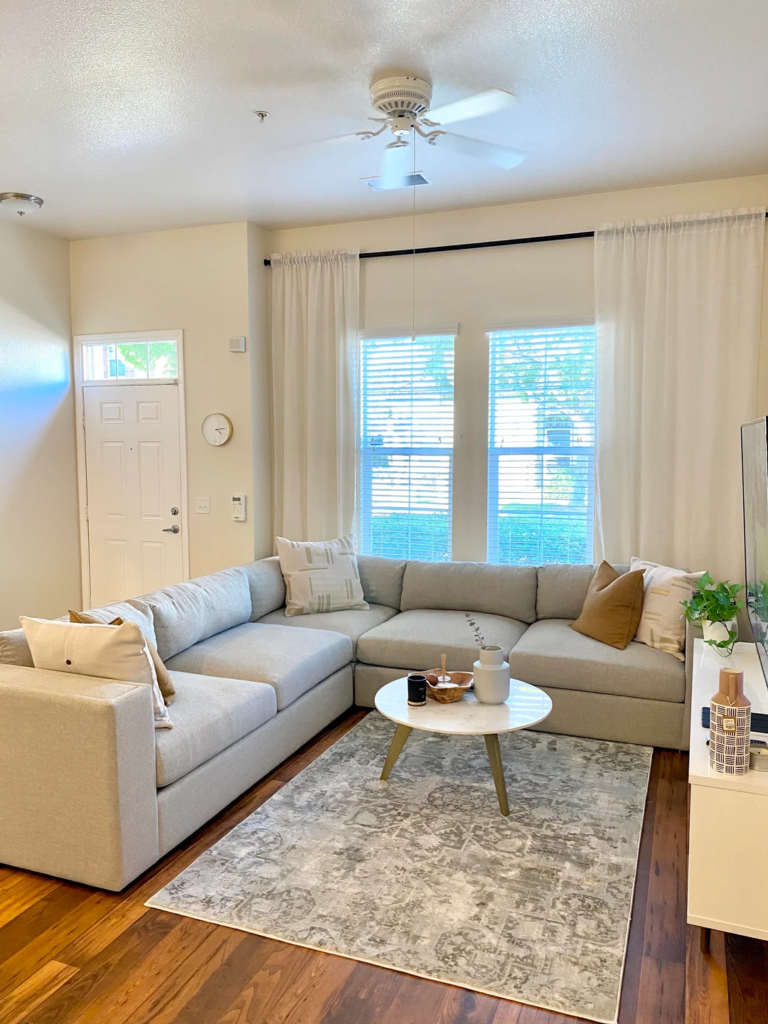
A rug placed under the reading chair and extending slightly in front of it defines the corner as a distinct zone within the room, visually separate, purposefully designated, and physically warmer underfoot. Even in a very small corner, a rug adds a definition and warmth that makes the reading spot feel intentional.
How to Choose One
Round rugs work beautifully for single-chair reading corners, they center the chair visually and create a defined circular zone without the sharp edges that can feel confined in a small space. Size the rug so the chair sits within it with a little extension in front, approximately 4 feet in diameter for most armchair setups. Soft, warm textures, a cotton shag, a wool pile, add tactile comfort to the floor experience.
21. Make It Non-Negotiable: Protect the Corner
Why It Works
The most beautifully designed reading corner fails its purpose if it gradually fills with other things, laundry, bags, children’s toys, and the general overflow of a busy life. The final and perhaps most important idea for a small reading corner isn’t a physical object or a decorative choice. It’s a decision: this corner is protected.
How to Do It
Decide, and communicate to anyone who shares your home, that the reading corner is not a storage zone, not a dumping spot, not a flexible-use area. It has one purpose: your reading. That protection is what allows the psychological association to build. Over time, sitting in that corner becomes immediately, automatically restful, because the corner has only ever been used for rest.
Insider Tip
A small, beautiful object placed visibly in the corner, a specific plant, a candle that’s always there, a particular throw, acts as a visual signal of the corner’s purpose. When the object is in place and the corner is clear, the reading corner is ready. That visual cue is both a reminder to yourself and a gentle signal to others that this space is in use.
Your Corner Is Already There
Here’s what this guide comes down to: you don’t need more space. You need to see what your existing space already offers, and then claim it, one intentional element at a time.
That gap beside the wardrobe. The corner of the bedroom that currently holds nothing. The window ledge that’s been unused since you moved in. Any one of these can become the reading corner you’ve been wishing for, with a cushion, a lamp, a small shelf, and the decision that this particular corner belongs to you.
Start today. Not with a renovation or a shopping list. With a chair. A lamp. One good book.
Then sit down, pull up the throw, and stay as long as you like.
Because the best reading corners aren’t found, they’re made, from whatever corner you already have.