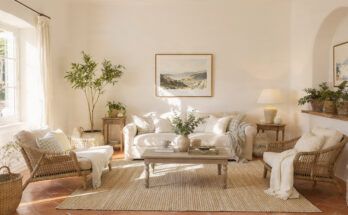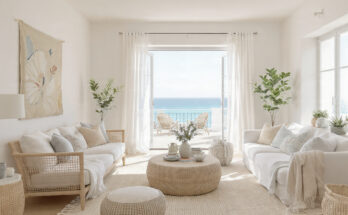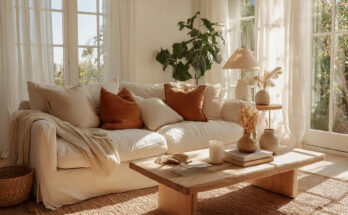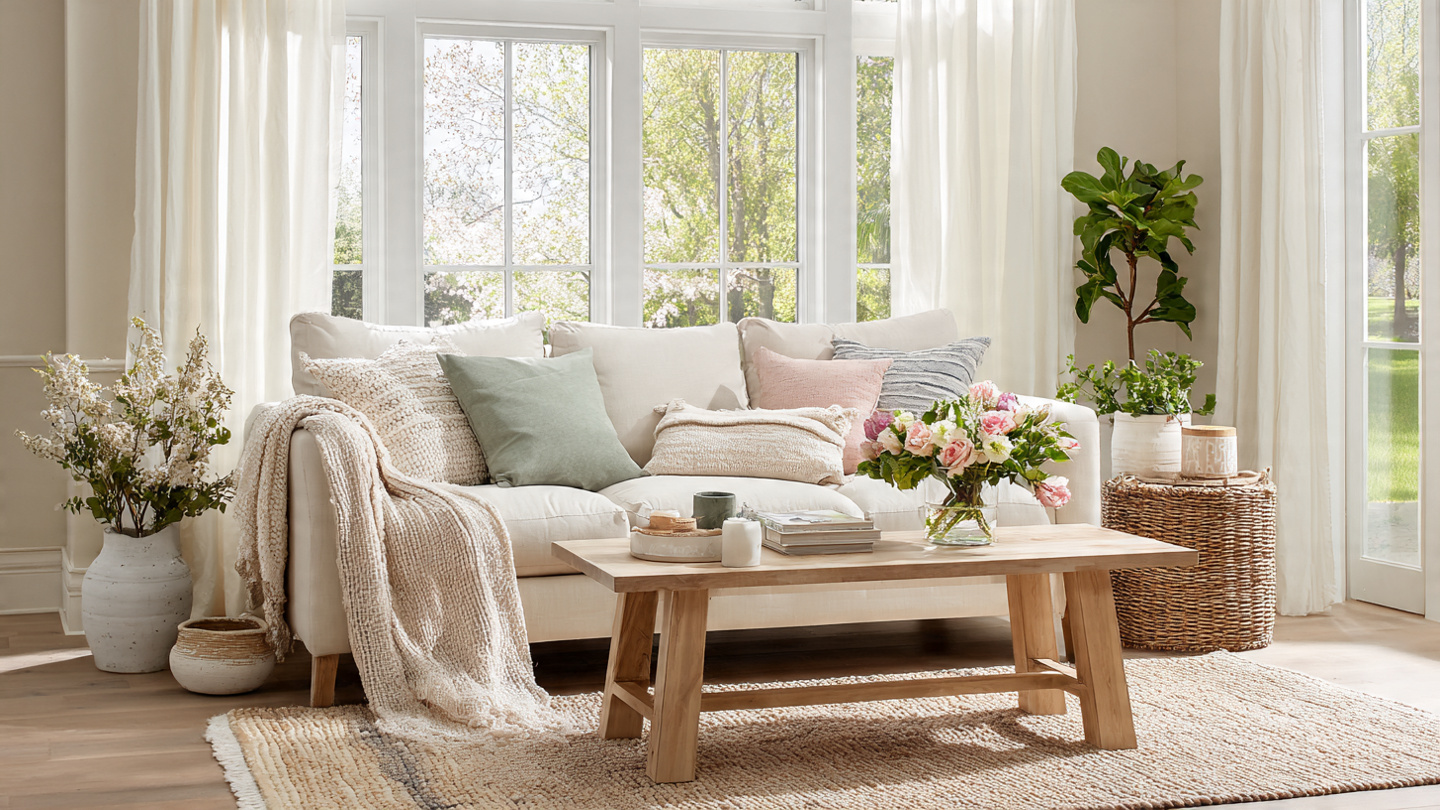
There is a specific restlessness that arrives with the first warm days of the year. The light changes, the air shifts, and suddenly every heavy curtain, dark cushion, and closed-off corner of your living room feels completely wrong. It is not just a seasonal mood. It is your home asking for a reset.
A spring summer living room is about capturing that transitional energy in your design, keeping the warmth and softness of spring while building toward the brightness and openness of summer. The best versions of this look do both at once, light enough to feel fresh, layered enough to feel inviting. Interior design trends consistently show that the most-searched living room refreshes happen in the first weeks of spring, and the ideas that perform best are the ones that work across both seasons without requiring a second overhaul in June.
Every idea below is a complete design concept you can visualize, plan, and implement. From full palette changes to furniture rearrangements to lighting transformations, this list covers every layer of the room.
Here are 24 ideas to refresh your spring summer living room right now.
1. Soft Blush and Warm White Linen Sofa Styling
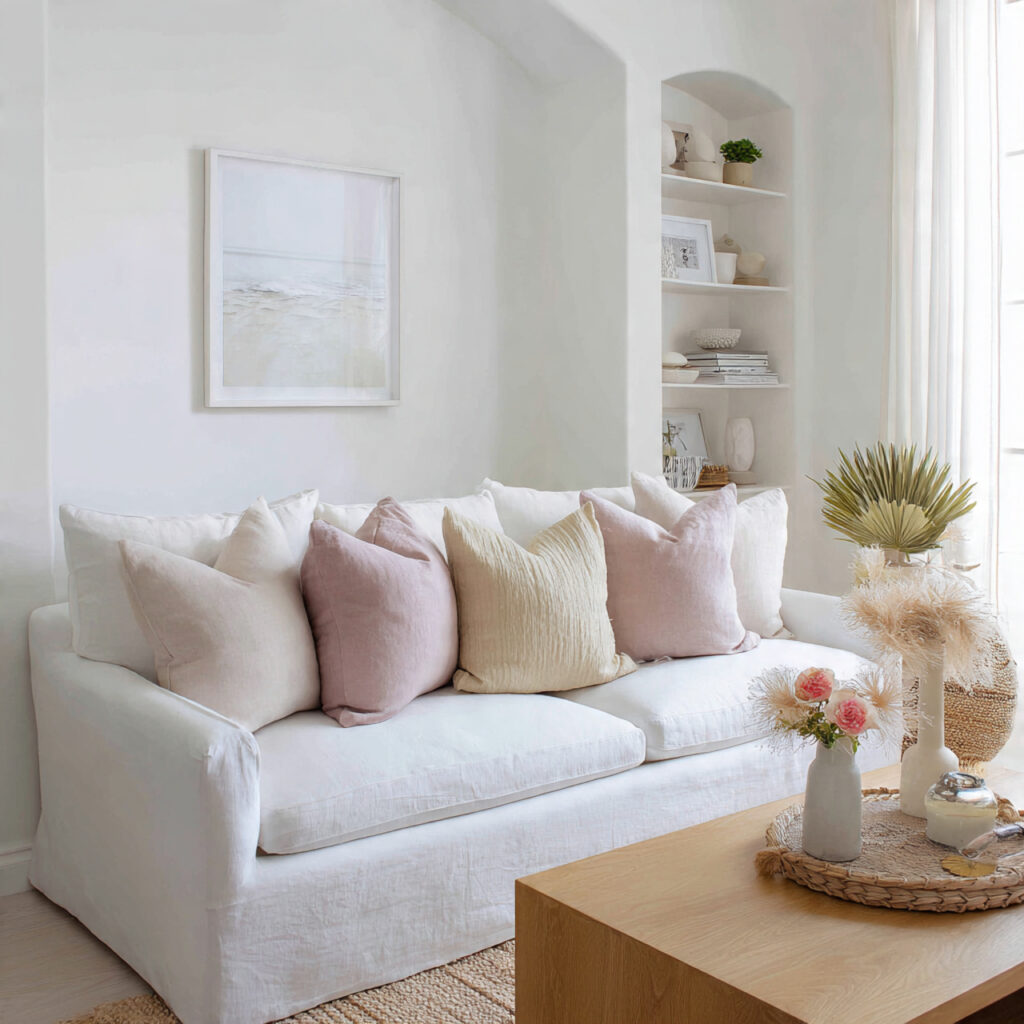
Swap out heavy upholstery covers or dark cushion sets for a linen sofa arrangement in soft blush and warm white. Use a linen slipcover in warm white or pale ivory as the base and layer with cushions in blush pink, dusty mauve, and cream in mixed textures, waffle weave, plain cotton, and a subtle floral jacquard.
This palette captures the exact transitional quality of spring moving into summer, warm and soft enough for cooler evenings, light and fresh enough for bright afternoon light. Blush and warm white is consistently one of the most pinned spring interior combinations and it works with almost every existing furniture style.
Also read: https://myhavenvibes.com/cozy-summer-living-room/
2. Botanical Wallpaper Accent Wall Behind the Main Sofa
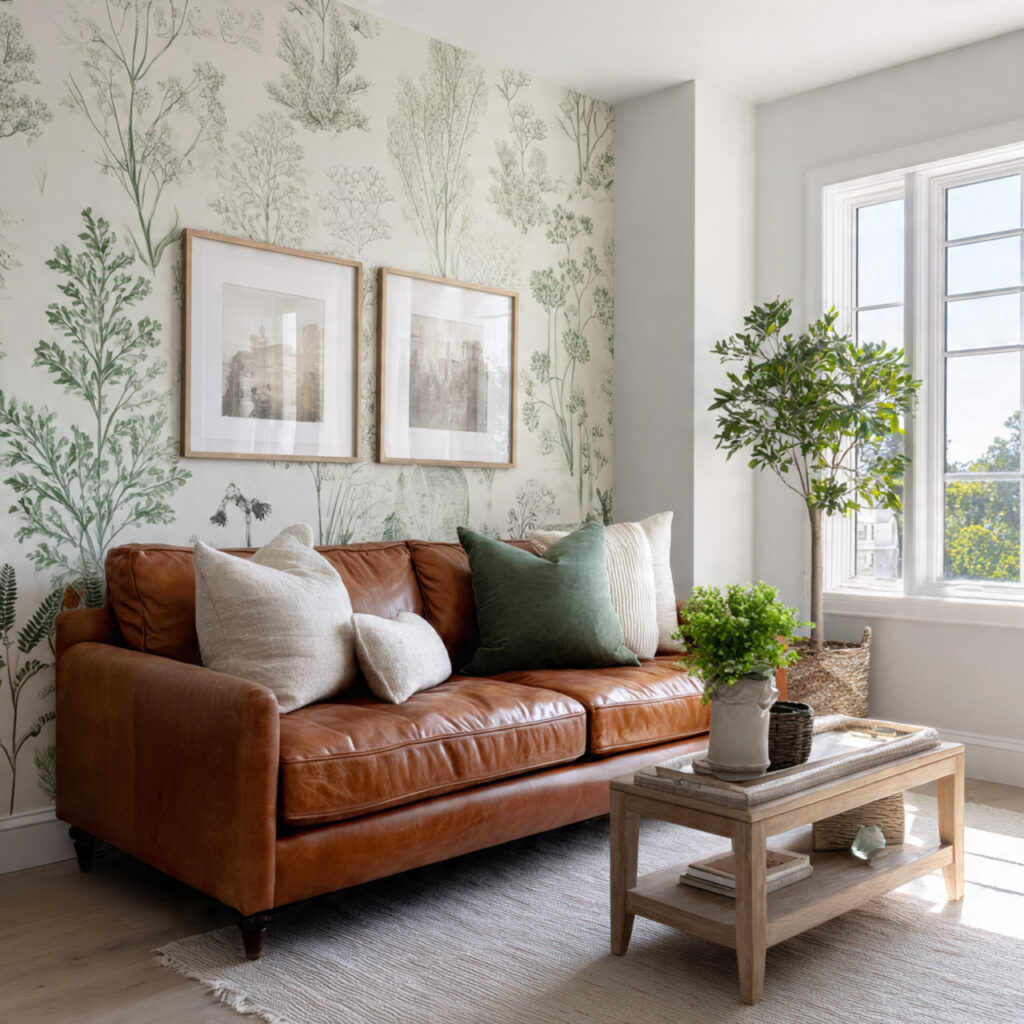
Install a botanical or nature-inspired wallpaper on the wall directly behind the sofa as a full feature wall. Choose a print featuring large tropical leaves, delicate spring florals, or organic abstract botanicals in a palette of greens, creams, and warm earthy tones.
A statement wallpaper wall transforms the entire visual identity of a living room instantly and creates a backdrop that reads as seasonal and design-forward without requiring any other major changes to the space. Pair it with plain linen upholstery, natural wood furniture, and simple ceramic accessories so the wallpaper remains the clear star of the room.
Read More: https://myhavenvibes.com/aesthetic-summer-living-room/
3. Pale Sage Green Accent Wall With Warm White Trim
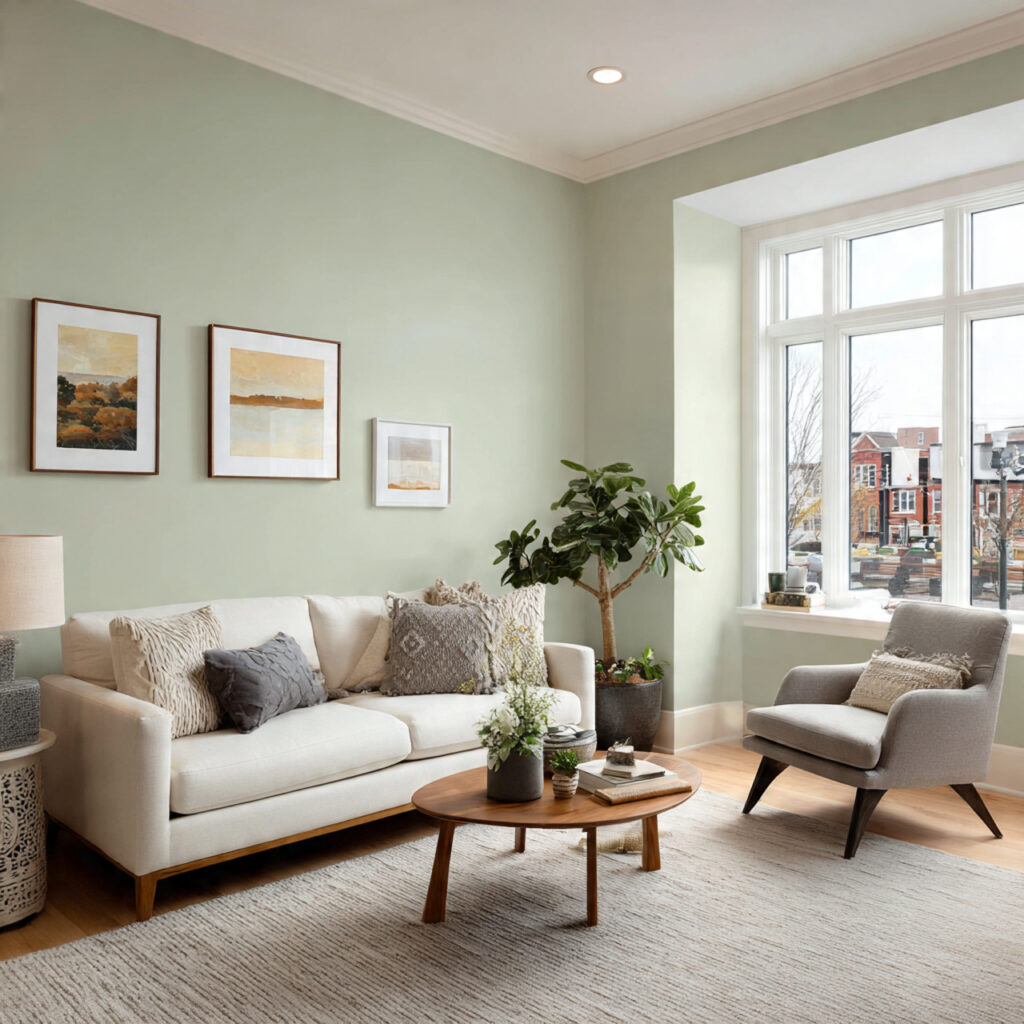
Paint one wall in a pale sage green, keeping all trim, ceiling, and surrounding walls in warm white. Sage green is one of the defining colors of the spring summer interior palette and it works across every design style from modern minimal to relaxed boho to classic traditional. It reads as both fresh and grounded, which is exactly the quality needed for a room that bridges two seasons.
The contrast between the sage wall and warm white trim creates a clean, architectural finish that photographs beautifully and gives the room a pulled-together, intentional quality. Pair it with natural wood, blush tones, and rattan accessories for maximum seasonal impact.
4. Sheer Floral or Leaf-Print Curtain Panels at Ceiling Height
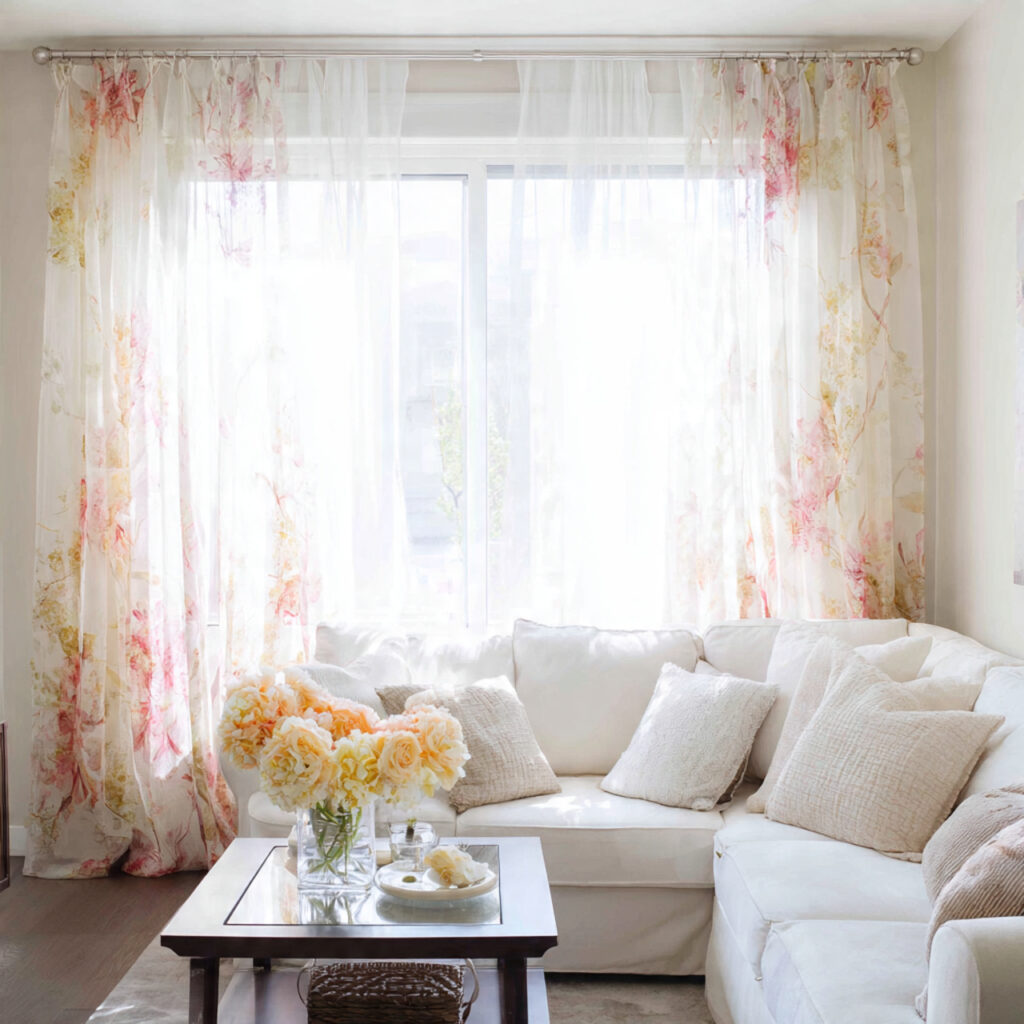
Hang sheer curtain panels featuring a delicate floral or leaf print, mounted at ceiling height and falling to the floor in a soft pool of fabric. The combination of a printed sheer and ceiling-height hanging creates a window wall that feels immediately spring-like and airy.
As natural light filters through the printed fabric it casts a soft, dappled pattern into the room that changes throughout the day. Use a warm brass or matte gold curtain rod for a refined finish and keep all other window treatments removed so the full effect of the sheer panels is visible. This is one of the most impactful spring summer window treatments available.
5. Pastel and Neutral Color-Blocked Floating Shelf Display
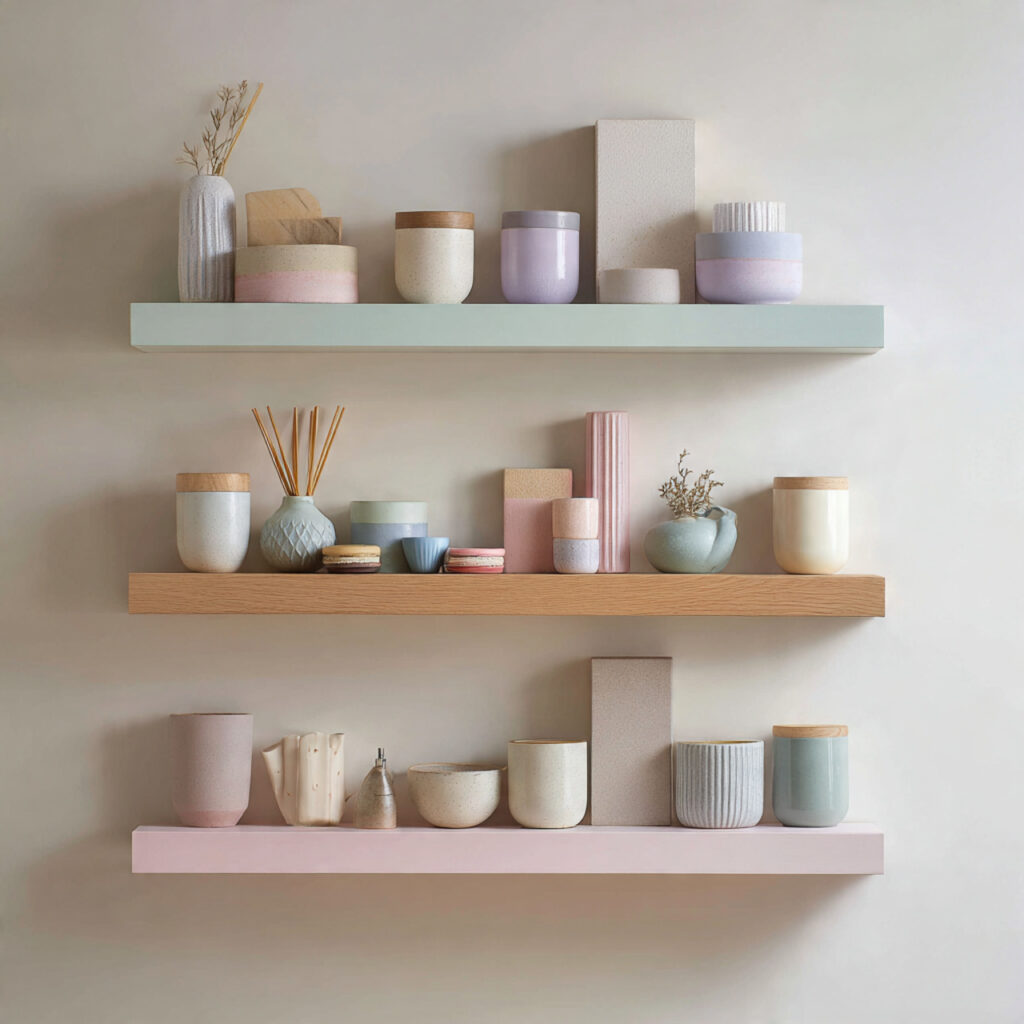
Install or restyle a set of floating shelves using a deliberate color-blocking approach. Paint the wall behind each shelf in a different soft pastel tone, blush, pale mint, soft lavender, or warm peach, and style each shelf with simple objects in coordinating natural tones. Use small ceramic vases, trailing plants, a few art books, and one or two sculptural objects per shelf.
This approach turns a simple shelf arrangement into a full wall feature that reads as playful, current, and distinctly spring-like without any single element being overly literal about the season.
6. Fresh Floral Arrangement as a Structural Room Element
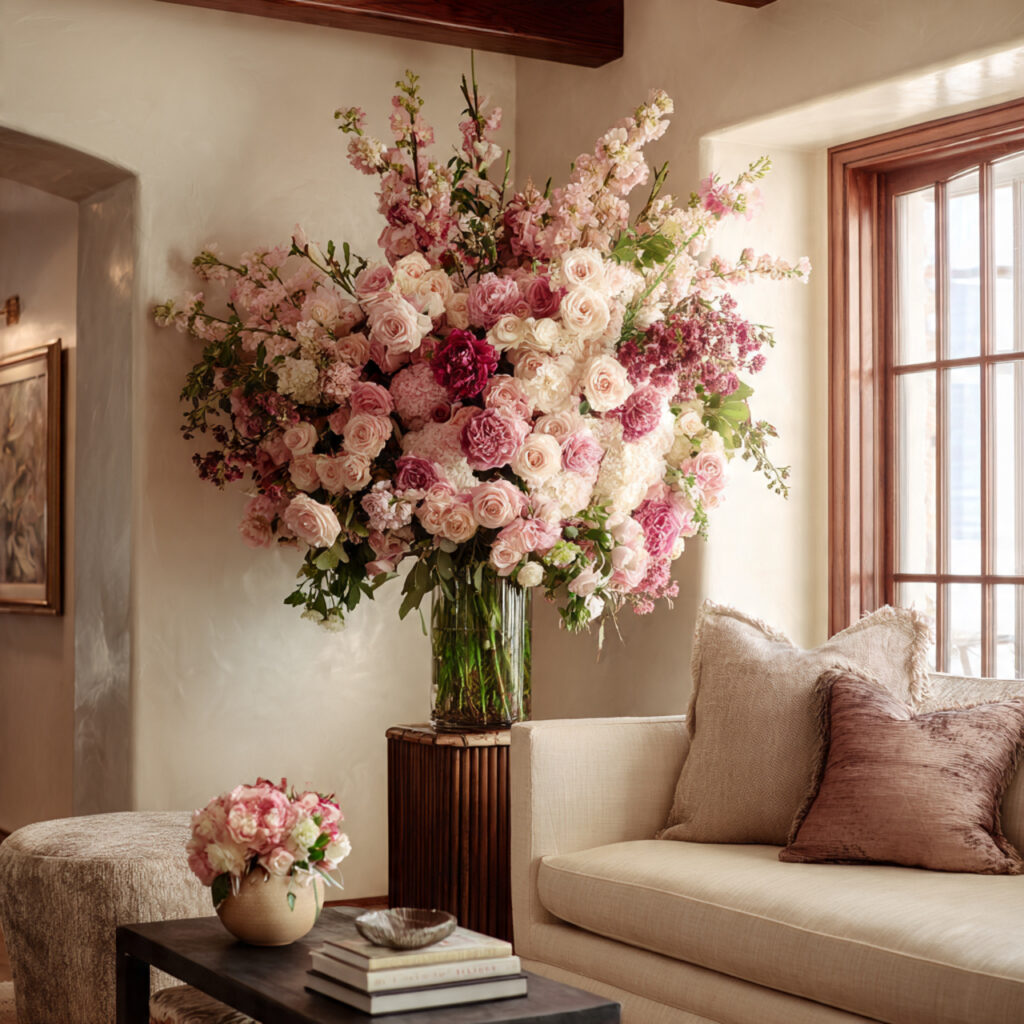
Use a very large fresh floral arrangement, not a small vase of flowers but a genuinely oversized display in a wide ceramic or stone vessel, as a structural design element in the room. Position it on the floor beside the sofa, on a console behind the seating area, or centered on the coffee table, and build it to a height and width that makes it visually comparable to a piece of furniture.
Use seasonal flowers in a tonal arrangement, all whites and greens, or all blush and peach tones, mixed with generous foliage. A floral arrangement at this scale completely changes the energy and fragrance of a living room and creates the most literal possible statement about the season.
The first six ideas alone can transform the primary visual layers of your space. Keep going because the next set tackles furniture, layout, and lighting with the same seasonal intention.
7. Rattan and Cane Furniture Introduction With Linen Cushions
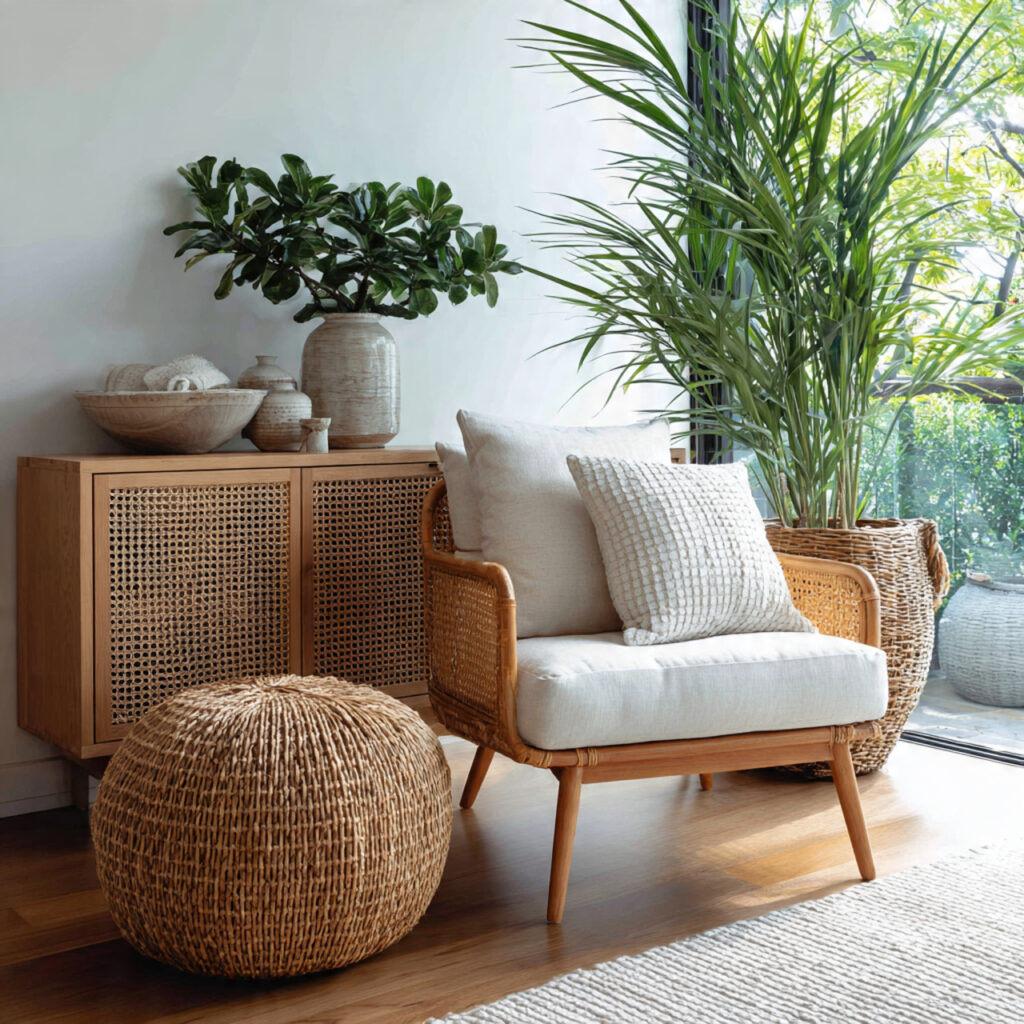
Bring in rattan or cane furniture as a core seating or accent piece rather than a single decorative object. A cane armchair with a linen cushion in blush or sage, paired with a rattan side table and a jute rug, creates a complete natural material zone within the room.
This setup captures the spring summer aesthetic more completely than almost any other single furniture addition because the open weave of rattan keeps the room visually light while the natural material brings warmth and organic texture. Choose chair frames in a honey or natural tone and keep the cushion fabric simple and breathable.
8. Lavender and Soft Gray Two-Tone Wall Color Treatment
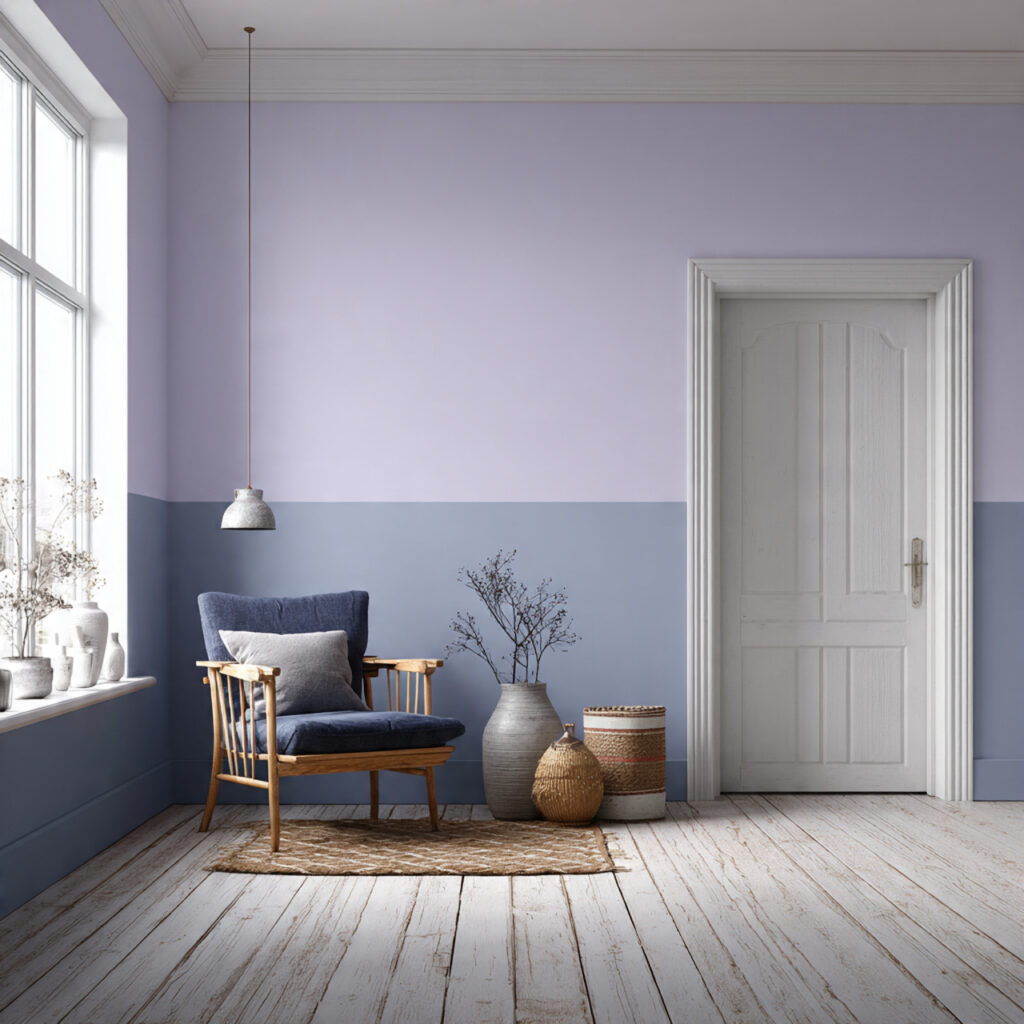
Paint the main feature wall in a soft, muted lavender and use a warm light gray on the remaining walls. This two-tone approach creates a spring color story that is subtle enough to live with year-round but distinctly seasonal in its associations.
Lavender is strongly linked to late spring and early summer in European design traditions, particularly French and English country interiors, and its combination with warm gray prevents it from feeling childlike or overly sweet. Pair this wall treatment with white trim, natural linen upholstery, and simple wooden furniture for a complete and cohesive result.
9. Arched Floor Mirror Styled as a Light-Amplifying Feature
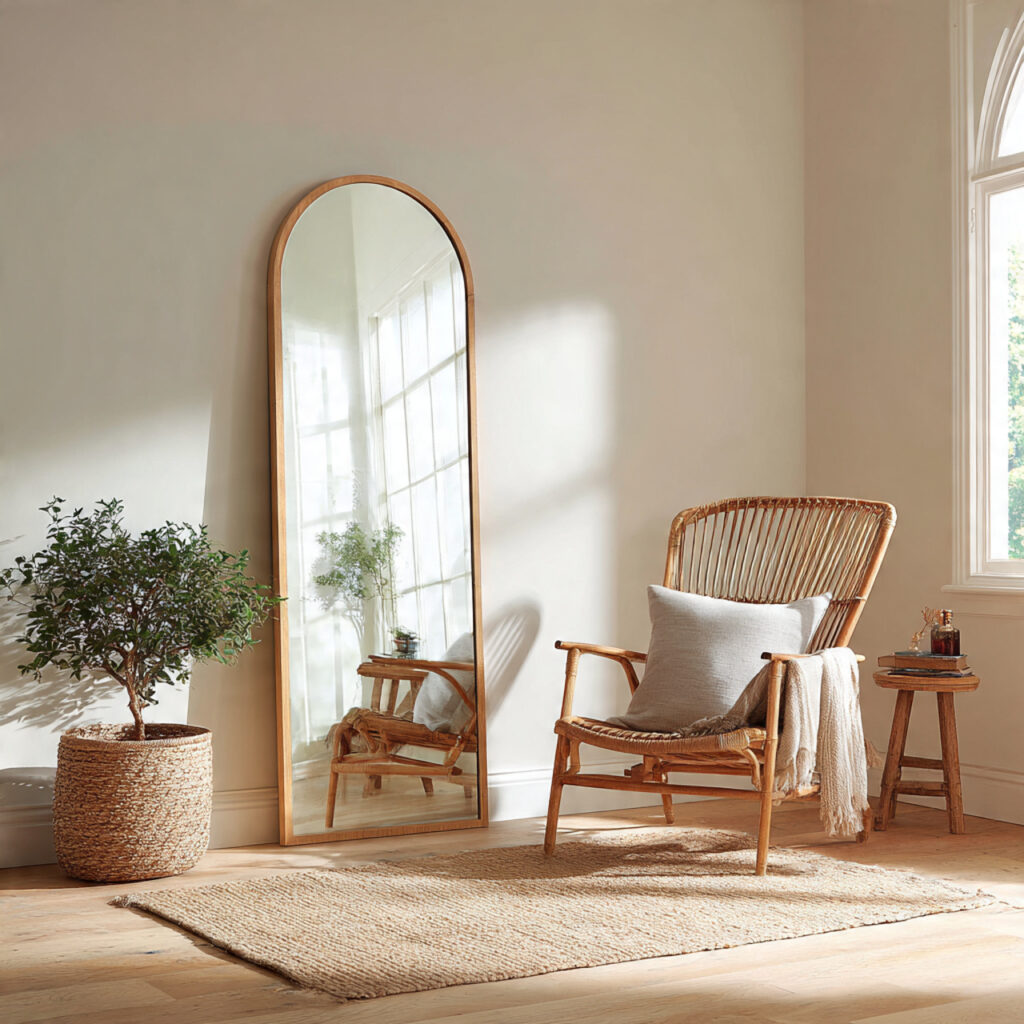
Place a large arched floor mirror against a wall, ideally opposite a window or near a natural light source, and use it as a structural design element rather than just a reflective surface. An arched mirror adds architectural interest, references current interior design trends, and doubles the perceived light and space in any room.
Lean it slightly against the wall rather than mounting it for a casual, editorial quality, and style a small plant, a ceramic object, or a low stack of books at its base to ground it. In a spring summer living room, a large mirror is one of the most effective tools for making the space feel as open and light-filled as possible.
10. Warm Terracotta and Soft Mint Accent Palette Combination
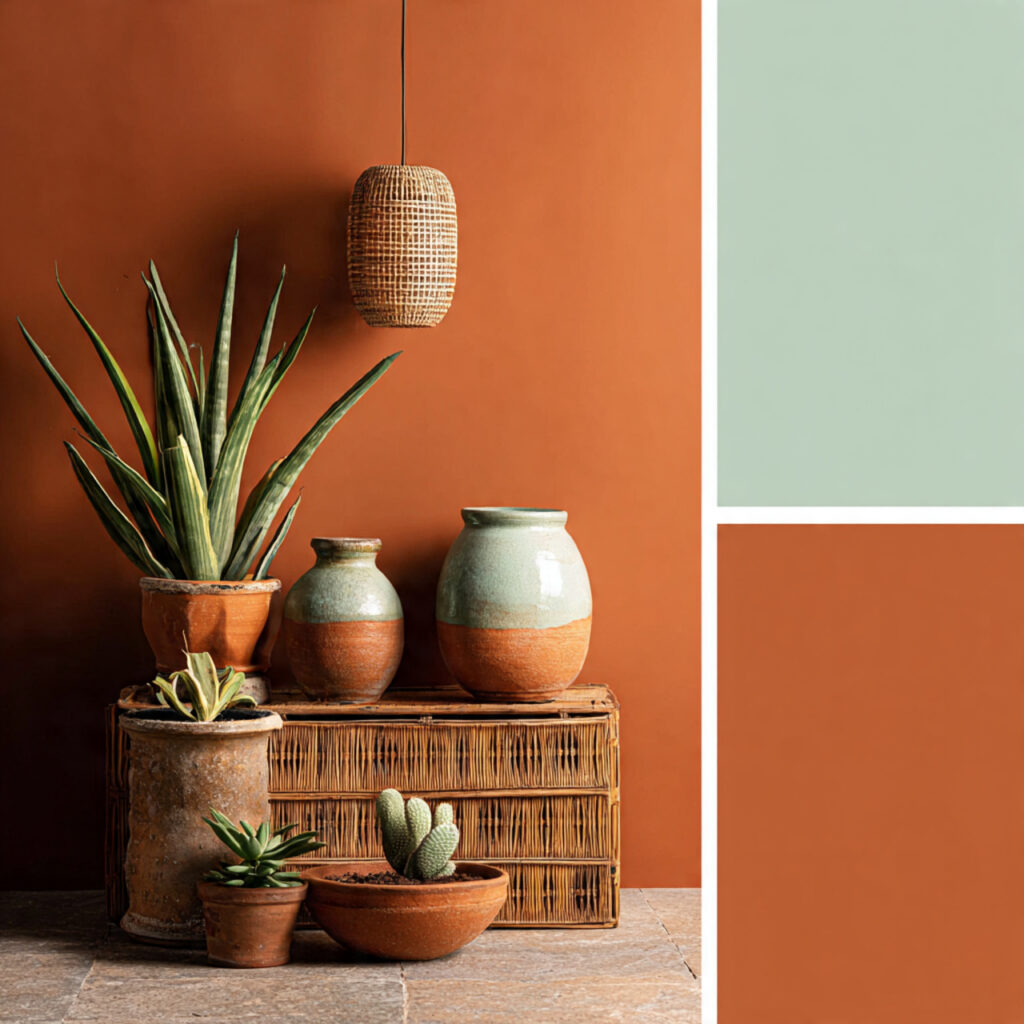
Introduce a spring-specific accent palette of warm terracotta and soft mint as the two key accent colors in an otherwise neutral room. Use terracotta in ceramic vessels, one or two cushion covers, and a candle grouping. Use soft mint in a throw, a small framed print, or a single painted accent element.
Ground both accents against a warm white or natural linen base so neither color dominates. This pairing is unusual enough to feel fresh and current but warm enough to bridge the cooler days of spring and the brighter days of early summer without feeling seasonal in a limiting way.
11. Light Oak or Ash Wood Furniture Arrangement With Open Layout
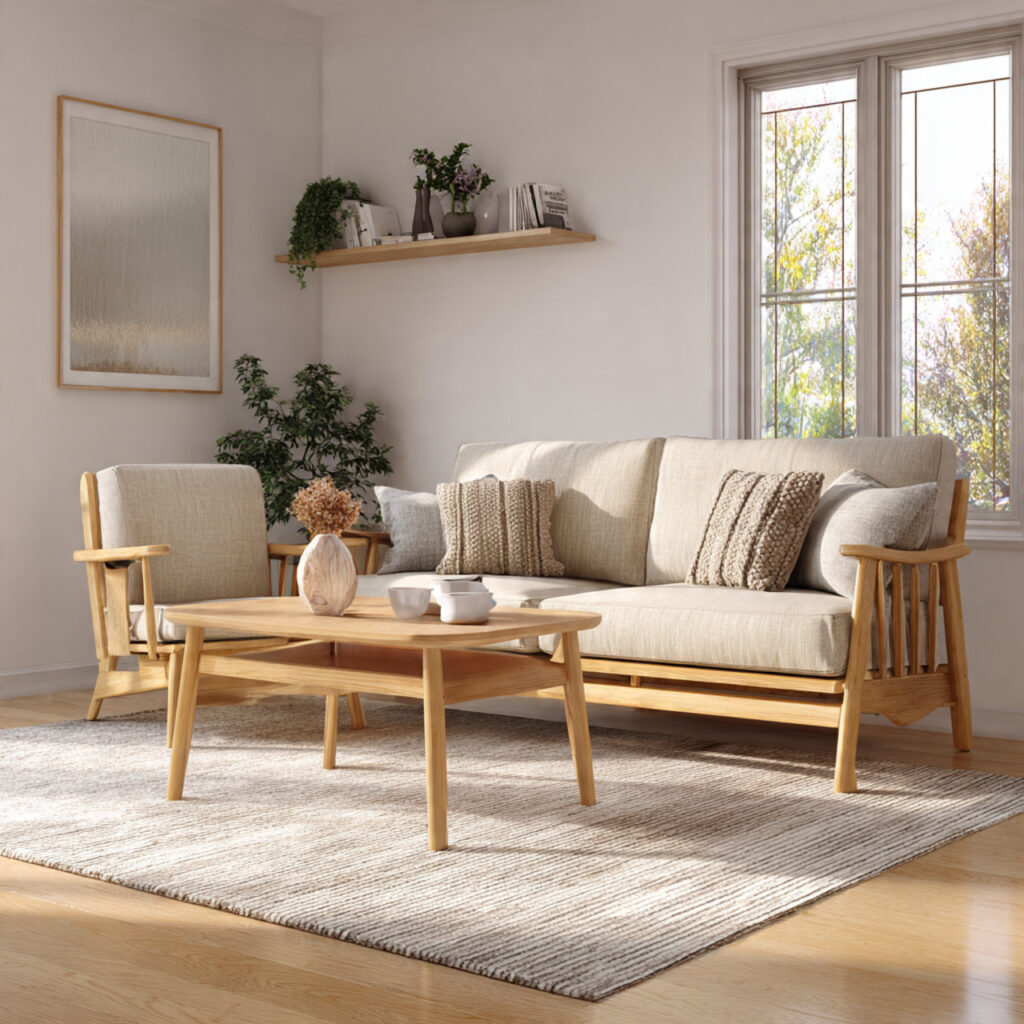
Replace or supplement dark wood furniture with light oak, ash, or blonde beechwood pieces and rearrange the layout to float all furniture away from the walls. Light wood tones immediately shift the visual temperature of a room, making it feel brighter, airier, and more spring-appropriate without changing the palette at all.
A light oak coffee table, a simple ash side table, and a pale wood console create a cohesive natural material thread through the room that supports any spring summer color palette. Floating the furniture away from the walls opens up the sightlines and makes the room feel significantly larger and more intentional.
12. Spring Green and White Botanical Print Gallery Wall
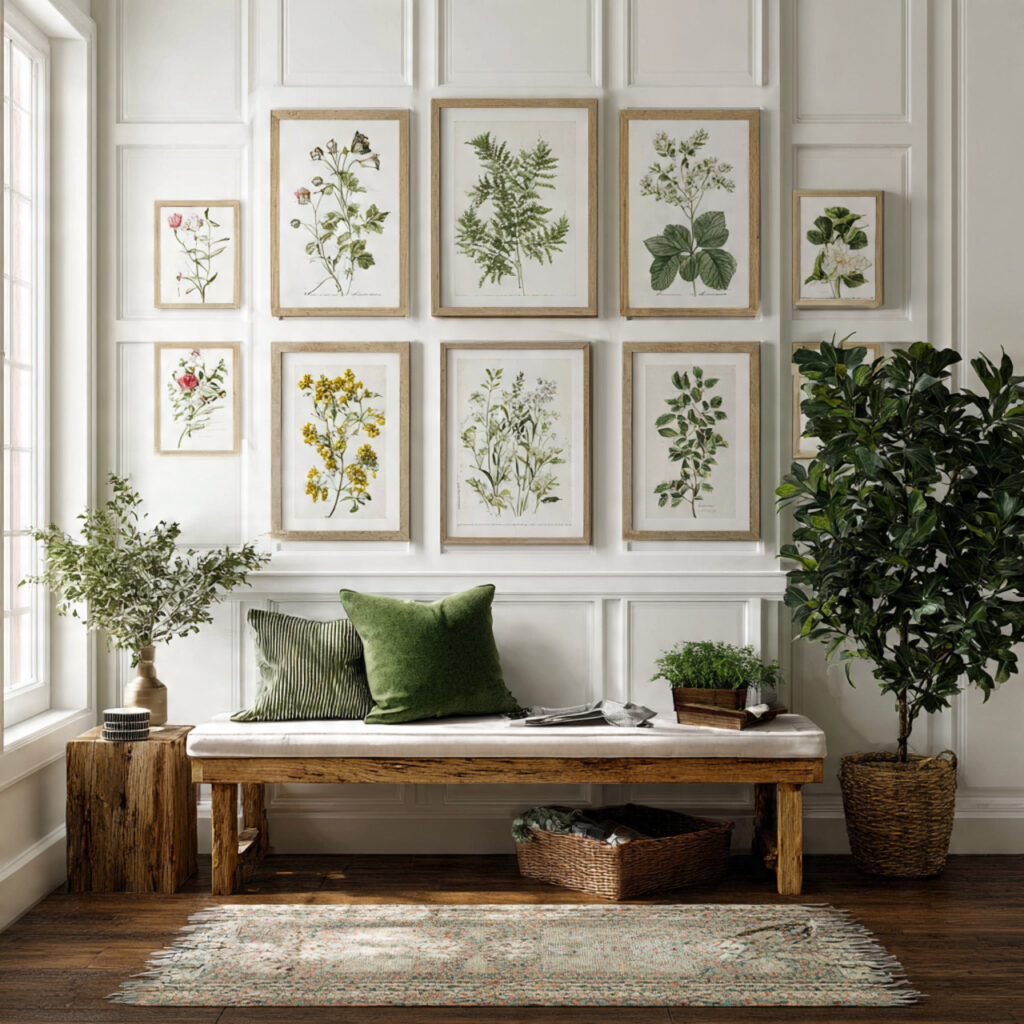
Create a gallery wall using botanical prints, leaf studies, pressed flower illustrations, and organic abstract pieces in a consistent spring green and white palette. Use simple white or pale natural wood frames in varied sizes and arrange them in a close-hung grid or organic cluster above the main sofa.
Botanical subject matter is the most season-appropriate art choice for a spring summer living room and a full gallery wall in this style creates a major visual statement that connects the interior directly to the natural world outside. Keep the print tones consistent so the collection reads as curated rather than random.
This is exactly the kind of wall that makes a living room feel intentional and finished. Save this idea if you have a blank wall above your sofa that needs a complete solution.
13. Soft Pink and Cream Velvet Cushion and Throw Layering
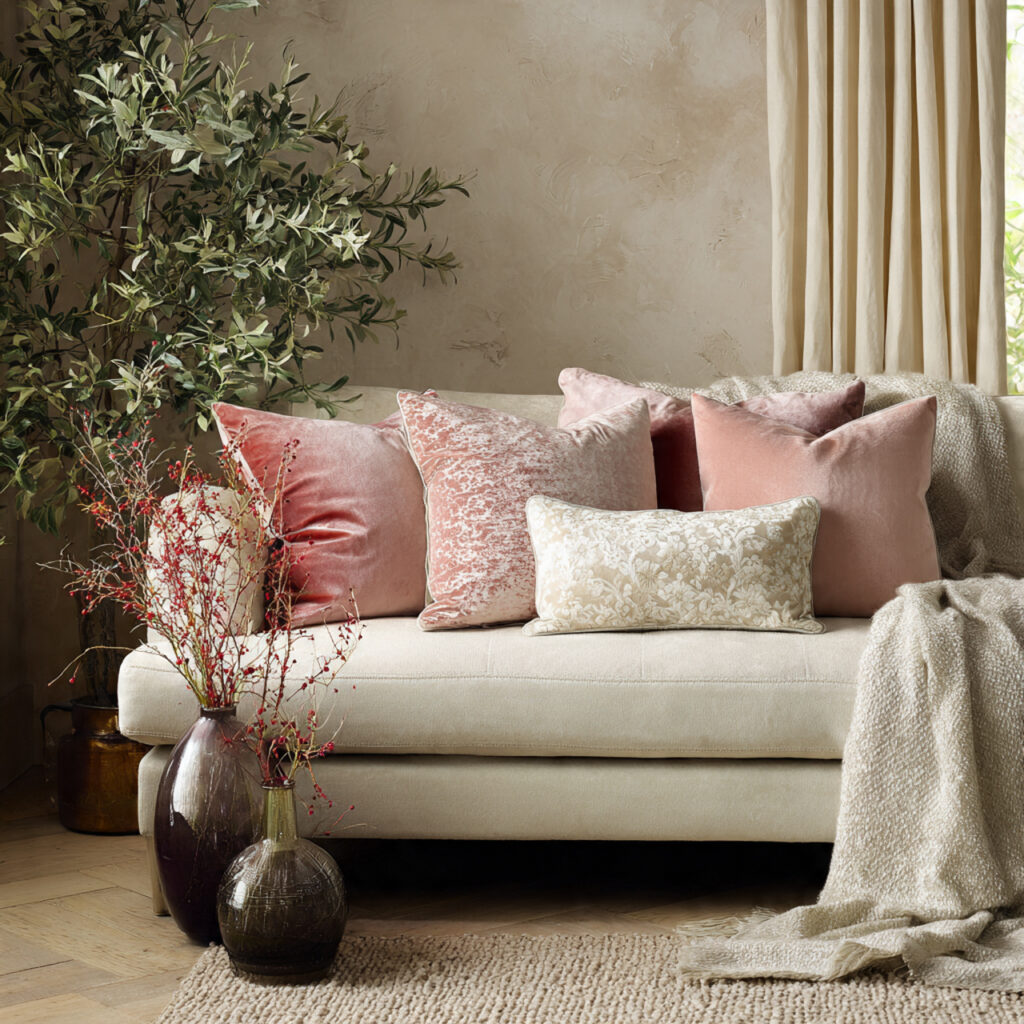
Layer the main sofa with a combination of soft pink and cream velvet cushions in varying sizes, mixing square and lumbar shapes, and drape a lightweight cream or blush cotton throw loosely across one end. Velvet in pastel tones reads very differently from velvet in deep jewel tones: instead of moody and heavy, it feels fresh, delicate, and distinctly spring-like.
Use at least five cushions in a mix of plain velvet and a subtle woven texture, and keep the throw lightweight enough that it does not add visual bulk to the arrangement. This sofa styling creates an immediate seasonal shift that costs very little and takes less than ten minutes to implement.
14. Nature-Inspired Woven Wall Hanging Above the Sofa
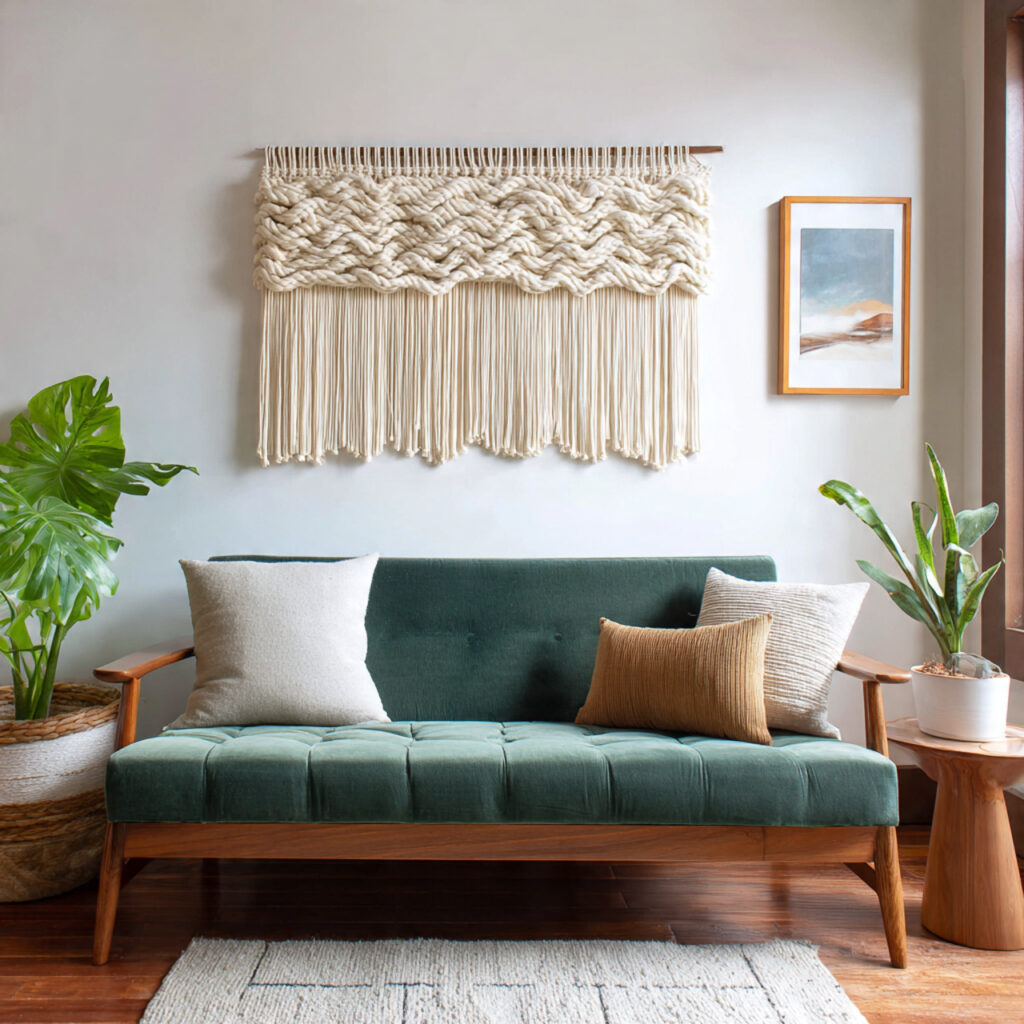
Hang a large woven or macrame wall piece above the sofa in natural fiber tones, cream, oat, pale sage, and warm sand, featuring organic shapes, leaf motifs, or loose botanical references woven into the design.
Textile wall art adds texture, dimension, and warmth to a wall in a way that flat printed art cannot, and a spring-toned woven piece creates a soft, natural focal point that connects beautifully to the seasonal palette of the room below it. Size up to at least two-thirds of the sofa width and choose a piece with visible variation in fiber texture for the most visually interesting result.
15. Warm Peach and Natural Linen Room Palette With Brass Accents
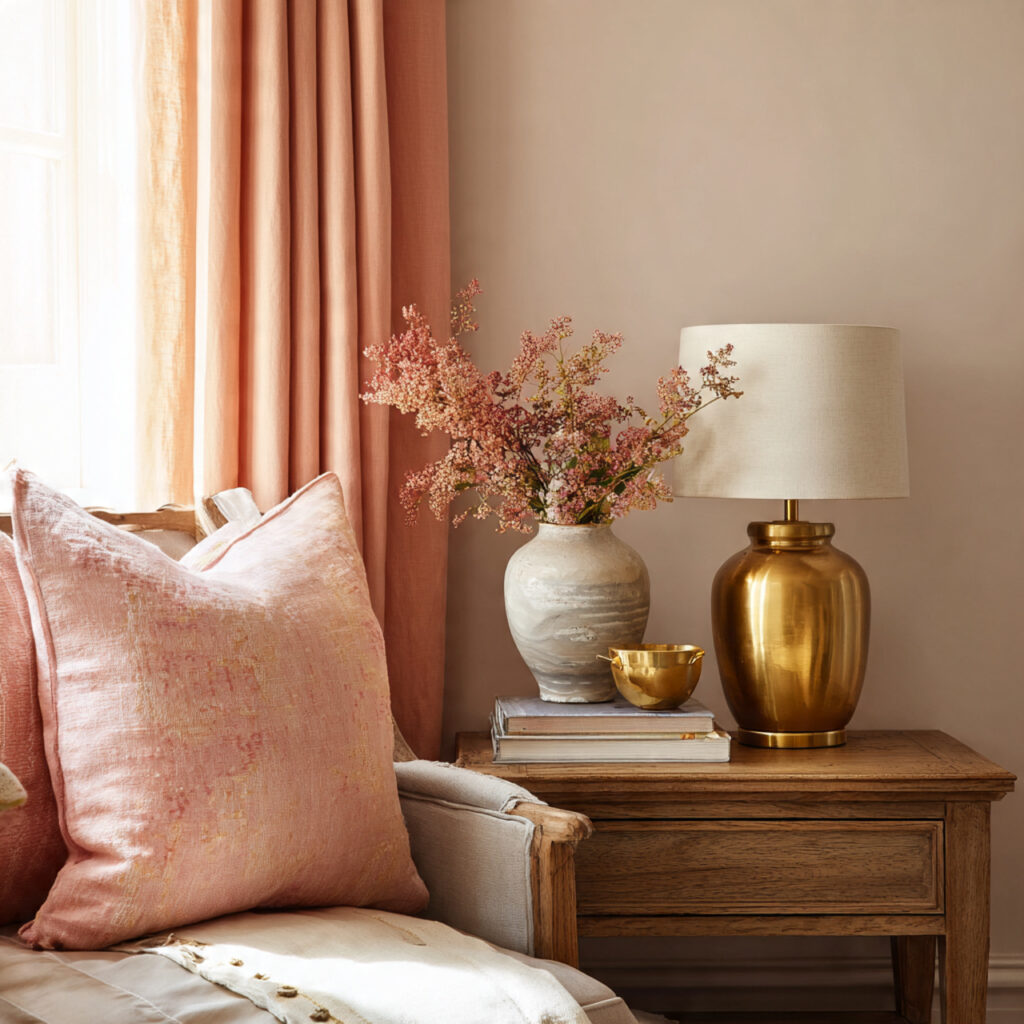
Build a room palette around warm peach as a soft wall tone or key accent color, natural linen as the primary textile, and brushed brass as the metal finish throughout. Use warm peach on the main feature wall in a limewash or flat paint finish and keep all upholstery in natural linen tones. Introduce brass through a pendant light, cushion trim, a side table base, or picture frames.
This combination reads as warm and spring-like without being obvious or overtly floral, and the brass accents give it a luxurious, polished quality that prevents the soft palette from feeling too casual.
16. Trailing Hanging Plants as Ceiling and Window Feature
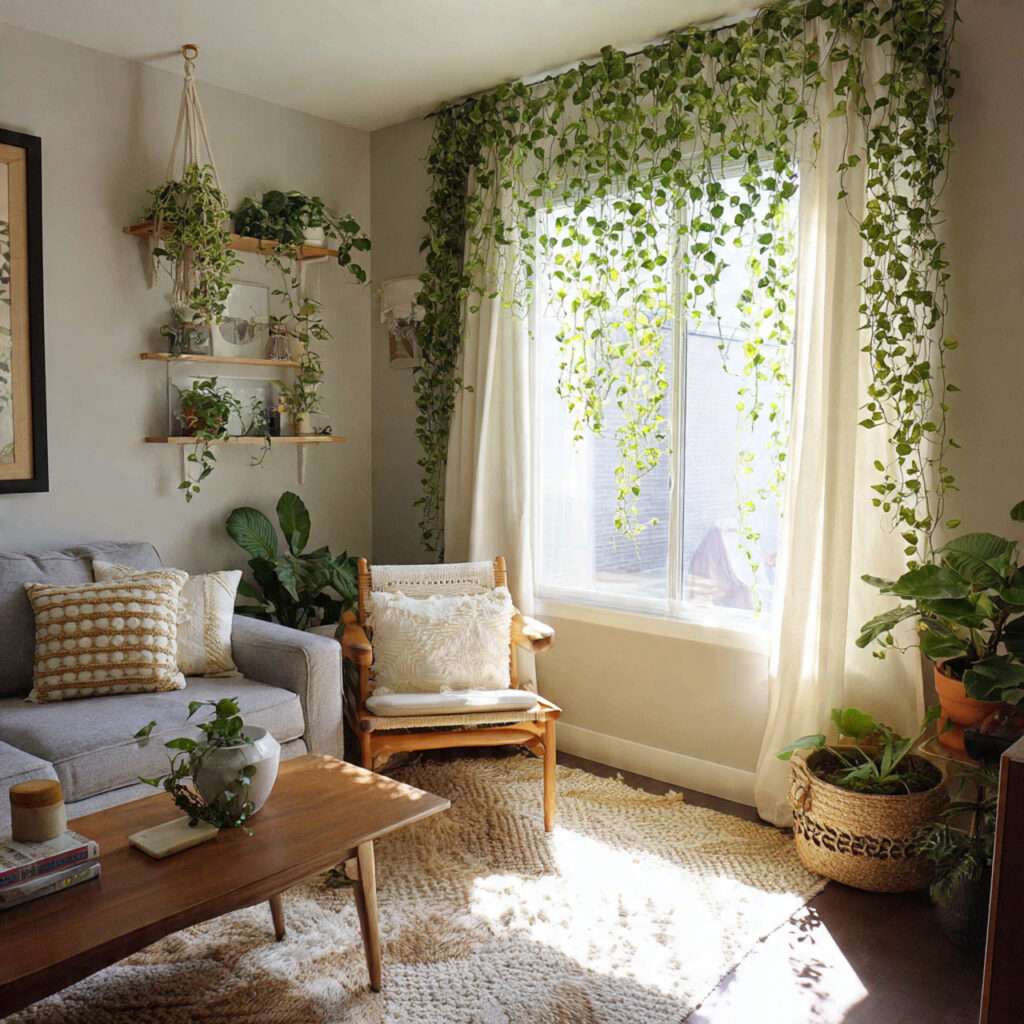
Install ceiling hooks or curtain rod hooks and hang trailing plants, pothos, ivy, string of pearls, or tradescantia, in woven or ceramic hanging planters at different heights across a window or in a corner of the room. A collection of three to five hanging plants at varying heights creates a living, moving element in the room that transforms the entire visual quality of the space.
The trailing greenery adds color, oxygen, and a deeply spring-like energy that no decor purchase can fully replicate. Keep the planters cohesive in material, all woven, all terracotta, or all white ceramic, for a styled rather than scattered result.
17. Soft Blue and White Porcelain Vase Collection as Styled Display
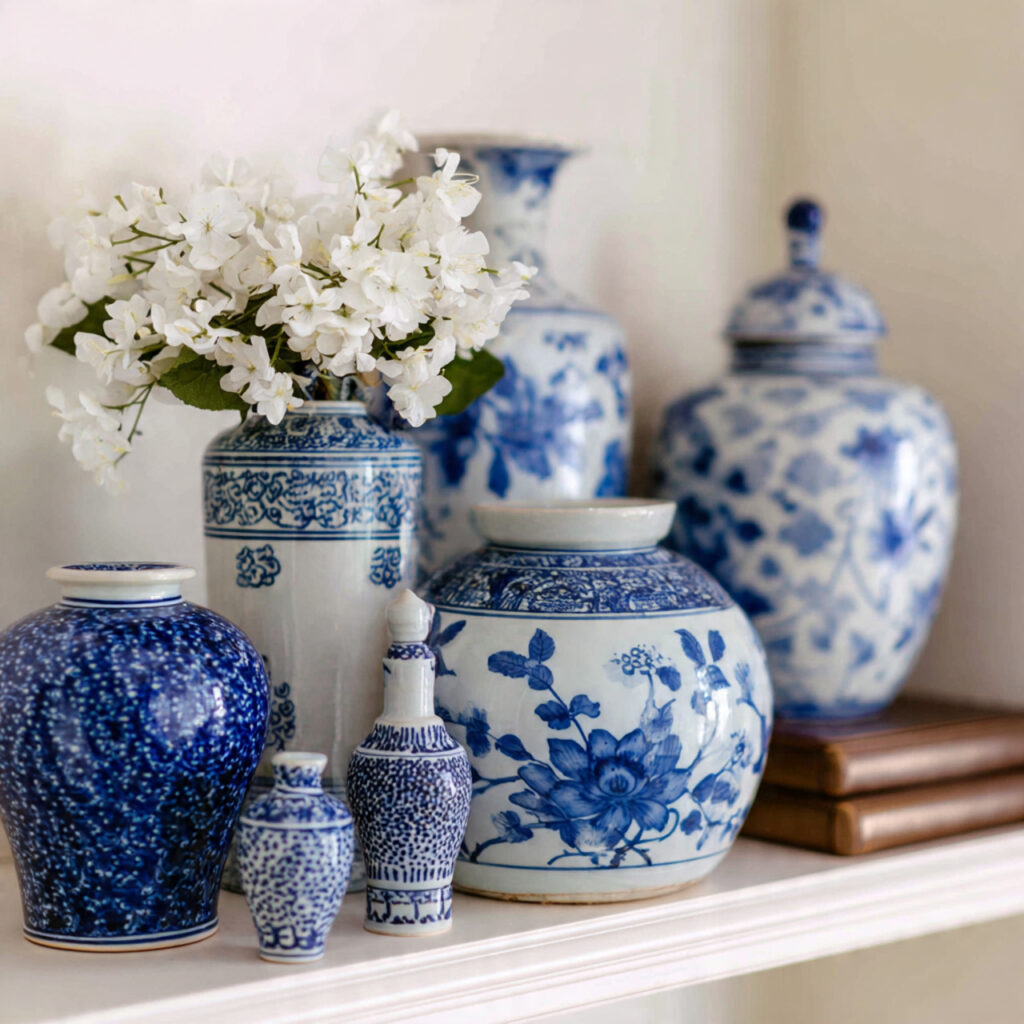
Arrange a curated collection of blue and white porcelain or ceramic vases in varying heights as a styled display on a console, shelf, or mantel. Use five to seven pieces in a mix of shapes, tall cylindrical, wide-mouthed, and small rounded, keeping all in the same blue and white palette with varied patterns. Fill the tallest vases with fresh or dried white florals and leave the smaller ones empty as sculptural objects.
A grouped ceramic display of this type creates a strong visual moment that references traditional European spring interior styling and brings a collected, personal quality to the room.
18. Pale Aqua or Duck Egg Blue Painted Furniture Piece
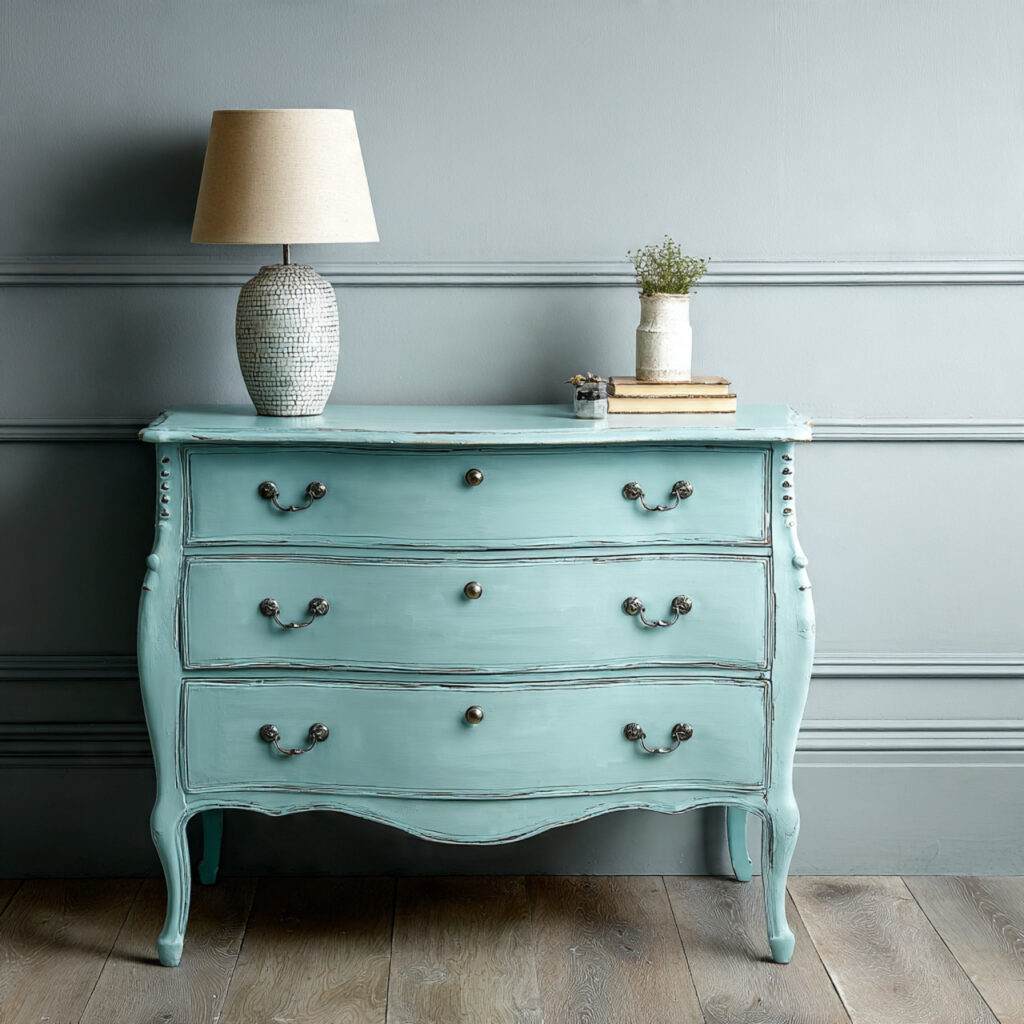
Paint one existing furniture piece, a side table, a console, a small cabinet, or a bookshelf, in a pale aqua or duck egg blue tone. This single painted piece introduces a spring color note into the room without committing to a full palette change and it gives older or plain furniture a fresh, custom quality.
Duck egg blue is one of the most universally flattering spring interior colors and it pairs beautifully with warm whites, natural wood tones, blush pinks, and soft greens. Use a chalk or eggshell paint for a soft, period-appropriate finish and distress the edges very lightly for an intentionally aged look.
19. Fresh White Slipcover Transformation on Existing Sofa
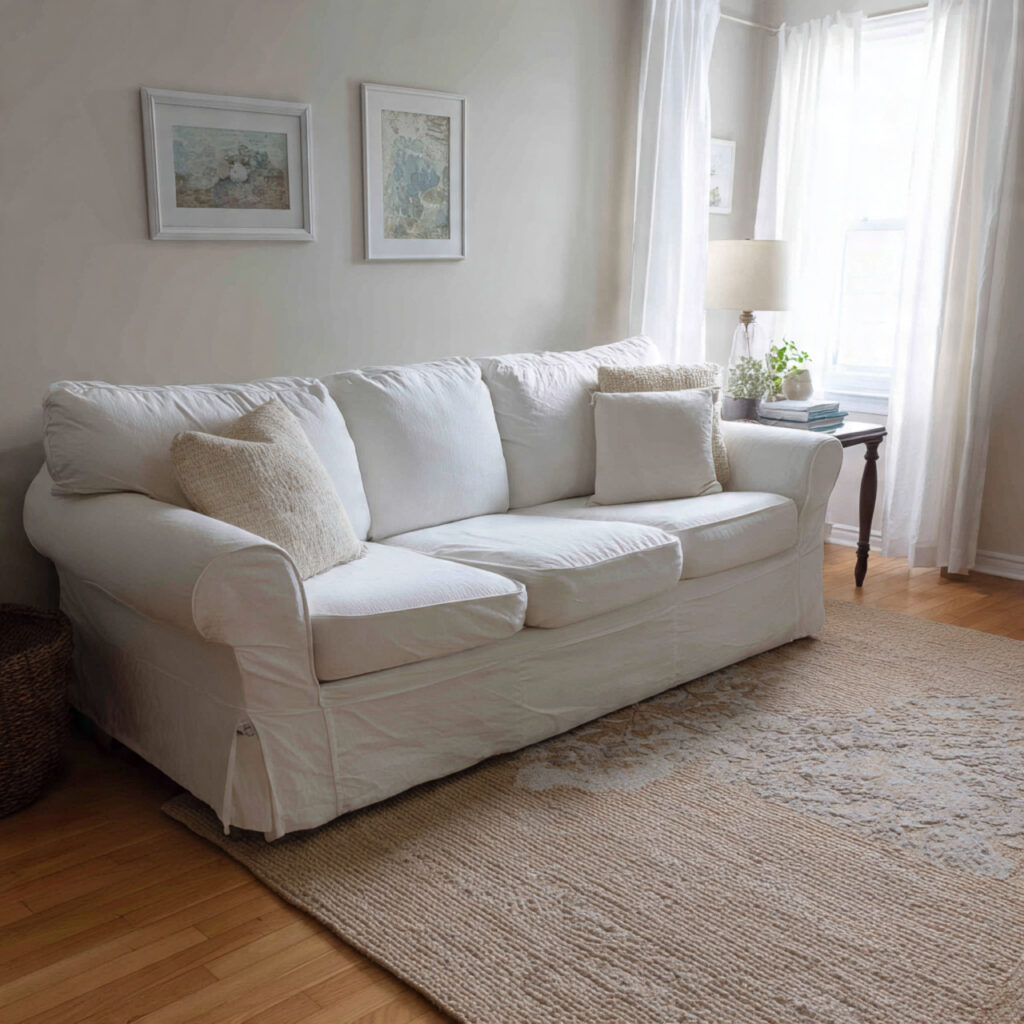
Fit a fresh white or warm ivory linen slipcover over your existing sofa and style it as the central spring summer furniture piece in the room. Slipcovers are one of the most cost-effective and visually dramatic seasonal changes possible. A crisp white linen slipcover immediately signals freshness, breathability, and seasonal transition.
Style it with spring-toned cushions, a lightweight throw, and a fresh plant nearby so the slipcover sits within a fully considered spring summer arrangement rather than looking like a protective cover. Wash and re-dress the slipcover every few weeks through the season to keep the whole setup looking bright and intentional.
20. Soft Floral or Abstract Watercolor Art as Room Color Anchor
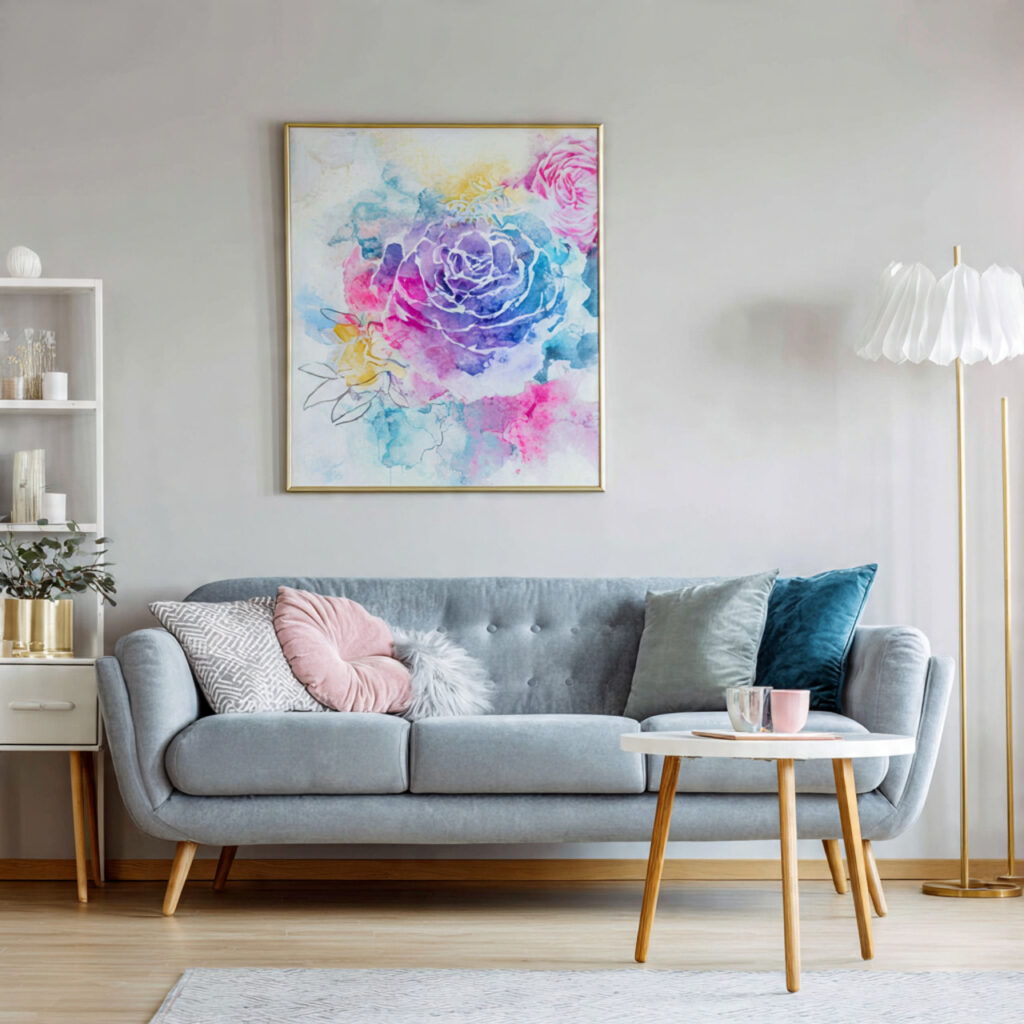
Choose one large-scale piece of art featuring soft florals, abstract botanicals, or a watercolor-style composition in your room’s spring palette, blush, sage, warm white, lavender, or peach, and use it as the color anchor for all other design decisions in the room. Hang it prominently, above the sofa, above the mantel, or on the main feature wall, and pull two or three tones from the piece into your cushions, ceramics, and throws.
This approach gives the room a cohesive, curated quality where every element feels connected and intentional. Choose a piece at least 60 by 80 centimeters to give it enough presence to function as a true room anchor.
21. Natural Linen Roman Blind With Woven Trim Detail
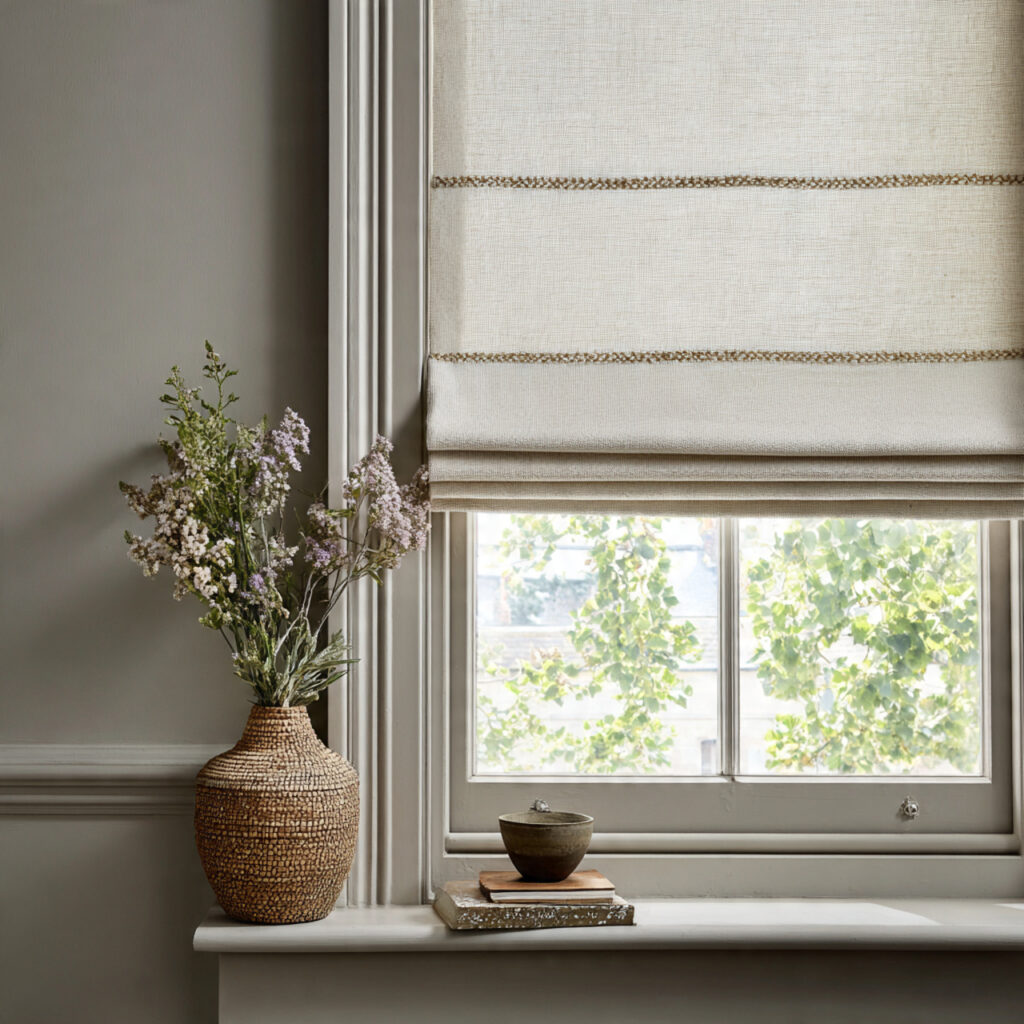
Replace heavy or synthetic window blinds with simple natural linen Roman blinds in warm white or oat, finished with a woven tape trim in a contrasting natural tone. Roman blinds in linen fabric filter light beautifully, creating a warm, diffused glow in the room when pulled down and folding into a clean, minimal stack when raised.
The woven trim detail gives them an artisanal, handmade quality that connects to the broader natural material story of a spring summer interior. This window treatment works especially well in rooms with smaller windows or where floor-length curtains are not practical.
22. Soft Ochre Yellow and White Graphic Cushion Arrangement
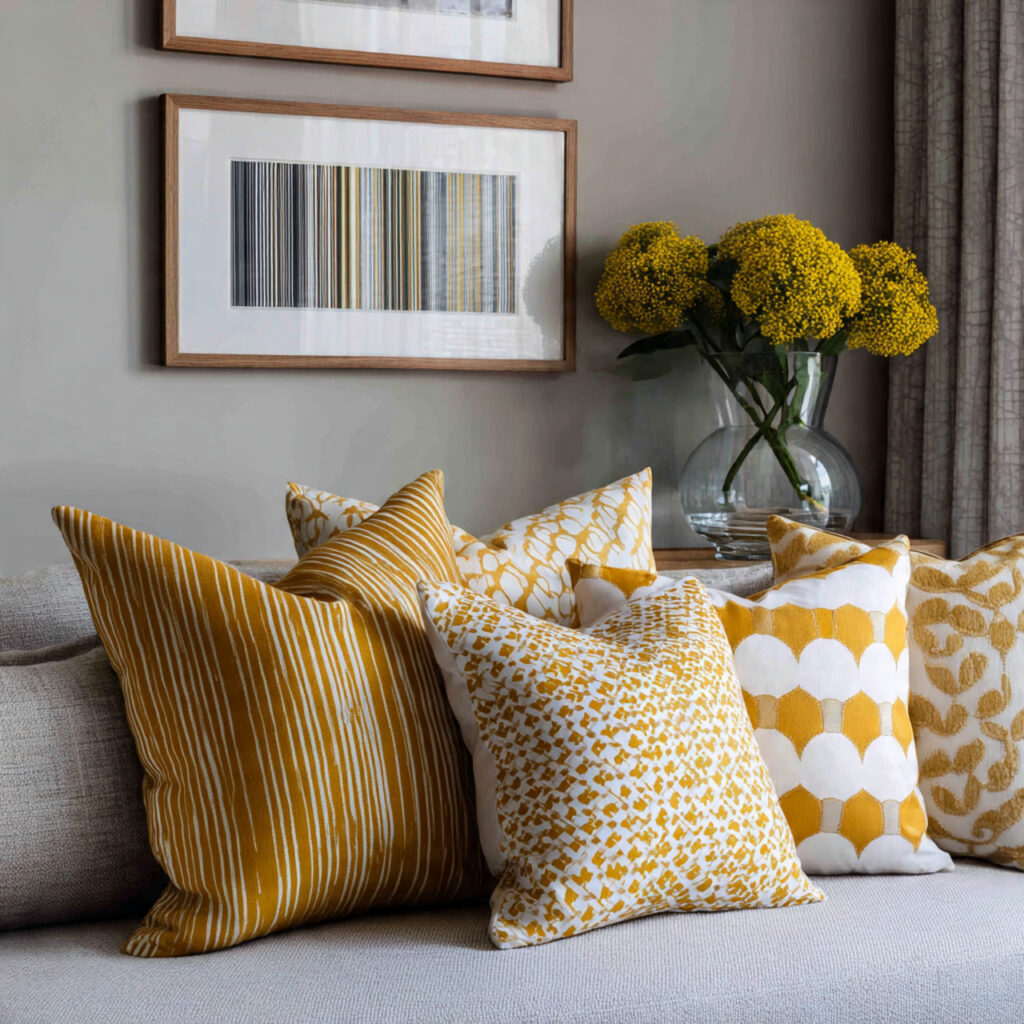
Style the main sofa with a bold but carefully edited cushion arrangement using soft ochre yellow and white as the two key tones. Use three large cushions in plain warm white linen, two medium cushions in soft ochre, and one lumbar cushion featuring a simple graphic or geometric print in both tones.
Ochre yellow is one of the strongest spring summer accent colors because it references sunlight, warmth, and the natural world without being aggressive or overly bright. Kept in the soft, dusty tone rather than a sharp primary yellow, it gives a living room a confident, modern spring energy that looks completely current.
23. Statement Potted Tree as Indoor Architectural Element
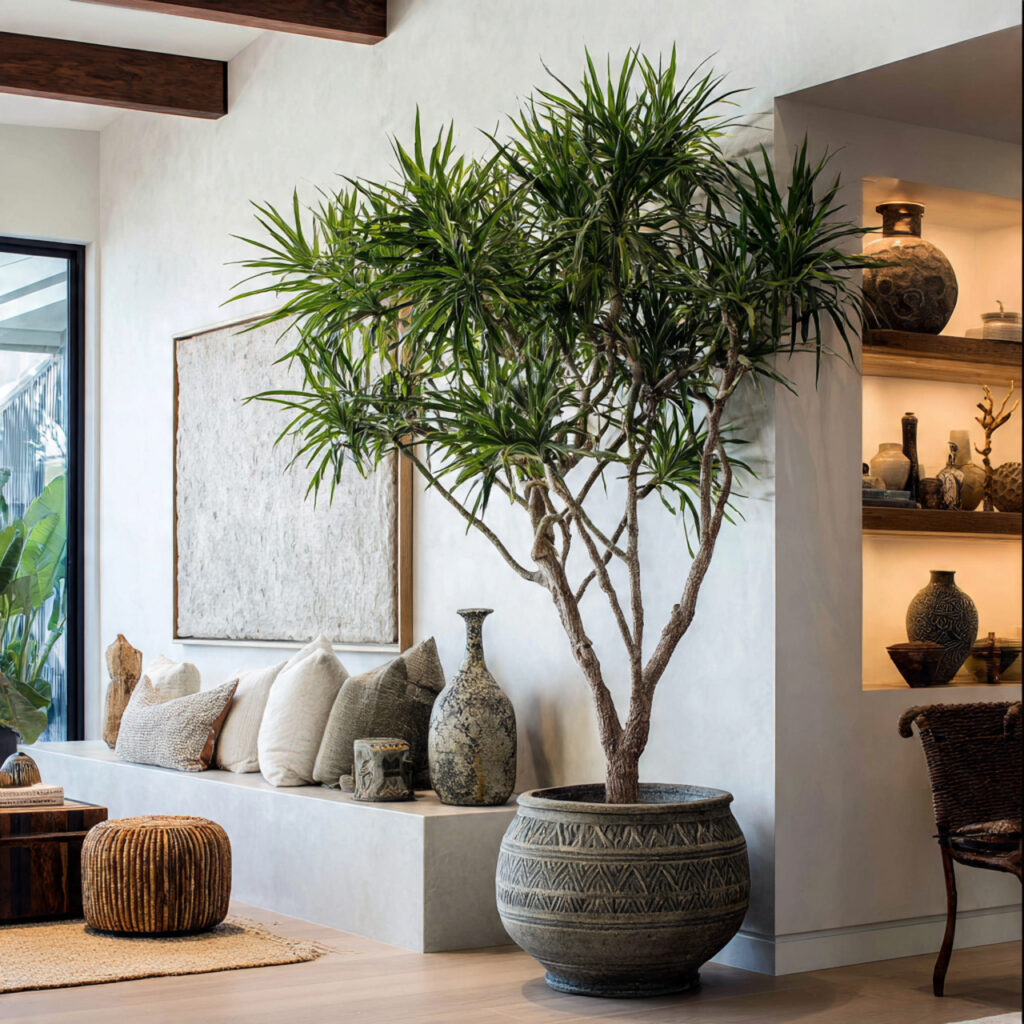
Place one large statement indoor tree, a fiddle-leaf fig, a bird of paradise, a large olive tree, or an oversized ficus, in a substantial ceramic or stone planter and position it in the corner of the room beside a window or at the end of the sofa. At full scale, an indoor tree functions as architecture rather than decoration.
It fills vertical space, brings living color and texture, and transforms the feeling of the entire room in a way that no inanimate object can. Choose a planter in a tone that connects to the room’s palette and keep the surrounding furniture simple so the tree remains the visual focal point.
24. Open-Plan Spring Summer Layout With Furniture Pulled to Center
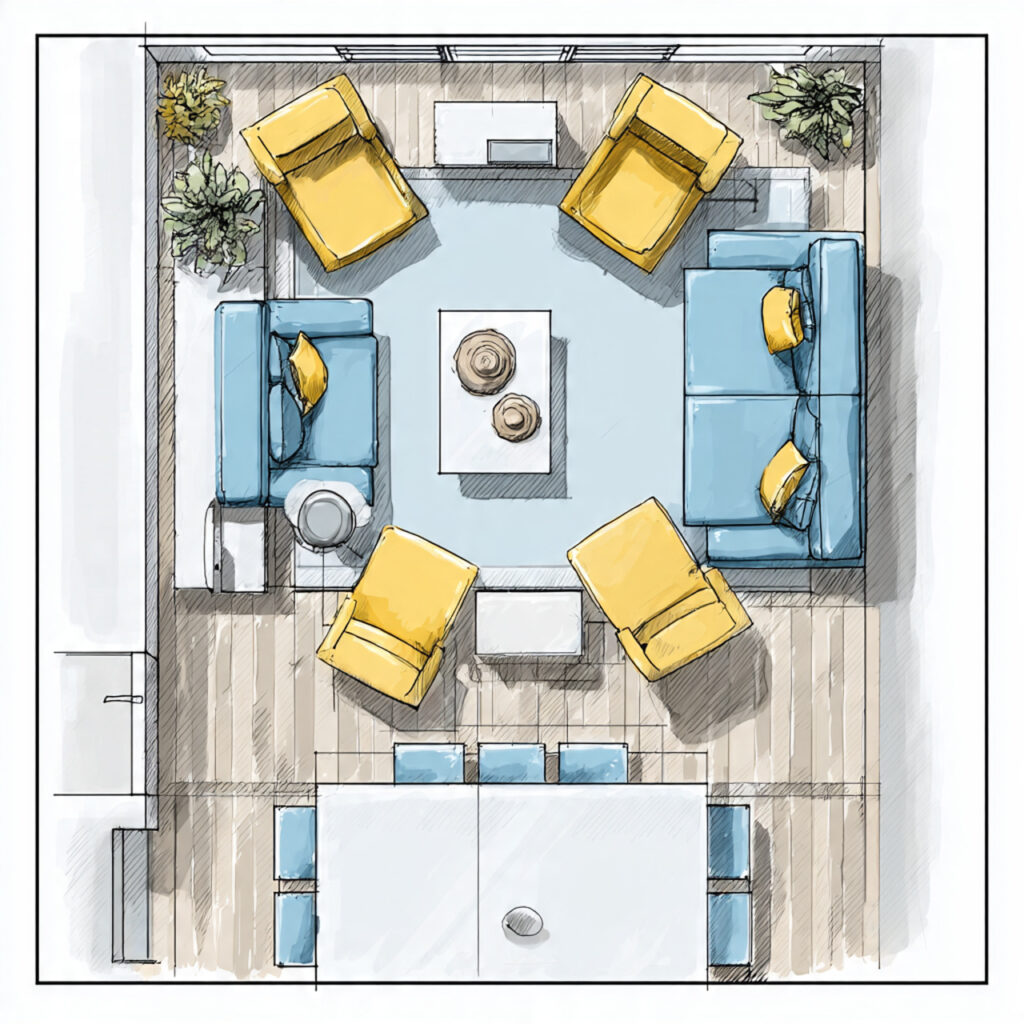
Reconfigure your entire living room layout by pulling all furniture away from the walls and creating a central, open arrangement on a large area rug. Remove unnecessary side pieces, clear the floor perimeter, and let the center of the room breathe.
This layout shift is one of the most transformative spring summer design moves because it immediately makes the room feel larger, more open, and more intentional. Pair it with the lightest possible window treatments so maximum natural light enters from every direction, and keep surfaces clear of clutter so the openness of the arrangement reads all the way from the front door.
A spring summer living room is about lightness in every sense: lighter colors, lighter materials, more light from the windows, and a lighter arrangement overall. The 24 ideas above cover every layer of the room and every design style, from soft and romantic to clean and modern. You do not need to implement all of them. Choose three or four that feel most aligned with your space and start there. Refresh follows quickly when the right changes are made in the right places. This season, let your living room catch up with the world outside.