23 Japandi Living Room Ideas That Feel Calm and Minimal

Creating a Japandi living room is about blending Japanese minimalism with Scandinavian functionality to achieve serene, balanced spaces that promote tranquility. Japandi living room design celebrates natural materials, neutral color palettes, and intentional furniture choices that transform your space into a peaceful sanctuary. Whether you live in a small apartment or spacious home, these Japandi design ideas will help you craft a living room that reflects simplicity, quality, and mindful living principles.
From low-profile furniture to organic textures, Japandi interior design emphasizes harmony, craftsmanship, and the beauty of imperfection through wabi-sabi philosophy. These 23 Japandi living room ideas showcase the latest trends in calm, minimal styling, helping you achieve a comfortable yet uncluttered environment that nurtures wellbeing and reflects your appreciation for thoughtful, timeless design aesthetics.
1. Low-Profile Sofa

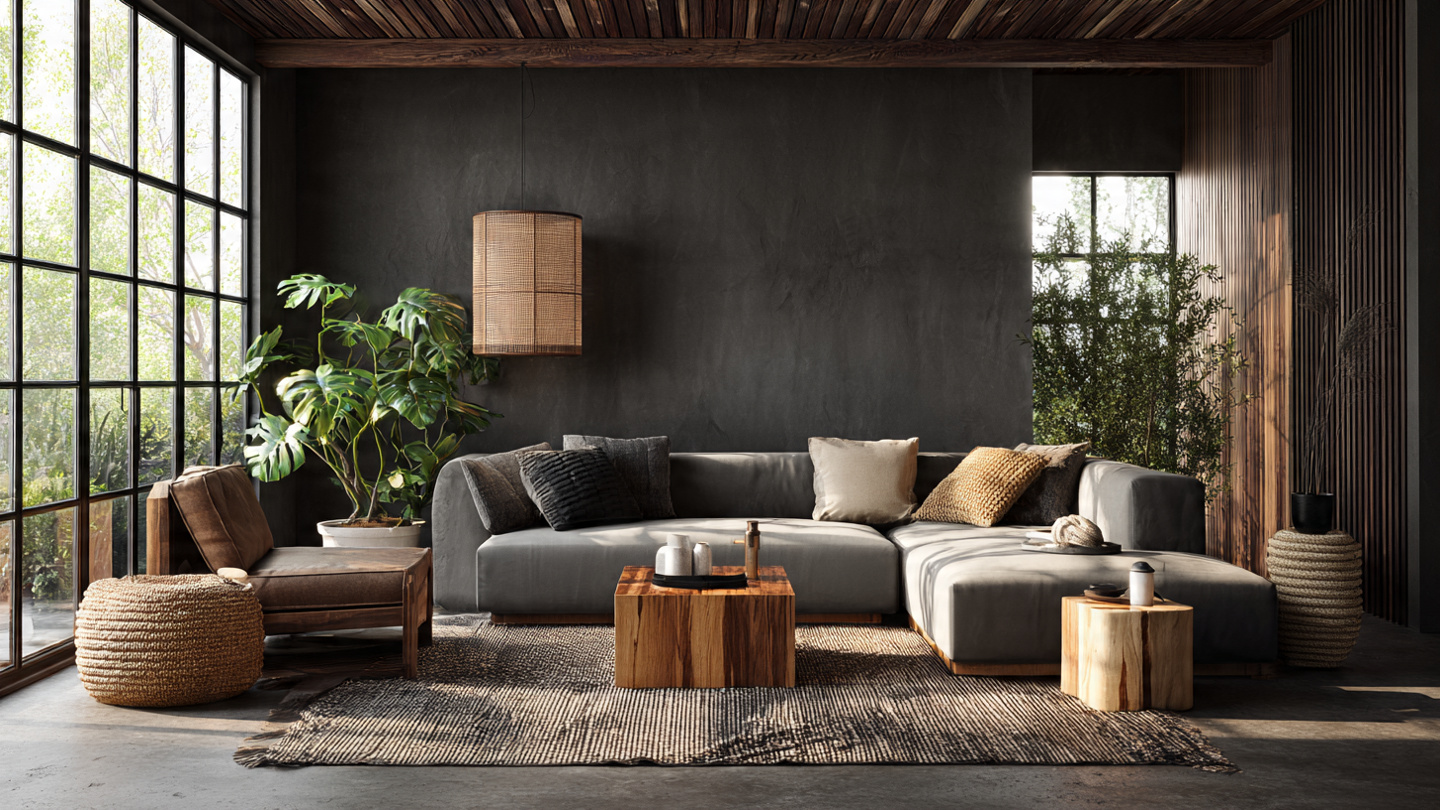
A low-profile sofa creates grounded seating that emphasizes horizontal lines and connection to the floor in true Japanese tradition. These streamlined sofas feature clean lines, minimal ornamentation, and comfortable cushions without excessive bulk or visual weight. The low seating encourages relaxation while maintaining the open, airy feeling essential to Japandi aesthetics.
Choose sofas in neutral colors like beige, gray, or oatmeal with wooden legs in light oak or walnut. The simplified form focuses attention on quality materials and craftsmanship rather than decorative details or trendy embellishments.
Also Read: 26 Cozy Modern Farmhouse Living Room Ideas That Feel Warm and Inviting
2. Natural Wood Coffee Table
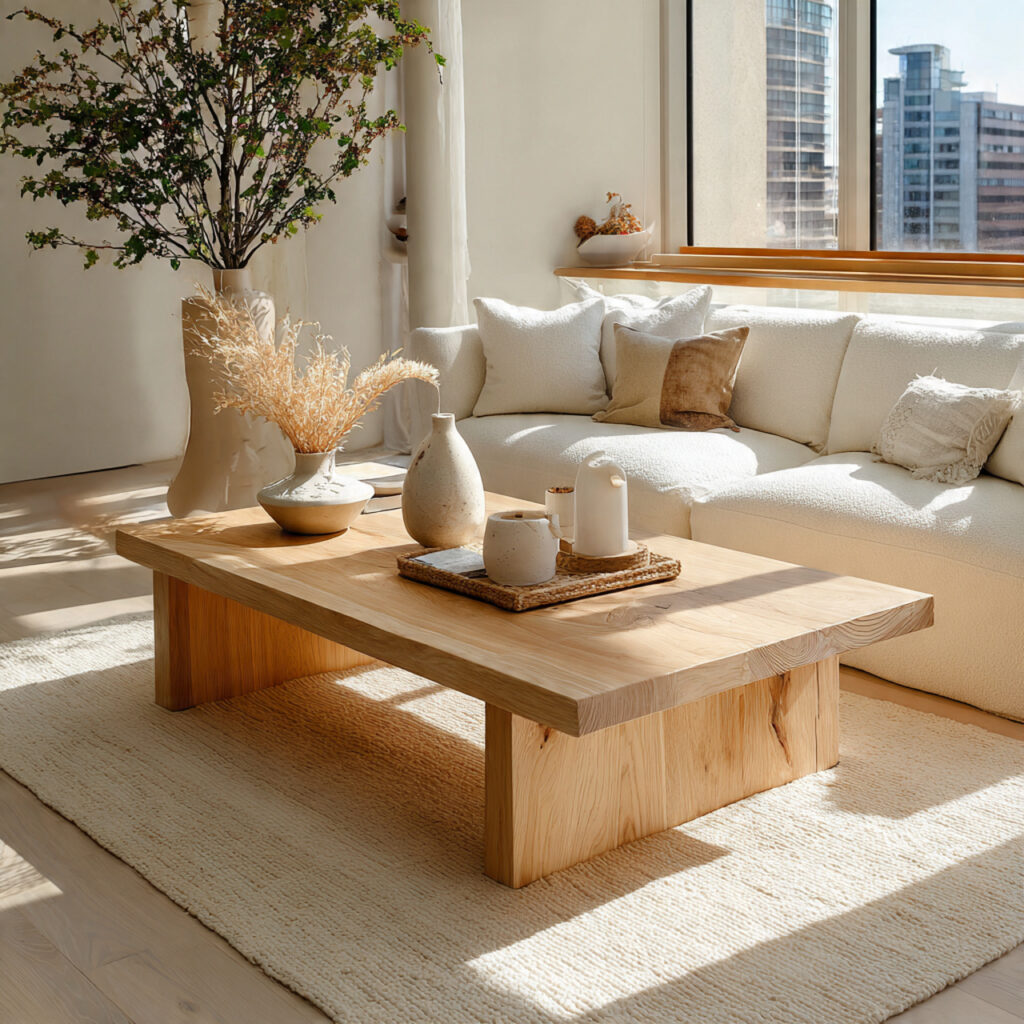
A natural wood coffee table serves as a functional centerpiece that celebrates organic beauty through visible grain patterns and minimal processing. Japanese and Scandinavian designs both honor wood’s natural character, making simple wooden tables perfect for Japandi spaces. Choose designs with clean lines, smooth finishes, and subtle details that showcase material quality.
Select light woods like oak, ash, or birch for Scandinavian influence, or darker walnut for Japanese sensibility. The natural variations in wood grain ensure each table is unique while maintaining the minimalist aesthetic central to Japandi design.
Read More: 29 Wabi Sabi Bedroom Ideas That Feel Natural and Peaceful
3. Shoji Screen Room Divider

A shoji screen room divider adds authentic Japanese architectural elements through translucent paper panels and wooden frames. These traditional screens filter light beautifully while creating subtle spatial divisions without solid walls. The geometric grid patterns add visual interest while maintaining the minimal, uncluttered appearance essential to Japandi interiors.
Use shoji screens to separate living areas from dining spaces or create privacy without blocking natural light. The sliding panels offer flexible space configuration that adapts to different needs throughout the day.
4. Neutral Color Palette
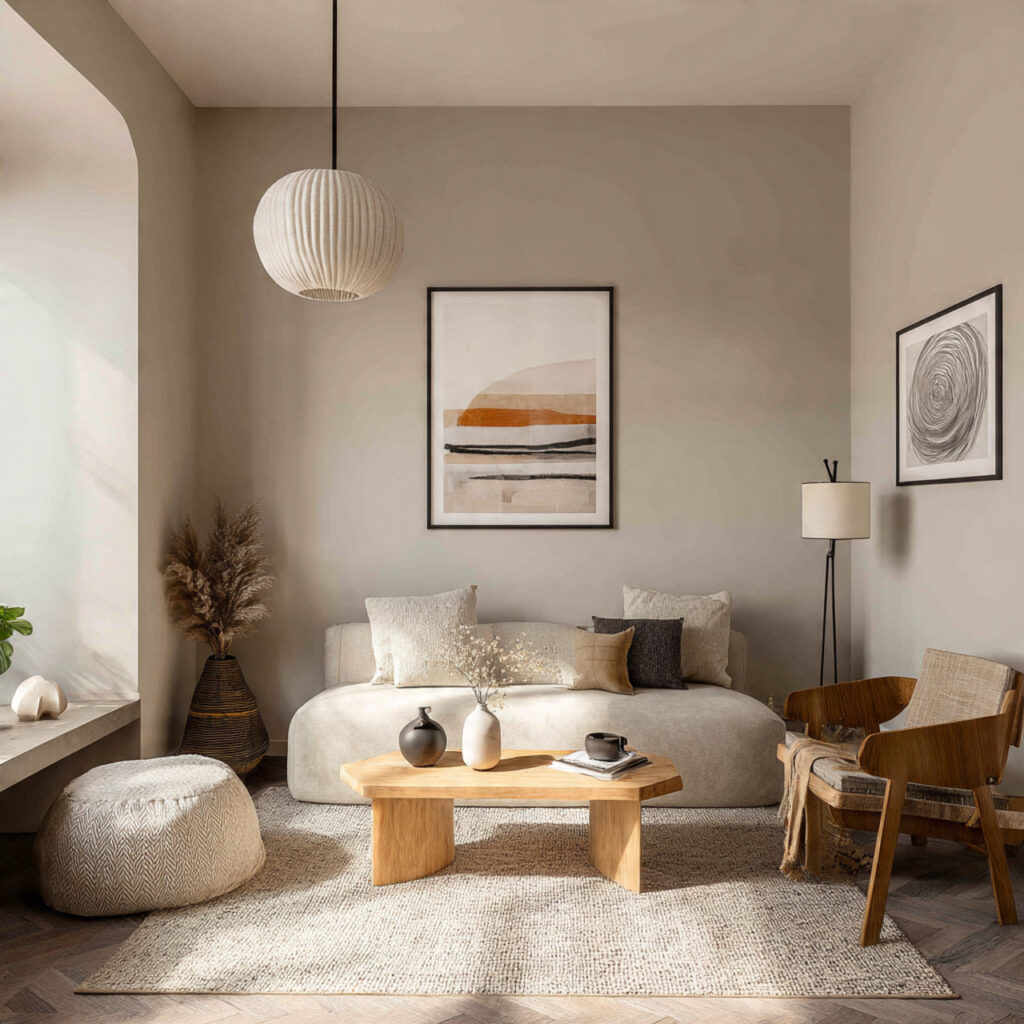
A neutral color palette creates a serene foundation through whites, beiges, grays, and warm earth tones that promote calm and mental clarity. Japandi design avoids bold colors in favor of subtle variations within neutral families that create depth without visual chaos. The restrained palette allows natural materials and textures to become focal points.
Layer different neutral shades through walls, furniture, and textiles for dimensional interest without color contrast. The monochromatic approach creates a cohesive, peaceful environment that reduces visual stimulation and promotes relaxation.
5. Tatami Mat Inspired Rug
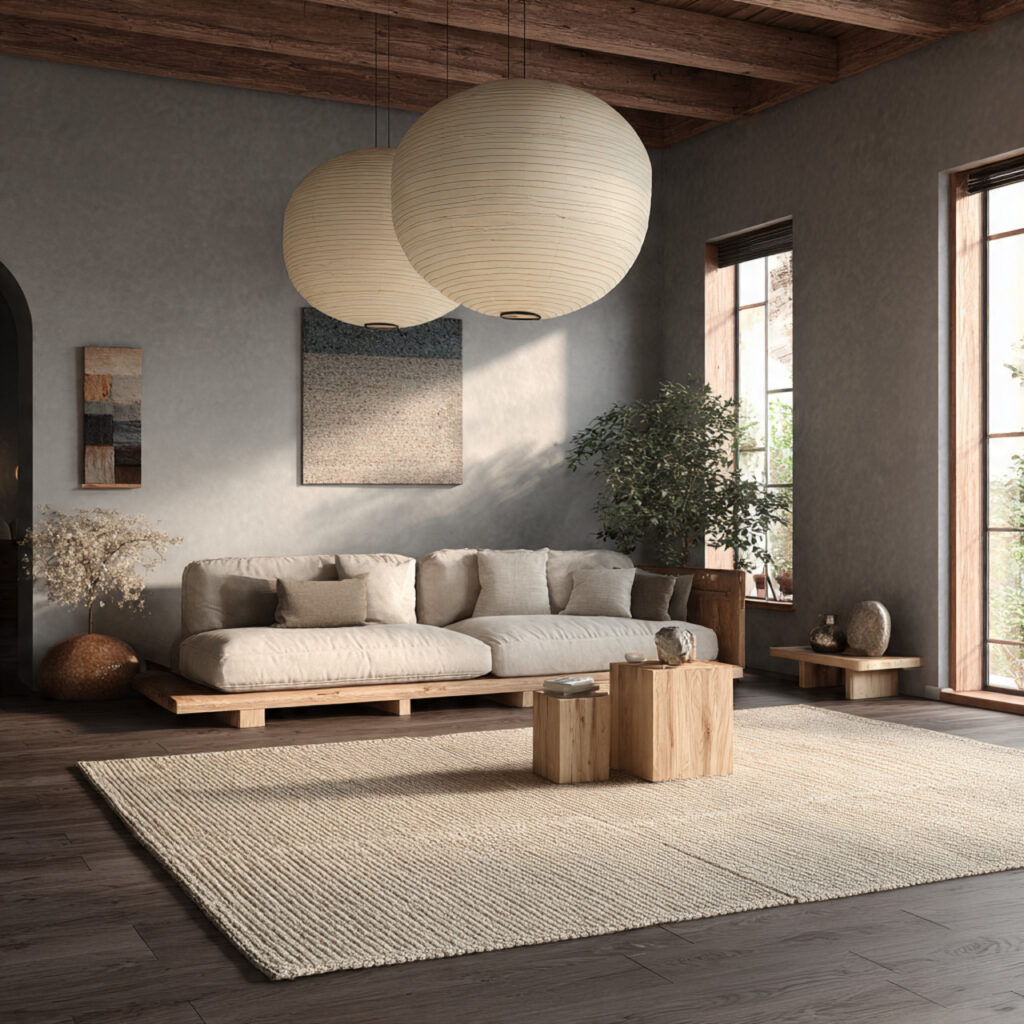
A tatami mat inspired rug brings Japanese flooring tradition into modern living rooms through woven natural fibers. These flat-weave rugs in jute, sisal, or wool create textured layers while maintaining minimal profile and organic aesthetic. The neutral tones and natural materials add warmth without overwhelming the space’s clean lines.
Choose rugs in sand, beige, or light gray tones that complement rather than contrast with flooring. The natural fiber texture adds tactile interest while the flat weave maintains the uncluttered, grounded feeling of Japandi design.
6. Minimalist Floating Shelves
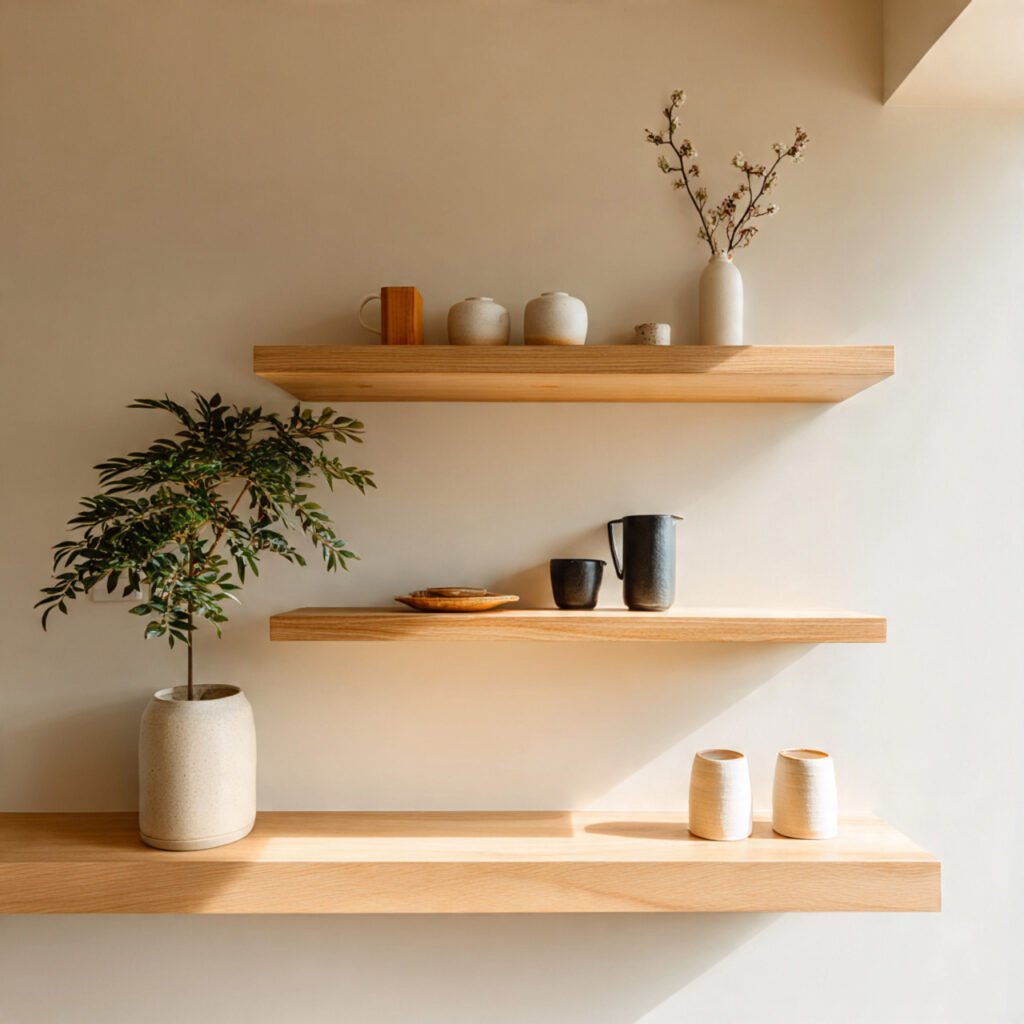
Minimalist floating shelves provide display and storage through clean-lined wooden ledges that appear to float without visible brackets. These simple shelves maintain wall space openness while offering practical storage for carefully curated objects. The floating design emphasizes lightness and simplicity central to both Japanese and Scandinavian aesthetics.
Style shelves sparingly with selected books, ceramics, and plants rather than crowded displays. The negative space around objects becomes as important as the items themselves in creating balanced, minimal compositions.
7. Paper Lantern Lighting
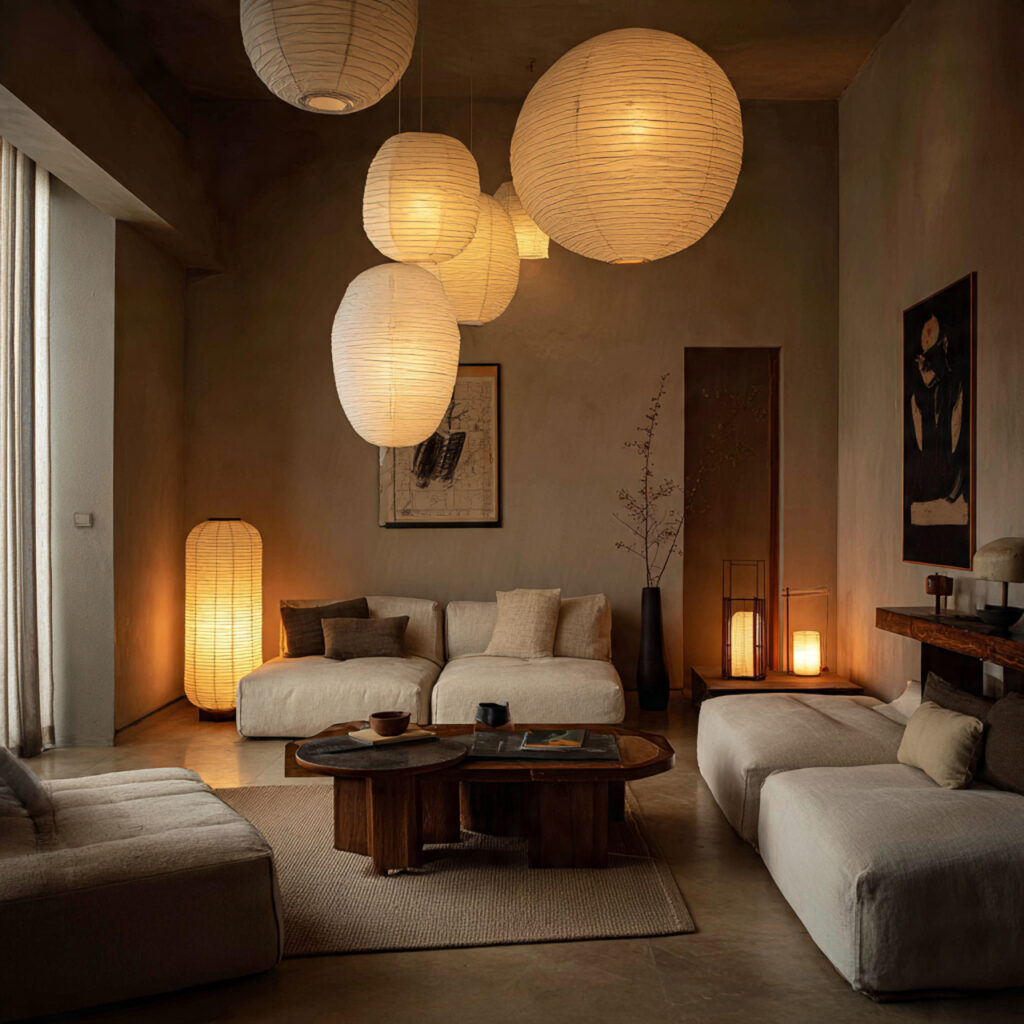
Paper lantern lighting adds soft, diffused illumination through traditional Japanese akari lamps or modern interpretations. These sculptural light fixtures create ambient glow while serving as artistic focal points with organic shapes. The paper material filters harsh light into gentle illumination that enhances the calm atmosphere.
Hang paper lanterns at varying heights for visual interest or use single large lanterns as statement pieces. The warm, diffused lighting creates an inviting ambiance perfect for evening relaxation and mindful living.
8. Wabi-Sabi Ceramics Display
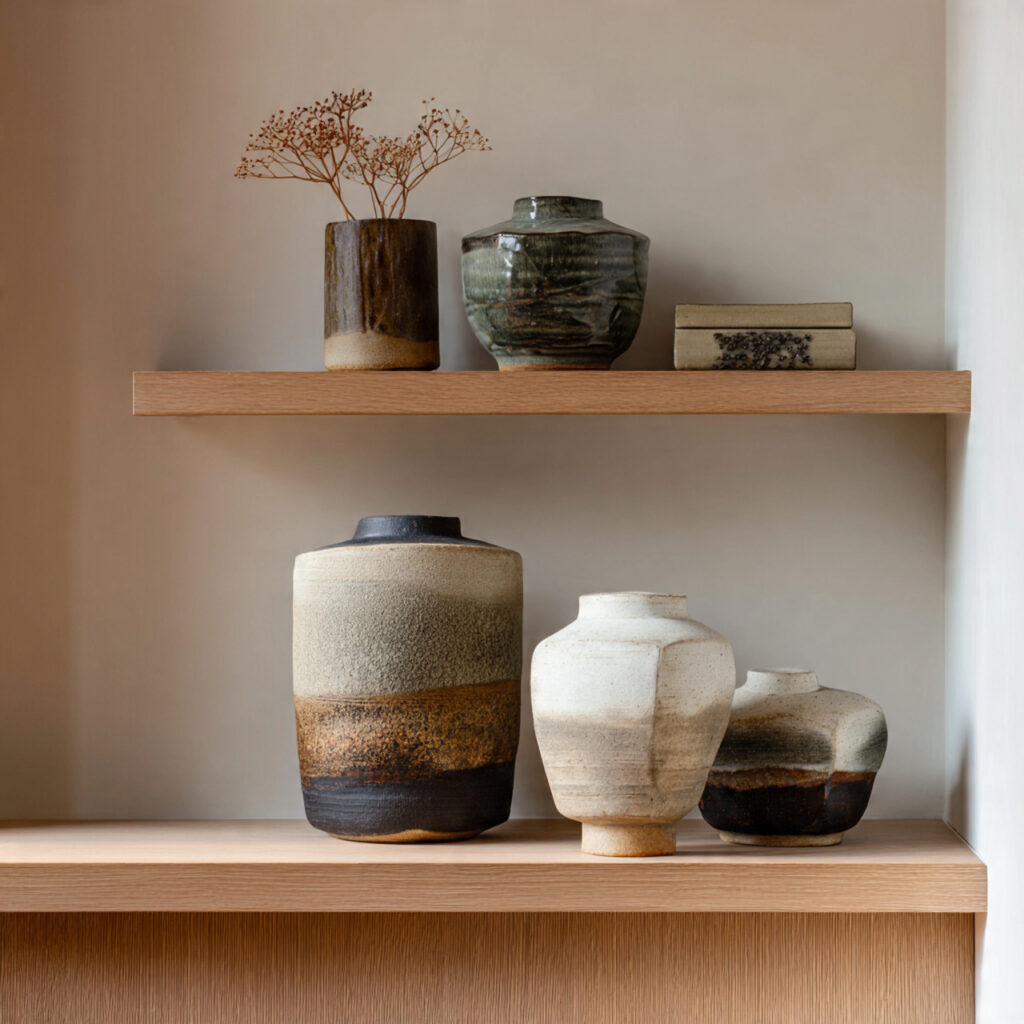
A wabi-sabi ceramics display celebrates imperfection through handmade pottery with irregular shapes, natural glazes, and artisanal character. This Japanese aesthetic philosophy finds beauty in impermanence and imperfection, making handcrafted ceramics perfect decorative elements. The organic forms and earth-toned glazes add warmth and humanity to minimal spaces.
Display ceramics individually with generous spacing to appreciate each piece’s unique qualities and craftsmanship. The curated collection demonstrates appreciation for artisan work and authentic materials over mass-produced perfection.
9. Floor Cushion Seating

Floor cushion seating creates casual, flexible arrangements that embrace Japanese tradition of low furniture and floor-level living. Large cushions in natural fabrics provide comfortable seating that can be easily rearranged or stored. The low seating perspective changes room perception and creates an intimate, relaxed atmosphere.
Choose cushions in linen, cotton, or wool in neutral colors that coordinate with the overall palette. Stack cushions for back support or arrange them around coffee tables for casual gatherings and mindful relaxation.
10. Indoor Bonsai or Ikebana
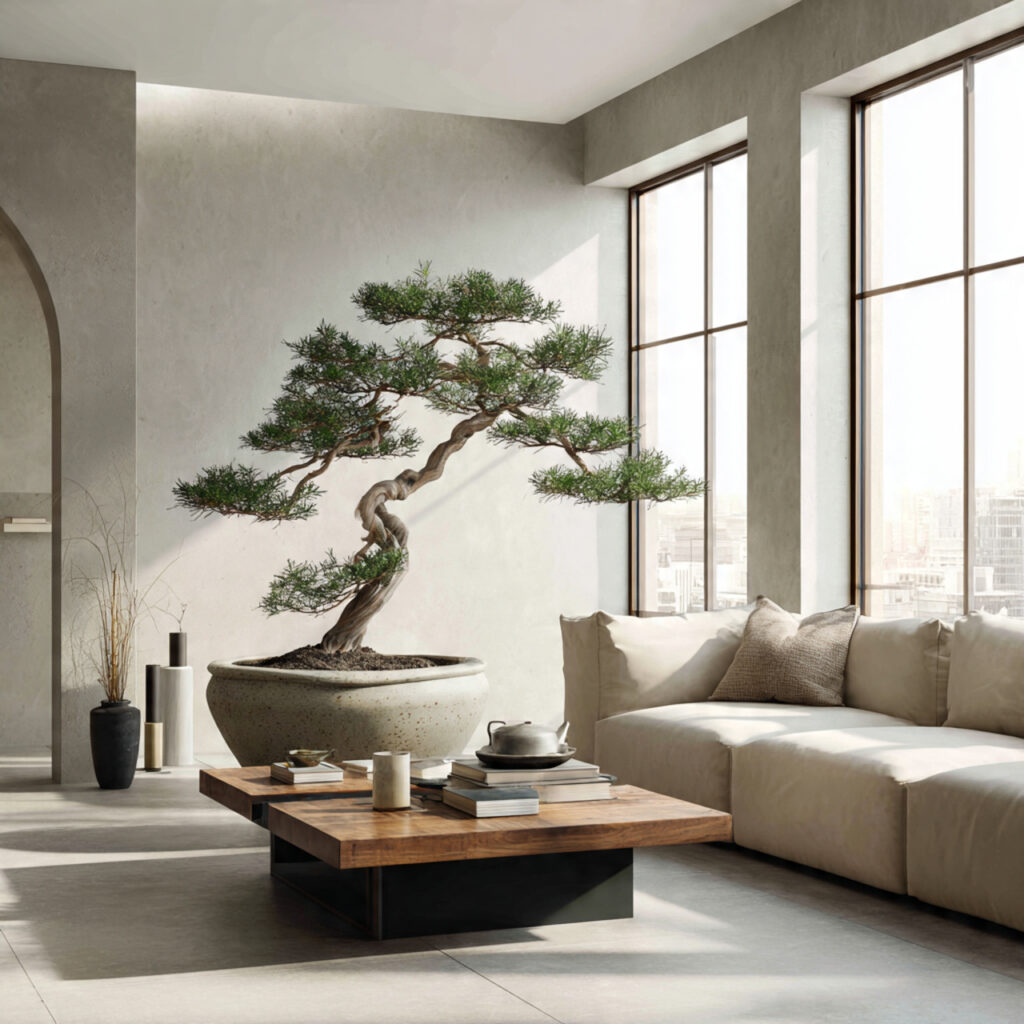
Indoor bonsai or ikebana arrangements bring living nature inside through Japanese horticultural and floral arts. These carefully composed plant displays celebrate natural beauty through minimal, intentional arrangements. A single bonsai tree or thoughtful ikebana composition becomes meditation on nature’s beauty and impermanence.
Position plant display where natural light enhances their beauty and supports their growth needs. The living elements add organic energy while maintaining the disciplined, minimal aesthetic of Japandi design.
11. Sliding Door Closets
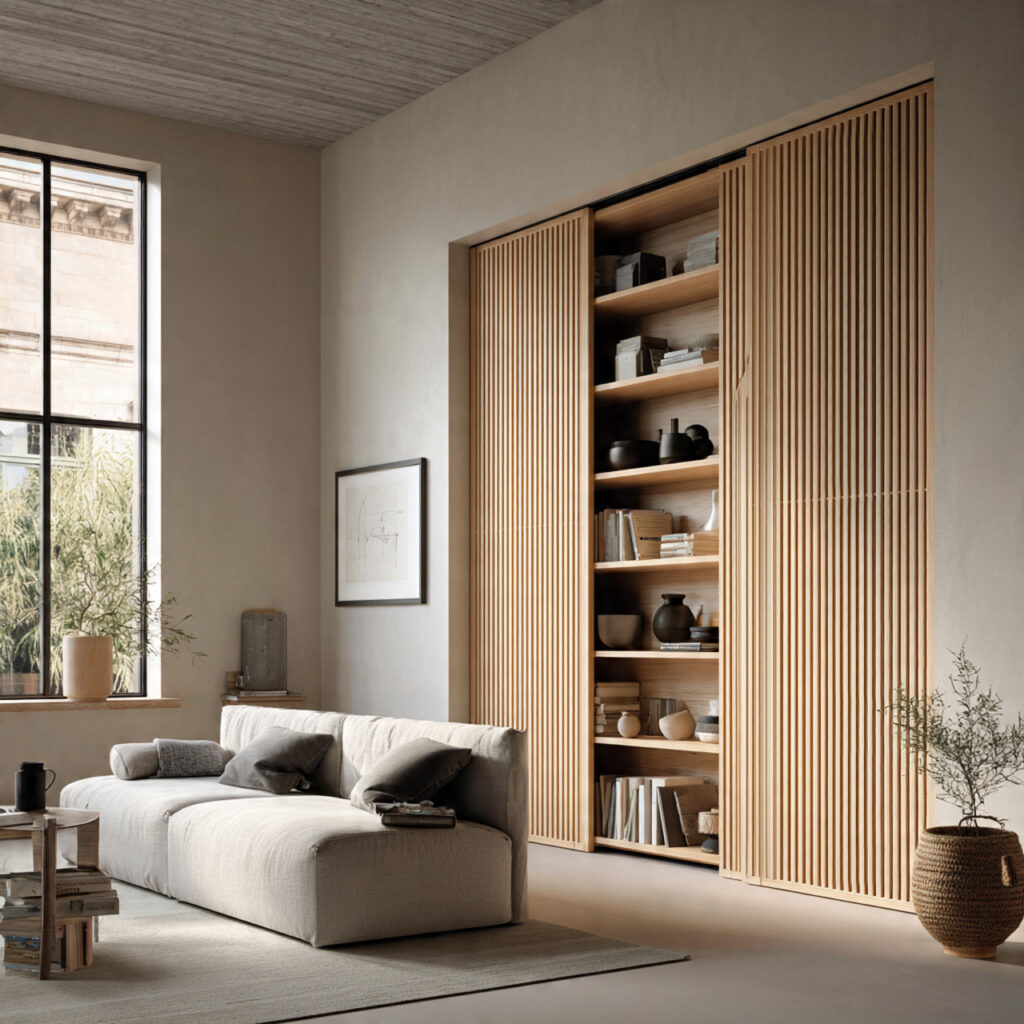
Sliding door closets maximize space efficiency while adding Japanese architectural influence through clean-lined panel systems. These space-saving doors eliminate swing clearance needs while maintaining smooth, minimal wall surfaces. Choose doors in light woods, frosted glass, or simple panels that complement the overall design aesthetic.
Sliding mechanisms reference traditional fusuma doors while providing modern storage solutions. The flush installation maintains uncluttered walls and contributes to the room’s serene, organized appearance.
12. Linen Textiles
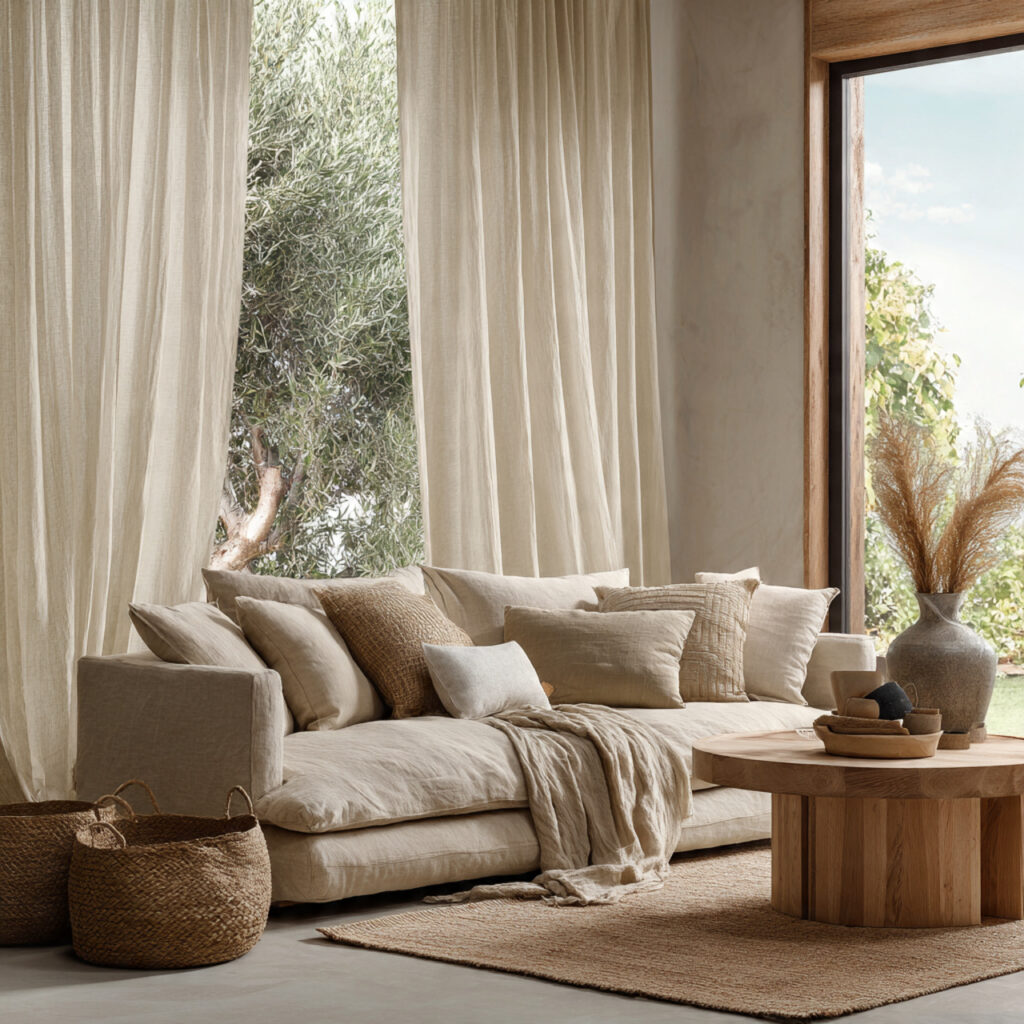
Linen textiles add natural texture through throw pillows, curtains, and upholstery in breathable, organic fabric. This sustainable material features characteristic texture and subtle wrinkles that align with wabi-sabi appreciation for natural imperfection. Linen’s neutral colors and organic feel perfectly bridge Japanese and Scandinavian design sensibilities.
Layer linen in various neutral shades for textural interest without pattern or color complexity. The natural fabric breathes well and ages beautifully, developing character that enhances rather than diminishes its appeal.
13. Wooden Slat Wall Treatment
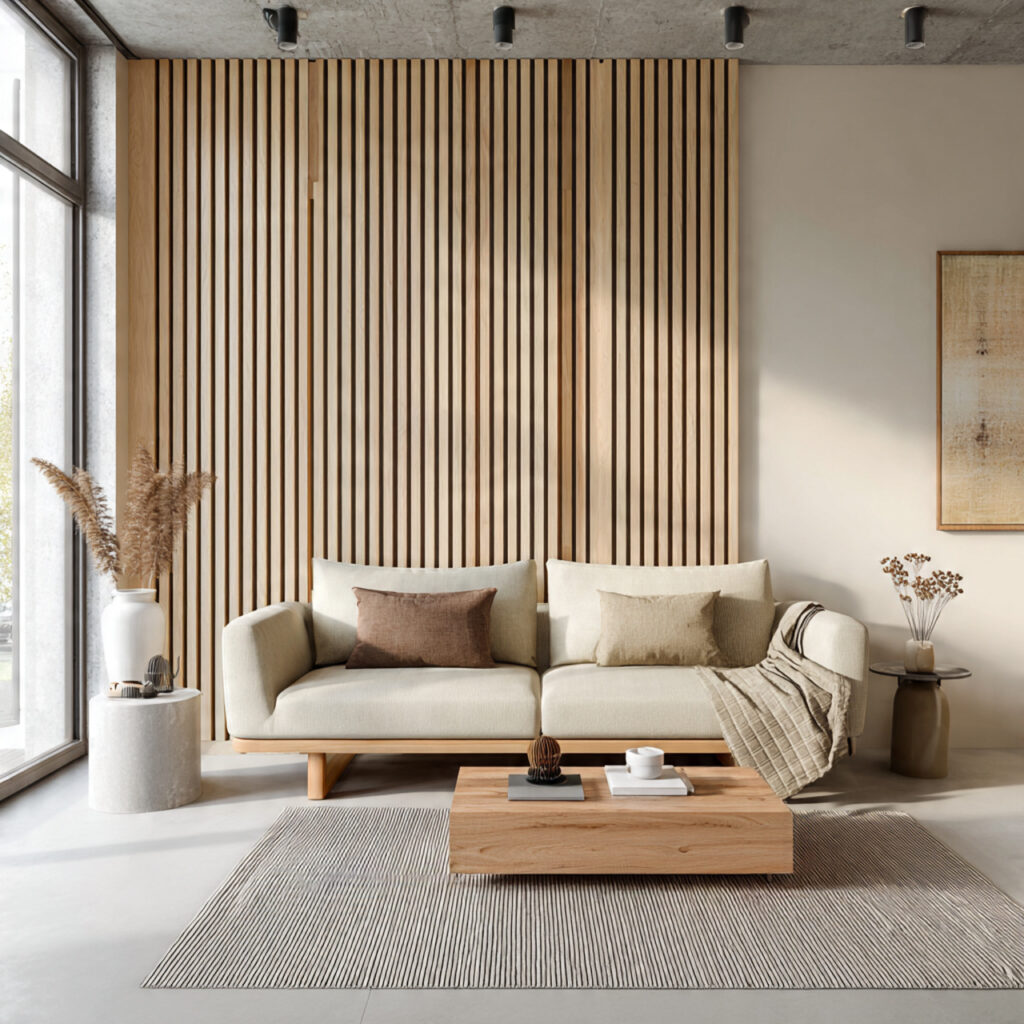
Wooden slat wall treatment creates architectural interest through vertical or horizontal wood panels with regular spacing. This design element adds texture and warmth while maintaining clean lines and geometric order. The natural wood brings organic elements to walls while the rhythmic spacing creates visual interest through shadow and light.
Install slat walls behind sofas as accent features or use them to define specific zones. The three-dimensional treatment adds depth without clutter while celebrating natural materials central to Japandi philosophy.
14. Simple Black Accents
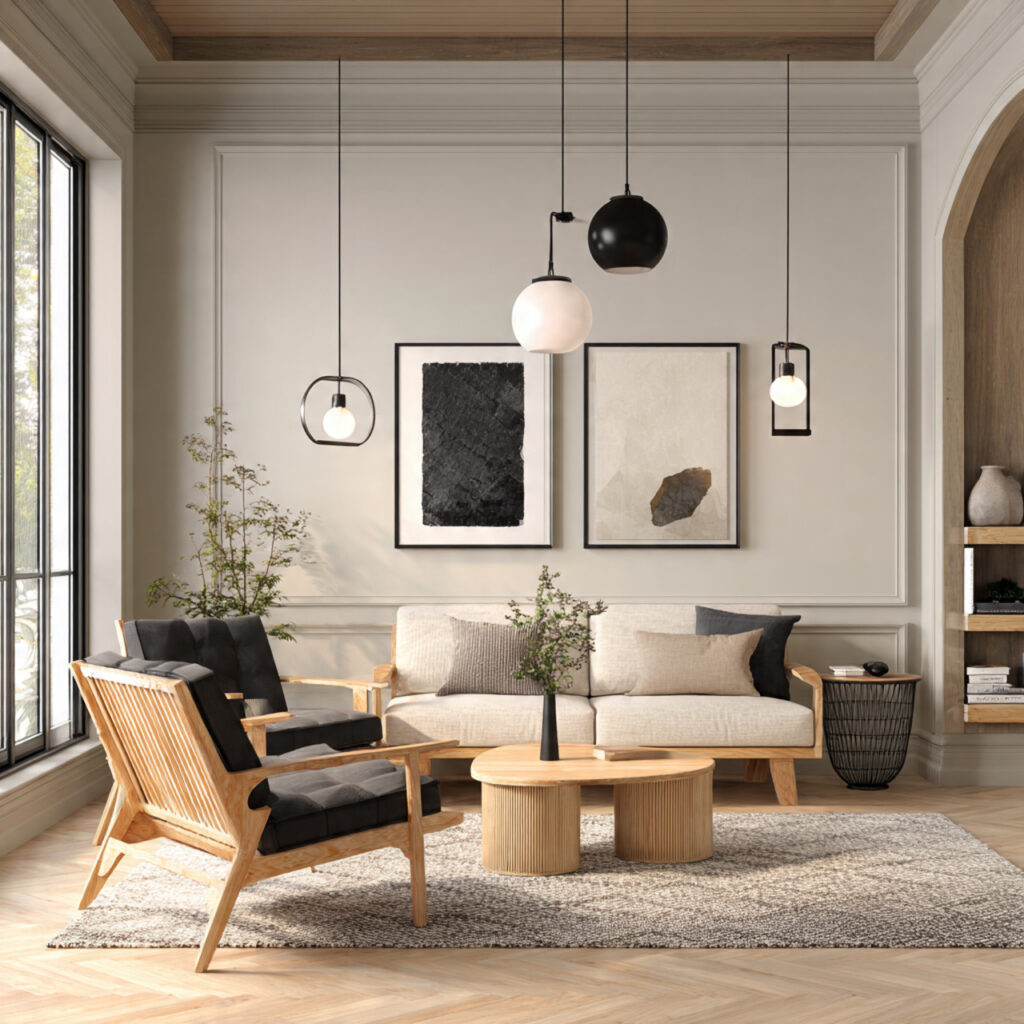
Simple black accents provide grounding contrast through carefully placed black elements in otherwise neutral spaces. Black window frames, light fixtures, or small decorative objects add definition and contemporary edge while maintaining minimal restraint. The strategic black placement creates visual anchors without overwhelming the calm palette.
Use black sparingly in hardware, frames, or single furniture pieces for maximum impact. The contrast helps define spaces and objects while maintaining the overall serene, uncluttered aesthetic.
15. Open Floor Plan
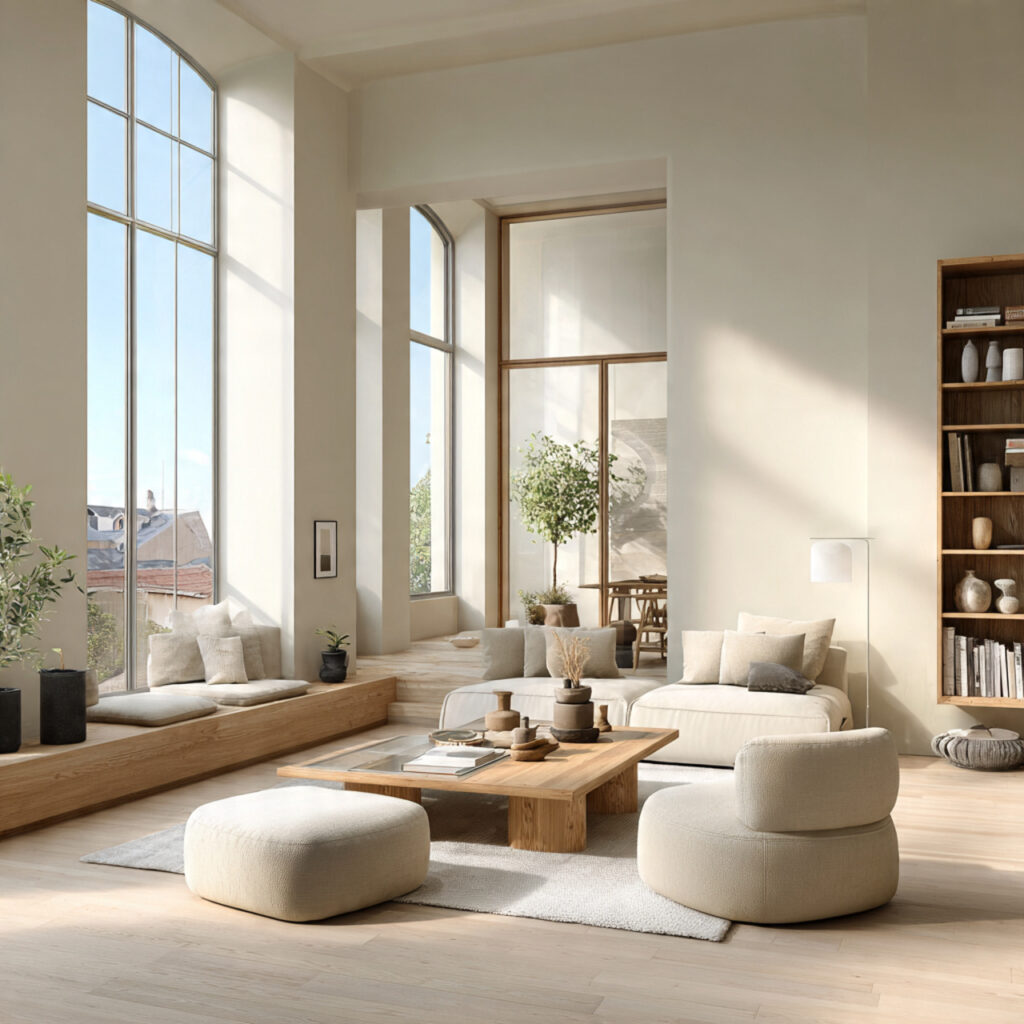
An open floor plan maximizes space flow and natural light distribution through minimal walls and visual barriers. This layout philosophy aligns with both Japanese ma (negative space) and Scandinavian appreciation for light-filled, efficient spaces. The open arrangement creates a sense of spaciousness even in modest square footage.
Define different zones through furniture arrangement, area rugs, or subtle level changes rather than walls. The flowing space encourages movement and social connection while maintaining visual simplicity and openness.
16. Rattan or Cane Furniture
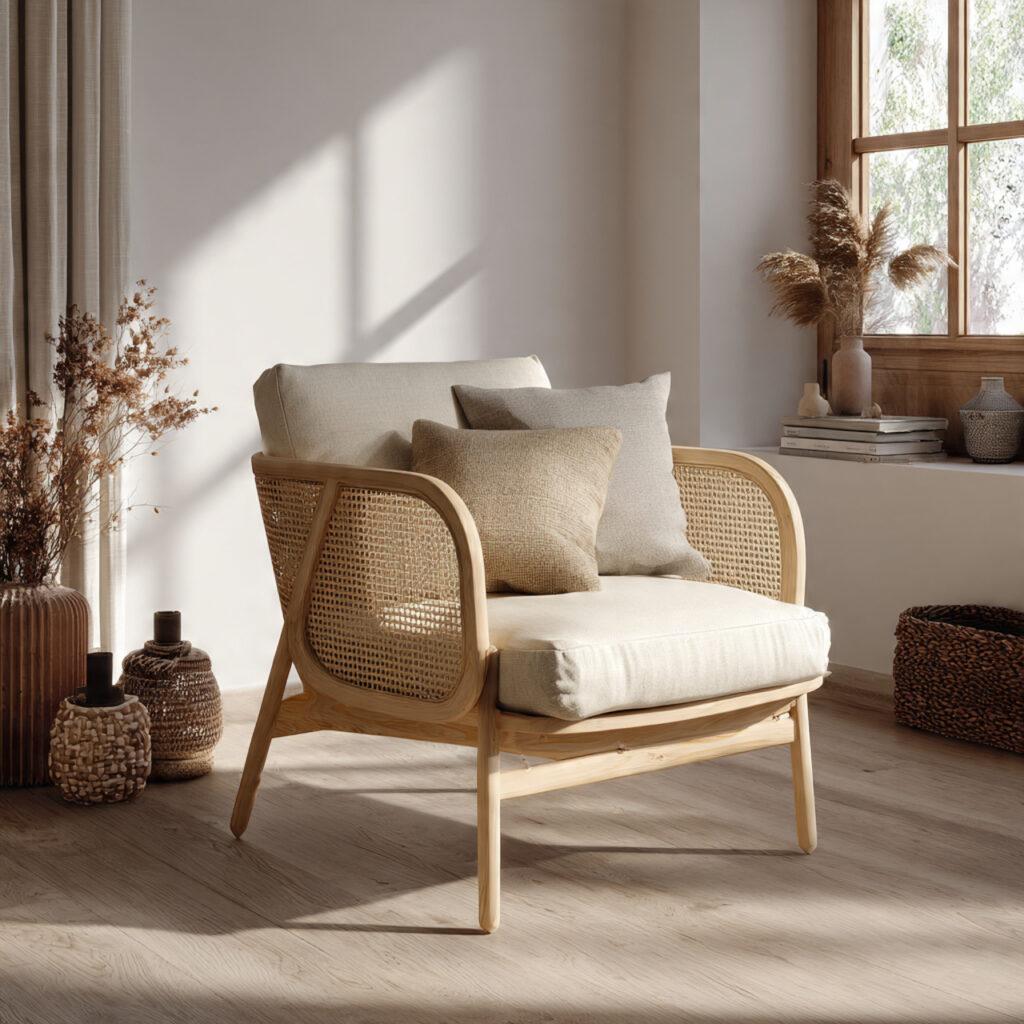
Rattan or cane furniture introduces organic texture through woven natural materials in chairs, baskets, or decorative elements. These sustainable materials add warmth and tactile interest while maintaining the light, airy quality essential to Japandi spaces. The woven patterns provide visual texture without busy patterns or colors.
Choose furniture with simple frames and natural finishes that showcase material beauty. The lightweight appearance and organic origins align perfectly with both Japanese and Scandinavian design values.
17. Minimalist Fireplace

A minimalist fireplace creates a focal point through clean-lined designs that emphasize function over ornamentation. Simple rectangular openings, flush installations, or modern bioethanol fireplaces provide warmth and ambiance without decorative mantles or elaborate surrounds. The understated design maintains wall simplicity while offering a cozy gathering point.
Surround fireplaces with simple stone, concrete, or smooth plaster for a minimal material palette. The restrained design allows the fire itself to become the visual focus and source of warmth and comfort.
18. Natural Light Maximization
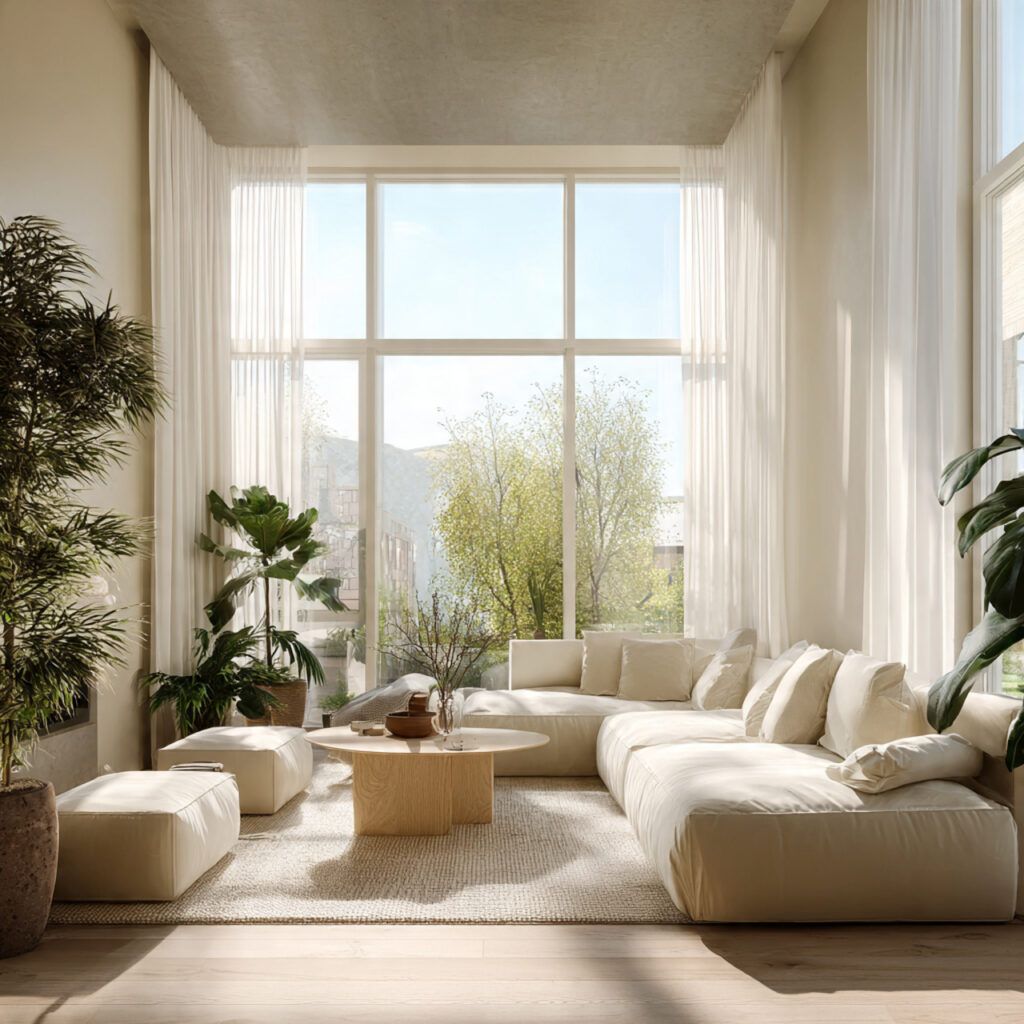
Natural light maximization prioritizes window treatments and layouts that flood spaces with daylight and connect interiors to nature. Both Japanese and Scandinavian design cultures value natural light for wellbeing and practical illumination. Large windows, sheer curtains, or no window treatments at all invite maximum light penetration.
Position furniture to take advantage of natural light without blocking windows or creating shadows. The abundant daylight reduces artificial lighting needs while creating dynamic spaces that change throughout the day.
19. Zen Garden View
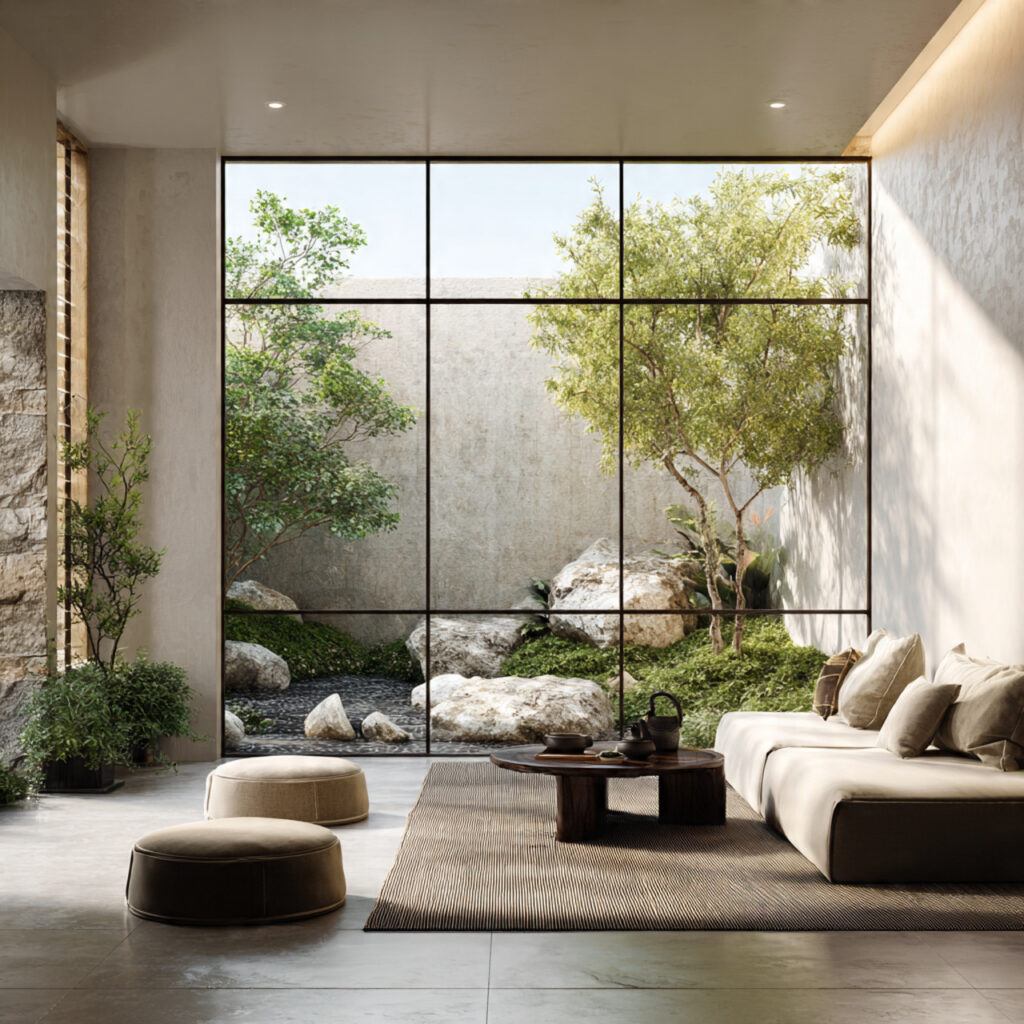
A zen garden view or indoor interpretation brings contemplative Japanese landscape design into living spaces through windows or interior arrangements. These minimalist compositions use rocks, sand, gravel, and sparse plantings to create meditative focal points. Even small-scale indoor zen gardens in trays provide calming visual anchors.
Position seating to face garden views for contemplative moments and stress reduction. The simplified natural scenes encourage mindfulness and provide visual rest from daily demands.
20. Handwoven Baskets
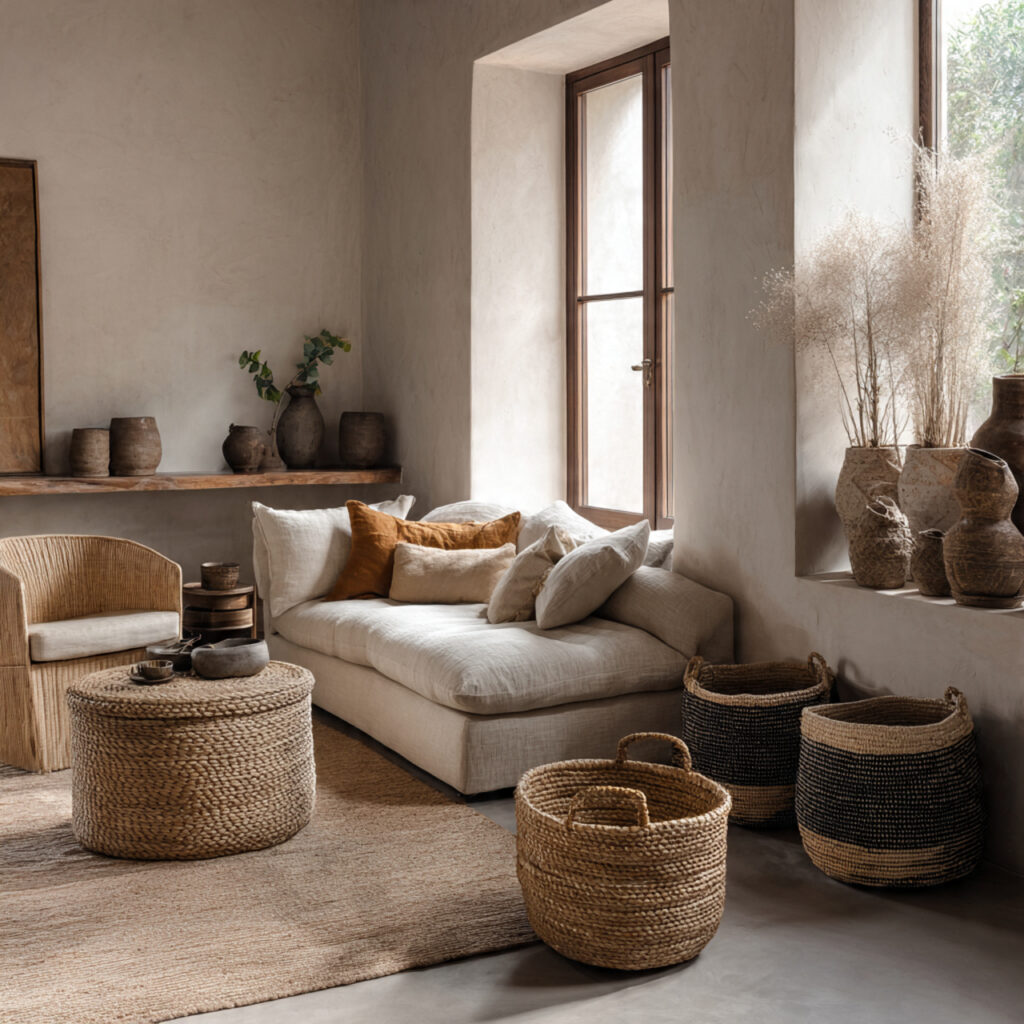
Handwoven baskets provide beautiful storage solutions through traditional craft techniques and natural materials. These functional art pieces organize blankets, magazines, or plants while adding organic texture and artisan quality. The natural fibers and visible weaving patterns celebrate handcraft and sustainable materials.
Group baskets in varying sizes for sculptural storage displays that maintain organization without closed cabinets. The natural materials and handmade quality align perfectly with Japandi values of craftsmanship and authenticity.
21. Platform Bench Seating
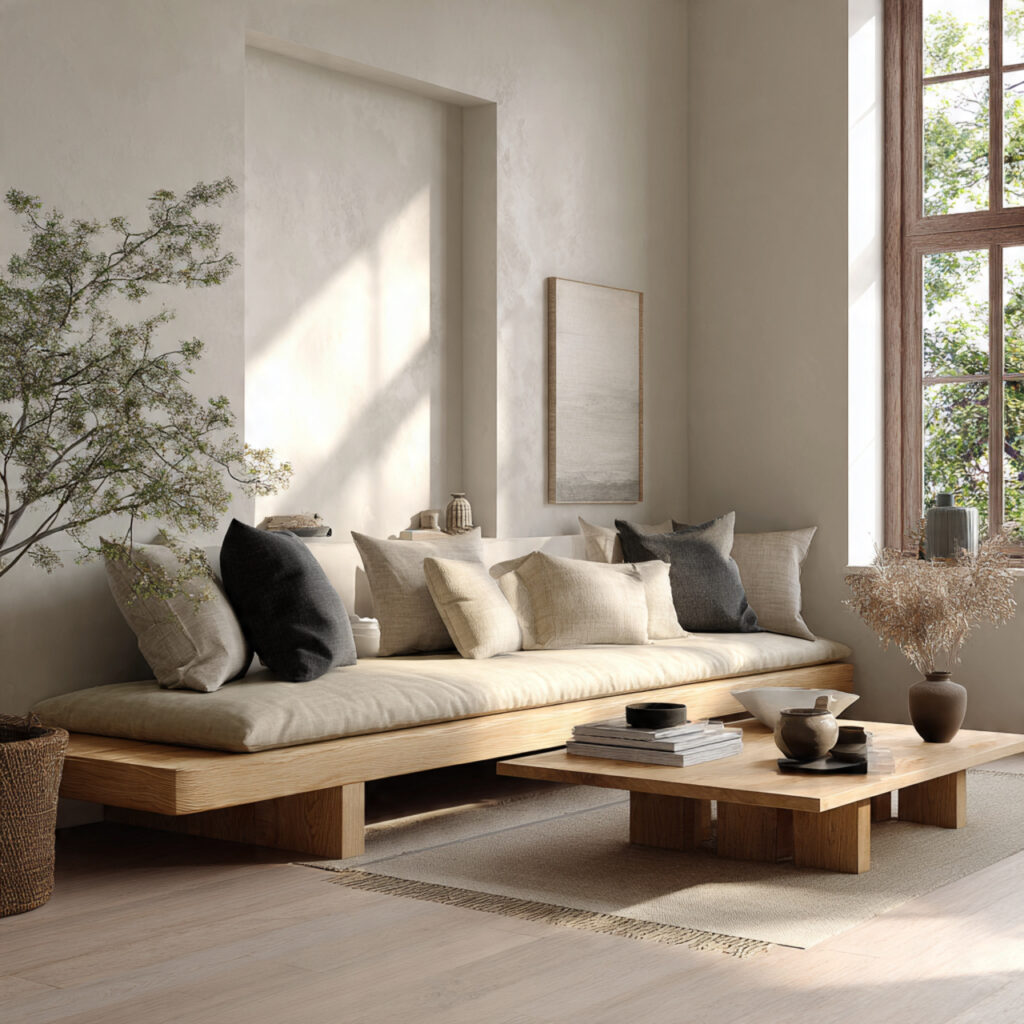
Platform bench seating creates versatile surfaces for sitting or display through simple wooden or upholstered benches. These low, linear pieces provide flexible seating that can be moved easily or used as coffee tables. The clean-lined forms maintain visual simplicity while offering practical functionality.
Choose benches with minimal legs or platform bases that emphasize horizontal lines and grounded feeling. The versatile pieces adapt to different needs while maintaining the uncluttered aesthetic essential to Japandi design.
22. Stone or Concrete Elements
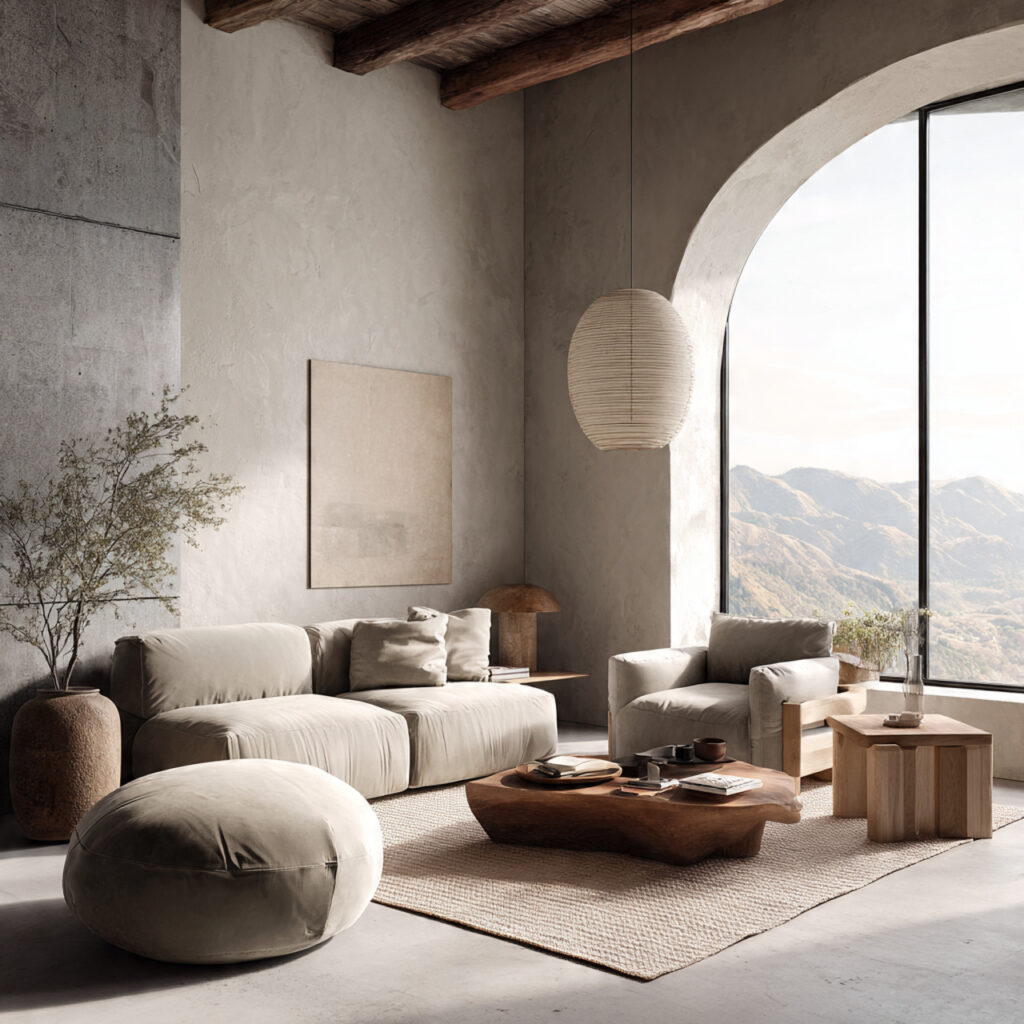
Stone or concrete elements introduce raw, natural materials through accent walls, fireplace surrounds, or decorative objects. These geological materials add weight and permanence while maintaining a neutral color palette and organic texture. The natural variations in stone or smooth concrete surfaces provide subtle visual interest.
Use stone sparingly for maximum impact and to avoid overwhelming softer elements. The natural materials ground spaces and connect interiors to earth’s fundamental elements.
23. Decluttered Surfaces
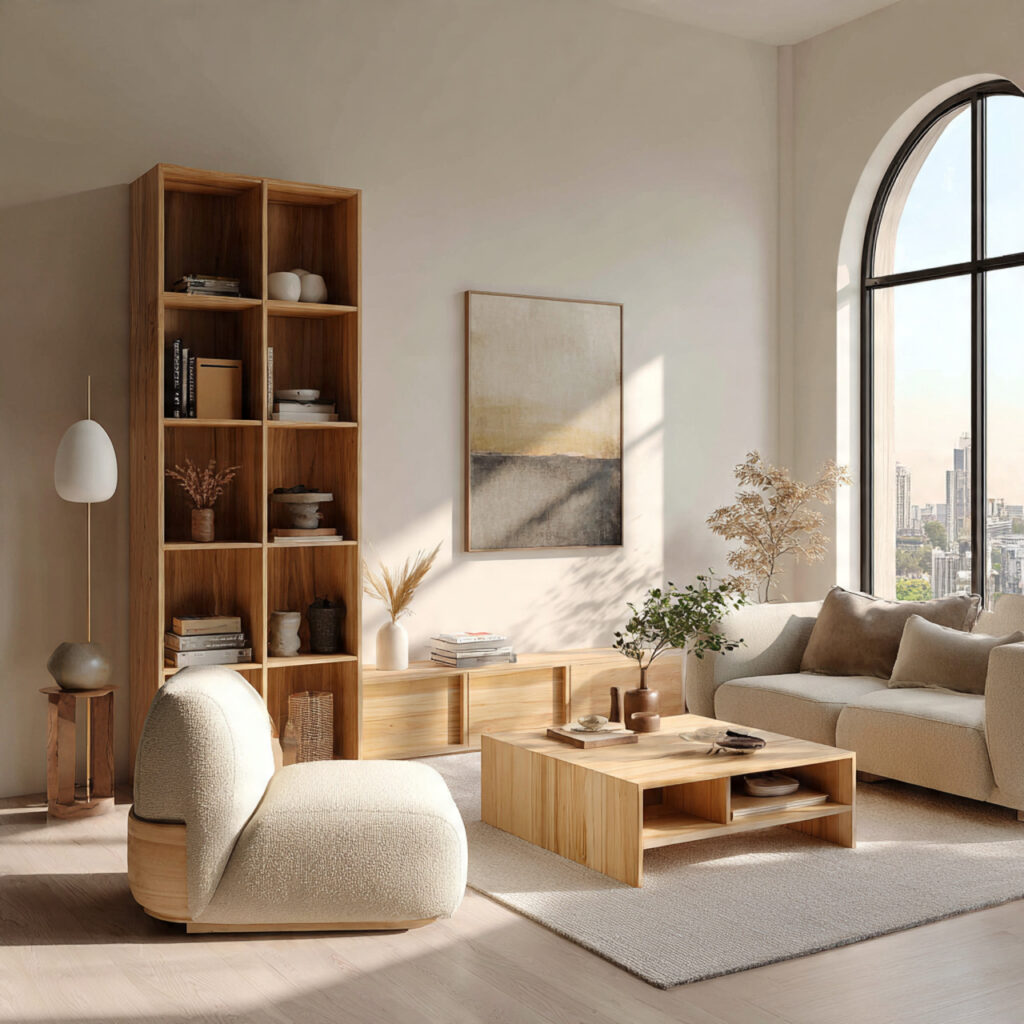
Decluttered surfaces maintain the minimal aesthetic through intentional curation and hidden storage that keeps only essential items visible. This principle reflects both Japanese minimalism and Scandinavian functionality that prize organization and visual calm. Every visible object should serve purpose or bring genuine joy.
Implement closed storage solutions that hide everyday clutter while displaying only carefully chosen decorative items. The clean surfaces reduce visual noise and create the serene, ordered environment central to Japandi living.
Conclusion
Japandi living room design offers endless possibilities for creating calm, minimal spaces that nurture wellbeing and celebrate quality over quantity. From low-profile furniture to natural materials, these 23 Japandi ideas demonstrate how Japanese minimalism and Scandinavian functionality blend seamlessly into harmonious interiors. Whether you embrace full Japandi principles or incorporate select elements, there’s a design approach perfect for your lifestyle needs and aesthetic preferences.
As you plan your living room transformation, consider how different Japandi elements complement your daily routines, spatial constraints, and personal values. Remember that successful Japandi design requires mindful curation rather than simple minimalism, ensuring every element contributes to the overall sense of peace and purpose. Embrace the tranquil beauty of Japandi design and let your living room reflect the calm, intentional, and balanced life you seek.