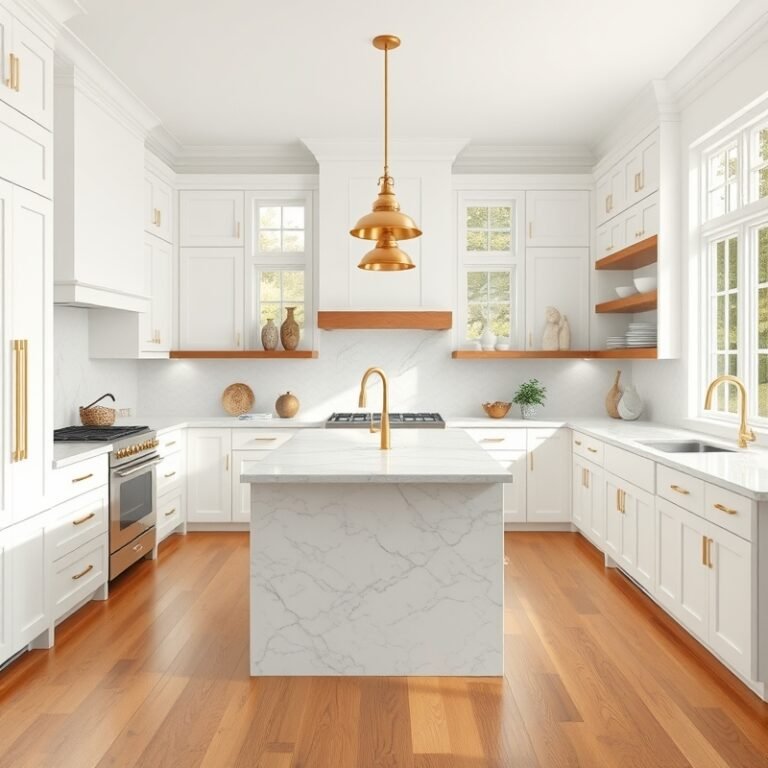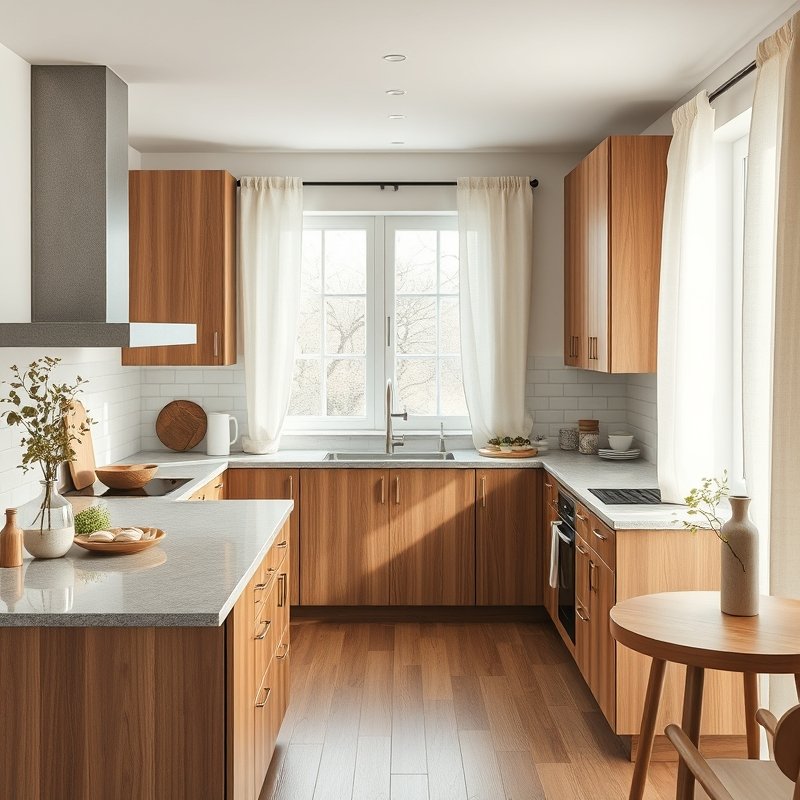
21 Japandi Kitchen Ideas That Blend Minimalist Style With Natural Calm Start Styling Now

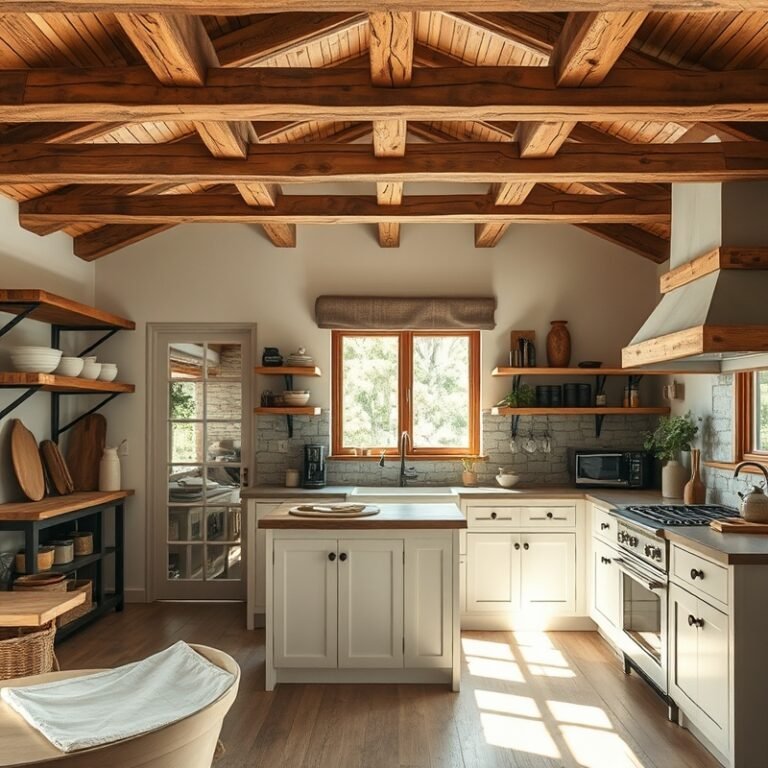
Imagine stepping into a kitchen where the morning light filters through a linen curtain, softly illuminating warm wood cabinets and a single branch resting in a handmade vase. The air feels still, intentional, and deeply restorative. This is the quiet magic of a Japandi kitchen. It strips away the noise of busy countertops and loud finishes, replacing them with a gentle harmony that soothes the senses. The Japandi kitchen ideas you are about to explore merge the functional warmth of Scandinavian design with the disciplined beauty of Japanese minimalism, creating a space that breathes.
In recent seasons, interior designers have noted a strong shift away from cold, industrial minimalism toward this softer, more soulful direction. Homeowners are craving kitchens that feel like a sanctuary, not a showroom. The trend leans heavily into natural materials, visible wood grain, and a palette drawn directly from clay, stone, and moss. Each of the following 21 design concepts is a complete visual idea you can bring into your own home, transforming the way you experience the heart of your house.
1. Embrace Light Wood Cabinetry
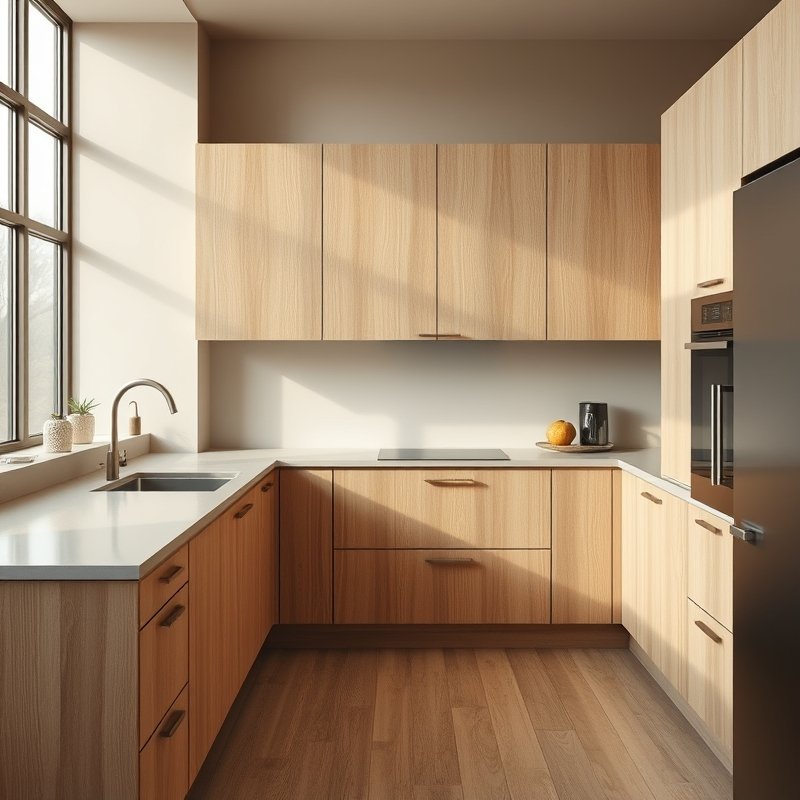
Light wood cabinetry forms the very backbone of the Japandi aesthetic. Think pale oak, ash, or birch with a matte finish that allows the natural grain to tell a quiet story. This design choice moves you away from stark white boxes and into a warmer domain where the furniture feels alive. The cabinets should be simple and flat-fronted, often handleless, to maintain the uncluttered flow. When you pair this with a low-profile kickboard and avoid any ornate molding, you create a seamless visual line that calms the eye.
This idea works because wood naturally connects us to a sense of the outdoors, anchoring the room in an organic comfort that glossy painted surfaces can never replicate. You can implement this by refacing your existing doors with a light wood veneer or choosing a durable bamboo alternative for a budget-friendly refresh that still holds the integrity of the style.
Also Visit: https://myhavenvibes.com/cozy-kitchen-ideas/
2. Add a Bamboo Backsplash
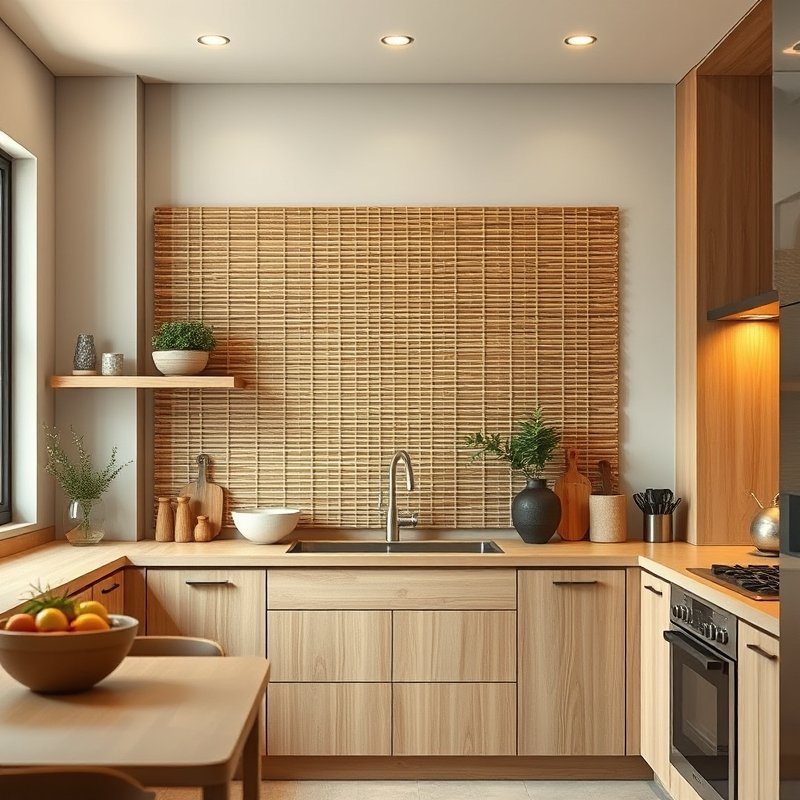
A bamboo backsplash functions as an instant texture infusion, bringing a distinctly Japanese material into the heart of your cooking zone. Unlike cold tiles, bamboo has a natural warmth and a subtle linear pattern that guides the eye horizontally, making the kitchen feel wider and more grounded.
Choose a tightly woven panel or vertically arranged stalks sealed for kitchen moisture, and let it run from the countertop to the underside of the cabinets. The honeyed tone against stone worktops and ceramic dishes creates a layered, artisan feel. Beyond its beauty, this material is highly renewable, aligning with the Japandi value of respectful sourcing. You can treat it with a food-safe matte sealant to protect it from splashes, ensuring the backsplash remains both a visual anchor and a practical surface for daily life.
Read More: https://myhavenvibes.com/island-kitchen-ideas/
3. Use Open Shelving with Neutral Ceramics
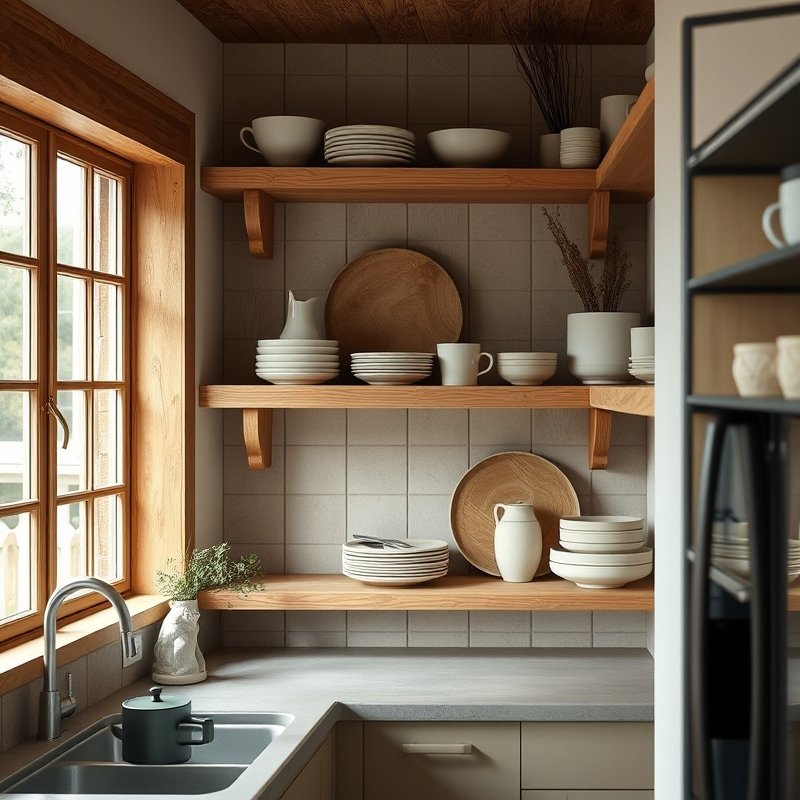
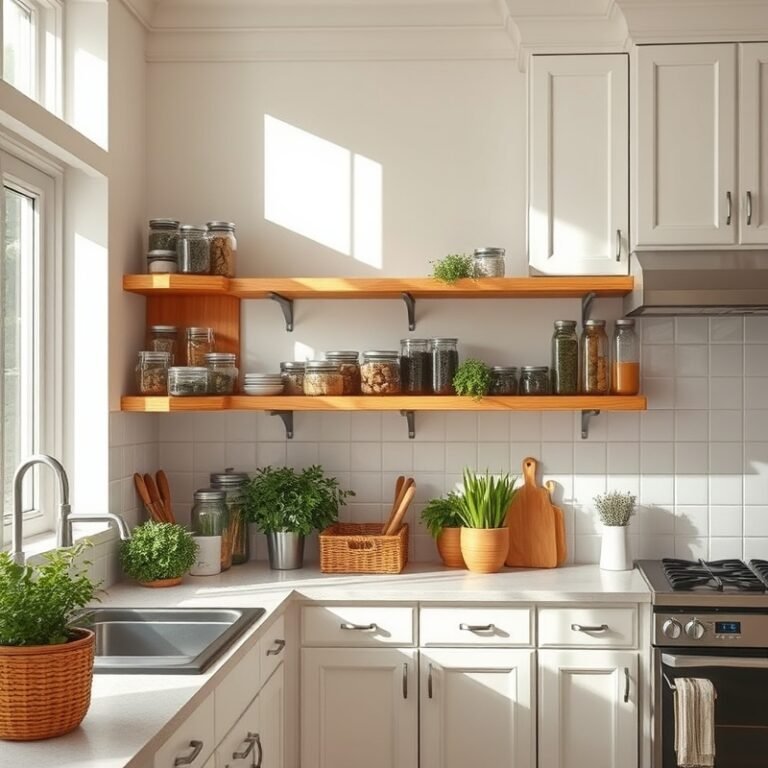
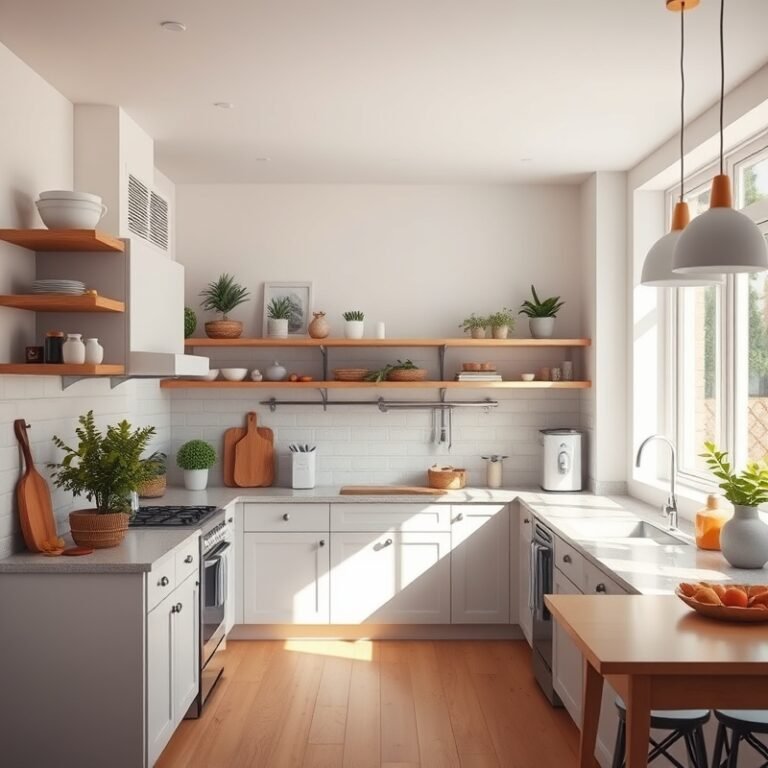
Open shelving in a Japandi kitchen becomes a curated display rather than a dumping ground for clutter. Install reclaimed pine or light oak shelves mounted on discreet brackets, and fill them intentionally with a rotation of neutral ceramic bowls, speckled mugs, and simple stoneware plates. The rule here is to leave plenty of empty space around each piece so that the objects themselves can breathe.
This practice, borrowed from Japanese ‘ma’ or negative space, transforms utilitarian storage into an artful statement. The varied heights of stacked bowls and upright plates create a gentle, undulating rhythm against the wall. You can easily bring this idea home by committing to a limited color story of beige, off-white, and soft grey for your everyday dishes, turning your shelf into a permanent source of visual peace.
4. Install Shoji-Style Sliding Doors
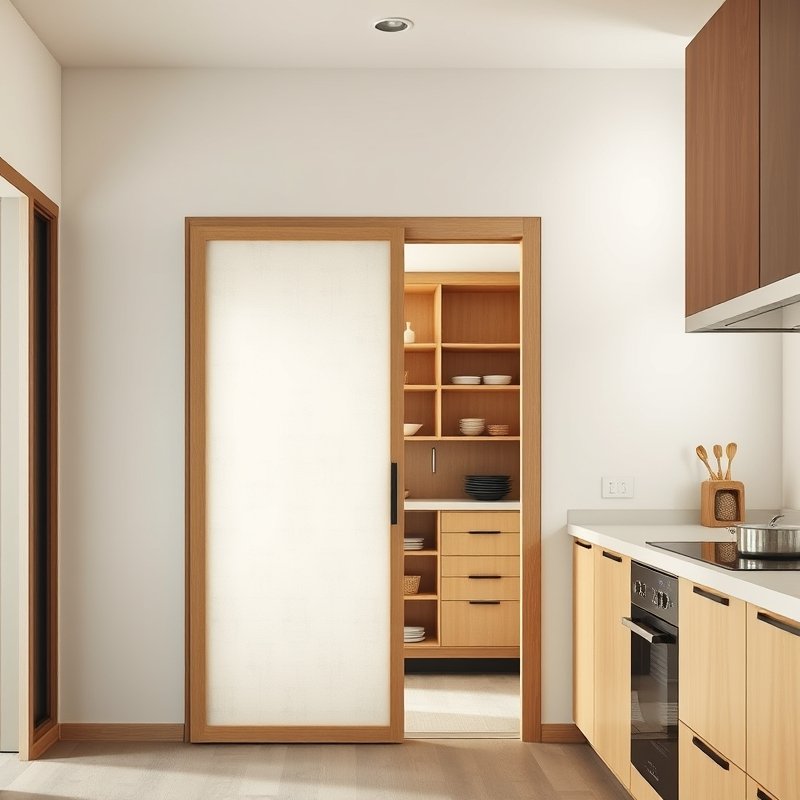
Bringing the architectural poetry of Kyoto into your home, Shoji-style sliding doors offer a soft, glowing way to conceal pantry items or appliances. Instead of a traditional swinging door that consumes floor space, a lightweight frame with a translucent fabric or frosted glass insert glides quietly along a ceiling-mounted track.
The diffused light that passes through is inherently calming, eliminating the harsh shadows often found in closed-off kitchen areas. The wooden lattice pattern adds a subtle geometric texture without overwhelming the room. You can install a pair of these panels to hide a coffee station or a utility closet, allowing the clean lines of your main kitchen to remain undisturbed while the hidden area feels like a secret, luminous alcove.
5. Choose Matte Black Hardware
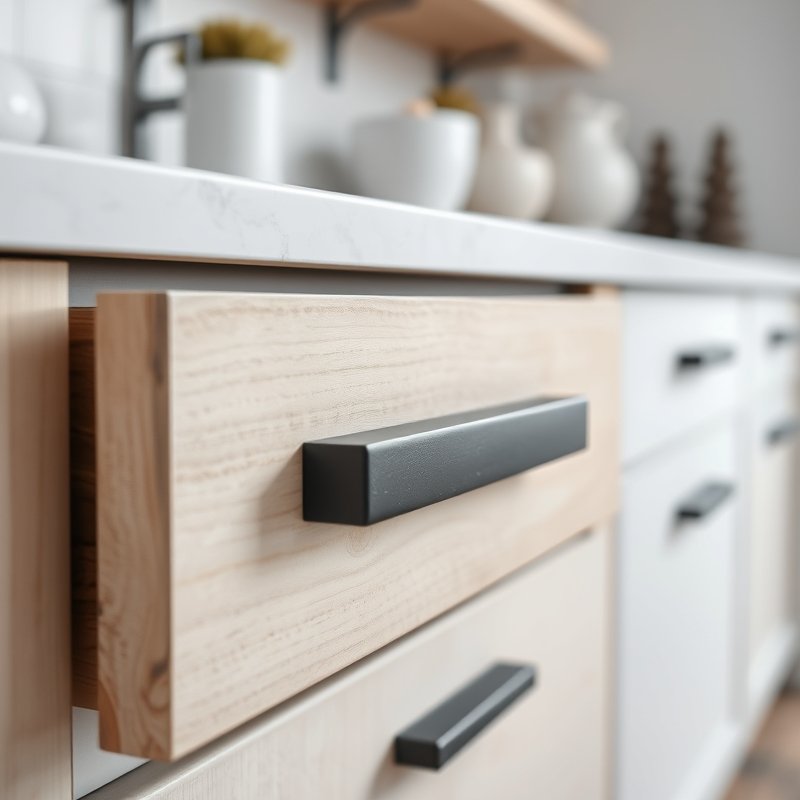
Matte black hardware acts as the quiet punctuation mark in a sentence of soft neutrals. In a sea of light wood and plaster walls, slender black pulls, taps, and rails provide just enough definition to ground the entire design. The trick is in the scale: opt for slim, elongated handles rather than chunky knobs to maintain the streamlined silhouette.
A black gooseneck mixer tap against a soapstone sink becomes a sculptural moment, not just a tool. This hardware choice uses contrast without aggression, drawing the eye to the functional touchpoints of the room. Swap out any bright chrome or brass fittings for this shadowy, tactile finish to immediately sharpen the space while preserving its deep sense of calm.
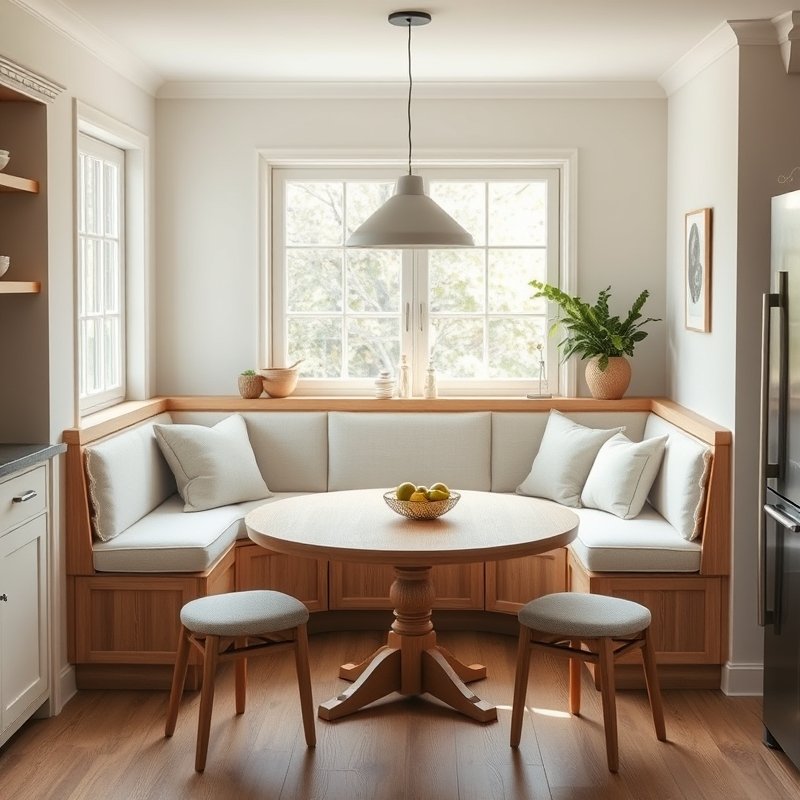
6. Incorporate a Built-In Banquette with Natural Cushions
A bulky island can quickly suffocate the calm of a kitchen. Instead, choose a design that hovers lightly above the floor on slim, tapered wooden legs, lifting the visual weight off the ground. The countertop could be a thick slab of oiled butcher block or matte honed stone, set at a slightly lower height than standard to echo Japanese low dining tables.
This floating appearance makes the room feel larger and airier while still providing a generous prep surface. Underneath, the open space can hold simple woven baskets or remain completely empty to let the light pass through. It is a design that serves deeply practical needs for chopping and casual dining yet looks like a fine piece of standalone furniture rather than a chunky built-in.
9. Use Natural Stone Countertops (e.g., Soapstone or Marble)
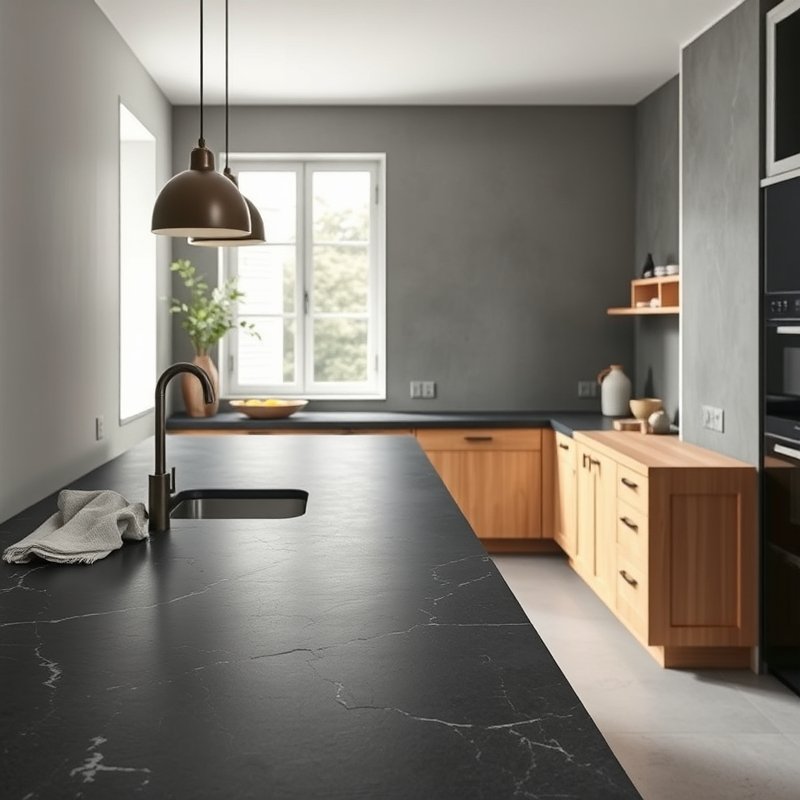
Natural stone, particularly soapstone or lightly veined matte marble, provides a cool, grounding contrast to warm wood cabinetry. Soapstone is an ideal choice, starting as a soft grey that develops a darker patina over time, telling the story of your kitchen’s life. Its non-porous, matte surface feels beautifully smooth underhand and rejects the artificial gloss of polished granite.
A honed marble with distant grey veining can work equally well if sealed and left to age gracefully. The organic patterning mimics an abstract landscape painting, adding visual depth without any bright colors. When the morning sun hits this stone, the subtle texture comes alive, turning the island or worktop into a functional piece of art that anchors your entire palette.
10. Hang Linen Curtains for Soft Texture
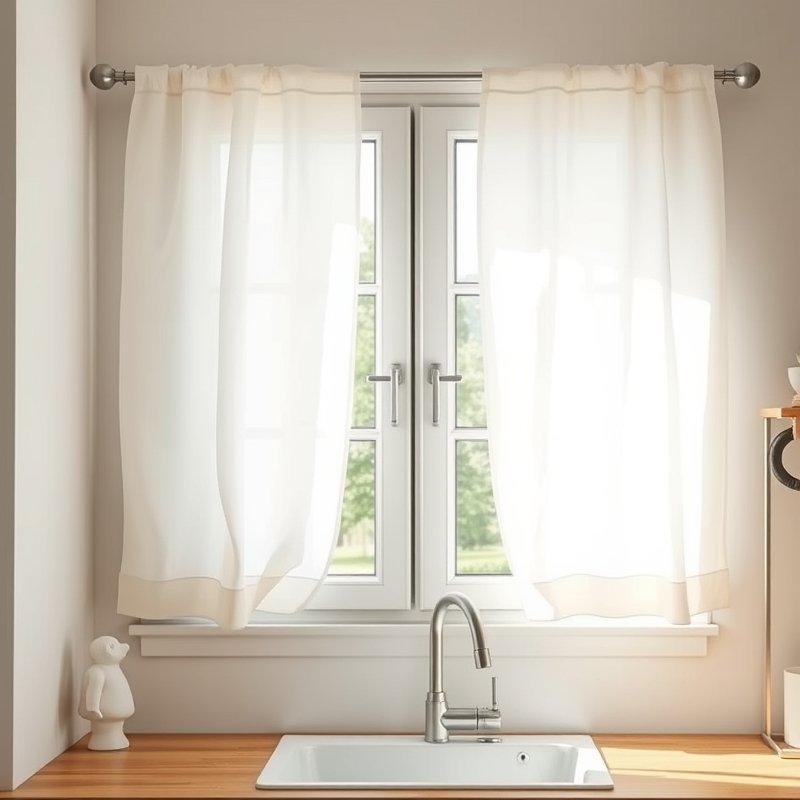
Linen curtains bring a kinetic softness to the clean lines of a kitchen, filtering harsh sun into a warm, honeyed glow. The key is to hang them high and let the natural creases in the heavyweight linen provide texture without feeling fussy. An oatmeal or washed-white color keeps the palette neutral, while the organic edges and slight transparency maintain the connection to the outdoors. These fabric panels soften the hard surfaces of glass and tile, absorbing sound and adding a layer of insulation.
On a bright afternoon, the moving shadows and diffused light create a sleepy, tranquil atmosphere that transforms even the busiest cooking session into a meditative act.
If you only save one idea from this list, let it be the way fabric and wood soften each other. That interplay is the entire soul of Japandi style.
11. Create a Dedicated Tea Station with Simple Shelving
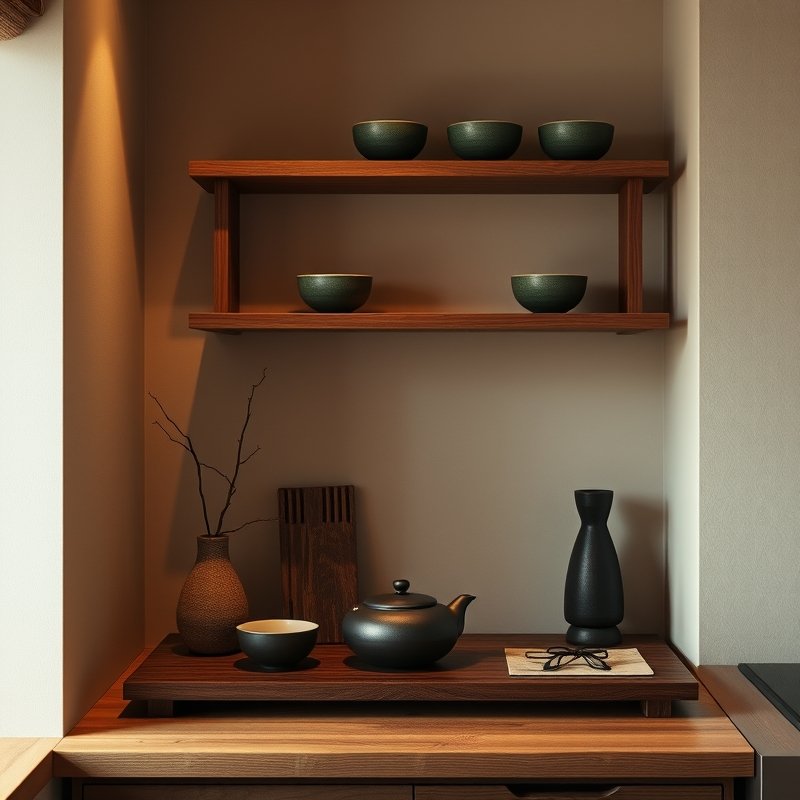
Carve out a quiet ritual corner by dedicating one section of your counter and a single open shelf to the art of tea. Mount a narrow wooden shelf specifically to hold a row of matching ceramic canisters for loose leaves, a dark glazed kyusu teapot, and small handleless cups. Below, keep the counter clear except for a bamboo whisk and a linen cloth folded neatly on a wooden tray.
This dedicated zone elevates the simple act of boiling water into a mindful break. It also contains the visual clutter, so tea paraphernalia doesn’t drift across the entire kitchen. The repetition of similar organic shapes, round pots, curved cups, and wooden lids, creates a soft, sculptural moment that invites you to pause and steep.
12. Add Shoji-Inspired Pendant Lighting
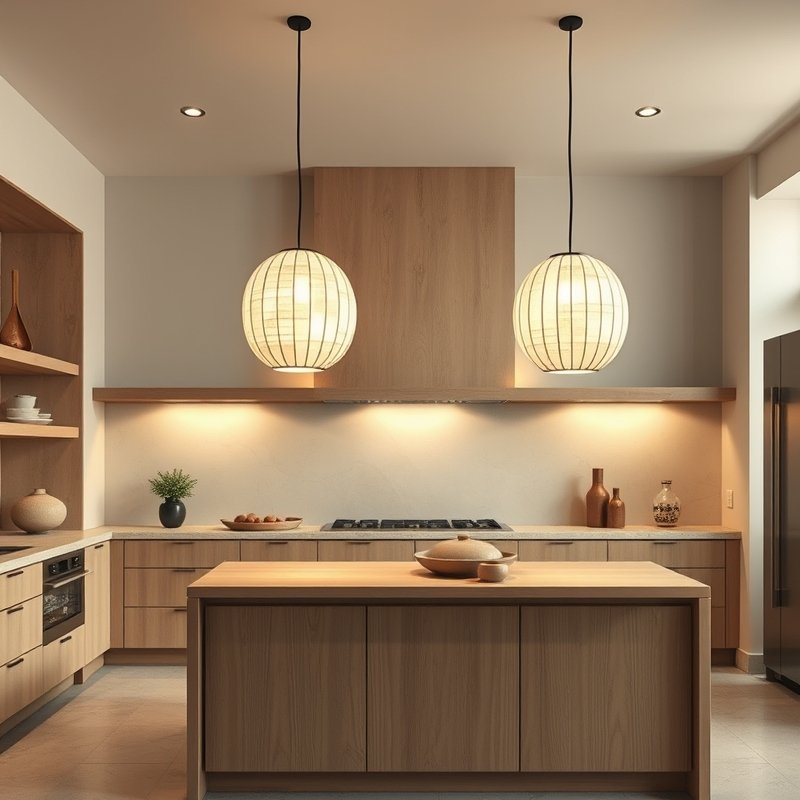
Lighting is the jewelry of the kitchen, and in the Japandi lexicon, that jewelry is handmade and understated. Shoji-inspired pendants, typically a lightweight wood frame wrapped in washi or rice paper, emit a soft, ambient light that glows rather than glares. Suspend a pair of them at staggered heights above your island or a single larger globe over a dining nook.
The translucent paper softens the bulb’s intensity, casting a flattering warmth that makes wood and stone surfaces appear richer. This type of fixture doubles as a textural sculpture during the daytime, its organic shape floating quietly in the air. Seek out craft-based lighting studios or DIY a cover using a simple wooden frame, ensuring the light brings a breath of artisan soul to your ceiling.
13. Incorporate a Mini Indoor Herb Garden Near the Window
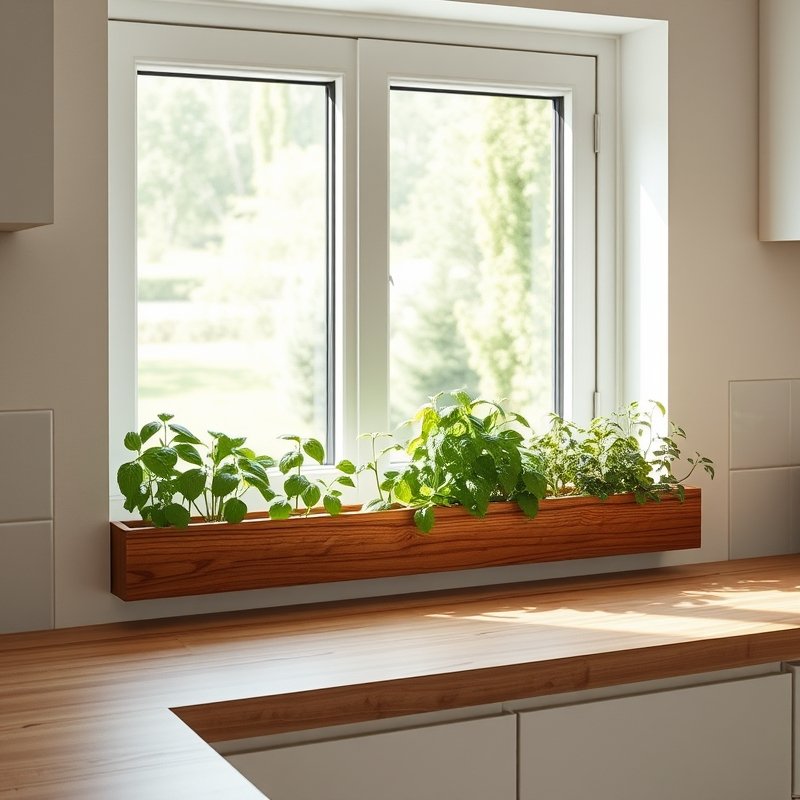
Life itself becomes the accent color in this design idea. Place a long, shallow wooden trough planter directly on the windowsill, filled with fragrant herbs like shiso, mint, or thyme. The fresh green sprigs offer a fleeting, natural pop against the earthy, muted backdrop. Use simple terracotta pots or line the wooden tray with pebbles and soil, keeping it neat and contained.
This living element connects your indoor sanctuary to the garden outside and provides snips of flavor right where you cook. The gentle scent released when you brush the leaves adds an invisible layer of sensory calm. Care for this miniature garden becomes a gratifying daily touchpoint, reminding you that a kitchen is fundamentally a space for nurturing.
14. Use a Muted Earth-Toned Color Palette
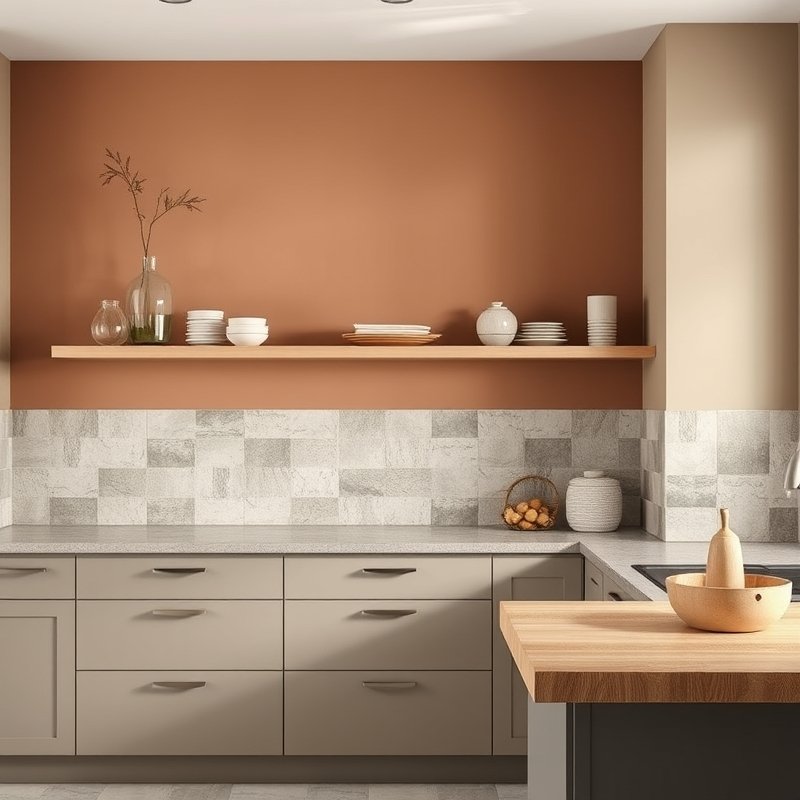
The color story holding a Japandi kitchen together is pulled directly from nature’s quieter moments: the grey of river stones, the beige of raw flax, the deep green of a forest shadow, and the charcoal of burnt wood. You should wrap your walls in a warm, pigmented limewash or matte clay-beige paint that shifts subtly with the light.
This enveloping tone immediately softens the architectural edges and makes the wood details stand out in gentle relief. You can bring in deeper accents like an olive-green pantry door or charcoal accessories, but keep the base vast and harmonious. This chromatic restraint ensures your eye never darts around looking for a place to land; it simply rests in the soothing, cohesive calm of the space.
15. Install Reclaimed Wood Open Shelving
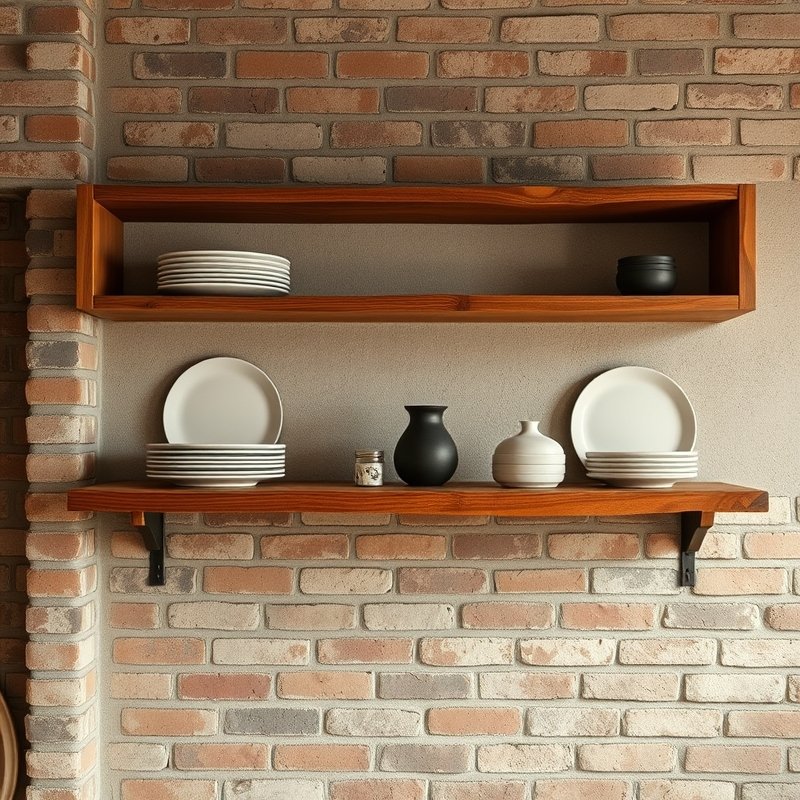
While light blonde woods are classic, introducing a single reclaimed wood shelf in a darker, weathered tone adds instant depth and a sense of history. The thick, old timber with visible saw marks and natural cracks brings a rustic Scandinavian barn feel directly into the clean Japanese framework.
Anchor this shelf against a plaster wall and use it to display heavy stoneware plates or cast-iron trivets. The weight and patina of the wood ground the airier elements in the kitchen, preventing the space from feeling too precious or untouchable. This material choice is essentially a story: it speaks of time passing, hands working, and meals made. Balance it carefully by keeping the surrounding cabinetry light, ensuring the single shelf becomes a powerful focal point rather than overwhelming the room.
Notice how the mix of textures, smooth clay, rough wood, and soft stone, keeps the minimalist look from ever becoming boring. Let’s carry that richness into the flooring and hidden details.
16. Add a Tatami Mat Floor Area for a Breakfast Nook
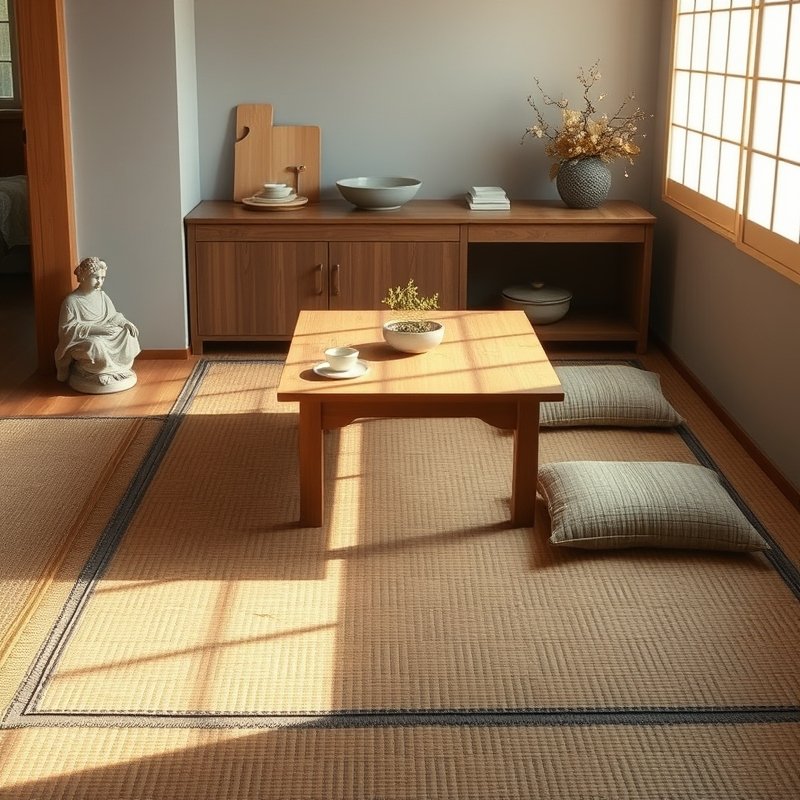
Dedicate a small corner of your kitchen floor to a platform of woven tatami mats, instantly transporting your bare feet to a Japanese farmhouse. The tightly woven rice straw emits a distinct grassy scent and provides a firm yet forgiving surface. Place a low, chunky ash table on top, surrounded by large sitting pillows or a backless low wooden chair.
This creates an intimate breakfast nook that fosters a relaxed, floor-level lifestyle, perfect for slow coffee or reading a cookbook. The boundary where the tatami meets the wood or stone floor is a powerful architectural detail, dividing the working zone of the kitchen from the resting zone. Treat this mat as sacred, keeping it free from crumbs and shoes, and it will reward you with a deep, grounding energy every time you step onto it.
17. Choose Slim Shaker-Style Cabinetry
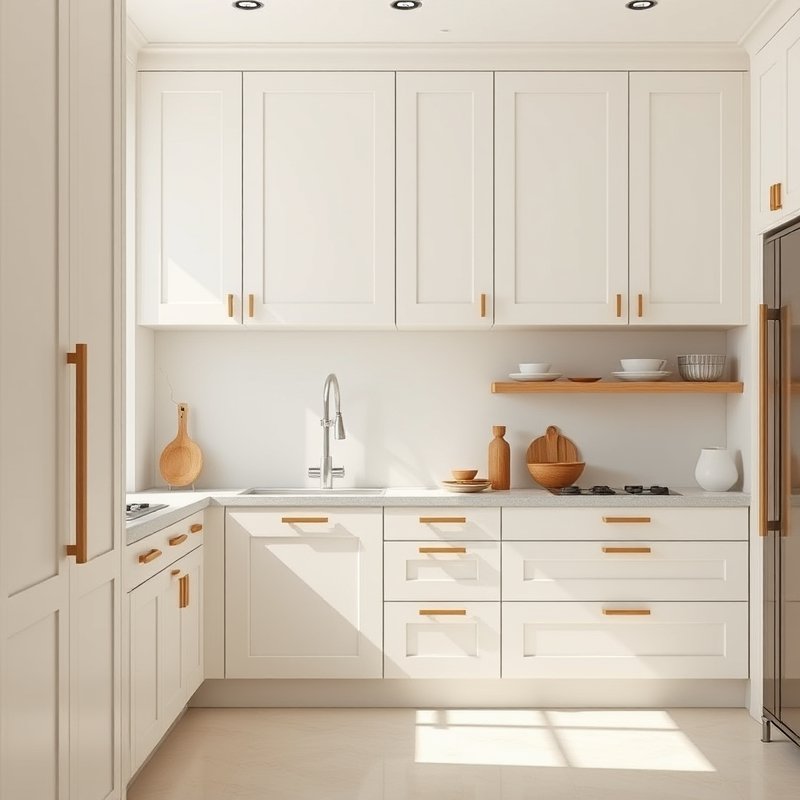
Standard Shaker cabinets can sometimes feel a bit heavy and farmhouse-centric, but scaling down the frame to a very slim, almost shadow-line profile changes the feel entirely. A thin frame around a recessed center panel gives just a whisper of classic joinery, aligning with the Japandi love for subtle, honest craftsmanship.
Painted in a soft off-white or pale warm grey, these doors look like a gentle sketch rather than a bold statement. Pair them with integrated wooden finger pulls or a slim J-profile instead of metal hardware to keep the line completely pure. This design choice works because it respects the functional heritage of the Shaker style while editing it down to its most refined and minimalist essence, providing a neat, tailored backdrop that never dominates the eye.
18. Incorporate Woven Baskets for Storage
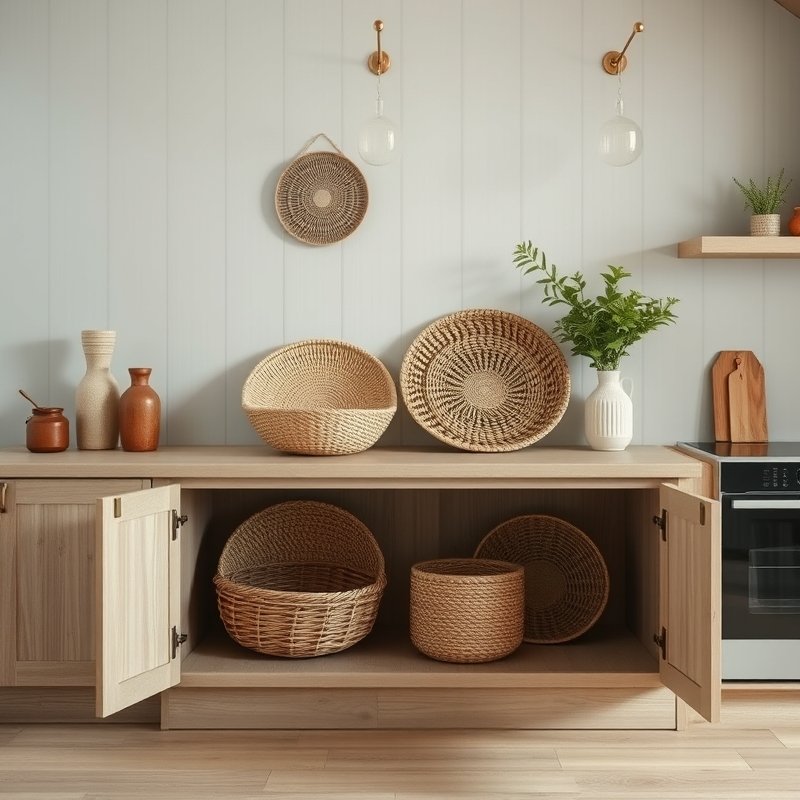
Swap out clunky plastic bins for natural woven baskets made of seagrass, water hyacinth, or bamboo strips. These baskets serve as the unsung heroes of Japandi storage, hiding visual chaos like root vegetables, tea towels, or children’s snack boxes. Slide them onto the open shelves of a freestanding island or into a cubby under the counter.
The organic, fibrous texture contrasts beautifully with smooth stone and lacquered wood, adding a layer of handcrafted warmth. Keeping a row of identical baskets also creates a uniform, rhythmic pattern that soothes the mind. This idea is deeply practical and instantly creates a more curated, less retail-looking kitchen. You are essentially turning necessary storage into an earthy, textured display element that breathes naturally.
19. Install Under-Cabinet Lighting for Warm Ambience
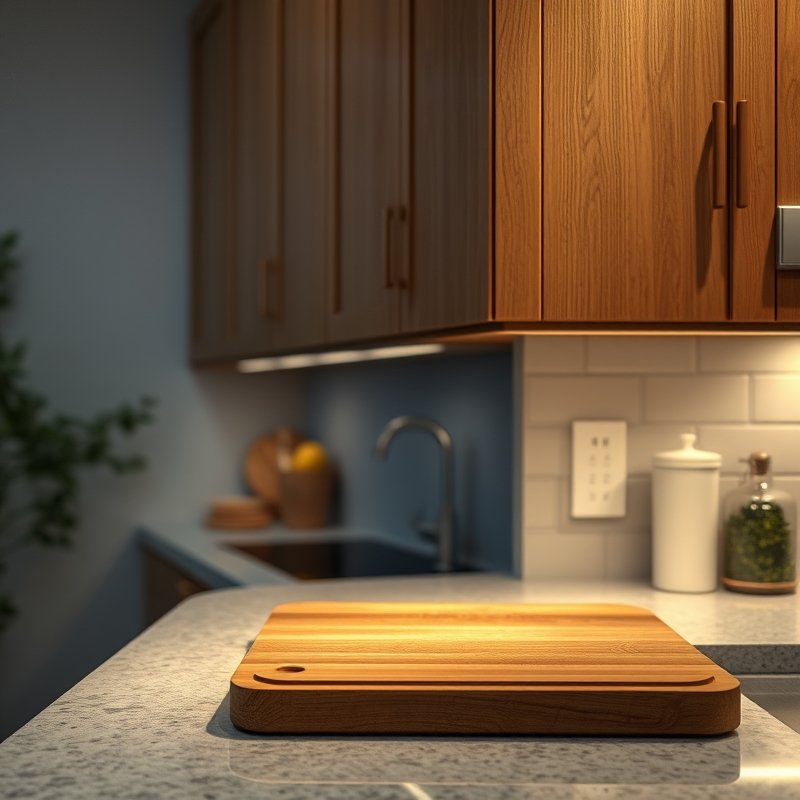
Lighting layered at multiple heights is the secret to a cozy, cave-like calm. The critical layer is a hidden strip of warm white LED lighting (around 2700K to 3000K) mounted beneath the upper cabinets. This washes the countertops in a soft, functional glow that eliminates harsh shadows while prepping, but more importantly, it acts as a night light for the soul in the evening.
The light bounces off a stone or wood surface, intensifying the natural grain and making polished concrete or matte quartz look luminous. Avoid cool white diodes, which can feel sterile and blue, and instead opt for a warm, almost candle-like color temperature. This creates a seamless transition from bright task lighting during the day to a relaxed, intimate mood when the overhead lights go off.
20. Add a Sliding Barn Door to Hide the Pantry
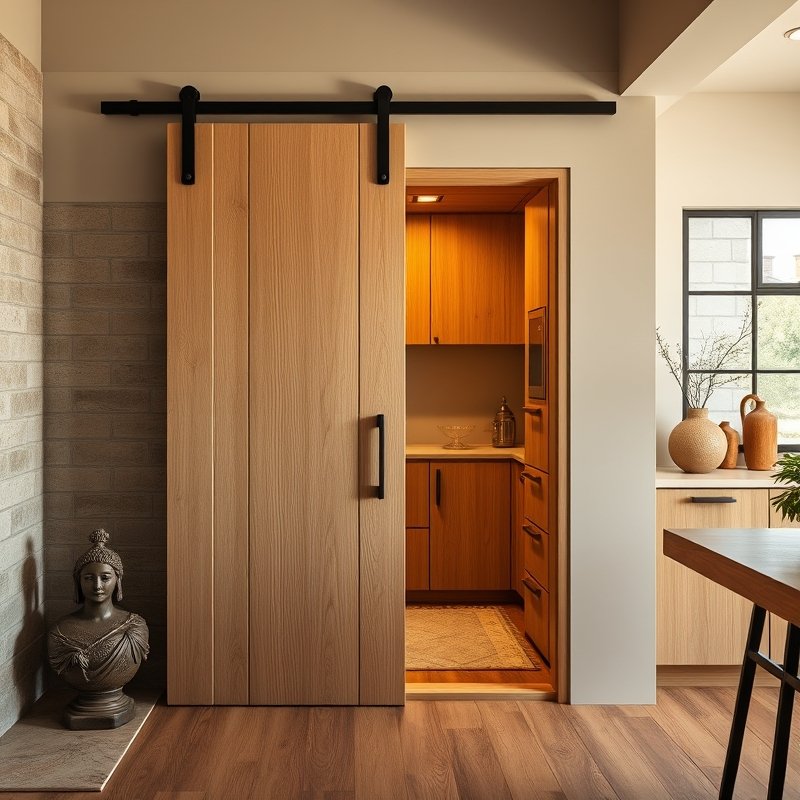
A pantry hosts the beautiful chaos of jars, dry goods, and appliances, but they don’t need to be center stage. A modern, flat-panel sliding barn door in oak or cedar on a black metal track can seal off this functional zone completely. Unlike the traditional rustic barn door, this version is sleek and flush, resembling a movable wall panel rather than a heavy z-brace door.
When closed, it becomes a solid slab of wood grain that adds architectural warmth and a quiet focal point. When open, it conveniently reveals your organized stores without swinging into your workspace. This idea maintains the minimalist commandment of “out of sight, out of mind,” allowing the rest of the kitchen to remain an open, breathable canvas.
21. Use a Single Statement Vase with Branches as Centerpiece
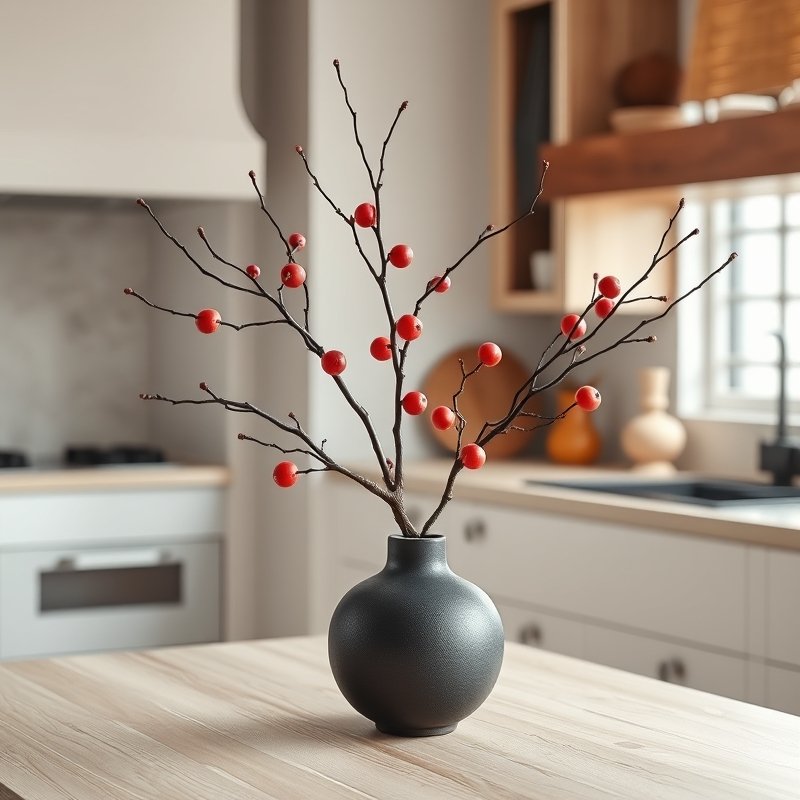
The final touch that ties the entire room together is not a bouquet of colorful flowers but a single, striking branch displayed in a sculptural vase. Choose a heavy, dark-toned vase, perhaps matte charcoal or distressed brown clay, and place a bare manzanita branch or a few long-stemmed dried grasses inside.
The organic, asymmetrical lines of the branch draw the eye upward, emphasizing the vertical space and breaking the horizontal lines of the counters. This centerpiece is a living line drawing, elegant in its simplicity. It brings a sense of scale and a final whisper of the natural world to your kitchen island or table. The beauty lies in the empty space around it, proving that in Japandi style, one perfect object is always more powerful than a cluttered collection of many.
Conclusion
These 21 Japandi kitchen ideas prove that less really is more. By focusing on natural materials, muted tones, and intentional storage, you can transform your cooking space into a calm, functional retreat. Start with one or two ideas, perhaps the warm lighting and a wooden tray of pottery, and let the tranquility grow from there. A serene kitchen is not just designed; it is cultivated with care.